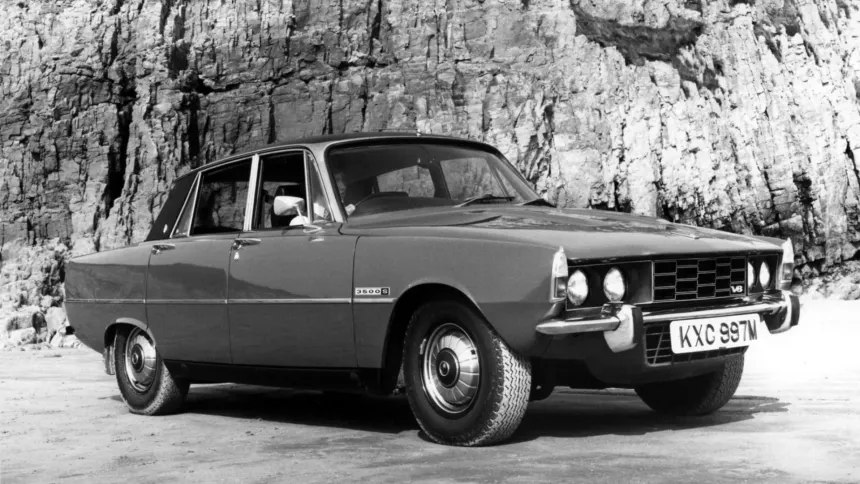
Rover P6 3500: the engine Detroit threw away and Britain made immortal
Every gearhead in America knows the Buick 215. Or thinks they don’t, until you tell them the story. It’s the little aluminum V8 that Buick and Oldsmobile built for their compacts at the dawn of the sixties, the one that powered the Buick Special and the turbocharged Olds Jetfire, the one Detroit built by the hundreds of thousands and then, after just three model years, quietly killed off and walked away from.
Here’s the part that should sting. That “failed” engine didn’t die. It got on a boat, crossed the Atlantic, and spent the next three decades becoming one of the most beloved powerplants in British motoring history — the roar of the Range Rover, the muscle of a thousand TVRs, the heart of the car we’re here to talk about. America invented it, gave up on it, and let Britain turn it into a legend.
This is how that happened.
A brilliant car that was missing something
Start with the car, because the Rover P6 was a remarkable machine even before the V8 showed up.
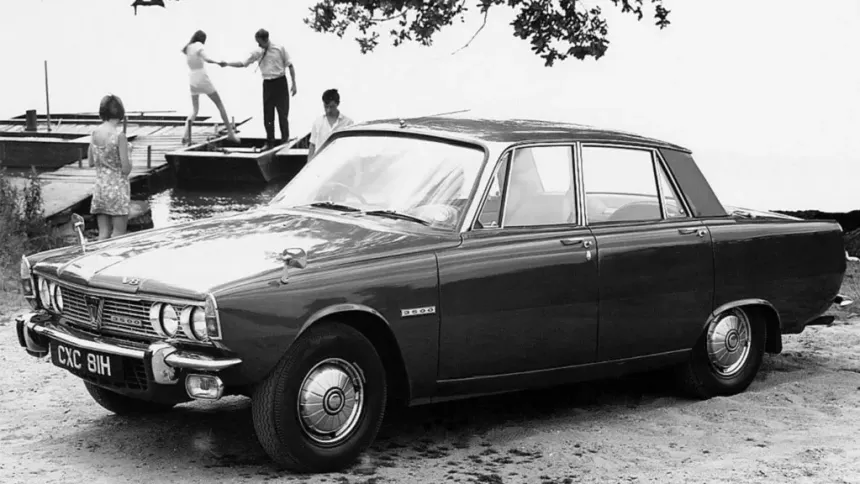
When Rover launched it in 1963 as the Rover 2000, it was a total clean sheet. Rover had spent years building solid, serious sedans for gentlemen in hats — cars like the P4 the P6 replaced. The P6 was something else. It was modern in a way that was almost unsettling. De Dion rear suspension, four-wheel disc brakes (the rears mounted inboard, tucked next to the differential), and a body built on an idea borrowed from the Citroën DS: a central skeleton that carried all the loads, with unstressed outer panels simply bolted on top. You could unbolt the sheet metal without touching the structure underneath.
The De Dion setup was nearly jewelry-grade engineering. The tube linking the rear wheels was split into two pieces that could telescope and rotate against each other, which eliminated the need for sliding splines in the driveshafts. Thoughtful, elegant engineering that solved a problem with brains instead of brute force.
In 1964 the P6 won the very first European Car of the Year award ever handed out. The first one. The only real knock from the critics was that the 90-horsepower four-cylinder, in a chassis this good, felt a little short on refinement. The car was begging for something better under the hood. The trouble was that Rover didn’t have anything better — and developing a brand-new engine from scratch costs a fortune Rover didn’t have.
Which brings us back to that aluminum V8.
Why GM gave away a gem
The engine was the Buick 215, a 3,528 cc aluminum V8. GM had launched it in the early sixties for its compacts, and on paper it was a marvel. Feather-light at just 144 kg (318 lb), good for up to 200 horsepower in the hottest Buick tune and even 215 in the turbocharged Oldsmobile Jetfire. It sold, too: Buick built 376,799 cars with it in three years, and Oldsmobile roughly the same.
So why did GM kill it?
Because aluminum, in the 1960s and at American scale, was a headache. Casting aluminum blocks in volume was expensive. The engine suffered oil and coolant sealing problems. And there was an almost comic failure mode: radiators clogged because the antifreeze people actually used was incompatible with aluminum, gumming up the cooling system. For an industry cranking out millions of cars that had to be cheap and idiot-proof, this beautiful engine was too delicate. After 1963 GM ceased aluminum-block production and stuck with heavier iron versions that were simpler to build.
Here’s the scale gap that explains everything, and it’s worth stating flat: GM built more aluminum V8s in three years than Rover would build in its entire existence. What was a failed experiment for the American giant — not worth the trouble at a scale of millions — was exactly the right part for a small manufacturer with clever hands. GM agreed to sell the tooling in January 1965. Retired Buick engineer Joe Turlay moved to England as a consultant to help Rover with the conversion.
The moment that kicked it all off is pure serendipity. Rover managing director Bill Martin-Hurst was in Wisconsin in 1964 trying to sell a Rover gas-turbine engine to Mercury Marine, the outboard-motor company. And there, lying on the floor of the experimental shop, was one of these abandoned aluminum Buicks. Martin-Hurst measured it and realized the eight-cylinder engine was very nearly the same length as the Rover 2000’s four — and, thanks to the aluminum, weighed only about 12 pounds more. He arranged to buy it and shipped it home to Solihull.
What Rover did to the engine
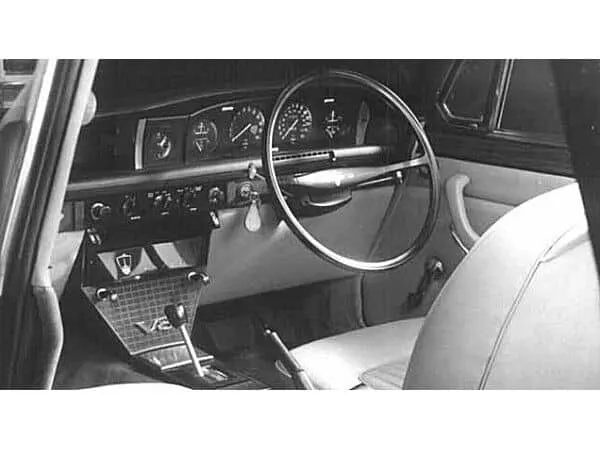
Rover didn’t just copy the engine — it rebuilt it better. It switched to a sand-cast block with pressed-in iron cylinder liners and fitted a new intake manifold with twin SU carburetors. The result was heavier than the original Buick — about 170 kg dry versus 144 — but stronger and built to last.
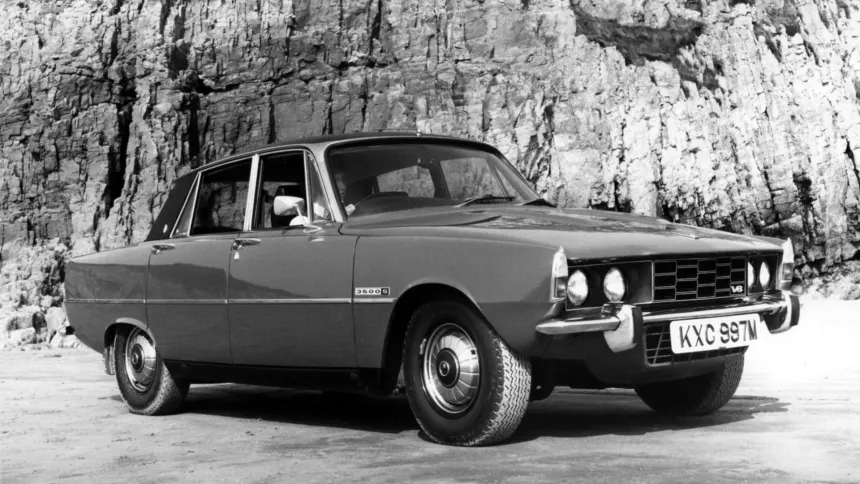
And here’s a point almost everyone gets wrong. The V8 didn’t debut in the P6. It arrived earlier, in September 1967, in Rover’s big sedan, the P5, rebadged 3½ Litre. There it made 184 gross horsepower — a full 50 more than the heavy six it replaced. The P6 3500, the car this piece is actually about, came in April 1968. That was one year after Rover was bought by Leyland, owners of arch-rival Triumph, in the tangle of mergers that would eventually give birth to the British Leyland disaster.
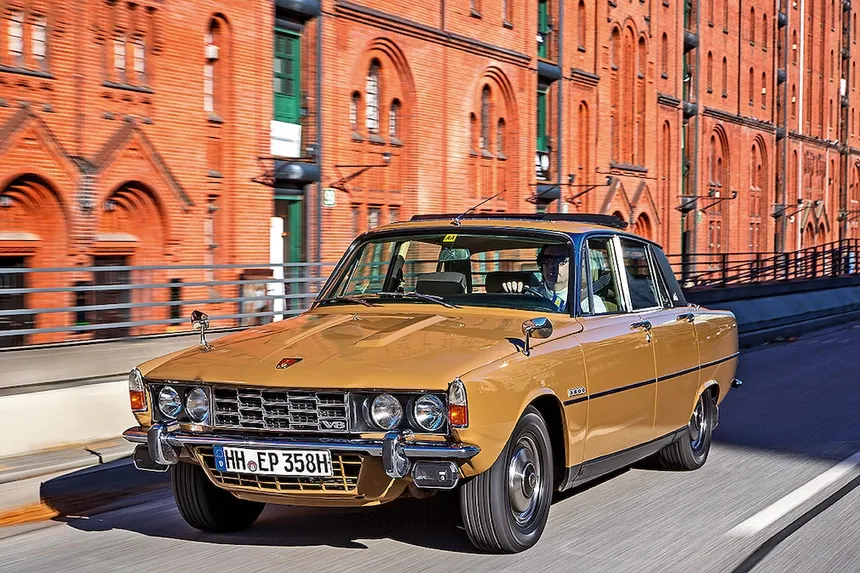
The effect on the P6 was to turn an already sporty, elegant sedan into what’s been called an “executive hot rod.” Rover boasted that the light-alloy V8 weighed practically the same as the Rover 2000’s four-cylinder, so the car’s balance barely suffered while power leapt. The 3500 hit 114 mph and ran 0–60 in 10.5 seconds. For the British market of the day, against rivals in the same price bracket, those were very respectable numbers. Not a supercar — a gentleman’s sedan that suddenly, genuinely moved.
One detail tells you everything about that engine’s character: at first the 3500 came only with an automatic gearbox. The reason? None of Rover’s manual transmissions could handle the V8’s torque. They had to use a Borg-Warner automatic. The little American engine Detroit deemed too soft for its standards turned out to be too brutal for British gearboxes.
It’s worth putting those numbers in context against the British competition of the late sixties, because otherwise the figures just float. The P6’s direct rival was the Triumph 2000, packing a smooth two-liter six — refined, but with less than half the V8’s horsepower. The Jaguars of the day played in a different price league. And the big Rover and Ford sedans hovering around its bracket were either heavier, slower, or both. The 3500 offered something rare in that market: the respectability of a banker’s sedan with the shove of something far pricier. That’s why “executive hot rod” isn’t a throwaway phrase — it describes exactly the niche it filled. A car discreet enough to park at the club without raising an eyebrow, that would leave half the road behind the moment you put your foot down.
And Martin-Hurst, once he had the engine home, didn’t even settle for civilian use. Convinced the V8 had far more in it, he probed taking it racing. He actually asked Jack Brabham — who at the time was using the same Buick engine, in Repco form, to win Formula 1 world championships — for a scrap unit, and Brabham declined. Rover ended up turning to the American firm Traco, which built a “full house” 350-horsepower version and shipped it to England for evaluation. That aluminum block, discarded as too delicate, had it in it to run at the top level of motorsport. Nobody in Detroit bothered to find out.
The eternal life of a discarded engine
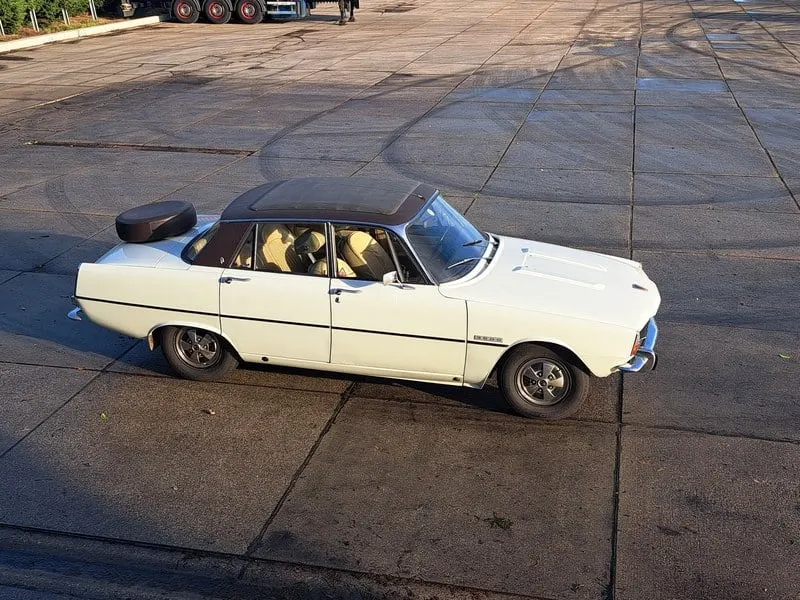
This is what turns the story into legend. That V8, given up for dead by GM in 1963, didn’t just survive — it became immortal. Rover put it in the P5, the P6, then its successor the SD1. In 1970 it was chosen to power the very first Range Rover, and with that the Buick engine became the soundtrack of the British luxury off-roader for generations. From there it spread to military Land Rovers, the MGB, and Rover sold it as a heart to an army of small builders: Morgan, TVR, Triumph, MG. In Britain, the Rover V8 became to hot-rodders what the small-block Chevy is in America — the default engine, the one you drop in when you want reliable horsepower without going broke.
The block was bored and stretched over the years, from the original 3.5 to 3.9, 4.0 and beyond. A design GM abandoned as unprofitable ended up with a career spanning more than three decades on the other side of the Atlantic, hauling everything from executive sedans to desert-crossing off-roaders. One company’s trash was another’s treasure, literally.
What died and what just changed owners
Careful with the easy nostalgia, because there are layers here. The Rover P6 was built until 1977 and replaced by the SD1. Rover as an independent brand had already vanished inside Leyland in 1967, and from there into the black hole of British Leyland, an industrial shipwreck worth several articles of its own another day. The Rover name got passed from hand to hand for decades before finally going dark.
But not the engine. The engine kept going. It outlived Rover, outlived British Leyland, outlived nearly every car that carried it. A V8 born in Detroit, discarded for being impractically American, ended up as the most British thing imaginable: the growl of the Range Rover, the punch of the TVR, the soul of a thousand English hot rods. Physical death and paper death aren’t the same thing. GM canceled the engine, yes — but the engine didn’t die. It just changed passports.
What the P6 3500 teaches
This story fascinates me for what it says about ingenuity versus muscle. General Motors was the largest manufacturer on earth. Infinite resources, engineers by the boatload, the capacity to build anything. And it discarded a gem because at its colossal scale the math didn’t work. Rover was tiny by comparison, almost artisanal, always short of money and about to be swallowed by mergers. But it had something GM couldn’t have: the need, and the freedom, to make use of what the giant threw away.
The P6 3500 isn’t an important car for being the fastest or the prettiest of its era. It’s important because it’s proof that sometimes the best engineering decision isn’t inventing something new — it’s having the eye to see the value in what someone else has thrown in the trash. Martin-Hurst didn’t design that engine. He just had the sense to crouch down and look at it lying on a Wisconsin shop floor, and the head to work out that it fit, that it barely weighed anything, and that a small manufacturer could do with it what a giant couldn’t be bothered to try.
Ask yourself something next time you hear a classic Range Rover or a TVR bark to life: that sound, so British, so unmistakably of that place, was born in a Buick factory and came within an inch of ending up in history’s scrapyard. It was saved by a man who knew to look down.
Sometimes genius isn’t in creating. It’s in knowing how to see.
Check you’re still alive.