
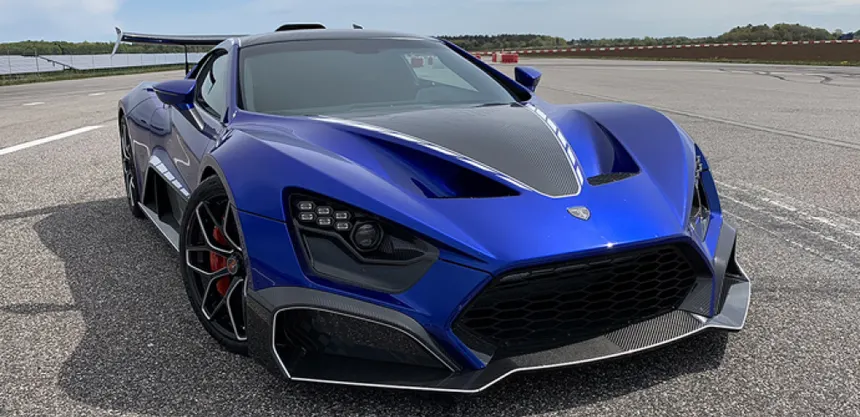
Zenvo TSR-S: What’s There Beyond the Wing?
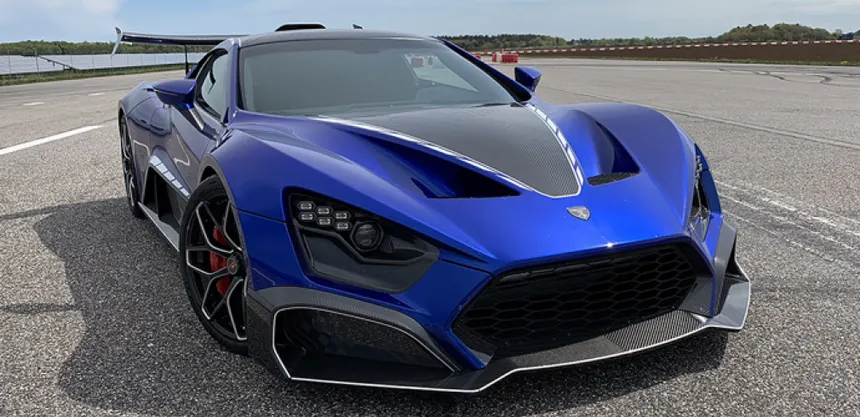
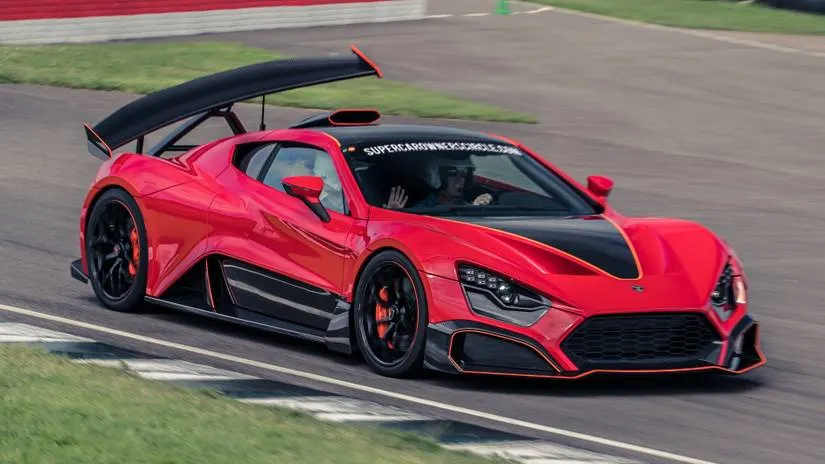
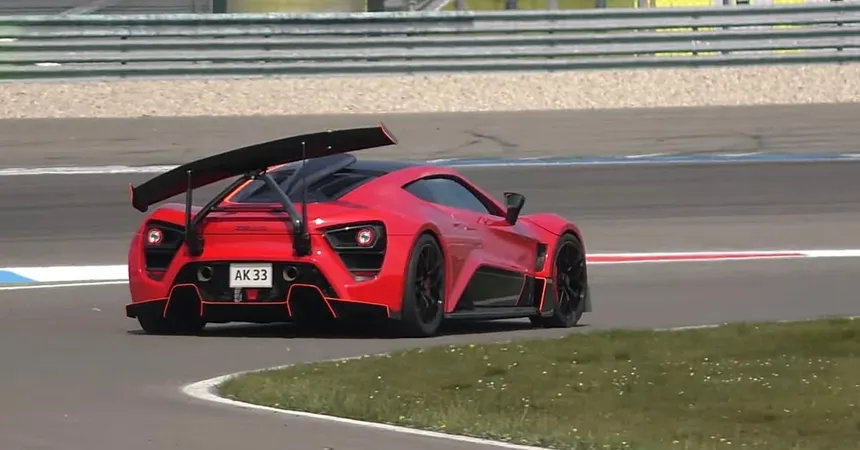
The Zenvo TSR-S is the car from that clip — the one with the wing that twists sideways. You’ve seen it: a stationary supercar, all angles and menace, and a rear wing that suddenly cants over to one side, pirouettes for the phone camera. Millions of views. “Witchcraft” in the comments. Then on to the next video, none the wiser.
And that’s the problem. The clip went viral for the wrong reason, and in doing so it turned one of the finest pieces of aerodynamic engineering of the last decade into a three-second party trick. Everyone shows the wing moving. Nobody tells you what it solves. Nobody explains how a company building five cars a year, in a country without a single supercar factory, arrived at a solution that Ferrari and McLaren have the budget to fit ten times over and don’t. That silence is the interesting part. Let’s break it.
What the Centripetal Wing Actually Does
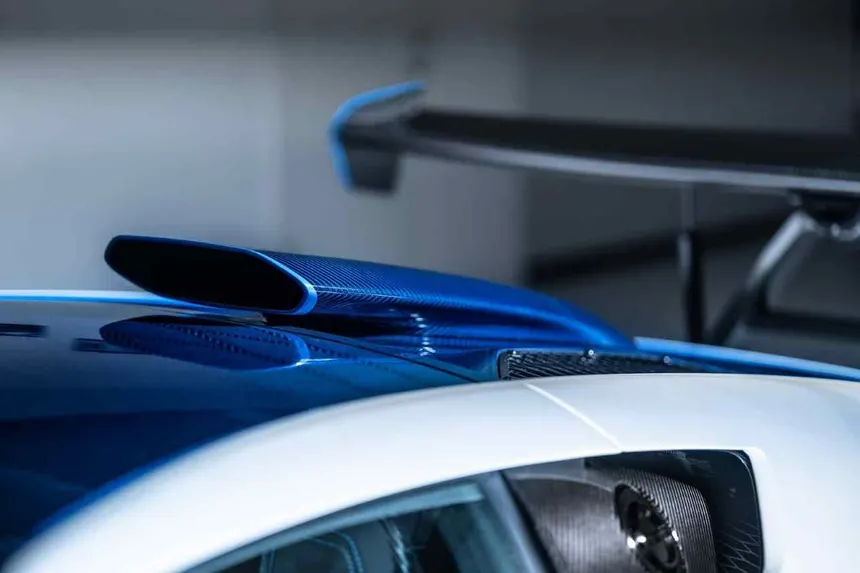
Start with the name, because it’s a clue in itself. Centripetal — the centre-seeking force, the one that points inward through a corner. Zenvo didn’t pick the word to sound clever. The wing exists to fight what happens when a car turns.
A conventional wing does one thing. Sat flat and horizontal, it generates downforce straight down, perpendicular to the road. Pure vertical. It pins the car to the tarmac and that’s the job done. An active wing might, at most, tilt up to brake or lie flat to cut drag. Up and down. Nothing more.
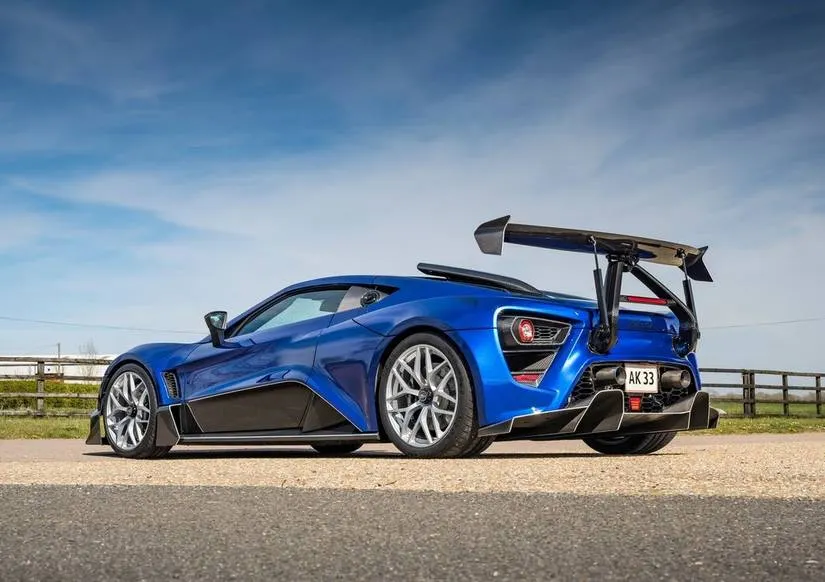
The TSR-S wing has two axes of rotation, and that changes everything. It can lift flat as an air brake or drop to reduce drag, like any decent active wing. But it also does something no rival fits as standard: in a corner, it rotates sideways. It tilts towards the inside of the bend. Turn left, the left side rises; turn right, the right side rises.
To what end? This is the meat of it. When you throw a car into a fast corner, weight transfer unloads the inside wheels. The car leans on its outer tyres while the inner ones go light and lose grip, almost idling. The Centripetal Wing, by tilting inward, presses aerodynamic load onto exactly that unloaded inner wheel. It hands grip back to the corner of the car that was losing it.
That isn’t a wing going up and down. That’s vectoring the load — deciding not just how much downforce you make, but which way you send it. And it does so with hydraulics and a patented double-hinge mechanism. Mechanical. Not an expensive electronic brain simulating what the air ought to do, but the air doing it for real, redirected by an arm that physically moves.
And it doesn’t stop there. That same double axis lets it play the other two cards any self-respecting active aero should, only better. On the straight, the wing lies flat to cut drag and let the car stretch its legs without the air holding it back. Under hard braking, it snaps up and stands into the wind like an air brake, helping anchor the car and keep it settled while the brakes do their work. One component, three distinct jobs depending on the moment: lateral grip in the corner, minimum drag on the straight, aerodynamic braking under deceleration. Most cars boasting an active wing manage two of those three. The TSR-S does all three — and the lateral-grip trick is one almost nobody else performs at all.
Why This Matters More Than It Looks
Some context, because that’s where the scale of the achievement lands.
The big names play with active aero too. The Lamborghini Huracán Performante runs a system called ALA: a hollow wing with internal ducts and flaps that open and close to blow air out of one side or the other, unbalancing downforce left to right. It’s brilliant. It’s complex. And it’s the work of a vast manufacturer with an R&D department the size of a small town and money to burn.
Zenvo has none of that. Zenvo is a handful of people in Denmark hand-assembling five cars a year. They arrived at the same problem — how to load the wheel that needs it mid-corner — by a completely different route. Instead of a hollow wing with flaps and internal plumbing, a solid wing that physically rotates to one side. Cruder. More direct. More Danish, if you like. Top Gear called it the “industrial” version of the Lamborghini idea, which is a fair way to see it. Where the Italian uses pneumatics and subtlety, the Dane grabs the wing and leans it over with an arm. Same goal, opposite philosophy.
And here’s my reading, the thing that ties the whole piece together. The comfortable version is “the giants do it with money, Zenvo does it with ingenuity.” But the real version stings more: Ferrari, McLaren, Lamborghini have the money, the engineers and the wind tunnels to build something like the Centripetal Wing whenever they fancy. They don’t. And a firm of a few people in Denmark, with none of that, did. The question isn’t how Zenvo managed it. The question is why the giants, who could, didn’t bother. When the ones with the least solve what the ones with the most won’t even attempt, it isn’t a Danish miracle — it’s an indictment of an industry that stopped taking risks.
What’s Driving All of It
Because let’s be clear, a clever wing is worthless without a car worthy of it behind it. The TSR-S is.
Amidships sits a 5.8-litre V8, flat-plane crank, high-revving, built entirely in-house by Zenvo. One important correction, because nearly everyone gets it wrong: there are no turbos. It runs twin centrifugal superchargers — mechanical forced induction, which is a different animal. You feel the difference in delivery: more immediate response, none of the turbo’s wait. The result is 1,177bhp at 8,500rpm and 1,100Nm, all of it sent to the rear axle. Rear wheels only. With that output and pure rear drive, the car demands respect.
But here’s another detail I love, because it follows the same think-differently thread: the power is adjustable from the cabin. Short on experience, or the day’s gone greasy? Dial it to 700bhp and the car turns manageable. Want the full monster? Wind it up. Three levels. It’s not a gimmick — it’s an admission that nearly 1,200bhp isn’t needed for a breakfast run, but it’s nice to have on track.
Zero to 62mph takes 2.8 seconds, zero to 124mph 6.8. Now note the figure that tells you most about the car’s philosophy: top speed is capped at 202mph. Deliberately. Zenvo could have chased the big number, gone hunting top-speed records like others do. It chose not to. The TSR-S is built to be fast through corners, not to post a figure down an airfield runway. That voluntary limit is a statement: what matters here is the circuit, not bragging about a v-max.
Who On Earth Is Zenvo
Worth a pause here, because you can’t measure the achievement without knowing where these people come from.
Zenvo is Danish. And Denmark, with all due respect, isn’t a country you associate with supercars — you associate it with furniture design, wind power, bicycles. There’s no industry behind it, no decades of accumulated knowledge in building cars that crack 300km/h. Zenvo started more or less from nothing, on the stubborn idea of building a proper supercar somewhere nobody ever had.
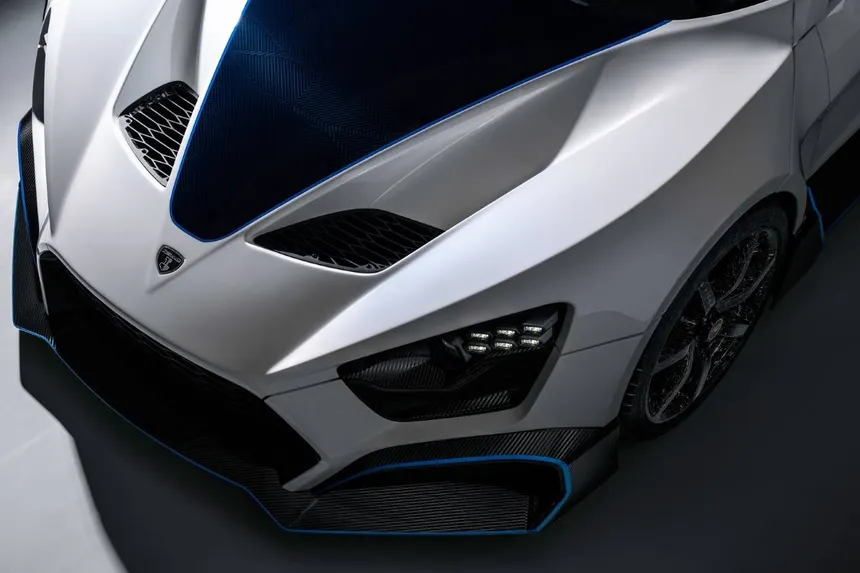
Its first car, the ST1, still leaned on an American engine: a supercharged GM LS V8. Sensible enough when you’re starting out — take a known, reliable block and build around it. But the TSR-S made the leap that defines a real manufacturer. Its 5.8-litre V8 is designed and built in-house, by Zenvo, bought from no one. That’s the step from assembler to constructor. The difference between putting a car together and creating one.
And they do all of it building five units a year. Five. It’s a laughable number, the output of an artisan workshop, not a factory. Every car passes through the same hands. The bodywork is entirely carbon fibre, panel by panel, produced in-house rather than farmed out — and a client can even have a personalised graphic embedded beneath the clear coat, laid into the composite itself. The chassis is a steel-and-aluminium semi-monocoque with competition subframes front and rear, and the whole thing comes in at 1,495kg dry, 44/56 distribution. That works out to a power-to-weight ratio near 1.3kg per horsepower — the territory of the most extreme combustion hypercars on sale.
And one thing, because you’ll read it elsewhere and it’s a lie: some spec sheets claim the TSR-S “weighs about the same as a compact hatchback.” It doesn’t. 1,495kg isn’t hatchback weight, it’s the weight of a properly built supercar. It’s the kind of brochure fantasy that insults the real engineering underneath, because the achievement isn’t that it’s impossibly light — it’s that with that weight, that power and rear drive only, the thing is drivable at all. Selling the fairy tale buries the actual feat.
A Gearbox That Also Thinks Sideways
While we’re on unconventional ideas, the transmission earns a paragraph, because it’s among the cleverest things on the car.
It’s a seven-speed sequential running helical-cut dog gears — and that pairing alone is worth stopping on. A dog box is race-car kit: brutal, barely synchronised shifts, you slam the gear home. The usual choice is straight-cut teeth, stronger but howling like a cement mixer. Zenvo went helical-cut instead — quieter, smoother, and something almost nobody combines with a dog box because it’s harder to make survive the abuse. Right there, they’re telling you they don’t take the easy road.
But the big trick is elsewhere. An aluminium switch on the wheel flips the box between Road and Race, and it isn’t a software map change — it’s hardware. In Race, the box is hard, dry and violent, a competition unit with no anaesthetic. In Road, an integrated electric motor steps in, smooths the shifts so the car can be driven through town without rattling your fillings, and throws in an eighth ratio on top. Zenvo calls it the Dual Gearbox, and the name isn’t marketing: it’s genuinely two behaviours in one casing. And the engineering kicker, the kind of idea only a sideways thinker lands on: that electric motor also handles reverse. So the mechanical gearbox needs no reverse gear at all. They simply delete it. Fewer parts, less weight, same result.
One gearbox behaving as two depending on what you need. Same hardware, two personalities. It’s precisely the same thinking as the wing: solving with mechanical intelligence what others would solve by throwing money or complexity at the problem.
What This Car Is Really About
The TSR-S is one of those cars people know for the wrong reason. They know it for the wing that dances in the clips, the visual trick, the three-second “wow” before they scroll on.
And they miss the point. Because when you stop and look at what the car is underneath, you find a minuscule company, from a country that doesn’t build supercars, hand-assembling five a year and solving genuinely hard engineering: how to load the inner wheel in a corner, how to have a race gearbox that also works on the road, how to make 1,177bhp a mortal can manage. And solving them not by copying the giants but with its own patented ideas — more mechanical, more physical, more workshop than supercomputer.
That’s what I find admirable. Not the spectacle. The mind behind the spectacle. The TSR-S is proof you don’t need to be Ferrari to have an idea Ferrari didn’t have. You just need to look at the same problem from somewhere else, and refuse to give up because you don’t have their budget.
And here’s the question that should sting half the industry: if five people in Denmark, with no factory wind tunnel and none of Maranello’s money, patented a wing that loads the wheel that needs it and built a gearbox that’s two gearboxes, what excuse is left for the ones with a thousand engineers who dare nothing like it? Because the comfortable answer is “Zenvo is small, it can afford to gamble.” The answer that hurts is that size was never the thing holding them back — habit was. The habit of selling the same car again under a new name.
Next time you see the clip of the wing twisting, you won’t see a trick anymore. You’ll see a group of stubborn Danes pushing load onto a wheel that was running out of work, while the giants of the industry looked the other way. And that, I promise you, is far more incendiary than witchcraft.
Then check you’re still alive.