
The Fucking EGR: How We’re Killing Engines in the Name of Ecology

Let’s talk about one of the biggest scams in modern automotive engineering. A component designed with the best intentions—reducing Nitrogen Oxide (NOx) emissions—but which, in practice, has turned reliable engines into ticking time bombs. I’m talking about the EGR valve (Exhaust Gas Recirculation), or as I call it: the silent cancer of the engine,alongside other parasitic systems like the DPF (FAP), DEF (AdBlue), or Start-Stop. They are all part of the same terminal illness.
What the fuck is the EGR and what is it even doing there?
The idea on paper is elegant: recirculate a portion of the exhaust gases back into the intake to lower combustion temperatures. By dropping that temp, you generate less NOx. Bravo. Applause. A Nobel Prize for mechanics.
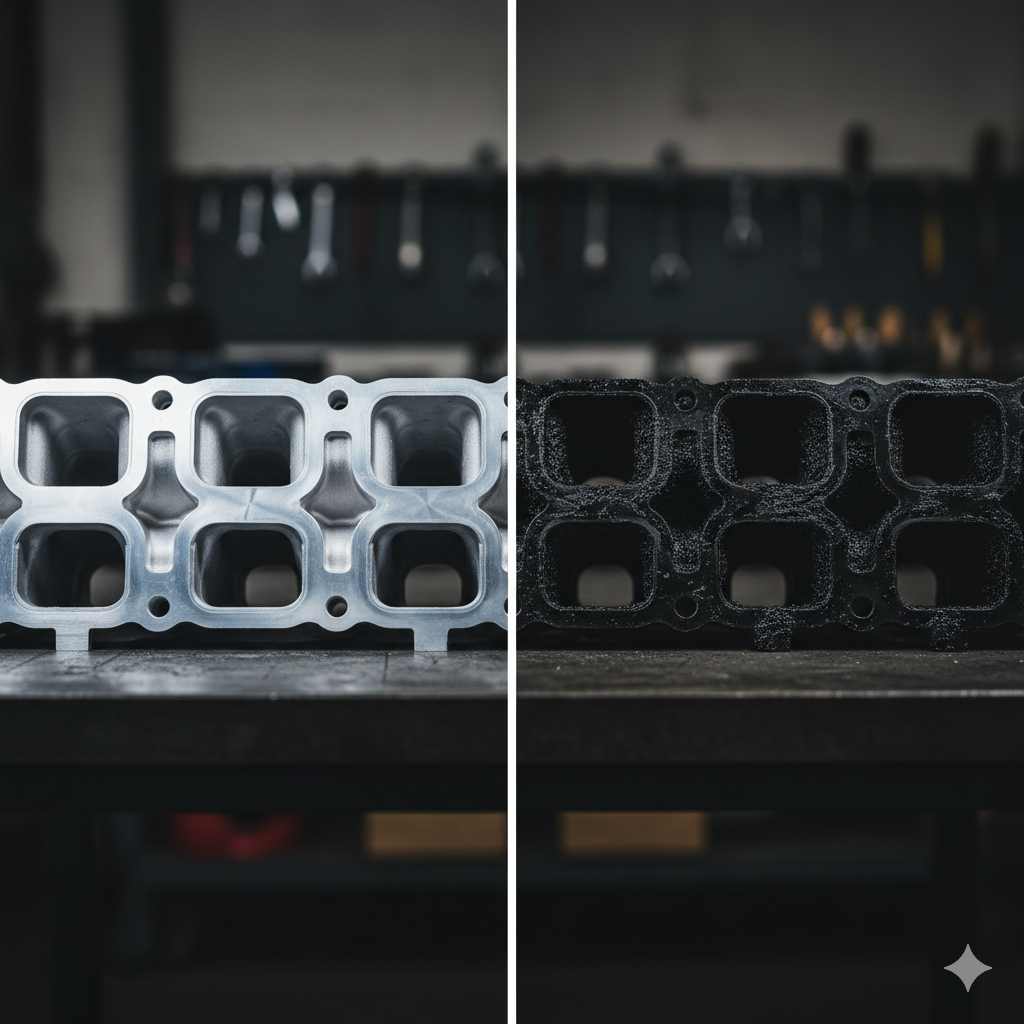
The problem? Those gases going back into your intake aren’t clean. They are loaded with soot, carbon particles, burnt oil residue, and every bit of shit that an internal combustion engine generates. And that, gentlemen, starts building up. In the intake manifold, on the valves, in the ports. Layer after layer, like cholesterol in the arteries of a guy who eats bacon for breakfast every single day.
Carbon buildup: The invisible killer
Anyone who has ever pulled the intake manifold off a diesel with 100,000 miles knows exactly what I’m talking about. What you find inside isn’t an air passage: it’s a damn cave. Solidified carbon an inch thick that shrinks the air passage to half its size or less. Your engine is trying to breathe through a straw.
The consequences? Here’s the list of horrors:
- Progressive power loss. The engine can’t breathe. The turbo has to work harder to compensate and wears out prematurely.
- Increased fuel consumption. The engine needs more diesel to compensate for the loss of efficiency. Ironic, right? An “ecological” component that makes you burn more fuel.
- Rough idle and hesitating. The EGR gets stuck open, gets stuck closed, or the actuator fails. The engine enters and exits Limp Mode like it’s on a rollercoaster.
- Chain reaction failures. A strained turbo, injectors working outside their specs, and a DPF that gets clogged because the combustion is trash. It’s a snowball of repairs that started with one simple pipe recirculating filth.
The big business of planned obsolescence
And here is what really pisses me off. Manufacturers know perfectly well that the EGR causes problems. They’ve known for decades. But the EGR exists because EPA regulations force them to hit NOx limits on a dyno. Not in the real world—on the test bench.
So the engineer designs an engine that passes the emissions test, and the politician gets a pat on the back. Meanwhile, you, the owner, are stuck with a $1,500 to $3,000 bill when your intake manifold looks like a 19th-century factory chimney at 80,000 miles.
And if you delete it? Oh, buddy, then you won’t pass inspection. Because the OBD system detects the EGR isn’t working, throws the Check Engine light, and you fail. It doesn’t matter that your engine actually emits fewer particulates because the combustion is cleaner without that soot. The law says EGR, and that’s that.
Trucks from the 90s didn’t have these problems
This is where nostalgia meets cold, hard facts. An old 1.9 TDI (ALH) or a 12-valve Cummins from the late 90s—with either no EGR or a primitive one that barely did anything—could hit 500,000 miles with basic maintenance. The intake ports stayed clean. The valves could breathe. The turbo lasted as long as the truck.
Now compare that to a modern diesel with a high-pressure cooled EGR, DPF, DEF, and seventeen sensors babysitting the whole mess. By 60,000 miles, you get your first scare. By 120,000, you’re looking at a manifold and EGR bill. By 150,000, the DPF won’t regenerate anymore.
They call it “progress.”
The hypocrisy of the system
What kills me is the hypocrisy. They sell us on the idea that these technologies are for the environment. But nobody talks about the carbon footprint of manufacturing an engine with more components, more electronics, and more rare earth materials. Nobody talks about the millions of EGR valves, DPFs, and catalysts that end up in landfills every year. Nobody talks about the extra fuel a choked-out engine burns because it’s suffocating on its own carbon.
The real ecological equation—the one that measures the entire lifecycle—doesn’t favor these systems. But the political equation does. And that’s the trick.
Is there a solution?
Some brands are trying to improve the design. Toyota with its D-4D tech, BMW with smarter intake systems. But the reality is that as long as current regulations exist, the EGR will be there, shitting in your engine.
What you can do as an owner:
- High-quality oil and frequent changes. Don’t wait for the 15k-mile interval the manufacturer claims. Change it every 5k or 7k miles in a diesel. Burnt oil vapor is half the problem.
- Avoid short trips. The engine needs to reach operating temp for the EGR and DPF to work correctly. If you only drive to the grocery store 2 miles away, your diesel is going to die young.
- Preventative cleaning. Don’t wait for it to fail. A proactive cleaning every 50,000 miles can save you a fortune.
- Ask yourself: Do I really need a diesel? For city driving and short hauls, a naturally aspirated gas engine is still the most reliable option and the one that gives the fewest headaches.
Final reflection
The EGR is the perfect symbol of what happens when environmental policy is designed in an office by someone who never gets grease on their hands. It’s a patch. A solution that creates more problems than it solves. And the one who pays the price isn’t the manufacturer, or the politician, or the armchair environmentalist. The one who pays is you, with your hard-earned money and an engine that lasts half as long as it should.
Automotive engineering should be about making cars better, more durable, and more efficient. Not about checking a box on a compliance form while the engine chokes on its own filth.
Because at the end of the day, an engine that lasts 500,000 miles is more ecological than one you have to scrap at 150,000. And that, ladies and gentlemen, isn’t measured by any EPA test.
Got an EGR horror story? Let’s hear it in the comments. We don’t censor here.
Not Enough Cylinders – 30 years of wrenching so you don’t have to.
7 thoughts on “THE FUCKING EGR”