Opel Monza: the day Opel dared to stare down Mercedes
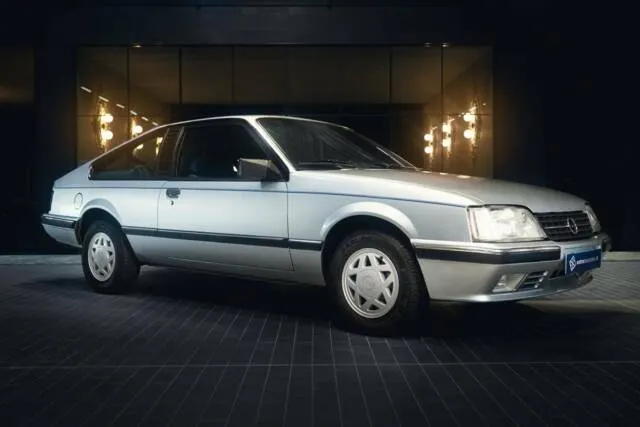
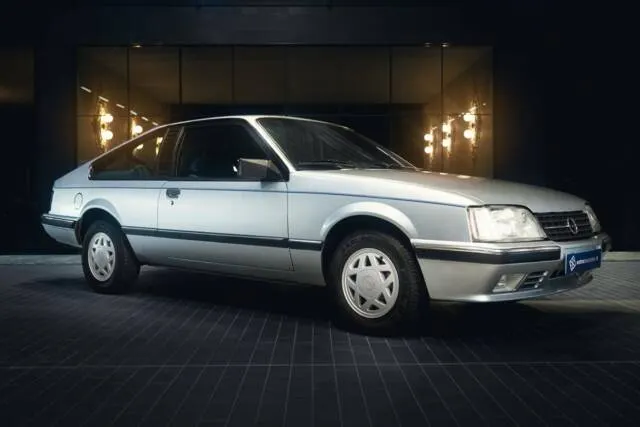
There’s a particular kind of car the British call a gentleman’s express. Big, fast, comfortable, six cylinders up front, room for four and their luggage, the sort of thing that eats a continent before lunch without ever raising its voice. For decades that territory belonged to Mercedes and BMW, and to a price tag most people could only dream about. Then, at the back end of the 1970s, the maker of sensible family saloons decided it fancied a piece. The result was the Opel Monza, and it remains one of the most quietly ambitious cars the brand ever built.
This is the story of the moment Opel stopped being the safe choice and looked German luxury royalty dead in the eye.
A brand sick of playing it safe
Picture the late seventies. Opel was the company of dependable, faintly dull machinery. Kadett, Rekord, Commodore. Cars that started every morning, ran forever and stirred precisely nobody. The marque your responsible uncle drove. Meanwhile, up in the rarefied air, Mercedes and BMW carved up the executive coupé class between them, those big, elegant, straight-six grand tourers for people with money who wanted to cross countries quickly and in comfort.
And somewhere inside Opel, around 1976, somebody asked the dangerous question: why not us?
That question is the Monza’s origin story. Opel had been building the Commodore Coupé, a large two-door but still essentially a saloon in a party frock. They wanted more. Something that could genuinely square up to the Mercedes C123 and the BMW 6 Series, the E24. No small ambition. Opel, maker of the insurance clerk’s motor, planting itself in front of Germany’s automotive aristocracy.
Grasp how audacious that move was. Opel belonged to General Motors, the American giant, and for decades it had been cast as a volume brand: plenty of cars, keen prices, zero pretension to prestige. Lifting its eyes toward the premium segment meant challenging not just Mercedes and BMW on their own turf, but also the public’s deep-seated prejudice, which simply didn’t believe an Opel could be an object of desire. Building the Monza was therefore an act of almost reckless courage: staking the brand’s credibility to prove it could make something great. And the astonishing thing is that, technically, it pulled it off.
By 1978 the Monza was on sale. And it wasn’t empty bravado. It was the real thing.
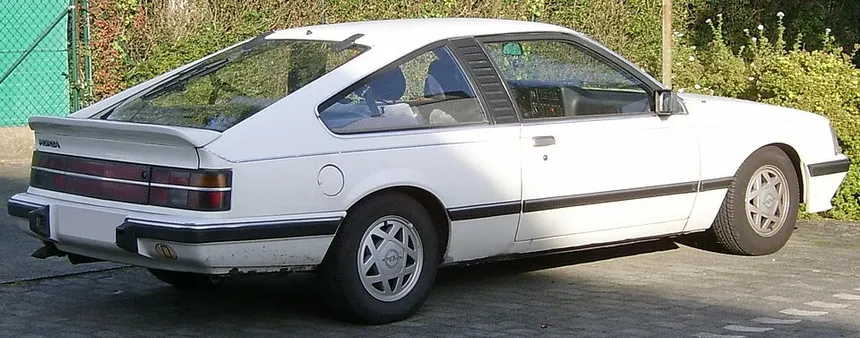
A proper four-seat fastback
The first thing to grasp about the Monza is what kind of car it is, because it shares nothing with the Manta or the GT. Those were small, nimble coupés, two seats or near enough. The Monza is a different animal entirely: a vast executive fastback, the textbook gentleman’s express. The car for the man who has arrived but, instead of the obligatory Mercedes, wants something with a bit more character.
And here’s the clever part: it genuinely seated four adults. Not the token rear perches you find in so many coupés where nobody over the age of eight fits. The Monza took four big people in comfort, the boot was cavernous, and the rear seats folded to swallow even more. A genuinely practical car hiding under a gorgeous fastback roofline.
It shared its bones with the Senator, Opel’s big saloon, and took the best of it: MacPherson struts up front and, crucially, an independent rear end with semi-trailing arms. For something this large, it moved remarkably well. Comfortable but tied-down, stable, predictable. None of that wallowing American barge feel. This had proper German composure.
To place where the Monza sat in the European landscape, you have to think about what the grand tourer concept meant in the late seventies. It wasn’t a pure sports car like a Porsche 911, nor an executive saloon like a Mercedes S-Class. It was the aristocratic middle way: the car in which you crossed a continent in a single day, arriving rested and at high motorway speeds, with a coupé’s style and an estate’s practicality. That territory belonged to Mercedes and BMW almost by default, and to a price most people could only dream of. For Opel to gatecrash that conversation from such humble origins is precisely what makes the Monza so fascinating: an intruder knocking at the door of the exclusive club.
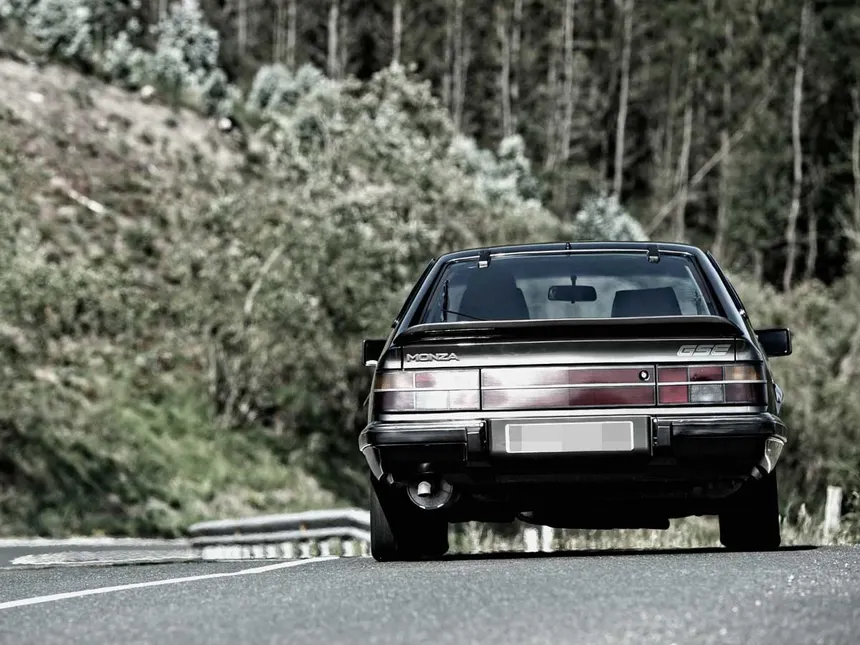
The straight-six that made it the fastest Opel ever
To the heart of it, which is where you and I speak the same language. The Monza launched with a range of straight-six engines from Opel’s CIH family, the cam-in-head units with the camshaft in the block working the valves up top. These weren’t new motors. They came thoroughly proven from the Commodore, the Admiral, the Diplomat. Years of trouble-free running behind them. Tractor reliability with six-cylinder smoothness.
At the summit sat the 3.0E with Bosch injection. 180bhp. And here’s the headline: with that engine, the Monza became the fastest car Opel had ever built up to that point. 134mph flat out and 0-62mph in 8.2 seconds. In 1978, in a big four-seat car, that was seriously quick. The fastest Opel in history, wearing a fastback roof.
Put that figure in period context and it becomes remarkable. A BMW 630 CS of the era, with Munich’s own straight-six, managed broadly similar performance but cost considerably more. A Mercedes 280 CE, Stuttgart’s elegant coupé, was actually slower flat out than this Opel. In other words, the Monza didn’t just dare to play in that league: in outright speed it saw off coupés that cost twice as much and wore a far grander badge on the bonnet. That was the message Opel wanted to send, and the numbers backed it up. This wasn’t brochure bluster, it was a car that could genuinely look the aristocracy in the eye.
A workshop detail I love: the early A1 3.0E units had one quirk, a tendency to overheat at a standstill, idling in traffic. Alarming for the owner. But the fix was textbook stuff, fit an oil cooler and the problem vanished. That’s the sort of fault anyone who’s spent time under a bonnet just grins at, because they know it isn’t a tragedy, it’s a matter of knowing the car.
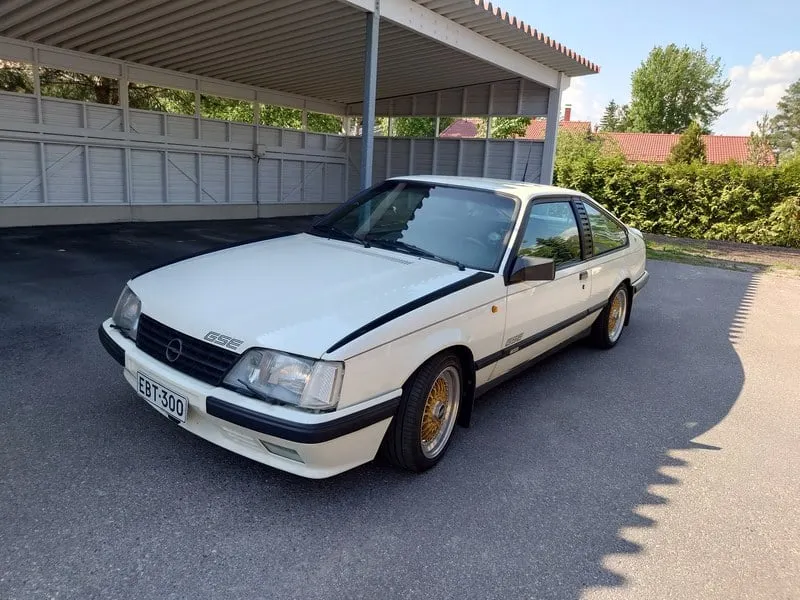
When Opel listened to the critics
The Monza A1 wasn’t a sales smash, in fairness. It was relatively cheap for what it offered, but it had an Achilles heel: the cabin. Because the dashboard was shared with the Senator and Rekord, it was awash with hard plastics that jarred in a car with grand touring pretensions. You wanted to feel like you were in Mercedes territory and instead you got Rekord plastics. It didn’t quite wash. Autocar memorably savaged the UK-market Vauxhall Royale version, the Monza’s badge-engineered sibling, as a frilly, over-titivated thing drowning in pastel velour. Ouch.
Opel took the hint. In 1982, for the 1983 model year, along came the A2, a serious facelift. Outside, the seventies chrome was gone: body-coloured grille, bigger wider headlamps, integrated plastic bumpers for a lower, more modern stance. But the important change was invisible: the car got far more aerodynamic. Drag dropped by around ten percent, from 0.40 to 0.35. That’s real engineering, not cosmetics. A car that slices the air better uses less fuel and goes faster on the same power.
Inside, finally, the luxury the car had always begged for: heated seats, a trip computer reading out consumption, speed and range, electric mirrors. Now the Monza’s cabin matched the promise of its bodywork.
That aerodynamic work was no engineer’s vanity project. Dropping the drag coefficient from 0.40 to 0.35 meant, in plain terms, that the car sliced the air with less effort, and that translated into lower fuel consumption at cruising speed and a few extra miles per hour of top end from the same engine. In a grand tourer, a car built to devour entire motorways in one sitting, that improvement told on every long journey. Opel understood earlier than most that a body’s elegance and its aerodynamic efficiency could go hand in hand, a lesson it would later take to the extreme with the Calibra and its world drag-coefficient record.
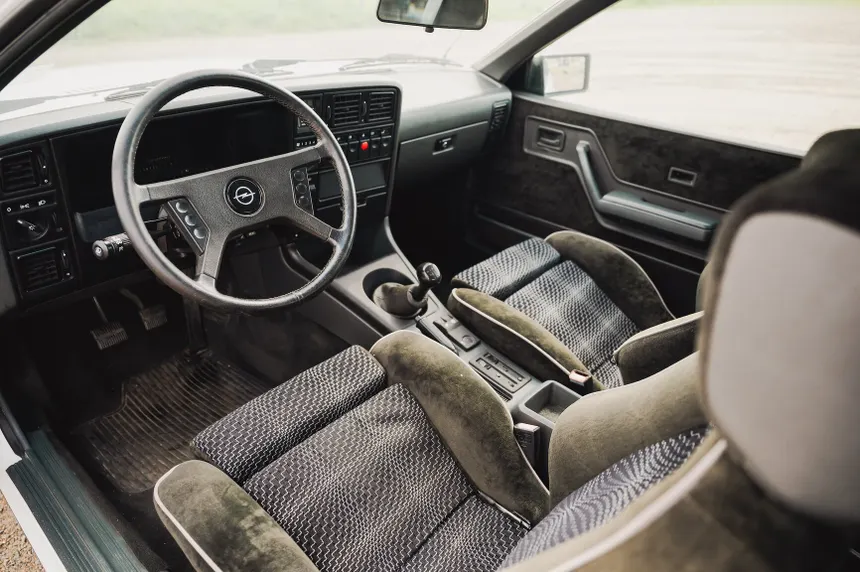
The GSE: the summit
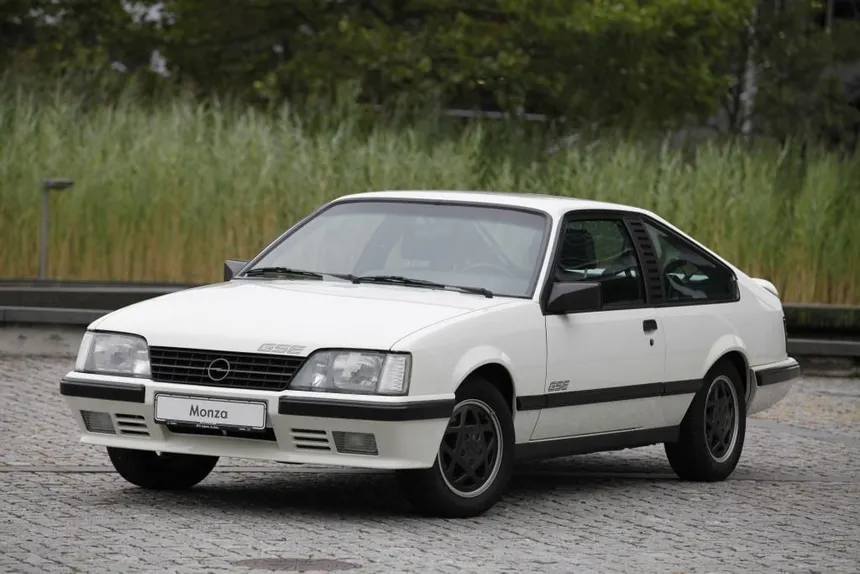
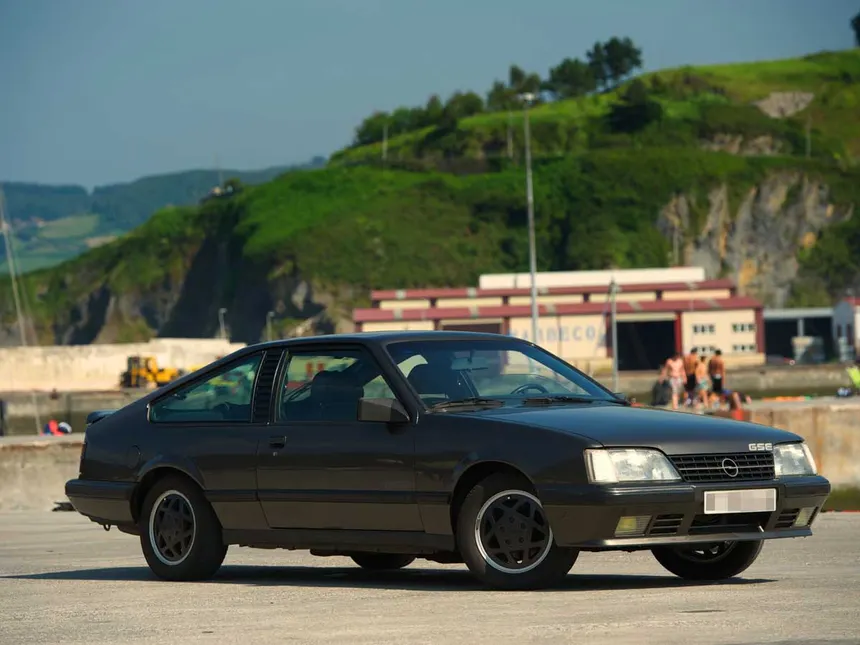
Then in 1983 came the version that crowns the whole story, the one every devotee of this car hunts down: the Monza GSE.
The GSE wasn’t simply a pricier trim. It was a different car. It took the A2 and turned it into a genuinely aggressive sports coupé. Available only with the 180bhp 3.0E, the most powerful engine. And they threw everything at it: proper Recaro seats, a digital LCD instrument cluster (in 1983, that was science fiction), firmer suspension, the Getrag five-speed manual, an all-black interior, a subtle bootlid spoiler and a 40% limited-slip differential as standard, something earlier 3.0E buyers had to pay extra for.
The GSE is the Monza at its absolute peak. The moment Opel said, “right, we’re not just competing with Mercedes any more, now we want to beat you.” A German grand tourer in the fullest sense, built by the company that was only supposed to make sensible cars.
That digital instrument cluster is worth dwelling on, because it captures the spirit of the age better than any spec sheet. In the early eighties, onboard electronics were the new frontier, the way a maker showed it was looking to the future. Liquid-crystal displays instead of needles, graphics shifting before the driver’s eyes: it felt like science fiction. Many of those systems proved fragile over the years, and today finding a GSE with a perfectly working digital dash is a small triumph for collectors. But at the time it was a statement of intent: Opel didn’t just want to match the grander German names, it wanted to out-modern them. That technological ambition, allied to the Recaros, the limited-slip diff and the Getrag box, made the GSE a complete car, not a mere styling exercise.
The end of a bloodline
The Monza ceased production in August 1986. A total of 43,812 were built. And here’s the part that stings: it had no direct successor. None at all.
When the Senator was renewed into the Senator B, the Monza was simply cancelled. Opel’s coupé torch hung in limbo for years until the Calibra arrived in 1989. But the Calibra was an entirely different beast: far smaller, front-wheel drive, four cylinders. A coupé for another age. The Monza was the last of its kind: Opel’s big flagship coupé, large, straight-six, rear-driven. After it, that recipe never returned.
And that’s the bittersweet greatness of the Monza. It was the moment Opel dared to dream big, to stand toe to toe with Mercedes and BMW with a genuine grand tourer. It didn’t sell in millions. It didn’t rewrite history. But it existed, and it existed well. It had dignity.
For a brief stretch at the turn of the eighties, the maker of the sensible saloon built a car that could look German luxury royalty in the eye and hold the stare. That’s the Monza. And it deserves to be remembered as far more than the safe choice it was never meant to be.
Check you’re still alive.