Lancia 037: The Last RWD King of Rally
Lancia 037: The Last Rear-Wheel Drive Car to Win the Rally World Championship. Nobody Has Done It Since.
Some records exist to inform. Others exist to humiliate. The Lancia 037‘s record belongs in the second category.
World Rally Championship Constructors’ title in 1983. Last rear-wheel drive car to win it. The following year, the Audi Quattro arrived with its four-wheel drive system, and rally would never be the same again. From 1984 to today — over four decades — no rear-wheel drive car has won the World Rally Championship. Not one.
The 037 didn’t just win. It won right before the door closed forever.
The Context: An Era of Regulatory Madness
To understand what the Lancia 037 was, you need to understand the world it was born into. Group B of the WRC is perhaps the most savage competition category in motorsport history. Minimal regulations, stratospheric power figures, cars that were barely disguised prototypes, and spectators watching these monsters pass at arm’s length.
The 037 was born in that world, but at a moment of transition. When Lancia unveiled it in 1982, they already knew what was coming. Audi had been developing its Quattro — a car with permanent four-wheel drive that would rewrite the rules on dirt. The question wasn’t whether the Quattro was the future of rally. It was when that future would arrive to stay.
Lancia made a decision that in retrospect seems almost romantic: rather than trying to replicate Audi’s formula, they built the best possible rear-wheel drive car. They pushed available two-wheel drive technology to its absolute limit, and then a little further.
Was it a brilliant tactical decision or the last roar of a doomed approach? Four decades later, I still think it was both at once.
The Car: Italian Engineering in Pure Form
The 037 wasn’t the Stratos, its legendary predecessor. It was something different — more refined, more modern, specifically designed to compete in an increasingly demanding category.
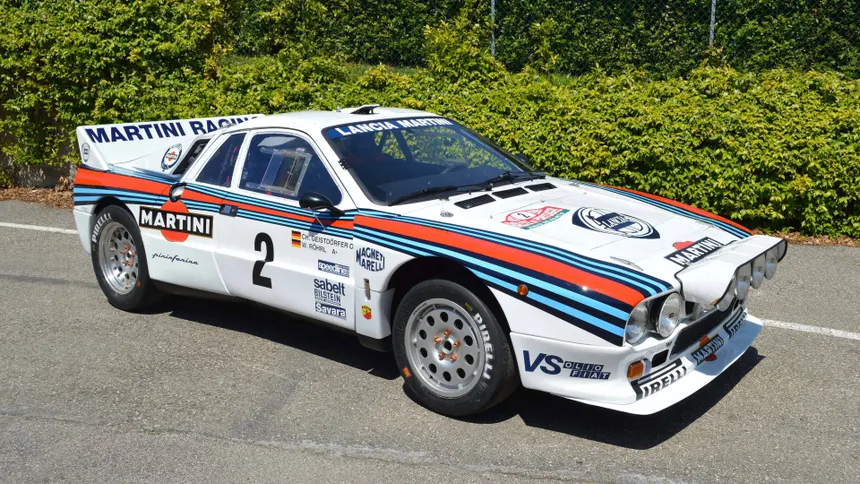
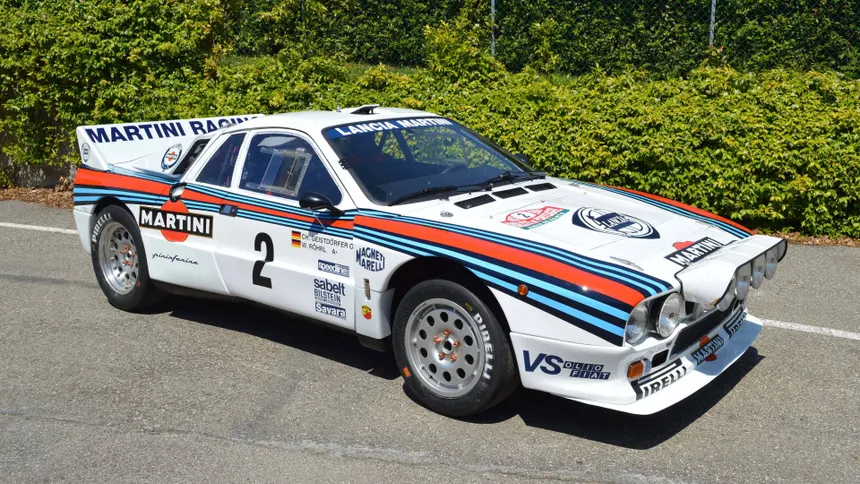
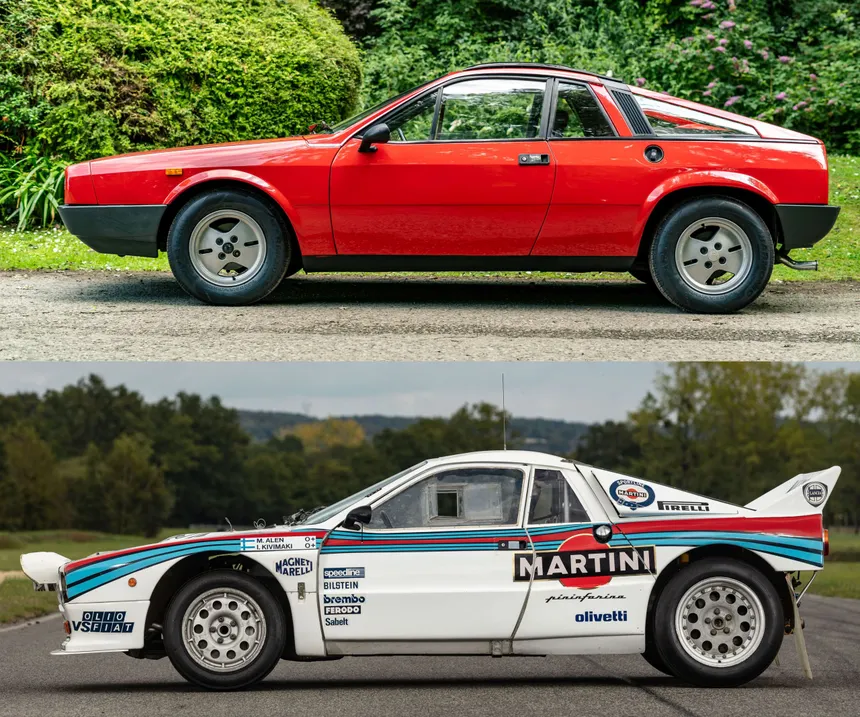
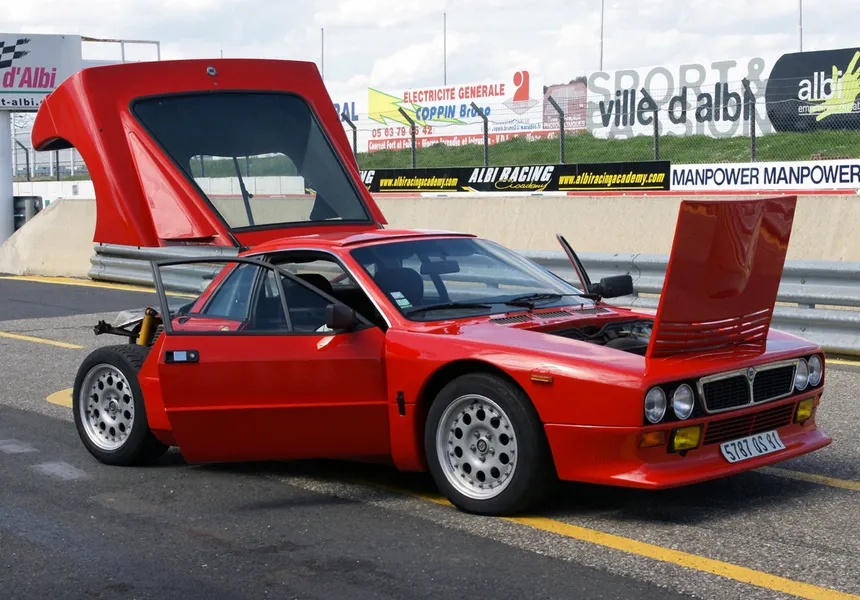
The platform started from the Fiat Montecarlo, but so little of the original car remained that the reference is almost a courtesy. The bodywork was fiberglass over a tubular chassis. The engine was a two-liter inline-four with a supercharger — not a turbo — developed by Aurelio Lampredi. That choice of supercharger over turbo wasn’t random: it delivers power more linearly, without turbo lag, which in a rear-wheel drive car on loose gravel is a considerable advantage when the driver needs to manage the slide with the throttle.
Power was around 325 hp in rally specification. In a 1,100 kg car, that gave a power-to-weight ratio that required real composure to manage. With rear-wheel drive.
The design was by Pininfarina — as it could only be for an Italian car of that era. The result was a low, wide-fendered car with a nose that pointed forward like a declaration of intent. It wasn’t beautiful in the easy way. It was beautiful the way things designed with a very specific function and without gratuitous aesthetic concessions are beautiful.
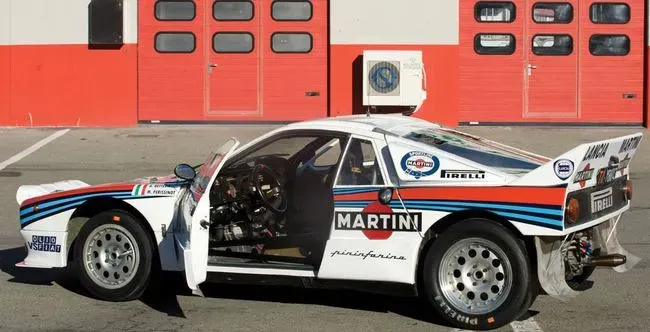
The 1983 Season: David vs Goliath on Dirt
The 1983 WRC season is one of those motorsport episodes that should be taught in schools. On one side, Audi with the Quattro — the technology of the future, the resources of a large German manufacturer, the almost arrogant certainty that four-wheel drive was going to dominate. On the other, Lancia with the 037 — the technology of the immediate past, the resources of an Italian brand with history but without German budgets, and a driving philosophy that required something the Audi didn’t need as much: absolute technical mastery.
Lancia’s drivers were Markku Alén and Walter Röhrl, with Attilio Bettega as third driver. Röhrl in particular was and remains considered one of the greatest rally drivers in history. A man who understood cars with a depth that allowed him to extract maximum performance from machines others couldn’t keep on the road.
The battle was epic and disputed to the final rally. Audi won the drivers’ championship with Hannu Mikkola. But Lancia won the constructors’ title. The 037 scored more team points than the Quattro in a season where both cars competed under the same conditions on the same stages.
Think about what that means. A rear-wheel drive car beating a four-wheel drive car on dirt. In 1983. And never again.
Walter Röhrl and the Art of Taming the Untameable
I want to spend time on Walter Röhrl because it would be an injustice to tell the 037’s story without talking about the man who understood it best.
Röhrl wasn’t a driver who mashed the throttle and waited for the car to save him. He was a driver who read the stage, who anticipated, who used the car’s physics — its tendencies, its limits, its character — like a musical instrument. The 037 demanded that kind of driving. With so much power and only two driven rear wheels, the car wanted to move, wanted to rotate, wanted you to let it live. If you tried to force it against its nature, it would eat you. If you understood it and worked with it, it was devastatingly fast.
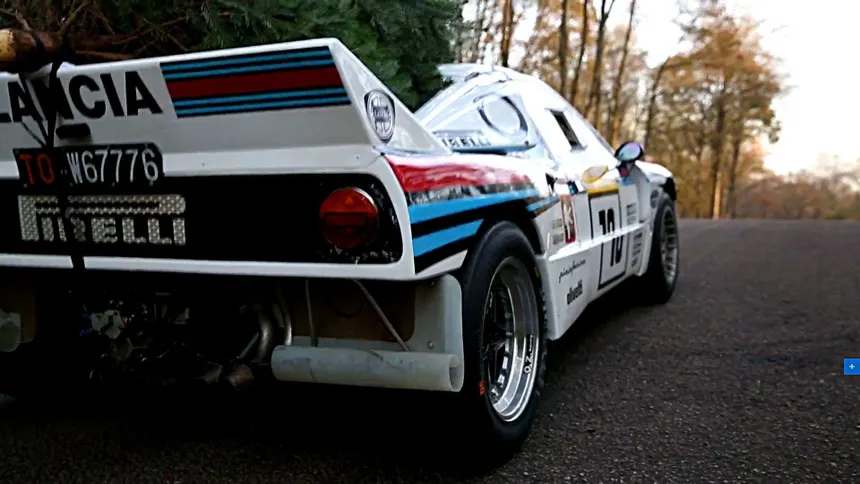
There’s footage of Röhrl driving the 037 on dirt that is among the most impressive documents in motorsport I know. The car slides at angles that would have cost any other driver their machine, and Röhrl catches it, places it, accelerates. No dramatic gestures. With the composure of someone who knows exactly what they’re doing.
That’s what makes the 037 great. Not just the car. The symbiosis between the car and the right driver at the right moment.
The Legacy: What Nobody Has Been Able to Repeat
The 037’s record as the last rear-wheel drive car to win the WRC isn’t just a statistic. It’s a symbol of what it means to arrive at exactly the right moment with exactly the right tool, even when that tool is about to become obsolete.
Since 1984, every WRC championship winner has had four-wheel drive. Today’s Rally1 cars are all AWD. The physics don’t forgive: on dirt, with high power, four-wheel drive distributes torque better and allows greater control. It’s simple applied physics.
But the 037 had something modern cars have lost: the requirement for a driver who was something more than very good. The 037 needed an artist. A man who understood slide physics, who could anticipate and correct, who had the perfect balance between aggression and precision.
Today’s cars are faster. Much faster. But the spectacle of the 037 sliding through a dirt stage, with Röhrl or Alén at the wheel, has an artistic dimension that modern cars can’t replicate.
The 037 is proof that there was a time when the difference between winning and losing didn’t depend only on budget or technology. It depended on pure talent and the courage of a driver facing a machine that would give you everything — if you gave everything in return.
In an era where cars are increasingly intelligent and drivers increasingly managed, the 037’s story sounds like something from another time.
Which is exactly why it needs to be told.
4 thoughts on “LANCIA 037”