
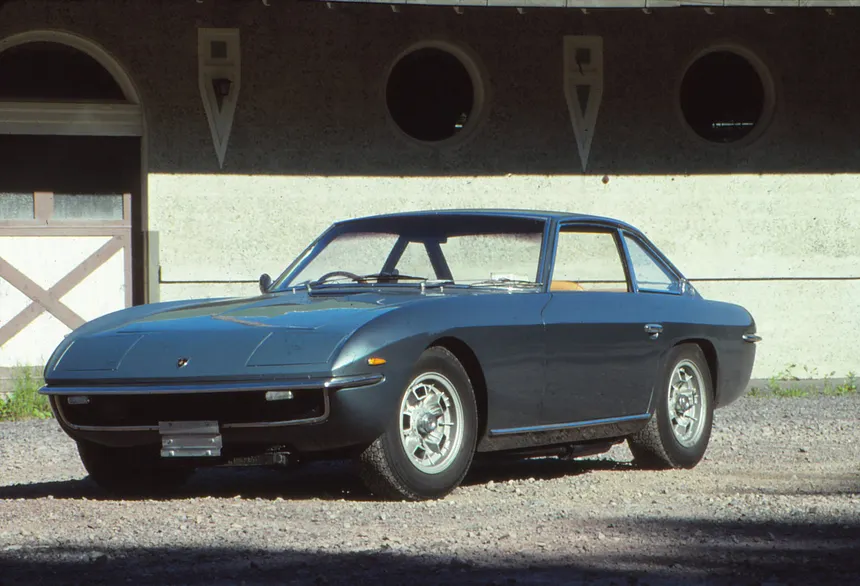
Lamborghini Islero: The One Ferruccio Kept for Himself
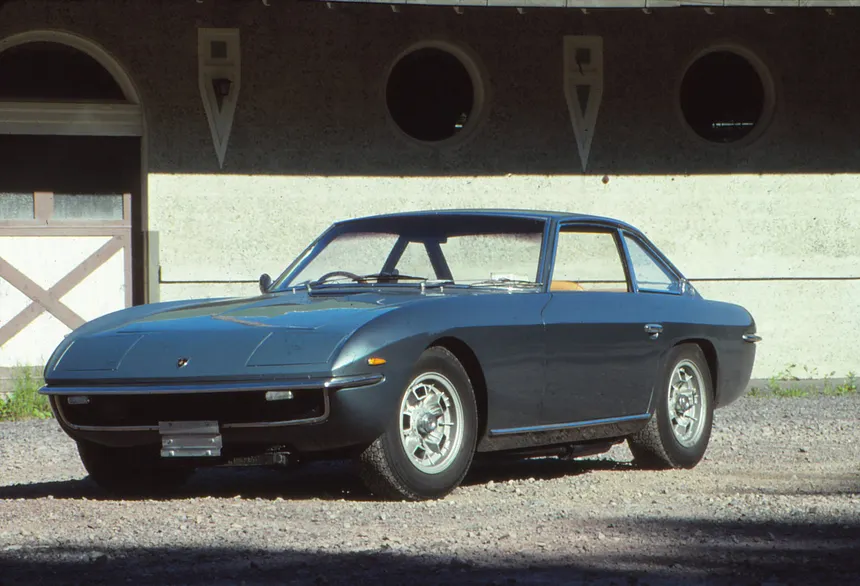
Ferruccio Lamborghini named his grand tourer after the bull that killed Manolete, kept one as his own daily driver, and almost nobody bought it. Of the 225 that left the factory, one ended up trying to qualify for the 24 Hours of Le Mans in the hands of two French amateurs.
That is the Islero: the Lamborghini its own era ignored and the factory never mentions.
America has a word for this car
Detroit invented the term sleeper for a car that looks like nothing and destroys everything at the lights. The Islero is the Italian edition of that idea, launched while Detroit’s muscle era was at full volume.
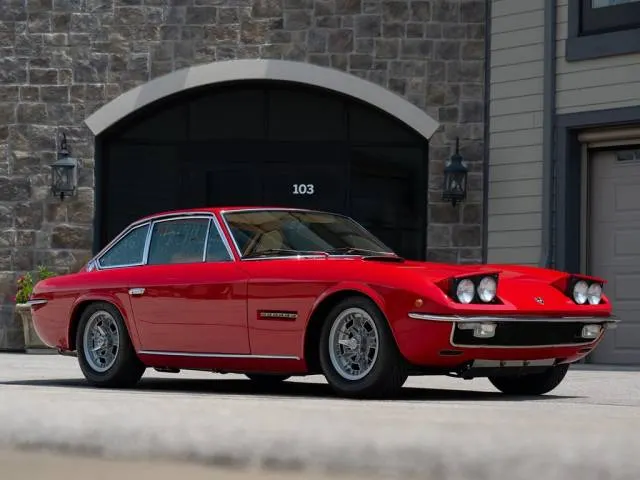
Here is the shape of it. A quiet two-seat coupé with pop-up headlights and clean, restrained lines. Underneath, a four-cam 3,929 cc V12 with six Weber 40 DCOE carburetors, 325 horsepower, a top speed of 154 mph and 0 to 60 mph in 6.4 seconds. In 1968, that acceleration put it in the same conversation as anything coming out of Michigan, and the top speed put it in a different conversation entirely.
The difference is that a Hemi Road Runner announced itself from two blocks away. The Islero did not announce anything.
The bull
Islero was a bull from Eduardo Miura’s ranch near Seville, weighing 495 kg. At the Linares bullring in the province of Jaén, on 28 August 1947, he was the fifth bull of the afternoon and the second for Manolete. He drove his right horn into the matador’s groin and severed the femoral artery. Manolete died that night on the operating table.
The animal had poor eyesight and a habit of chopping with his right horn. Two lines from a breeding record that ended up, by a strange route, on the tail of an Italian twelve-cylinder.
Ferruccio’s friendship with Eduardo Miura is acknowledged by Lamborghini itself. For his personal car he chose the name of the bull that killed Spain’s most famous bullfighter. Not any bull. That one.
Geneva 1968: the loud one and the quiet one
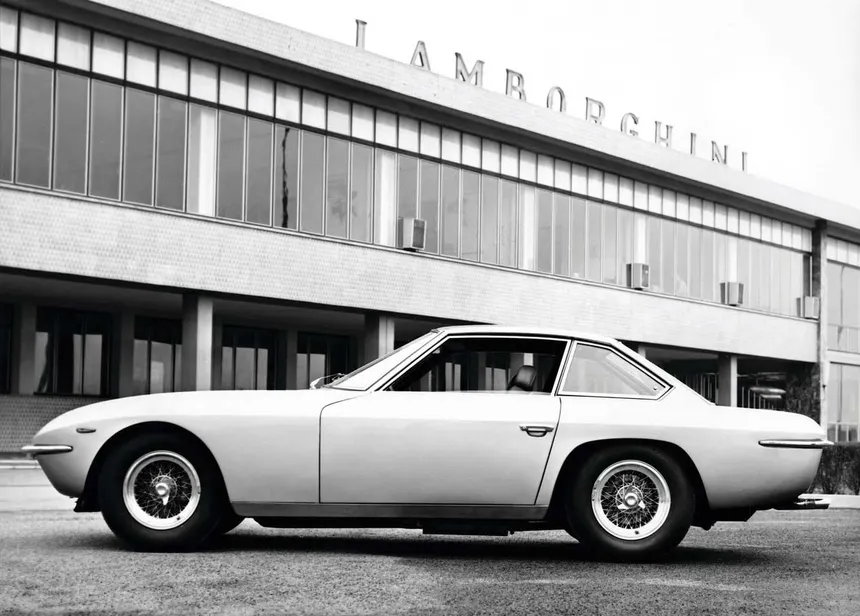
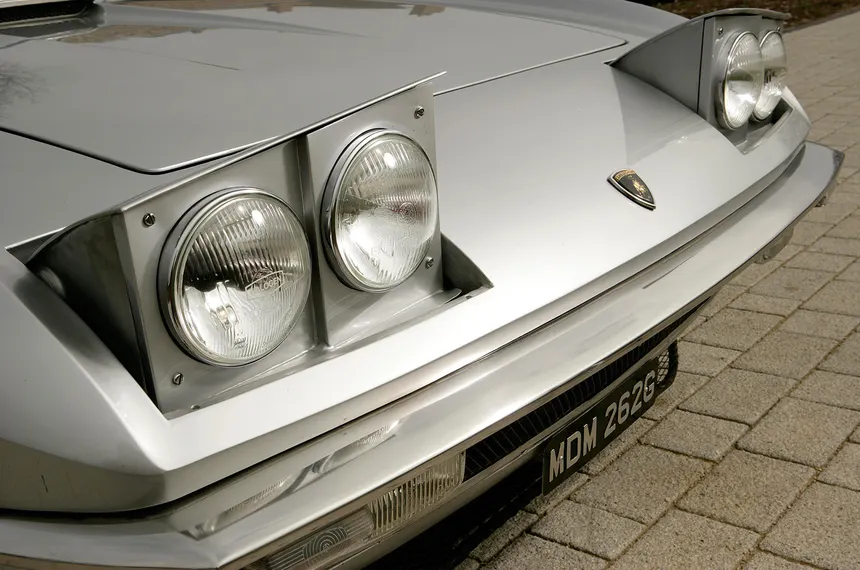
Lamborghini launched two cars at the same 1968 Geneva show. The Espada — radical, low, four seats, drawn by Gandini at Bertone. And the Islero, which replaced the 400 GT and was offered as the visually conservative alternative, carrying over the traditional lines of the house.
The Espada took everything. The Islero, as the British press noted looking back at it years later, drew very little interest from the media of its day.
The body came from Carrozzeria Marazzi, with Mario Marazzi credited as designer. That ties straight back to the marque’s origins: Marazzi was staffed by former Touring workers, the Milanese house that had bodied the 350 GT before ceasing operations in 1966. When Touring died, the same hands carried on building Lamborghinis under different letterhead.
Construction is a tubular steel frame with riveted aluminum panels. Double-wishbone independent suspension. Disc brakes. Wheelbase 2,550 mm, length 4,525 mm, width 1,730 mm, height 1,300 mm, dry weight 1,315 kg — around 2,900 lb.
The gearbox was already its own
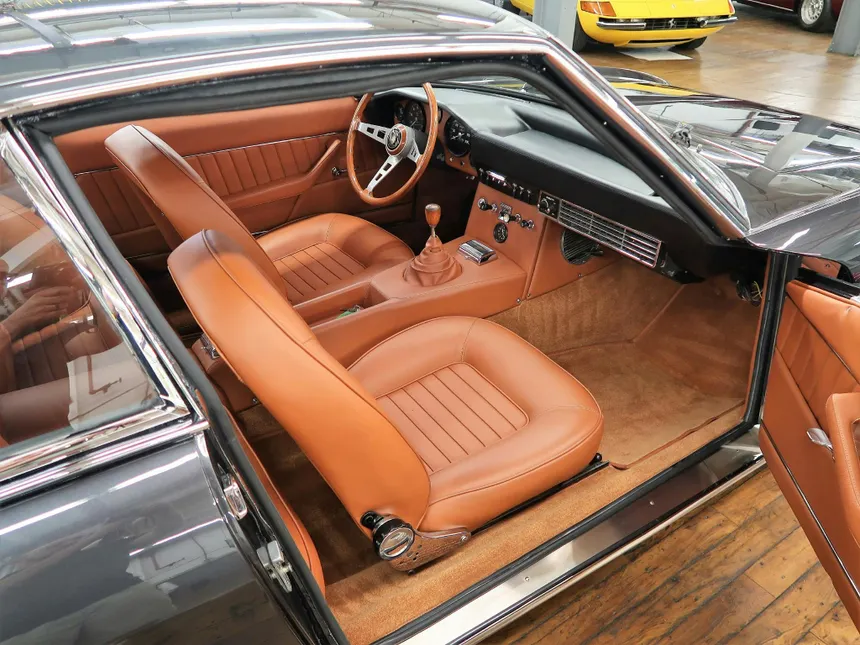
The five-speed all-synchromesh transmission was designed and built by Lamborghini. That is the thread you lose if you look at the Islero in isolation: that gearbox is the one introduced on the 400 GT 2+2 in 1966, when Sant’Agata stopped buying transmissions from ZF. By the Islero, the decision is simply part of the furniture.
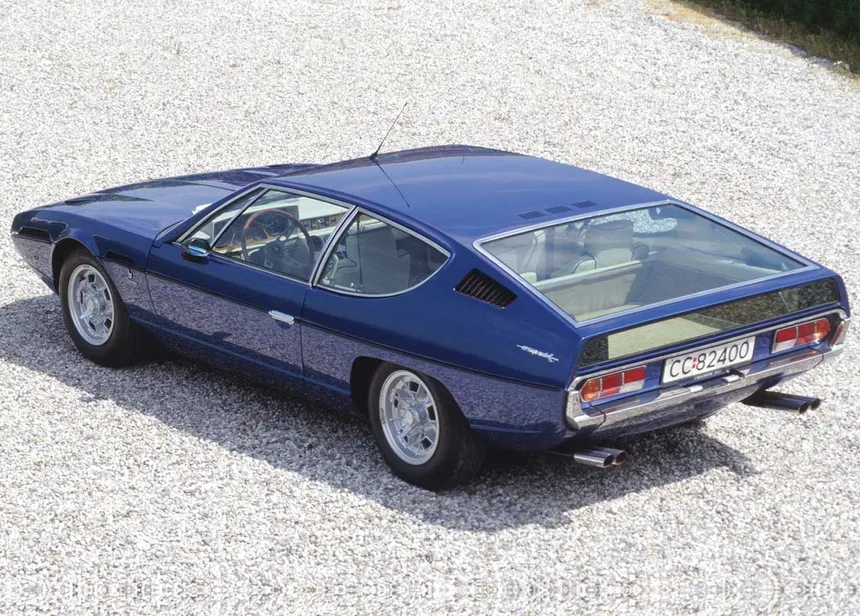
In the summer of 1969 came the Islero S. Camshafts of the Miura P400 S type, compression raised to 10.8:1, 350 horsepower, 161 mph and 0 to 60 in 6.2 seconds. Outside: six vents in the wheel arches, slightly wider flares, an enlarged hood scoop feeding the cabin rather than the engine, tinted glass, round side markers in place of the teardrop units. Inside: new instrument panel, and revised rear suspension closer to the Espada’s.
One upgrade says plenty about the original car. Build quality on the S was better all round. The first-series Islero had earned a reputation for badly fitting panels.
The numbers of a commercial failure
The factory built 125 Isleros and 100 Islero S. Total: 225 cars between 1968 and 1970.
In the same period the Espada, launched at the same show by the same company, passed twelve hundred units. The Ferrari 365 GT 2+2, Maranello’s twelve-cylinder grand tourer of those years with 4,390 cc and 320 horsepower, sold around 800 in four years.
The Islero was not expensive for what it was. In Britain, Lamborghini Concessionaires listed it at £7,400 in 1969, with the Miura at £9,500. Two thousand pounds under the poster car bought the same cylinder count, four disc brakes and a body you did not have to fold yourself into. Just five Islero S were delivered in right-hand drive.
Nobody wanted it. An engineer with experience of the marque put it without decoration: they did not really sell.
Ferruccio, meanwhile, drove an Islero. So did his brother Edmondo. The man who owned the factory picked for himself the car his customers were rejecting.
Three V12s at once, five years after coming into existence
Look at the whole 1968 catalog, because it explains why the Islero got crushed inside its own house.
That year Lamborghini had the Miura in production, the most desired car on earth, building since March 1967. It launched the Espada, four seats and twelve cylinders, which would become its best-selling model. And it launched the Islero, the sober two-seat GT.
Three twelve-cylinder models at once, all sharing the same base engine, from a company incorporated in October 1963. Under five years from signature to three distinct V12s on the market.
Seen that way, the Islero’s problem was not the product. It was shelf space. It shared a showroom with a mid-engined car that had rewritten the definition of a sports car and a four-seater that looked like a spacecraft. In that showroom, an elegant coupé with pop-up lights is the one nobody looks at.
The Touring bloodline does not end here
The Islero was replaced in 1970 by the Jarama, styled by Bertone. But the Jarama’s bodies went on being built and assembled by Marazzi, in the province of Varese, according to Lamborghini’s own official history. The workforce that came out of Carrozzeria Touring — first under its own name, then under Marazzi’s — kept dressing Lamborghinis after the Islero.
That relationship ended in 1972, when Jarama body production moved entirely to Bertone following quality control problems at Marazzi.
The successor’s numbers were no more glorious: 177 Jaramas and 150 Jarama S, for 327 cars in total — better than the Islero, nowhere near anything you could call success.
That was the constant across Sant’Agata’s entire front-engined two-seat line. Well-made cars, sold by the hundred, eclipsed over and over by the ones that appeared in the magazines. For scale, Ferrari built 1,099 examples of the 330 GT 2+2 across its two series in the mid-sixties. That is one Maranello model outselling the Islero nearly five times over.
Roger Moore’s Islero
One Islero S did find an audience: chassis 6432, which appears in the 1970 psychological thriller The Man Who Haunted Himself with Roger Moore at the wheel, taking a remarkable amount of screen time as the vehicular stand-in for the repressed hero’s alter ego.
Its factory record is a documentary gem. Invoiced on 31 March 1969 to its first owner, A.C. Johnson, in Azzurro Blue with grey Connolly leather, a Borletti air-conditioning unit at an extra £250, and a sprint-version engine. Total price: £8,440.
There was another screen appearance, this one Italian: an Islero in Vedo nudo, as the car belonging to Sylva Koscina’s character.
Le Mans 1975: two Frenchmen and an orange engine
Here is the part nobody tells.
In 1975, seven years after launch and five after production ended, a French enthusiast named Paul Rilly entered an Islero in the 24 Hours of Le Mans, to share with his friend Roger Levève. Rilly signed his ACO entry on 2 June that year, amending an earlier entry in which he had planned to race a Porsche 911.
The car would run number 34 in the GTX class. Preparation included a special brake kit, sports suspension, a roll cage, a 100-liter fuel tank and racing tires. The engine was rebuilt and painted orange, using a color code lifted from the BMW 2002 Ti.
Practice began on 11 June. The car arrived with instability under braking and carburetion problems. Then an unidentified Formula 2 driver put it into the barriers. Rilly set the slowest qualifying time of the meeting, 5:28.00, and withdrew. When the ACO finally accepted the car to fill the vacancies left by Luigi Chinetti’s NART Ferraris, there was no time left to get it back to the circuit.
Sources disagree on the chassis: one identifies it as 6348, while official French documentation points to 6009.
A seven-year-old road GT with a cage, a competition tank and a BMW-orange engine, trying to get into Le Mans on the strength of two friends and a signature. It did not qualify. It did not race. And it is still the closest this model ever came to competition.
What is left today
Nobody has an exact survivor count for 225 cars built more than half a century ago. What is documented is the split: 125 Isleros and 100 Islero S, with barely five of the latter in right-hand drive. Those are craft numbers, not industrial ones.
The film car, chassis 6432, passed through several owners after 1970 with little documentation, and was restored decades later. It wears silver with red leather today instead of its original blue over grey.
That is the standard path of a classic that spent years being worth less than it cost to maintain: driven, sold on cheaply, neglected, and finally restored in whatever colors the market likes when it eventually looks up.
The case
The Islero is the Lamborghini collectors resent, because it does not fit the story. Not a beast like the Miura, not strange like the Espada, not foundational like the 350 GT. It is a sober, well-resolved car with the right mechanicals underneath, built for the man who wants twelve cylinders without being stared at.
Which is exactly the proof of what Lamborghini was by 1968: a company capable of building a mature grand tourer with its own gearbox, power to spare and decent manners. What it could not do was sell one. Sant’Agata got the product right and the market wrong, and 225 cars in two years is not fixed by pointing out that the founder kept one.
That Ferruccio chose this car for his own use, with a factory full of Miuras and Espadas, says more about the Islero than any period road test. The founder knew which of his cars was best built for driving every day. His customers preferred the one on the poster.
How many excellent cars have we buried for the sole crime of not being spectacular?
Check you’re still alive.