Alfa Romeo 4C: the carbon-fiber sports car that brought Alfa back to America
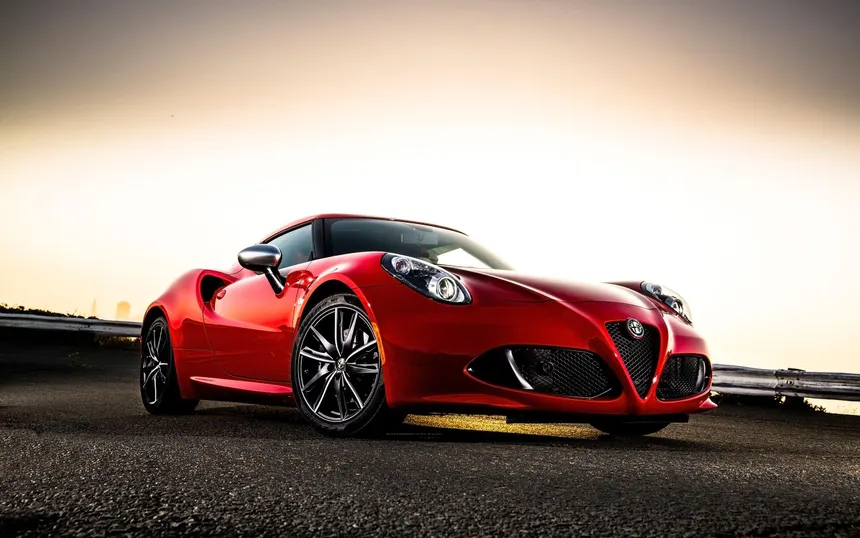
The Alfa Romeo 4C was the car Alfa chose to come back to the United States with, and it was the least sensible choice imaginable. Alfa had left the American market after 1995. When it returned for the 2015 model year, it didn’t bring a crossover or a sensible sedan. It brought, of all things, a two-seat, mid-engine coupe built around a carbon fiber tub, with a turbocharged four-cylinder, no power steering and no manual gearbox. It cost $53,900 to start, and it was louder, harder and less practical than anything else in the showroom. For people who wanted to drive, that was the point. Everyone else could buy a Mercedes.
From Geneva concept to Modena production
The Alfa Romeo 4C first appeared as a concept at the Geneva Motor Show in 2011, and the production version was shown at Geneva two years later, looking almost identical. The name follows Alfa’s own logic. The 8C Competizione had eight cylinders, so a four-cylinder sports car became the 4C. It was a small car in every way, just under four meters long and about as tall as a person’s waist, with a wide, low stance that made it look more expensive than it was.
The plan was to build it in Maserati’s Modena plant, where low-volume, hand-assembled cars were already the norm. That gave the Alfa Romeo 4C a level of craftsmanship you don’t usually find at its price, and it explains why production was always going to be limited.
Why a carbon tub matters
The heart of the 4C isn’t the engine. It’s the tub. The central structure, the part you sit in and everything else bolts to, is a carbon fiber monocoque that weighs about 65 kg, or 143 lb. A conventional steel structure for a car this size would weigh several times as much.
Carbon fiber tubs were supercar technology at the time. McLaren used them, Lamborghini used them, and you paid six figures and up for the privilege. Alfa built one for a car that cost less than a well-optioned Porsche Cayman. The tub was made by TTA, a joint venture involving the Italian composites specialist Adler, and aluminum crash structures were bolted to the front and back to absorb impacts. An aluminum subframe carried the engine, gearbox and rear suspension.

Making a tub like that isn’t like stamping steel. Sheets of carbon fiber cloth already soaked in resin are cut, laid by hand into a mold in carefully planned directions, and then cured under heat and pressure in an autoclave, a large industrial oven that works like a pressure cooker. The direction of each layer decides where the structure is stiff and where it can flex. It’s slow and expensive work, which is why Alfa needed a specialist supplier and why a few thousand tubs a year was a realistic ceiling.
The result was a car with a dry weight of 895 kg in European form, about 1,973 lb. That’s lighter than a Mazda Miata with two people aboard. The American version came heavier, with extra structure and equipment for US rules and buyers, and it was still a featherweight by modern standards.
A small engine doing big work
The engine was Alfa’s 1,742 cc turbocharged four, the "1750" that also served in the Giulietta hatchback. In the 4C it got an aluminum block in place of the Giulietta’s cast iron, saving about 22 kg, plus revised cooling, electronics and turbo calibration for life in the middle of the car, where heat is harder to manage.

It made 240 PS, about 237 hp, at 6,000 rpm, and 350 Nm, or 258 lb-ft, from 2,200 to 4,250 rpm. On paper that’s modest. A 2013 Porsche Cayman S had 325 PS, and the Lotus Exige S had around 345. But the 4C only had to move 895 kg, which works out to roughly 3.7 kg per horsepower. The flat torque curve mattered more than the peak number: there was strong pull from low revs, so the car punched out of corners without waiting for the turbo to wake up.
Alfa quoted 0 to 100 km/h, about 62 mph, in 4.5 seconds and a top speed of 258 km/h, around 160 mph. Italy’s Quattroruote magazine measured 4.2 seconds with launch control.
No power steering, no clutch pedal
Two decisions defined how the 4C felt, and both divided people.
The steering had no assistance at all, neither hydraulic nor electric. In parking lots it was hard work. At speed it was a revelation, because the wheel squirmed and tugged with every change in the road surface. In an era when even economy cars came with electric steering and a "sport" mode that changed nothing, the 4C told you exactly what the front tires were doing.
The gearbox was the other story. The only option was Alfa’s TCT, a six-speed dual-clutch with paddles behind the wheel. There was no manual. For a car aimed squarely at purists, that was the single most criticized choice, and it cost Alfa buyers in America, where enthusiasts have long been loyal to the stick shift. The DNA selector offered Dynamic, Natural and All-weather modes, plus a Race mode unique to the 4C that turned off stability control and sharpened the shifts.
The suspension used double wishbones up front and a MacPherson strut layout at the rear, with no electronic gadgets to soften it. On a smooth road it was sharp and alive. On a broken highway it was busy, and the wide tires tended to follow ruts and grooves, something American road testers complained about.
That split the reviews in a way few cars do. Magazines that tested the Alfa Romeo 4C on a racetrack or a mountain road came back talking about the purest steering on sale. Those that lived with it on Interstate highways and city potholes wrote about kickback through the wheel, a noisy cabin and a car that wanted constant attention. Both were right. The 4C was built for the first kind of driving and made almost no concessions to the second. In a market where even sports cars were getting softer every year, that single-mindedness was refreshing to some buyers and a deal-breaker for most.
8:04 at the Nürburgring
The number that made the 4C famous came from Germany. In September 2013 Horst von Saurma, the long-time test driver of sport auto magazine, lapped the Nürburgring Nordschleife in 8 minutes 4 seconds, on Pirelli P Zero Trofeo tires, the street-legal semi-slicks offered on the car.
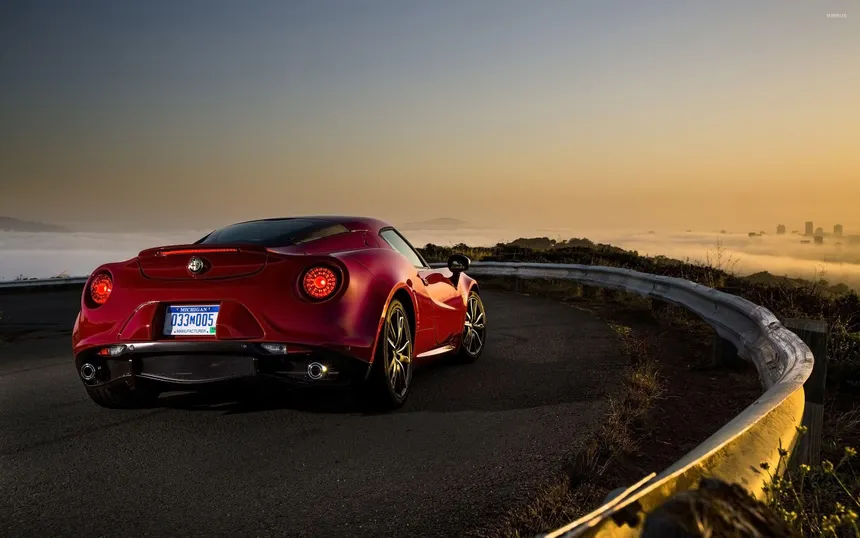
For context, sport auto had timed a BMW M3 of the E46 generation at 8:22, and the 4C was in the same area as a Porsche Cayman S of that period. All of that with 240 PS and four cylinders. The Nordschleife doesn’t reward horsepower so much as stiffness, low weight and grip, and the carbon tub gave the 4C a rigidity that much more expensive cars couldn’t match. Light weight also meant less load on brakes and tires lap after lap.
The 4C also served as the official safety car of the World Superbike Championship from 2013, which says something about how quick a production four-cylinder car had to be to keep ahead of racing motorcycles on a cold track.
Spider, specials and the 33 tribute
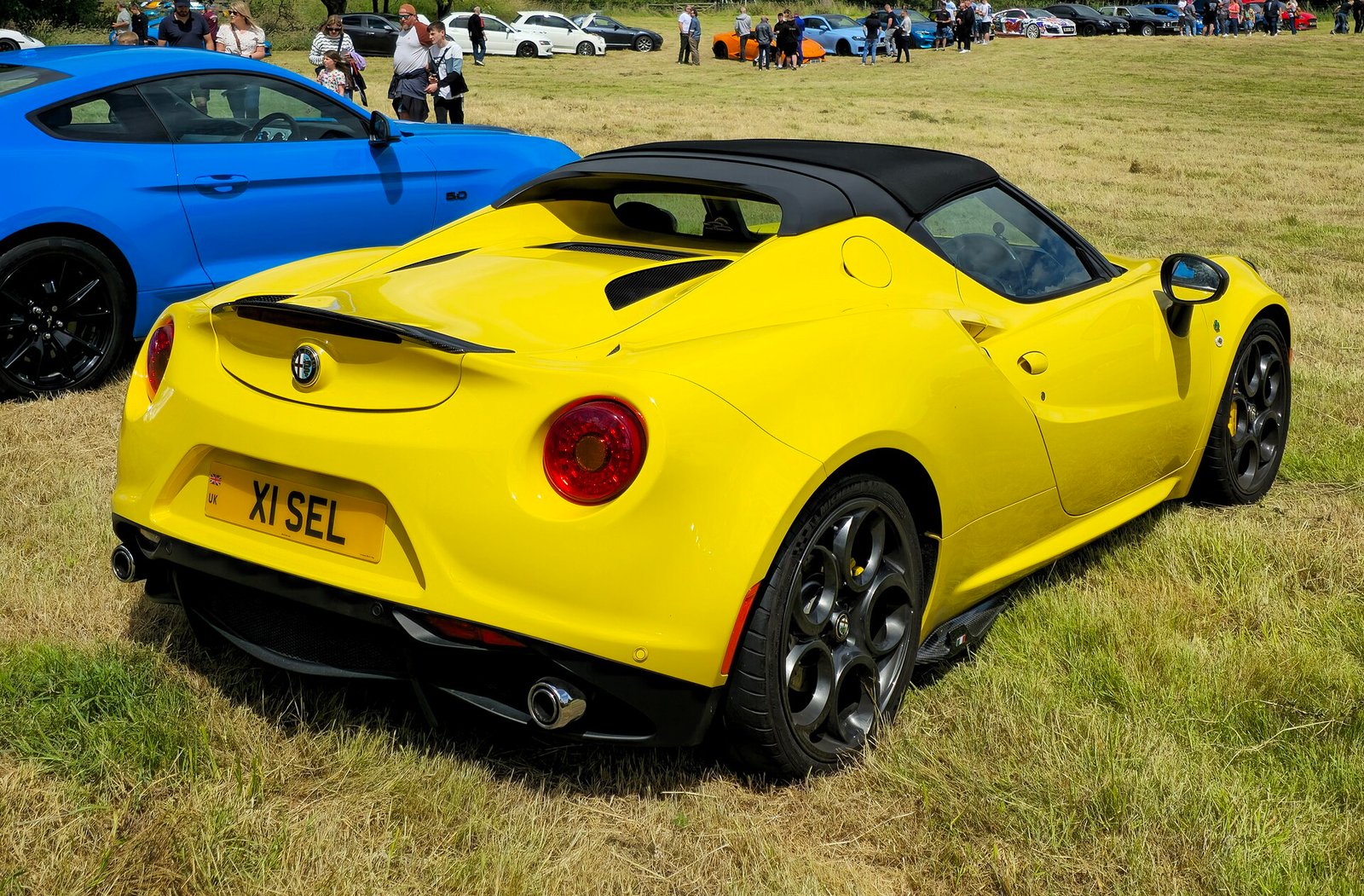
Production started in 2013 at the Maserati plant in Modena, the same factory that built cars costing several times as much. A numbered Launch Edition came first. In 2015 the 4C Spider arrived, with a removable roof panel and a weight penalty of only about 10 kg, 22 lb, in US form. Later came the 4C Spider Italia in Misano Blue, a limited run of a little over a hundred cars.
The last edition was the most symbolic. The 4C Spider 33 Stradale Tributo of 2020 was built in 33 examples for North America, with a red carbon fiber tub, an Akrapovič exhaust and every option included. Its name was a deliberate nod to the 1967 Alfa Romeo 33 Stradale, a mid-engine car of about 700 kg with a 2.0-liter V8 and 230 hp, built in just 18 examples and often called one of the most beautiful cars ever made. Between them sits the 8C Competizione of 2007, a front-engine V8 coupe built in 500 examples, which also proved Alfa still knew how to build something special.
Inside: deliberately bare
Opening the door showed you the carbon tub right away, its glossy sills running under your legs. The cabin was narrow and low, closer to a first-generation Lotus Elise than to a Porsche. There was no glovebox. Storage meant a small space behind the seats and a couple of cupholders. The instruments were simple and digital, the controls few.

There was no big touchscreen and no navigation worth mentioning. The 4C communicated through the steering wheel, the pedals and the seat. If you wanted more conversation than that, you were in the wrong car, and many American buyers were.
Why the Alfa Romeo 4C didn’t sell, and why it still matters
The 4C never came close to the 2,500 cars a year Alfa had planned. The reasons were well known. No manual. A harsh ride. An interior too spartan for the price. And the Porsche Cayman sat right there, more refined, more comfortable and easier to live with every day. Lotus, its other natural rival, had already left the US market for its Elise after 2011, which shows how small that niche was.
Alfa ended production in 2020. But as a statement, the 4C did its job. It showed that Alfa could still build a pure driver’s car, one where every gram had a reason to be there. It came before the Giulia Quadrifoglio and helped convince skeptics that the brand’s return to America was about more than nostalgia.
Owning one has its own quirks. A carbon tub is incredibly strong, but if it’s seriously damaged in a crash it can’t simply be straightened on a frame machine the way steel can, so insurers tend to treat a badly hit 4C as a total loss. The aluminum crash structures at each end are there precisely to take the hit and protect the tub. Routine maintenance is less dramatic: the 1750 engine is shared with other Alfas, and the dual-clutch gearbox is the part owners watch most closely, especially its clutch wear on cars that spent their lives in traffic.
The engine sound split opinion too. With the turbo sitting right behind your head, you hear every whoosh and chatter of the wastegate, along with an intake roar that some found thrilling and others found tiring on a long drive. Alfa offered a louder racing exhaust, which made the Alfa Romeo 4C even more of a weekend car.
Today the 4C has a growing following. Clean coupes and Spiders are sought after by people who want a carbon-tub, mid-engine car for the price of a new hot hatch, and the rare editions, especially the 33 Stradale Tributo, are already collector pieces.
895 kg, four cylinders, no excuses
The Alfa Romeo 4C was never comfortable, never practical and never refined. It didn’t try to be a Cayman. It tried to be the purest Alfa in decades, and it was. It was 895 kg of carbon fiber and aluminum with a turbo engine behind your head and a steering wheel that hid nothing.
If you want to see where Alfa’s sports-car line came from, start with the Alfa Romeo 33 Stradale. For more on carbon tubs and how they’re made, read our story on Koenigsegg Advanced Manufacturing, and for the Nordschleife itself, our guide to the Nürburgring Green Hell. The car Alfa built to rival the 4C’s spirit in a sedan is the Giulia Quadrifoglio.
Check you’re still alive.
Photos via Wikimedia Commons: 4C carbon tub, youkeys (CC BY 2.0); 4C Spider interior, Ssu (CC BY-SA 4.0); 4C Spider, Calreyn88 (CC0). Other photos: Alfa Romeo press images.