The Aston Martin DBR1 That Won Le Mans Costs Less Than the One That Lost
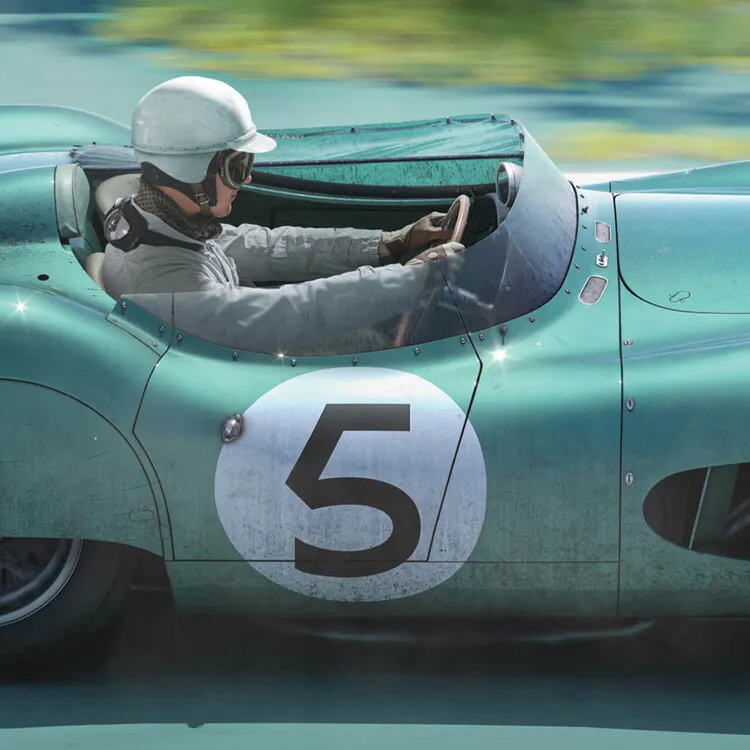
The Aston Martin DBR1 lived in five near-identical examples: same shape, same engine, built by the same hands in the same English works months apart. Brothers in green. And something happened between them that doesn’t add up until you understand it fully.
One of them won the 24 Hours of Le Mans in 1959 — Aston Martin’s only outright victory in the race’s entire history, a feat the marque has chased every year since and still hasn’t repeated. That car is a legend: anyone with the faintest interest in Le Mans knows it.
Another of the brothers never won anything of the sort. It tried Le Mans three times and broke down all three. And yet that’s the one that sold for $22.5 million, becoming the most expensive British car ever to cross an auction block.
How does that work? Why did the money reward the brother who failed rather than the one who won? That’s the story worth telling, because it says a great deal about memory, value, and what we’re really paying for when we pay for a car.
Five Cars and One Obsession
Start at the beginning, because here the beginning is the whole point.
In the late 1950s Aston Martin belonged to David Brown, an industrialist with one very specific fixation: winning the 24 Hours of Le Mans. Not a class. Not a podium. The overall win, the one that writes you into the record books. To get it he commissioned the DBR1, a pure-bred competition prototype. No road car in fancy dress — a machine built solely to race.
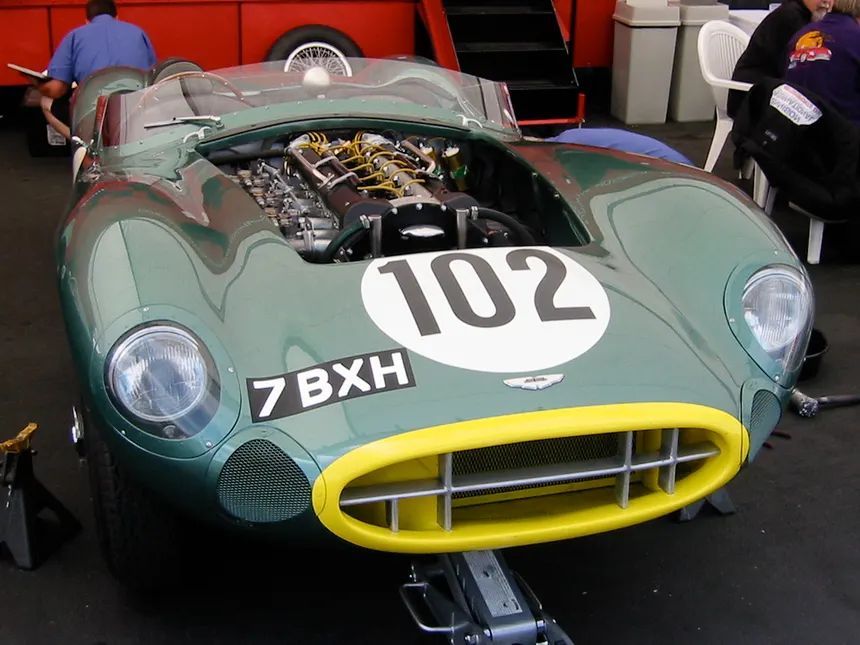
Five were made. Five DBR1s in total, hand-built at the factory. The very first, the chassis christened DBR1/1, appeared in 1956. It was the pioneer, the one that opened the bloodline, the test bed on which everything that followed was built. It carried a straight-six engine that grew in power over the years, from a little over 250bhp to around 270 in its most developed form.
That first car raced and raced across three seasons. And at Le Mans, the very thing Brown was obsessed with, it simply couldn’t do it. In 1956 it ran well for twenty hours before its bearings let go. It went back, and nothing. Three cracks at Le Mans, three retirements. The car that blazed the trail couldn’t cross that particular finish line.
What the DBR1 Actually Was
Worth pausing on the machine itself, because it helps explain why these cars are worth what they’re worth.
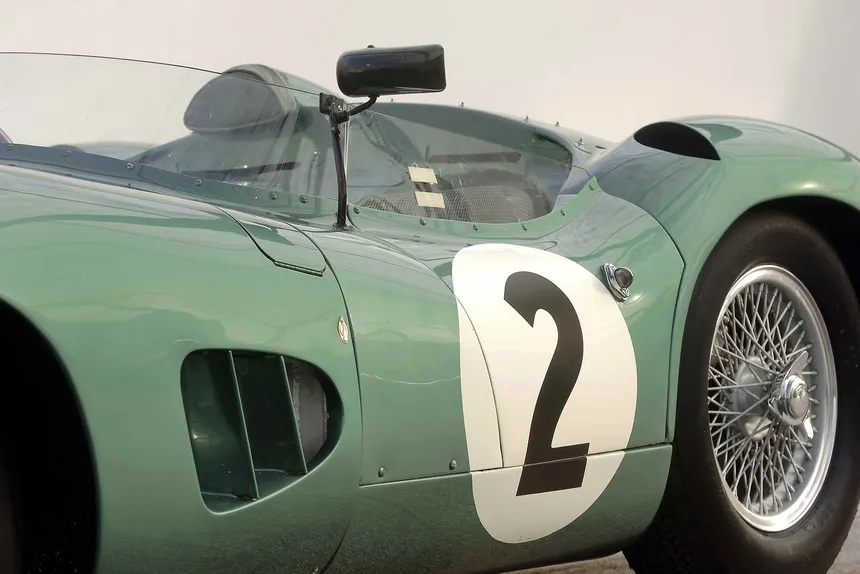
The DBR1 was a textbook competition prototype: light, fragile where it needed to be, built around the single idea of going fast for a long time without breaking. An open body of thin aluminium beaten by hand, shapes chasing clean air down the Mulsanne, a straight-six positioned to balance the weight. Brakes that would look comical by today’s standards and were simply what existed then. All of it built for a kind of racing that barely exists anymore: the late-1950s sports prototype, those beautiful, lethal open cars that raced with almost no protection at all.
You have to place it in its moment to value it. Those years were among the hardest and most romantic in motorsport. The cars were quick, safety was next to nonexistent, and the gap between winning and killing yourself fit inside a single mechanical failure. The DBR1 was born right on that knife-edge, and the fact that a hand-built British marque could put one of these at the very top, against Italian and German muscle, carries a merit no horsepower figure can explain. They didn’t win by having the most powerful car. They won through balance, relative reliability, and colossal drivers.
The Glory Went to Number Two
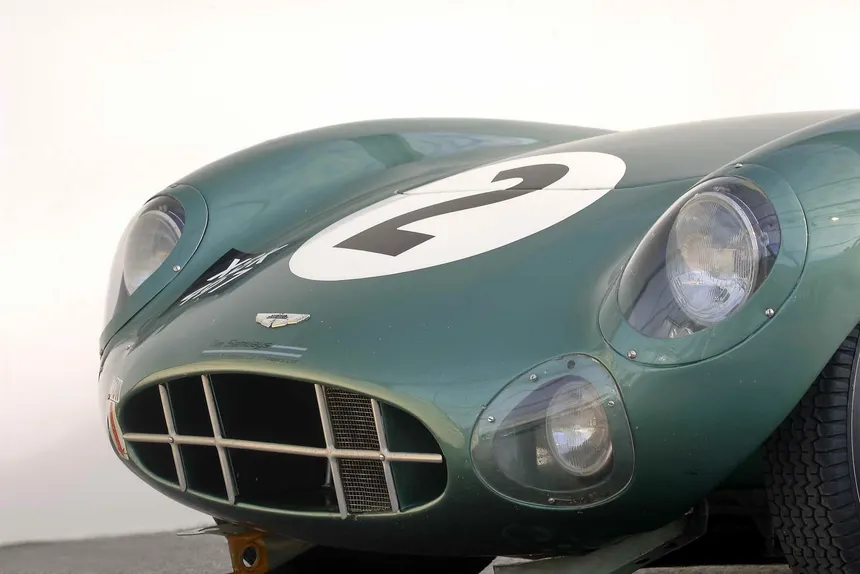
The big win, the one that mattered, came in 1959 — and it went to a different chassis: DBR1/2.
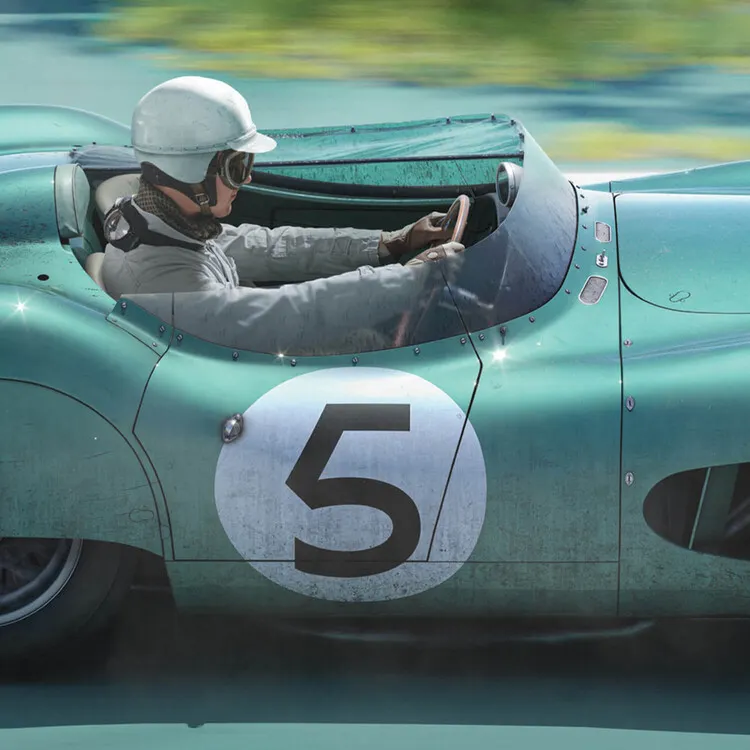
That year was Aston’s finest hour. Roy Salvadori and a lean, scrappy Texan named Carroll Shelby drove it to victory. Yes, that Shelby — the same man who, a few years later, would become immortal in his own right by stuffing American V8s into British bodies and creating the Cobra. In 1959 he was still a racing driver, and he won Le Mans for Aston Martin. Think about the crossing of bloodlines sitting in that one seat.
And it wasn’t only Le Mans. That same 1959, Aston took the World Sportscar Championship. The full double. A relatively small British outfit squaring up to Ferrari and Porsche on their own ground and beating them at it. The DBR1 was the weapon with which David Brown realised his dream, and in doing so gave Aston Martin the most important page in its sporting history.
There’s a detail I love that shows just how good this car was beyond Le Mans. Stirling Moss, in a DBR1, lapped the 1958 Targa Florio more than a minute faster than he himself had managed three years earlier in a Mercedes 300 SLR. More than a minute. And it was Moss who talked the factory into entering chassis number one, DBR1/1, in the 1959 Nürburgring 1000km — where it won. So the car that never cracked Le Mans did conquer the Green Hell, in the hands of the man many regard as the greatest driver never to be world champion.
So Why Is the Expensive One the Loser?
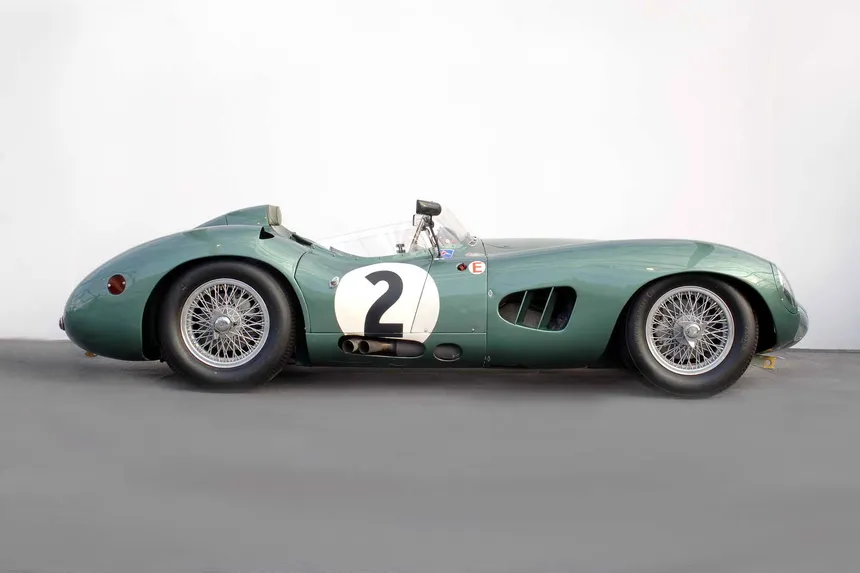
Here’s the knot of it. In 2017, at the Monterey sale, RM Sotheby’s sold a DBR1 for $22.5 million. An outright record for a British car, the most ever hammered. One of those figures that defines an era in the collecting world.
And the car that hit that number wasn’t the Le Mans winner. It was DBR1/1. The first one. The one that tried Le Mans three times and failed three times.
Does it make sense? Scratch the surface and it does, completely. Because the value of a collector car at this level isn’t measured by one specific victory, however towering. It’s measured by what the car represents, its place in the chain, the hands that touched it, and something as prosaic as availability.
DBR1/1 was, according to the experts who appraised it, the most technically correct of the five — the most faithful to its original state. It was the first of the line, the chassis that laid the foundations on which the 1959 triumph was built: no DBR1/1, no programme, no development, no win. In period it was driven by Salvadori, by Shelby himself, by Stirling Moss, Jack Brabham, and later by Jim Clark and Bruce McLaren. Read that roll of names again. That’s half the history of British motorsport sitting in one car. And it earned its own glory with Moss’s Nürburgring win.
Above all, it was the only one of the five to come up for sale. The Le Mans winner wasn’t on the market. When a piece like that — unique and available — comes to auction, the price detonates because there’s no second chance. You’re not bidding against other DBR1s for sale; you’re bidding against everyone who wants that one, and only one of you can have it.
To grasp the scale of the figure: that $22.5 million made DBR1/1 the most expensive British car ever auctioned, and placed it among the fifteen most valuable cars ever sold at auction from any country or era. The only other British machine to have come close was a Le Mans-winning Jaguar D-Type, which had held the previous record. So at the very top of the British collector market, only 1950s competition machinery plays — real racing cars, not luxury saloons or modern hypercars. The big money, the serious money, goes hunting for track history. And within that history, it went hunting for the first of a bloodline, not the one that crossed a particular line.
What You’re Actually Paying For
Here’s my reading, and it’s what makes this story so rich.
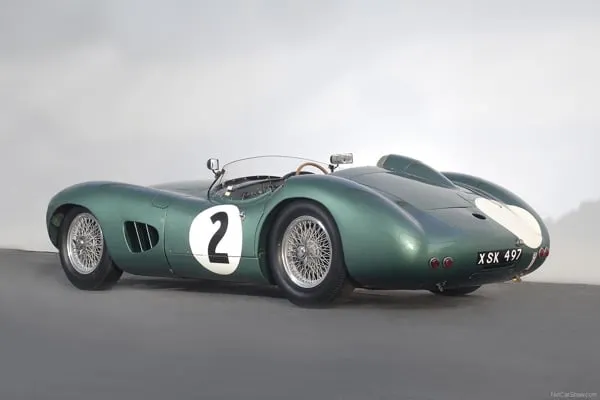
When someone drops $22 million on a car, we assume they’re paying for the victory, for the moment of glory, for the photo at the line. But this story proves it isn’t quite so. The man who paid that fortune didn’t buy the car that won Le Mans. He bought the first of the family. He bought the origin, the founding piece, chassis number one from which everything flowed. He bought history and rarity, not the trophy.
It’s a lovely distinction, and it tells you a lot about how value really works. The glory of the moment, the specific win, belongs to whoever crosses the line. But the historical weight — what the money ends up recognising years later — often lands somewhere else: on the one who opened the way, who was there first, who made it possible even if he never collected the prize himself.
It happens in life more than we’d like to admit. The one who takes the applause and the one who lays the groundwork aren’t always the same. The player who scores and the twenty passes that came before. The DBR1 tells it with two brothers in green steel: one kept the eternal glory of Le Mans, the other kept the record figure and the title of most valuable British car. And neither has what the other does.
To this day the 1959 DBR1 remains the only Aston Martin to have won Le Mans outright. They tried again recently with the Valkyrie, that howling V12 hypercar, and so far they couldn’t do it — David Brown’s dream remains, more than sixty years on, a single unrepeated victory. Which makes those five green cars, the winner and the also-rans alike, worth even more. Because between the five of them they hold the only moment Aston ever touched the sky at La Sarthe.
And consider one more thing, because it closes the circle. Through the seat of DBR1/1 — the car that never won Le Mans — passed Salvadori, Shelby, Moss, Brabham, Clark and McLaren. From that list, two would go on to lend their names to legendary marques of their own, and nearly all are figures carved into motorsport history. The value of that car isn’t only in what it won or didn’t win: it’s in who drove it, in how much legend sat inside it. Sometimes what really commands a price isn’t the result on a timing sheet but the trail of hands a machine left in its wake.
Next time you see an auction figure and think “they’re paying for having won,” remember the two brothers. Sometimes the money doesn’t reward the one who won. It rewards the one who was there first.
Then check you’re still alive.