
The Deprofessionalization of Auto Repair Shops: No Succession, No Future
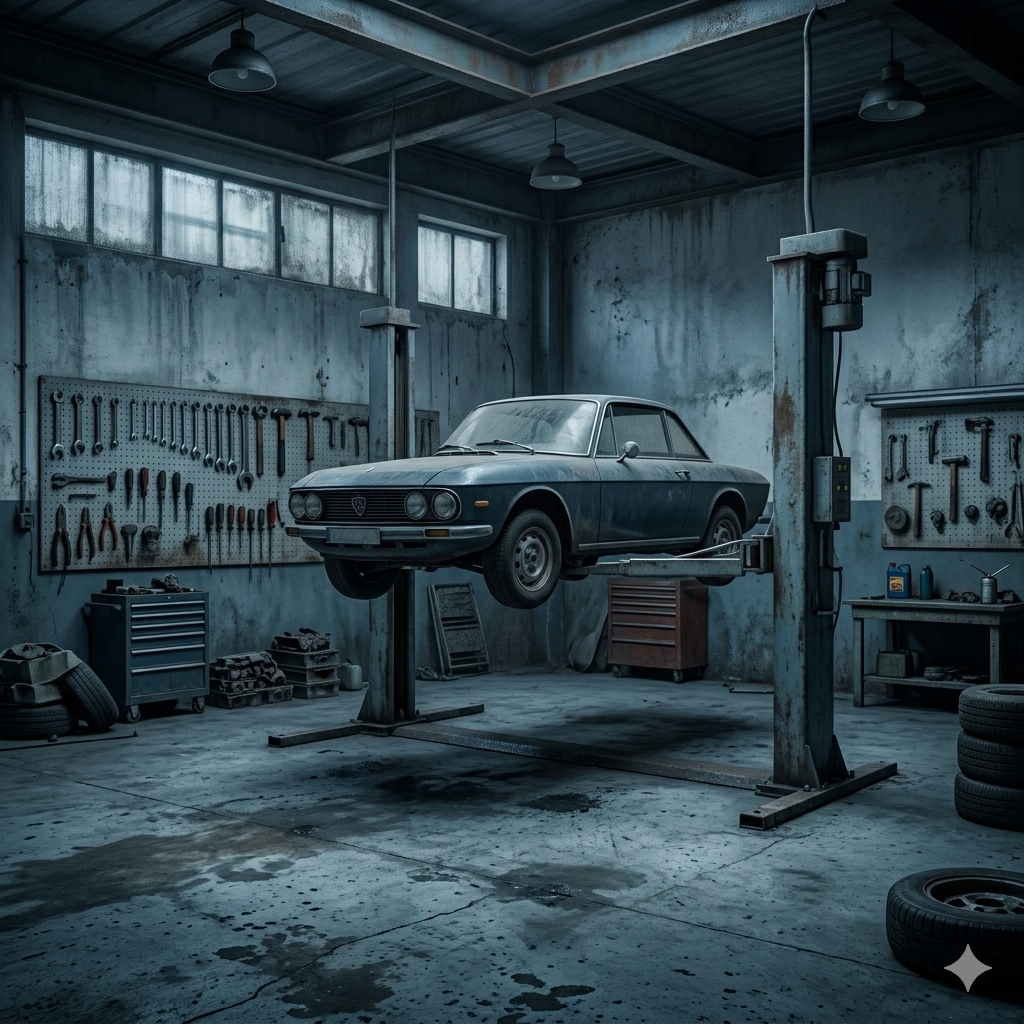
There is a silent crisis eating the automotive world from within. It is not the transition to electric vehicles. It is not Euro 7 regulations. It is not fuel prices. It is something far more basic, far deeper, and far more dangerous: we are running out of mechanics.
And I am not talking about average mechanics. I am talking about real professionals. The ones who diagnose a fault by ear before plugging in the diagnostic machine. The ones who know why an engine vibrates at 2,300 rpm and not at 2,500. The ones who understand that a car is not a household appliance on wheels but a piece of engineering that deserves respect.
I have spent over 30 years in the industrial world. I have repaired cars, worked with KUKA robots, programmed PLCs, installed automatic doors, and now I assemble trains. I have seen entire sectors transform. But what is happening to auto repair shops in Spain and across Europe is not a transformation: it is a disintegration.
And we need to talk about it.
The Numbers Behind the Hemorrhage
The numbers do not lie, and those coming from Spain’s vehicle repair sector are devastating. According to the main industry associations, CONEPA and CETRAA, Spain needs between 15,000 and 20,000 qualified mechanics right now to meet existing demand. Not tomorrow. Not in five years. Right now.
In Catalonia, where approximately 7,000 workshops operate, the situation is so desperate that associations like the one in Lleida have launched recruitment campaigns directly in high schools, trying to convince teenagers that automotive mechanics can be a viable future. In Galicia, the APREVAR association has had to bring mechanics from Peru to fill positions that had been open for months. Ten professionals in six months. A drop in an ocean of need.
The industrial vehicle sector is no different. The “360 Vision” White Paper on Industrial Vehicles reports more than 6,000 unfilled positions in the industrial vehicle aftermarket alone. Trucks, buses, and heavy vehicles that drive the country’s economy depend on workshops that cannot find qualified hands to repair them.
Meanwhile, Spain’s vehicle fleet continues aging relentlessly. The average vehicle age now exceeds 14 years. More old cars mean more repairs, more maintenance, more demand for professionals. But the professionals are not there. And those who remain are approaching retirement with nobody coming up behind them.
Why Young People Do Not Want to Be Mechanics
Let us be direct: why would an 18-year-old want to spend eight hours a day underneath a car?
The short answer is they don’t. And they have their reasons.
The money does not add up. A mechanic in Spain earns an average of around 24,000 euros per year. That is roughly 2,000 euros gross per month. For physically demanding work that wrecks hands, backs, and knees, requiring years of training and constant upskilling. An unqualified young person can get a job in logistics or hospitality and approach similar figures without having invested years learning a technical trade. The equation does not balance.
The profession’s image is on the ground. In Spain, being a mechanic is still associated with the image of a grease-covered person in a dark garage. Spanish society carries a deep cultural contempt for manual labor. The technical trade is perceived as something lesser, a fallback for those who are not cut out for studying. That mentality is burned deep into the country’s culture, and it stands in brutal contrast to what happens in other European nations.
Vocational training is not keeping pace. Spain’s vocational training programs do not adapt to real market needs. There is no specific qualification for industrial vehicle mechanics, forcing workshops to retrain passenger car professionals. And the content of existing qualifications does not always reflect current technological reality: ADAS systems, advanced electronic diagnostics, hybrid and electric vehicles.
Starting a business is a nightmare. And here we reach a point that especially affects anyone who wants to go beyond being an employee. Opening a repair shop in Spain requires an initial investment ranging from 40,000 to 200,000 euros, depending on size and specialization. That includes machinery, tools, licenses, premises conditioning, an engineering project signed by a qualified engineer, registration in the Industrial Registry, insurance, initial parts inventory… And that is before serving a single customer.
Add the bureaucracy. Municipal activity licenses, building permits, toxic waste producer registration, industrial registry fees, environmental regulations. By the time you have all the paperwork sorted, months have passed along with thousands of euros in procedures. Then come the taxes, self-employment contributions, quarterly VAT, and the fiscal pressure that suffocates Spain’s small business owners.
Is anyone truly surprised that young people do not want to start a business in this sector?
The German Model: A Mirror to Look Into
And then you look at Germany and wonder what we are doing wrong.
In Germany, a car mechanic (Kfz-Mechatroniker) is not a second-class citizen. They are a recognized qualified professional with social standing. The dual training system, the famous Ausbildung, combines theoretical learning in educational centers with paid practical training in companies. Apprentices are paid from day one, with salaries that in 2024 saw the largest increase since 1992, reaching an average of 1,133 euros gross per month.
A trained mechanic in Germany can aspire to gross annual salaries between 30,000 and 48,000 euros, with the most experienced exceeding 55,000. In Spain, the salary ceiling for the same profession rarely surpasses 28,000 to 30,000 euros. But beyond the money, there is something fundamental that Germany has and Spain does not: institutional and social respect for the trade.
Vocational training in Germany is not the “Plan B” for those who cannot attend university. It is a first-line option, with updated programs, direct collaboration between companies and training centers, and a culture that values what you do with your hands as much as what you do with a laptop. The automotive mechatronics technician occupation was the most in-demand vocational training program in Germany in 2024. Not IT. Not digital marketing. Mechanics.
Switzerland follows a similar model. Austria too. Countries where a plumber, an electrician, or a mechanic earns a decent wage, has job stability, and is respected by their community. Countries where manual work is not something to be ashamed of but something to be proud of.
And Meanwhile, Who Maintains the Classics?
This is where the problem directly touches the heart of what we do at Not Enough Cylinders.
If the crisis affects general workshops that repair modern cars, imagine what it means for the classic car world. Restoring a Volkswagen Corrado G60, adjusting the mechanical injection on a Mercedes W123, rebuilding the gearbox of an Alfa Romeo GTV… Not just anyone can do this. It requires specialized knowledge, decades of accumulated experience, and a sensitivity that cannot be learned on YouTube.
The master artisans of classic car mechanics are retiring. And there is nobody behind them. Young people who are passionate about classic cars often cannot find where to train because official programs do not cover technologies that are no longer manufactured. Who teaches how to tune a twin-choke Weber carburetor? Who trains in welding 1970s steel chassis? Who passes on the knowledge of Citroën DS hydraulics?
When these professionals disappear, they will take with them decades of knowledge that no artificial intelligence and no YouTube tutorial can replace. And with that knowledge goes the possibility of keeping alive the cars we love.
Every specialized workshop that closes is a library burning down.
The Trap of “Everything Is Electronic Now”
There is a dangerous narrative claiming that with the arrival of electric cars, traditional mechanics are redundant. That everything will be software diagnostics, that parts will be swapped like modules, that future workshops will be tech centers where nobody gets their hands dirty.
It is a half-truth wrapped in a great lie.
Yes, technology advances. Yes, cars are increasingly complex electronically. But that very complexity requires more qualified professionals, not fewer. A modern vehicle is a puzzle where mechanical, electrical, electronic, hydraulic, and pneumatic systems coexist. Diagnosing a fault in an ADAS system requires understanding both software and suspension geometry. Repairing a hybrid vehicle demands high-voltage knowledge that can be literally lethal if mishandled.
Meanwhile, Spain has over 30 million vehicles on the road, the vast majority powered by internal combustion. Cars that need oil changes, brake pads, timing belts, clutches, shock absorbers. Real, tangible mechanics that will remain necessary for decades. The electric car has not eliminated the need for mechanics. It has added a layer of complexity that means we need more and better professionals.
The Euromaster chain, with over 500 centers in Spain, has publicly denounced that workshops are being forced to lower selection criteria and hire workers from other sectors, such as factory operators or agricultural workers, to fill vacancies. Not from lack of will, but from sheer desperation.
What Can Be Done?
I will not pretend I have all the answers. But after three decades in the industrial world, one thing is clear: the problem is not solved by a single measure. We need systemic change.
Dignify wages. If you want to attract talent, you have to pay for it. A qualified, experienced mechanic should earn at least 35,000 to 40,000 euros per year. If the market cannot sustain that with current labor rates, those rates need to increase. The average workshop hour rate in Spain sits around 44 euros. In Germany, it exceeds 100 euros in many centers. The difference is not justified by cost of living alone.
Revolutionize vocational training. Training programs must be radically updated. We need specific qualifications for industrial vehicles, mandatory advanced electronic diagnostics modules, ADAS training, and compulsory paid internships in workshops. The German dual model is not perfect, but it works infinitely better than what we have.
Change the cultural narrative. Being a mechanic must stop being “Plan B.” Outreach campaigns in high schools are a good start, but we need something deeper: a cultural shift that values technical work at the same level as intellectual work. Because dismantling and rebuilding an engine requires as much intelligence as programming an application.
Make entrepreneurship accessible. Reduce the bureaucracy required to open workshops, offer real tax incentives (not the token 10,000 euros from current grants), create specific financing lines for the sector. If we want people to start businesses, we must stop placing obstacles in their path.
Preserve artisanal knowledge. Create mentorship programs where veteran mechanics pass on their knowledge to new generations. Document classic restoration techniques before they are lost forever. Officially recognize specialization in historic vehicles as a professional qualification.
The Time to Act Is Now
By early 2026, electrified vehicles in Spain already exceed 600,000 units. Technology advances. The world changes. But the fundamentals remain the same: someone has to repair the cars. Someone has to keep them safe. Someone has to understand how they work inside.
And that someone needs to be valued, trained, compensated, and respected for what they are: an essential professional.
Every workshop that closes due to lack of succession is a collective failure. Every mechanic who retires without passing on their knowledge is an irreparable loss. Every young person who dismisses mechanics because it “has no future” is a wasted opportunity.
The deprofessionalization of workshops is not just a problem for the automotive sector. It is a problem for all of society. Because when there is nobody left to repair your car, when workshop waiting lists multiply, when road safety suffers because vehicles do not receive adequate maintenance… then everyone will pay the price.
And for those of us who love cars with soul, the classics that tell stories, the engines that sound like symphonies, the loss will be even greater. Because we will not only lose workshops. We will lose the ability to keep a passion alive.
It is time to act. It is time to value. It is time to change.
Because without mechanics, there are no cars. And without cars that work, there is no future.
— Toni | Not Enough Cylinders 30+ years in the industrial world. Railway assembler. Incurable enthusiast.