Brabus: The German Hot Rod Shop Built on a $50 Handshake That a 34-Year-Old Inherited Overnight
America has a type for this. Carroll Shelby stuffing Fords into British roadsters. John Hennessey in Texas bolting turbos onto anything with a pulse. Jack Roush, Steve Saleen, Reeves Callaway. Every one of them built a name on the idea that a factory car is a rough draft. Germany’s version of that guy was Bodo Buschmann, and he took the idea further than almost any of them. He built a four-door Mercedes that ran 227 mph with the air conditioning on, then got a street in his hometown named after his company.
On April 26, 2018, he died after a short illness at 62. It was a Thursday. By that afternoon, the largest independent tuner on the planet belonged in practice to his son Constantin, 34 years old, head of marketing and sales, who had never been a CEO of anything. The company had about 450 employees, a campus of 112,000 square meters in Bottrop and customers in more than 100 countries. Nobody said out loud what everybody was wondering, and it’s the question American family companies know very well: can the kid actually do this?
In short: Brabus is the Mercedes tuner founded in Bottrop in 1977 by Bodo Buschmann and Klaus Brackmann, whose names make up BRA-BUS. Brackmann soon sold his half for 100 marks. Buschmann built it into the world’s largest independent tuner, with about 450 employees, and when he died on 26 April 2018 his son Constantin, then 34, took over.
Mercedes Dealer’s Kid Buys a Porsche
Bodo Buschmann was born on August 27, 1955, in Bottrop, a coal-and-steel town in Germany’s Ruhr valley that has about as much glamour as Gary, Indiana. His parents ran a Mercedes-Benz dealership. As a young man he bought a Porsche 911 and parked it in front of the family store, which went over about as well as you’d expect. A Chevy dealer’s son showing up in a Mustang would get the same reception.
His father’s anger gave him an idea. He sold the Porsche, ordered a W116 S-Class and modified it until it could keep up with the 911. Customers at the dealership noticed and started asking who did the work. At 22, in 1977, while still studying law, he talked a friend named Klaus Brackmann into starting a company with him. BRA for Brackmann, BUS for Buschmann. Brackmann soon sold his half for 100 German marks, which at the time was about $50, or dinner for two. It has to rank up there with Ronald Wayne selling his share of Apple for $800 as one of the worst exits in business history. The name stayed on the building anyway.
There was a whole scene around this in Germany. AMG had started a decade earlier in Burgstall as a racing engine shop, as we tell in our history of AMG, and its founder, Hans Werner Aufrecht, ended up selling out to Mercedes itself. In the 1980s, American gray-market importers were bringing in tuned Benzes for people in Los Angeles and Miami who were bored with the versions Stuttgart sent over. Brabus stayed independent, which meant that its only product was going further than the factory wanted to go.
A Man Who Slept at the Office, Roughly
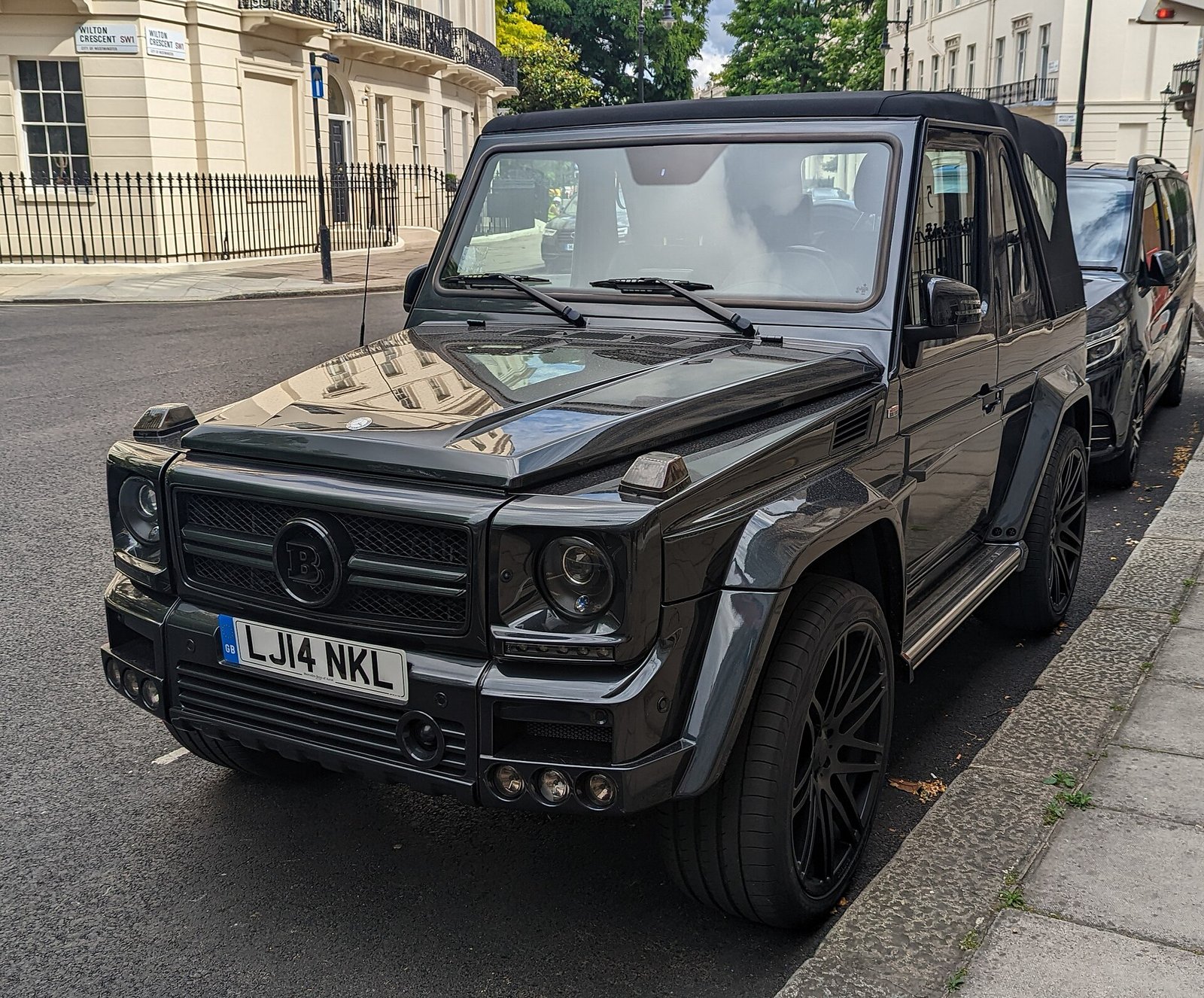
People who knew Bodo all describe the same guy: six foot three in a black suit, working his 40 hours before Wednesday and taking no weekends. His motto, "Don’t work for money, work for passion," sounds like a poster in a dentist’s waiting room, but in his case it appears to have been a literal description of the schedule. His own cars matched the man. They were big, dark and built to dominate a parking lot, and nobody ever accused him of subtlety.
His peers apparently respected it. When German tuners formed their trade association, the VDAT, in 1987, they elected him its president. Consider that for a moment. These were direct competitors, in a business where nobody trusts anybody, and they handed him the job of representing them to regulators.
There’s a story that captures him well. In 2002 Brabus went into a 50-50 joint venture with Smart, Daimler’s tiny city-car brand, and Bodo became its CEO. At one event celebrating the partnership, he’s said to have shown up in an 850-hp V12 GLS instead of a Smart fortwo, then done a launch-control start in the parking lot to get back to Bottrop as quickly as possible when the presentation was over. Think of Lee Iacocca arriving at the Pinto launch in a Cobra.
Engineering, Not Just a Bigger Turbo
What made Brabus different from a guy with a dyno was how much of the car it was willing to redo. There’s a basic rule that any American drag racer learns early: make twice the power and something else will break. An engine upgrade alone just moves the failure to the transmission, the axles or the brakes. Brabus reworked the driveline, suspension, brakes, aero and exhaust together, and it wanted the finished car to last. The fastest car in the world isn’t much use if its gearbox lets go at 12,000 miles.
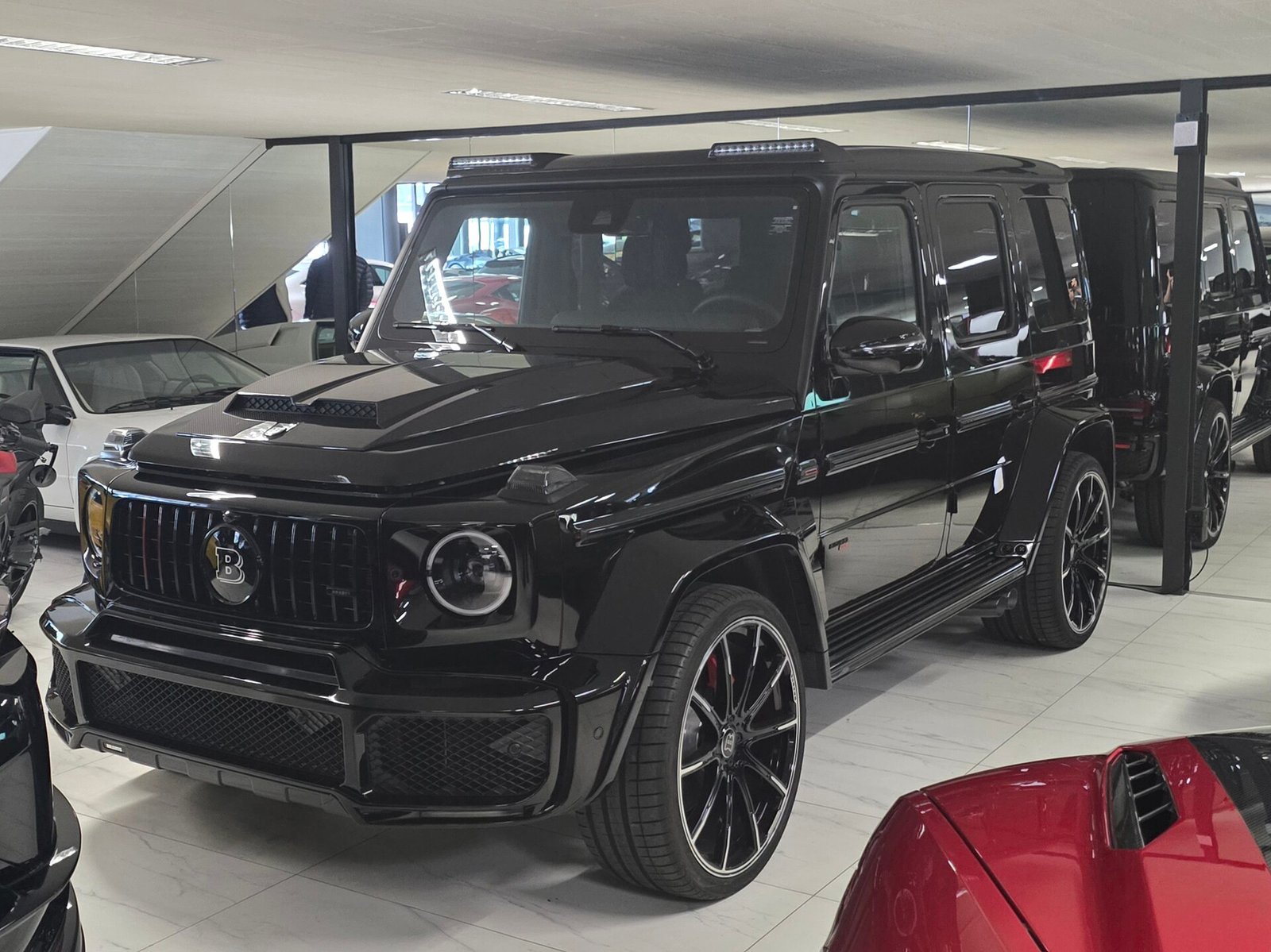
The company then did something American tuners have long found very hard to do: it got the cars legal. Every Brabus had to pass TÜV, Germany’s notoriously strict inspection, and meet emissions rules. Imagine Hennessey having to certify a Venom in all 50 states, including California, and you’ve got the idea. The result was a car you could buy on Friday, register, insure and use for the school run on Monday, with a top speed that would get you put in prison in most of the United States.
The numbers kept climbing. In 1996, a Brabus E V12 became the world’s fastest street-legal sedan at 330 km/h, or 205 mph. Michael Schumacher bought one, and a wagon too. In 2003 the sedan record went up to 350.2 km/h, about 218 mph. Then in 2006 came the Rocket, a CLS with a 6,233 cc twin-turbo V12, 730 hp and 1,320 Nm, or 974 lb-ft, of torque, at the time described as the most powerful TÜV-certified engine of German origin. It averaged 365.7 km/h, or 227 mph, at Nardò, the Italian oval where Volkswagen’s W12 ran for 24 hours, and Guinness recognized it. For context, a Dodge Charger SRT8 of that year topped out somewhere around 165 mph, and it was the fast American four-door. This was a sedan with a trunk and working A/C going 62 mph faster.
The Bottrop Factory
Each car took between 1,500 and 4,000 hours of hand labor. Leather was cut and sewn in-house, in more than 3,500 color combinations. Carbon fiber was laid up in-house using aerospace-grade prepreg, the same material you’d find in a race car’s tub. Dynos in the building could test up to 800 kW, nearly 1,100 hp. More than 7,500 vehicles a year passed through, counting everything from small upgrades to complete builds, and each left with a plaque signed by the CEO.
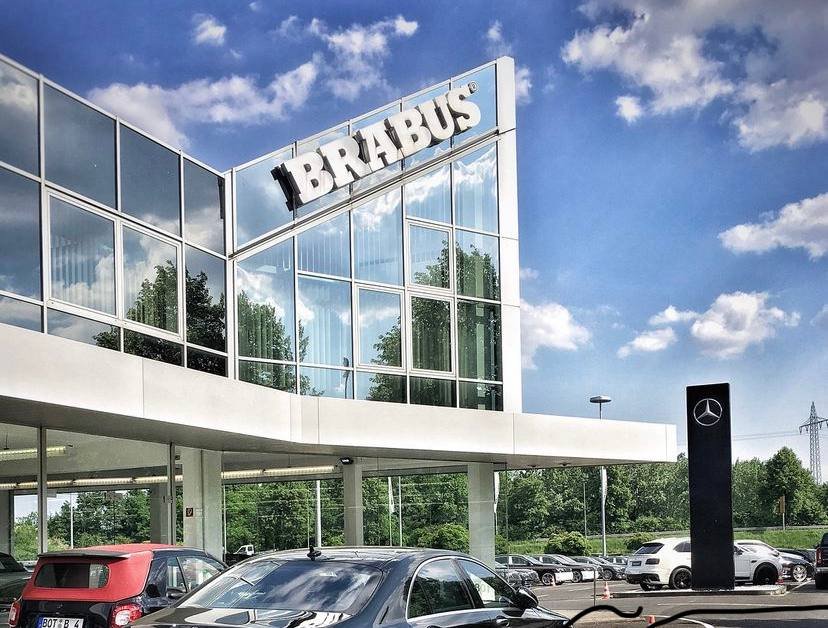
The site grew from a shed behind the family dealership into five buildings. At some point the city of Bottrop renamed the street out front Brabus-Allee. Dearborn has Ford Road, and Detroit has any number of streets named after dead executives, but I can’t think of an American aftermarket shop that got its own avenue.
"You Can’t Simulate the Front Row"
Then Bodo died, and somebody else had to sign the plaques. Constantin had joined the company in 2005, at 21. He ran sales by 2012 and was chief marketing officer by 2018. He knew the place as well as anyone, but that’s not the same thing. The older engineers had spent their careers building 900-hp V12s with his father looking over their shoulders, and many customers were buying Bodo as much as anything else.
He’s described that moment with an orchestra metaphor. You can play horn, flute and drums, he has said, but you can’t understand the stress of sitting up front next to the first violin until you’re there. American family businesses know this story too. Edsel Ford spent his career under his father’s thumb. William Clay Ford Jr. was handed a company in crisis. The usual failure is a son trying to be his father. Constantin seems to have decided early on that this wasn’t possible, and instead talks about having "one face to life," meaning the same person at home, at the office and on a trade-show stand.
One Second Wow
What he’s built since is less a tuning shop than a luxury brand, and it’s a real change in direction. His internal concept is "1-Second-Wow": a product has to hit you in the first second you see it, or it doesn’t leave Bottrop. Bad stitching gets ripped out and done again. A collaboration that doesn’t fit gets turned down. He talks about a megatrend of individualization, which sounds like consultant-speak until you look at what has come out of the building.
Brabus Marine now sells 900-hp boats with Mercury Racing V8s, in a venture with Finland’s Axopar, and they’ve picked up a Red Dot design award. The Big Boy 1200, a 12-meter motorhome built with STX Motorhomes, won a Red Dot Best of the Best in 2025, and if you’re wondering whether RV buyers in Quartzsite want a Brabus, somebody in Germany evidently thinks so. Its Startech subsidiary applies the same treatment to Aston Martin, Bentley, Jaguar, Land Rover and Maserati.
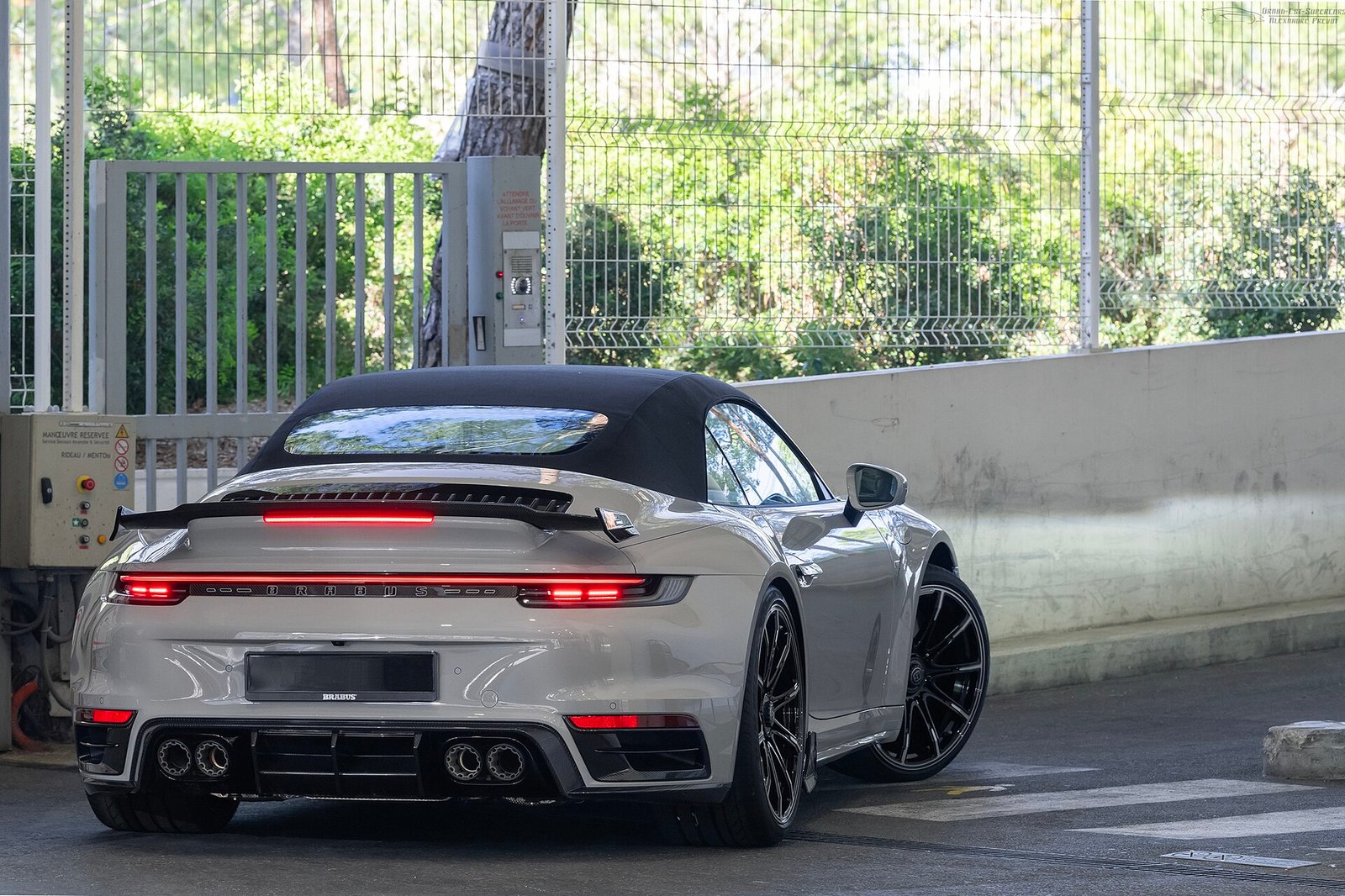
Then in 2024 came the move that closes the circle. The Brabus 900 Rocket R is based, for the first time in the company’s history, on a Porsche, the 911 Turbo S, with 900 hp, 1,000 Nm, and just 25 being built. The son of the guy who sold his 911 to buy a Mercedes ended up building one of the wildest Porsches around. It’s the kind of plot twist that a screenwriter would be told to tone down.
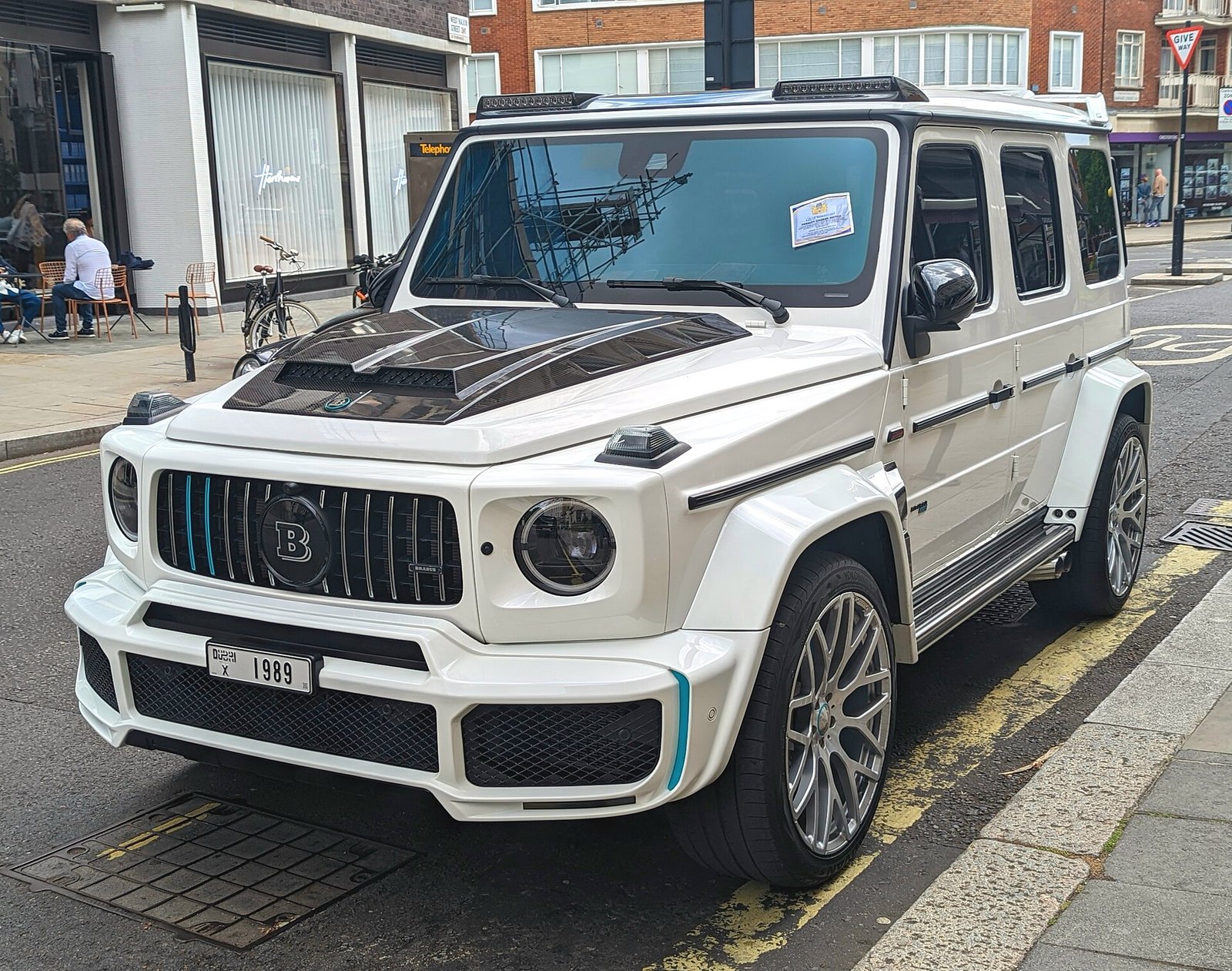
Which is good, because there’s a show. In spring 2026 Amazon Prime Video released "Brabus: One Second Wow," six episodes following Constantin between Bottrop, Beverly Hills and Milan. A Beverly Hills stop tells you who the audience is, and if you’ve spent any time on Rodeo Drive you’ve seen the customers: a widebody G-Class in matte black, its owner looking pleased with himself. In late 2025 he also brought in a new CMO, a chief sales officer and a chief strategy officer, the kind of hires a founder like Bodo might never have made.
A Gullwing and a Warhol
The classic side of the business has its own best story. Brabus Classic restores historic Mercedes to what it calls a six-star standard, and one of its projects was a 300 SL Gullwing that turned out to be the last object Andy Warhol painted before his death in 1987. The restoration took 4,800 hours. It’s hard to come up with a better summary of what Brabus sells: German engineering with an American pop-art punch line. There’s also a boutique in Dubai, where the brand has become something people buy the way they’d buy Hermès.
The SL His Father Would Have Built
The most telling thing Constantin has done has nothing to do with any of that. When Mercedes launched the new SL in 2023, he knew what he had to do. The SL was Bodo’s favorite car; visitors to the old campus could count on seeing one in the lot. So he created the Brabus 750 Bodo Buschmann Edition, an SL 63 with 750 hp, set up as his father would’ve wanted it. He said the point was to make a car that looked exactly like what Bodo would’ve built, down to the leather, the wheels, the calibration and the paint.
There’s no shortage of tribute editions out there, most of them a stripe package and a plaque. Ford has sold plenty, and so has everyone else. This one has more behind it, because the guy choosing the options knew the man as an engineer as well as a father.
Brabus-Allee, 46240 Bottrop, Germany, still exists. If you ever happen to be in the Ruhr, it’s easy to find, about an hour from the Nürburgring. It’s a long way from a kid getting yelled at for parking a Porsche in front of his dad’s Mercedes store, and nobody has yet asked for the street name back.
Brabus FAQ
Who owns Brabus?
Constantin Buschmann, son of founder Bodo Buschmann, has run the company since his father died on 26 April 2018. He was 34 at the time and had been head of marketing and sales.
Where does the name Brabus come from?
From the surnames of its founders: BRA for Klaus Brackmann and BUS for Bodo Buschmann. Brackmann sold his half almost immediately for 100 German marks, about $50 at the time.
Where is Brabus based?
In Bottrop, in Germany’s Ruhr valley, on a 112,000 square metre site, with about 450 employees and customers in more than 100 countries.
Check you’re still alive.
Photos: Brabus G 800, Calreyn88 (CC BY-SA 4.0); Brabus 820, Alexandre Prevot (CC BY-SA 4.0); Brabus HQ, L33chl (CC BY-SA 4.0); Brabus G, Calreyn88 (CC BY-SA 4.0). Via Wikimedia Commons.