
FERRARI BIG FIVE: The Five Cars That Define Maranello (And No, Your F40 Poster Doesn’t Count)
Let’s get one thing straight from the first line:
If you’ve ever said, “my favorite Ferrari is the F40” during a car conversation, congratulations: you’ve just proven your knowledge of Maranello starts and ends with a 1997 desktop wallpaper. I don’t blame you. The F40 is spectacular. But picking it as your favorite Ferrari is like saying your favorite Scorsese movie is Goodfellas. It’s not wrong, but it says more about you than it does about Scorsese.
True Ferrari history isn’t understood through one car. It’s understood through five. They call them the Big Five. And if you don’t know what they are, sit down, shut up, and read. Because after this, you’ll either know Ferrari or admit you never really cared.
What the Hell are the “Big Five”?
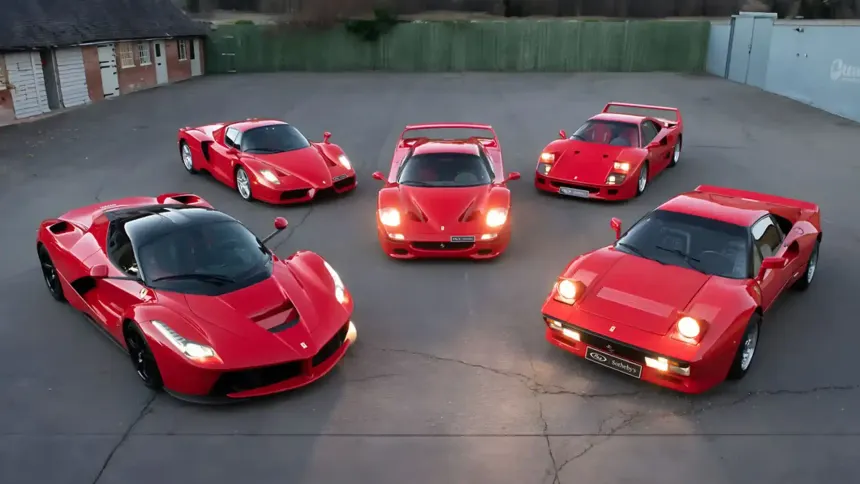
The term “Big Five” wasn’t invented by a Motortrend journalist looking for clickbait. It’s a concept born from Ferrari’s own history to refer to the five limited-production, mid-engine models that defined the golden age of supercars. Five machines that, in their respective decades, represented the absolute peak of Maranello engineering for anyone with enough cash to play.
These aren’t GTs. They aren’t daily-driver Ferraris. They are the mid-engine, limited-edition beasts Ferrari built when it decided to show the world what it was truly made of.
| Model | Years | Engine | HP | Units |
| 288 GTO | 1984-87 | 2.9L Twin-Turbo V8 | 400 | 272 |
| F40 | 1987-92 | 2.9L Twin-Turbo V8 | 478 | 1,315 |
| F50 | 1995-97 | 4.7L Naturally Asp. V12 | 520 | 349 |
| Enzo | 2002-04 | 6.0L Naturally Asp. V12 | 660 | 399 |
| LaFerrari | 2013-16 | 6.3L Hybrid V12 | 963 | 499 |
Each was the most extreme car of its era. Each brought racing technology to a street chassis. And each one is now worth more than most people will earn in their entire lives. Let’s break them down.
1. Ferrari 288 GTO (1984-1987)
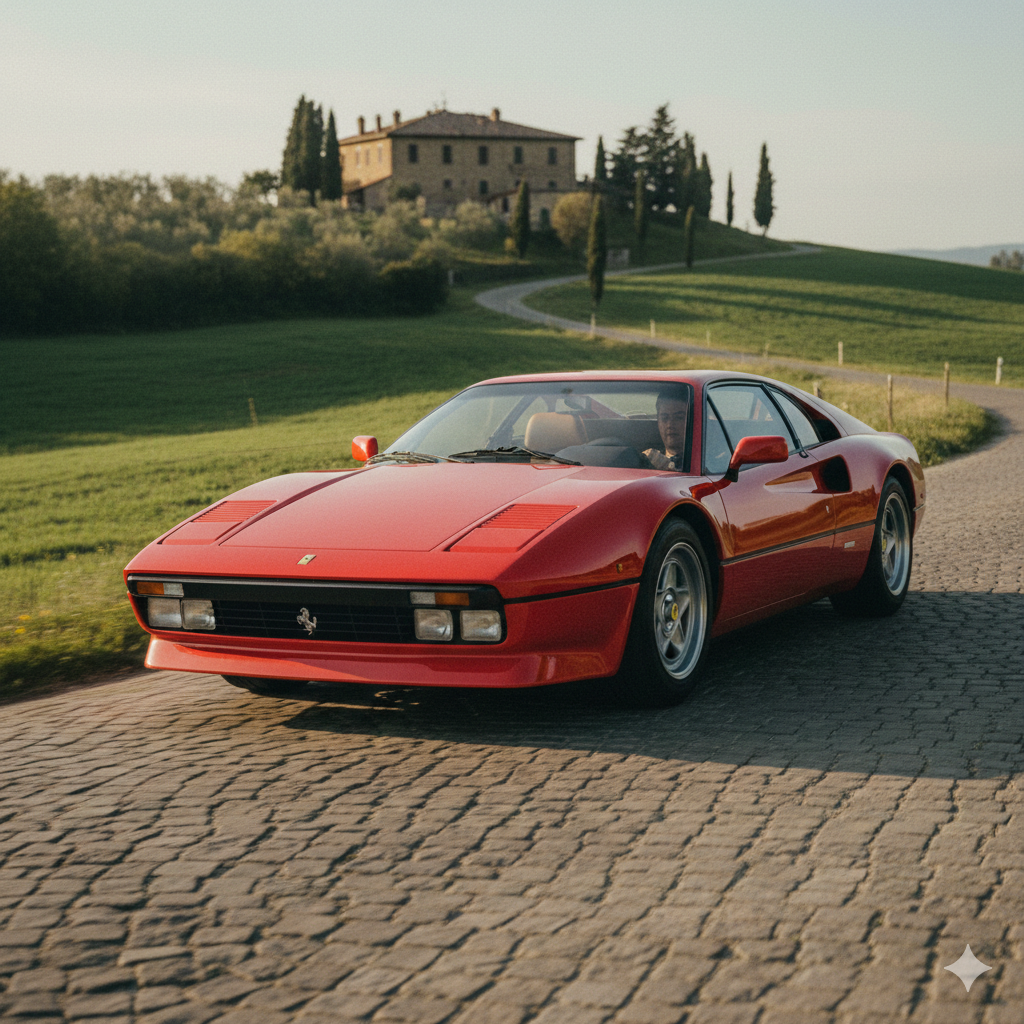
“The Grandfather Who Could Break Your Jaw” The 288 GTO was born for one reason: homologation for Group B. Yes, the same Group B rally class that killed drivers as a hobby. Ferrari wanted in, and they needed to build 200 road cars to qualify. They built 272. Then the FIA canceled Group B because, well, people were dying too often.
But the car was already done. A 2.9L twin-turbo V8. 400 HP at a time when a Porsche 911 Turbo had 300 and felt like a death trap. It was the bridge between the “old school” Ferraris—pretty and loud—and the new era of real-world competition technology. Without the 288 GTO, there is no F40. Period.
- Value: $3.5M – $4.5M.
2. Ferrari F40 (1987-1992)
“The One Everyone Knows (But Few Understand)” Here it is. The one on your t-shirt since you were 12. The last Ferrari personally approved by Enzo Ferrari before his death in 1988. It’s a race car with a license plate. Literally. No soundproofing. No carpets. The Kevlar door panels are so thin you can see light through them.
It was the first production car to break 200 mph. But here’s the uncomfortable truth: the F40 is the least technologically innovative of the Big Five. It was an extreme evolution of the 288 GTO, not a revolution. Its importance is emotional and cultural. It’s Enzo’s last breath.
- Value: $2.5M – $4M.
3. Ferrari F50 (1995-1997)
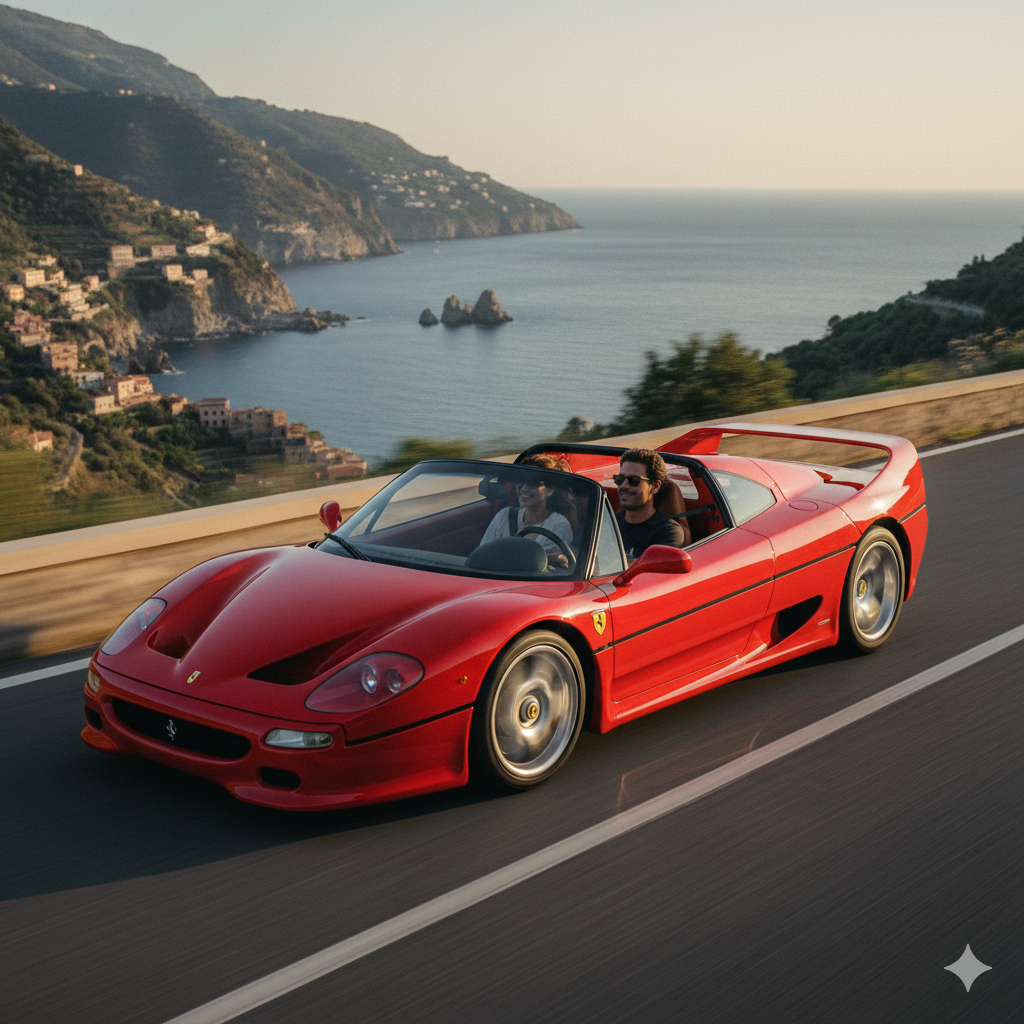
“The Misunderstood Son Who Was Right All Along” If the F40 is a rockstar, the F50 is the jazz guitarist no one appreciated until 20 years later. The press hated it. “It’s not as fast as the McLaren F1.” “It looks weird.” They were all wrong.
The F50 has a 4.7L V12 derived directly from the 1990 Ferrari 641 Formula 1 car. The engine block is bolted directly to the carbon fiber chassis as a structural element—exactly like a monoposto. No other road car was doing that in 1995. It’s an F1 car for the street.
- Value: $4.5M – $5.5M. (Now routinely outselling the F40 at auction).
4. Ferrari Enzo (2002-2004)
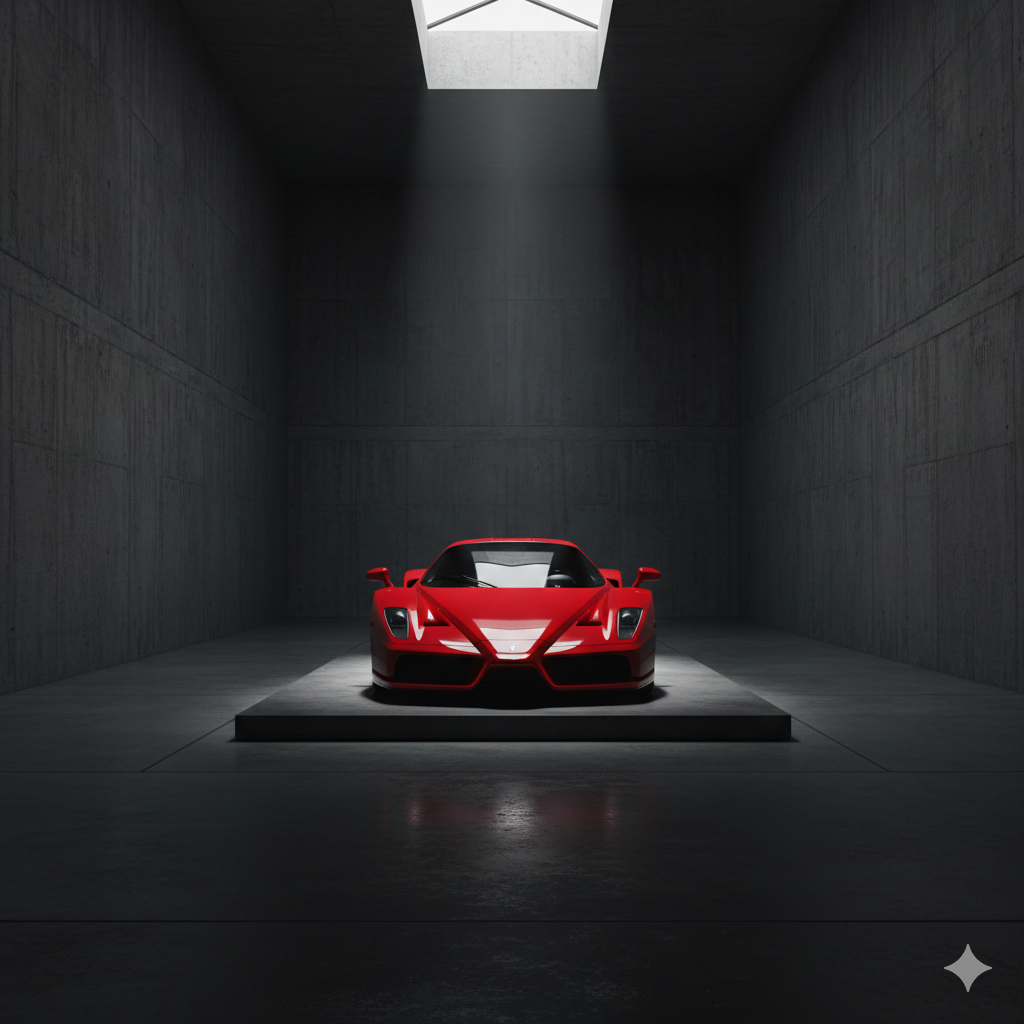
“The Beast Carrying the Father’s Name” Naming a car after yourself is a massive statement. Ferrari did it, and they didn’t miss. The Enzo was the first Big Five to fully integrate active aero and Schumacher-era F1 electronics. 660 HP, carbon-ceramic brakes, and a shark-nosed design by Pininfarina that aged like fine wine.
- Value: $3.5M – $4.5M.
5. LaFerrari (2013-2016)
“Engineering as Ego” Let’s talk about the name: “LaFerrari.” THE Ferrari. As if every other Ferrari was just a warm-up. 963 HP from a hybrid V12 system (HY-KERS). The electric motor isn’t there to save gas; it’s there to fill the torque gaps of the V12. It’s objectively the “best” car of the five, but “best” and “most exciting” aren’t always synonyms.
- Value: $4M – $5M (Aperta versions can hit $8M+).
The Pattern: What the Big Five Teach Us
Look at them together and the pattern is clear:
- Mid-engine.
- Limited production (under 500 units, except for the F40).
- The absolute ceiling of Ferrari tech for their time.
- Direct F1 or Group B DNA.
The Unpopular Opinion
The best Big Five isn’t the F40. It’s the F50. The F40 is just a louder, faster turbo evolution. The F50 was the first to take a real F1 engine and make it structural. It’s the purest, most honest “F1 for the road” ever made. But hey, the F50 wasn’t in Need for Speed, so most internet “petrolheads” don’t care. Go back to your wallpapers.
What About the SF90?
No, the SF90 Stradale is not a Big Five. It’s spectacular, but it’s a regular production model, not a “Halo Car.” The successor to LaFerrari hasn’t arrived yet. When it does, we’ll know. Ferrari doesn’t do these things quietly.
Conclusion: Not Just Cars. Statements.
The Ferrari Big Five aren’t just cars. They are five moments where Maranello looked at the rest of the industry and said: “This is where the world ends. We are a little further than that.”
If your favorite Ferrari is still the F40 just because it was the fastest car in Gran Turismo 2… well, at least now you know there are four more.
You’re welcome.
Pingback: Pegaso Z-102: The Story of the Spanish Supercar That Was the Fastest in the World
Pingback: Honda NSX: The Japanese Supercar That Humbled Ferrari | Full History
Pingback: Ferrari 250 GTO: Why It's Worth $70 Million
Pingback: Lancia Thema 8.32: La Berlina con Motor Ferrari
Pingback: BMW 850 CSi: The Manual V12 Nobody Wanted That Everyone Now Desires
Pingback: Opel Lotus Omega: The 377 bhp Family Saloon That Scandalised Britain
Pingback: Pagani: The True Story of Horacio Pagani and the Creation of the Zonda
Pingback: Porsche Carrera GT: The V10 Supercar That Wanted to Kill You
Pingback: Ferrari's Flat V12 Engines: Why They Howl and Why Nothing Else Sounds the Same
Pingback: De Tomaso Complete History: Mangusta, Pantera & the Ford V8 Formula
Pingback: Ford GT40: La Venganza Americana Que Humilló a Ferrari en Le Mans
Pingback: Carroll Shelby: The Chicken Farmer with a Borrowed Heart Who Humiliated Ferrari
Pingback: Alfa Romeo 4C: Carbon Fiber, 237 HP & the Last Real Alfa