
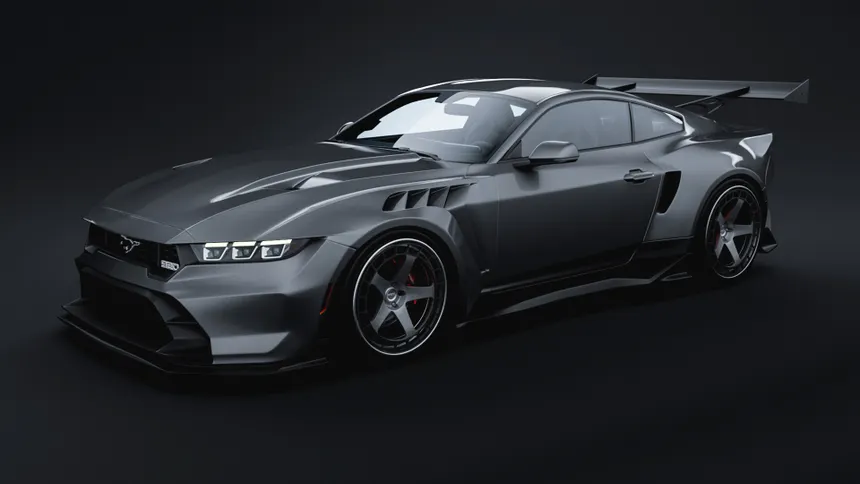
Ford Mustang GTD: the Mustang that wasn’t supposed to exist
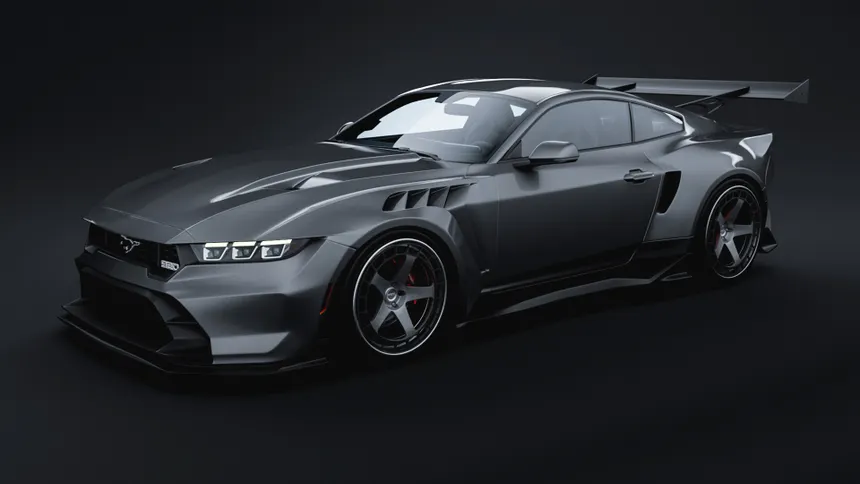
Three hundred and twenty-eight thousand dollars. For a Mustang.
Read it again. No typo. A Ford Mustang costs, today, more than a Porsche 911 GT3 RS. More than a base McLaren 750S. More than an Aston Martin Vantage did not long ago. And the guy writing the check doesn’t just put the money on the table. He has to pass an interview. Ford picks the customers, not the other way around.
This never happened with a Mustang. Never. The Mustang was always the working man’s V8, the kid’s first-paycheck ride, the car that sounded right in the high school parking lot. A middle-class American icon built on the idea that horsepower shouldn’t be a privilege.
And now, suddenly, it’s a supercar with a social filter. What the hell happened here?
What happened is that Ford engineered a race car. Then put license plates on it.
The day Jim Farley said “enough”
The Mustang GTD was born from a very specific corporate frustration. For decades Ford watched the Europeans dominate the Nürburgring, watched Porsche release a sharper 911 every three years, watched Ferrari turn every launch into a geopolitical event. Ford had the Mustang. The Mustang had a V8. Nobody took the Mustang seriously outside American dealerships.
Jim Farley, Ford CEO, said it straight in August 2023: the target was sub-seven-minutes around the Nordschleife. Not “competing with Europe.” Sub-seven. A street-legal American car, the first in history, doing what until then only Manthey-kitted Porsches and very expensive German stuff could pull off.
In December 2024, Dirk Müller, Multimatic Motorsports driver, stopped the clock at 6:57.685. First American under seven minutes. Six months later they improved it to 6:52.072. American street-legal absolute record.
Until Chevrolet showed up. The Corvette ZR1X, all-wheel-drive hybrid with 1,250 hp, posted 6:49.275 in summer 2025 and took the American record off the GTD. Three seconds. Corporate humiliation with chin up, because at least both cars were American. That fight, which ended with Ford reclaiming the throne months later with the GTD Competition, we cover in detail in another article in this series. Here we talk about the car that started the whole story: the standard GTD.
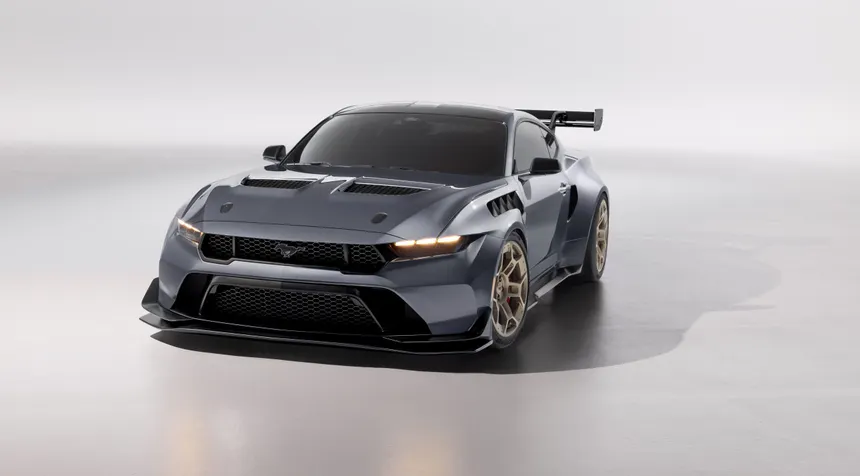
A European supercar dressed as a muscle car
Look under a GTD and what you see doesn’t look like a Mustang. It looks like a Dallara, a track Ferrari, a single-seater with bodywork.
Rear pushrod suspension with inboard dampers. Technology that in the motor world means one very specific thing: race car. Mustangs lived their whole life with solid axles, then multilink, road car suspensions. The GTD carries GT3 geometry, Multimatic DSSV five-way adjustable dampers, and the whole package hidden inside the cabin so it doesn’t disrupt the aerodynamic flow under the car.
Out back there’s no gearbox bolted to the engine. There’s a transaxle. The eight-speed dual-clutch gearbox lives at the rear axle, connected to the front V8 through a carbon fiber driveshaft. Porsche does this in the 911 GT3. Ferrari does it in the 296. Lamborghini does it when they feel like it. A Mustang shouldn’t carry this. A Mustang carries this.
Weight distribution lands near 50/50, something impossible with a front engine and a front gearbox. And the result is that the car turns like no Mustang has ever turned, brakes like no Mustang has ever braked, and enters corners like it’s something else. Because, essentially, it is.
Predator: the V8 that wasn’t in any brochure
The engine is called Predator. 5.2-liter supercharged V8. 815 horsepower. 664 lb-ft of torque. The power figure sits above any historic production Mustang, above the Shelby GT500, above anything Ford ever released for a street-legal car.
And here comes the nuance many people miss: the GTD’s Predator is NOT the engine of the Mustang GT3 race car. The GT3 runs a 5.4-liter naturally aspirated V8 developed by M-Sport because GT3 rules forbid forced induction in that class. Two different engines for two different cars. The street GTD can use supercharging precisely because it doesn’t have to comply with GT3 regulations.
Eight thousand one hundred RPM redline. American V8 sound with a supercharger whine on top. And one detail that says a lot about how the car is engineered: Track mode drops the ride height by two inches, roughly forty millimeters, stiffens springs and dampers, and recalibrates the whole car for circuit work.
It’s not a “sport” mode on a street car. It’s a track car with a street mode.
DRS on a Mustang
On top of the car’s rear sits a huge carbon fiber wing. Hydraulic. It moves. Two modes. One attack position, wing upright, generating maximum downforce. One drag-reduction position, wing tilted back, reducing drag to gain top speed. This is called DRS in Formula 1. Drag Reduction System. Active.
Up front there are hydraulic aero flaps. Also active. They work together with the rear wing and the flat floor to manage the airflow under the car. The official downforce figure is 885 kilograms at 180 mph. At 300 km/h, almost a ton of air pinning the car to the asphalt.
GT3 regulations forbid all of this. Active aero, no. Circuit DRS, no. Because if they allowed it, the cars would go too fast and the manufacturers would bankrupt themselves racing. The street GTD doesn’t need to comply with those rules. So it breaks every single one.
Two thousand kilos of sin
Two thousand kilograms. Almost exactly two thousand kilograms. 4,343 pounds per the official EPA spec. That’s the car’s weakest point, and Ford can’t hide it.
A 911 GT3 RS weighs a bit over 1,450 kg. A McLaren 750S sits under 1,400. The GTD is 500 kilos heavier than its direct rivals. Half a Fiat Panda worth of difference, at the same price point and with the same intended use.
Ford compensates with 815 horsepower, custom Michelin tires developed specifically for this car, forged Brembo carbon-ceramic brakes, and the most aggressive aero in the segment. But weight is weight. And on a circuit with slow corners and hard braking zones, half a Panda shows up. On the Nürburgring, where aero rules, the GTD went under seven minutes. On a tight-corner go-kart track, a 911 would eat its lunch.
Carbon fiber covers the main exterior panels, with an optional carbon roof for an extra ten grand. The driveshaft is carbon. The Recaro seats are carbon. And still, two thousand kilos. Because the transaxle weighs, the supercharged V8 weighs, the eight-speed gearbox weighs, and a Mustang is still a Mustang underneath.
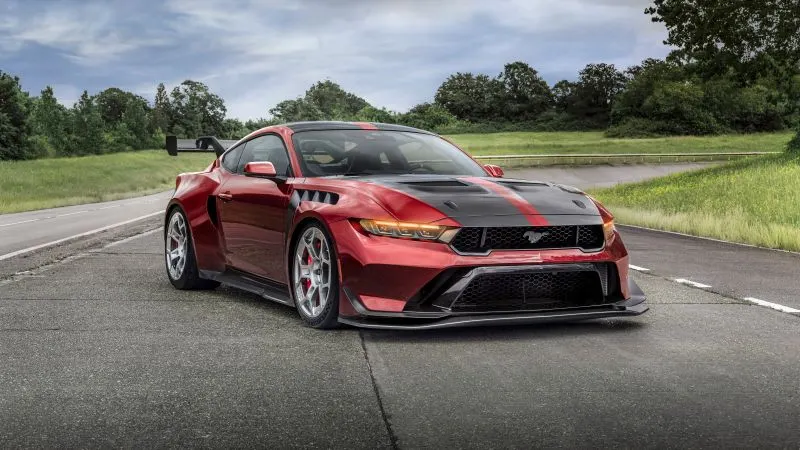
Buying a GTD: paperwork with the brand
Buying a GTD isn’t walking into a dealership and signing. It’s submitting an application. Ford opens application windows, reviews profiles, requires 50% deposits up front, and decides who gets the car.
The actual production figure is now confirmed by Ford-authorized dealers: under 2,000 units of the original GTD planned in total. The distribution network is filtered too: only a select group of Ford dealers in the United States can sell the GTD, and the designation isn’t handed out widely — Ford requires those dealers to meet specific facility, training, and sales standards to carry the GTD nameplate.
Why this system? Because Ford is protecting the asset. If you sold the GTD freely to the first person to pay, in six months half the units would be sitting in investment-car dealerships at $600,000 a piece, pure speculation, brand damage. By filtering the buyer, Ford makes sure the GTD goes to people who are going to use it, store it, respect it. The industrial logic behind this is the same Porsche applies with the GT3 RS, Ferrari with its limited series, and Lamborghini with anything ending in SVJ. Social filters that protect residuals.
For the buyer, the money on the table: base price $318,760 plus $5,500 destination plus $3,700 gas guzzler tax. Three hundred and twenty-eight thousand out the door. The Carbon Series starts at $428,000. Spirit of America at $429,000. The Liquid Carbon, with the full body in exposed carbon and thirteen kilos less than the Carbon Series, lives around $450,000.
Against the Porsche 911 GT3 RS 992-gen, with its 525 naturally aspirated horsepower and $243,000 price tag, the GTD costs 35% more. For a Mustang. Against the 830-hp hybrid Ferrari 296 GTB at $320,000, the GTD stays at similar money but without the hybrid tech. Against the 750-hp turbocharged McLaren 750S at $330,000, it comes down to religion. The Corvette ZR1X, the American car that took the ‘Ring record off the GTD, starts at $223,000 — a hundred grand less than the GTD with all-wheel hybrid drive.
Does it make sense to pay what the GTD costs when the 911 GT3 RS exists, is lighter, is purer, and is significantly cheaper? And when the ZR1X costs a hundred thousand less and currently runs faster at the ‘Ring? Rationally, no. The GT3 RS is objectively a better car on track, in maintenance, in residual value, in almost anything measurable with a stopwatch and a scale.
The GTD doesn’t get bought on rationality.
What it costs to own a GTD for five years
This is where the conversation gets serious. Buying a supercar is one thing. Maintaining it is another. And in the GTD vs 911 GT3 RS comparison, ownership cost is where Porsche pulls a quiet but real advantage on Ford.
Start with the tires. The GTD runs Michelin Pilot Sport Cup 2 R developed specifically for this car, not the general catalog you can order online from any supplier. The compound and the sizing are unique. That means when you wear them out — and you will wear them out fast if you use the car as intended — you can only replace them through Ford’s network. The 911 GT3 RS also runs Michelin Cup 2 Rs, but in a size that exists in the open Michelin catalog, so you can buy them at any specialist shop with discount margin. Difference: on the GTD, tire price is whatever Ford says; on the GT3 RS, tire price is whatever the open market says.
The Multimatic transaxle. This gearbox isn’t serviced by any random Ford mechanic. Multimatic builds it in Markham, Ontario, and specialist service runs through a limited authorized network. While the car sits inside warranty, fine. Once it’s out, the bill for the first major transaxle service isn’t really known yet because the oldest GTDs have only been in circulation for two years. But anyone with experience in racing dual-clutch gearboxes knows these parts demand periodic and professional attention. The Porsche equivalent, the GT3 RS PDK, has twenty years of evolution, global service network, known intervals, and a mature parts market.
The active aerodynamics. The GTD requires periodic recalibration of the rear wing’s hydraulic actuators and the front flaps. This isn’t done by any random shop. The car has to go to a specialist with the correct Ford Performance diagnostic gear. The 911 GT3 RS uses fixed mechanical aero, manually adjustable without a hydraulic system. Simpler, cheaper to maintain.
Carbon-ceramic brakes. Here they’re more even, both cars use forged Brembos and the discs cost what they cost: five figures per set on either side. But wear on the GTD is higher because of the higher weight — 500 extra kilos punish each circuit braking event harder.
Industrial summary: the GTD is more expensive to maintain. Not marginally. Significantly. We’re talking 30-50% higher annual ownership cost versus a well-maintained GT3 RS in similar use. If your plan is to buy the car, drive it twice a year on track day and store it in a climate-controlled garage the rest of the time, doesn’t matter. But if you’re going to use it, knowing what you’re signing up for helps.
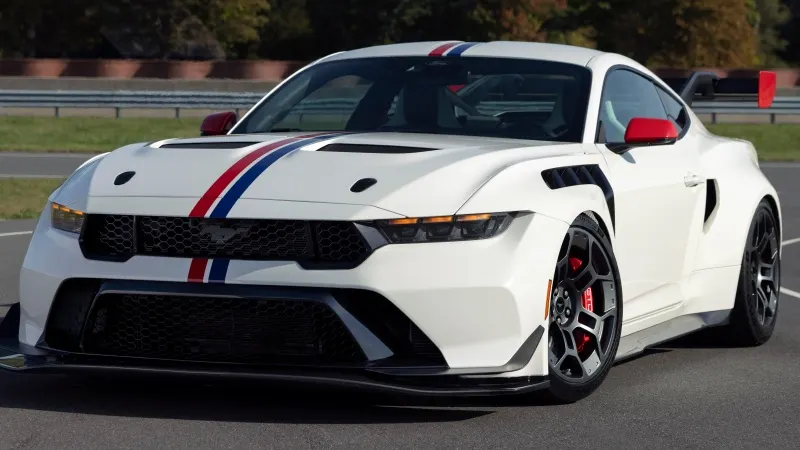
What Ford actually built
The Mustang GTD doesn’t exist to move units. It exists to position a brand. Ford has been “the Americans who build pickup trucks and cheap muscle cars” for decades. The GTD says: we can do this too. We can go to Le Mans, win at Daytona, go under seven minutes at the ‘Ring, and sell you a street car breathing the same technology.
The car is a statement of intent. A diplomatic slap to Porsche, Ferrari, McLaren and the whole European clan that’s been believing it owns the supercar segment for fifty years. Americans don’t show up at Le Mans anymore with just vintage GT40s and nostalgia. They show up with a pushrod Mustang, transaxle, DRS, carbon-ceramic, 815 horsepower.
The GTD isn’t a Mustang. The GTD is a Ford carrying Mustang lettering on its rear. The badge weighs, the icon rules, but what sits underneath has nothing to do with the pony car’s history. It’s something else. It’s Ford Performance showing teeth and telling the world that the 2025 supercar conversation doesn’t happen anymore without Americans at the table.
Is it worth it? Depends. If you want the best track car per dollar, no — the ZR1X costs a hundred grand less. If you want the best mixed-use circuit-street car with proven global service network, no — the 911 GT3 RS gives you that with less drama. If you want a European supercar with objectively superior performance and cheaper maintenance, no.
If you want the car that proved, stopwatch in hand, that an American can enter the ‘Ring’s most exclusive club without asking for permission, then yes. And if you want it, you have to pray Ford approves your application.
Check you’re still alive.