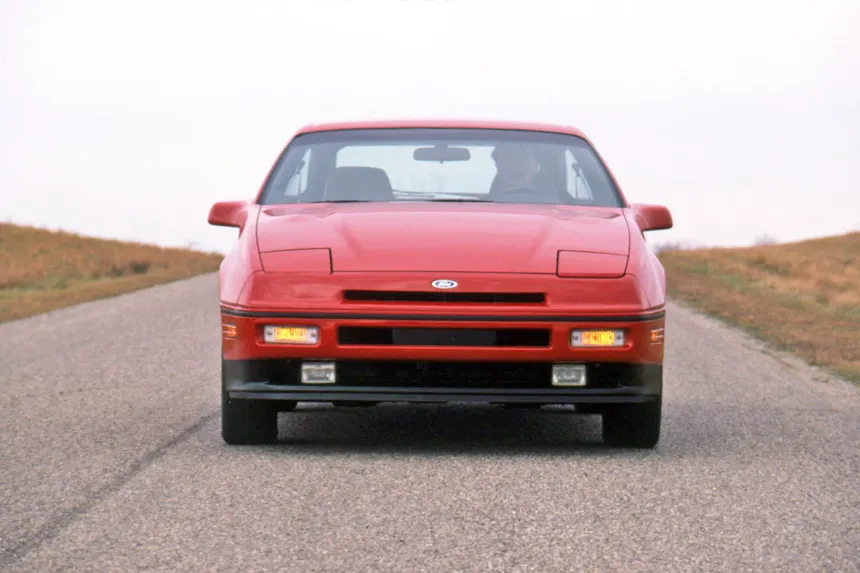
Ford Probe: the car built to kill the Mustang, saved by the Mustang’s own fans
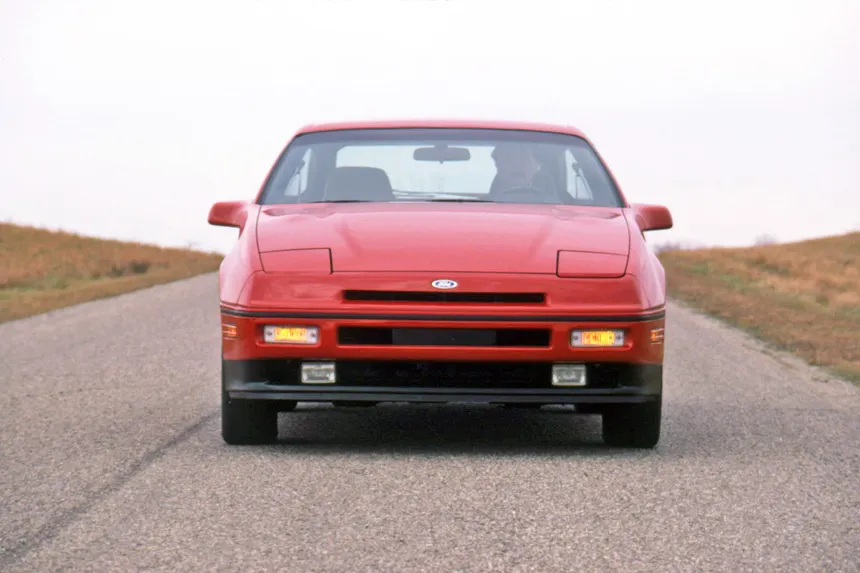
Here’s one of the greatest “what if?” stories the car industry ever produced. And it’s a tale with a doubly happy ending: it saved the Mustang and, quite by accident, condemned a perfectly good car to spend its whole life in the shadow of what it nearly became.
In the early 1980s, Ford made a decision that, viewed today, makes any enthusiast’s blood run cold. It decided to kill the Ford Mustang. Not retire it: transform it into something else entirely. The new Mustang would be front-wheel drive, riding on a Japanese Mazda platform, powered by four-cylinder engines and, brace yourself, no V8. America’s quintessential muscle car turned into a Japanese coupé with a Ford badge. What happened next was one of the most significant enthusiast revolts in motoring history. And from that revolt, the Ford Probe was born. Let me walk you through it.
Why Ford wanted to kill its own legend
Set the scene, because the decision, mad as it sounds, had its logic. Early eighties. The oil shocks of the seventies still hung like a millstone. Insurance had gone through the roof. Emissions rules were strangling big engines. And American muscle, the pony cars, the muscle cars, were in steep decline. The V8 was starting to look like a relic of another age.
The Mustang had survived the seventies, but its rear-wheel-drive Fox platform was ageing. Meanwhile, the Japanese were cleaning up with smaller, lighter, more modern and efficient coupés. The Celica, the Prelude, the Integra. Ford looked at all that and drew a cold conclusion: the future was front-wheel drive, four cylinders and efficiency. The Mustang, as it stood, had no place in that future.
Since Ford had owned a quarter of Mazda since 1979 and the two had collaborated since the seventies, the solution seemed obvious: take a Mazda platform and build the Mustang of the future on top of it.
It’s worth grasping how deep the Ford-Mazda alliance ran in those years, because it explains many of the choices made. The Dearborn company had taken a significant stake in the Hiroshima maker, and from that bond sprang dozens of shared projects: platforms, engines, gearboxes, whole models. For Ford, leaning on Japanese engineering meant access to light, efficient front-wheel-drive technology it simply didn’t command with the same mastery in the States. Mazda, for its part, gained volume and access to the American sales network. On paper it was a perfect marriage. The trouble is that no engineer in Hiroshima, however gifted, could breathe the soul of a muscle car into a front-drive coupé. And that soul, for Mustang buyers, wasn’t a detail: it was everything.
The secret ST-16 project
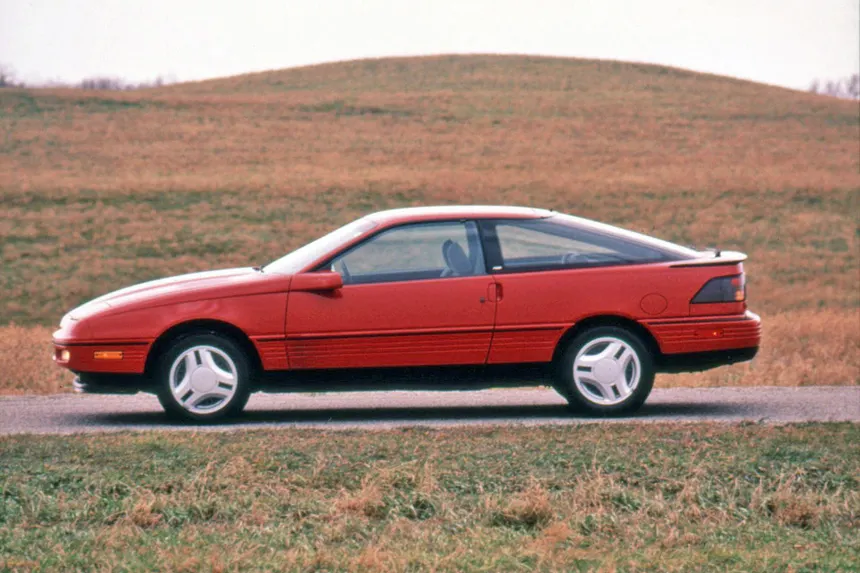
So, deep inside Ford, the project codenamed ST-16 was born. The idea was as ambitious as it was heretical: gradually retire the rear-drive Mustang, provisionally renaming it “Mustang Classic,” and replace it with this new car that would inherit the sacred name.
The design was handed to Toshi Saito, a designer working for Ford in North America, and finalised in early 1984. The project then moved to Hiroshima, to Mazda itself, for development. The car would share the front-wheel-drive G platform with two Mazdas built at the same Flat Rock, Michigan plant: the 626 and the MX-6. In fact, the Probe and the MX-6 are platform twins. And a detail you’ll enjoy: the pop-up headlight mechanism and the instrument cluster came straight from the Mazda RX-7 FC.
On paper, all was well. Until somebody talked.
The leak that changed everything
In 1987, AutoWeek magazine did what good journalism does best: it dug, and it exposed. It put the ST-16 on its cover and revealed to the world what Ford had been quietly cooking for years: that it planned to kill the rear-drive Mustang and replace it with a front-drive coupé with Japanese guts.
And then everything blew up.
The reaction was one of the biggest enthusiast revolts on record. Mustang clubs descended on Ford. Motoring journalists laid in without mercy. Dealers protested. Loyal, lifelong customers vented their fury unfiltered. How dare Ford take the quintessential American icon, a purely US invention, and turn it into a front-drive Japanese car with no V8? It was a betrayal of everything the Mustang stood for.
Ford listened. And here’s the loveliest lesson in this whole story: sometimes the fans understand what truly matters better than the executives do.
The U-turn and the birth of the Probe
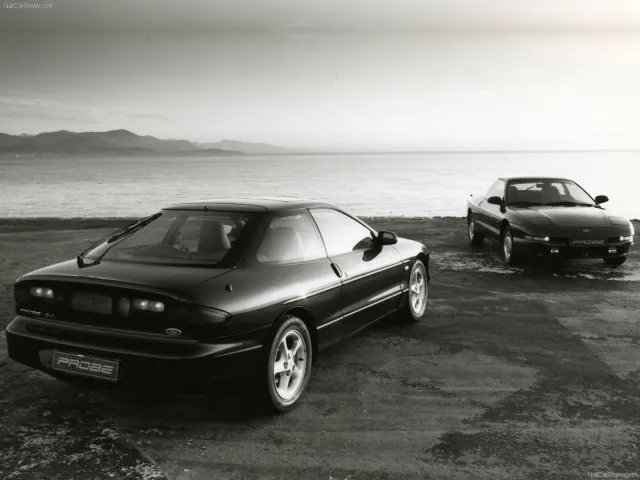
Ford swerved at the last minute, and it was a masterstroke. On one hand, it approved continued development of a rear-drive Mustang. A small skunkworks team led by John Coletti took the old 1979 Fox platform and heavily revised it on a tight budget. From that would come, years later, the fourth-generation 1994 Mustang. The Mustang survived. It stayed what it was meant to be.
And the ST-16? It couldn’t simply be cancelled. Production was about to begin, and if Ford stopped it, the company would lose the entire development budget and, worse, break its manufacturing contract with Mazda, with all the financial grief that implied. So it launched in May 1988, but under a new name, lifted from a series of futuristic aerodynamic Ford concept cars: Probe.
Instead of being the Mustang’s successor, the Probe went on sale alongside it, competing not against the Camaro or Firebird but against the fashionable Japanese coupés: the Celica, the Prelude, the Eclipse. The original plan had been turned completely on its head.
And it turned out to be no bad car
Here’s the biggest irony. The Probe, freed from the heavy inheritance of the Mustang name, was a perfectly good car. More than good.
Period reviews praised its modern, aerodynamic styling, its excellent handling, helped by an adjustable suspension. The flagship Probe GT carried a 145bhp 2.2 turbo with an intercooler, four-wheel disc brakes with ABS, three-way adjustable suspension and variable-assist steering. It did 0-60 in around seven seconds and reached 134mph. Later came a 3.0 Vulcan V6 that cured the turbo lag. On the road it steered sweetly and rode with a composure that shamed plenty of pricier rivals, and reviewers kept returning to how grown-up and resolved the whole car felt for something built to a budget.
And it sold. In its first year, demand outstripped supply. People were paying list price or above to get one, to the point that a Chicago Tribune columnist advised anyone who couldn’t find a Probe to just buy its twin, the Mazda MX-6. Nearly 390,000 first-generation cars were built. For Ford, a success. The Probe opened doors to buyers who’d never have considered an Escort GT or a Mustang, people now cross-shopping it against a Celica or an Eclipse.
There’s a fascinating reading in that commercial success. The Probe worked precisely because it stopped being a Mustang. Freed from the weight of a legendary name and the impossible expectations that name dragged along, it could be judged for what it really was: a modern, well-made, pleasant, affordable coupé. The buyers who chose it weren’t after a muscle car, they wanted an elegant alternative to the Japanese, and the Probe gave it to them. It proves that sometimes a product fails or triumphs not for its intrinsic qualities, but for the label you stick on it. Call it Mustang and it would have been a disaster foretold; call it Probe and it became a respectable hit. The same metal, the same mechanicals, two opposite fates depending on the name on the bonnet.
The European connection: the Capri-shaped hole
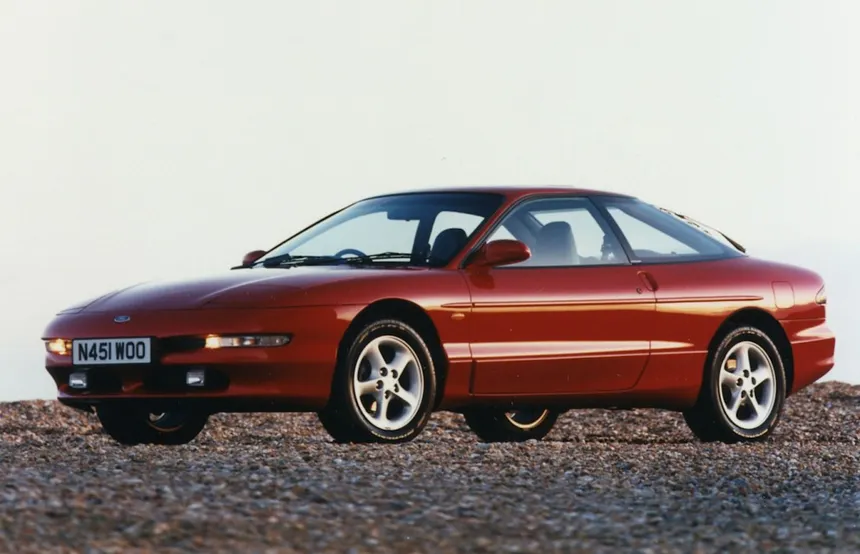
And here’s where this story crosses ours. Because in Europe, the Probe didn’t arrive as a fake Mustang. It arrived to fill a very specific hole: the one left empty by the Ford Capri.
The Capri, that people’s coupé that won championships, had died in 1986. Ford needed something to take its place in European hearts. And it sent the Probe on that mission. The trouble is, the Probe was no Capri. It lacked the charisma, the rear-drive heritage, that soul of a working man’s car turned track legend. It was a good modern coupé, yes, but to European eyes it felt too American and too soft.
In fact, in its most direct European fight, against the Opel Calibra, the Probe lost. The Calibra clearly outsold it precisely because the Probe was seen as too American and underpowered for continental taste. The car that in America was born “too Japanese” for Mustang fans turned out, in Europe, to be “too American” for coupé lovers. It couldn’t win for losing.
For a European audience, raised on coupés with sharply drawn characters, the Probe’s case is instructive. Over here a coupé was expected to have a precise identity: driving involvement, a distinctive engine note, a personality you could name. The Probe, born of an industrial compromise between Detroit and Hiroshima and then shipped to Europe to plug a hole left by another car, had no such identity. It was competent at everything and memorable at nothing. And in a market where coupés were bought with the heart before the head, competence without character wasn’t enough. The Calibra, with its aerodynamic record and its DTM wins, had a character, however deliberately manufactured. The Probe didn’t, and the market punished it for that.
The NEC verdict
The Probe is, to me, the exact mirror image of the Capri, which makes it the perfect piece to close this story.
The Capri was a European people’s car that earned its glory the hard way, on the road and on the circuits. The Probe was a technically sound car doomed to be remembered not for what it was, but for what it nearly was and never became. Its whole life it carried the shadow of a name it was never allowed to wear. And that’s a deeply unfair sentence for a car that, looked at coldly, did almost everything well.
But the Probe’s biggest lesson isn’t about the car. It’s about who really runs a brand with a soul. Ford, with all its executives, its market research and its impeccable financial logic, came within a whisker of murdering its own legend. And the people who stopped it weren’t the directors. It was the enthusiasts. The clubs, the purists, the usual obsessives who refused to have their Mustang swapped for a front-drive coupé. The very people the industry tends to ignore turned out to be right, and they saved one of the most important icons in automotive history.
Every time you see a modern Mustang roar with its V8 and rear-wheel drive, remember it nearly didn’t exist. And remember the Probe, the good car that paid the price of that battle. It wasn’t the Mustang. But perhaps, by forcing Ford to think again, it did something more important: it saved the Mustang from itself.
Check you’re still alive.