IDIADA: Europe’s Best Automotive Lab Hides in Spain, and Even the Spaniards Don’t Talk About It
When Chris Harris wants to test a road car at the limit, he heads to the Nürburgring or, if he’s lucky, gets handed the keys at Anglesey. When Top Gear needed a track for Power Laps, they used a disused airfield in Surrey. When Tiff Needell hammered hot hatches in the nineties, he did it on British country roads. Every car culture builds its mythology around a place where the lap times happen. The Ring. Goodwood. Bathurst. Laguna Seca.
Tarragona doesn’t appear on that list. And it should.
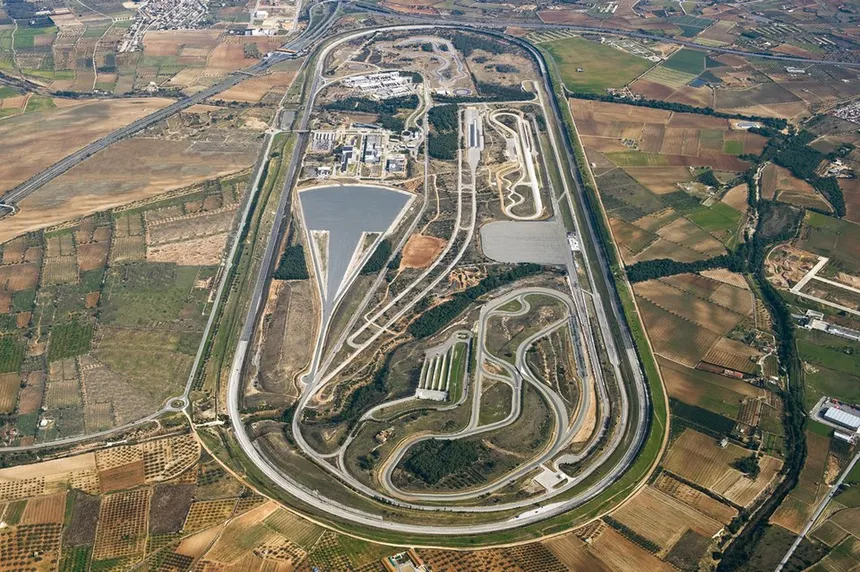
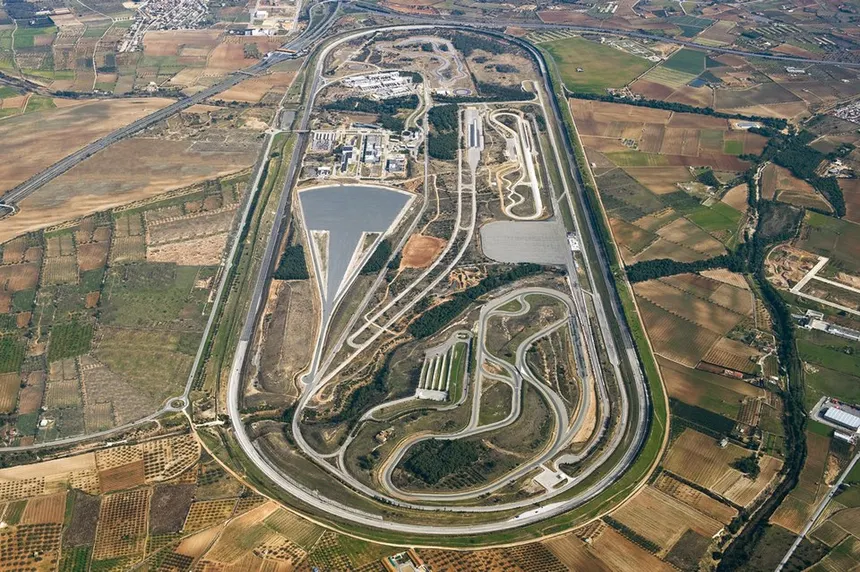
About 70 kilometres south of Barcelona, tucked between the AP-7 motorway and the Mediterranean coast, sits a 370-hectare facility called IDIADA. Inside it, on any given week, you’ll find prototypes from Mercedes, Porsche, McLaren, Tesla, BYD, Hyundai, the Stellantis brands, the VW Group and dozens of suppliers nobody outside the industry has heard of. They come to crash cars, to break suspensions on calibrated potholes, to validate autonomous driving stacks, to torture battery packs until they catch fire. Then they leave, sworn to confidentiality, and the cars eventually appear in showrooms with five Euro NCAP stars and not a single mention of where those stars were earned.
This is one of the best-kept secrets in European engineering. And the funniest part is that nobody is actively keeping it secret. The Spanish public simply doesn’t talk about it.
The University Spin-Off That Became a Continental Reference
IDIADA stands for Institut d’Investigació Aplicada de l’Automòbil. In English, the Institute of Applied Automotive Research. It was founded in 1971 inside the Universitat Politècnica de Catalunya, originally as an academic research outfit aimed at supporting a Spanish car industry that, back then, was essentially SEAT and not much else. Think of it as the equivalent of MIRA in the UK or NATC in the US, but born inside a public university rather than as a private consortium.
The real physical jump came in 1994, when the Santa Oliva proving ground opened in L’Albornar, Tarragona. From day one, the site was designed as a one-stop shop: a single perimeter where a manufacturer could roll in a development mule on Monday and roll out by Friday with enough data to greenlight production decisions. High-speed oval, dynamic platforms, wet and dry braking surfaces, durability loops with calibrated potholes, NVH chambers, crash labs, battery test cells. Everything under one fence.
By the late nineties, the Catalan government privatised the operating company. The Generalitat kept ownership of the land and a minority stake. The Applus group, a Catalan multinational specialised in testing and certification (the same Applus you see at Spanish MOT stations under another name), took over management and 80% of the operating capital. That public-private hybrid still runs the show. And in 2024, it got renewed in spectacular fashion.
The Biggest Public Asset Deal in Catalan History
July 2024. The Generalitat opens a public tender to re-award the IDIADA management contract for the next 25 years. Applus puts in a bid of 428 million euros, nearly double the floor price set in the bidding rules. The only serious competitor, TÜV Rheinland of Germany, pulls out before the financial envelope is opened. Applus walks away with the contract.
Add the annual fees that Applus will pay over a quarter-century, and the Generalitat books a total of more than 800 million euros from this single operation. That makes it the largest single patrimonial deal in the history of the regional government. Bigger than any privatisation, any land sale, any port concession. A proving ground, of all things, turned out to be the most valuable asset the Catalan public administration ever had on its books.
You’d think that kind of headline would travel. It didn’t. The Madrid press treated it as a regional business item. The English-speaking automotive media barely registered it. And the average European car enthusiast, who can recite the elevation change on the Karussell from memory, has never heard the word IDIADA in any language.
What’s Actually Inside the Fence
Let’s be concrete. The L’Albornar complex includes a banked high-speed oval, a dynamic platform for slalom and skidpad work, a multi-surface braking strip (dry asphalt, wet asphalt, simulated low-grip, ISO V noise certification surface, cobblestones), a durability loop designed to destroy suspensions in days rather than years, an off-road comfort track, and a motorway loop for sustained-load testing. There’s also a hot-climate testing area that takes advantage of the Mediterranean summer (consistent 35-plus degree days, low humidity, ideal for cooling system validation).
Since 2022, IDIADA added a dedicated ADAS and Connected Automated Vehicle area, which simulates urban, interurban and motorway environments for autonomous driving validation. That zone was expanded in 2024 with a 541-metre, four-lane straight specifically designed for highway-speed autonomous tests. The whole thing is wrapped in a private cellular network that hosts 2G, 3G, 4G and 5G in parallel, so a manufacturer can replicate the network conditions of any market on Earth without leaving the site.
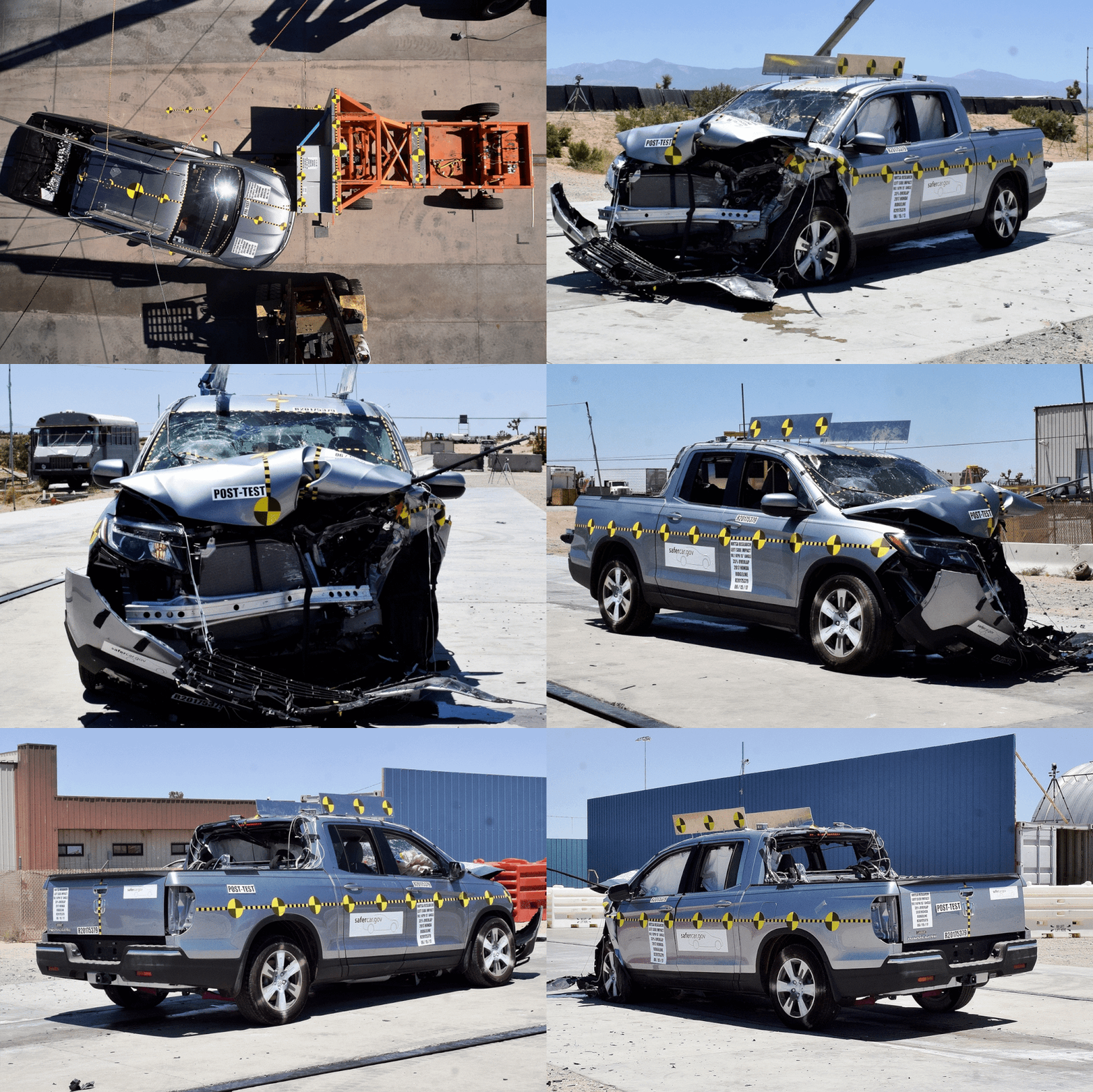
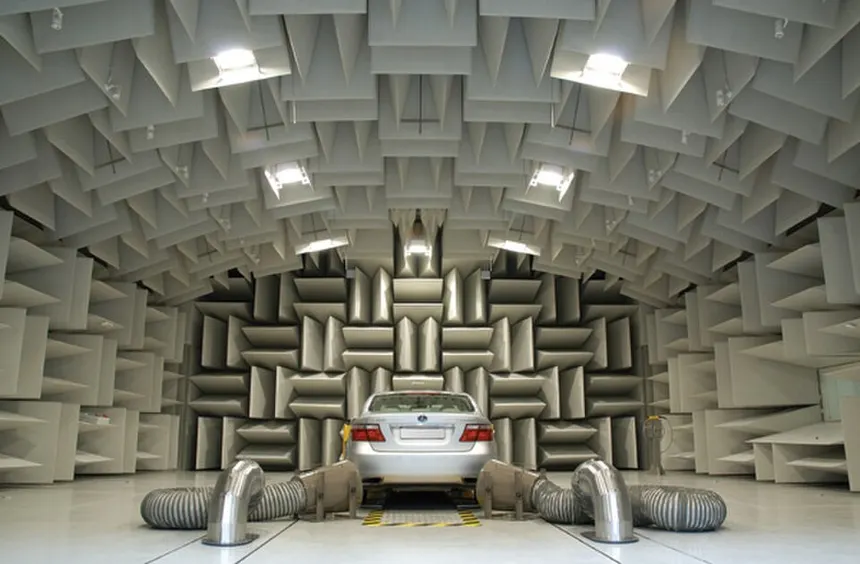
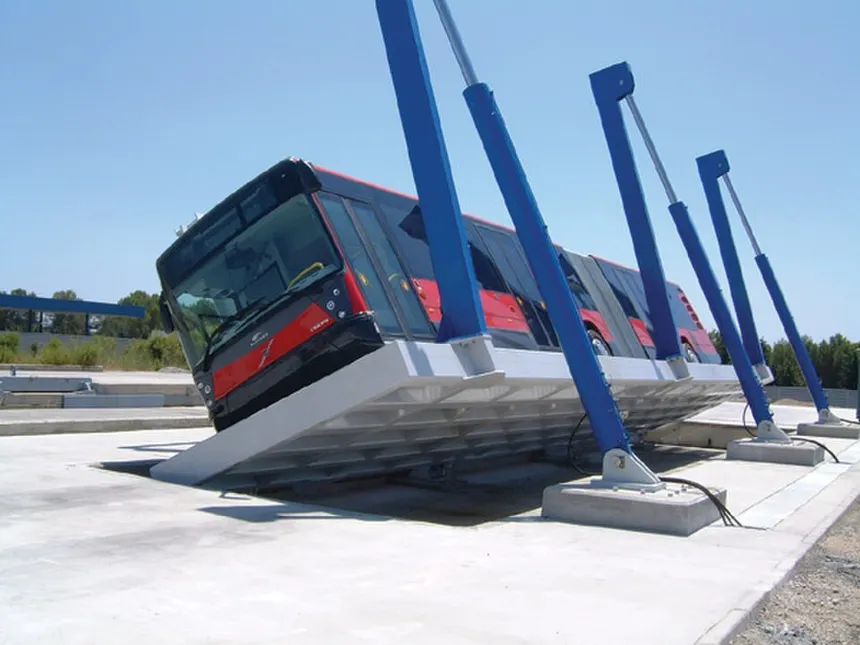
Then there are the labs. Full-vehicle crash testing for frontal, side, rear and pedestrian impact. Airbag deployment in climatic chambers. A powertrain test bench. A semi-anechoic NVH room. Battery abuse testing facilities where lithium packs get punctured, shorted and set on fire on purpose, because the only way to know how a battery fails is to make it fail under controlled conditions. The whole operation runs on ISO 17025 accreditation, with more than 3,400 staff across 24 countries.
IDIADA is one of the official partner labs of Euro NCAP. So when you see a five-star rating on a brochure for a European-market car, there’s a real chance that the test which earned that star happened in Tarragona. Same goes for the homologation paperwork that allows a Chinese EV brand to sell legally in Germany, France or the UK. Pass through IDIADA, get your Type Approval, ship to dealerships. That’s the workflow.
And here comes the detail that almost nobody outside the industry ever mentions. In 2002, IDIADA set up a joint venture with CTAG (the Galician Automotive Technology Centre) called CTAG-IDIADA Safety Technology. Over the years, that joint venture has expanded into Germany. A pedestrian protection laboratory in Ingolstadt, right in Audi’s backyard. A passive safety testing complex near Frankfurt, equipped with a Hy-Ge reverse acceleration sled for frontal, side and rear impact simulation, airbag deployment testing in climatic conditions, and a full set of state-of-the-art dummies including THOR and World SID.
Read that again. A Spanish-Galician joint venture operates two crash testing facilities on German soil, serving German manufacturers who would rather contract a Spanish company than build the same capability in-house. Imagine Top Gear telling that story properly. Imagine Doug DeMuro doing a tour video. Imagine James May explaining, with his usual mock-incredulous face, that the most respected pedestrian protection lab in Ingolstadt isn’t German. None of that has happened. Because the people who should be telling this story (the Spanish motoring press, the Spanish industrial agencies, the cultural conversation in general) have decided it isn’t a story at all.
The Chinese operation completes the global map. Since 2016, IDIADA has managed a proving ground in Zhaoyuan (Shandong province), owned by tyre manufacturer LingLong. 150 hectares, 18 tracks, a 5.2-kilometre high-speed loop, the same operating standards as Spain. A manufacturer can homologate in Tarragona, replicate in Zhaoyuan and have a single technical interlocutor for both. That global coordination is what separates a good proving ground from an expensive one.
The Rimac Story Nobody Tells Properly
February 2013, Circuit de Catalunya, during the F1 pre-season tests. IDIADA rolls out a prototype called Volar-e. Electric supercar, four motors in central layout, all-wheel drive, 800 kilowatts (equivalent to 1,088 hp) and 1,000 Nm of torque according to the official Applus IDIADA release. 0 to 100 kilometres per hour in 3.4 seconds, top speed quoted at 300, Rimac battery modules supplying 38 kWh at 640 volts. Commissioned by the European Commission, co-financed 50/50 with IDIADA itself. Built in four months.
Four months. To go from blank sheet to running prototype on a Formula 1 circuit. Anyone who has worked in vehicle development knows that this kind of timeline is normally measured in years, not weeks. IDIADA pulled it off by partnering with a 25-year-old Croatian called Mate Rimac, who at the time was an unknown name running a small operation in Sveta Nedelja with a project called the Concept_One.
Mate Rimac himself, present at the Montmeló unveiling, didn’t sugar-coat the relationship. Rimac contributed the base car (the Concept_One platform), plus the motor-inverter-reduction gearbox unit that also equipped his own supercar. IDIADA did the engineering integration, the central-motor architecture (replacing the original in-wheel layout), the electronic development and the project coordination. According to Rimac himself, the two cars shared roughly five percent of exterior components (doors, windows, dashboard). Straight translation: the Volar-e was first-class Spanish integration on a Croatian platform, delivered in four months. Neither a Spanish invention nor a disguised copy. A joint project with technical contributions from both parties, co-financed 50/50 by the European Commission and IDIADA itself.
The Volar-e never reached production. That wasn’t the point. The point was that, in 2013, a Spanish engineering centre and a young Croatian entrepreneur jointly built what was, at the moment of presentation, arguably the most powerful production-spec electric supercar in the world. Five years before the Rimac C_Two. Eight years before the Nevera. Twelve years before Rimac would end up controlling Bugatti through the Bugatti Rimac joint venture.
IDIADA was, quietly, one of the first major European references to bet on Mate Rimac. The story should be told as the moment a young outsider entered the top tier through the side door of a Catalan engineering company. Instead, it got filed under “concept cars that never made it” and forgotten.
There’s a wider lesson in there. When American outlets cover Tesla, they cover it like a national triumph. When the British press covers Lotus or McLaren, they wrap the engineering in identity. When the Italians talk about Ferrari, even a brake disc becomes a cultural artefact. Spain has stories of the same calibre and treats them as administrative footnotes. The Volar-e wasn’t just an EU-funded prototype. It was the moment a Spanish lab gave a Croatian unknown the platform that eventually rewrote the supercar business. That deserved a documentary. It got a press release.
What This Says About Engineering Storytelling
The British have built a global motoring culture on the back of relatively modest infrastructure. The Top Gear airfield is a former RAF runway. Goodwood is a private estate. Bedford Autodrome is a converted airfield. None of these places match what IDIADA has in raw capability. They don’t need to. Because Britain figured out, decades ago, that the story of where cars get tested is as valuable as the test itself. Chris Harris filming a slide on a Welsh B-road sells more enthusiasm for cars than a thousand technical reports.
Spain has the engineering. The communication is another matter entirely. There’s no IDIADA documentary on prime-time television. No long-form YouTube tour by a major motoring journalist. No annual press junket where European media get to drive the high-speed oval. The site stays sealed and the work stays anonymous, partly because client confidentiality demands it and partly because nobody in Spanish car media has built the relationships to push past that confidentiality.
Meanwhile, in the engineering offices of Wolfsburg, Munich, Stuttgart and increasingly Shenzhen, the name IDIADA is dropped routinely. Ask a German chassis engineer where they do their summer hot-weather development, and Tarragona comes up before California. Ask a Korean ADAS team where they validate against Euro NCAP protocols, and they’ll mention L’Albornar without hesitation. Inside the industry, this place is famous. Outside it, almost nothing.
The next 25 years are written. Applus keeps the contract until 2049. The Generalitat keeps cashing the cheques. IDIADA keeps expanding into autonomous vehicle territory, where the next decade of automotive value will be created. The infrastructure is in place. The talent is there. The clients keep coming. The only thing missing is somebody, anywhere, deciding that this story deserves a wider audience.
Next time you see a five-star Euro NCAP rating in a car advert, remember. That star may well have been earned in a corner of Catalonia where the gates stay shut and the cameras stay outside.
Check you’re still alive.