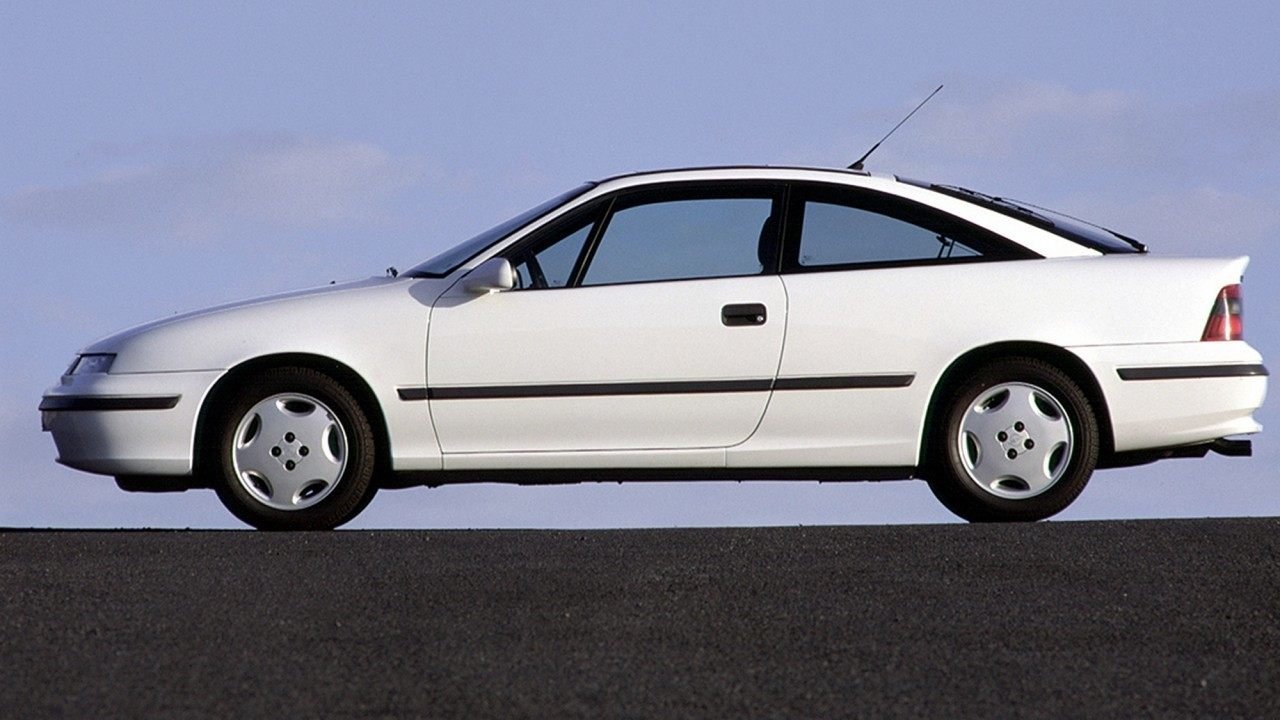
Opel Calibra: the world’s most aerodynamic car was the slowest one in the showroom
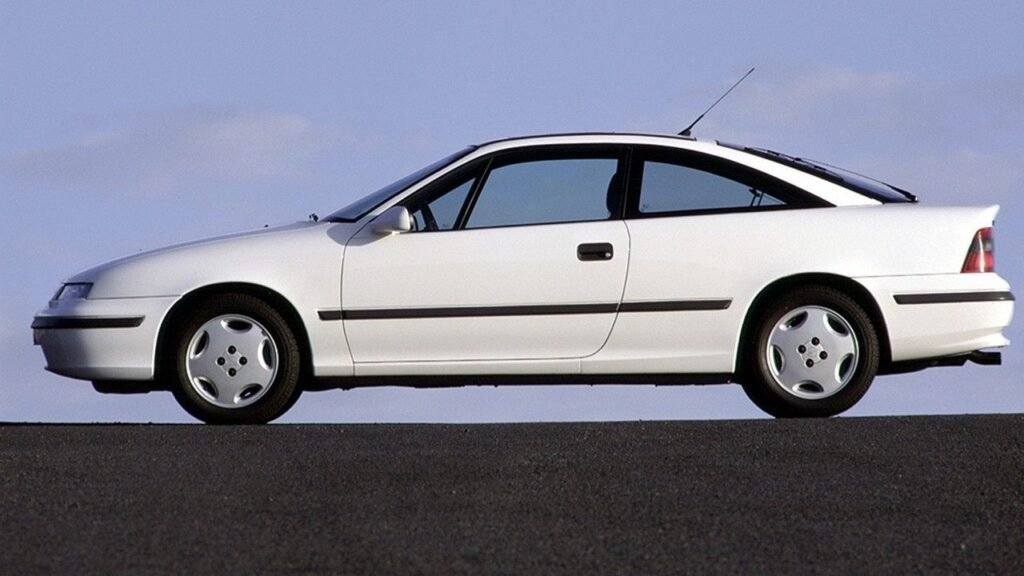
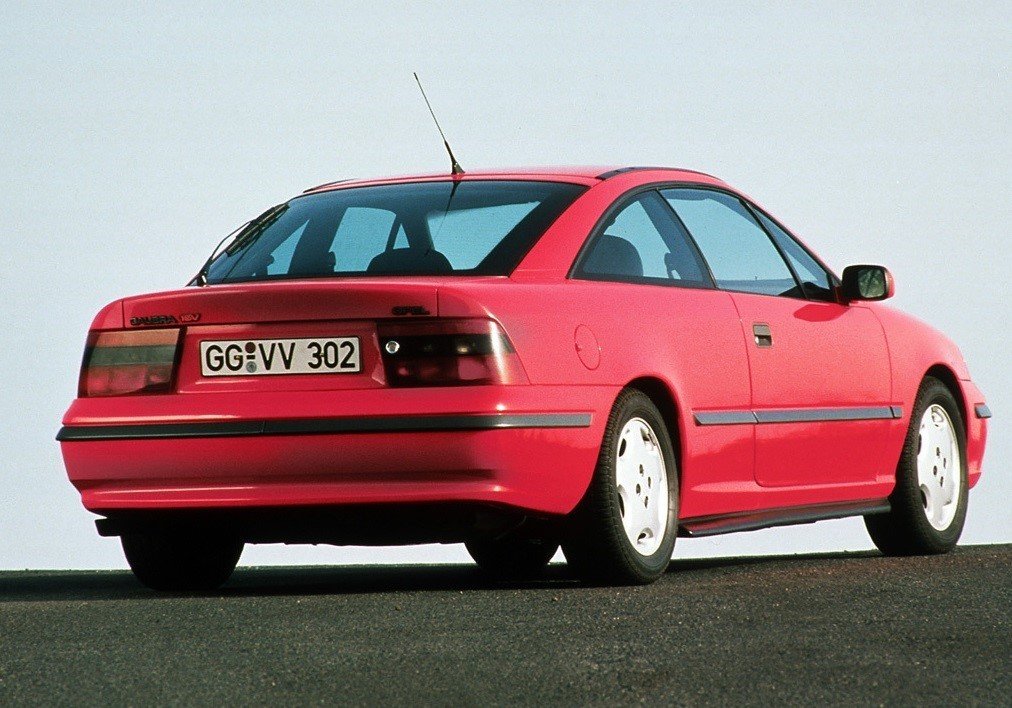
Here’s one of the loveliest ironies the car industry ever produced. In June 1989, Opel launched a car that broke a world record and held it for ten years. The Calibra was the most aerodynamic production car on the planet, with a drag coefficient of 0.26. A figure that stood until 1999, when the Honda Insight and Audi A2 finally beat it. A full decade as king of the air.
Now the catch. That 0.26 belonged only to the most basic version. The slowest one. The 115bhp car. The moment you wanted a quick Calibra, the turbo, the V6, the 4×4, the number climbed to 0.29 and the record evaporated. Which means the most aerodynamic car in the world was, within its own range, the weakest. And in that contradiction lives the entire story of the Calibra. Let me walk you through it.
The man who closed the circle
Start with a detail almost nobody joins up. The Calibra was penned by Wayne Cherry, GM’s design boss, and a German named Erhard Schnell. If you’ve followed this series, that name rings a bell. It’s the same Erhard Schnell who in the 1960s secretly sketched the Opel GT, the baby Corvette. The very same man.
Sit with that a moment. The bloke who drew Opel’s prettiest sports car in 1968, with its Coke-bottle line and its hand-cranked headlamps, was still there twenty years later drawing the most aerodynamic coupé in the world. The entire Opel coupé bloodline, from GT to Calibra, runs through one designer’s hands. That’s no accident. It’s a company that kept, for decades, a man who knew how to draw cars that cut the air and stole hearts at the same time.
How you hunt a record in a wind tunnel
The Calibra launched on 10 June 1989 with one number stamped on its forehead: 0.26. For context, most cars of the era sat around 0.35 or 0.40. The Calibra sliced the air like almost nothing built in series until then.
How do you manage that? Obsession with every detail. The key was the headlamps. Opel worked with Hella to develop wafer-thin units, just 7cm tall, using ellipsoid technology that was new at the time. Those slim lamps allowed a very low, clean nose without the bulges normal headlights forced on a design. The Calibra’s front is flat, sharp, almost grille-less. Everything shaped so the air would simply slide off. Even the door mirrors, the underbody and the gaps around the panels were fussed over, because at those speeds every tiny eddy of turbulence adds up. This was obsessive, detail-by-detail engineering of a kind usually reserved for record cars, applied to a mainstream coupé you could buy from a dealer.
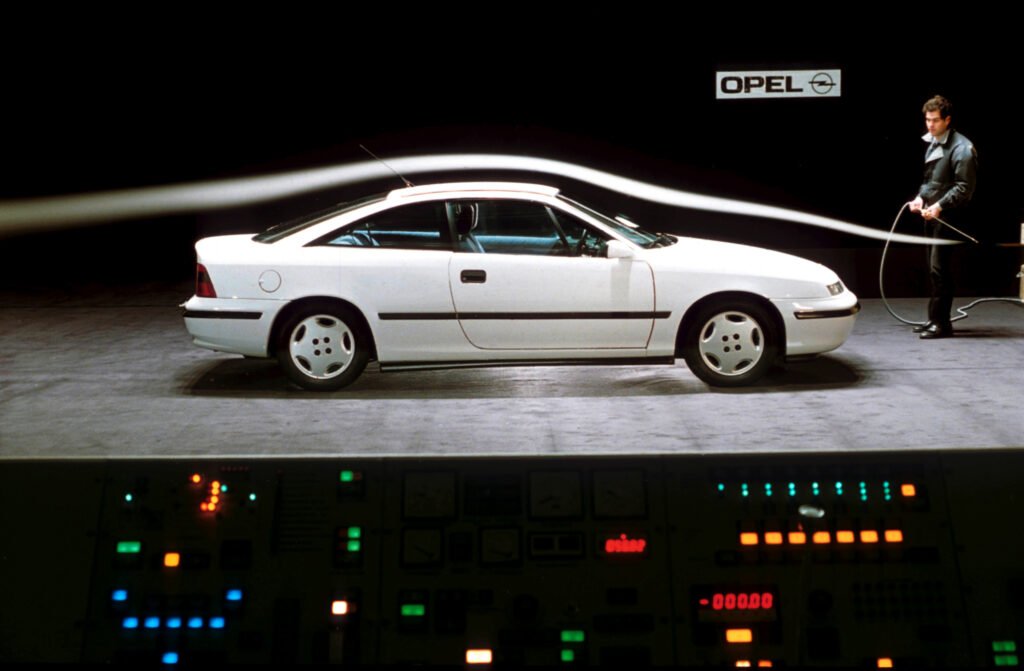
To verify the record, the prototype had to travel to the DNW wind tunnel in the Netherlands, one of the few in the world with a rolling road, that moving belt which simulates air genuinely flowing under the car as it does on the road. An ordinary tunnel wouldn’t do. They wanted the real figure, not a lab approximation. And they got it. 0.26. A record that lasted ten years.
It’s worth explaining why aerodynamics mattered so much in those particular years. By the late eighties, after two oil crises and with the first serious fuel-economy rules, cutting drag had become the most elegant way to make a car go faster without raising displacement or running costs. A tenth on the drag coefficient could be worth several miles per hour of top end and a real fuel saving at motorway speeds. Opel had grasped this and made it its banner: while other makers chased horsepower, it chased aerodynamic cleanliness, and for a decade nobody did it better on a production car.
The small print on the record
Here’s the part most write-ups skip over, and it’s exactly what makes the Calibra so interesting.
That 0.26 was exclusive to the entry model: the 2.0 8-valve, 115bhp. The cheapest and slowest car in the whole range. Step up a rung and the number got worse. Every potent version, the 16-valve, the V6, the 4×4 and the turbo, ran a Cd of 0.29. Why? Pure workshop stuff: spoked wheels instead of smooth covers, cooling changes to feed hotter engines, underbody modifications. Every extra horse cost aerodynamics.
Think about what that means. The Calibra’s star sales pitch, the world record splashed across that famous 1990 British TV advert, was met only by the version that went slowest. Anyone buying the quick Calibra, the genuinely good one, paid more, went faster and lost the very record that made the car famous. Form over function, served with an irony you can’t help but admire. It’s the kind of small print the marketing department hoped nobody would read, and almost nobody did.
A pretty Vectra, and we both know it
To the mechanicals, where you and I don’t kid ourselves. Beneath that gorgeous body, the Calibra was an Opel Vectra A. Opel’s 1988 family saloon. Same chassis, same bones, front-wheel drive.
And that has consequences. However much the Calibra looked like a parked missile, dynamically it was no better than the saloon it grew from. It drove well, it was comfortable, genuinely practical thanks to the hatchback and four usable seats with 300 litres of boot. But it fooled nobody who knew cars: a front-drive coupé with torque steer when you pressed on, built off a family hatch. Pretty on top, sensible underneath. The old parts-bin coupé trick again, just as the Manta spun off the Ascona or the GT off the Kadett. Opel had been doing this its whole life.
The engine range opened with that 115bhp 2.0 and climbed to the 150bhp 16-valve C20XE, the famous Cosworth-assisted “redtop,” good for 138mph. There was also a 2.5 V6 with 170bhp, smooth and unhurried. None of these, though, could quite shake the fundamental truth that the chassis underneath had been designed for a sensible family saloon, and no amount of lovely bodywork changed the way it behaved when you really pressed on.
And then came the one that delivered
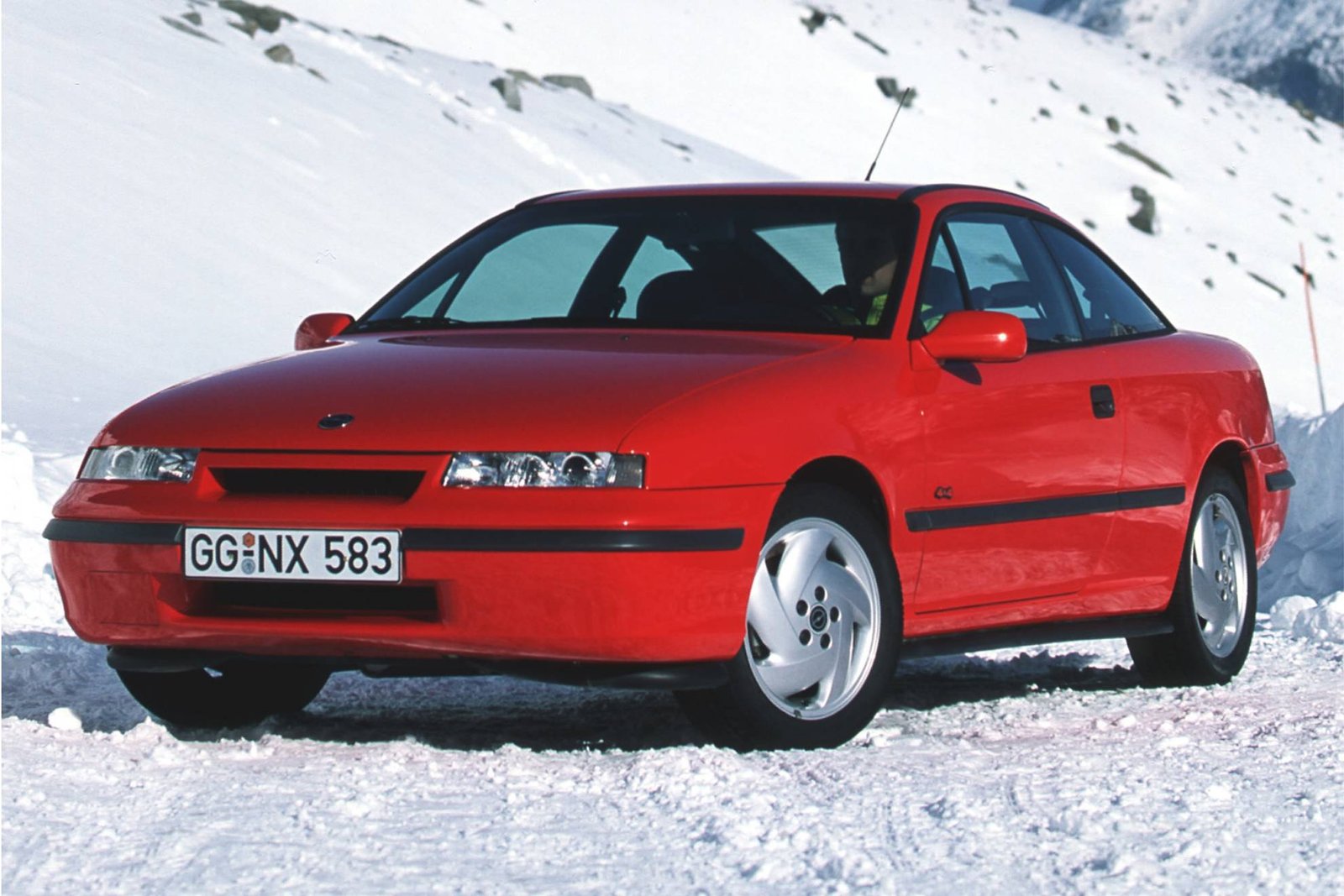
But in 1992 Opel got serious and launched the Calibra Turbo, the model that finally gave the car the dynamics its silhouette had been promising since day one.
The Turbo carried the C20LET, the turbocharged redtop, with 204bhp and a proper shove of torque. And crucially: four-wheel drive as standard, a Getrag six-speed gearbox, sports seats and 16-inch wheels. A claimed 152mph and 0-60 in around 6.2 seconds in magazine tests. That Calibra was no longer a pretty Vectra: it was a genuinely fast coupé, all four wheels gripping, with an engine you could take to 350bhp for not much money. Which is why it remains a cult car among tuners to this day.
Mind you, the four-wheel-drive system had a weak spot: the transfer box was shared with the Cavalier 4×4 and was a touch fragile, suffering if there were differences in wear or pressure between the front and rear tyres. One to watch for anyone chasing one now.
The double life: saint on the road, devil on the track
And here’s the contrast that defines the Calibra, the chasm between what it was on the road and what it became on the circuits.
Because while the road Calibra was a sensible front-drive coupé, the racing Calibra was an absolute monster. In the DTM and ITC, the German touring car championship, the Calibra raced a car with almost nothing of the Vectra left in it: four-wheel drive, the engine mounted longitudinally rather than transversely, and a Cosworth V6 that started at 420bhp and reached 480. By 1996, with a new aluminium KF V6 based on an Isuzu block, that race engine could spin to a staggering 15,000rpm. Fifteen thousand. In an Opel.
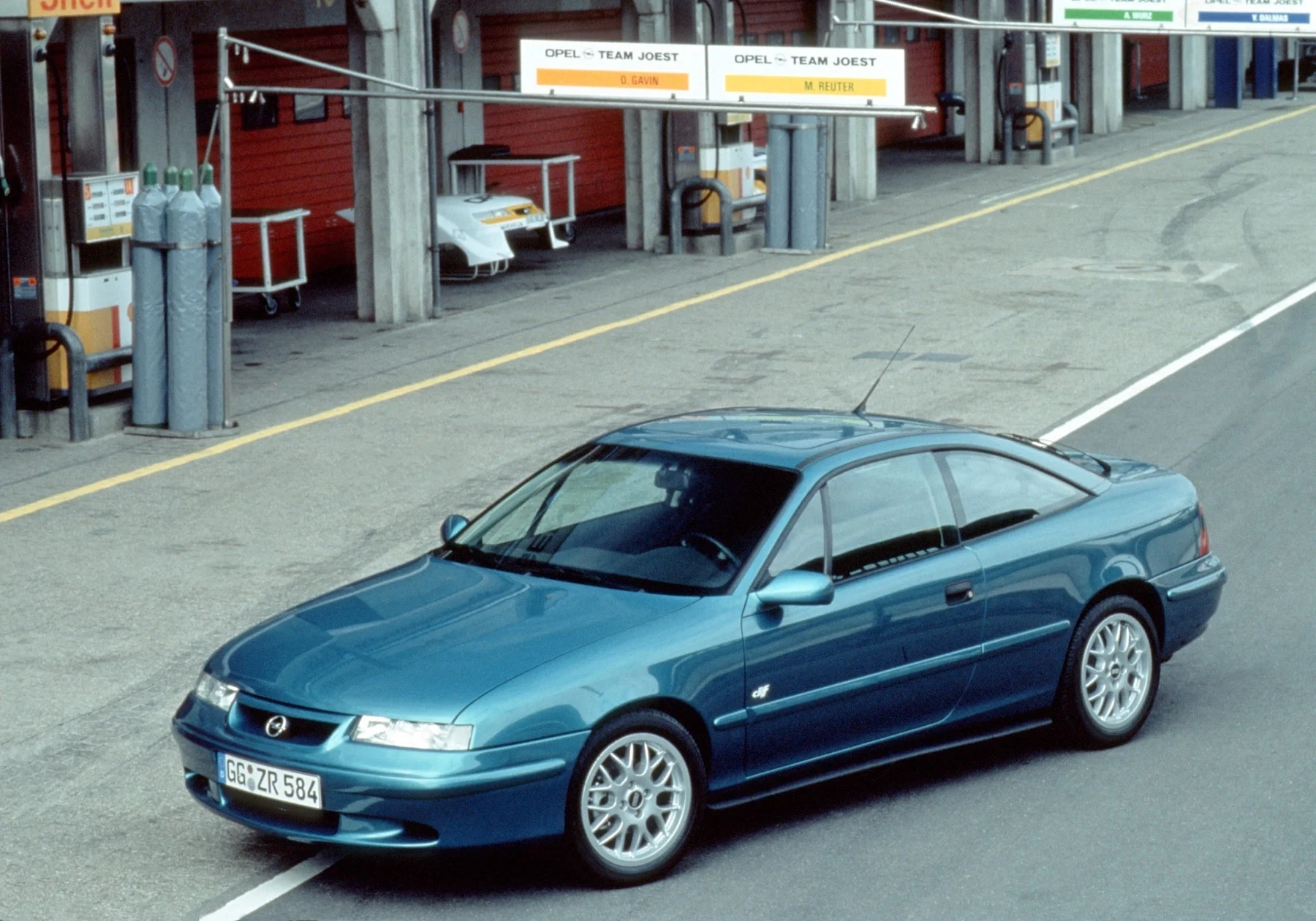
With that car, Opel won the 1996 ITC championship with Manuel Reuter at the wheel, scrapping against the Mercedes and the Alfa Romeo 155 V6 Ti in one of the wildest, most expensive eras touring cars ever saw. The track Calibra was everything the road car couldn’t be. And from it came the special editions everyone remembers: the DTM, the Keke Rosberg, the Cliff, all with lowered Irmscher suspension celebrating those wins.
That championship, the DTM first and the ITC later, was a technical and financial madness motorsport has never seen again. Mercedes, Alfa Romeo and Opel spent Formula 1 money to race cars that on paper were ordinary showroom saloons and coupés. Beneath the bodywork, though, lurked hugely sophisticated four-wheel-drive systems, advanced management electronics and engines that reached unthinkable revs. The Calibra, with that V6 capable of 15,000rpm and its four-wheel drive, was at the absolute cutting edge. To watch it take the 1996 title was to watch a car triumph that, in road trim, was little more than a pretty Vectra. The gulf between the two Calibras, the showroom one and the circuit one, has never been so wide in any other car of those years.
The NEC verdict
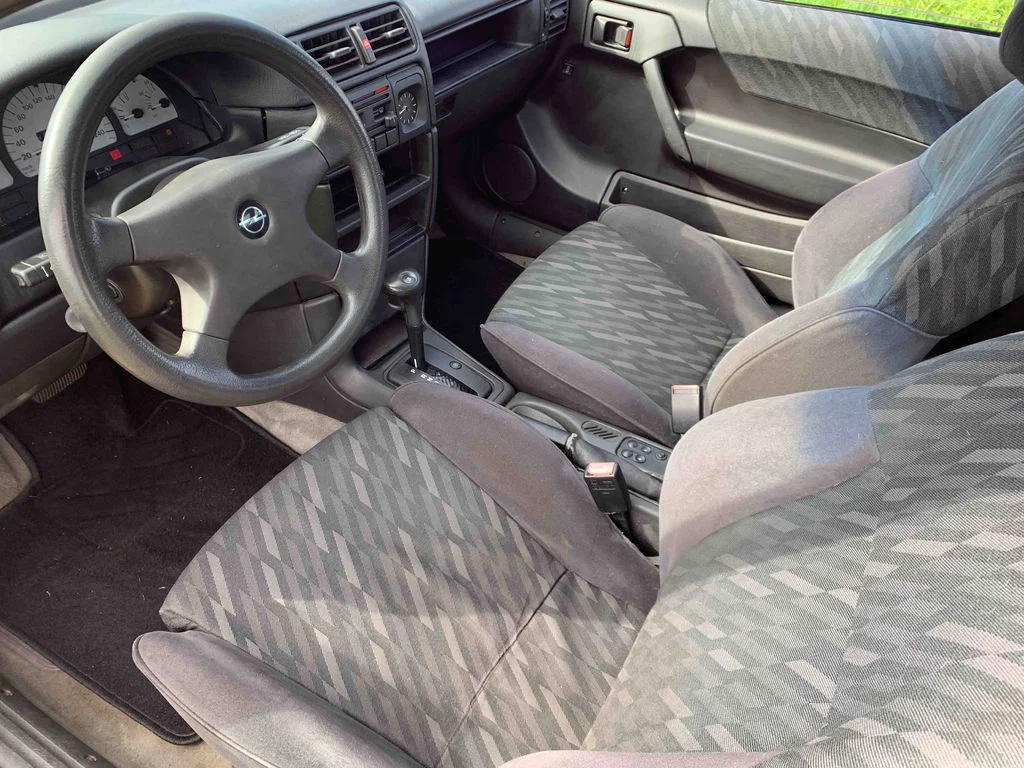
The Calibra fascinates precisely because of its contradiction. It sold shape. It sold a number, 0.26, that was real but that you could barely buy, because it lived in the slowest version. The car that arrived on your driveway was a Vectra in a tuxedo: stunning, practical, pleasant, but not the machine its silhouette promised. Most of the 130,000 buyers of the base model took home the world aerodynamics record and a car that went merely adequately.
And yet there’s the other face: when Opel truly wanted to, it built the Turbo 4×4, which did deliver, and a race car that revved to 15,000rpm and won championships against Mercedes. The Calibra was no bluff. It was a car with two souls, one sold to the masses and one reserved for those who paid up or for the circuits.
Perhaps that’s the most Opel lesson of all. The Manta was the working man’s coupé. The Monza, the dream of grandeur. And the Calibra was the car that understood, before anyone else, that in the nineties image sold harder than performance, that a number in an advert could be worth more than a stopwatch. It was the first coupé of modern marketing, a car that grasped the coming decade’s logic before its rivals did. Genuinely aerodynamic, sometimes fast, and always, always cleverer than it looked.
And with it, an era closed. After the Calibra, Opel went years without a coupé of its size. The bloodline Erhard Schnell had begun with the GT in 1968 ended here, in 1997, with the most aerodynamic car in the world. Thirty years on, a clean, well-kept Turbo 4×4 is a genuinely sought-after modern classic. Not a bad full stop.
Check you’re still alive.