Rover 220 Coupé Turbo: the car its own gearbox held back
Here’s one of those stories only properly understood by someone who’s been under a car with grease up to the elbows. In the early nineties, Rover built the fastest, most powerful car in its entire history. A gorgeous coupé with 197bhp, capable on paper of squaring up to the supercars of Stuttgart and Maranello. And that car carried an awkward secret buried in its ECU: its engine had more muscle than it was allowed to use, because Rover’s own gearbox couldn’t cope with the full torque. They had to throttle it electronically. The car braked itself from the inside.
That car was the Rover 220 Coupé Turbo, the one enthusiasts call the Tomcat. And its story is that of a maker who aimed higher than its own engineering could reach. Let me tell you.
The cat that wanted to hunt lions
Set the scene. Early nineties. Rover, the British marque, was on a crusade to stop being a mass-market badge and move upmarket. It wanted to quit fighting Ford and Vauxhall, its traditional rivals, and look higher, into BMW 3 Series territory. More prestige, more perceived quality, higher prices.
For that crusade it needed a flagship with hook. Something that told the world Rover was no longer your uncle’s brand. The project, codenamed Tomcat, kicked off in 1988. The base was the Rover 200, that R8 platform the firm wrung out to absurd lengths: there were 200s in three-door, five-door, estate, cabriolet and this coupé. Half a range from one platform.
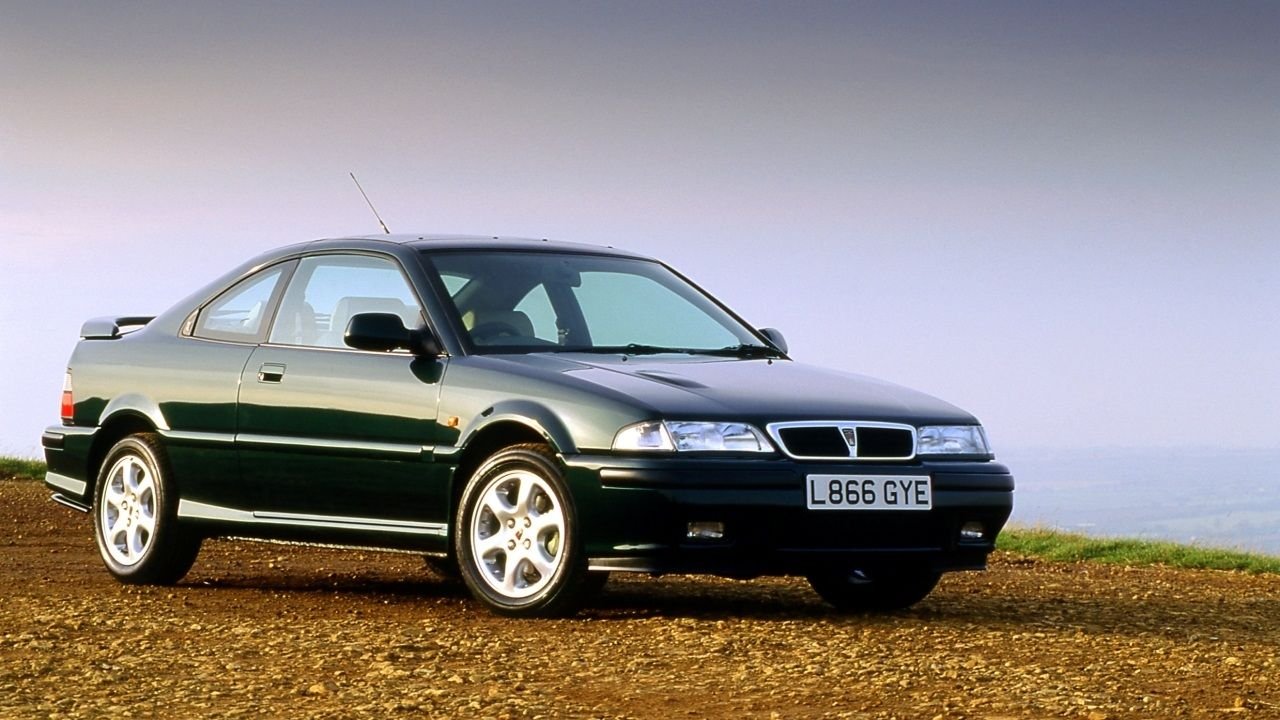
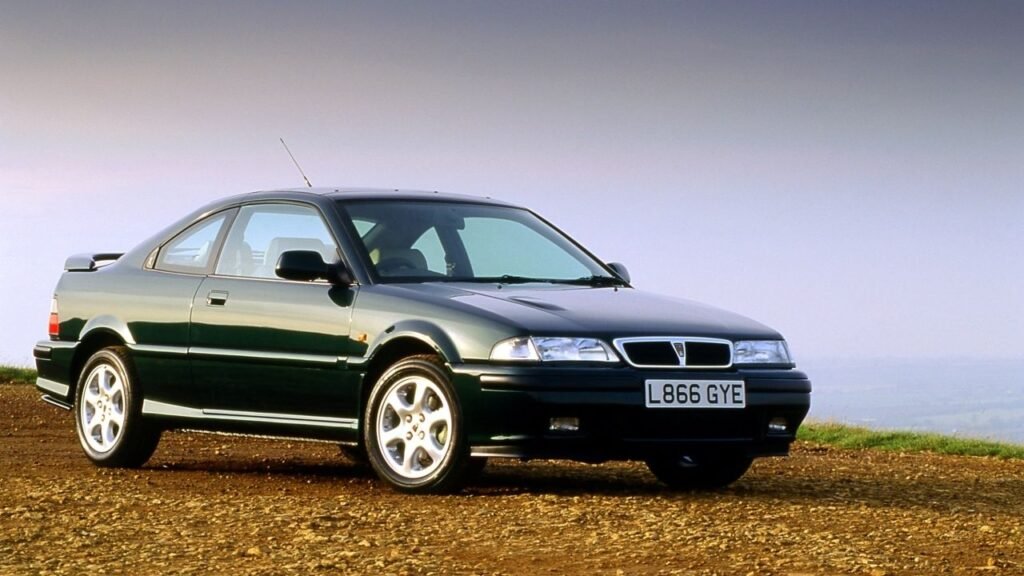
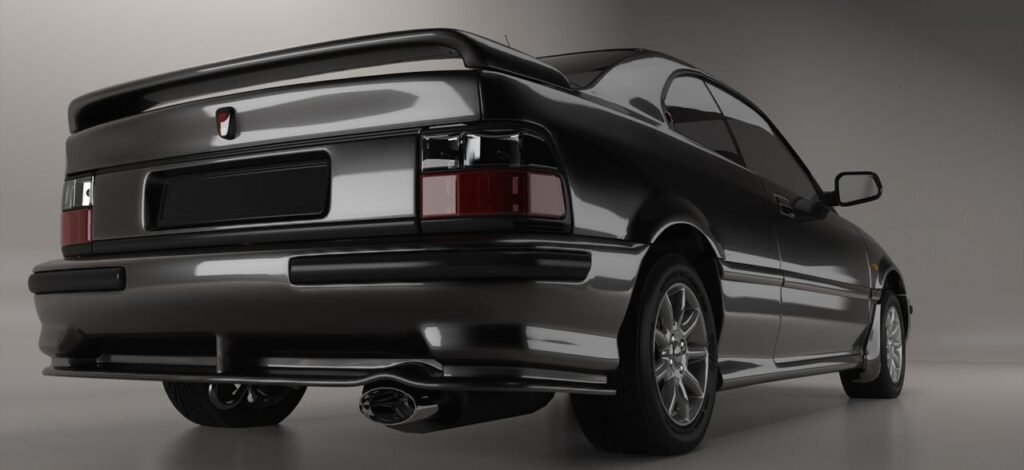
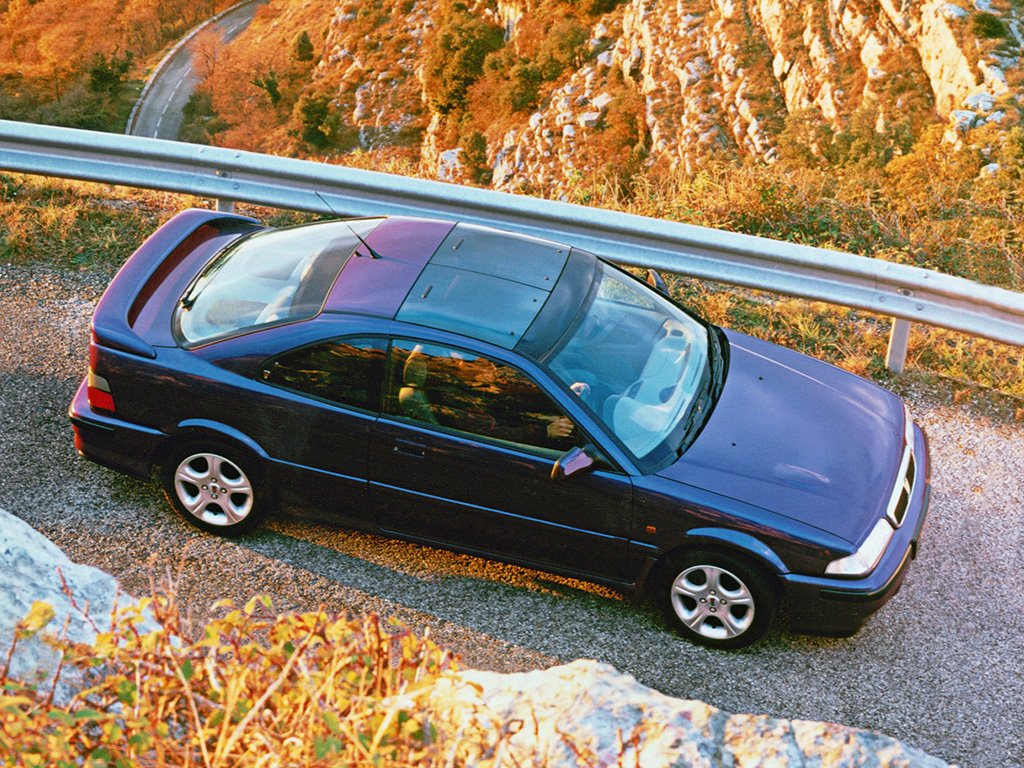
But the coupé was special. Almost all of its bodywork was its own, distinct from the rest of the family. It debuted on 6 October 1992 at the Paris Motor Show, and it brought a lovely design flourish: a split glass roof with a central T-bar, twin panels you could tilt or remove independently and stow in the boot, made from a semi-reflective glass coated with titanium. A genuinely pretty coupé, the kind that still turns heads.
197bhp and the house record
The range had three rungs. At the bottom, the 216, with a Honda 1.6, fruit of the old Rover-Honda alliance. In the middle, the naturally aspirated 220 with the Rover 2.0 T-Series and 134bhp. And at the very top, the jewel: the 220 Coupé Turbo.
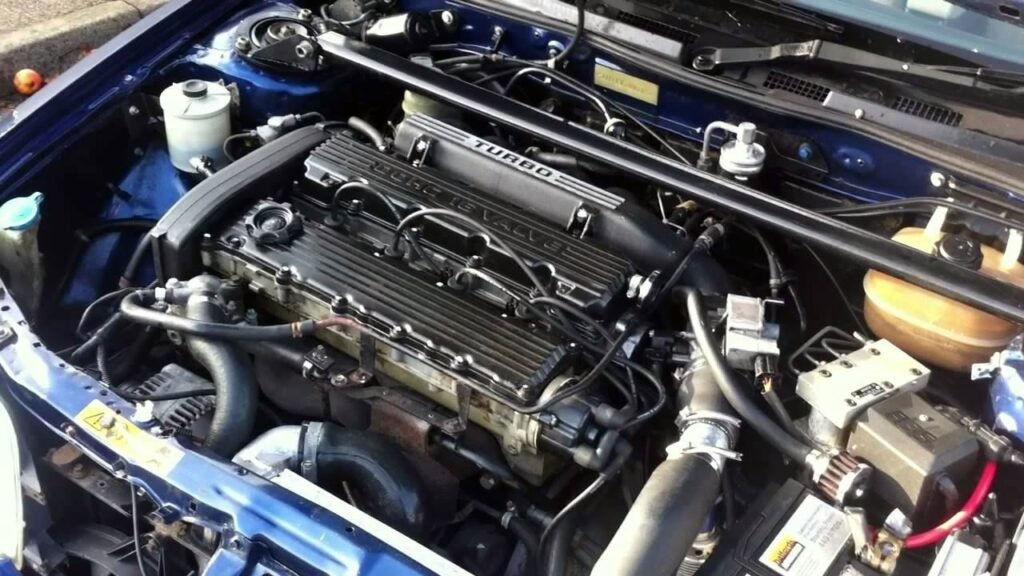
The Turbo carried the T-Series T16, a 2.0-litre 16-valve four, this time turbocharged, making 197bhp at 6,000rpm. And with that it earned a weighty title: the most powerful and fastest production Rover ever built. The figures from Autocar’s October 1992 test make it plain: 0-60mph in around 6.2 seconds and a top speed of 150mph. For a Rover, that was science fiction. The car the marque used to say “we’ve arrived.”
The advert summed it up without modesty: “one of the most beautiful cars Rover have ever put into production also turns out to be the fastest.” And for once, the advertising wasn’t exaggerating on either the beautiful or the fast.
The secret hiding in the ECU
Now to the detail that makes this car one of our kind of stories, the one almost nobody tells.
The T16 turbo engine could make more torque than it delivered. It had plenty in reserve. But Rover capped it. They electronically limited torque to around 232Nm. Why throttle an engine that could give more? For a purely engineering reason, the sort anyone who’s built a gearbox understands: Rover’s own PG1 gearbox couldn’t withstand the full torque the engine could generate. It would have grenaded. So rather than build a stronger gearbox, which cost money, they chose to strangle the engine to protect it.
Think about what that means. The most powerful car in Rover’s history ran its engine on a short leash, not because of any limit in the engine, but because of the weakness of its own gearbox. The car’s Achilles heel was in-house. The wildcat wanted to hunt lions, but they’d put it on a lead so it wouldn’t pull too hard and break itself.
For an enthusiast, that detail reveals a whole industrial philosophy. Rover in the nineties was a company of big ideas and slim means, heir to a British colossus that had fragmented and impoverished itself over the preceding decades. Designing and building a new gearbox, one able to take more torque, demanded investment that simply wasn’t there. The electronic fix was the skint pragmatist’s choice: use the ECU to dodge a physical limit it couldn’t afford to remove. It’s the same kind of compromise countless small makers have had to accept through automotive history, and one that’s rarely told, because no marketing department happily admits its flagship is born gelded. And yet it’s precisely in these compromises that you read the truth of a car, far more than in any slogan.
There is, mind you, a curious upside: that electronic cap, by shaving the torque peak, left a very flat, full delivery curve, which made the car more tractable with even shove across the rev range. Sometimes limitations, well managed, have their reward. But the story stands: the Tomcat ran with its own transmission’s handbrake half on.
Front drive and the “traction control” fib
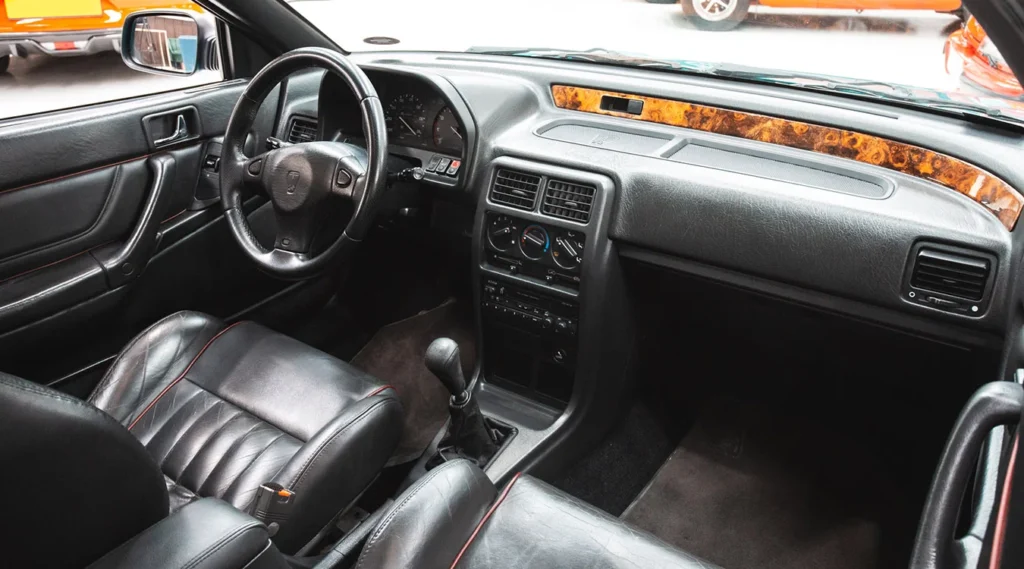
Here’s the other weak spot, and it’s one we’ve seen before in this coupé cluster. Like so many others, the Tomcat was front-wheel drive. And putting 197bhp through the front wheels is asking a lot.
Rover knew it, so it fitted the Turbo with a Torsen torque-sensing limited-slip differential as standard, a system that senses torque and apportions it, technology until then reserved for four-wheel-drive or rear-drive cars like the Maserati Biturbo. And it sold it as “traction control.” A small marketing fib: the Torsen is a purely mechanical differential, not a true electronic traction control as we’d understand it today. But it sounded modern and high-tech, and that sold.
Did it work? Half. The period criticism was unanimous on one point: the handling suffered because shoving all that power through the front axle was clumsy. And that cost it dearly where it hurt. In a CAR magazine group test, the 220 Turbo, which on paper had “the potential for a head-to-head ruck with the super-coupés from Stuttgart and Maranello,” finished fourth. Fourth of four. Behind the BMW 325i Coupé, the Volkswagen Corrado VR6 and the Honda Prelude VTEC. The magazine conceded the Rover had “Herculean strength” and “looked the part,” but on the road it didn’t shine like its rivals. The promise on paper stayed on paper.
It’s worth setting those numbers against the 1992 opposition to understand the frustration. A BMW 325i Coupé of that year had fewer horses, but its rear-wheel drive made it a far more balanced, rewarding car to drive at the limit. A Volkswagen Corrado VR6 deployed its shove with a poise the Rover never matched. The Tomcat had, on paper, the most generous engine of the group, and for exactly that reason its power-handling problem sang out all the louder. It had the horsepower of the big names, but not the architecture to use it. It’s the classic case of ambition outrunning technical means.
Records, racing and a cigarette at Millbrook
But it wasn’t all frustration. The Tomcat earned its place in history through sheer speed. By the time it broke cover in Paris, the car had already claimed 37 UK land speed records, 36 of which still stand today. Those records were set with special cars prepped at the Millbrook proving ground, which among other things had their wing mirrors removed, because that was the only way the 220 Turbo could genuinely reach 150mph.
There’s a glorious tale from those development days at Millbrook. The cars pounded round the high-speed bowl flat out on brutal durability runs: thrashed senseless, then parked hard against a wall and switched off to check they kept their cool. One day, one of the drivers burst a rear tyre at nearly 150mph. The chap caught the slide, drifted all the way down the slope of the bowl sideways, gathered it up and waited for help. When it was all over, he handed back his radio, bought a pack of Marlboro Reds from a vending machine and disappeared into the Gents to recover. That’s old-school car development.
Rover also created its own race series, the Dunlop Rover Tomcat Race Series. In 1993 it built 36 special cars, not undersealed, seam-welded and fully race-prepared. They raced all over the UK and Europe for two years, until Rover pulled its backing. Many of those cars survive, and some still compete.
Those 37 records and the one-make series deserve a pause, because they show the Tomcat’s other face. The disappointment of the road comparison against German and Japanese rivals is one thing; sheer straight-line speed and mechanical endurance over distance, where the car was at its best, is another. In a straight line, with no corners to tax the front-wheel drive, the Tomcat was blisteringly quick, and its turbo mechanicals proved robust in gruelling endurance runs. It’s a paradox that defines the car: it shone precisely where its Achilles heel, managing power through a bend, didn’t count. Take that penalising variable out of the equation and the Rover showed all the potential its engine hid. Those British records, many unbeaten thirty years on, are the most concrete testament to what the Tomcat could have been had Rover only had the means to give it the transmission and the architecture it deserved.
The NEC verdict
The Tomcat is, of this whole coupé cluster, the most British in its greatness and its tragedy. And its lesson is a lovely one.
Because the 220 Turbo is the car of a maker dreaming beyond its means. Rover wanted to play in the league of BMW, of Porsche, of the great sporting coupés. And it built a car that, on the spec sheet, looked capable of it: beautiful, blisteringly quick, packed with tech, the most powerful in its history. It had the ambition. It had the numbers. It even had the titanium roof.
What it didn’t have was the foundation. The gearbox couldn’t take the torque, so it capped the engine. The front drive couldn’t manage the power, so the handling fell short. The wildcat had claws and speed, but underneath it dragged the limitations of a brand whose engineering wasn’t a match for its ambition. And that’s what’s moving about the car: it tried with everything it had, knowing it started at a disadvantage.
In this series we’ve watched the Capri humble the big names with humble guts, and the Calibra sell a record you could barely buy. The Tomcat is something else: the car that aimed for the stars with a fairground rifle. And though it fell short, the sheer act of daring, of building the fastest Rover in history and sending it to fight the Germans, makes it worthy of respect. Sometimes the courage to try is worth more than the result. The Tomcat tried. And that’s why, thirty years on, it still has people who love it.
Check you’re still alive.