
Porsche 993 — The Last of the Purebreds
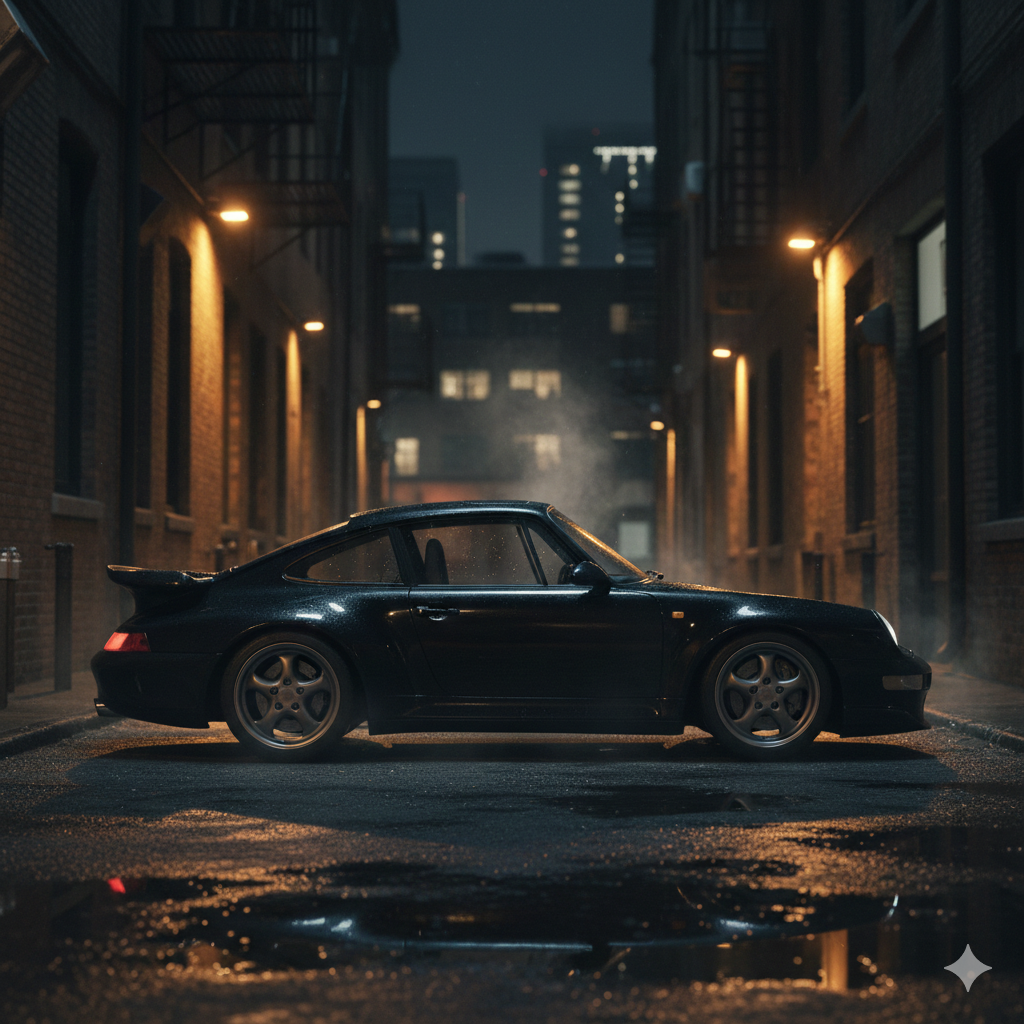
Every great story needs an ending. For Porsche’s air-cooled engine — a design philosophy stretching back to the Volkswagen Beetle and spanning nearly every significant car the company ever built — that ending was the 993.
Produced from 1994 to 1998, the 993 is the 911 generation that air-cooled purists treat as scripture. It’s the one they point to when they argue that Porsche lost its soul. It’s the one whose values have gone vertical, pushing clean examples into territory that makes accountants weep and financial advisors question their clients’ sanity.
But is the 993 actually the best 911? Or is it simply the last one before everything changed?
The 911 Perfected (Almost)
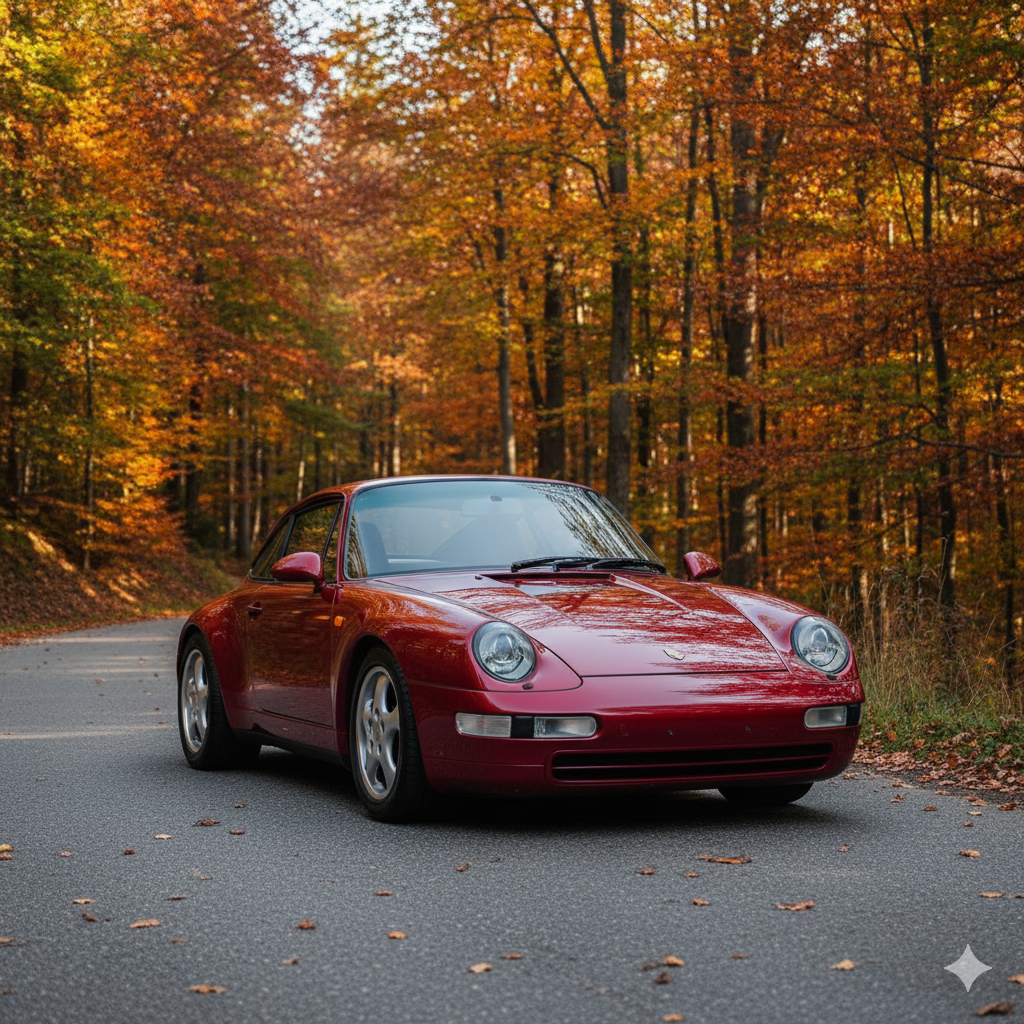
The 993 was designed by Tony Hatter under the direction of Harm Lagaay, and it represented the most significant visual evolution of the 911 in decades. The integrated bumpers replaced the ugly impact units that had marred the 964. The headlights were sleeker, more organic, and beautifully integrated into the front wings. The rear was wider, more muscular, and more purposeful than any previous 911. The overall effect was a car that looked modern without abandoning the silhouette that had defined the 911 since 1963 — a design balancing act that Porsche would struggle to replicate with the 996 that followed.
The proportions were simply right in a way that’s difficult to articulate but immediately apparent. The 993 had the stance of a car that knew exactly what it was and had no need to prove anything. Where the 964 had looked like a modernised version of something old, the 993 looked like a car that had always existed in this form, as if every previous 911 had been leading toward this specific shape. It’s the rare case of a design that is both instantly recognisable as evolutionary and completely fresh.
Underneath, the changes were equally dramatic and arguably more important. The 993 was the first 911 with a multilink rear suspension — the LSA (Lightweight, Stable, Agile) system that replaced the semi-trailing arm setup which had contributed to the 911’s reputation for terminal oversteer since 1964. This wasn’t a minor tweak. This was a fundamental reimagining of how the rear of the car interacted with the road.
The semi-trailing arm suspension on previous 911s had a nasty habit of jacking up the rear of the car during hard cornering, reducing rear grip precisely when you needed it most. The result was the infamous snap oversteer that had earned the 911 its “widowmaker” reputation — lift off the throttle mid-corner, and the rear would swing around with a violence that caught even experienced drivers off guard. The multilink system eliminated this behaviour, providing consistent, predictable rear-end grip that transformed the car’s handling from exciting-but-treacherous to exciting-and-controllable.
The 3.6-litre flat-six produced 272 horsepower in base Carrera form — a modest increase over the 964’s output, but the engine felt stronger and more willing to rev thanks to revised intake and exhaust systems. The VarioRam intake system, introduced on later cars, improved mid-range torque significantly. Connected to a six-speed manual gearbox (replacing the 964’s five-speed) or Porsche’s new Tiptronic S automatic, the powertrain felt more complete and more refined than any previous air-cooled 911.
The engine was still air-cooled, still mounted behind the rear axle, and still produced that distinctive mechanical wail that no water-cooled engine has ever quite replicated. The sound of a 993 at full throttle — a raw, mechanical scream that seems to come from the very core of the machine rather than from an exhaust pipe — is something that recordings cannot adequately capture. You need to stand next to one, preferably in a tunnel, to understand why people pay six figures for the privilege of hearing it regularly.
The result was a 911 that felt complete for the first time in the model’s history. Previous generations always had a caveat — “brilliant, but you need to respect the handling” or “amazing, but the build quality isn’t quite there” or “fast, but the suspension is basically from the 1960s.” The 993 was simply brilliant. Full stop. No caveats. No excuses. No asterisks.
The Variants That Broke the Market
The 993 came in a staggering array of variants, and understanding them is essential to understanding why the collector market has become disconnected from rational valuation.
The Carrera and Carrera S (wide body) are the volume models — the cars that most people think of when they picture a 993. The Carrera S used the Turbo’s wider body with the naturally aspirated engine, creating a look that combined elegance with aggression. Even these “base” models now command €100,000-€180,000 for good examples. Five years ago, you could find them for half that. Ten years ago, a third.
The Carrera 4S combines the wide Turbo body with the naturally aspirated engine and all-wheel drive. It’s arguably the best-looking 993 variant — the wide body gives it presence, the all-wheel drive provides all-weather confidence, and the naturally aspirated engine keeps the driving experience pure. It has become a collector favourite precisely because it offers the broadest range of usability combined with the most desirable aesthetics. Expect €150,000-€250,000.
The Turbo uses a twin-turbocharged 3.6-litre engine producing 408 horsepower with all-wheel drive. It was the fastest production Porsche when launched and remains devastatingly quick by modern standards — 0-100 km/h in about 4.5 seconds, top speed of 290 km/h. The twin turbo setup provided smoother power delivery than the single-turbo 964 Turbo, though there was still enough lag to remind you that forced induction in the 1990s was not the seamless experience it is today. Values sit between €200,000 and €350,000 depending on condition and specification.
The Turbo S was a factory-enhanced variant with 450 horsepower — achieved through larger turbochargers, revised intercoolers, and modified engine management — plus carbon fibre accents and a host of lightweight components. Only 183 were built across all body styles, making it one of the rarest production 993s. Prices have exceeded €700,000 at auction, and the trajectory suggests seven figures are only a matter of time.
The Carrera RS stripped weight and added power for track-focused driving. Thinner glass, reduced sound deadening, lightweight door panels, a stripped interior, and a revised engine producing 300 horsepower made it the driver’s choice for track days and spirited road driving. Around 1,014 were produced. Values now exceed €400,000 for clean examples, and the best cars push significantly higher.
And then there’s the GT2 — the variant that makes everything else in the 993 range look tame. Take the Turbo’s twin-turbocharged engine, remove the all-wheel drive to save weight, strip the interior to its essentials, add a massive rear wing, and what you get is a 430-horsepower, rear-wheel-drive missile with minimal safety nets. Around 194 were built in various specifications. When they appear at auction, they comfortably clear half a million euros, with exceptional examples approaching or exceeding the million-euro mark.
The Air-Cooled Premium: Justified or Insane?
Let’s address the elephant in the room: the prices.
A decent 993 Carrera now costs more than a brand-new 992 Carrera T. A 993 Turbo costs more than a new 992 Turbo. A 993 GT2 costs more than a new 992 GT3 RS. This makes no objective sense if you evaluate cars purely as machines — the modern cars are faster, safer, more reliable, and more comfortable in every measurable way. A 992 is better than a 993 at literally everything a car does, except make you feel like you’re piloting something mechanical rather than something digital.
But the 993 market isn’t based on objective performance. It’s based on three factors that combine to create a valuation multiplier that defies conventional analysis:
Scarcity. Porsche produced approximately 68,029 993s across all variants over four model years. That sounds like a lot until you consider how many have been crashed, poorly maintained, export to markets where they’ve disappeared, converted into modified track cars that destroyed their originality, or simply worn out through decades of use. The pool of good, original, well-maintained examples shrinks every year, and it will never grow.
Finality. The 993 is the last air-cooled 911. This is the single most important factor in its valuation. It occupies the same emotional position as a first-edition book or a final-season jersey — its value is amplified by the fact that nothing like it will ever be made again. Porsche will never build another air-cooled 911. No manufacturer will. The combination of regulations, technology, and market expectations makes it impossible. The 993 is the end of a line that stretches back to 1948, and that finality has genuine emotional and financial value.
Sensory experience. This is the argument that’s hardest to quantify and easiest to understand if you’ve ever driven one. An air-cooled flat-six sounds different, feels different, and connects you to the mechanical process of driving in a way that modern engines simply don’t. There’s a rawness, an immediacy, a sense of mechanical honesty that water-cooled engines, no matter how well engineered, cannot replicate. It’s not better — a 992’s engine is objectively superior in every technical metric. But it’s different, and that difference has emotional value that the market has decided to price very aggressively.
Are these factors worth the premium? That depends entirely on what you value. If you see cars as transportation or even as performance tools, the 993 is a terrible purchase. If you see cars as emotional experiences, as connections to a mechanical era that is rapidly disappearing, as tangible links to a philosophy of engineering that prioritised feel over function — then the 993 is one of the purest available.
What I Think (And You Won’t Like It)
I respect the 993 enormously. I think it’s a genuinely beautiful car, a superb driving machine, and a worthy final chapter for the air-cooled era. It represents everything that was best about Porsche’s engineering philosophy in the 1990s, and its combination of design, performance, and character is genuinely exceptional.
But I wouldn’t buy one.
Not because it’s not a great car — it absolutely is. But because the premium you’re paying for “last air-cooled” status has disconnected these cars from their actual worth as driving machines. You’re paying for narrative, not for experience. You’re paying for the story you can tell, not for the drive you can have. And if I’m spending €150,000+ on a driving experience, I’d rather buy a modern GT3 and have money left over for a track day season, plus tyres, plus fuel, plus hotels — and still come in under budget.
The 993 is the 911 that purists deserve — the culmination of everything they value. For those who worship at the altar of air cooling, it’s the holy grail. For the rest of us, it’s a reminder that scarcity and sentiment can make any good car seem great, and any great car seem priceless.
But here’s the thing I can’t argue with: every person I know who’s owned a 993 describes selling it as one of their biggest regrets. Not one of them regrets the purchase. Every single one regrets the sale. That kind of emotional attachment doesn’t come from marketing. It doesn’t come from hype. It comes from the car itself — from something in the mechanical character of the thing that creates a bond that rational analysis cannot explain and financial logic cannot justify.
Maybe the purists are right about this one. I’m just not willing to pay what it costs to find out.
Pingback: Porsche 944 Turbo: El Porsche de 4 Cilindros Que los Puristas Desprecian
Pingback: Porsche 911: Overrated Legend or Deserved Icon? The Full History
Pingback: Porsche 996: The Hated 911 That Actually Saved Porsche