Renault 5 GT Turbo: the F1-bred econobox that embarrassed cars twice its price
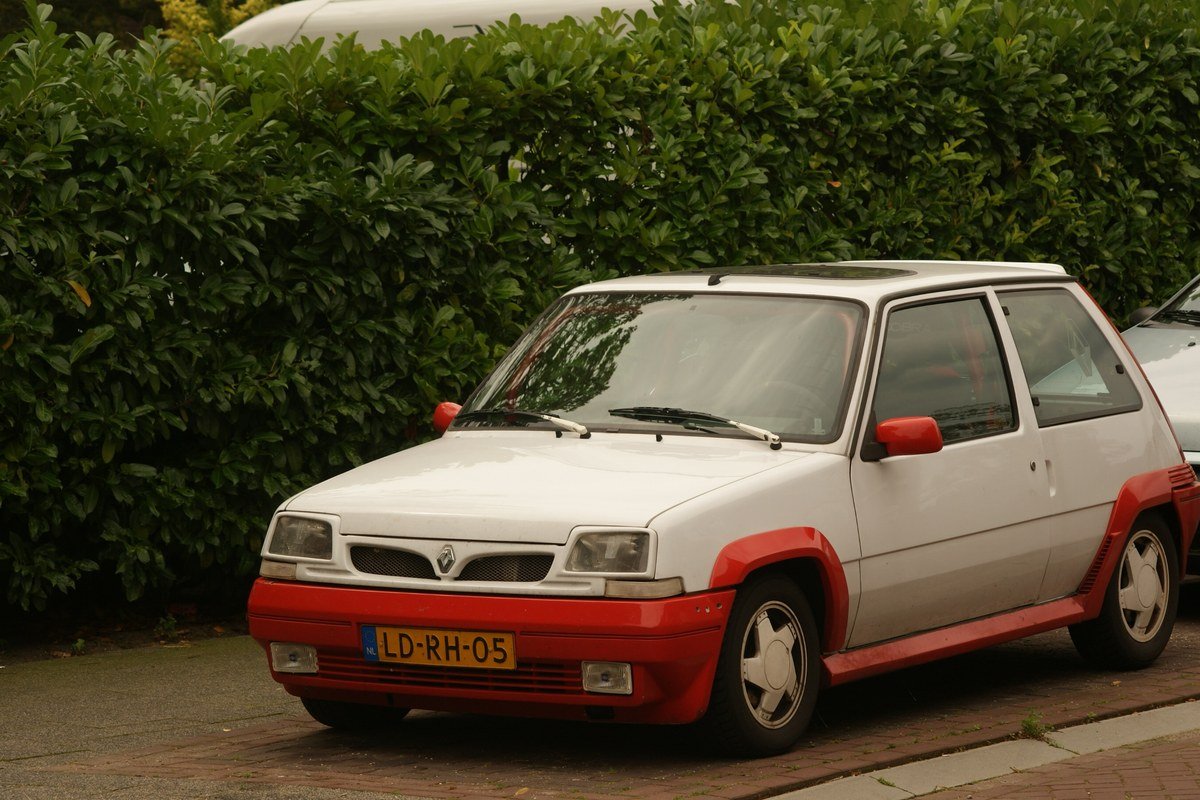
If you’re American and you know the Renault 5 at all, you know it as Le Car: the chirpy little hatchback AMC dealers sold from 1976 to 1983 to people who wanted something cheap, French and easy to park. It got a canvas sunroof and a reputation as a punchline. Then Renault redesigned it, stopped sending it to the States, and in 1985 bolted a turbocharger onto it. The result was the Renault 5 GT Turbo, and for six years it made a habit of humiliating cars that cost a good deal more.
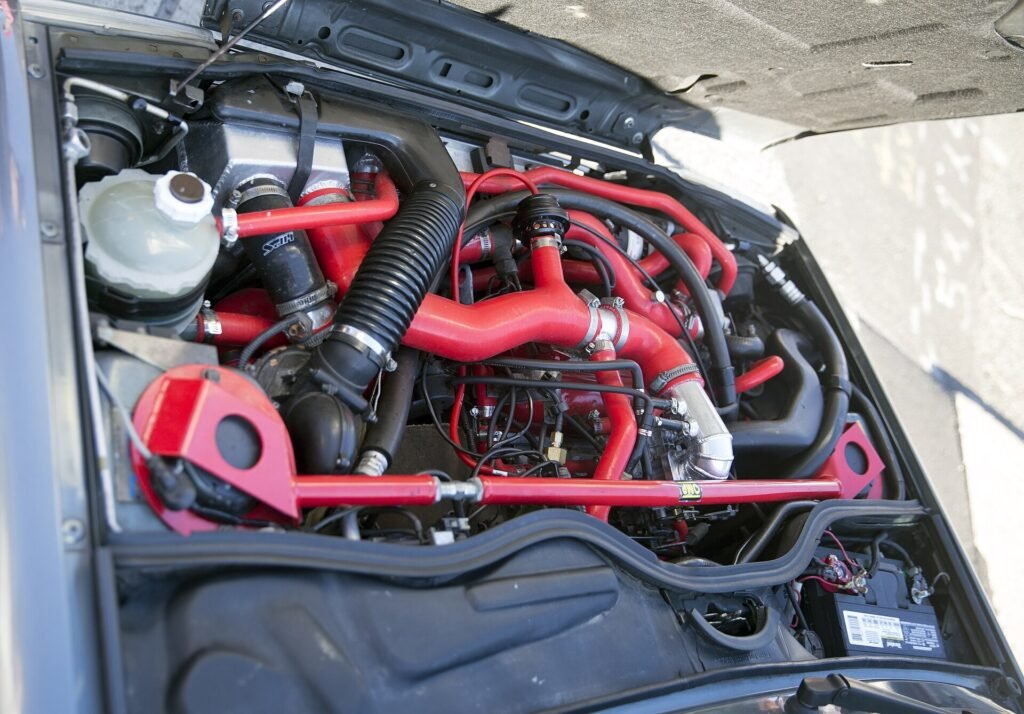
The Alliance engine with a turbo on it
Here’s the part an American reader will enjoy. The GT Turbo’s engine was the Cléon-Fonte, a 1,397cc cast-iron four with pushrods and a camshaft down in the block, first built in 1962. A version of that same family went into the Renault Alliance and Encore that AMC assembled in Kenosha, Wisconsin, the cars that won Motor Trend’s Car of the Year in 1983 and then rusted and rattled their way into infamy. In 1985, when rivals were moving to overhead cams and engine computers, this was close to a museum piece.
What Renault knew was how to turbocharge a small engine. It had brought a 1.5-liter turbo V6 to Formula 1 in 1977, a car Ken Tyrrell mocked as “the yellow teapot” because it kept blowing up in clouds of steam. It won its first race at Dijon in 1979, and by the mid-eighties every front-running team had gone turbo. That same itch gave us the Fuego Turbo and, a few years later, the Renault 21 Turbo, the car you got as the Eagle Medallion without the turbo.
For the 5, Renault took the old block, added a Garrett T2 turbo, an air-to-air intercooler and a single-barrel Solex carburetor that the turbo blew through. No fuel injection. Output was 115 PS, about 113 horsepower, in a car weighing around 1,830 pounds. Evo ran it from 0 to 60 mph in 7.5 seconds in 1985 and it topped out near 125 mph.
What Americans had instead
The closest thing on a US showroom floor that year was the Dodge Omni GLH Turbo, Carroll Shelby’s “Goes Like Hell”: 146 horsepower, fuel injection, and roughly 2,200 pounds. More power, a lot more weight, and a chassis from a family commuter car. The Volkswagen GTI sold in the States made around 100 horsepower. The Renault’s trick was the ratio. A light car with a strong shove of boost doesn’t need big numbers, which is a lesson the industry has since forgotten, as I argued in the great weight lie.
Why it wouldn’t start when hot
Every GT Turbo owner has the same story. Drive it hard, park it at the gas station, come back ten minutes later, and it won’t start.
The turbo cooked everything under the hood, including the carburetor sitting next to it. Once the engine was off, the heat soaked into the float bowl and boiled the gasoline away. Try to restart and there was only vapor to feed the engine, so it coughed and sulked. Renault’s eventual answer, on the Phase 2, was a water-cooled turbo and a small fan under the hood to keep the carburetor from boiling dry. It helped. It didn’t cure it.
Phase 1 and Phase 2
You’ll see the GT Turbo quoted at 115, 118 and 120 horsepower. There were two versions, and the British magazines quoted brake horsepower, which reads a little lower than the European PS figure.
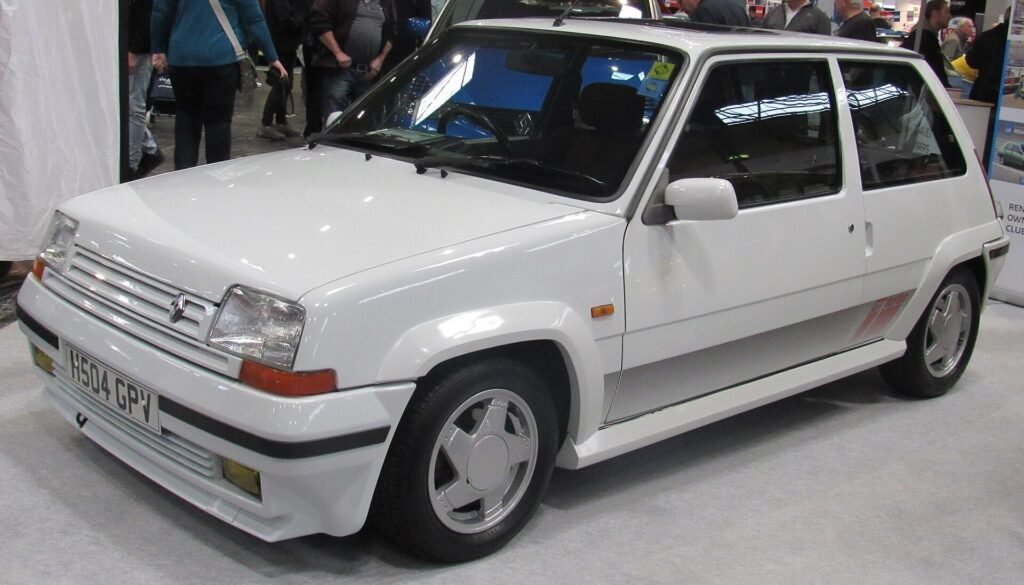
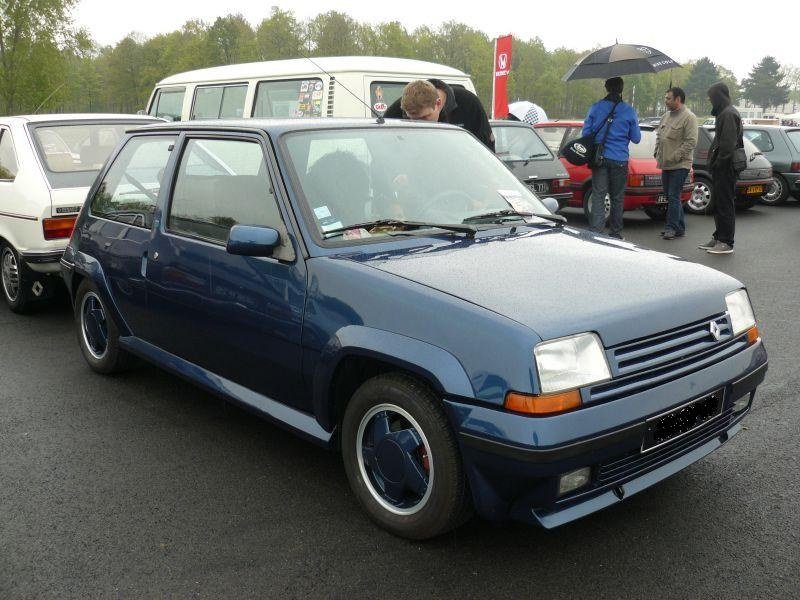
The Phase 1 ran from 1985 to 1987 with 115 PS and the worst hot-start manners. The Phase 2 arrived in 1987 with the water-cooled turbo, a new ignition system with better knock control and 120 PS (118 bhp in Britain). You can tell them apart from across a parking lot: the Phase 2 has a body-colored body kit, horizontal grille slats, and the Renault diamond moved from the center of the nose to the left side. Across both phases Renault built around 160,000. The last ones were the all-blue Raider edition of 1991.
Built in Spain
Most histories skip this, and I write from Spain, so I won’t. A big share of the second-generation Renault 5 came out of FASA-Renault, Renault’s Spanish arm, in Valladolid and Palencia. FASA had been founded in 1951 under Franco’s autarky, when getting a license to build a foreign car in Spain took diplomacy as much as engineering. Spaniards called the car the Supercinco and treated it as a local product.
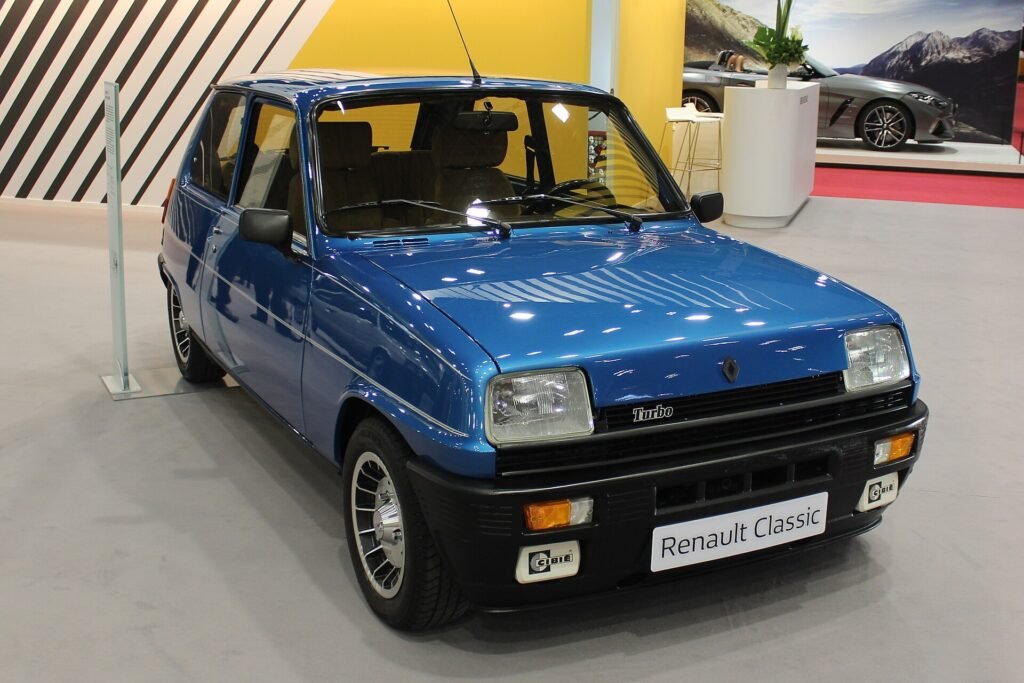
The Spanish connection runs further back. The hot version of the first Renault 5, sold in France as the Alpine and in Britain as the Gordini because Sunbeam owned the Alpine name there, was sold in Spain as the Renault 5 Copa, after the one-make race series FASA-Renault ran on Spanish circuits. Its 1982 turbo version, the Copa Turbo, used the same 1,397cc engine with a Garrett T3 and 110 PS. That’s the engine the GT Turbo grew out of.
Not the mid-engined one
Don’t confuse it with the Renault 5 Turbo. That car, built by Alpine in Dieppe, had its engine behind the seats, rear-wheel drive and wildly flared fenders. It was a rally car homologated for the road, about 5,000 were built, and Jean Ragnotti won the 1981 Monte Carlo Rally and the 1982 Tour de Corse in one. The GT Turbo has its engine up front driving the front wheels. They share a badge and a turbo philosophy, nothing else.
The only Group N car to win a WRC round
In 1989 Alain Oreille won the Ivory Coast Rally, a round of the World Rally Championship, in a Group N Renault 5 GT Turbo, which is to say a car very close to showroom spec. No other Group N car has won a WRC round outright. He took the Group N world title in 1989 and 1990, and Renault sold 2,000 cars in his name.
Driving it
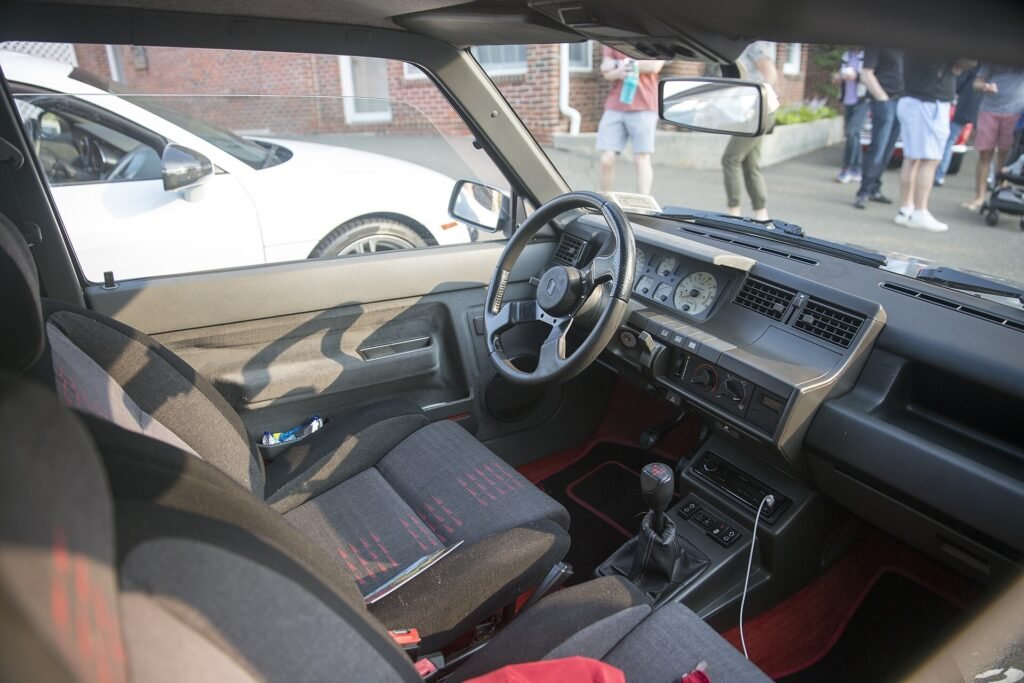
Eighties turbos didn’t build boost gradually. Below a certain point not much happened, then everything arrived at once. On a straight that was fun. In a wet corner, with no limited-slip differential, unassisted steering at almost four turns lock to lock, and boost hitting the front tires mid-turn, it could scare you badly. It rewarded the driver who learned to get on the throttle before the corner and let the turbo catch up.
Stolen, crashed and tuned to death
Cheap speed and a bad-boy image made it the default car for British boy racers, and over there it had a reputation as a favorite of car thieves. Plenty were crashed. Plenty more were killed by owners who wound up the wastegate until the head gasket let go, because the engine was simple enough that anyone with a wrench tried.
That’s what you’ll find if you go shopping: badly repaired crash damage, rust, blue smoke at startup and tired head gaskets. Clean, unmodified cars are rare. Evo puts projects from £5,000, decent higher-mileage cars around £12,000 and low-mileage examples above £20,000. The good news for Americans is that every GT Turbo is now old enough to import under the 25-year rule.
What it left behind
An engine from 1962, a carburetor in the age of fuel injection, a hot-start habit and a power delivery that bit the careless. It still became one of the quickest and best-loved hot hatches of its generation. Renault replaced it with the Clio 16V and then the Clio Williams, and every Renault Sport since descends from it.
The Renault 5 is back now as an electric car weighing close to twice as much, which is the same problem I wrote about at Not Enough Battery with the Hummer EV, only shrunk to city-car size. Renault even revived the Turbo name for a 500-plus horsepower electric 5, the Turbo 3E. The car ordinary people could buy didn’t get an heir. How many people remember that the fastest car on the block once had a carburetor?
Check you’re still alive.
Photos: Niels de Wit (CC BY 2.0), Mr.choppers (CC BY-SA 3.0), Vauxford (CC BY-SA 4.0), Éric Manesse (CC BY-SA 4.0), Lebubu93 (CC BY-SA 3.0). Via Wikimedia Commons.