Nacional Pescara: The European Champion Spain Almost Lost for Ten Euros
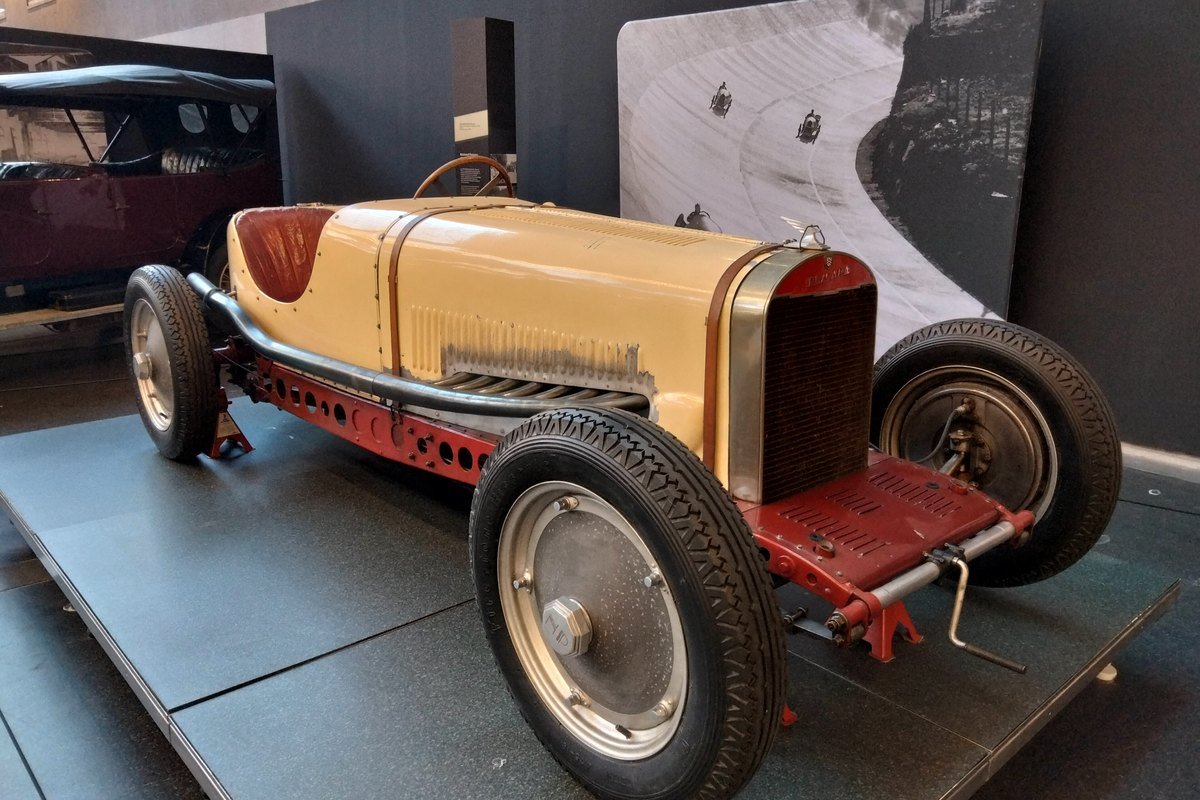
On October 5, 2024, in a Brussels saleroom run by the French auction house Aguttes, the government of Catalonia bid against an English collector for a 1929 racing car with a straight-eight engine. It won at €585,348, roughly $640,000. Jaume Perarnau, director of the Catalan science and technology museum that now owns the car, later told Catalan public broadcaster 3Cat that the government had a hard spending ceiling and that the final gap between its bid and the Englishman’s was ten euros.
The car is the only complete Nacional Pescara left in the world. In 1931, a car like it won the European Hill Climb Championship, beating Rudolf Caracciola’s Mercedes on German soil. Almost nobody outside Catalonia remembers the name, and until the car turned up in an auction catalog, nobody in Spain had gone looking for it.
The helicopter man
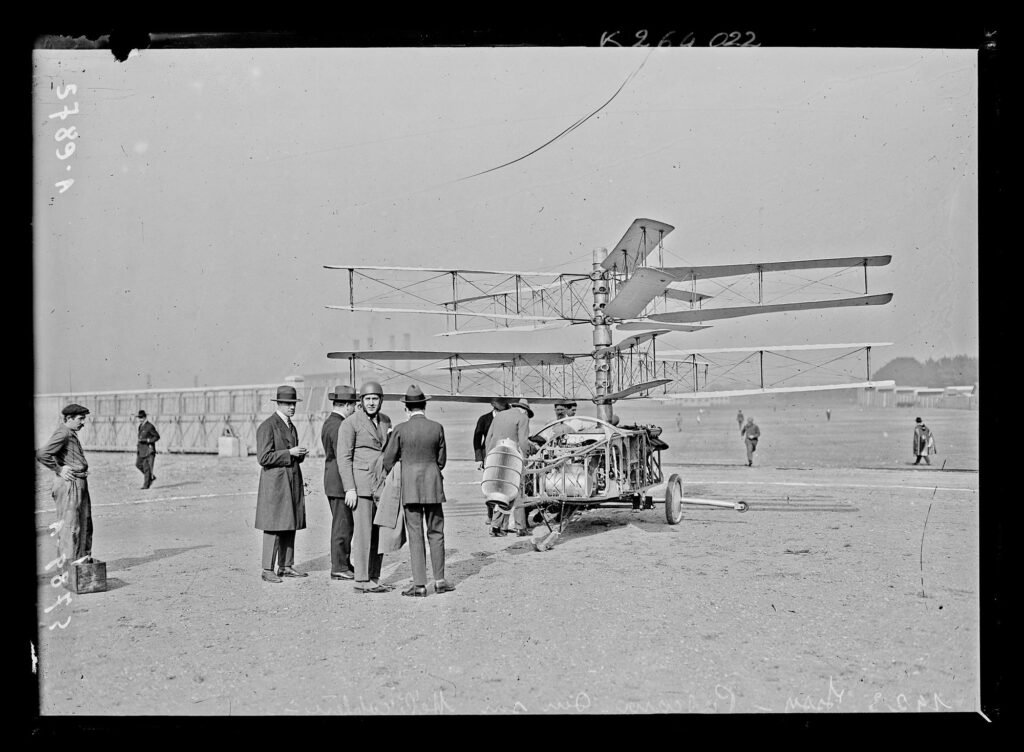
The company’s founder had already made history once before he built a car. Raúl Pateras Pescara de Castelluccio was born in Buenos Aires in 1890 to an aristocratic family of Italian and French roots, trained at technical schools in Nice and Venice, earned a law degree and practiced in Italy before engineering took over his life.
On April 18, 1924, at the Issy-les-Moulineaux airfield outside Paris, Pescara flew his 2F helicopter in a straight line for 736 meters, about 2,400 feet, in four minutes and eleven seconds, roughly six feet off the ground. It was the first helicopter distance record recognized by the Fédération Aéronautique Internationale. His machines used two rotors stacked on one shaft and turning in opposite directions, and he was among the first to use cyclic pitch and autorotation, the two ideas that let a modern helicopter steer and survive an engine failure. He had developed and flown his first experimental machines in Spain before moving the work to France, and the Musée de l’Air et de l’Espace in Paris still keeps one of them.
He had one more idea that ended up in Detroit. Pescara spent decades on the free-piston engine, a crankshaft-less design where the pistons bounce between combustion gas and a cushion of air. The French company SIGMA mass-produced free-piston gas generators, his compressor business had an American partner in the Pescara & Raymond Corporation of Dover, Delaware, and in 1956 General Motors built the XP-500, a concept car powered by a free-piston engine feeding a turbine.
A car company with a king behind it
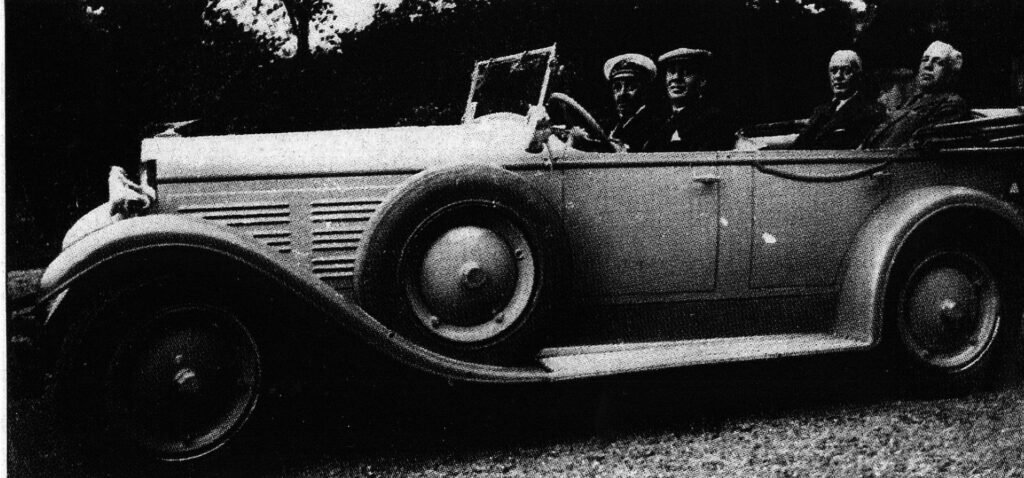
In the late 1920s Pescara and his brother Enrique set up the Fábrica Nacional de Automóviles in Barcelona, the city where Emilio de la Cuadra had opened Spain’s first car factory in 1898. Their sponsor was King Alfonso XIII, a serious car enthusiast who personally backed the project. The Catalan museum and government date the founding to 1928; most Spanish specialist sources, including the Spanish historic vehicle federation, say 1929.
They didn’t train a workforce from scratch. They hired technicians away from Hispano-Suiza and Elizalde, the two most capable Spanish car and engine makers of the day. The engine was designed by Edmond Moglia, a Franco-Italian engineer who had already drawn twin-cam racing engines for Sunbeam.
The first model was a luxury tourer with a three-liter straight-eight, pitched openly as the heir to the Hispano-Suiza. Alfonso XIII bought one of the few built. The Catalan museum says the company eventually built cars with four, six, eight and even sixteen cylinders.
Hillclimbing, before Pikes Peak was famous
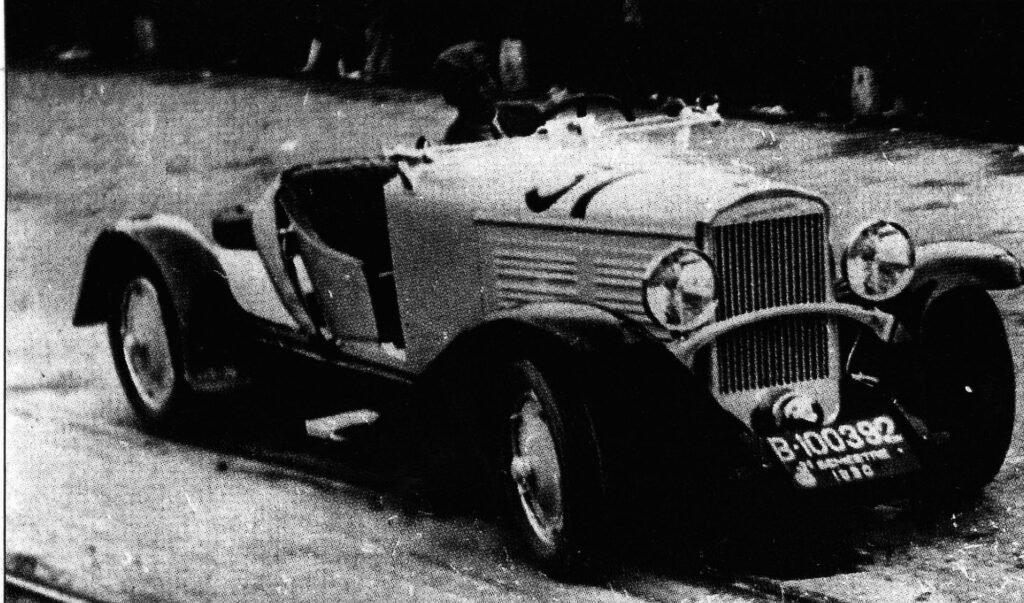
American readers know the hillclimb through Pikes Peak, first run in August 1916. In 1930s Europe it was a full championship. The AIACR, the governing body that later became the FIA, ran a European Hill Climb Championship from 1930, with timed runs up closed mountain roads in Spain, Czechoslovakia, Germany, Italy, Britain, Poland, France and Hungary. Every car runs alone against the clock, so what counts is pulling hard out of slow hairpins.
Nacional Pescara’s sporty version, the Tipo C, made its debut at the Rabassada climb outside Barcelona in 1930 with Enrique Pateras at the wheel. He won the sports car class and finished second overall. The man who beat him, in an Alfa Romeo, was a local driver named Esteban Tort. The family did the sensible thing and hired him.
Turning a tourer into a climber
Over the winter of 1930, the Barcelona shop rebuilt the road car for the hills, working on three things.
Power came first. The engine got twin overhead camshafts, one for the intake valves and one for the exhaust, and the flat cylinder head of the production car was replaced by a hemispherical one. Output went from about 75 hp to about 110, with a deliberately smooth torque curve so the driver could pull from low revs out of a hairpin.
Then handling. The wheelbase was cut from 3,000 to 2,750 mm, about 108 inches, practically the same as the Alfa Romeo Monza, the short version of the 8C 2300 and the benchmark of the time. Rearranged leaf springs lowered the whole car.
Then weight. The chassis was lightened with Elektron, a magnesium alloy developed in Germany in 1908 that is about 90 percent magnesium and 9 percent aluminum. Spanish sources usually call it an aluminum-magnesium alloy, which gets it backwards. Elektron also went into the inner discs of the faired wheels, bolted to the outer rims with five bolts. Everything that could be drilled was drilled, and the fenders and headlights came off. The car dropped from 860 kg to 770, from about 1,900 lb to 1,700.
The two works cars, cream bodies on dark red chassis, were still outgunned. They topped out around 100 mph. The supercharged Mercedes and the best Bugattis ran past 125. Caracciola’s Mercedes-Benz SSKL had a supercharged straight-six of just over seven liters, about 300 hp, and weighed more than 1,700 kg. It had nearly three times the Spanish car’s power.
Points for showing up
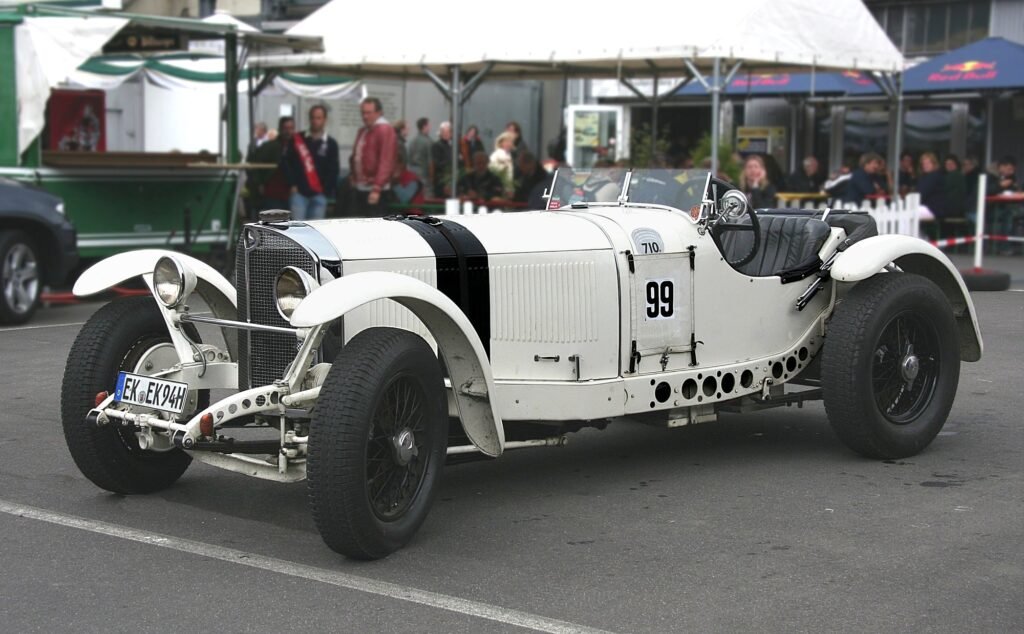
The 1931 championship had a scoring system that decided everything. In each of the two classes, Racing Cars and Sports Cars, the winner got five points, second place four, third three. Every other finisher got two, wherever they placed. A car that started and didn’t finish got one.
Eighth place paid the same as fourth. The championship rewarded the team that went everywhere, and the Germans and French picked their events. The Barcelona team drove its two cars across Europe on two trucks and scored in six of the eight rounds.
May to August, 1931
At the Rabassada on May 17, Caracciola set the fastest time among the cars in his SSKL. The fastest run of the whole day belonged to a motorcyclist, Fernando Aranda, on a Rudge 500, because the event also counted for the European motorcycle hillclimb title. The two Nacional Pescaras were second and third fastest car and swept the Racing Cars class: Tort first, the Chilean Juan Ernesto Zanelli second.
Two weeks later at Zbraslav-Jíloviště, near Prague, the long straights exposed the car’s lack of power. Zanelli had oiled plugs, Tort had gearbox trouble, and they finished eighth and twelfth in class. Under the rules, each still collected two points.
Then came Kesselberg, in Bavaria, on June 14. Five kilometers of tight bends suited the light car. Early in his run Zanelli had to lift off to avoid an overturned Bugatti, and he still reached the top in 4:00.2, a course record and the fastest time of the day. Behind him came Heinrich-Joachim von Morgen in a supercharged Bugatti Type 35B and Caracciola in the SSKL. The president of the Bavarian Automobile Club congratulated the Pateras brothers in person.
At Susa-Moncenisio, near Turin, on July 5, the Italian works teams showed up for their home event. Achille Varzi won in a Bugatti Type 51 on a 22-kilometer course, ahead of Luigi Fagioli and Ernesto Maserati in Maseratis. Zanelli beat the course record set the previous year by Giuseppe Campari and still finished only sixth in class. That same evening the team loaded the cars onto the trucks and headed for England: over the Alps, across France with a stop in Paris, onto a ferry at Dieppe, about 1,600 kilometers in five days and five nights with almost no sleep. They reached the Shelsley Walsh paddock in Worcestershire at six on Saturday morning, the only foreign entrants. On a 914-meter climb they changed the final drive gears twice, and Zanelli finished fourth, about a second off the winner, with Tort sixth.
Then the team took its summer vacation and skipped the round in Poland. On August 30, at Mont Ventoux in Provence, Zanelli was third in Racing Cars behind two Bugattis, and Tort, the only driver who could still catch him, finished well back. Zanelli was champion with a round to spare.
The final order in Racing Cars: Juan Ernesto Zanelli, Nacional Pescara, champion. Esteban Tort, Nacional Pescara, second. Count Max Arco-Zinneberg, Austro-Daimler, third, despite winning two of the last rounds, because he had entered fewer. Zanelli won one climb out of eight and took the title.
A republic, and no king to pay the bills
The Second Spanish Republic was proclaimed on April 14, 1931, a month before the season opened, and Alfonso XIII went into exile. Without the king’s backing there was no bank credit. Plans to build the eight-cylinder Tipo C in series died, along with a straight-ten and a V16 on the drawing board. In 1932 Zanelli failed to qualify for the Monaco Grand Prix.
In June 1933 the Copa Barcelona ran on the streets of Montjuïc, with Tazio Nuvolari in the field. Tort debuted a supercharged Nacional Pescara and ran fourth on lap four, ahead of the Alfa Romeo Monza his former teammate had bought from Le Mans winner Raymond Sommer. Tort retired. Zanelli won the race in the Alfa, his biggest win, against the car that had made him champion. His last victory came in 1935 at the Val de Cuech climb in France, back in a Nacional Pescara. The Spanish Civil War of 1936 sent the marquis into exile in Switzerland and ended the company.
Zanelli’s war
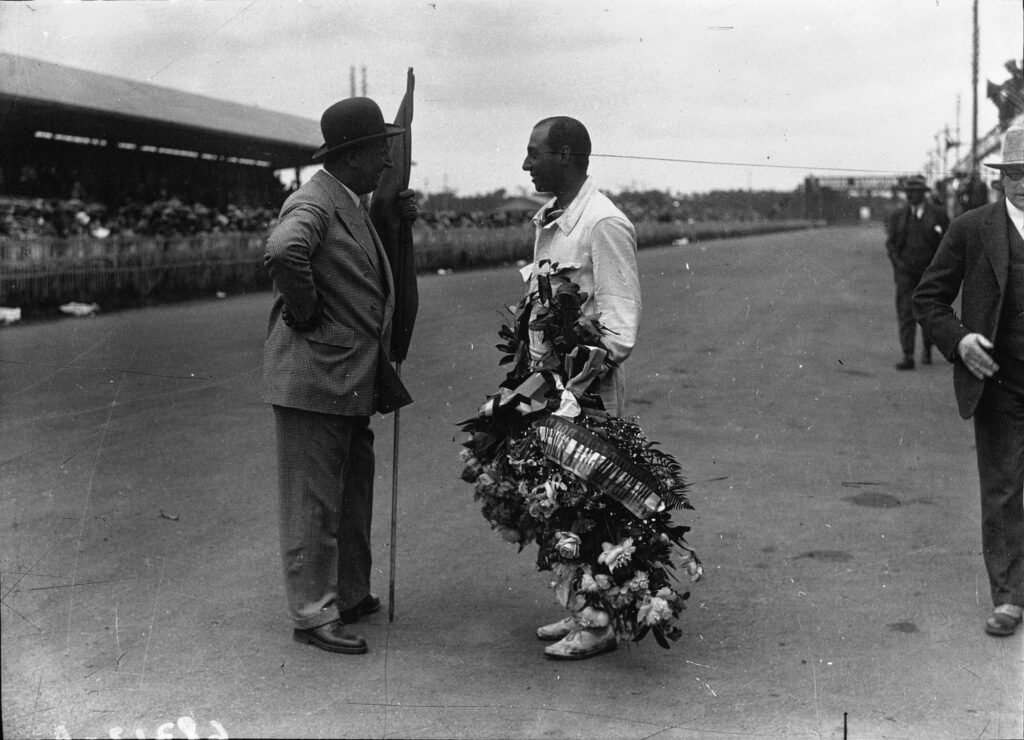
Zanelli, born in Iquique, Chile, to an Italian immigrant who had made money in nitrate mining, had settled in Nice, where he worked as Chile’s vice-consul and married a French dancer. Chile stayed out of the Second World War. He didn’t, and joined the French Resistance, as did Robert Benoist and William Grover-Williams, two drivers he had raced against. None of them survived. Benoist was executed in September 1944 and Grover-Williams in early 1945. Zanelli was killed in a gunfight in Toulouse on August 19, 1944.
Ten euros
The car Catalonia bought is a factory racing car registered in 1929, with a supercharged three-liter straight-eight rated at 125 hp. The Catalan government called it the most important surviving car the company built. The bid was made at the request of the museum, the MNACTEC, with advice from the Fundació Claret Sargatal. Since March 2025 it has been part of the long-term exhibition “La Revolució de l’Automòbil” at the museum in Terrassa, near Barcelona, alongside a replica of the 1890 Bonet, a 1919 Hispano-Suiza and an Elizalde chassis. The museum closed for renovation in October 2025, with its reopening announced for June 30, 2026, and by fall 2026 its calendar of events was running again. Check its website before you go.
A king backed the company and the fall of the monarchy sank it. For more than eighty years after that, no Spanish government went after a single one of its cars. When the last one finally came up for sale, the margin was ten euros.
Check you’re still alive.
Photos: Enric (CC BY-SA 4.0); Agence de presse Meurisse (public domain); unknown author (public domain); Lothar Spurzem (CC BY-SA 2.0 de). Wikimedia Commons.