
Ferdinand Piëch’s Bugatti
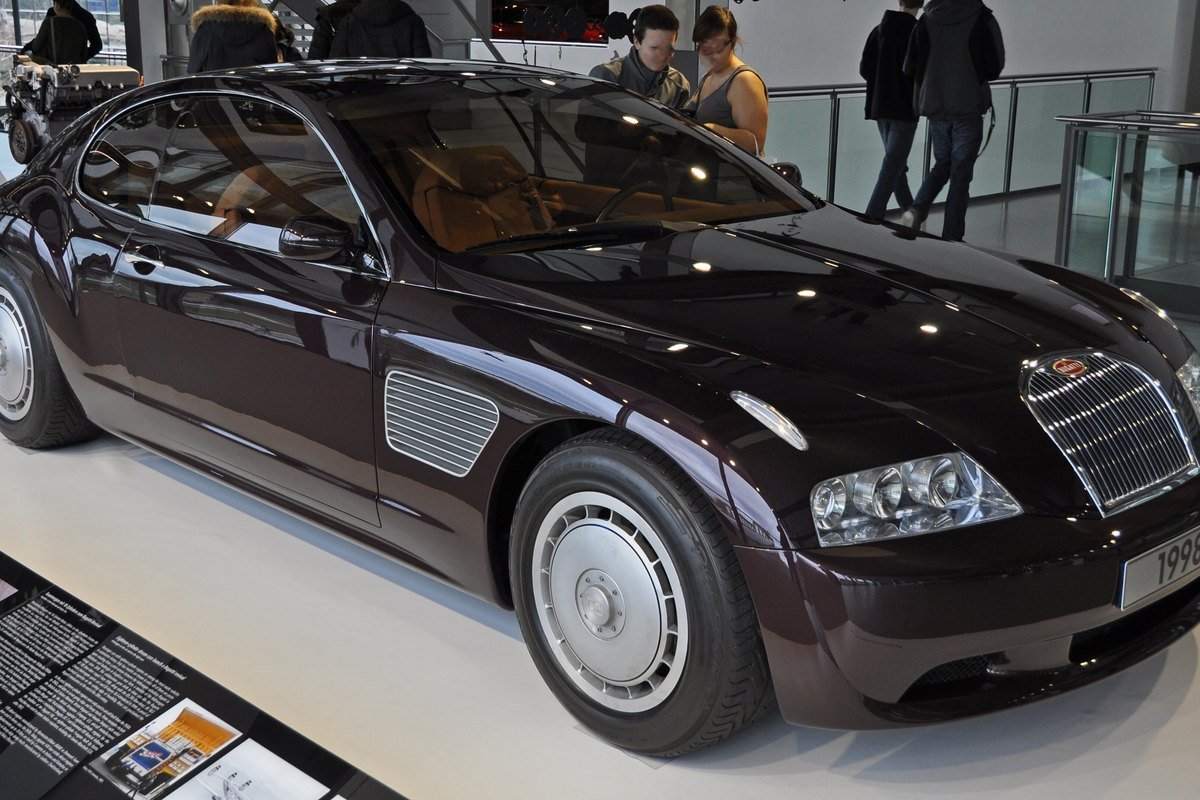
Volkswagen gave up on selling the Phaeton in North America after the 2006 model year, with around 3,500 found homes in three years. Analysts at Bernstein Research later worked out that the big sedan lost €28,101 on every unit sold worldwide between 2002 and 2012, and that the Bugatti Veyron lost about €4.6 million a car. Both were the personal projects of one man, Ferdinand Piëch, who announced the Veyron’s 1,001 metric horsepower in March 2000, before his engineers had an engine that could make it.
Porsche’s grandson
Ferdinand Karl Piëch was born in Vienna on April 17, 1937. His mother, Louise, was the daughter of Ferdinand Porsche and the sister of Ferry Porsche. Bugatti says he could drive a car at nine. He earned a mechanical engineering degree from ETH Zürich in 1962 with a thesis on a Formula One engine, and in 1963 he joined the family company in Stuttgart under his uncle Ferry.
By 1965 he was running development, and by 1971 he was technical director. His name is on the 906 and above all on the 917, the car that won Le Mans outright for Porsche in 1970. In 1972 the family decided that no family member would hold an operating job at Porsche, and Top Gear’s Paul Horrell, who interviewed him, writes that Piëch’s abrasiveness had plenty to do with it.
The grandfather, for the record, had built the world’s first hybrid car in 1900. Engineering ran in the family. So did an appetite for doing things nobody else would bother with.
A crankshaft on the dinner table
In 1999 Piëch told Horrell that his fascination with cylinder counts went back to the 917. He had tested a sixteen-cylinder engine to squeeze more power out of the car, found that a turbocharged twelve did the job better, and dropped it. One of the leftover sixteen-cylinder crankshafts became a candlestick in his house. In the 1970s he also studied an eighteen-cylinder engine built for the Italian Navy.
Decades later, when he heard Mercedes was building a V12 for the Maybach, he said it plainly: “Anyone who makes a V12 can easily turn it into a V16. But an 18-cylinder is unique.”
Audi and the 60 Minutes years
In August 1972 Piëch moved to Audi in Ingolstadt. He brought in the five-cylinder engine, first used in the Audi 100 5E in 1977, pushed the quattro all-wheel-drive system that sends the engine’s power to both axles, and oversaw the TDI, a turbocharged direct-injection diesel. He became deputy chairman in 1983 and chairman of the management board in 1988.
That 1988 promotion handed him an American disaster. On November 23, 1986, CBS’s 60 Minutes had aired a segment on the Audi 5000, the US version of the Audi 100, accusing it of accelerating by itself. Later reporting showed the show had rigged a car to demonstrate the effect. In 1989 the National Highway Traffic Safety Administration concluded that the incidents came mainly from drivers pressing the gas instead of the brake. By then the damage was done: Audi’s US sales fell from a peak of 74,061 in the mid-1980s to 12,283 in 1991.
Inside the company, people called him “Fugen-Ferdl,” roughly “Gap Ferdl,” because he was obsessed with the panel gaps on the bodywork. In 1993 he became chairman of the Volkswagen Group’s management board, a job he held until 2002, and then chaired the supervisory board until 2015. Under him the group bought or consolidated Lamborghini, Bentley, Bugatti, Scania, MAN, Italdesign and, in 2012, Ducati. In 1999 a jury of journalists named him Car Executive of the Century.
Detroit sues
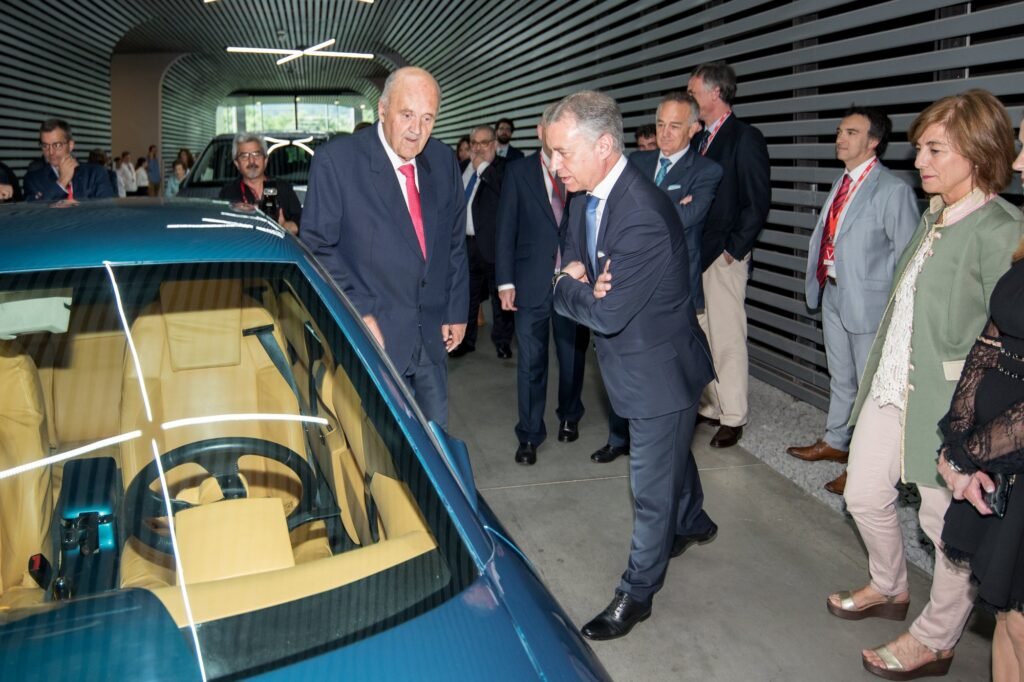
In 1993, the year he took over Volkswagen, Piëch also hired a man from General Motors. José Ignacio López de Arriortúa was a Basque engineer, born in Amorebieta in 1941, whose father ran a repair shop. He joined GM in 1980 at its plant in Zaragoza, Spain, became head of purchasing at Opel in 1987, and then moved to Detroit as GM’s worldwide vice president of purchasing. GM credited his cost-cutting methods with savings of about $1 billion.
López quit GM in 1993 and went to Wolfsburg with three GM purchasing executives. According to his biography, Piëch had promised him a new plant in the Basque Country. GM sued Volkswagen, arguing that López had taken trade secrets with him and broken a non-compete agreement. German authorities searched the offices and homes of López and the three former GM managers. Criminal charges were filed in Germany on December 12, 1996, and dropped in 1998. López resigned from Volkswagen on November 30, 1996, three days after a federal court in Detroit ruled that the RICO racketeering law could be applied to GM’s civil suit, which raised the prospect of triple damages. In 1997 Volkswagen settled: $100 million to GM, plus a commitment to buy $1 billion worth of GM parts over seven years.
The Basque factory was never built. López died on June 10, 2026, at 85. The “López effect” still describes two things at once: lower prices squeezed out of suppliers, and the drop in parts quality that followed.
An envelope and a toy car
In 1997, on a Shinkansen bullet train between Tokyo and Nagoya, Piëch sketched an eighteen-cylinder engine with his engine chief, Karl-Heinz Neumann. Bugatti makes a point of saying it was the back of an envelope, not a napkin.
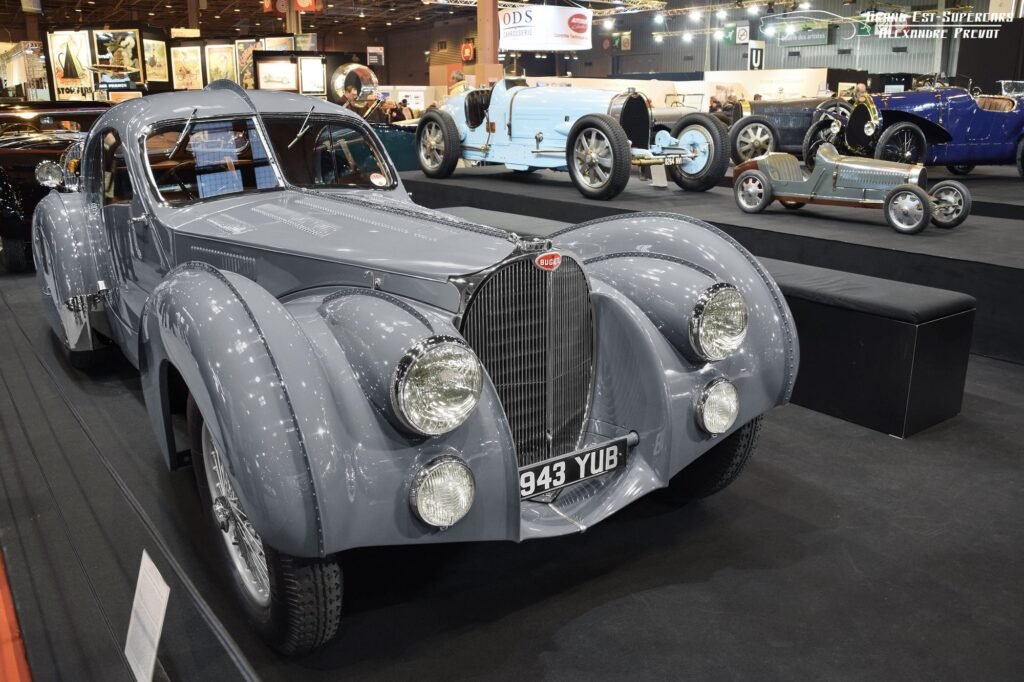
He also wanted a luxury brand. Bentley and Rolls-Royce were both for sale, and in the end the Rolls-Royce name went to BMW. That Easter, according to Bugatti, Piëch walked into a toy shop to buy his son Gregor a model Rolls-Royce. The boy pointed at a different car, a Bugatti Type 57 SC Atlantic. Piëch later wrote that it was the pointer that got him interested in Bugatti.
The name belonged to Romano Artioli, the Italian who had revived Bugatti near Modena with the EB110 and gone bankrupt in 1995. Piëch spent months talking with him, and Volkswagen secured the rights on May 5, 1998. Top Gear adds a detail few people mention: the deal was announced after the Bentley purchase because Volkswagen’s lawyers needed months to cancel all the licenses Artioli had sold for Bugatti-branded sunglasses, perfume and scarves.
Shape first, engine last
Piëch handed the first concept to his friend Giorgetto Giugiaro at Italdesign. The EB118, a two-door with an eighteen-cylinder engine up front, appeared in Paris in September 1998. A four-door, the EB218, followed at Geneva in March 1999. At Frankfurt that fall came the mid-engined EB 18/3 Chiron, named Chiron instead of 318 because, according to Motor1, BMW already protected that number. In October 1999, in Tokyo, the EB 18/4 Veyron, drawn largely by a young Jozef Kabaň under design chief Hartmut Warkuß, looked almost exactly like the car that went on sale.
Then, at Geneva in March 2000, Piëch promised 1,001 PS, more than 400 km/h (about 250 mph), and a car comfortable enough to drive to the opera. Neumann later told Top Gear that the eighteen-cylinder could never do it, because it was basically six of the three-cylinder engines from the little VW Lupo bolted together, and the best they ever got out of it was 555 hp.
Normal car programs set secret targets, design an engine to meet them, wrap a body around it and only then show the public. Top Gear describes Piëch doing it backwards: shape first, then a public performance promise, then the engine. It also describes a boss who used fear as a management tool with his engineers.
Neumann’s list of headaches
Neumann was blunt about what cost the most work. “Aerodynamics was the biggest challenge,” he told Top Gear. “That the car doesn’t fly.” At top speed the moving rear spoiler produced about 100 kg of downforce at the back and 80 at the front. He said the tires had been tested at 440 km/h, and admitted a development car had grazed a barrier at Italy’s Nardò test track at 380. He also conceded the car was too heavy: “But I wouldn’t change anything.”
He didn’t think the Veyron had to compete with Ferraris at all. The Enzo, the Mercedes SLR and the McLaren F1 were driving machines, he said; in the Bugatti you could go to the opera. “The people who are interested in our car own Bentleys, maybe a Porsche 911. Basically none of them own Ferraris.”
Late, and spinning in California
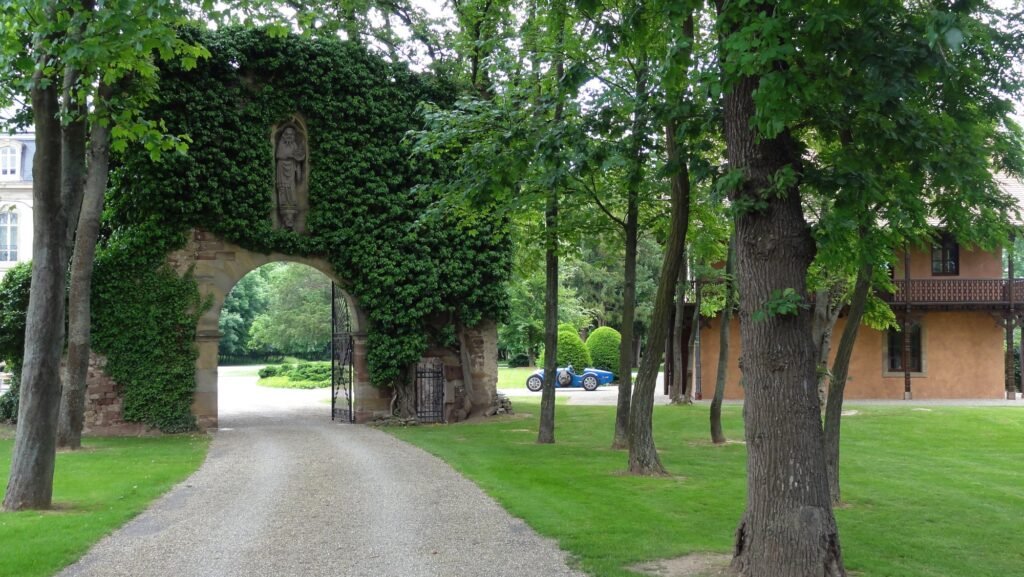
In 2001 Bugatti publicly scheduled the launch for 2003, and Piëch bought the old Château Saint-Jean in Molsheim, where Ettore Bugatti had set up headquarters in 1928, and started building a factory on the grounds. Customers were told to expect cars in 2004. In July 2003, days before the event, the press drive was canceled.
The man behind the delay was Bernd Pischetsrieder, a former BMW boss who had replaced Piëch as Volkswagen Group chairman in 2002. Pischetsrieder owned a Ferrari Enzo, drove the Veyron and found the steering too slow. The ratio went from 20:1 to 18:1, and the suspension had to be retuned to match. In August 2003 a Veyron doing demonstration laps at the Monterey Historics at Laguna Seca spun in front of the crowd. In September Pischetsrieder issued a statement saying the engine, transmission and cooling were fine and only the steering needed work.
At the Frankfurt show that fall, Neumann went on the attack: “According to everything I’ve read, what we should be presenting here today is nothing more than a pile of junk.” He retired in November 2003, at retirement age, and said it was not Volkswagen’s policy to extend contracts. Thomas Bscher, a banker who had raced a BMW V12 prototype at Le Mans in 1999, took over Bugatti. Inside the group, according to Top Gear, people floated capping production at 50 cars instead of the announced 300.
The press finally drove the Veyron in Sicily in October 2005, more than two years late. Top Gear brought Gordon Murray, the man behind the McLaren F1, to test it, and he came away impressed. Jeremy Clarkson then raced one from Italy to London against James May in a light plane, and won. The car’s name came from Pierre Veyron, who won the 1939 24 Hours of Le Mans in a Bugatti.
A closed highway in Washington State
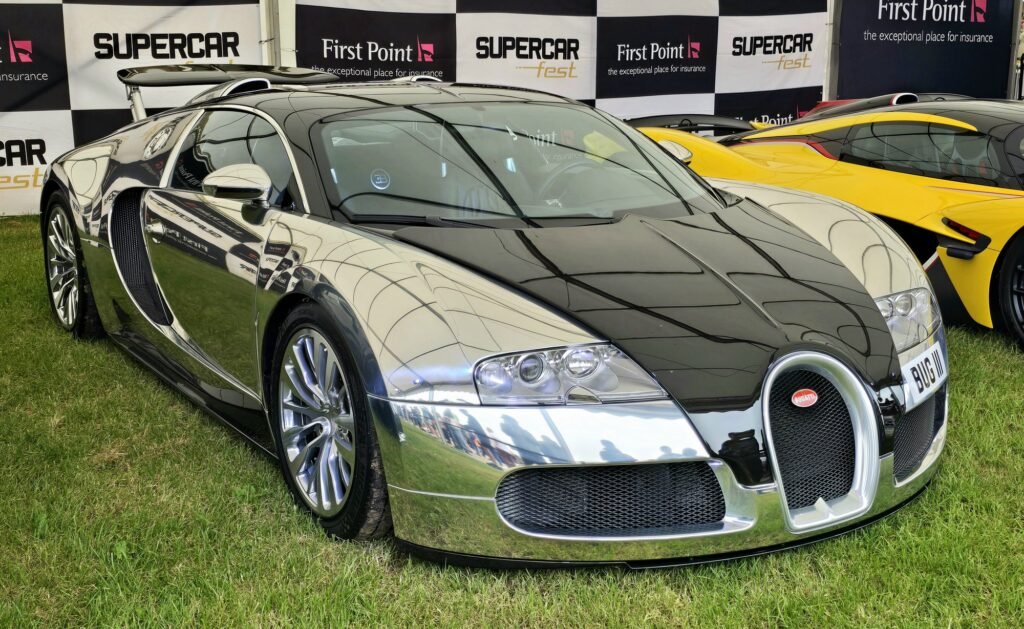
The Veyron’s top speed was 253 mph. On September 13, 2007, SSC, a small company from West Richland, Washington, took the production car speed record with its Ultimate Aero TT at 256.18 mph on a closed road near Benton City. Bugatti answered on July 4, 2010, when test driver Pierre-Henri Raphanel took a Veyron Super Sport with 1,200 PS to 267.856 mph at Ehra-Lessien. Customer Super Sports were limited to 258 mph, which led Guinness to suspend the record in April 2013 and then confirm it five days later.
That was the Bugatti Piëch built: a record you could put in a press release, attached to a luxury car that cost its maker a fortune each time one left the factory. Piëch’s own words, in his biography quoted by Bugatti, were that “a concept like Bugatti must simply not be devalued by mass producing and tabloid methods,” and that “Bugatti has to always offer the extraordinary, the unsurpassed, the optimum.”
The exit
On April 10, 2015, Piëch said publicly that he was distancing himself from Martin Winterkorn, then Volkswagen’s CEO. On April 25 he resigned all his group positions, saying mutual trust on the supervisory board was gone. Months later the diesel emissions scandal broke in the United States. In February 2017 he declined to testify before the Bundestag’s inquiry into the scandal, while claiming he had warned board members early about discrepancies in the software, without saying when.
Piëch died on August 25, 2019, at 82, after collapsing at dinner with his wife in Aschau, near Rosenheim in Bavaria. No cause of death was released. Stephan Winkelmann, Bugatti’s president, said that without him Bugatti would not be where it is today.
Check you’re still alive.
Photos: MPW57 (CC BY 3.0); Jon Bernardez (CC BY 2.0); Alexandre Prévot (CC BY-SA 2.0); Ralph Hammann (CC BY-SA 4.0); Calreyn88 (CC BY-SA 4.0). Wikimedia Commons.