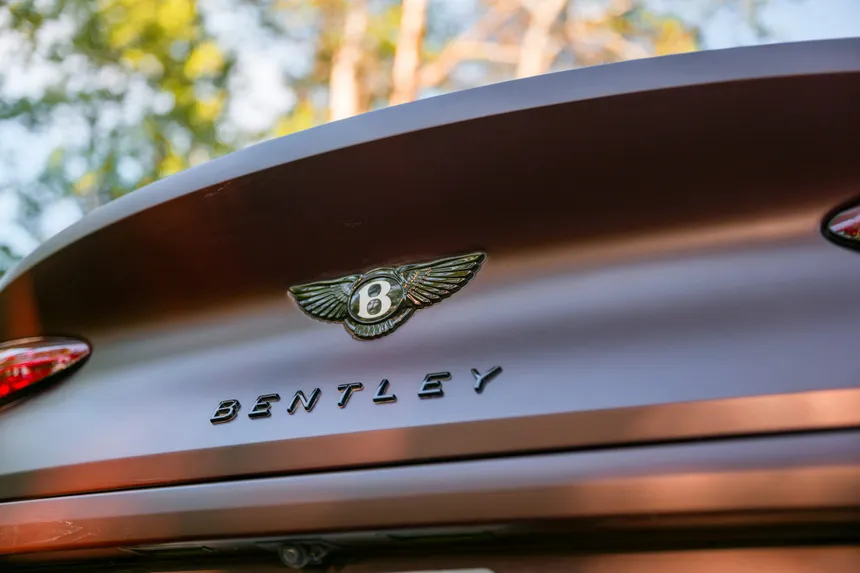
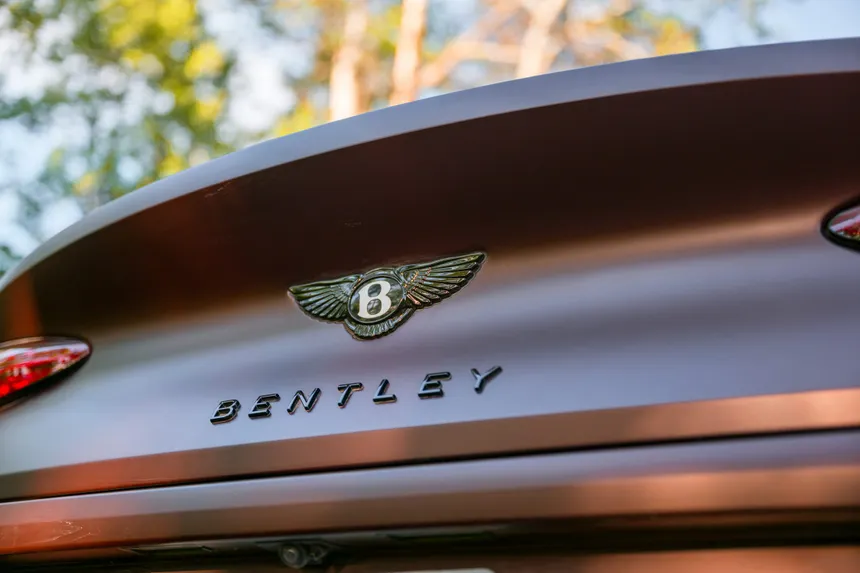
Bentley: the Man Who Built the World’s Fastest Lorries
It all started with a paperweight.
An aluminum paperweight sitting on a desk in a French office. That single object changed British military aviation, Le Mans history, and the luxury car industry forever. Because Walter Owen Bentley wasn’t a businessman playing at making cars. He was an obsessive engineer who saw a lump of metal on a table and asked himself whether he could make pistons from it.
He could. So well that Ettore Bugatti ended up calling his cars “the fastest lorries in the world.” He meant it as an insult. History turned it into an epitaph: the lorries won Le Mans five times. The elegant Bugattis, none.
The apprentice who changed the war
W.O. Bentley was born in 1888 in Hampstead, London. The youngest of nine siblings. At 16 he left school and entered an apprenticeship at Great Northern Railway in Doncaster. Locomotives. Iron. Grease. That was his engineering master’s degree. Not a university. A train workshop.
In 1912, together with his brother Horace, he founded Bentley & Bentley to import French DFP cars. But W.O. didn’t just sell cars. He stripped them. Examined their innards. Decided what was wrong. And what was wrong were the cast-iron pistons: heavy, slow to dissipate heat, prone to seizure.
Enter the paperweight. During a visit to the DFP factory in France, W.O. spotted an aluminum one sitting on a desk. His mind did the rest. He experimented with alloys until he found a formula—88% aluminum, 12% copper—that could withstand combustion temperatures. He fitted those pistons to his DFP racer and broke the flying mile record at Brooklands at 89.7 mph.
When the First World War broke out in 1914, W.O. enlisted with the Royal Naval Air Service. He was tasked with improving the Clerget rotary engines powering British fighters. Those engines overheated and seized in combat. Pilots were dying from mechanical failures, not enemy bullets. W.O. applied his aluminum pistons and redesigned the engine from scratch. The result was the BR1 (Bentley Rotary 1), which turned the Sopwith Camel into Britain’s most successful fighter aircraft of the war. Then came the BR2, more powerful still, with orders for 30,000 units placed before the Armistice.
But W.O. didn’t just save British pilots. He was sent to share his aluminum discovery with other manufacturers. His first visit was to Rolls-Royce, where the future Lord Hives adopted aluminum pistons for the Eagle engine. He then visited Sunbeam, with identical results. W.O. Bentley improved the engines of his future competitors before he ever built his own.
For his services, he received an MBE and £8,000 from the Commission of Awards to Inventors. That money was the seed of Bentley Motors.
Birth, glory, and the Bentley Boys
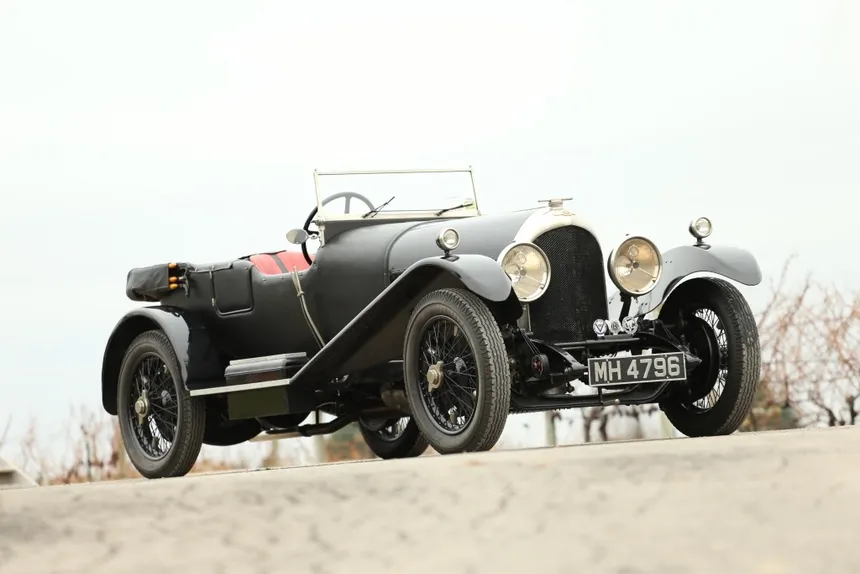
On January 18, 1919—the very same day the Paris Peace Conference opened—W.O. registered Bentley Motors Limited. He set up in a small workshop at New Street Mews, Baker Street, London. His initial team: Frank Burgess (ex-Humber), Harry Varley (ex-Vauxhall), and Clive Gallop as engine designer. The goal was simple: to build a fast car, a good car, the best in its class.
In October 1919 he displayed a chassis with a dummy engine at the London Motor Show. By December, the real engine—a four-cylinder, 3-liter unit with four valves per cylinder, designed by Gallop—was running. The first production Bentley 3 Litre was delivered in September 1921 to Noel van Raalte for £1,050.
A detail almost nobody knows: W.O.’s first wife, Leonie Gore, died during the 1919 Spanish flu pandemic. The man founded his company while burying his wife. There’s no romanticizing that story. Just the raw truth of someone who channeled all his grief into an engine block.
You probably know the names. The Bentley Boys. But what you may not know is who they really were. Woolf “Babe” Barnato: heir to diamond and gold mines in South Africa, ironically nicknamed for his heavyweight boxer’s build. Dr. Dudley Benjafield: bacteriologist who fought the Spanish flu in Egypt before racing at Le Mans. Bernard Rubin: gravely wounded in 1917, he spent three years regaining the use of his legs. Glen Kidston: submariner holding the rank of Lieutenant-Commander. Tim Birkin: RAF Lieutenant. Sammy Davis: sports editor of The Autocar who wrote under the pen name “Casque” (French for helmet).
All war veterans. All wealthy. All living in London’s most fashionable district. And all sharing one addiction: speed as an antidote to what they’d seen in the trenches.
Le Mans: the White House night
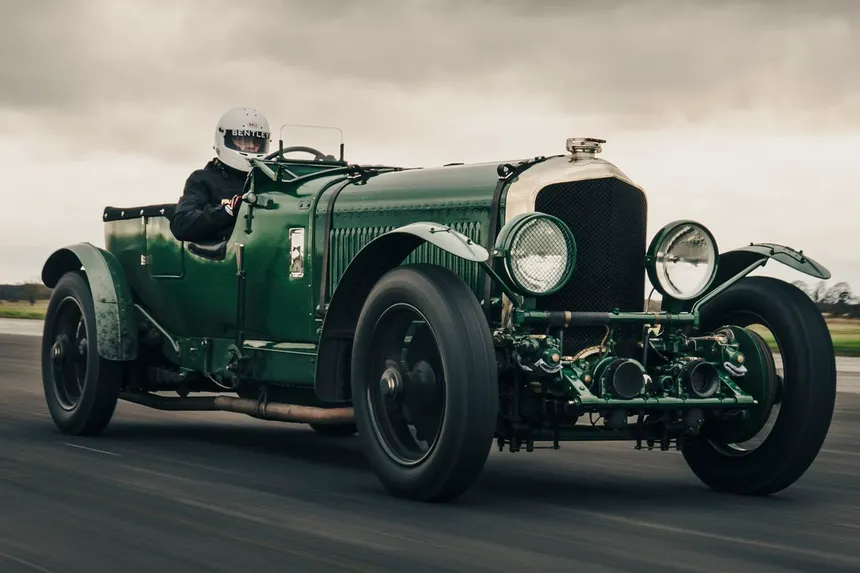
The victory that defined Bentley at Le Mans wasn’t the first one in 1924 (with John Duff and Frank Clement). It was 1927. And it was a mechanical miracle.
Three Bentleys were competing that year. In darkness, entering the White House corner, a Théophile Schneider crashed into a farmyard shed. Callingham’s 4½ Litre couldn’t avoid the wreckage and overturned. The second 3 Litre of d’Erlanger and Duller ploughed into the debris. And Sammy Davis, at the wheel of the third Bentley—the veteran 3 Litre nicknamed “Old Number 7″—arrived to find the road completely blocked.
Davis did the only thing he could: he threw the car into a controlled slide and crashed sideways into the pile of wreckage. The chassis twisted. The headlamps shattered. The right fender disappeared. But the engine was still alive.
He limped back to the pits dragging the remains. They strapped a torch to the windscreen frame to replace the headlights. Repaired what they could with wire and string. And went back out. Davis and Benjafield hunted down the leading Ariès through the night. With less than an hour to go, the French car’s engine blew. The wrecked Bentley, chassis bent, a flashlight for headlamps, crossed the finish line 20 laps ahead.
“Old Number 7” was broken up afterward. Its parts probably live inside other Bentleys, but its identity was lost forever. The car that won one of the most epic races in history no longer exists.
Barnato versus the Blue Train
March 1930. Woolf Barnato is at a dinner party on a yacht near Cannes. Someone mentions that Rover and Alvis had recently beaten Le Train Bleu, the luxurious overnight express connecting the Côte d’Azur with Calais. Barnato was unimpressed. He said it was no great achievement. And he wagered £200 (the average annual UK income was £165) that he could not only reach Calais before the train, but London.
Nobody took the bet. But Barnato ran the race anyway.
On March 13, at 5:45 PM, he left the Carlton Hotel in Cannes with golfer Dale Bourne riding shotgun, in his Speed Six with H.J. Mulliner coachwork. They drove through the night. Fog across central France. A puncture with no additional spare. Refueling problems in Auxerre at 4:20 AM. They reached Boulogne at 10:30, crossed the Channel by ferry, and parked outside the Conservative Club on St. James’s Street at 3:20 PM. The Blue Train arrived in Calais four minutes later.
The French Motor Manufacturers’ Association was not amused. They fined Bentley for racing on public roads and banned the marque from the 1930 Paris Salon. Barnato claimed he’d raced as a private individual, not as Bentley’s chairman. It didn’t fly.
And there’s a delicious detail that official history distorted for decades: the car Barnato drove that night was a formal sedan with fabric Mulliner bodywork. Not the spectacular Gurney Nutting fastback coupé that appears in every famous painting and photograph. That coupé wasn’t delivered until May 1930, two months after the race. Terence Cuneo immortalized it in his celebrated painting alongside the train, but he painted the wrong car.
Five Le Mans victories. The Blue Train record. Brooklands dominated. It was too much for Ettore Bugatti, whose elegant Type 35s couldn’t match the British beasts. Hence the phrase—probably apocryphal, according to historian David Venables—that became motorsport’s most famous insult: “Monsieur Bentley builds the fastest lorries in the world.” He was right about the form: they were huge, heavy, brutal. But the lorries kept winning and the Bugattis kept breaking. That was the only difference that mattered.
But the Bentley Boys’ glory was an economic mirage. And the bill came due fast.
The velvet-glove betrayal
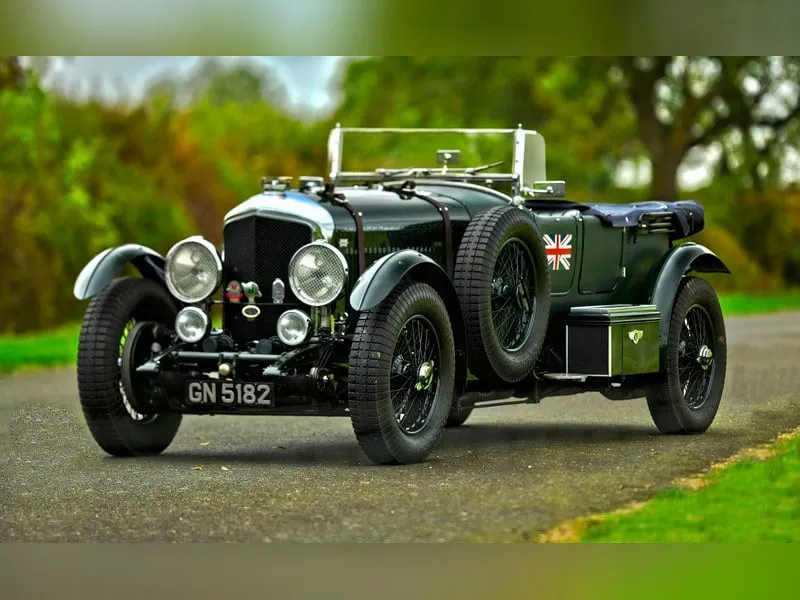
In 1930, W.O. unveiled his masterpiece: the 8 Litre. A straight-six producing 220 bhp, capable of exceeding 100 mph. It was better, faster, and marginally more expensive than the Rolls-Royce Phantom II. That was its death sentence.
The Great Depression strangled sales. Barnato could no longer inject capital. In July 1931, a receiver was appointed. Napier & Son negotiated a purchase. But then the British Central Equitable Trust appeared with a sealed bid of £125,275.
Nobody knew who was behind it until after the deal closed. Not even W.O. himself. The British Central Equitable Trust was a front for Rolls-Royce. They bought their competitor to eliminate it. A detail that stings: Bentley had never registered its own trademark. Rolls-Royce did so immediately.
They closed the Cricklewood factory. Halted production for two years. Killed the 8 Litre. And when they resurrected the brand in 1933, what emerged from Derby was a derivative of the Rolls-Royce 20/25, marketed as “the silent sports car.” W.O. was contractually bound to work for them until 1935. Designing the car that bore his name but was no longer his. Rolls-Royce shut him out of the design team. They let him do road testing.
Exile and the silent revenge
When his Rolls-Royce contract expired in April 1935, W.O. walked free. Alan P. Good had bought Lagonda—outbidding Rolls-Royce, ironically—and convinced W.O. to join as technical director. He brought most of Rolls-Royce’s racing department staff with him.
At Lagonda, W.O. designed his secret masterpiece: a 4,480 cc V12 producing 180 bhp. But Rolls-Royce sued to prevent him from linking his name to those cars. The judge ruled in Rolls-Royce’s favor. W.O. Bentley was designing Britain’s finest engines, but he couldn’t put his surname on them.
After the war, David Brown bought Lagonda. The real reason: the twin-cam straight-six that W.O. had designed. That engine ended up under the bonnet of the Aston Martin DB2 and remained in production until 1959. W.O. Bentley fed the heart of three of Britain’s greatest marques: Bentley, Lagonda, and Aston Martin.
He died in 1971. A modest man who had lost his company, his name, and his legacy four decades earlier.
The turbo resurrection and the German war
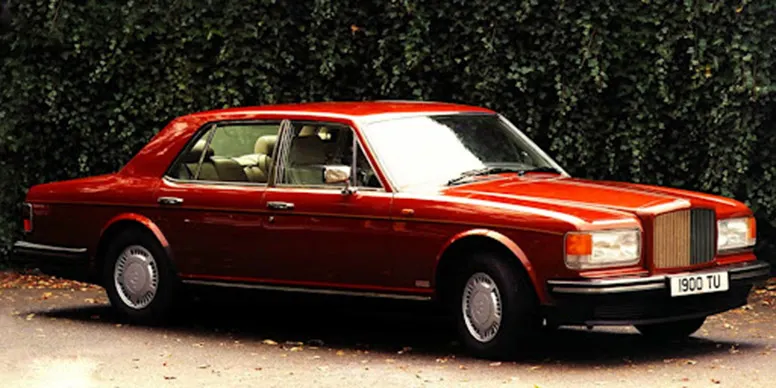
For decades, Bentley was a Rolls-Royce wearing a different grille. Literally. Same chassis, same engine, same interior. Only the bonnet badge changed. By the early 1980s, Bentley accounted for less than 5% of Rolls-Royce Motors’ sales. The brand was clinically dead.
Until someone decided to do exactly what W.O. would have done: strap a turbo to it.
The 1982 Mulsanne Turbo lit the fuse: the venerable 6.75-liter V8—an engine block whose design dated back to 1959—received forced induction for the first time. Suddenly, Bentley had a character of its own that didn’t need Rolls-Royce’s permission. The 1985 Turbo R, with the “R” for roadholding and retuned suspension, consolidated it: around 300 bhp and dynamic behavior that no luxury sedan in the world could match at that size. For the first time in half a century, people were buying a Bentley because it was a Bentley, not because it was a cheaper Rolls-Royce. Sales reversed: Bentley went from supporting act to headliner.
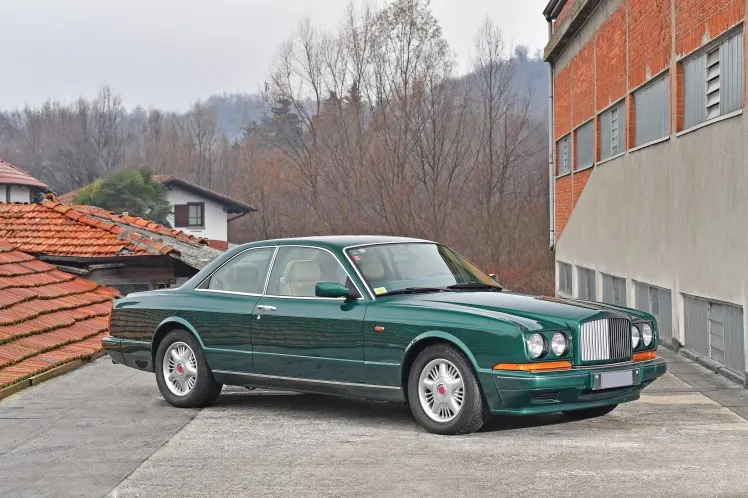
The 1991 Continental R sealed the transformation. It was the first Bentley in over 25 years with its own unique bodywork, not shared with Rolls-Royce. The most expensive production car in the world at launch. That resurrection saved Rolls-Royce Motors from financial ruin. The brand scorned for half a century ended up rescuing its master. The irony would have made W.O. smile.
In 1998, Vickers put Rolls-Royce Motors up for sale. BMW seemed the logical buyer: they already supplied engines and components. They bid £340 million. Volkswagen appeared at the last moment with £430 million and acquired the Crewe factory, the designs, the Spirit of Ecstasy, the Rolls-Royce grille shape… and Bentley.
But VW made a colossal error: the “Rolls-Royce” brand name and logo didn’t belong to Vickers. They belonged to Rolls-Royce plc, the aerospace company. And Rolls-Royce plc licensed the name to BMW for a mere £40 million. Volkswagen bought everything except what mattered. BMW bought only what mattered with almost nothing else.
The final deal: VW would produce Rolls-Royce and Bentley cars until 2002. From 2003 onward, Bentley would belong to VW and Rolls-Royce to BMW. BMW built a new factory at Goodwood. VW invested £500 million modernizing Crewe.
Le Mans 2003: 73 years later
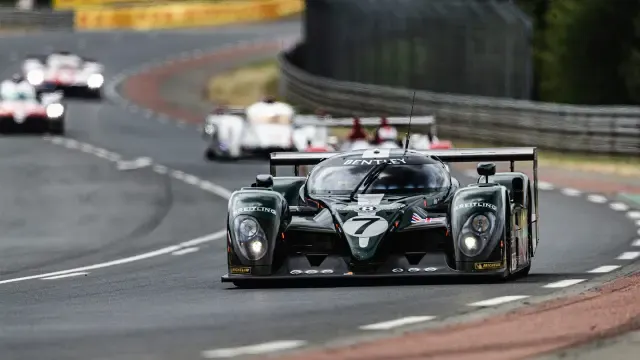
The very year of the final separation, Bentley won Le Mans. Again. 73 years after the Bentley Boys’ last victory. The Speed 8, powered by a 4.0-liter twin-turbo V8 derived from the Audi R8, was designed by Racing Technology Norfolk and run by Joest Racing—the same team that had delivered Audi’s victories. Tom Kristensen, Rinaldo Capello, and Guy Smith drove the #7 from pole to victory. The #8, with Mark Blundell, David Brabham, and Johnny Herbert, completed the one-two.
Kristensen described the Speed 8 as the most beautiful machine ever to win Le Mans. And the Bentley team’s budget was, according to internal legend, less than Audi’s catering bill.
Today: between legacy and an electric future
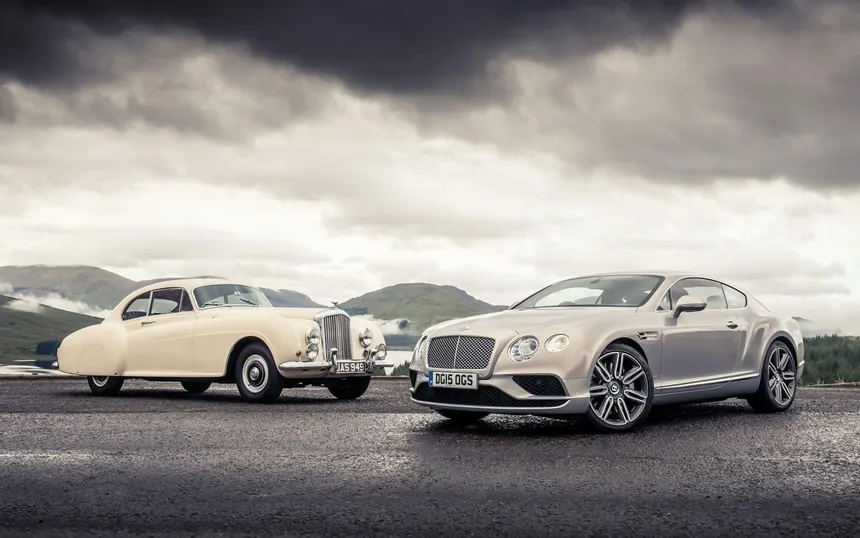
Bentley’s current range—Continental GT, Flying Spur, Bentayga—is offered exclusively with Ultra Performance plug-in hybrid V8 powertrains following the retirement of the iconic W12. The Beyond100+ strategy, announced in 2024 and revised in 2025, charts the path: the first fully electric Bentley will be unveiled in late 2026, a luxury urban SUV measuring under five meters with 100 miles of range in under seven minutes of charging. Deliveries begin in 2027. Combustion and hybrid models will continue until 2035.
The Crewe factory, born in 1938 manufacturing Merlin engines for Spitfires, is being reinvented as the “Dream Factory”: the largest self-funded investment in Bentley’s 106-year history.
W.O. wanted to build a fast car, a good car, the best in its class. 106 years later, the brand that carries his name is preparing its first car with no pistons. No cylinders. No sound to tell you you’re alive. W.O. started with an aluminum paperweight and a world war. The next war has already begun. And this time there are no trenches to hide in.
Check you’re still alive.