Carlo Chiti, the Ferrari engineer who made Phil Hill a champion and then dragged him down with him
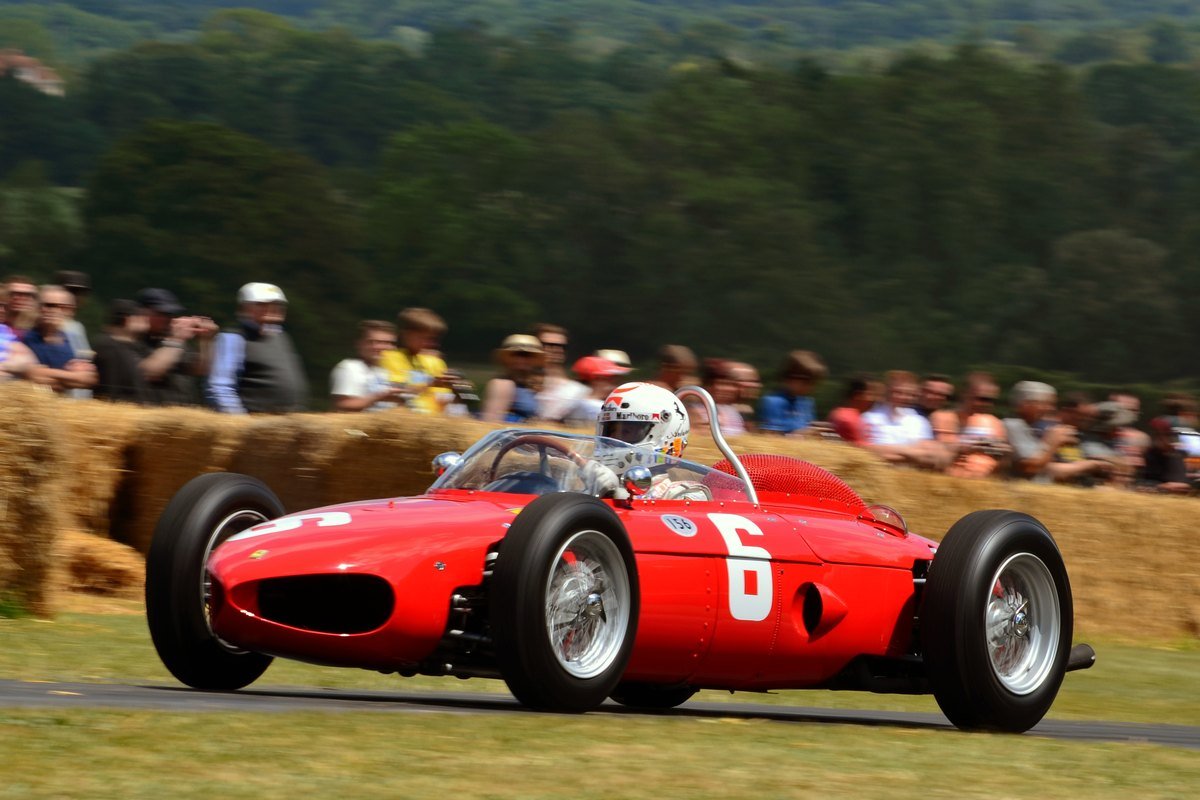
The first American to win the Formula 1 World Championship did it in a car designed by a man most Americans have never heard of. Phil Hill took the 1961 title in the Ferrari 156, the “sharknose,” and the engineer behind it was Carlo Chiti, a heavyset Tuscan in glasses and a light raincoat who rescued stray dogs, cooled off at Sebring by pouring vodka over his head, and kept a revolver in his office desk.
Two years later Hill was driving for Chiti again, this time in a car that couldn’t finish races. That was the worst career move Hill ever made. It wasn’t the last time a Chiti project would end in a pile of broken parts, and it wasn’t the last time someone brilliant would bet on him anyway. Bernie Ecclestone did. Niki Lauda won with him. Mario Andretti drove for him. And in the 1990s a young Swede named Christian von Koenigsegg built his first car around a Chiti engine nobody else wanted.
From Pistoia to the Mille Miglia
Chiti was born in Pistoia, in Tuscany, in December 1924. Even the day is disputed: English Wikipedia says the 19th, while most Italian sources and the tribute site run by Robert Little, an American who worked for him, say the 29th. He took his aeronautical engineering degree at the University of Pisa in 1953, a year after he had already started at Alfa Romeo. The experimental department run by Orazio Satta Puliga hired him in 1952, and one of his first jobs was the 6C 3000 CM sports racer that Juan Manuel Fangio drove to second place in the 1953 Mille Miglia.
Alfa then lost interest in racing, and Chiti got bored. What got him out was a funeral. In 1957 Ferrari’s chief engineer, Andrea Fraschetti, a friend and fellow Tuscan, was killed testing a Formula 2 Dino at Modena. Enzo Ferrari needed someone fast, and he called Chiti.
Talking Enzo into a mid-engined car
Ferrari in 1957 still put the engine in front of the driver. Chiti worked alongside Vittorio Jano on the 246 F1 that carried Mike Hawthorn to the 1958 title, while across the Channel a couple of garage outfits, Cooper first and then Lotus, were winning with the engine behind the driver’s back.
If you’ve ever spun a broom, you already understand why. Hold it by the middle and it twirls easily. Hold it by the end and you’re fighting it. A race car with its heaviest part between the axles turns into a corner the same way, with less effort. Enzo didn’t want to hear it. Motor Sport credits Chiti with changing his mind. Chiti also built a small wind tunnel at Maranello, signed off on disc brakes and fiberglass, and started measuring airflow instead of guessing at it.
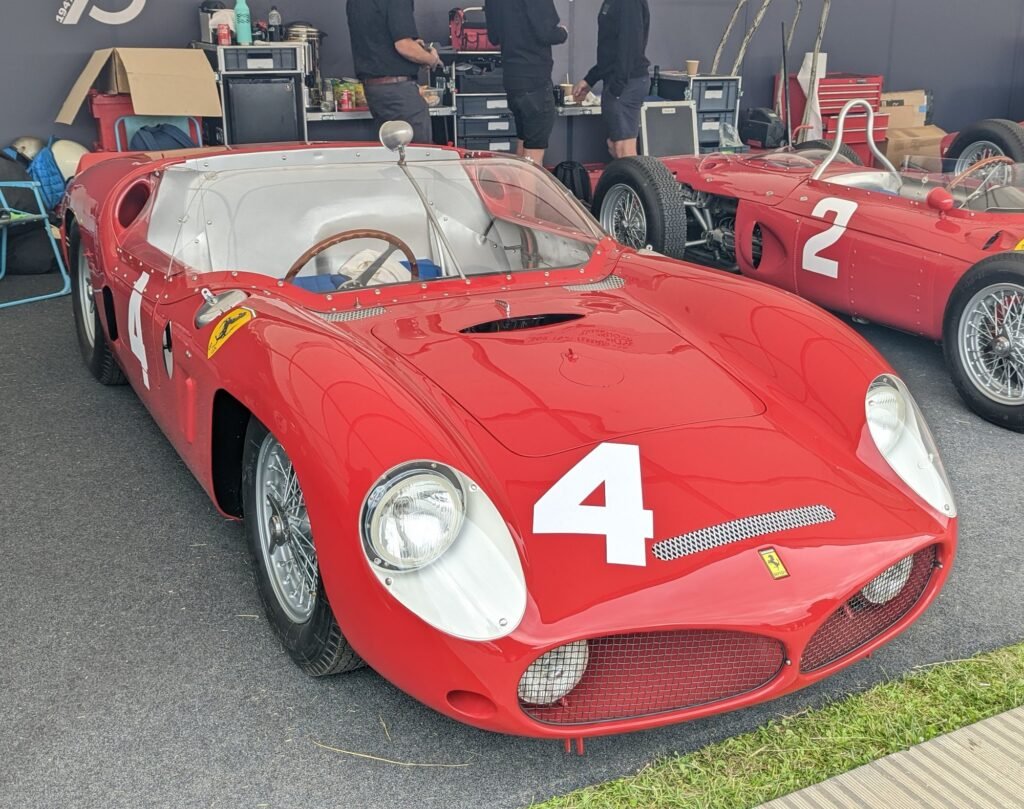
The first product was the 246 SP sports racer, shown to the press on February 13, 1961, Ferrari’s first mid-engined sports car. Chiti engineered it and shaped the body with Medardo Fantuzzi, the Modena coachbuilder. The twin nostrils that became the “sharknose” were Fantuzzi’s idea, and Chiti’s tunnel numbers proved him right.
Here’s where an American walks into the story. The 246 SP got loose at high speed, and Wolfgang von Trips rolled one at the Modena autodrome. Richie Ginther, the Californian who drove and tested for Ferrari and had worked on aircraft during the war, suggested pulling off the vertical tail fin and riveting a 13-centimeter lip, about five inches, across the rear deck. It worked. That strip of aluminum is one of the earliest ancestors of the spoiler on every Mustang and Camaro sold today. The 246 SP won the Targa Florio in 1961 and again in 1962, and von Trips complained the cockpit got so hot during a seven-hour race you could grow tomatoes in it.
1961: Phil Hill’s year
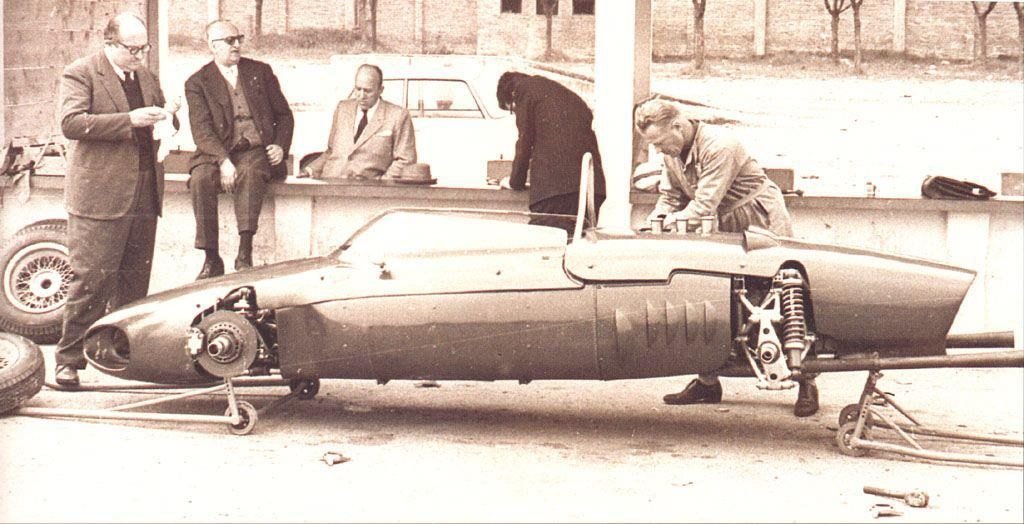
For 1961 Formula 1 cut engine size from 2.5 liters to 1.5. The British teams had lobbied against the change, lost, and turned up with a stopgap Coventry Climax four-cylinder good for around 150 horsepower. Ferrari arrived ready, with a mid-engined, sharknosed 156 F1 and a 1,476cc V6.
In its best form, that V6 had its two cylinder banks splayed at 120 degrees instead of the usual 65. Flatten the V and the engine sits lower. Lower the engine and the center of gravity drops, and a car that carries its weight closer to the pavement leans less in a turn. Ferrari claimed 190 horsepower. Hill guessed closer to 185 and called the supposed 40-horsepower edge over the Climax “a stretch,” while still saying the car “was built the way a race car ought to be built.”
Ferrari entered seven of the eight championship rounds and won five. At Spa, red cars finished first, second, third and fourth. The only man who beat them was Stirling Moss, in a privately run Lotus, at Monaco and the Nürburgring, on talent alone.
The title was decided at Monza on September 10, and it was a horror show. On the second lap von Trips, leading the championship, touched wheels with Jim Clark’s Lotus and was launched into the crowd. He was killed along with 14 spectators; Ferrari’s own account says 15. Hill won the race and became America’s first World Champion. Ferrari then skipped the last round, the United States Grand Prix at Watkins Glen, so Hill never got to race at home as the new champion.
A year later the 156 couldn’t win a thing. In 1963 Enzo had every one of them cut up. Not a single original survives.
The slap
At the end of 1961 Chiti and seven other senior Ferrari men walked out together. Sources can’t agree whether it was late October or November. The group included Giotto Bizzarrini, the father of the 250 GTO, sporting director Romolo Tavoni, commercial manager Girolamo Gardini and Federico Giberti.
The official story is a dispute over pay and working conditions. The real one has a woman in it. After their son Dino died in 1956, and after she found out Enzo had a second family, Laura Ferrari started showing up everywhere: in the workshop, at races, even at Sebring. According to Motor Sport, the last straw was Laura slapping Gardini. The eight sent their complaints to Enzo through a lawyer. Enzo called it a coup and fired the lot.
Some crawled back within a month. Chiti never did. In his 1962 memoir, Enzo wrote that Chiti’s vast theoretical knowledge was matched only by his eagerness to make a name for himself, which by Enzo’s standards was almost a compliment. Andrea de Adamich, who later drove for Chiti for years, said Chiti never said a word against Enzo Ferrari in return.
ATS: the revenge that failed, and the champion it sank
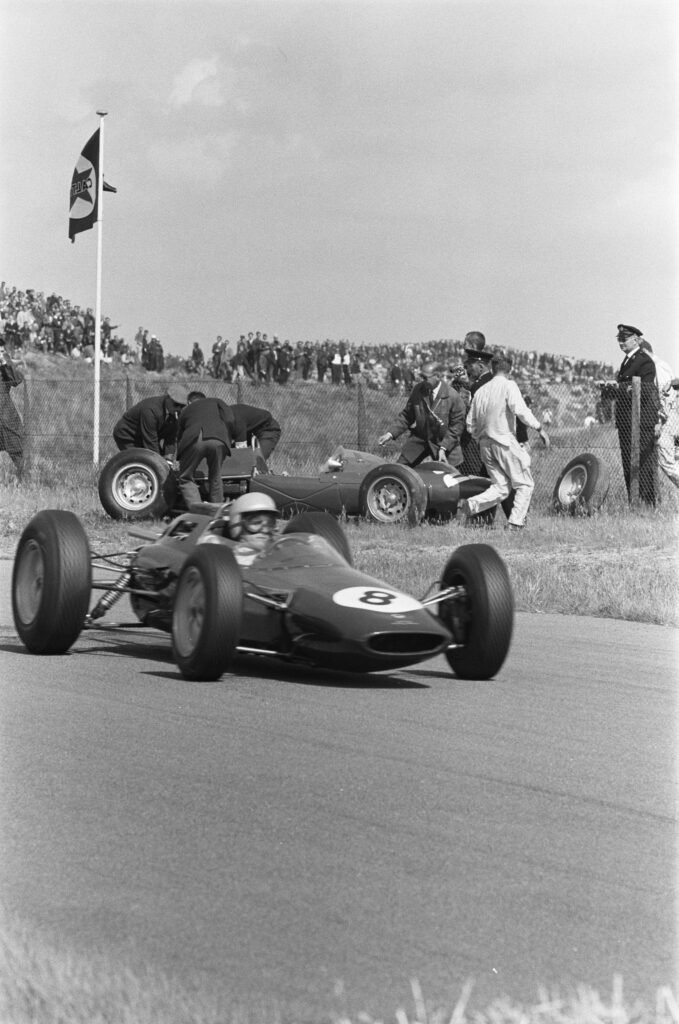
The rebels decided to beat Ferrari at its own game. The money came from Count Giovanni Volpi di Misurata of Scuderia Serenissima, textile magnate Giorgio Billi and Jaime Ortiz-Patiño, heir to a Bolivian tin fortune. Volpi and Ortiz-Patiño bailed after a falling-out, and the Bologna operation became Automobili Turismo e Sport: ATS.
Chiti drew the Tipo 100 around a 1.5-liter V8. In the cockpits sat Phil Hill, who had left Ferrari after a winless 1962, and Giancarlo Baghetti, another Maranello refugee.
The 1963 season played like a slapstick reel. At the Belgian Grand Prix both cars started at the back and both broke their transmissions. The team skipped two races. On the road to the German Grand Prix the transporter crashed and wrecked both cars before they ever got there. At Monza, Hill came home 11th, seven laps down. At Watkins Glen, with his home crowd watching, and then in Mexico City, both cars dropped out. ATS shut its doors at the end of the year.
Hill never won another Formula 1 race. Bizzarrini went off to work for Ferruccio Lamborghini, several mechanics slunk back to Ferrari, and Chiti went back to Alfa Romeo. Motor Sport reckons it took him 16 years to earn back his name in Formula 1.
Autodelta and the Sebring years
In March 1963 Chiti and Lodovico Chizzola, Alfa Romeo’s dealer in Udine, registered a small company called Auto-Delta just outside that city. Its first job was assembling the Giulia TZ, which needed 100 cars built to race as a GT, a run too small for Alfa’s own assembly lines. By late 1964 Alfa had swallowed the company, moved it to Settimo Milanese near the Balocco test track, and made it the factory racing department. Chiti ran it for two decades.
Under him, Autodelta built the Giulia GTA, the A for alleggerita, lightened, thanks to aluminum body panels. It won the European Touring Car Championship in 1966, 1967 and 1968. Then came the Tipo 33 prototypes. In 1971 the 33/3 beat the five-liter Porsche 917s at the Brands Hatch 1000 km, Alfa’s first world championship win in 20 years. In 1974 Mario Andretti shared the winning 33 TT 12 with Arturo Merzario at the Monza 1000 km. Alfa took the 1975 World Championship for Makes and the 1977 World Sports Car Championship.
Sebring was where Americans got to know him. People who worked those races remember a big man with a handkerchief knotted at the four corners on his head against the Florida heat, pouring vodka on himself because, he said, “vodka leaves no after-aroma like bourbon or gin.” Oscar Feldman recalled Chiti blowing up in 1965 when two drivers cut an unauthorized cooling hole in a TZ2, and then sitting everyone down to a four-hour dinner. For the 1971 race Chiti named his Tipo 33s after stars, one of them Rigel. Robert Little, who later built the main English-language archive on Chiti and Autodelta, got his first Alfa job from him, running errands at Sebring.
He had a serious side, too. In March 1969 Lucien Bianchi was killed testing an Alfa 33 at Le Mans, and Alfa sat out the race that year. Little says it turned Chiti into a safety obsessive. He kept a tubular chassis on the 33 partly because it protected the driver better, and in early 1970 he and engineer Garbarino developed a foam-filled cellular fuel tank meant to stop fuel from dumping out all at once in a crash. He offered it to rival teams and pushed for it to be made mandatory. Nobody listened.
Bernie’s free engines and Andretti’s vacuum cleaner
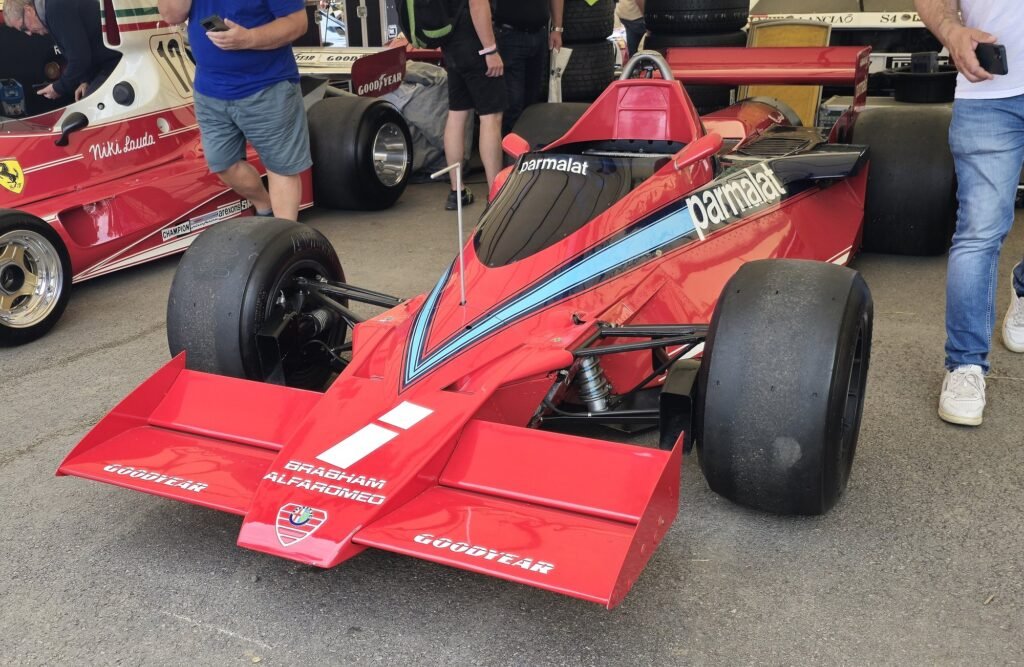
In 1976 Bernie Ecclestone pulled the Cosworth V8s out of his Brabhams and bolted in Chiti’s 115-12, a three-liter flat-12. Think of a Porsche 911 or a Subaru boxer, but with twelve cylinders: the pistons lie flat and punch outward in opposed pairs, which makes for a very low engine. Ferrari had just won both 1975 titles with a similar layout, Brabham’s sponsor Martini & Rossi was Italian, and conceptcarz says the engines didn’t cost Bernie a cent.
They were worth roughly what he paid in reliability. The flat-12 made around 500 horsepower, but it weighed 386 to 392 pounds, about 10 percent more than most Formula 1 engines of the same size, and it was wider than Ferrari’s. Brabham designer Gordon Murray grumbled that Autodelta “couldn’t control themselves” and kept changing things on him. Brabham finished ninth in the 1976 constructors’ standings. In 1977 John Watson was half a lap from winning the French Grand Prix at Dijon when it slipped away.
Then came 1978 and Niki Lauda. Colin Chapman’s Lotus had figured out ground effect, shaping the underside of the car like an upside-down airplane wing so the air rushing beneath it sucks the car onto the track. That trick needs open tunnels on both sides of the engine, and Chiti’s flat-12 filled them. Murray’s workaround was the BT46B: a big fan at the tail, driven off the engine, that pulled the air out from under the car and clamped it to the asphalt. Brabham swore it was a cooling fan, and technically it was, because it also pulled air through a radiator laid over the engine. Andretti, who won the title for Lotus that year, said it was “like a bloody great vacuum cleaner.”
The fan car raced exactly once, at the Swedish Grand Prix at Anderstorp on June 17, 1978, and Lauda won it. Murray gave Chiti’s crew credit for turning the car around in record time. The other teams screamed, and Ecclestone, who also ran the constructors’ association, pulled the car rather than lose their votes. Murray said Chiti took it hard. Lauda won again at Monza, after Andretti and Gilles Villeneuve were each handed a penalty for jumping the restart.
For 1979 Murray asked for a narrower engine, and Autodelta delivered a V12 in about three months. It broke too often, and Brabham went back to Cosworth before the season was out. Murray still summed him up kindly: “Chiti was a genius in his own way.”
Alfa Romeo’s own car, and Andretti in red
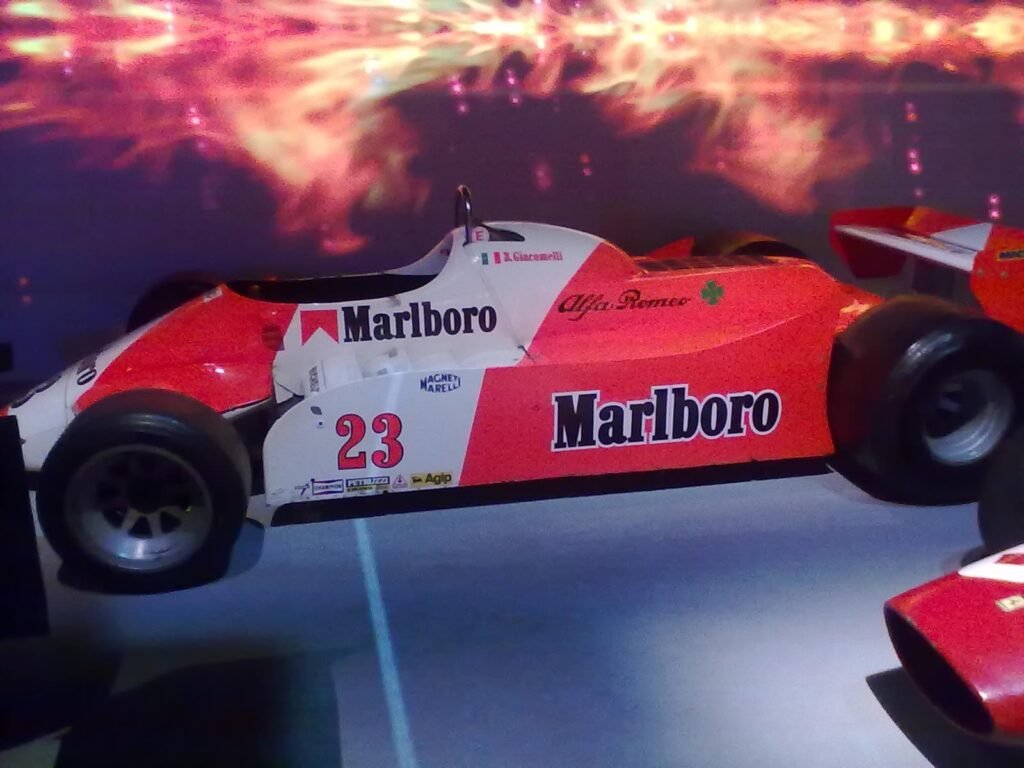
Chiti had talked Alfa into building its own Formula 1 car as early as 1977. The 177 showed up at the 1979 Belgian Grand Prix at Zolder. Many people rate the 1980 Alfa 179 as the best Formula 1 car Alfa ever built. That season Patrick Depailler was killed testing at Hockenheim, and Bruno Giacomelli, left on his own, put the car on pole at Watkins Glen and led 32 laps before the electrics quit.
When sliding skirts were banned, several teams found loopholes to keep their cars stuck to the ground. Chiti wouldn’t play. Motor Sport quotes him: “We cannot cheat like that. We are a big company with a reputation.”
Andretti, the 1978 champion, joined in 1981. At the Spanish Grand Prix at Jarama on June 21 he came home eighth and Giacomelli tenth, both on the lead lap in one of the closest finishes of the era. In 1982 Andrea de Cesaris put an Alfa on pole at Long Beach. By then, though, Euroracing was taking over the running of the team, and Chiti was left with the engines alone, a demotion in Motor Sport’s view. His 890T turbo V8 still gave de Cesaris two second places in 1983. Chiti left Alfa in 1984, lonely and bitter, according to people who knew him.
Minardi, a Spaniard, and a flat-12 for Subaru
He set up Motori Moderni in Novara, a little company that would sell a Formula 1 engine to anyone with a check. Its 1.5-liter turbo V6 weighed 324 pounds and made about 720 horsepower in race trim in 1985, when Renault, Honda and BMW were pushing close to 1,000. Minardi ran it from 1985 to 1987, and AGS used it in two races in 1986. In 46 Grands Prix it never scored a single point.
In 1987 the second Minardi went to Adrián Campos, a Spaniard from Alzira who brought sponsorship from Lois jeans. He was disqualified in Brazil, never took the start at Monaco, retired 13 times, and saw the checkered flag once: at his home race, the Spanish Grand Prix at Jerez on September 27, 1987, in 14th place, four laps behind Nigel Mansell. Campos later became Fernando Alonso’s mentor and founded Campos Racing. He died in January 2021.
Then Subaru called. In late 1988 the Japanese company hired Chiti to build an engine for the new 3.5-liter, non-turbo Formula 1. He went straight back to his favorite layout, a flat-12, which fit Subaru’s boxer-engined road cars and kept the weight down low. It was the same idea that had boxed Brabham in a decade earlier.
On the dyno in 1989 it made about 559 horsepower. The Cosworth DFR made at least 590, and Honda’s V10 at least 660. Bare, the engine weighed 351 pounds, about 22 more than the DFR. With all its ancillaries hung on, the Subaru package was roughly 247 pounds heavier. Minardi tried it at Misano in May 1989 and said no thanks.
Subaru bought half of the Coloni team and stuffed the engine into the Coloni C3B for 1990, with Bertrand Gachot driving. Back then the teams with the worst results had to get through a pre-qualifying session on Friday morning just to earn the right to try to qualify. At the car’s first race, the 1990 United States Grand Prix in Phoenix, Gachot didn’t finish a single lap of pre-qualifying because the gear linkage broke. The Coloni-Subaru was entered eight times and failed to pre-qualify eight times. Subaru walked away after the British Grand Prix.
How the engine ended up in Sweden
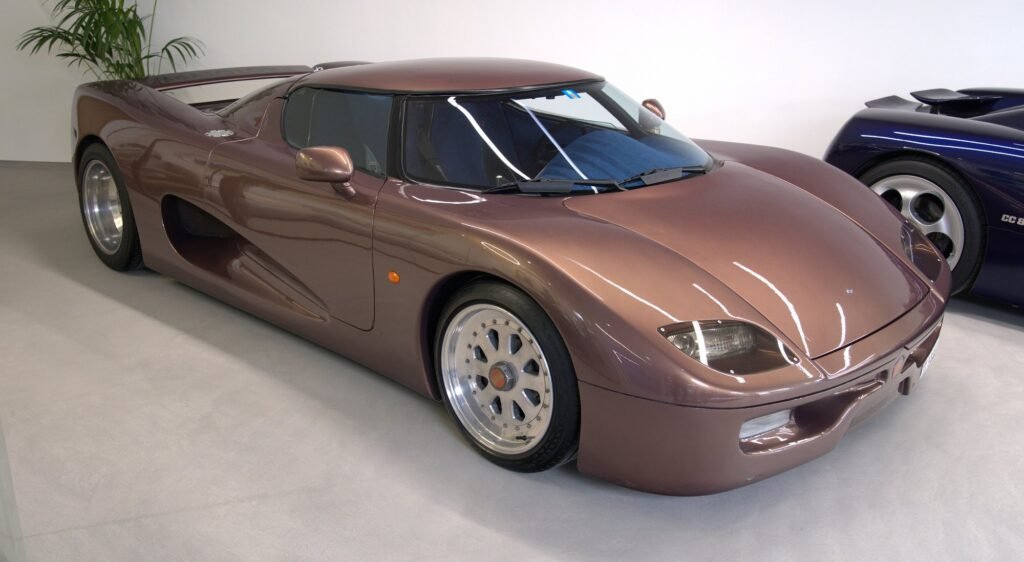
The flat-12 got one more shot. In the mid-1990s Christian von Koenigsegg, hunting for an engine for his first car, got in touch with Motori Moderni. They agreed on a version stretched to 3.8 liters, revving to 9,000 rpm instead of 12,000, with 580 horsepower as the target. Koenigsegg took delivery of two engines and designed his first carbon tub around them. As he told Jalopnik, the mounting points from that engine carried all the way through to the Agera.
When Chiti died and the company went bust, Koenigsegg bought drawings, tooling, castings and parts at auction. He dates that to early 1997; Wikipedia says 1999. He tried to build the engines himself, but every drawing had been done by hand and much of the tooling was worn out. He gave up and went with a V8.
The man behind the raincoat
Chiti was big and round, with glasses, the light raincoat and a Borsalino, and he made his engineers wear a suit and tie. John Watson said he looked like he’d walked off a Fellini set. On hot days he sat with his feet in a bucket of water. Drivers called him “Uncle.” Giacomelli called him a toscanaccio, Italian for a hardheaded Tuscan with a short fuse.
The fuse was real. Motor Sport says that when Chiti got frustrated he would take a revolver out of his desk drawer and put a round into the office ceiling. Murray remembered him at a dinner holding a lit candle in his mouth for about ten seconds, just to make an impression.
And then there were the animals. He picked up sick and injured dogs and cats off the streets of Milan, and there was always one convalescing at his place. Autodelta had three-legged and one-eyed dogs that sprinted for the coffee machine every time they heard a coin drop, because they knew sugar was coming. During a race in Buenos Aires he ran out onto the track to save a dog. He named one of his dogs Lina, the same as his wife, so that if his wife answered he could tell her, “Not you, the other dog.”
Chiti died of a heart attack in Milan on July 7, 1994. In 2024, for his centenary, Pistoia made him an honorary citizen and put up a plaque at his old high school. His son Arturo, a professor of medicine, told the students that his father’s most valuable trait was curiosity.
He gave Ferrari its first constructors’ title and gave America its first World Champion. Within a year Ferrari had thrown him out and Hill was stuck with him at the back of the grid. The one who got the most out of Chiti’s last engine was a Swede building his first supercar, and the Agera was still bolted to the points Chiti’s flat-12 had dictated.
Check you’re still alive.
Photos: Nic Redhead (CC BY-SA 2.0); Peter Coltrin (public domain); Calreyn88 (CC BY-SA 4.0); Harry Pot / Anefo (CC0); Rugars2 (CC BY-SA 3.0); MrWalkr (CC BY-SA 4.0). Wikimedia Commons.