
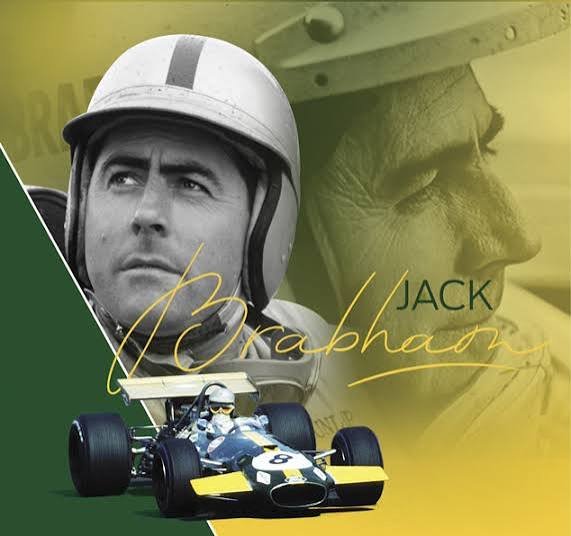
Jack Brabham: the quiet Australian who broke the front-engine church
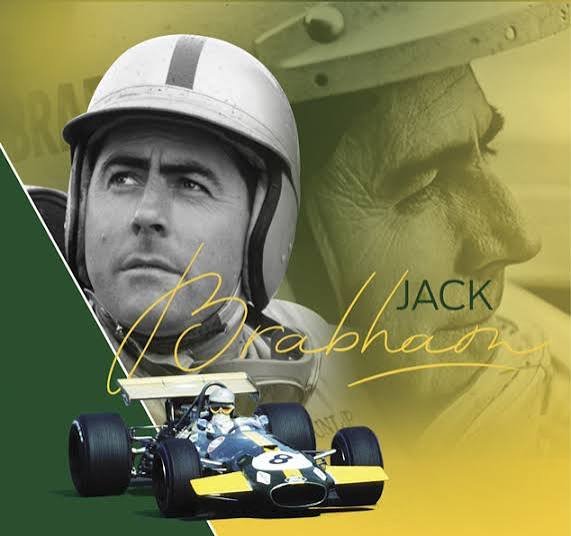
Every Formula One World Champion did something big. One of them, on top of it, pushed his own car four hundred yards under the Florida sun because he ran out of gasoline on the final lap. That was how he won his first world title. He made it across the finish line before collapsing in the medic tent from exhaustion. A quarter of an hour later, when he could breathe again, someone told him he was World Champion.
The man didn’t smile. He didn’t say anything memorable that afternoon. He didn’t give a press conference. He was deaf from the noise of his Cooper and he wanted a beer.
That was Jack Brabham. And that’s the part Formula One doesn’t like remembering about him: he didn’t fit the mold.
The drivers of his era were either European aristocrats with cravats and members-only clubs, or war heroes with cinematic biographies. Brabham was the son of a shopkeeper from a southern suburb of Sydney who quit school at fifteen to work in a garage. He studied mechanical engineering at night while wrenching on cars during the day. In the Royal Australian Air Force he wanted to fly fighters and they told him there were no flight seats left, that he could work as an aircraft engine mechanic instead. He accepted. Like everything else in his life, without complaint.
Twelve years after leaving the RAAF he won his first world championship. Thirteen years after that, the second. Eighteen years after that, the third — in a car he had built himself, with his own name painted on the bodywork. He remains the only driver in Formula One history to win a World Championship in a car bearing his own surname. Sixty years and eighteen champions later, he’s still alone on that page.
For American readers, one line of context matters before we go further. Brabham didn’t only change Formula One — in May 1961, he took a small European car with a mid-mounted engine to Indianapolis and finished ninth. That single result triggered the rear-engine revolution that killed the American front-engined roadster at Indy by 1969. So this is a story about two continents, not one.
The shopkeeper’s kid who took the family Chevy apart
John Arthur Brabham was born on 2 April 1926 in Hurstville, a nondescript southern suburb of Sydney. Father a shopkeeper, modest house, three brothers, no family passion for cars beyond the Chevrolet the old man used for deliveries.
At twelve, Brabham was driving that Chevrolet in secret when his father wasn’t looking. At fourteen, he had stripped it out of curiosity and reassembled it. There’s no romance in this. Shopkeepers’ kids in rural Australia in the 1930s didn’t have baseball cards or comic books. They had their father’s shed, a set of imperial spanners and all the time in the world. Brabham was the kind who climbed inside the engine to find out why it made one sound and not another.
At fifteen he quit school. He got an apprenticeship at a Sydney garage and enrolled in evening classes at Sydney Technical College — mechanical engineering. This isn’t a nice résumé bullet. This is the entire foundation of what comes later. When Brabham arrived in England in 1955 to race Formula One, he didn’t only bring driving talent: he brought seven years of workbench time plus the theoretical training of a night-school engineer. He was an engineer-driver before that category existed.
In May 1944, aged eighteen, he enlisted in the Royal Australian Air Force. He wanted to fly. They said no. The Pacific war was winding down, there were more trainee pilots than aircraft, and Brabham was reassigned as a flight mechanic. His job for two years: keep the engines of Australian fighters and bombers running in the final phase of the Second World War. Precision, zero fault tolerance, on-the-spot diagnosis without manuals under time pressure. The hardest school there was in the 1940s for a kid who had wanted a cockpit and got a spanner instead.
He was discharged in April 1946. He opened a small repair shop behind his grandfather’s house. And here’s where the American shows up.
Johnny Schonberg, the friend nobody talks about
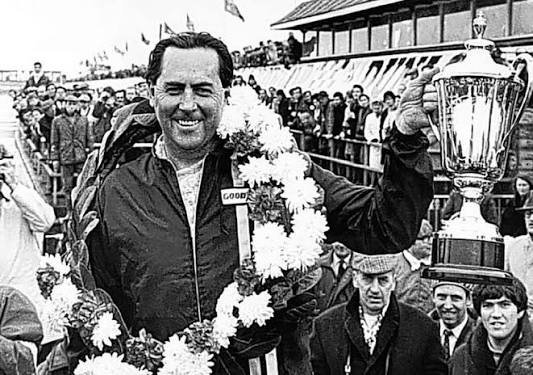
This is the piece missing from most Brabham biographies. The man who started Brabham’s racing career wasn’t Brabham himself — it was an American midget racer called Johnny Schonberg, who had moved to Sydney and wanted to compete in the 1946-47 Australian speedcar season. He asked Brabham to build him a car. Brabham built one. Schonberg raced it. They won.
Brabham hadn’t driven a midget in his life. He’d spent the RAAF years thinking about aero engines and his intent was to build up his repair business. But when Schonberg retired from driving in 1948, Schonberg’s wife told Brabham to get in the car himself, that she had seen what he could do.
Brabham got in. And from day one he started winning. New South Wales champion 1948. Australian midget champion 1948 and 1949. Australian speedcar champion 1950-51. Four national titles in three years in a discipline he hadn’t touched until age twenty-two. In a car he had built himself, from post-war salvaged parts.
American readers will recognize the environment. Australian speedcars were essentially the same idea as USAC midgets: light open-wheelers, tubular chassis, front engine (four-cylinder), racing on dirt short ovals. The discipline doesn’t reward the elegant driver: it rewards the man who tips the car into the loose stuff without lifting. Brabham did it without ceremony, without heroics, and without post-race interviews. He’d win, then he’d go home. An Australian journalist of the era described his style in three words that stuck: “Untidy, but very effective.”
1955: England with a used Cooper and no concessions
By 1953 Brabham was splitting his season between midgets and tarmac road racing in Australia and New Zealand with a privately-entered Cooper-Bristol. In 1955 he emigrated to England with his wife Betty and their first son Geoff. Few people today grasp what that meant. A 29-year-old Australian mechanic, no sponsor, no factory team waiting for him, no European contacts beyond John Cooper (whom he had contacted by mail), lands in Britain to take on the entire European F1 establishment.
His Formula One debut was the 1955 British Grand Prix at Aintree with a Cooper-Bristol T40 he had bought with his own money. He finished out of the points. He didn’t care. What he wanted was inside the Cooper workshop in Surbiton, south-west London. And that’s where he became not a driver working for Cooper — he became Cooper’s second man. Mornings sanding down chassis. Afternoons testing them. Evenings arguing with John Cooper about how to make them faster.
This is the part official histories smooth over. When Cooper crested the peak of Formula One in 1959 with the T51 and its mid-engine layout, the story tends to be told as if the whole idea belonged to John Cooper and his father Charles. That’s half-true. Cooper had been building Formula 3 single-seaters with rear-mounted engines since the late 1940s. But scaling that concept to Formula One and making it work against Ferrari and Vanwall required someone who was driver and mechanic in the same skin, who could point at the problem on the track and then fix it back in the pit lane. That someone was Brabham.
The engine behind the driver: the heresy that became doctrine
Until 1959, Formula One was front-engined. Period. Ferrari, Maserati, Vanwall, BRM, all of them. The logic was simple, almost religious: the engine goes in front because it has always gone in front. The few teams that had tried a mid-engine layout before did it for practical reasons, not conviction: Auto Union in the 1930s, forced by regulations. Cooper in Formula 3, forced because they were using motorcycle engines that wouldn’t fit anywhere else.
Nobody had taken the mid-engined concept to Formula One with the intent of winning the world title.
What Brabham and John Cooper did in 1958 and 1959 was scale the F3 formula upward. Small car, light (around 990 lb / 450 kg against 1,200-1,300 lb / 550-600 kg for a contemporary Ferrari Dino 246 F1), with a Coventry Climax 2.5-litre engine — originally a marine and industrial fire-pump motor — mounted behind the driver. The rivals laughed. Italian journalists called the Cooper T51 “a boat without a bow.” The engineers at Maranello dismissed it as a passing fad.
Brabham won his first Grand Prix at Monaco in 1959 in the T51. He won the British Grand Prix a few months later. And he arrived at Sebring in December 1959 leading the championship by 5.5 points over Stirling Moss.
Time to tell Sebring properly. Not as legend.
Sebring, 12 December 1959: the four hundred yards that changed Formula One
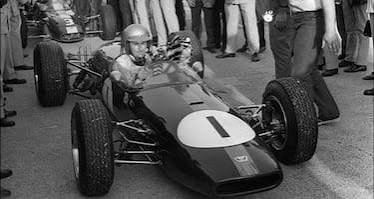
Twelve December 1959. Sebring, Florida. The first United States Grand Prix ever held outside Indianapolis, and the last F1 race Sebring ever hosted. Three drivers still in contention for the title: Brabham on 31 points, Moss on 25.5, Tony Brooks on 23. The math is complicated. The simple version: Brabham needs fourth or better and he is champion, no matter what the other two do.
Moss qualified on pole. On lap 5 his Rob Walker Cooper-Climax broke its gearbox and he retired. Brooks had been punted by his own Ferrari teammate Wolfgang von Trips at the first corner and was already out of contention. Brabham inherited the lead with a comfortable margin over his teammate Bruce McLaren, a 22-year-old New Zealander in his first full season.
On the final lap, with the win in hand, the Cooper started to sputter. Fuel starvation. Four hundred yards from the flag, the car died completely.
McLaren, who had been following in his teammate’s slipstream, pulled out and passed. Behind him came Maurice Trintignant. Then Tony Brooks in third. Brabham didn’t see any of that, because he was already out of the car and pushing it uphill toward the finish, unable to look back. The rules of the day said that any outside assistance meant immediate disqualification. Four hundred yards pushing a 990 lb single-seater under the Florida sun.
He crossed the line in fourth. A few minutes later, McLaren stood on the podium as the youngest Grand Prix winner in Formula One history to that point (22 years, 104 days, a record that would stand until Fernando Alonso broke it in 2003). Brabham wasn’t on the podium. He was flat on his back in the medic tent, gasping for air. A quarter of an hour later, a mechanic told him he was World Champion.
Cooper also took the Constructors’ title. The first Formula One World Constructors’ Championship for a British manufacturer. The first World Championship of any kind for a rear-engined car. Formula One changed eras that afternoon at Sebring, and the man who changed it ended up on a bench recovering from heat exhaustion without stepping on the podium.
1960: a second title and Ferrari staring at its own belly button
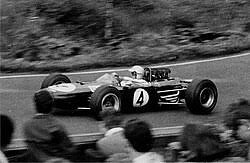
The following year, 1960, Brabham won five Grands Prix in a row (Netherlands, Belgium, France, Britain and Portugal). Five straight. He took the world title again. Ferrari finished the season with a dead driver at Monza (Wolfgang von Trips would die there the following year) and no real victories against Cooper, since the ones Maranello did win came in races boycotted by the British teams. Front-engine racing was finished. Ferrari finally accepted it. In 1961 the first mid-engined Ferrari appeared: the 156 “Sharknose.” Three years for Maranello to accept what an engineer-mechanic from Sydney and a small-time chassis builder from Surbiton had proven with two consecutive world titles.
Indianapolis 1961: the bomb Detroit and Gasoline Alley never saw coming
Before we jump to 1962, one detail almost nobody writes about in Brabham biographies. At the very same Sebring Grand Prix of December 1959 — the push finish, the first title race — another driver was on the grid: Rodger Ward, then the reigning Indianapolis 500 winner from his 1959 victory, one of the finest oval racers of his generation. Ward showed up at Sebring with a dirt-track Kurtis Kraft-Offenhauser midget, convinced that his car’s cornering agility would embarrass the European F1 machines. The organizers stuck the number 1 on the nose, promoting him as the all-American challenger.
He qualified stone last. Forty-three point eight seconds off Moss on pole. He retired after 21 laps with a burnt clutch. But he had seen one thing on the way to that humiliation: the rear-engined Coopers cornered on rails, in ways his midget couldn’t approach. A year later, after the 1960 United States Grand Prix at Riverside, Ward reached out to Cooper. In October 1960, at his invitation, Brabham did a private test on the Indianapolis oval in a Cooper T53 F1 chassis. John Cooper and Brabham studied the lap times and decided to attack Indy for real.
In May 1961 a Cooper T54 appeared at the Indianapolis Motor Speedway with a Coventry Climax engine bored out to 2.75 litres. Behind the wheel: Jack Brabham, two-time Formula One World Champion, at Indy for the first time. The car was half the size of the American front-engined roadsters. It weighed less. It braked better. It cornered on rails compared to the roadsters. The Americans laughed. They called it “the English toy.” Brabham qualified on row five, ran as high as sixth in the race, and finished ninth. His cornering speeds were significantly better than anything the roadsters could produce. What killed his race was Dunlop rubber that wasn’t up to the American oval, and pit stops that took forever because the European crew wasn’t trained for American tire changes.
Ninth. An anonymous finish. But five years later, in 1966, every winning car at Indianapolis had its engine behind the driver. By 1969, the last front-engine roadster disappeared from the Indianapolis 500 grid. The rear-engine revolution in American open-wheel racing was triggered by an anonymous ninth-place finish by a 35-year-old Australian who had already been Formula One World Champion twice.
1962-1965: from engineer-driver to constructor
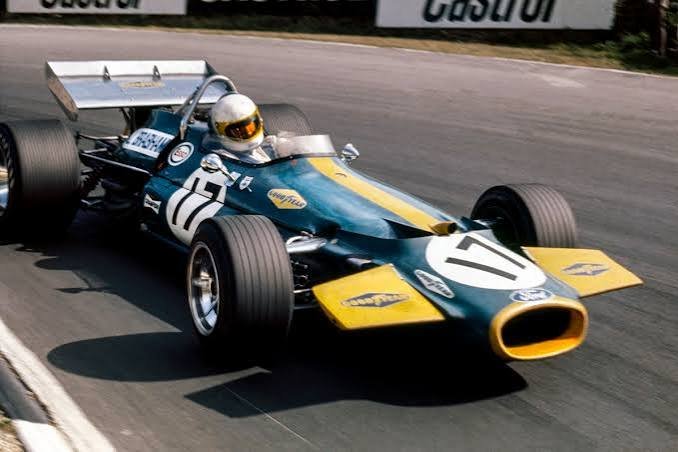
In 1961 Brabham decided to leave Cooper. The technical direction no longer convinced him: the Coopers, father and son, had grown comfortable with success and no longer wanted to experiment. Brabham called Australia and brought over Ron Tauranac, another Australian, another self-taught engineer, another mechanical engineer whom Brabham had known back in Sydney. They set up a small unit in Chessington, Surrey, with a storefront selling tuning kits for road cars (Sunbeam Rapier, Triumph Herald). Behind that storefront, Motor Racing Developments started designing racing cars under the BT designation (Brabham-Tauranac).
Brabham founded his own team, Brabham Racing Organisation, and in 1962 he became the first reigning World Champion in history to walk away from a winning outfit to race a car of his own construction. In modern terms that would be like Verstappen leaving Red Bull to start Verstappen F1. In 1962 it was arguably even more of a leap into the unknown.
The early years were brutal. Stretched Coventry Climax engines. Indifferent reliability. No wins. Seventh in 1962. Seventh in 1963. Sixth in 1964. Tenth in 1965. Three-and-a-half years without a single Grand Prix victory in his own car. He nearly quit driving to focus purely on the factory. But one thing turned out to be critical: the FIA changed the engine regulations for 1966 from 1.5 to 3 litres. And Brabham had been quietly conspiring for two years with an Australian engine builder called Repco to have a 3-litre V8 ready the day that window opened.
1966: the only man ever to win a world title in his own namesake car
The mechanical detail of the BT19 and the Repco engine belongs in their own separate articles in this series. What matters here is what Brabham did as a driver with that car.
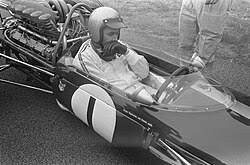
Fourth round of the 1966 season, French Grand Prix at Reims, 3 July: Brabham wins. Brands Hatch two weeks later: he wins. Zandvoort: he wins. Nürburgring: he wins. Four consecutive Grand Prix victories in four consecutive races. In his own car. With his own surname painted on the bodywork. The all-time Formula One record for consecutive wins at that point in the sport’s history.
When he crossed the line at Monza to mathematically clinch the title, he climbed out of the car, found his wife Betty in the crowd, and gave her a quiet hug. No champagne over the head. No grandstand speech. A silent embrace with the woman who had crossed the Pacific with him eleven years earlier, with two small children and very little money.
Sixty years later, Jack Brabham is still the only driver in the history of Formula One to have won a World Championship in a car bearing his own surname. Chapman didn’t do it. Bruce McLaren didn’t do it. Frank Williams didn’t do it. Enzo Ferrari never even competed. None of them. Sixty years, eighteen different champions and dozens of attempted driver-constructor combinations later, Brabham is alone on that page.
The following year, 1967, his teammate Denny Hulme took the title (in the BT20/BT24), with Brabham runner-up. Brabham the marque took the Constructors’ title in 1966 and 1967 back-to-back. Two consecutive drivers’ titles in the same team with two different drivers, one of whom owned the place. That has never been repeated either.
Retirement, 1970, and the sale to a young Englishman called Bernie
Brabham retired at the end of 1970. His last victory came at Kyalami, South African Grand Prix, 7 March 1970. He was 44. Final numbers: 14 Grand Prix wins in 126 starts, 13 pole positions, 31 podiums, three World Drivers’ Championships, two World Constructors’ Championships.
He sold his stake in Motor Racing Developments to Ron Tauranac on his way out. A year later Tauranac tired of the commercial side and sold the company to a young Englishman who had been circling the paddock for two seasons looking for a way in: Bernie Ecclestone. That sale reshaped Formula One entirely. Without Brabham selling to Tauranac and Tauranac selling to Ecclestone, the commercial Formula One we know today simply doesn’t exist. But that’s another story for another article.
Brabham returned to Australia. He founded Brabham Air Services, a small aviation company. He kept driving historic cars in demonstration events until 2004, at age 78. Deaf from decades of unprotected exposure to racing engine noise, on daily dialysis for chronic renal disease for the last eight years of his life, with sons and grandsons already established as professional racers, he kept showing up at circuits until the day before he died.
Sir Jack Brabham OBE AO died at his home on the Gold Coast, Queensland, on 19 May 2014. Age 88. Formula One observed a minute of silence before that year’s Monaco Grand Prix. The heir of the commercial empire Ecclestone had built out of the Tauranac purchase, Sebastian Vettel — then reigning four-time World Champion — said one thing about Brabham worth keeping: “He was the last of his kind. Today we are all professional drivers. Brabham was an engineer who also won races.”
The honors and the template
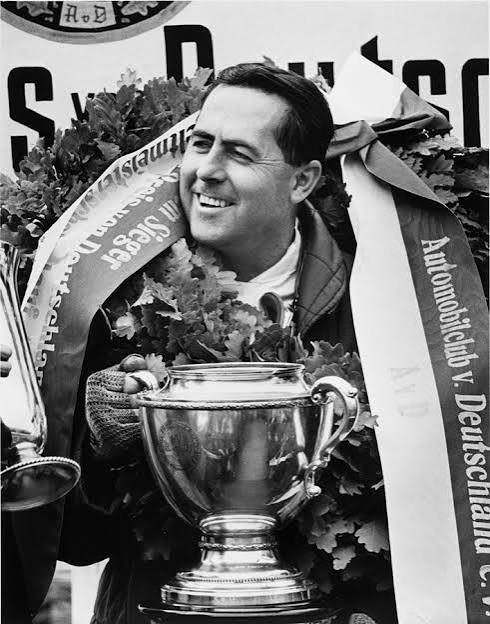
He was made OBE in 1966, the same year he was named Australian of the Year. He was knighted in 1979 — the first Formula One driver ever knighted by the British Crown. He was made Officer of the Order of Australia in 2008. In 2010 a town in Western Australia was renamed Brabham in his honor. Three of his sons followed him into motorsport: Geoff, winner of the 24 Hours of Le Mans in 1993 and four-time IMSA GTP champion; Gary, professional sportscar driver; David, winner of Le Mans in 2009 and ALMS champion. A racing dynasty.
All of that is recognition. Recognition isn’t what matters here.
What matters is that an Australian shopkeeper’s son, denied his dream of flying by the RAAF, opened a racing car factory in the back room of a tuning shop in Surrey, won three World Championships, popularized the mid-engine layout in two racing categories on two different continents, and at 44 walked away, went home to Australia and started flying light aircraft because he felt like it. No drama. No dramatic autobiographies. No television appearances discussing his legacy.
That template — the pilot-engineer-constructor who neither asks permission nor waits for applause — wasn’t invented by Brabham. But he proved it possible with two consecutive titles first and one in his own car second. After him came Chapman with Lotus, Bruce McLaren with his own marque, Roger Penske with the American industrialization of the model, and today Lawrence Stroll trying to buy with cash what Brabham built with night classes and a set of imperial spanners. It’s not the same thing. It never will be.
Check you’re still alive.