
Opel Corsa GSi: the Spanish-built GM pocket rocket Britain called a Nova
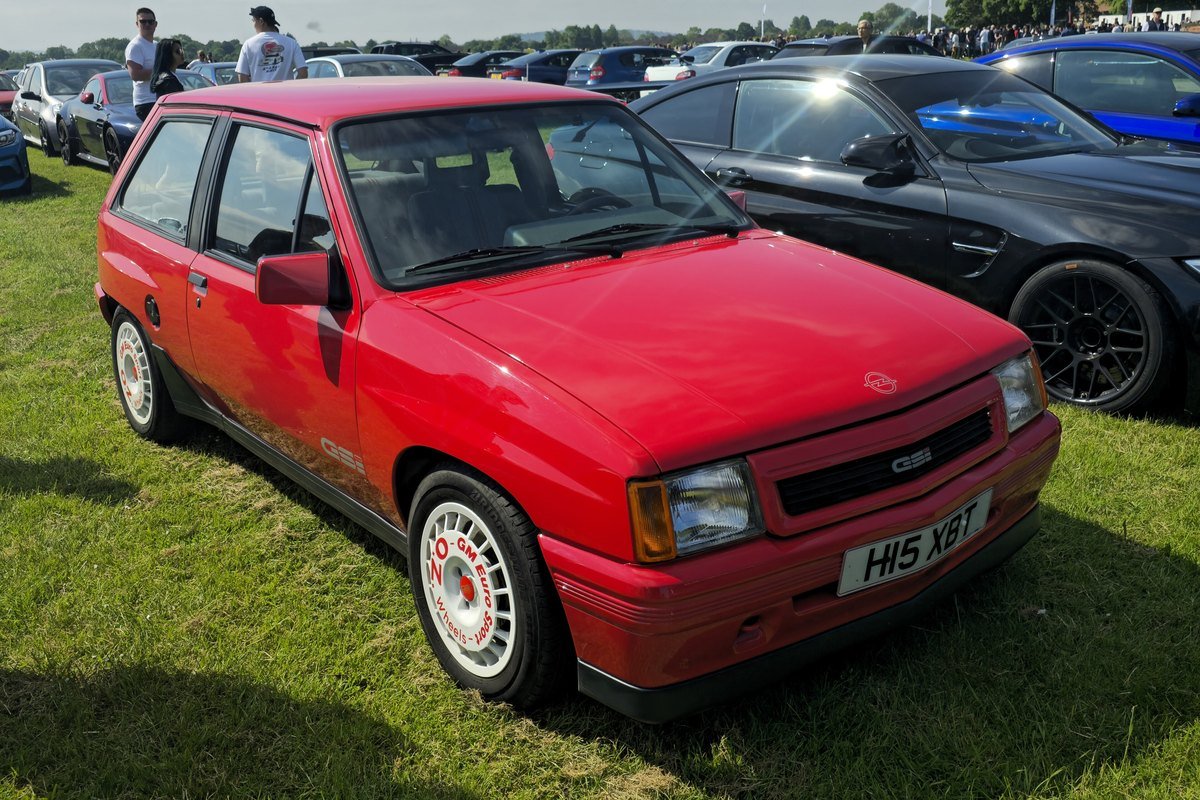
General Motors built one of the best small hot hatches of the eighties and never let a single American buy it. It came out of a GM plant in Spain, wore an Opel badge in Europe and a Vauxhall badge in Britain, and in Britain it was sold under a name GM had already used in Detroit: Nova. While Chevrolet dealers here were pushing rebadged Suzukis and the Chevette was limping toward retirement, GM Europe was building a 1,900-pound three-door with 100 horsepower, fuel injection and a chassis that rewarded anyone who drove it like they stole it. In Britain, a lot of people literally did.
This is the Opel Corsa GSi, the smallest and most overlooked member of the eighties hot hatch club. It deserves better.
GM’s factory in the Spanish desert
In 1979 GM started negotiating to build a brand-new assembly plant in Figueruelas, a village in the dry plains about 20 miles outside Zaragoza, in northeastern Spain. Spain had joined the industrial big leagues late, and a GM plant was a big deal there: in August 1982 King Juan Carlos himself drove the first Corsa off the line.
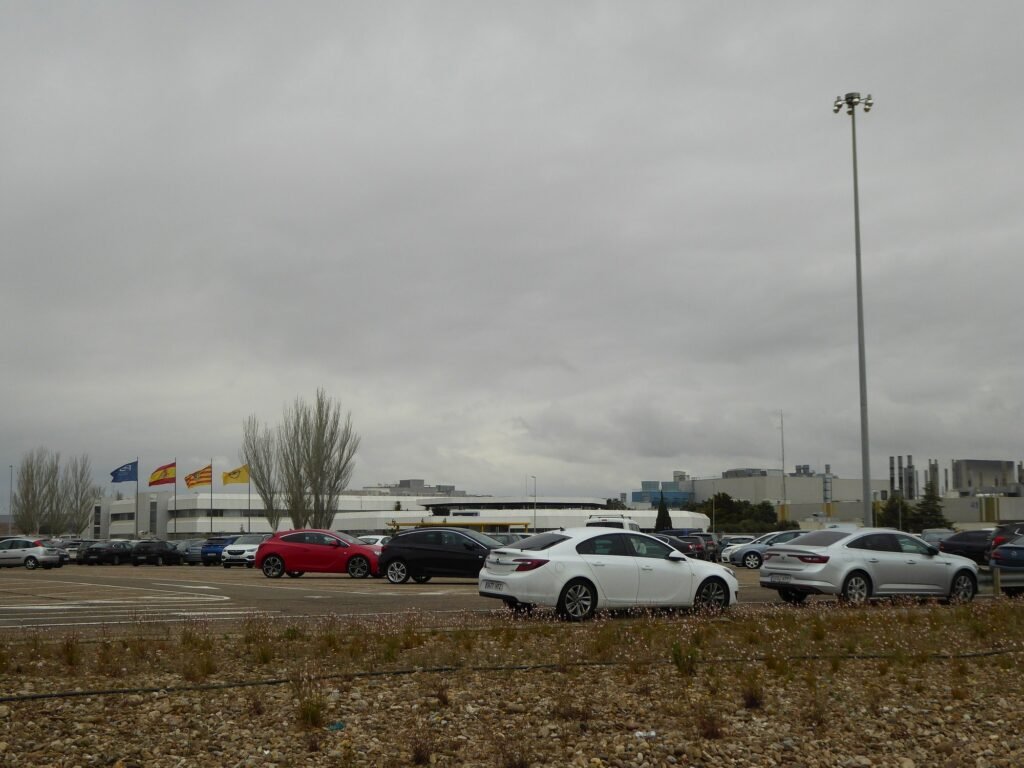
The Corsa was designed from day one to be built in Spain and exported. It went on sale in September 1982 in Spain, France and Italy first, the countries where small cars made up a third to almost half of the market, and reached the rest of Europe by March 1983. For a sense of scale: the first-generation Corsa ran to about 3.1 million cars, and the Zaragoza plant has built every generation of Corsa since. GM sold Opel and Vauxhall to France’s PSA in 2017, so the factory now belongs to Stellantis, the group that also owns Fiat, Peugeot and Chrysler. More than four decades after the King’s test drive, the same plant is still turning out Corsas, which makes it one of the longest-running single-model stories in the European car business.
The Nova, the strike and the name
Britain got the car as the Vauxhall Nova, and getting it there was a fight. British union workers objected to Vauxhall selling a car built in Spain, and the dispute delayed the launch by seven months. The Nova finally went on sale in April 1983 and stayed until March 1993. Almost 500,000 were sold in the UK, every single one built in Zaragoza, and in 1989 it was the country’s seventh best-selling car.
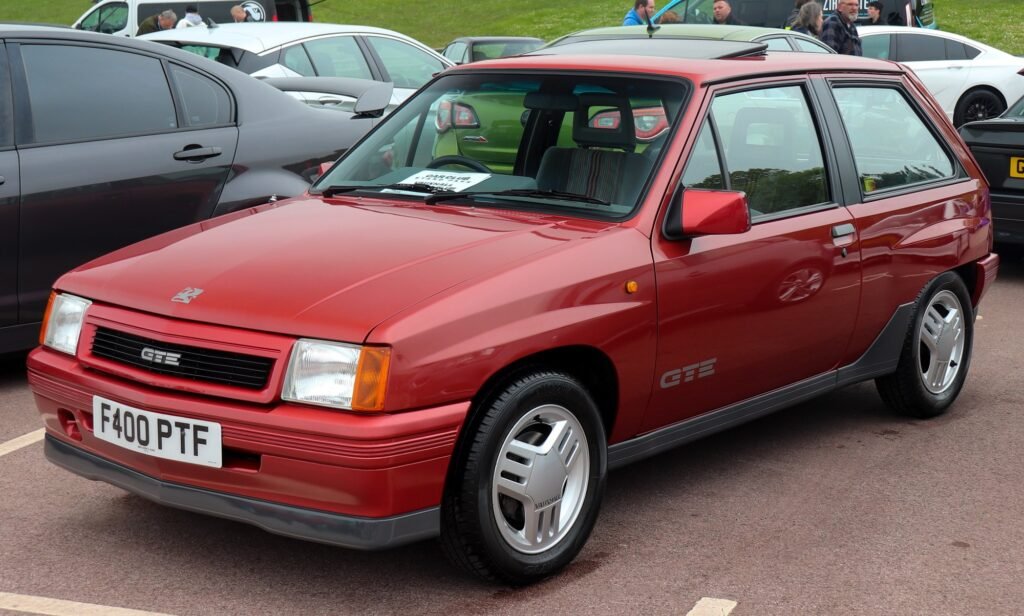
The name came from GM’s North American catalog, where the Nova name had been on Chevrolets since 1962. American readers may know the old legend that the Chevy Nova flopped in Latin America because “no va” means “it doesn’t go” in Spanish. It’s a myth; the car sold fine there. The joke writes itself anyway: the car that finally carried the Nova name to glory in Europe was built by Spaniards, and it went very well indeed.
Hot hatch, size small
The GSi was shown at the Frankfurt auto show in 1987 and went on sale in May 1988. In Britain it was called the Nova GTE at first, then GSi after 1990. The recipe was the classic one: take the smallest car in the range, a three-door just 142.5 inches long, and give it the biggest engine that fits.
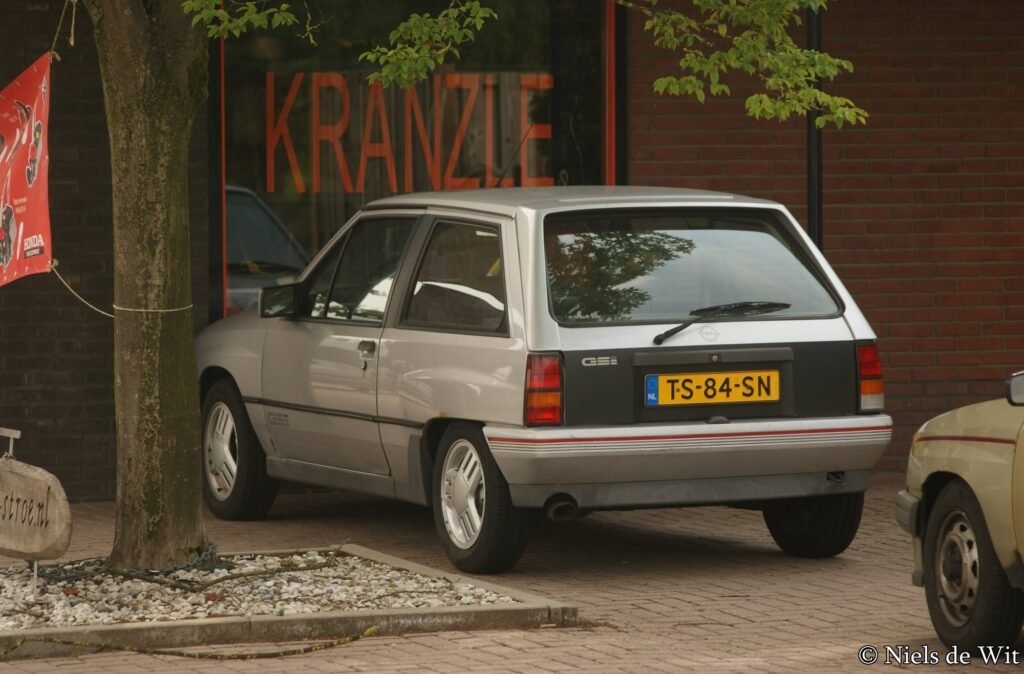
That engine was a 1.6-liter four with a single overhead cam, two valves per cylinder and Bosch L3-Jetronic fuel injection, tuned with help from Irmscher, Opel’s in-house tuner. It made 100 PS (about 99 hp) at 5,600 rpm and 100 lb-ft of torque at 3,400, and revved to 6,400. The car weighed about 1,850 pounds. Opel claimed 0-62 mph in 9.8 seconds and a top speed of 117 mph. Autocar, testing the British Nova GTE in 1988, recorded 0-60 mph in 9.1 seconds.
The “i” in GSi stands for injection, and in 1988 that still meant something. Plenty of small cars were still breathing through carburetors, which mix fuel and air mechanically and never quite get it right when the engine is cold or working hard. Electronic injection meters fuel precisely for every situation, which meant cleaner starts, crisper throttle response and more power from the same displacement.
What America had instead
Put the Corsa GSi next to what was in American showrooms in 1988 and it fits right in. The Honda CRX Si had 105 hp and was the darling of the buff books. The Volkswagen GTI 16V got 123 hp, but weighed more and cost more. The Ford Escort GT made 110 hp. The Dodge Omni GLH had been the fun one a few years earlier. The Corsa had less power than most of them and less weight than all of them, and that is the whole trick of a good hot hatch. Power-to-weight decides how a small car feels, and at about 18.5 pounds per horsepower the Corsa felt quick.
GM, meanwhile, had nothing like it for Americans. The closest thing in a Chevy showroom was the Sprint Turbo, a Suzuki-built three-cylinder with 70 hp. GM Europe was building the car its American customers would have loved, and shipping it to Britain instead.
How it drove
The chassis was simple: MacPherson struts up front, a torsion beam in the back, discs at the front and drums at the rear, skinny 175 mm tires on 14-inch alloys. It gripped better than it had any right to and barely understeered, which means it actually turned when you turned the wheel instead of plowing straight on. There were no electronic aids at all, so a clumsy right foot out of a slow corner could get the tail wagging, and it leaned noticeably in fast bends. Enthusiasts called that personality. The long, rubbery gearshift was the one thing nobody defended.
Autocar’s 1988 group test put the Nova GTE against Ford’s Fiesta XR2 and the turbocharged Daihatsu Charade GTti. The Ford had the better steering. The Nova won on body control and balance and took the overall verdict. The ride was “uncompromising,” the magazine said, but “well controlled at all times.”
The rivals it fought in Europe
In its class the Corsa GSi was up against cars with bigger reputations: the Ford Fiesta XR2, the Peugeot 205 GTI in 1.6 form, the Renault 5 GT Turbo and the Fiat Uno Turbo. In Spain, its home market, the most direct rival came from the same country: SEAT’s Ibiza SXI, built in Barcelona, with a 1.5-liter injected engine marketed with the “System Porsche” label and exactly the same 100 PS. Period figures gave the SEAT 0-100 km/h in 10.8 seconds. The Opel from Zaragoza beat it by a full second.
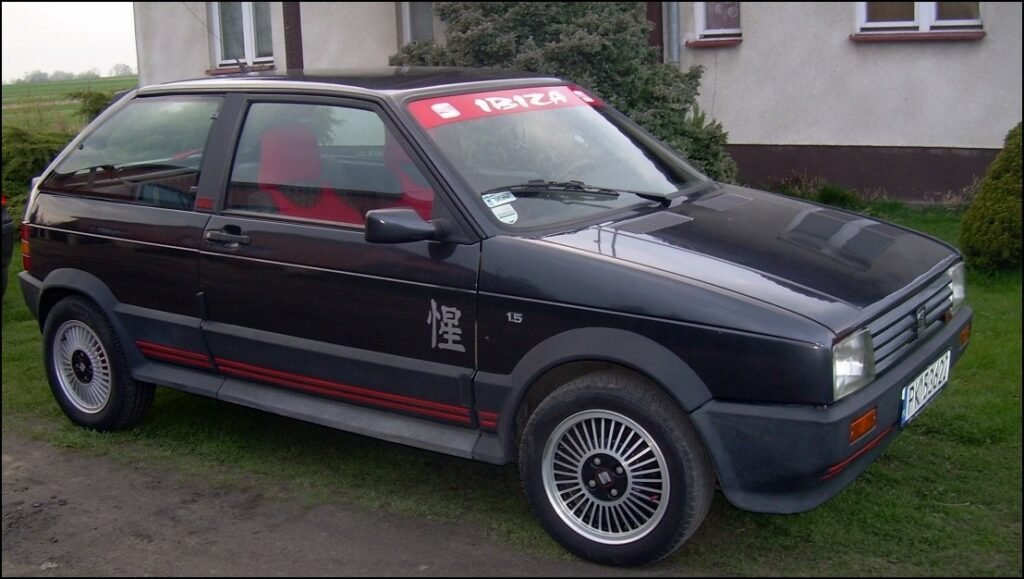
Above the Corsa sat its big brother, the Kadett GSi, sold in Britain as the Vauxhall Astra GTE, whose 16-valve version used a cylinder head developed with Cosworth. The GSi badge had already been on the Opel Manta too. The Corsa was the entry ticket to that family, the one a twenty-year-old could actually afford.
A rally school in Spain
Opel knew the little car could race long before the GSi existed. Between 1984 and 1986 it ran the Copa Opel Corsa in Spain, a one-make rally series for lightly prepared Group A cars on standard tires. The calendar included the Costa Blanca, the Príncipe de Asturias, the Rally Catalunya and the El Corte Inglés rally in the Canary Islands, and the first champion, José B. Pino, won a seat in a works Corsa for the 1985 Monte Carlo Rally. That is a remarkable prize for a kid in a supermini series, and it says how seriously Opel took the car in the country that built it.
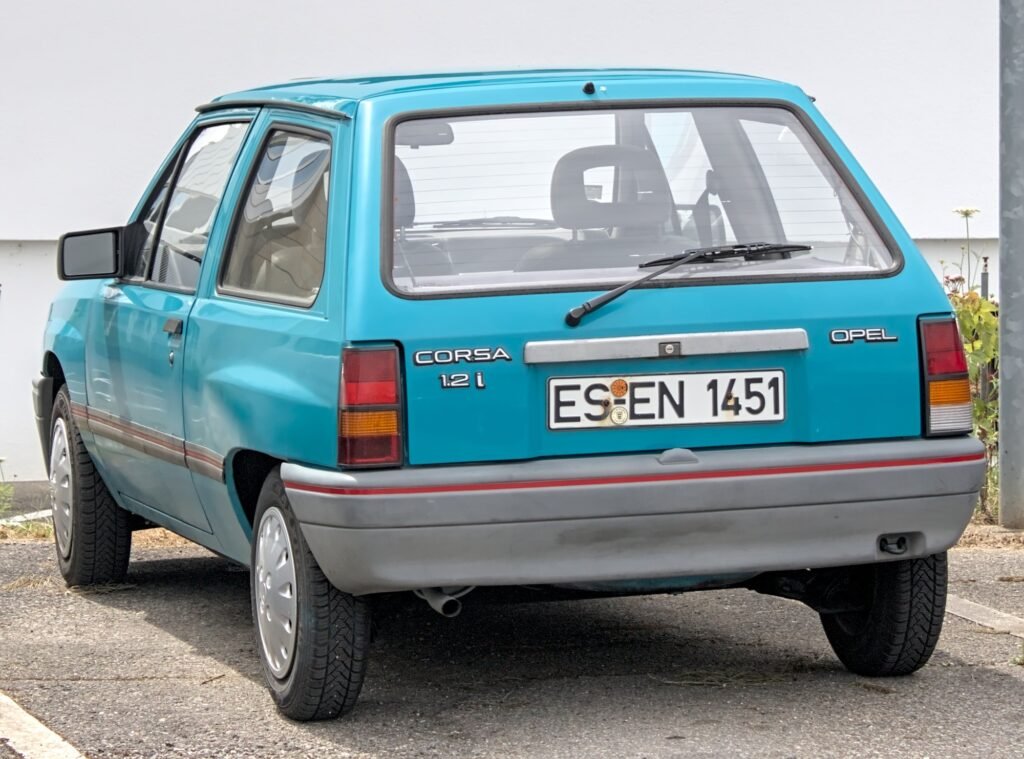
Spain was a different market in other ways too. There, the best-selling Corsa for years was not a hatchback at all but the Corsa TR, a two- and four-door sedan with a proper trunk that most of Europe ignored. In Spain it accounted for half of all Corsa sales. The hot GSi was the exception in a country that bought small cars as family transportation, which is one reason so few survive there today.
Spotting a real one
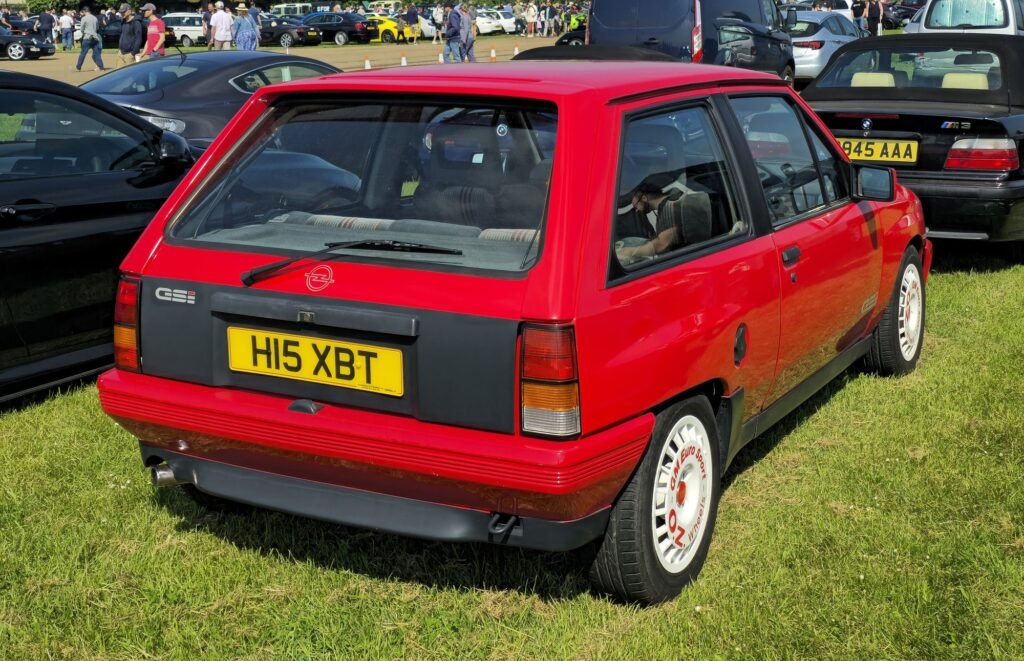
GM loved to share parts and badges, a habit we dug into in our piece on badge engineering, so it pays to know what makes a GSi a GSi. From the outside: body-colored bumpers, mirrors and front spoiler, the GSi script in the grille, a small spoiler at the top of the hatch and a black panel joining the taillights. Inside: sports seats with special upholstery, a three-spoke wheel, a tachometer, plus oil pressure and voltage gauges, which was a lot of instrumentation for a supermini in 1988. Check for rust in the usual eighties places, and walk away from any car with a “fully modified” interior. Originality is what collectors pay for now.
Updates, and the catalyst tax
In 1989 the GSi got the newer LE-Jetronic injection plus a stiffer chassis and better brakes, and in October 1989 a catalytic converter became standard everywhere, which cut output to 98 PS. Some export markets, Switzerland among them, got a strangled 75 PS version to meet local rules. A broader facelift in September 1990 brought new bumpers, headlights, grille and dashboard. The first-generation Corsa was replaced in March 1993.
The car thieves’ favorite
In Britain the Nova became a cultural icon of the worst kind. Cheap to buy and easy to modify, it was the default car of the “boy racer” scene, kids who bolted on body kits and big exhausts and drove like idiots. It was also notoriously easy to steal: there was a well-known trick involving the hazard light switch that let thieves get one moving without a key. Vauxhall had even built a 1985 Nova Sport homologation special for rallying, a 1.3 with twin Weber carburetors and 93 hp, of which about 500 were made.
The result was a massacre. By February 2014, only 1,757 Novas of every type were still on British roads, out of nearly half a million sold. An original, unmodified GTE or GSi is now a genuine collector’s car in the UK, and prices have climbed accordingly.
Why it matters
The Corsa GSi never had the glamour of a GTI or a 205. It was the hot hatch you bought when you couldn’t stretch to the famous ones. But it nailed the formula: light, eager, cheap to run, fun at legal speeds. And it carries a story most hot hatches can’t: a GM car built in Spain, blocked by British unions, named after a Chevy, and stolen by an entire generation of British teenagers. Opel itself knows what the name is worth: in 2018 it revived the Corsa GSi badge on a 150 hp version of the fifth-generation car, thirty years after the original. It was quicker in every measurable way and nowhere near as much fun to read about. The first Corsa rolled out of Figueruelas with a king at the wheel. The GSi was the one that deserved him.
Check you’re still alive.
Photos: Calreyn88 (CC BY-SA 4.0); Millars (CC BY-SA 4.0); Vauxford (CC BY-SA 4.0); Niels de Wit from Lunteren, The Netherlands (CC BY 2.0); Arczi70 (CC BY-SA 3.0); Alexander-93 (CC BY-SA 4.0). Wikimedia Commons.