Lincoln Navigator: the king who built the throne and lost the crown
Picture a Cadillac board meeting in early 1998. Someone walks in with the year-end sales figures and the room goes quiet. For the first time since 1950, Lincoln has outsold Cadillac in total US volume. Not by a rounding error. By 4,551 units. And one model alone accounts for almost 44,000 of those sales.
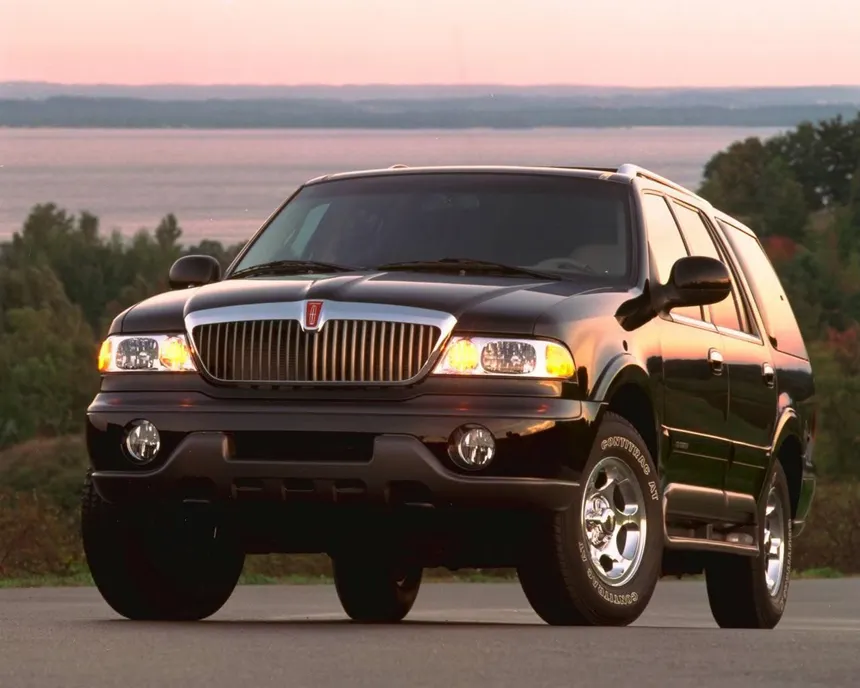
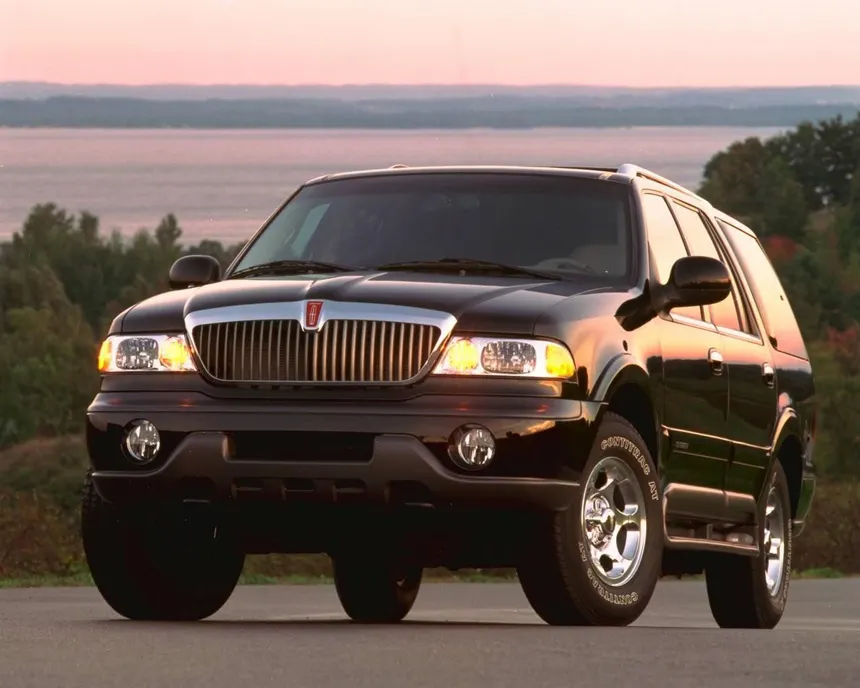
That model is the Lincoln Navigator. A full-size luxury SUV that didn’t exist as a category eighteen months earlier, because Lincoln invented the category when they put it on dealer lots in August 1997. Body-on-frame Expedition platform, 5.4-litre Triton V8, four-wheel drive with low range, seating for eight, leather everywhere, Lincoln badge on the hood. Starting at $39,995. Nothing on the market did what it did at the price it did it for.
The Range Rover existed, yes. Different beast. Smaller, less reliable, much more expensive, and aimed at a buyer who wanted to look like they’d just come off a grouse moor in the Highlands. The Lexus LX was a rebadged Land Cruiser. The Cadillac Escalade didn’t exist yet. The Navigator wasn’t entering a segment. It was creating one.
Twenty-eight years later, that segment moves billions of dollars annually in the US alone. And the undisputed king of the segment is the Cadillac Escalade. The Navigator is still around, technically better than it has ever been, with a 48-inch screen running the width of the dashboard and a twin-turbo V6 making 440 horsepower. And it’s still the runner-up. Outsold three-to-one. In the segment it invented.
This is the story of how you build a throne, win the first technical fight, and then lose the cultural war over four seasons of HBO television and a couple of Cash Money Records albums. Top Gear would have called it tragic. Chris Harris would have called it unfair. It is both, and neither matters.
The car nobody asked for that everybody needed
Detroit in 1996 had a problem and didn’t know it yet. SUVs were exploding in popularity but the luxury end of the market had nothing to offer in the full-size, full-American format. You could buy a big truck dressed up as a Suburban or an Expedition. You could buy a smaller luxury SUV from Europe or Japan, with all the compromises that came with those choices. You could not buy what didn’t yet exist: an American full-size luxury SUV.
Lincoln walked into that gap with the first-generation Navigator. The numbers tell you what Lincoln engineers signed off on. Ford Expedition platform (designated UN173). 5.4-litre Triton SOHC V8, 230 horsepower at launch, bumped to 260 horsepower for the 1999 model year. 4R100 four-speed automatic transmission. Four-wheel drive with proper low range. Towing capacity of 7,700 pounds. Solid rear axle, but rear air suspension on higher trims. Eight-passenger seating. Heated mirrors with welcome puddle lamps. Sticker: $39,995 base.
Nearly 44,000 of them sold in the first full calendar year. Lincoln as a brand sold 187,121 vehicles in 1998. Cadillac sold 182,570. The Navigator did not just contribute to that victory. It made the victory mathematically possible.
The Cadillac response was not graceful. Initial figures published in December 1998 suggested Cadillac had actually outsold Lincoln by 222 units, on the back of a wildly suspicious surge of Escalade sales in December from hundreds per month to nearly 5,000 in that one month alone. May 1999: audit. Retraction. Public apology. The “error” was attributed to “low-level employees” who had been a bit too keen. In plain English: somebody at GM cooked the books because losing to Lincoln hurt their feelings.
The pressure that forced Cadillac’s hand
Detroit operates on long timescales. New vehicle programs at major manufacturers take four to seven years from conception to showroom. That’s just how it works. Sketches, clay models, engineering, prototypes, validation, tooling, supplier contracts, dealer training. The whole machine is slow because the whole machine is enormous.
The first Cadillac Escalade broke every rule of that machine.
General Motors saw the Navigator. Saw the 1998 sales numbers. Saw the face on the Cadillac executives when they were told they had been beaten in total US sales for the first time in nearly half a century. And reacted the way a huge company reacts when it is panicking: approved, designed and shipped a vehicle in under ten months. The result was, technically speaking, a GMC Yukon Denali with a Cadillac grille, swapped badges and a bit more leather. The motoring press tore it to pieces. Quick fix. Embarrassing. Beneath the brand. All of which was true.
It didn’t matter. The Escalade made it to market.
That is the lesson General Motors learned from this story and Lincoln never fully internalised. In the American full-size luxury SUV segment, being late is worse than being wrong. Cadillac arrived late and arrived wrong. But they arrived. And from that first 1999 Escalade onwards, Cadillac has had a contender in the segment Lincoln created. Every single model year. Not one missed beat.
Late nineties, the Navigator era
This is the part of the story that gets misremembered the most.
Before the Cadillac Escalade became shorthand for new-money success in American hip hop during the early 2000s, the SUV that mattered in that cultural conversation was the Navigator. The first-generation Escalade was on sale from late 1998 to 2000 as a rebadged Yukon Denali, and the culture treated it exactly that way: as a quick fix. The Navigator, meanwhile, was the SUV. The vehicle young professional athletes wanted before they wanted anything else. The vehicle that showed up in late-nineties music videos when an artist needed to signal arrival without crossing into Rolls-Royce territory.
This is not a fan claim. The Pebble Beach Concours d’Elegance, in its 2024 acknowledgment of the original Navigator, identified it as the vehicle that created the full-size luxury SUV segment, with a documented presence in screen and song lyrics that created a pop-culture footprint reaching well beyond the car world itself.
That detail tends to get edited out of the official Escalade-versus-Navigator narrative. The Navigator arrived first on sales charts, first on dealer lots, and first in the cultural conversation. All three. And then lost all three.
The miscalculation that defined the next twenty years
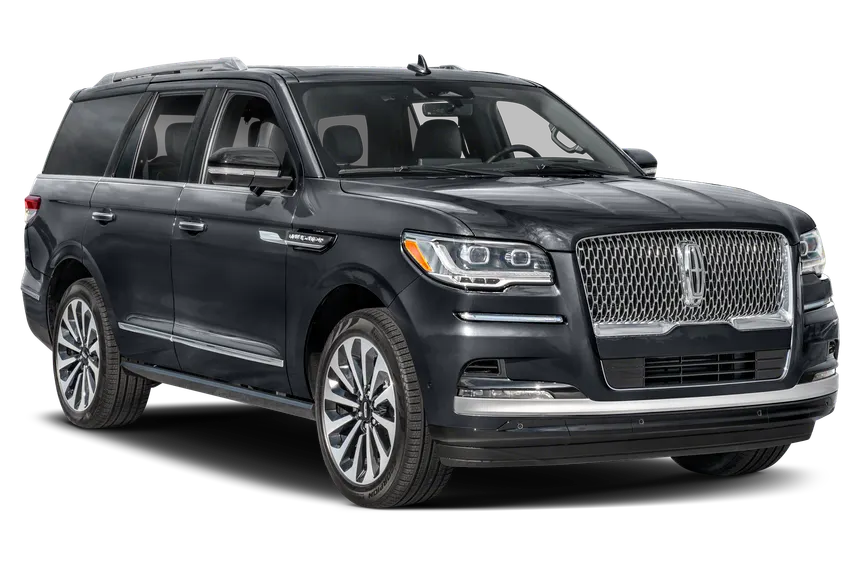
- Cadillac launches the second-generation Escalade. And this is where Lincoln falls asleep at the wheel.
The new Escalade is not a Denali in a Cadillac suit. It’s a vehicle conceived from scratch as a Cadillac. New design language, more aggressive, more squared-off, more visually American in the way that registers on television and in music videos. 6.0-litre V8 producing 345 horsepower. Air suspension at all four corners. Interior with a Bulgari clock, Bose audio system, and materials that don’t appear anywhere else in the GM catalogue. Cadillac finally understood that the Escalade could not be a more expensive version of another truck. It had to be its own thing.
And it became exactly that. Tony Soprano drove a 2003 Escalade ESV in white during the final three seasons of HBO’s The Sopranos. When James Gandolfini died and that prop vehicle eventually went under the hammer, it sold for nearly $120,000 at RR Auction in Boston, with three of Gandolfini’s signatures on the interior trim. That is not a car. That is a cultural artefact.
The hip-hop adoption was simultaneous and total. Cash Money Records, Birdman, Lil Wayne, Jay-Z in 2002, Jennifer Lopez. The Escalade entered American music video iconography at a pace no SUV had managed before. MTV Cribs featured it constantly. Mike Myers parodied it in Austin Powers in Goldmember, which is when you know a vehicle has fully arrived in mainstream consciousness: it has become its own punchline.
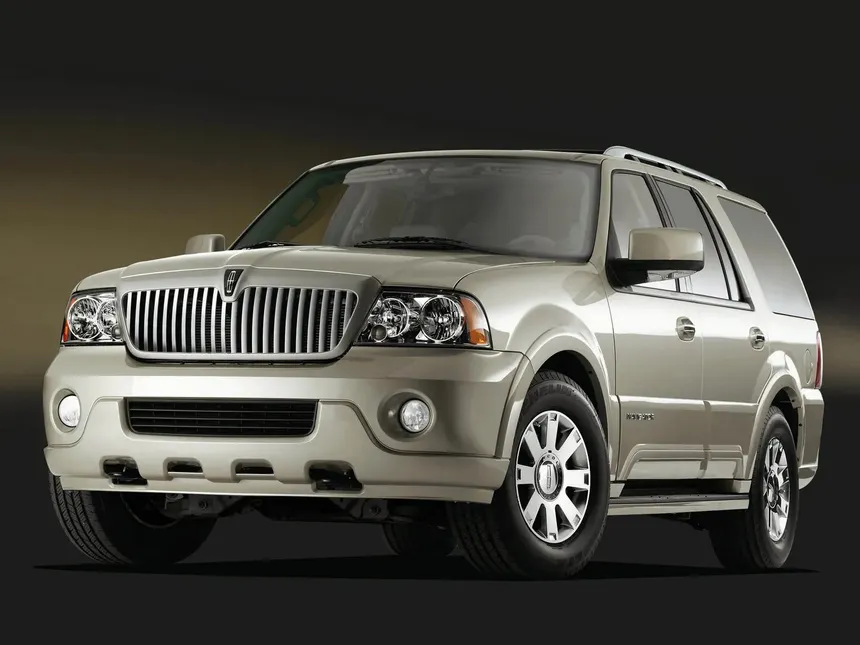
And the Navigator? The second-generation Navigator launched the same year and did the right technical things. Independent rear suspension, a real improvement. New 5.4-litre three-valve V8 making 300 horsepower. Revised interior. Genuine upgrades over the first generation. What it didn’t do was take an identity leap. It looked like a slightly improved first-generation Navigator. And at the precise moment Cadillac was reinventing the Escalade as a cultural object, looking like a slightly improved version of the previous thing was the worst possible answer.
Hagerty later summed up that moment with a line that lands harder when you read it now than it probably did when written: the new Escalade turned the Navigator into the MySpace of the luxury SUV world, going from first to market to also-ran in record time. The Navigator didn’t do anything wrong. It just didn’t do anything spectacular when the moment demanded spectacular. In the early-2000s American luxury SUV market, that distinction was fatal.
The desert years
Third generation, 2007 through 2014. Lincoln introduced the Navigator L, an extended-wheelbase version with more cargo capacity, designed specifically to compete with the Escalade ESV. 5.4-litre V8 with 310 horsepower. Six-speed automatic transmission. Evolutionary improvements across the board. The Navigator sold reasonably well, but the Escalade dominated the cultural conversation without serious challenge.
Then the 2008-2009 financial crisis hit. The full-size luxury SUV segment collapsed. Sales fell across every nameplate. Ford began asking serious internal questions about whether Lincoln had a future as a distinct brand at all. There were moments during those years when the conversation in Dearborn was not how to reclaim Navigator leadership but whether Lincoln deserved to keep existing as a separate marque.
This matters more than it sounds. While Cadillac was consolidating the Escalade as their indisputable flagship and building the brand identity around it, Lincoln was internally debating whether the entire brand had a reason to exist. Two parallel realities. One brand with absolute clarity about its hero product. The other questioning everything it was doing. That gap, opened in 2002 and widened during the recession, has never fully closed.
The six-cylinder gamble
Fourth generation, 2015. Lincoln makes a technical decision that would have been entirely sensible in another market and turned out to be a cultural mis-step in this one: drop the V8 and switch to a twin-turbocharged V6.
The new engine is the EcoBoost 3.5-litre, making 380 horsepower. More power than the V8 it replaced. Better fuel economy. Earlier torque delivery. On paper, every box ticked. In the American collective imagination of what a full-size luxury SUV is supposed to be, where the V8 is not an engineering choice but an identity attribute alongside the chrome grille, a problem that would take years to solve.
The motoring press received it well. The buying public had reservations. Meanwhile the Escalade kept its naturally aspirated 6.2-litre V8, delivering exactly what the buyer believed a full-size American luxury SUV ought to deliver, badge aside.
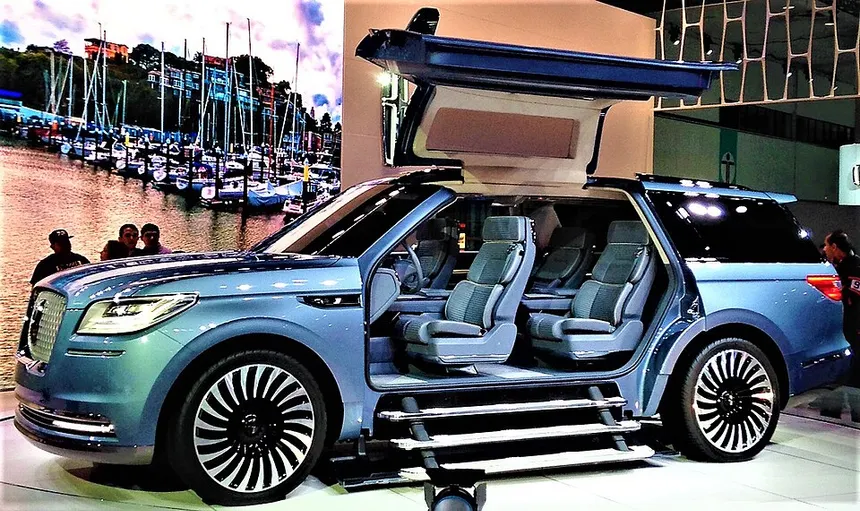
The 2018 refresh is where things genuinely changed. New chassis architecture. Reimagined interior with proper premium materials. Improved air suspension. Power-operated doors styled after private jet airliners. Screens for the second and third rows. The Black Label trim arrived with dedicated interior designers and themes named Destination and Yacht Club. The Navigator was back in the conversation about top-tier American luxury vehicles on its own merits, not on historical inertia.
2022 facelift. 13.2-inch touchscreen. BlueCruise hands-free semi-autonomous driving. By every metric the motoring press could measure, the Navigator was a better vehicle than the comparable Escalade. The reviews said so. The awards said so. Anybody who took one for a test drive said so.
The sales charts said something else entirely. Q1 2025: Escalade 12,683 units. Infiniti QX80 4,064. Lincoln Navigator 4,058. Third place, by six units. The Escalade outsold the Navigator by more than three to one. In the segment Lincoln created.
The dashboard reboot
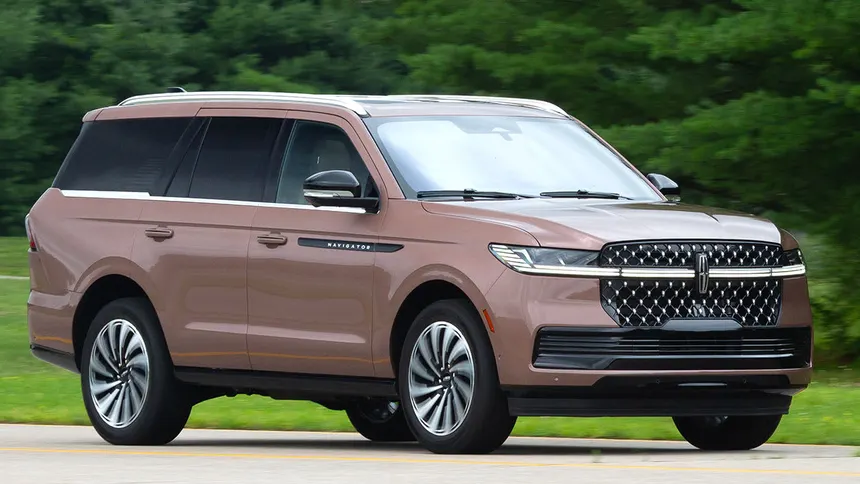
Monterey Car Week 2024. Lincoln unveils the fifth-generation Navigator. Production for the 2025 model year.
The spec sheet first. 3.5-litre twin-turbo V6 producing 440 horsepower and 510 lb-ft of torque. Ten-speed automatic transmission. Standard four-wheel drive across every trim. The rear-drive option, available on previous generations, is gone. That small decision says everything about how Lincoln is positioning this vehicle against a rear-drive base Escalade. Towing capacity up to 8,700 pounds with the heavy-duty trailer tow package.
What hits you when you sit inside is something else. A 48-inch diagonal screen surface running almost the full width of the dashboard, combining instrument cluster and infotainment into one continuous display. Above it, in the centre stack, a secondary 11.1-inch touchscreen handling primary interface duties. Revel Ultima 3D audio system with 28 speakers. 24-way power-adjustable front seats. A scent diffuser integrated into the climate control. Three Black Label themes named Invitation, Enlighten and Atmospheric.
Pricing. $99,995 for the base Reserve. $102,985 for the Reserve L. $116,995 for Black Label. $119,995 for Black Label L. The Premiere trim that anchored the 2024 lineup below $90,000 is gone for 2025. Lincoln will bring it back for 2026, dropping the entry point back below the six-figure mark, but the launch year message was unmistakable: the Navigator goes straight into six-figure territory and offers no escape route.
Pricing comparison with the direct rival. Base 2025 Cadillac Escalade: $82,195. Platinum Escalade: around $120,000. Escalade-V with the supercharged 6.2-litre V8: from $165,000. The Navigator has no equivalent to the Escalade-V. That is a deliberate strategic choice. Lincoln has decided not to play the raw performance card and to put all its chips on refinement, technology and cabin experience. Coherent with the brand. Hands the entire aggressive-performance corner of the American full-size luxury SUV market to Cadillac. Forever.
The question Lincoln still can’t answer
The 2025 Navigator is, by most measurable criteria, a better vehicle than the comparable Escalade. Better cabin. Better infotainment integration. Better ride refinement. Better rear-passenger experience. Any half-serious comparison test will tell you that.
And it sells one-third as many units.
That is the question that stings in Dearborn when somebody asks it out loud. Why, if the vehicle is better, if the history is on the Navigator’s side, if Lincoln invented the segment, if it briefly beat Cadillac in total US sales for the first time in fifty years, is the American luxury SUV buyer still picking Cadillac at a rate of three to one?
The short answer is not technical. It is cultural. The Escalade entered the American collective imagination through the front door between 2002 and 2007 and has not moved since. Tony Soprano drove one. Birdman owned several. It appeared on MTV Cribs more often than any other vehicle in the show’s history. NBA players gifted them to their mothers at Christmas. The Escalade means something specific in American culture, something you can put into words: arrival, authority, new money well-spent, presence. The Navigator means something more vague: luxury, yes, but the kind of luxury that doesn’t need to prove itself. In American full-size luxury SUV culture, not proving it is not an option. The whole point of the category is the proving.
The long answer involves three decades of marketing investment, sports sponsorships, film and television placements, celebrity relationships and, above all, consistency. Cadillac has not left the segment since 1999. Lincoln has wandered through brand identity crises, doubts about the marque’s future, engine changes that sowed cultural confusion, and long periods without a genuinely competitive flagship product. That accumulated baggage shows up every time a buyer walks into a showroom.
What this story says about Lincoln
There is a truth that stings running through all of this. Lincoln invented the segment, took the crown in 1998 and lost it in 2002 without losing a single technical round. That is the profile of a brand that knows how to design vehicles and doesn’t know how to tell stories. Cadillac, by the opposite logic, has been telling stories for twenty-five years around products that have ranged from excellent to merely competent. The product matters. The narrative matters more, in this particular segment, at this particular level of the market.
The 2025 Navigator is the strongest argument Lincoln has had in two decades to rejoin the conversation. The problem is that bringing the strongest argument to a debate does not guarantee winning the debate. Especially when the other side has been holding the microphone for twenty-five years and isn’t planning to hand it back any time soon.
What Lincoln should actually do
This is where I stop hedging. Lincoln has three roads ahead of it and two of them end up exactly where Lincoln is right now.
Road one: keep playing the Escalade’s game. More horsepower. Bigger screen. More chrome. A performance trim to answer the supercharged Escalade-V. Twenty-seven years of evidence say that road does not work. Cadillac will always get there first because Cadillac built that road. Fighting on it is fighting at the away game forever.
Road two: the leap into electric. Navigator EV, new platform, win the technology conversation, reset the brand. Looks clever on a strategy slide. In real life, Cadillac launched the Escalade IQ for the 2025 model year with 750 horsepower in Velocity mode, around 450 miles of range and a 55-inch curved OLED display running the dash. The electric flagship corner of this segment is also already taken. Lincoln walking into that conversation now would mean arriving second to a fight Cadillac is already winning. Again. They should have seen that coming.
Road three: the one that requires something Detroit has not demonstrated in decades. Patience and brand self-awareness. Stop competing for the crown of the aggressive, present, size-first American luxury SUV, and build a Lincoln identity that does not need to glance sideways at Cadillac. Refinement over dominance. Cabin over intimidation. Experience over status signalling. Something a Mercedes-Maybach buyer or a long-wheelbase Range Rover buyer understands without needing to cross-reference a Cadillac spec sheet. That means giving up short-term volume. Accepting lower sales for several years in order to sell something different for many years. Telling your board that the five-year plan involves losing market share to gain something you do not yet have.
No American executive in the auto industry has presented a plan like that and made it stick for decades. That does not mean it cannot be done. It means it requires conviction and shareholder backing, and neither comes cheap in Detroit in 2026.
The 2025 Navigator is not failing because it is a bad vehicle. It is failing because Lincoln keeps trying to win a cultural fight it lost in 2002 by playing on the opponent’s terms. Going back to a naturally aspirated V8 would mean retreating to the exact battlefield Cadillac won on first. Betting everything on the biggest dashboard screen is confusing the what with the how. Another thirty-five years of Escalade-Y, Escalade-Z, Escalade-Alpha will not change the answer. Lincoln will have to decide whether it wants to keep being the best argument nobody listens to, or whether it is prepared to talk about something else entirely.
Because history does not get rewritten with 48-inch screens. It gets rewritten when a brand has the nerve to say what it is and what it isn’t, takes three product cycles of losing money on that principle, and comes out the other side with something Cadillac cannot answer because Cadillac was never asking that question.
That sentence is easy to write in a paragraph and very hard to defend in a Ford Motor Company board meeting. Which is why we have been waiting twenty-three years to see it.
Thirty years after building the throne, Lincoln is still trying to reclaim the crown the wrong way. The problem is not the vehicle. The problem was never the vehicle.
Check you’re still alive.