Lincoln Navigator: how Ford’s luxury brand invented the big luxury SUV and handed the crown to Cadillac
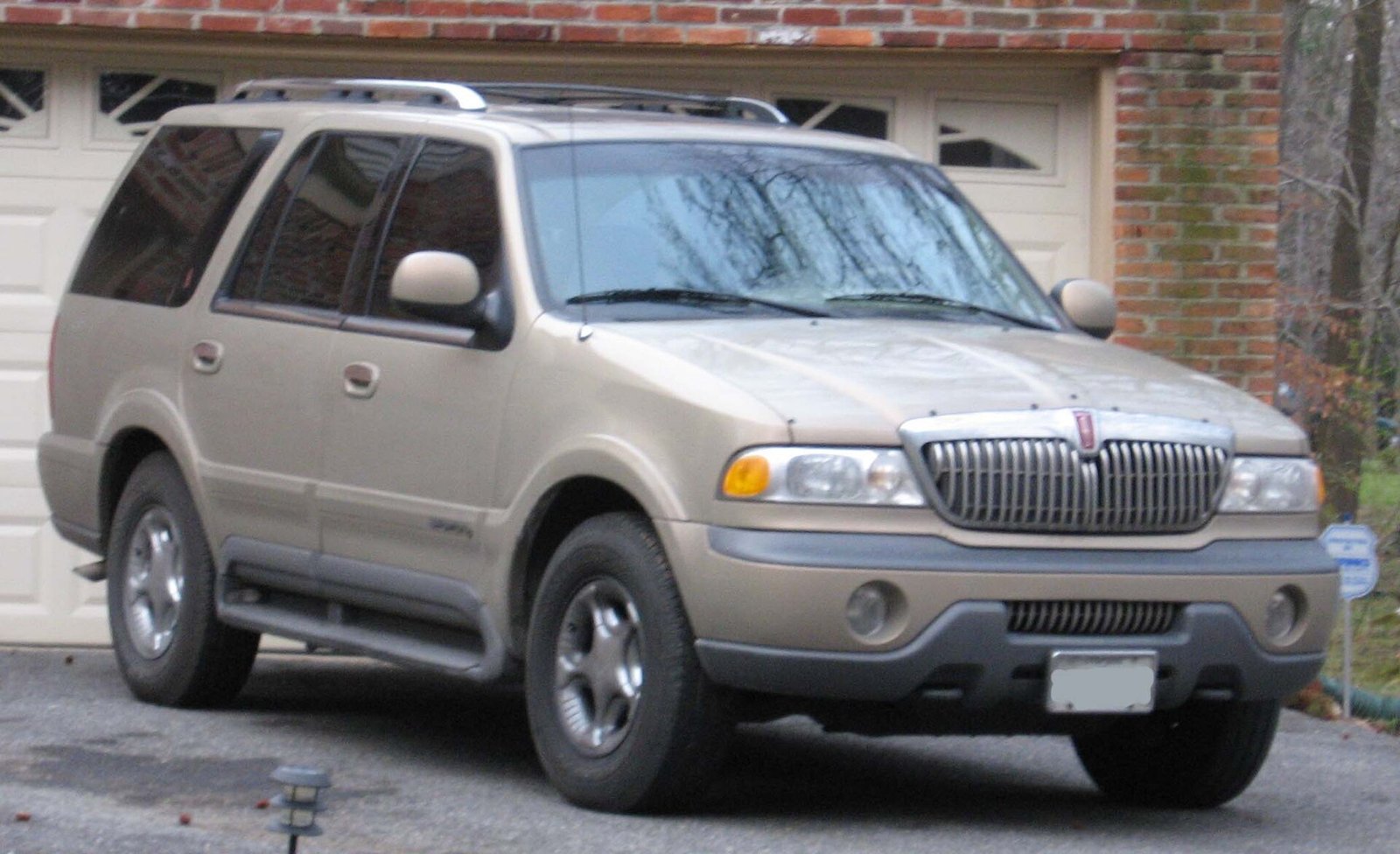
In 1998, for the first time since 1950, Lincoln outsold Cadillac in the United States. For almost half a century Cadillac had been the default answer to the question of what a successful American bought, and suddenly Ford’s luxury division was ahead. The reason wasn’t a sedan. It was a giant, leather-lined, V8-powered truck with a Lincoln grille: the Navigator.
Cadillac’s reaction was so panicked that it briefly misreported its own sales. Then it rushed out a response, the Escalade, which was mocked as a badge job when it arrived. Less than a decade later, the Escalade was a cultural icon, driven by Tony Soprano and name-checked in hip-hop, and the Navigator was the also-ran in the segment it had created. The Navigator story is one of the clearest examples in modern Detroit of a company winning on product and losing on meaning.
In short: the Lincoln Navigator, on sale from summer 1997 as a 1998 model, was the first full-size, body-on-frame American luxury SUV: an Expedition with a 5.4-litre Triton V8, seating for up to eight and a $39,995 starting price. It helped Lincoln outsell Cadillac in 1998, 187,121 to 182,570, for the first time since 1950. Cadillac answered with the Escalade, which later took over the segment.
A segment that didn’t exist
In the mid-1990s American buyers already loved big SUVs. Chevrolet sold the Suburban and Tahoe, Ford the Expedition and Explorer. Luxury SUVs existed too, but they were different animals: the Range Rover was expensive, British and temperamental, the Mercedes M-Class was midsize and new, and the Lexus LX 450 of 1996 was a dressed-up Toyota Land Cruiser. Nobody sold a full-size, body-on-frame American SUV with real luxury inside.
Ford saw the gap. It took the Expedition, launched for 1997, and turned it into a Lincoln. The Navigator went on sale in the summer of 1997 as a 1998 model with a 5.4-liter Triton V8 rated at 230 hp, a four-speed automatic, available four-wheel drive with a low range, seating for up to eight and a rear air suspension that kept the ride level with a trailer hitched up. It had leather, wood trim and a waterfall grille that made it look like a Town Car on stilts. The starting price was $39,995.
It sold immediately. In its first full year, the Navigator moved more than 40,000 units, an enormous number for a brand that had been surviving on Town Cars sold to retirees and limousine companies. And it delivered the headline every Ford executive dreamed of: in 1998 Lincoln sold 187,121 vehicles in the U.S., Cadillac 182,570. Lincoln was America’s best-selling luxury brand for the first time in nearly five decades.
Lincoln before the Navigator
To understand how big a shock the Navigator was, you have to remember what Lincoln was in the mid-1990s. Its best-known product was the Town Car, a big rear-wheel-drive sedan with a V8, a soft ride and a very loyal customer base. It was the favorite of livery companies, airport limousine services and retirees in Florida and Arizona. The Continental and the Mark VIII coupe filled out the range. They were comfortable, quiet cars, but nobody under fifty dreamed of owning one.
Cadillac had the same problem. Its DeVille and Fleetwood sedans were aging along with their buyers, and the brand’s attempts to attract younger customers, like the Cimarron of the 1980s, had been embarrassing. Both American luxury brands were losing ground to Mercedes, BMW and the new Japanese luxury labels, Lexus, Acura and Infiniti, which had arrived in 1986 and 1989.
The Navigator changed Lincoln’s customer overnight. Suddenly the brand was selling to young families, professional athletes and entrepreneurs who had never set foot in a Lincoln showroom.
Why body-on-frame matters
The Navigator, like the Expedition, Tahoe and Escalade, uses body-on-frame construction. That means a separate steel ladder frame carries the engine, suspension and drivetrain, and the body sits on top of it, the way pickup trucks have always been built. Most passenger cars and crossovers use a unibody, in which the body and frame are a single welded structure.
Body-on-frame is heavier and usually less refined, but it has advantages that matter to this kind of buyer. It handles heavy towing well, survives rough use and is relatively cheap to build in high volumes, because it shares components with pickups that sell in the hundreds of thousands. For Ford, building a luxury SUV on the Expedition’s frame meant enormous profit margins, since most of the hardware was already paid for by the truck business.
Built in the truck plants
The first Navigators were built alongside Expeditions at Ford’s Michigan Assembly Plant in Wayne, outside Detroit. Later, production of both moved to the Kentucky Truck Plant in Louisville, one of Ford’s biggest and most profitable factories, which also builds Super Duty pickups. That’s the irony of the American luxury SUV: the most expensive Lincoln is built on a truck line, between work vehicles.
Cadillac’s embarrassing December
The story behind those numbers is pure Detroit drama. When the 1998 figures first came out, Cadillac claimed to have won by a whisker, thanks to an unusual spike in December deliveries of its brand-new Escalade. The following spring the numbers were audited and revised, and Cadillac had to concede that some of those sales had been counted too early. The company blamed overenthusiastic staff. Lincoln took the crown.
It was a humiliation that GM did not forget, and it explains everything that happened next.
Ten months to build an answer
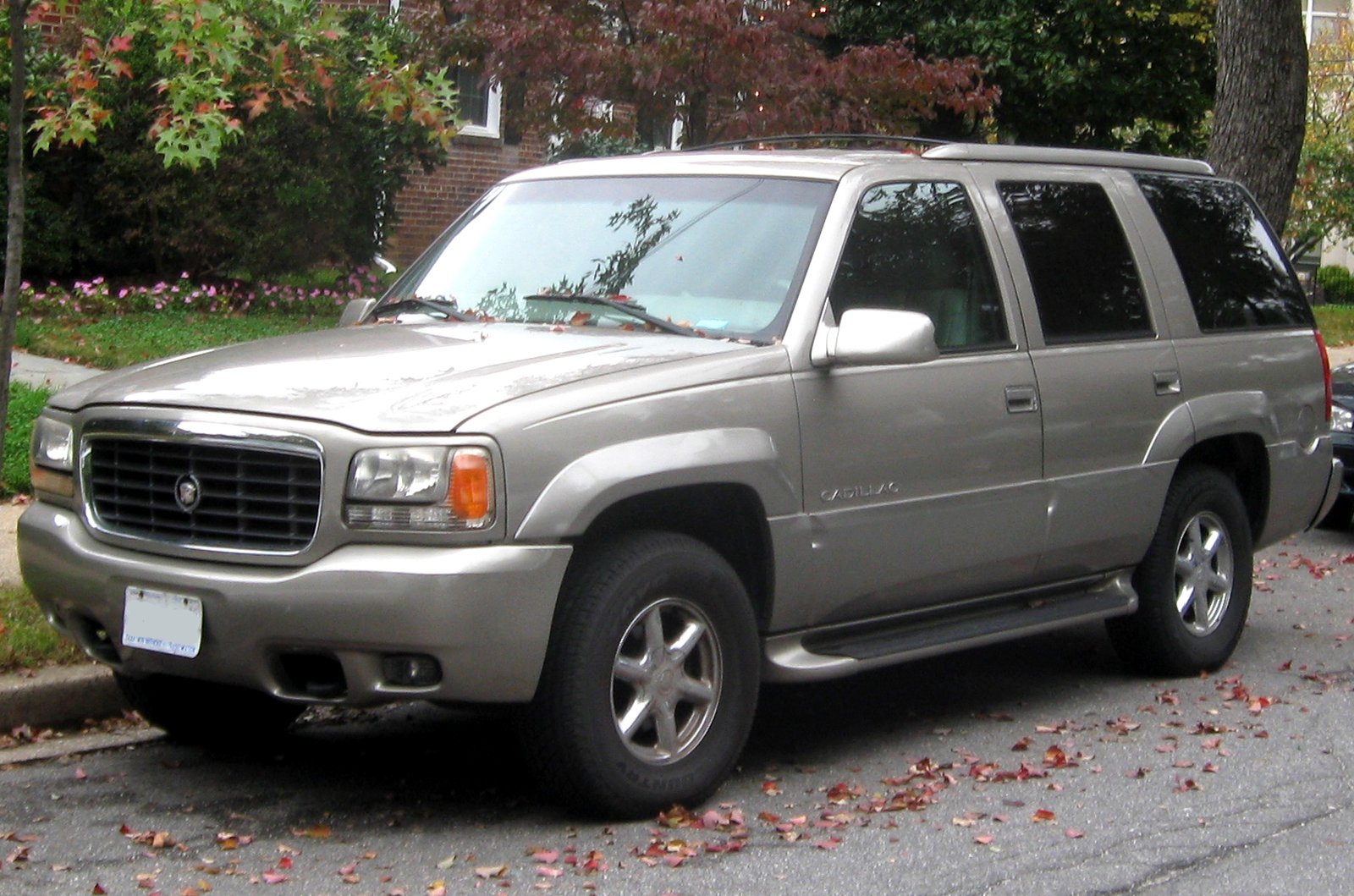
Developing a new vehicle at a big Detroit company normally took four years or more. The first Escalade was approved, styled and launched in around ten months. That speed was possible only because it wasn’t really a new vehicle. It was essentially a GMC Yukon Denali with a Cadillac grille, Cadillac badges and some extra leather.
The press tore it apart. Critics said it was beneath Cadillac, a cynical badge job, proof that GM didn’t take luxury seriously. They were mostly right. It didn’t matter. The Escalade gave Cadillac a seat at the table, and GM never left that table again. From 1999 to today, there has always been an Escalade on sale. That consistency would turn out to be Cadillac’s most important weapon.
When the Navigator was the cool one
It’s easy to forget now, but in the late 1990s the Navigator was the status truck. Young athletes with their first big contracts bought them. So did music producers, rappers on the way up and anyone who wanted to look successful without stepping into Rolls-Royce territory. Navigators showed up in music videos and on magazine covers. The first Escalade, meanwhile, was the copycat.
The Navigator had arrived first in the showroom, first in the sales charts and first in pop culture. Within a few years it would lose all three.
The 2002 Escalade changes everything
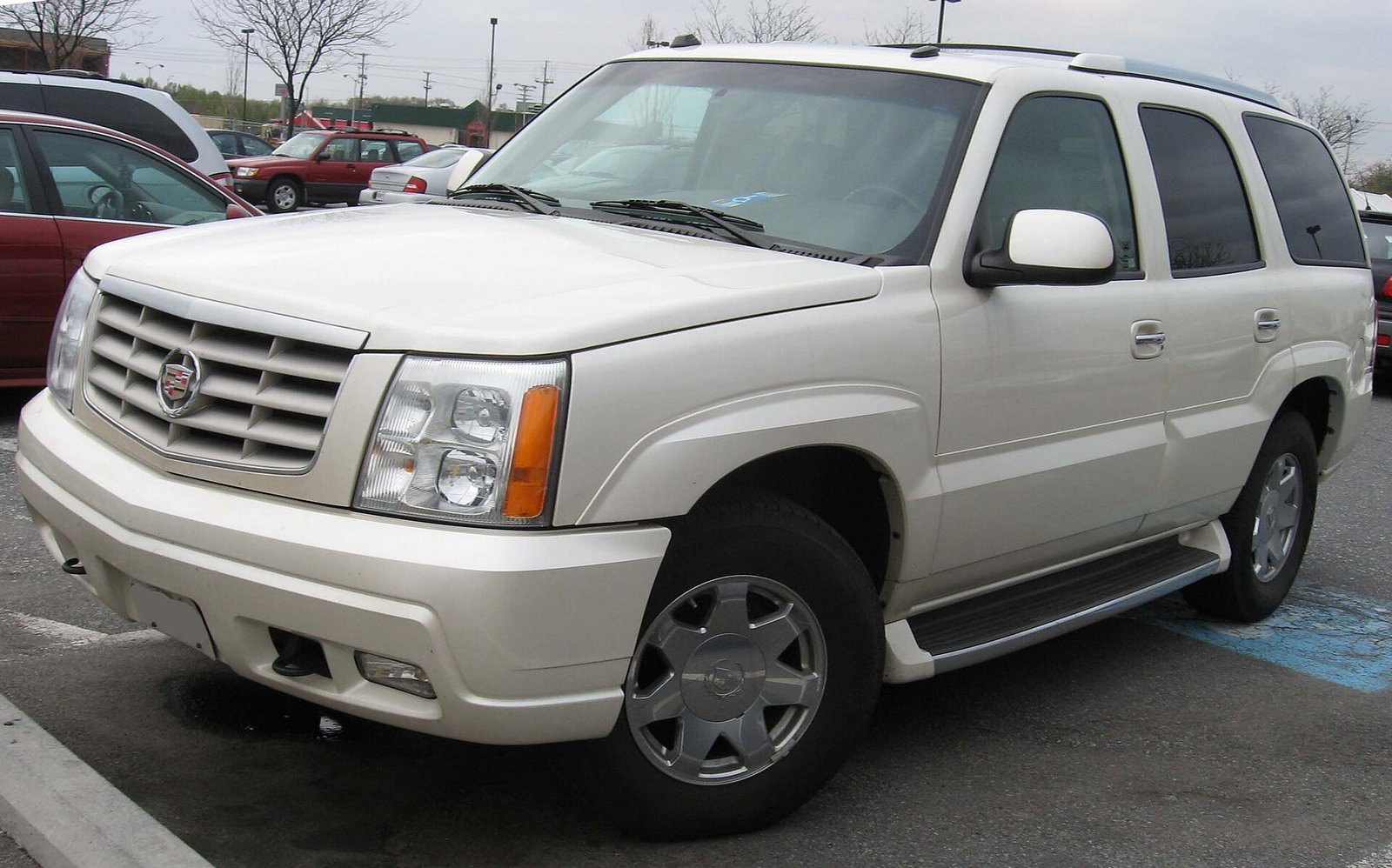
The turning point came with the second-generation Escalade, launched for the 2002 model year. This time GM designed it as a Cadillac from the start. The styling followed Cadillac’s new sharp-edged "Art and Science" language, the engine was a 6.0-liter V8 with 345 hp, and the interior got real luxury touches, including an analog clock from the Italian jeweler Bulgari. It looked like nothing else on the road.
The culture embraced it instantly. Jay-Z, Cash Money Records, Lil Wayne and a generation of rappers put the Escalade into lyrics and videos. MTV Cribs showed one in seemingly every celebrity driveway. In 2002 "Austin Powers in Goldmember" parodied the whole pimped-out SUV culture. And from 2004 to 2007, HBO’s The Sopranos had Tony Soprano drive a white Escalade ESV through New Jersey, week after week, in one of the most-watched dramas on television. The Escalade had become shorthand for power and new money.
A good Navigator at the wrong moment
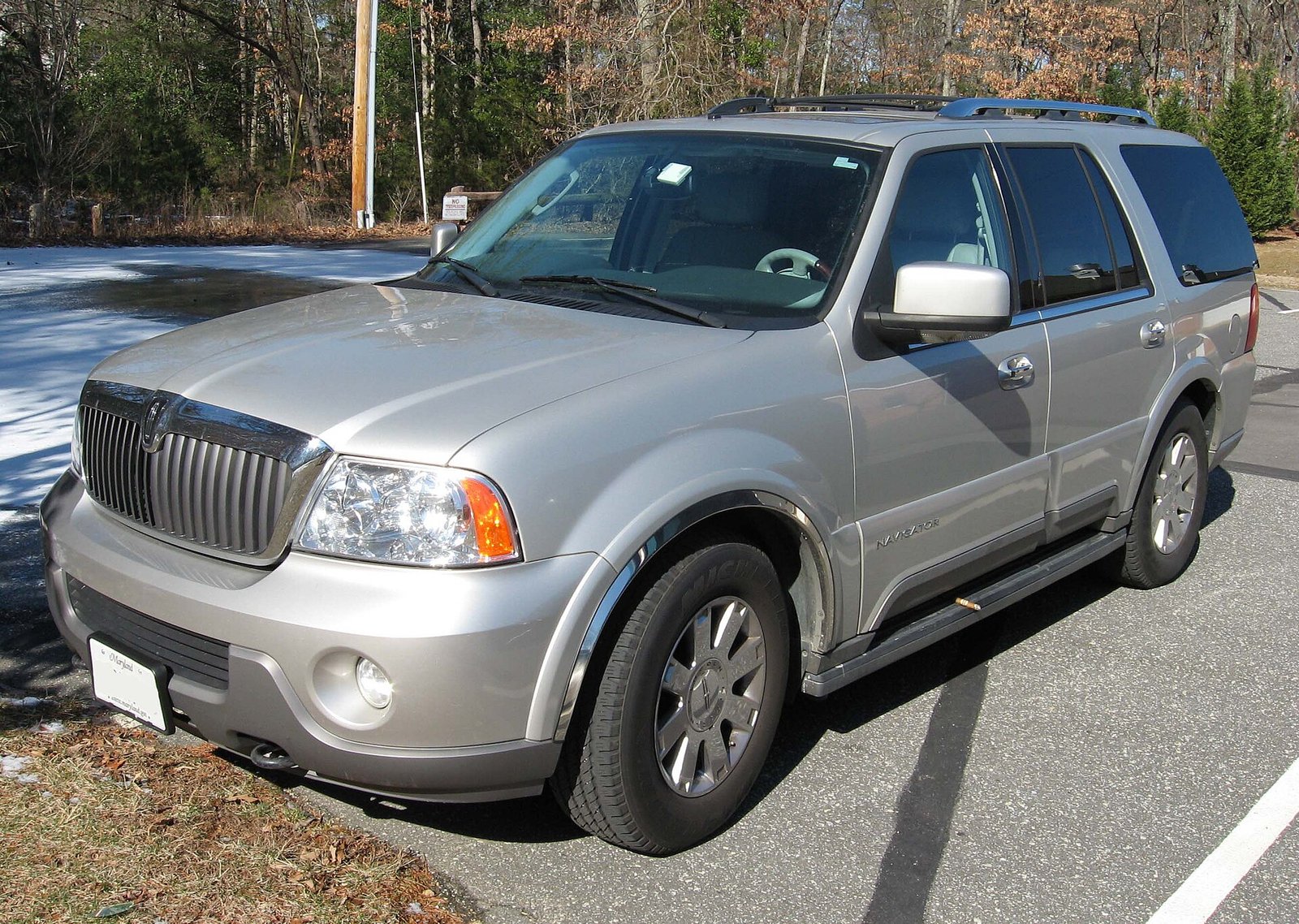
Lincoln’s response, the second-generation Navigator for 2003, was a good truck. It got independent rear suspension, a smoother ride, a 5.4-liter V8 with three valves per cylinder and 300 hp, a much nicer interior and clever features like power-deploying running boards. In engineering terms it was a real improvement.
What it didn’t have was a new identity. It looked like an updated version of the first Navigator, arriving just as the Escalade had reinvented itself. Hagerty later summed it up memorably: the new Escalade turned the Navigator into the MySpace of luxury SUVs, a pioneer overtaken by a rival that understood the moment better.
The Blackwood and the identity crisis
Lincoln’s confusion in those years went beyond the Navigator. In 2002 it launched the Blackwood, a luxury pickup based on the Ford F-150 with a black paint job, pinstripes, faux-wood bed trim and a carpeted bed under a power cover. It couldn’t tow much, wasn’t offered with four-wheel drive and sold only a few thousand units before it was canceled after one season. A few years later Lincoln tried again with the Mark LT pickup. Neither helped the brand’s image.
Meanwhile Lincoln’s car lineup drifted. The Town Car aged, the LS sedan came and went, and the brand moved toward alphanumeric names like MKX, MKZ and MKS that few buyers could keep straight. Lincoln looked like a company unsure of what it stood for.
The tax break nobody talks about
There’s a less glamorous reason big luxury SUVs took off in America, and it has to do with the tax code. Under Section 179 of the federal tax law, business owners can deduct the cost of equipment used in their business. Vehicles with a gross vehicle weight rating above 6,000 pounds were treated more generously than passenger cars, because they were classified like trucks. A full-size SUV like the Navigator or the Escalade cleared that threshold easily.
For a while in the early 2000s, a small-business owner could write off most or all of the price of a heavy SUV in the year of purchase. Critics nicknamed it the "Hummer loophole," after the vehicle that became its symbol, and Congress later capped the deduction for heavy SUVs. But the incentive helped turn the big luxury SUV into the favorite vehicle of doctors, dentists, contractors and lawyers across the country.
Fuel economy rules helped too. Because SUVs were classified as light trucks, they faced looser federal fuel economy standards than cars for many years. Building a big, heavy, thirsty luxury vehicle was far easier on a truck chassis than in a sedan.
The rivals arrive
The Navigator and Escalade didn’t have the segment to themselves for long. Infiniti launched the QX56 in 2004, built in Mississippi on a Nissan truck platform. Mercedes-Benz introduced the GL-Class in 2006, built in Alabama. Lexus replaced the LX with the bigger LX 570 in 2007. Range Rover kept moving upmarket. By the late 2000s the full-size luxury SUV had become one of the most profitable segments in the American market, and every luxury brand wanted a piece.
That competition made Cadillac’s grip even more striking. The Escalade kept its lead through each generation: the third generation in 2007 with a 6.2-liter V8 of 403 hp, the fourth in 2015 with 420 hp and a much better interior, and the fifth in 2021 with a curved OLED display of 38 inches across the dashboard. Each time, Cadillac raised the stakes on design and technology, and each time the Escalade remained the default choice.
The faults owners remember
Every long-lived vehicle earns a reputation in repair shops, and the early Navigators have theirs. The air suspension that made the first generation ride so smoothly was its best-known weak point. The rubber air springs dried out and cracked with age, the compressor wore out trying to keep up, and many owners eventually replaced the whole system with conventional coil springs, which is why so many older Navigators now sit slightly differently from how they left the factory.
The three-valve 5.4-liter V8 used in the second- and third-generation trucks had its own notorious issue. Its two-piece spark plugs had a tendency to break off in the cylinder head when mechanics tried to remove them at service time, turning a routine tune-up into an expensive repair that required special extraction tools. Ford later changed the plug design, but the problem became legendary among Ford technicians. The same engine family also suffered from cam phaser and timing chain problems that produced a distinctive ticking noise at idle.
None of this was unique to Lincoln. Big SUVs of the era from every brand had their issues, and the Escalade had its share too. But it fed a perception that Lincoln was a dressed-up Ford, sharing Ford’s problems, while Cadillac worked hard to persuade buyers that the Escalade was something more than a Chevrolet underneath, even when, mechanically, it wasn’t.
The desert years
The third-generation Navigator arrived for 2007 and stayed in production, with updates, until 2017. It added a long-wheelbase Navigator L to take on the Escalade ESV, a 5.4-liter V8 with around 300 hp and a six-speed automatic. It was competent and sold respectably, but the cultural conversation belonged to Cadillac.
Then came the financial crisis of 2008 and 2009. Big SUV sales collapsed, fuel prices spiked, and Ford, which avoided a government bailout by mortgaging nearly everything it owned in 2006, made hard choices. It sold Jaguar and Land Rover, sold Volvo and shut down Mercury in 2011. There were real questions inside the company about whether Lincoln itself had a future.
In 2012 Ford relaunched the brand as The Lincoln Motor Company, with new design leadership, a new focus on quiet luxury and, a little later, a memorable advertising campaign starring Matthew McConaughey driving Lincolns through the night and talking to bulls. It was the start of a slow rebuild.
The V6 gamble
For the 2015 model year Lincoln gave the third-generation Navigator a major facelift and made a decision that, in the full-size luxury SUV market, was close to heresy: it dropped the V8. In its place came the 3.5-liter twin-turbo EcoBoost V6, rated at 380 hp. On paper it was the right call. It made more power and more low-end torque than the old V8 and used less fuel.
But in this segment, a V8 isn’t just an engine. It’s part of the identity, like a chrome grille or a towing hitch. Buyers had reservations, and Cadillac kept offering a naturally aspirated 6.2-liter V8 in the Escalade, giving its customers exactly what they believed a big American luxury SUV should have.
The 2018 rebirth
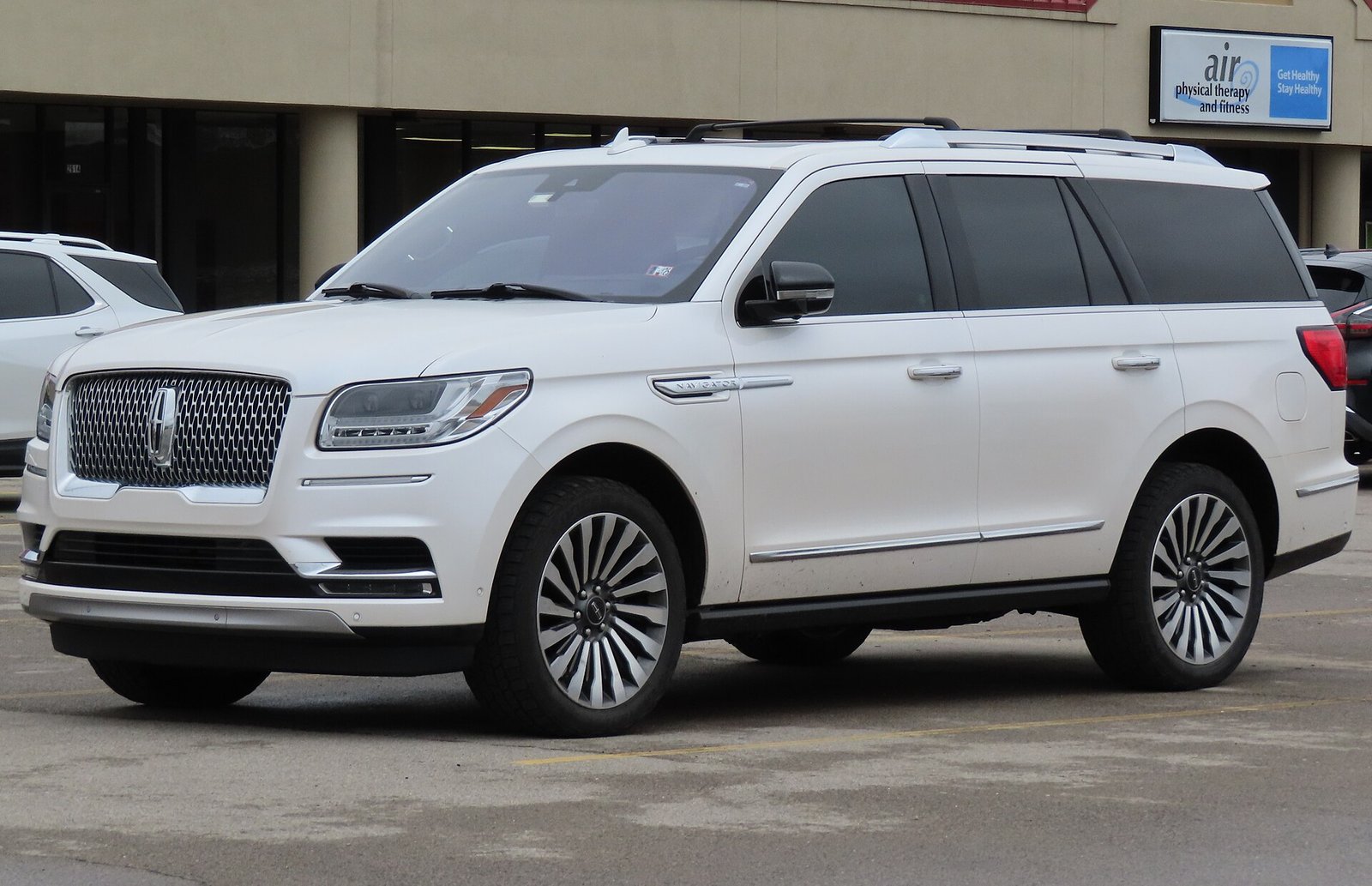
The fourth-generation Navigator, launched for 2018, was the moment Lincoln finally built a Navigator that stood out. Like the new Expedition, it used an aluminum body to save weight. The twin-turbo V6 now made 450 hp, paired with a ten-speed automatic. The interior was the best Lincoln had ever built, with seats offering up to 30 adjustments, screens for the rear passengers and a Black Label trim level with designer-themed interiors carrying names like Destination and Yacht Club.
Critics loved it. The Navigator was named 2018 North American Truck of the Year, an award usually won by pickups. For the first time in years, many reviewers said a Navigator was nicer inside than the equivalent Escalade. A 2022 update added a 13.2-inch touchscreen and Ford’s hands-free BlueCruise driver assistance on highways.
Better product, smaller numbers
And yet the sales gap kept growing. In the first quarter of 2025, according to the manufacturers’ figures reported by Ford Authority and TFLtruck, Cadillac sold 12,683 Escalades in the United States. Infiniti sold 4,064 QX80s. Lincoln sold 4,058 Navigators, six fewer than the Infiniti. The Escalade outsold the Navigator by more than three to one in the segment the Navigator had invented.
The 2025 Navigator
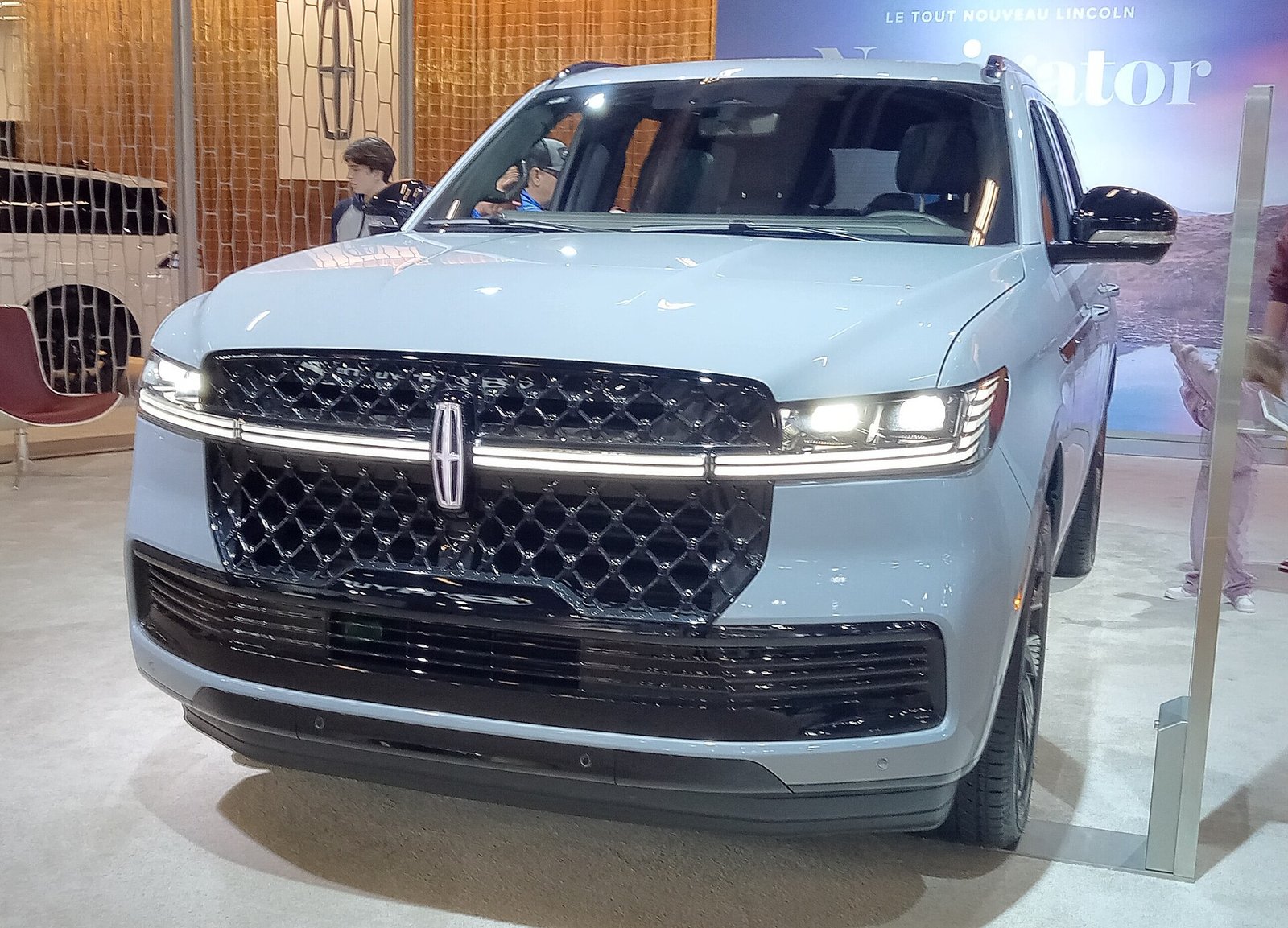
The fifth-generation Navigator was revealed during Monterey Car Week in August 2024. It keeps the 3.5-liter twin-turbo V6, now rated at 440 hp and 510 lb-ft of torque, with a ten-speed automatic and four-wheel drive as standard. It can tow up to 8,700 pounds with the heavy-duty package.
Inside, the headline feature is a 48-inch display that stretches across almost the entire dashboard, combining the instruments and infotainment, with an 11.1-inch touchscreen below it. There’s a 28-speaker Revel Ultima 3D sound system, front seats with 24-way adjustment, a scent diffuser in the climate system and Black Label themes with names like Invitation and Atmospheric. Prices start at around $100,000 and rise to roughly $120,000 for the top Black Label L.
What it doesn’t have is a performance flagship. Cadillac sells the Escalade-V with a supercharged V8, and the all-electric Escalade IQ with around 750 hp in its most powerful mode. Lincoln has chosen not to play that game. The Navigator competes on comfort, technology and calm. It’s a coherent choice for a brand that has spent a decade selling itself as the quiet alternative, but it also means the Navigator has no answer for the buyer who wants the loudest, fastest and most visible truck in the parking lot. That buyer has only one destination, and it has a Cadillac crest on the grille. Lincoln is betting that there are enough customers who want something calmer. So far, the sales charts haven’t proved it right.
Screens as status
The 48-inch display in the 2025 Navigator says a lot about where the luxury SUV has gone. Twenty-five years ago, the symbols of luxury were wood, leather and chrome. Today they are pixels. Cadillac’s 38-inch curved OLED display in the 2021 Escalade started an arms race, and Lincoln answered by going wider than anyone else. Mercedes, BMW and others are doing the same thing with dashboards made of glass.
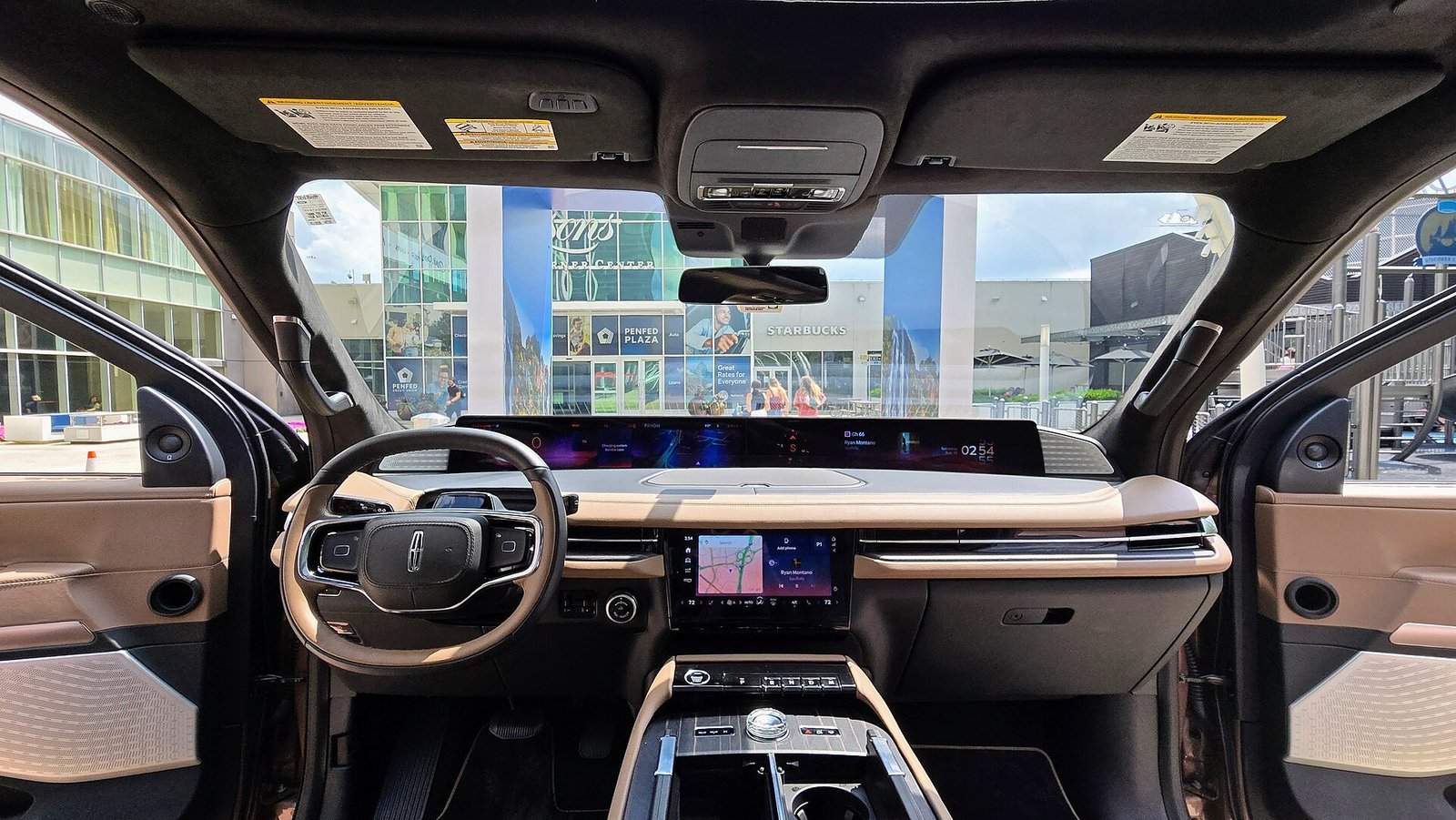
It’s an impressive party trick, but it raises the same question that runs through the whole Navigator story. A bigger screen is easy to copy. A cultural identity is not. When every luxury SUV has a wall of screens, the screen stops being the reason to choose one over another, and buyers go back to the badge, the image and what the vehicle says about them.
Why the better truck keeps losing
Why does the Escalade keep winning when many reviewers think the Navigator is the better vehicle in measurable ways, from cabin quality to ride comfort?
The short answer is culture. Between 2002 and 2007 the Escalade became part of the American imagination, and it never left. It stands for success, authority and money spent loudly. The Navigator stands for something vaguer: luxury that doesn’t need to prove anything. In a segment where proving it is the whole point, that’s a disadvantage.
The longer answer is consistency. Cadillac has never left the segment, never let the Escalade drift and never stopped spending to keep it in movies, sports and music. Lincoln went through identity crises, brand-name confusion, a near-death experience and an engine change that unsettled its core buyers. Each of those cost something, and the costs added up.
What Lincoln could do
Lincoln has three options. It can keep fighting the Escalade on its own terms, with more power, more chrome and a Navigator performance model. Twenty-five years of evidence suggest that doesn’t work, because Cadillac built that ground and will always get there first.
It can try to leap ahead with an electric Navigator. But the Escalade IQ is already there, and Lincoln would again be second to a conversation Cadillac is leading.
Or it can stop measuring itself against Cadillac entirely and build an identity around refinement rather than dominance, the kind of quiet luxury that buyers of a Range Rover or a Mercedes-Maybach understand without comparing spec sheets. That would mean accepting lower volume for a while, which is a hard sell to any board in Dearborn.
The Navigator’s problem has never been the truck. It’s a brand that invented the throne in 1997, wore the crown for a year, and has spent the time since trying to win back a cultural argument it lost in 2002. The story echoes other American luxury battles NEC has covered, from the Cadillac Escalade itself to the broader rise of the SUV, which we’ve argued is the biggest con in the car world, and the cautionary tale of Maybach, a luxury name that died three times. Making the best truck isn’t enough. Someone has to want to be seen in it.
Lincoln Navigator FAQ
When did the Lincoln Navigator come out?
It went on sale in the summer of 1997 as a 1998 model, based on the Ford Expedition, with a 230 hp 5.4-litre Triton V8 and a starting price of $39,995.
Did the Lincoln Navigator beat Cadillac?
Yes. In 1998 Lincoln sold 187,121 vehicles in the US against Cadillac’s 182,570, the first time it had outsold Cadillac since 1950, largely thanks to the Navigator.
Is the Lincoln Navigator body-on-frame?
Yes. Like the Expedition, Tahoe and Escalade, it uses a separate steel ladder frame, which suits heavy towing and shares parts with high-volume pickups.
Check you’re still alive.
Photos via Wikimedia Commons: first- and second-generation Lincoln Navigator and Cadillac Escalade, IFCAR (public domain); 2018 Lincoln Navigator Reserve, MercurySable99 (CC BY-SA 4.0); 2025 Navigator dashboard, Baron Maddock (CC BY 4.0); 2025 Lincoln Navigator, Bull-Doser (public domain).