
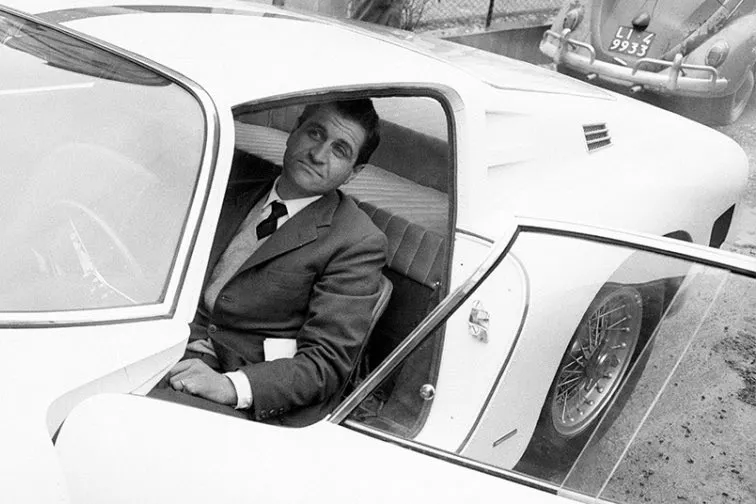
The Engineer Ferrari Tried to Erase
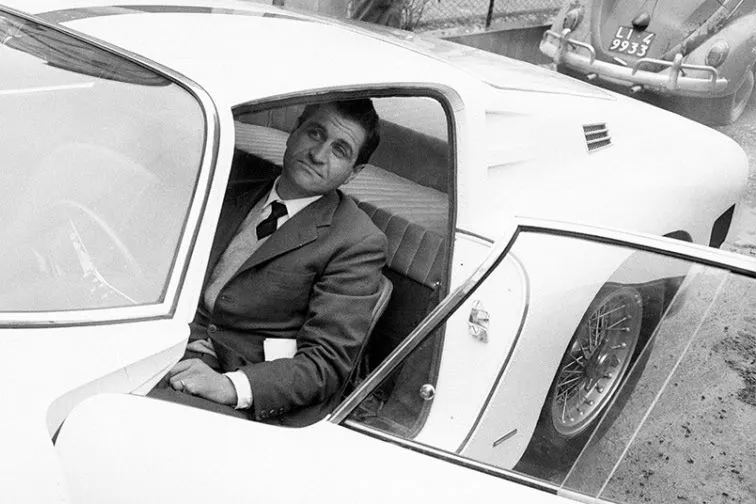
There’s a car that regularly sells for over fifty million dollars at auction. It is, by most measures, the most valuable automobile ever made. The man who engineered its engine never saw it win a race. He was fired before it crossed a finish line — handed a sealed envelope in a corridor by a secretary while his boss sat in the next room saying nothing.
That car is the Ferrari 250 GTO. That engineer is Giotto Bizzarrini. And that envelope tells you everything you need to know about how Enzo Ferrari ran his company.
A Village on the Tuscan Coast, 1926
Quercianella is a small coastal hamlet fifteen kilometres south of Livorno, where the Apennine cliffs drop into the Tyrrhenian Sea. Giotto Bizzarrini was born there on June 6, 1926, into a family of landowners. His grandfather, also called Giotto, had been a biologist who worked alongside Guglielmo Marconi on the development of radio technology — so close to the inventor that one section of the Livorno Library was named after the Bizzarrini family.
When you inherit that kind of intellectual pedigree, engineering is less a career choice than a gravitational inevitability.
He studied at the University of Pisa and graduated in 1953. His final-year thesis tells you exactly who he was: he took a used Fiat Topolino — the most ordinary car imaginable — and redesigned it from the ground up. Modified the engine for more power, relocated it in the chassis to improve weight distribution and handling. It wasn’t an academic exercise in any conventional sense. It was a prototype. It was Bizzarrini being Bizzarrini before the world knew his name.
He taught briefly, then joined Alfa Romeo‘s experimental department in August 1954. He was assigned to Giulietta chassis development — frustrating work for a man who wanted engine development — but he used the time to cross-train as a test driver. That combination would become his defining characteristic: an engineer who could verify his own calculations by driving the result. In the mid-1950s, that was extraordinarily rare. It remains so today.
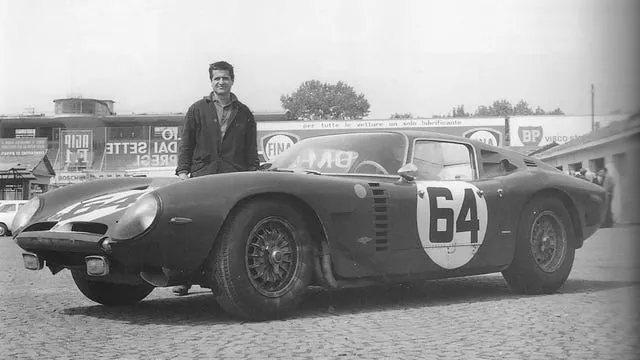
Ferrari, 1957: Five Years That Rewrote the GT Bible
Ferrari recruited Bizzarrini in 1957 as a test driver. He was quickly promoted to head of experimental sports and GT car development. The years between 1957 and 1961 produced a catalogue of machines that now fetch serious money at auction and that, at the time, were systematically redefining what a GT car could do.
The 250 Testa Rossa. The 250 GT SWB — the short-wheelbase berlinetta that dominated the GT category at the turn of the decade. And then the 250 GTO.
To understand what Bizzarrini was building, you need to understand the competitive landscape. When the SWB was being developed in the late 1950s, Ferrari was watching Aston Martin’s DB4 GT very carefully — Ted Cutting’s straight-six was genuinely competitive — and planning against the Jaguar Lightweight E-Type that was still on the drawing board. Maserati was fighting in the same weight class. Bizzarrini didn’t just know the competition; he dismantled it analytically, car by car, looking for where each one had its limits and how to exploit them.
The 250 GTO started taking shape in his head around 1960. He used his personal 250 GT — chassis 2643GT, which they called the “Ugly Duck” internally — as a development mule to test the technical solutions that would end up on the GTO. Lower frontal area, proper aerodynamic work, dry-sump lubrication to drop the engine lower in the chassis, engine moved rearward for better weight distribution, six twin-choke Weber carburettors instead of three. He wasn’t calculating at a desk and sending the results to someone else to verify. He was calculating at a desk, then getting in the car, then coming back and calculating again. That was his process. That’s why the GTO was what it was.
When the GTO launched in 1962, there was nothing faster in its class. Nothing. The Shelby Cobra had an advantage on slow circuits, but on fast roads the GTO’s superior aerodynamics and top speed left it behind. Bizzarrini had built it to win Le Mans. It won Le Mans. He just wasn’t there to see it.
October 24, 1961: The Night Ferrari Fired Eight People
There was accumulated resentment. Pay was poor. Laura Ferrari — Enzo’s wife — had been steadily increasing her influence over the company’s operations in ways that made everyone uncomfortable. Enzo himself ran the place with the grip of someone who considered any challenge to his authority a form of betrayal.
The trigger was Girolamo Gardini, the commercial director. Fed up with Laura Ferrari’s interference, Gardini worked with seven other senior managers — including Bizzarrini and chief engineer Carlo Chiti — to draft a collective letter, written with legal assistance, formally requesting that Enzo’s wife step back from operational decisions. Nobody had ever done anything like this before. Nobody had ever pushed back on Enzo Ferrari in writing, with a lawyer’s signature attached.
Ferrari’s response was characteristically theatrical. In the weekly staff meeting on Tuesday, October 24, 1961 — which team manager Romolo Tavoni later remembered as unusually short, no more than forty-five minutes — Enzo said nothing about the letter. He proceeded through the normal agenda, as if nothing had happened. When the meeting ended, his secretary pulled the eight men aside and handed each of them a sealed envelope.
The eight were Bizzarrini, Chiti, Tavoni, Gardini, financial director Ermanno Della Casa, foundry chief Fausto Galasso, purchasing manager Federico Giberti, and HR director Enzo Selmi. In one evening, Ferrari lost the entire technical core that had built the most successful racing cars in the company’s history.
Some people at Maranello thought it was the end of the company. Mauro Forghieri — twenty-seven years old, almost no experience at that level — had to finish the GTO that Bizzarrini had designed. Ferrari took two years to find its feet again. It was the closest the company ever came to destroying itself from within, and it was entirely self-inflicted.
The episode is known in Ferrari’s history as “The Great Walkout.” The Italian nickname, “Il Palazzo dei Balocchi” — the Palace of Toys — came from Enzo’s habit of compensating his engineers with gifts instead of adequate pay. A perfectly bitter description of how the hierarchy worked.
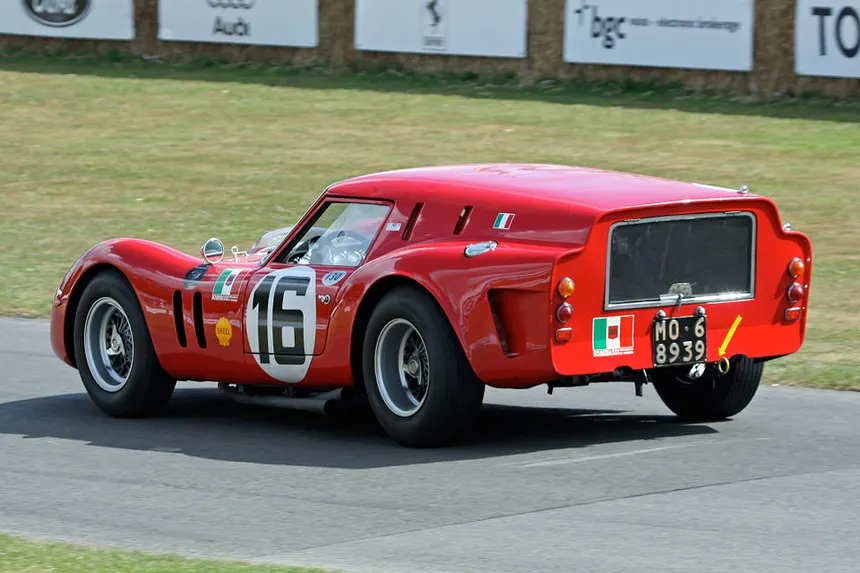
The Breadvan: Bizzarrini’s Written Reply to Ferrari
After the dismissal, Bizzarrini and Chiti co-founded ATS — Automobili Turismo e Sport — with Count Volpi’s financial backing. It didn’t work. Bizzarrini and Chiti clashed on everything. Bizzarrini left ATS quickly and set up his own engineering consultancy, Società Autostar, in Livorno in 1962.
One of his first clients was Count Giovanni Volpi di Misurata himself, who had a specific problem: he wanted to race at Le Mans 1962 with a Ferrari 250 GTO, but Enzo had refused to sell him one as direct punishment for having hired former Ferrari employees. What Volpi had was a 250 GT SWB — chassis number 2819GT, previously raced by Olivier Gendebien — and a burning desire to embarrass his former supplier.
The brief Bizzarrini received was straightforward: turn this SWB into something that can match the GTO. What he delivered was the Breadvan.
The name came from the English press, who were dubious about a silhouette that looked like nothing that had ever left Italy: very low and pointed nose, roofline extended almost horizontally to the rear following Kamm aerodynamic theory, squared-off tail. The French called it “La Camionnette” — the little truck. Neither name was flattering, but both were accurate. Bizzarrini had prioritised aerodynamic efficiency over aesthetics, and he wasn’t apologising for it.
The modifications were precisely what you’d expect from the man who built the GTO. Engine repositioned twelve centimetres further rearward compared to the GTO. Dry-sump lubrication to lower the centre of gravity. Six twin-choke 38 DCN Weber carburettors replacing the original three. Kerb weight: 935 kilograms — 65 kilograms lighter than the GTO. Coachwork by Piero Drogo in Modena. The car was completed in fourteen days.
At Le Mans 1962, the Breadvan ran ahead of all the factory GTOs for the first four hours. It was reportedly 7 km/h faster than the Ferrari works cars on the Mulsanne Straight. In hour four, a driveshaft failure retired it. But the demonstration had been made, clearly and in public: the man Ferrari had dismissed with a sealed envelope understood the GTO better than anyone left at Ferrari did — because he had built it.
Ferrari, under pressure, had persuaded the organisers to classify the Breadvan as a prototype rather than a GT, preventing it from racing directly against the GTOs. Even the paperwork had to be manipulated to keep Bizzarrini contained.
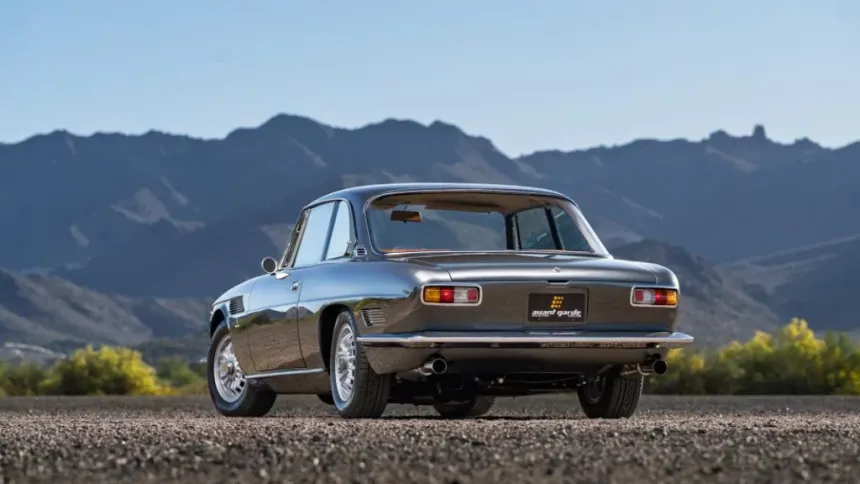
Iso Rivolta and the Cars Nobody Talks About
While the Breadvan project was underway, Bizzarrini had begun working for Renzo Rivolta, a Milanese industrialist who wanted to transform his Iso company — manufacturer of refrigerators, the Isetta bubble car and scooters — into a serious GT manufacturer.
Bizzarrini designed the chassis for the Iso Rivolta IR300, presented in 1962. The philosophy was pragmatic: Italian coachwork, American engine. The Chevrolet Corvette’s 5.4-litre V8 was reliable, powerful and cost a fraction of what a purpose-built engine would require. Giugiaro, then at Bertone, designed the body. The result was a convincing grand tourer that found its market.
But Bizzarrini wasn’t interested in grand touring. He wanted to race. That’s where the Grifo A3/C came in — the competition variant developed alongside the road car. Extraordinarily low, with the engine pushed so far back in the chassis that accessing the distributor required a trapdoor cut into the dashboard. It raced at Le Mans in 1964 under the Iso banner, demonstrating what the car could do.
The split with Rivolta wasn’t about money or a single incident. It was about fundamentally different objectives. Rivolta wanted high-quality GT road cars and family transport. Bizzarrini wanted to win Le Mans. Two goals that appear compatible on paper and become irreconcilable the moment the budget runs out. The final trigger was typically Bizzarrini: he had registered the “Grifo” trademark in his own name without telling Rivolta — the same pattern as always, the engineer who considers the car his regardless of who pays for the workshop. Rivolta was forced to effectively buy back his own brand name in exchange for supplying Bizzarrini with chassis for independent production. It wasn’t a clean break. It was another envelope, a different kind.
Bizzarrini SpA, 1964–1969: Genius Without Infrastructure
The break with Iso came in 1965. Bizzarrini walked away with production rights to the A3/C and enough components to build fifty cars. He founded Bizzarrini SpA in Livorno and began producing the car under his own name: the 5300 GT.
The specifications were serious. Chevrolet V8, 5,354 cc, 365 bhp in Strada trim, up to 405 bhp in the Corsa configuration with four side-draught twin-choke Weber carburettors. Kerb weight: 1,252 kg in road form. Top speed: 266 km/h. Zero to sixty: approximately 6.4 seconds. US price: around $14,000 — compared to the Ferrari 275 GTB’s $17,000.
To put that in context: in 1965, the Ferrari 275 GTB produced 280 bhp from its V12. The Shelby Cobra 427 was more savage but heavier and less sorted dynamically. The Lamborghini Miura didn’t exist yet — it arrived in 1966. The 5300 GT was genuinely faster in circuit conditions than many cars that cost significantly more, and its aerodynamics — which Bizzarrini had spent years obsessing over — gave it a real advantage on fast tracks.
At Le Mans 1965, a Grifo A3/C/Bizzarrini won its class and finished ninth overall. A production-based car competing against prototype machinery and works teams with budgets that dwarfed everything Bizzarrini had available.
The problem was never the engineering. It was everything else. There was no business infrastructure. Production was artisanal — approximately 133 units built across all variants. There was no capital to develop the cars at the pace the market demanded. The P538 prototype he built for 1966 to contest the prototype category had the bones of something serious but never the resources to become it. In 1969, Bizzarrini SpA went bankrupt.
Not a surprise to anyone who understood him. Bizzarrini was, by his own admission, an engineer and nothing else. “I am not a car designer,” he said. “I am a worker.” The statement is disarming in its precision. A worker of extraordinary capability — but a company needs more than one extraordinary worker to survive.
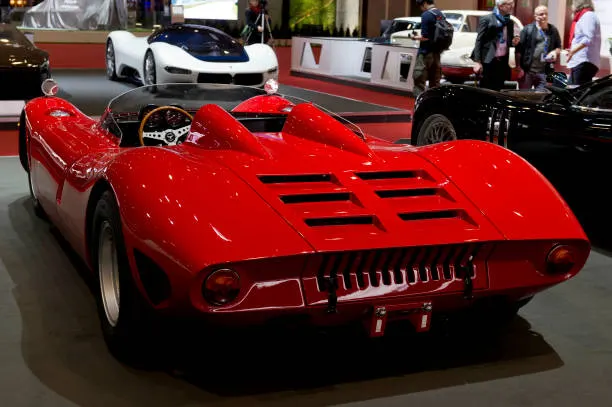
What Came After, and What Never Changed
After 1969, Bizzarrini kept working. He collaborated with American Motors on the AMX/3 in the early 1970s — a mid-engined two-seater that never made it to production when AMC’s finances collapsed, but was technically coherent. He consulted for General Motors in Europe and the United States, where his expertise in mass distribution and low centre-of-gravity aerodynamics remained relevant in an industry that was only beginning to take those parameters seriously. He also worked for Japanese motorcycle manufacturers and for Pininfarina.
He taught engineering first at the University of Rome, then ended where he had started: at the University of Pisa, where he had graduated in 1953 with that thesis redesigning a Fiat Topolino. There is something very Bizzarrini about that closed circle. In 2012, the University of Florence awarded him an honorary doctorate in industrial design at the age of eighty-six.
In 1998 he presented the Kjara — a concept car of his own design. In 2005, another concept. He never stopped.
He once explained why he always needed to understand the car from inside — as a driver, not only as an analyst. “I became a test driver who coincidentally was also an engineer, with mathematical principles. I always needed to know why something fails, so I can invent a solution.” Not humility. The most precise description imaginable of how he actually thought.
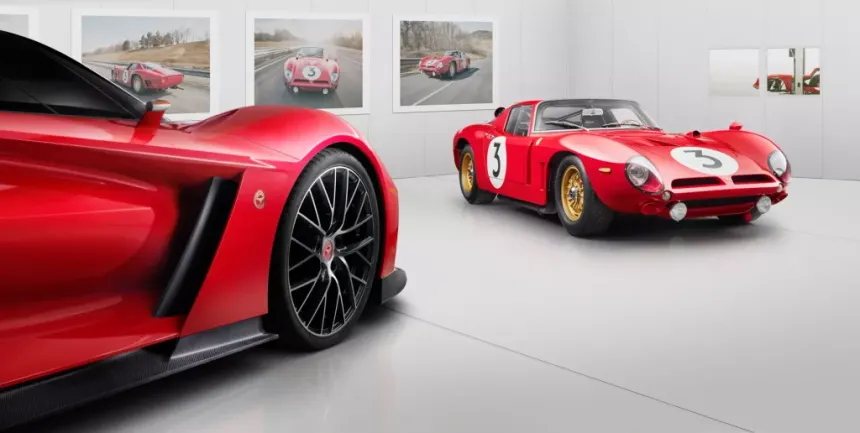
When the Bizzarrini name was revived in 2023 and the new company unveiled the Giotto hypercar as his tribute, the man himself was ninety-six years old, living in Rosignano Marittimo near Livorno. The car’s Cosworth V12 displaced precisely 6,626 cc — a reference to his date of birth: 6/6/26. He died on May 13, 2023, a few weeks short of his ninety-seventh birthday. He didn’t see the car finished. He hadn’t seen the GTO win either. There is a terrible consistency to that pattern.
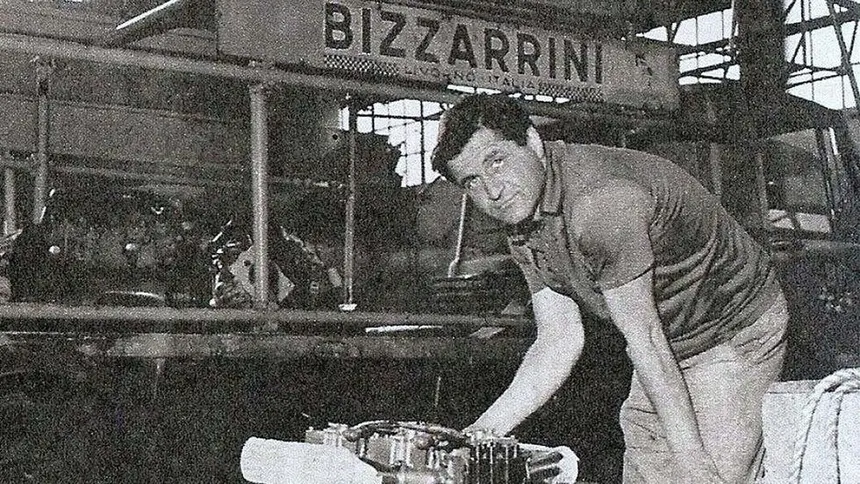
The Man in the Envelope
The automotive industry is full of brilliant engineers who stayed inside the big brands. Their names appear in collective credits, in acknowledgements, in footnotes. Bizzarrini’s name appears alone, on the bodywork of cars worth fortunes and on the badge of a company that lasted five years and that, fifty years later, someone considered significant enough to resurrect.
Ferrari fired him for signing a letter. For daring to challenge the way the company was being managed. Not because he was inadequate — precisely because he was too good and too willing to say what he thought. Enzo knew exactly what he was losing on the evening of October 24. That’s why it happened the way it did: no conversation, no eye contact, a sealed envelope handed by a secretary.
Some engineers are larger than the companies they work for. Bizzarrini is the evidence.
Check you’re still alive.