
Ricart Cars: A Century Later, the Family Name Returns to Building Cars
In 1922, a 25-year-old engineer from Barcelona designed and built two racing cars with double overhead cams and 16 valves. In 200 days. By himself. Engine, chassis, bodywork, suspension, brakes. Everything. With those cars he won races, beat Bugatti, and then dropped the same engine into a speedboat that won in Barcelona harbor. His name was Wifredo Ricart. In 1926 he presented his own touring car at the Paris Motor Show and the international press lost its mind. In 1928 he founded a brand bearing his name. In 1930 the brand died when Spain stripped away the tariff protections keeping it alive. Ricart went to Alfa Romeo, outranked Enzo Ferrari, returned to Spain, created Pegaso, and died without the world giving him what he deserved.
The family name went dark. Ninety-six years without a car carrying the Ricart badge on its hood.
Until now.
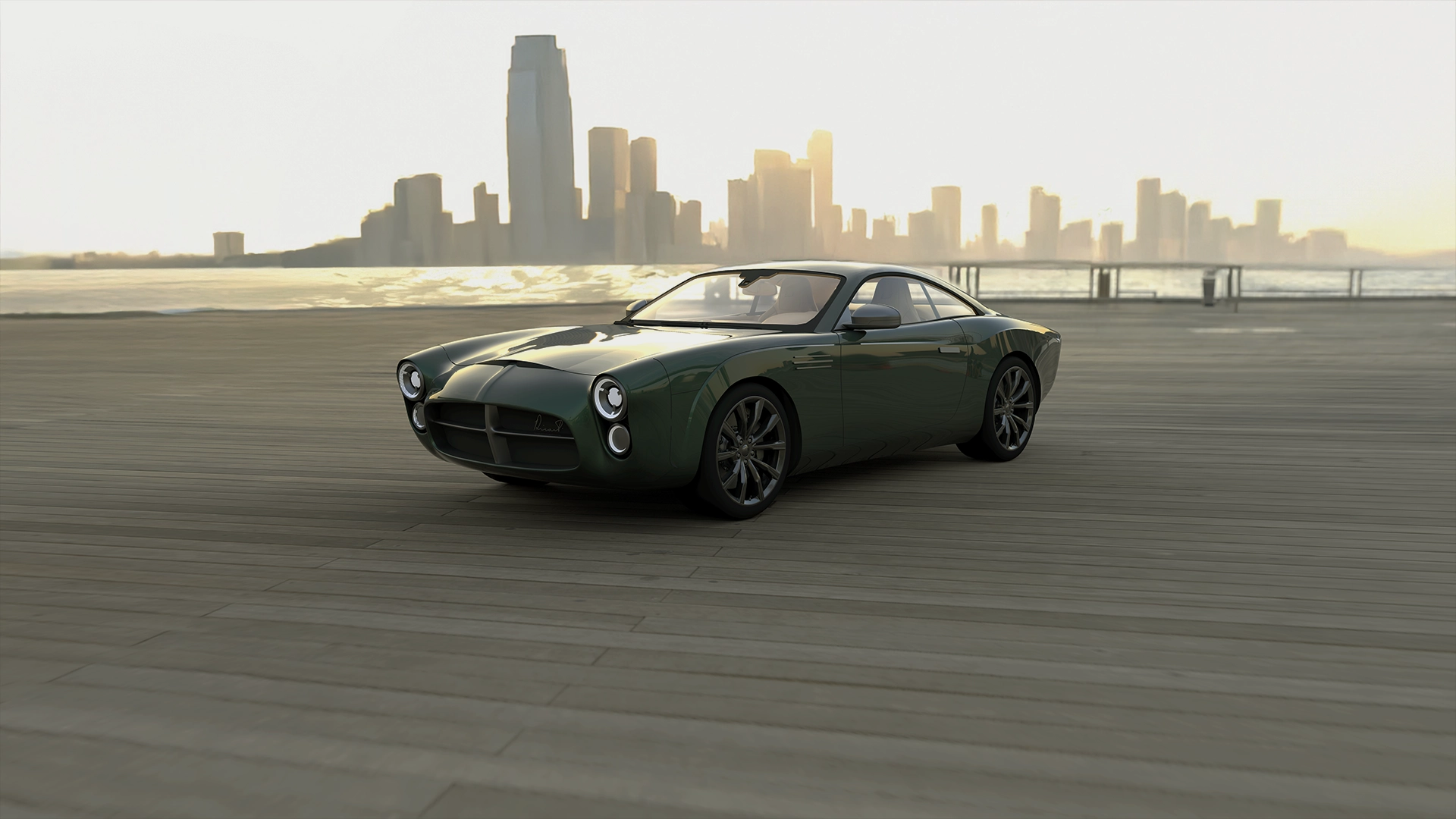
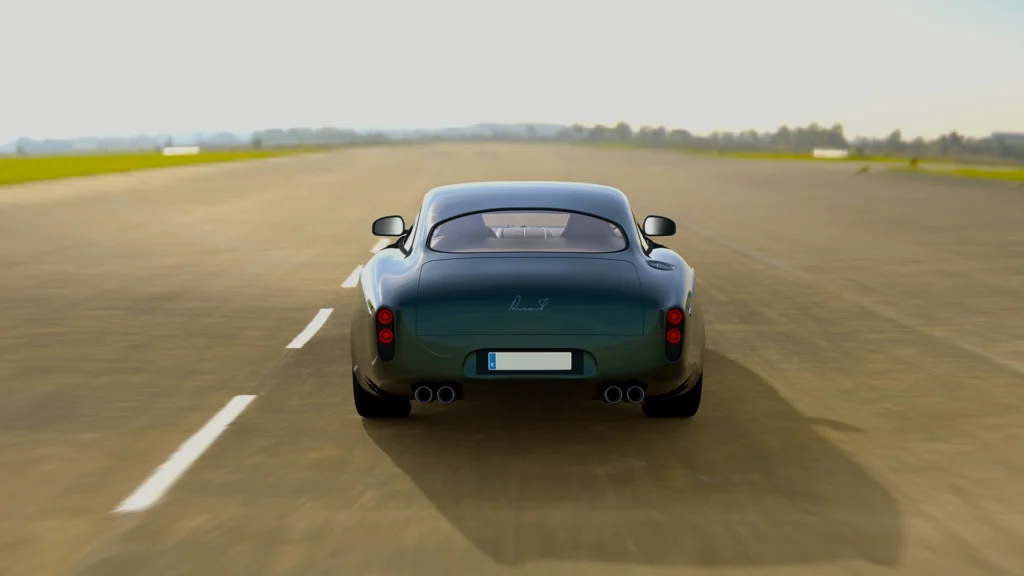
In a Barcelona office, Wifredo Ricart’s great-grandson is working with two partners to resurrect the brand. A 750 hp GT inspired by the Pegaso Z-102. Production limited to 86 units — the exact number of Pegaso sports cars ever built. Manufactured in Spain. Non-negotiable.
This isn’t a press release. This is the story of a name that built cars before almost anyone else in Spain, that was forced to stop, and that a century later is trying to come back. With everything that entails: the ambition, the risk, and the question of whether three people can pull off what a state-owned enterprise couldn’t sustain.
The Cars Almost Nobody Remembers
The story of Wifredo Ricart is already on NEC. But there’s a chapter that doesn’t get told enough: the cars he built under his own name before leaving for Italy. Because Ricart didn’t start at Alfa Romeo. He started in a Barcelona workshop, hands full of grease and an obsession that wouldn’t let him sleep.
In 1920, with Francisco Pérez de Olaguer, he sets up Ricart y Pérez. Industrial engines under the Rex brand. But Ricart wants to race. In 1922 he designs two racing cars in under 200 days. The Ricart-Pérez carries a four-cylinder 1,498 cc engine with double overhead cams, 16 valves, and hemispherical combustion chambers. It revs past 6,000 rpm when most road cars barely cracked 3,000. They debut at the II Gran Premio Internacional de la Penya Rhin. Neither finishes. But the following year, one of those cars wins the Rabassada Hillclimb in the 1,500 cc class. Ahead of a Bugatti.
In 1926, now on his own, Ricart unveils the Ricart 226 at the Paris Motor Show. He drives the car himself from Barcelona. Six-cylinder 1,486 cc engine, dual overhead cams, hemispherical combustion chambers, duralumin con-rods, dry sump lubrication, north of 5,000 rpm, 140 km/h flat out. The French press kneels. Omnia magazine calls it a masterpiece of lightweight engineering.
Two years later, Ricart partners with Felipe Batlló y Godó to create Ricart España. Small-series touring cars. But General Berenguer scraps the tariff protections. No shield, no market. Ricart España dies in 1930.
Wifredo Ricart reinvents himself as a consultant, works for Mercedes-Benz, Saurer, and Lancia, joins Alfa Romeo in 1936, and you know the rest. But cars bearing the Ricart name ceased to exist. And for nearly a century, nobody tried to bring them back.
Until a November evening in Brussels, in 2018, something shifted.
Brussels, 2018: The Moment That Changed Everything
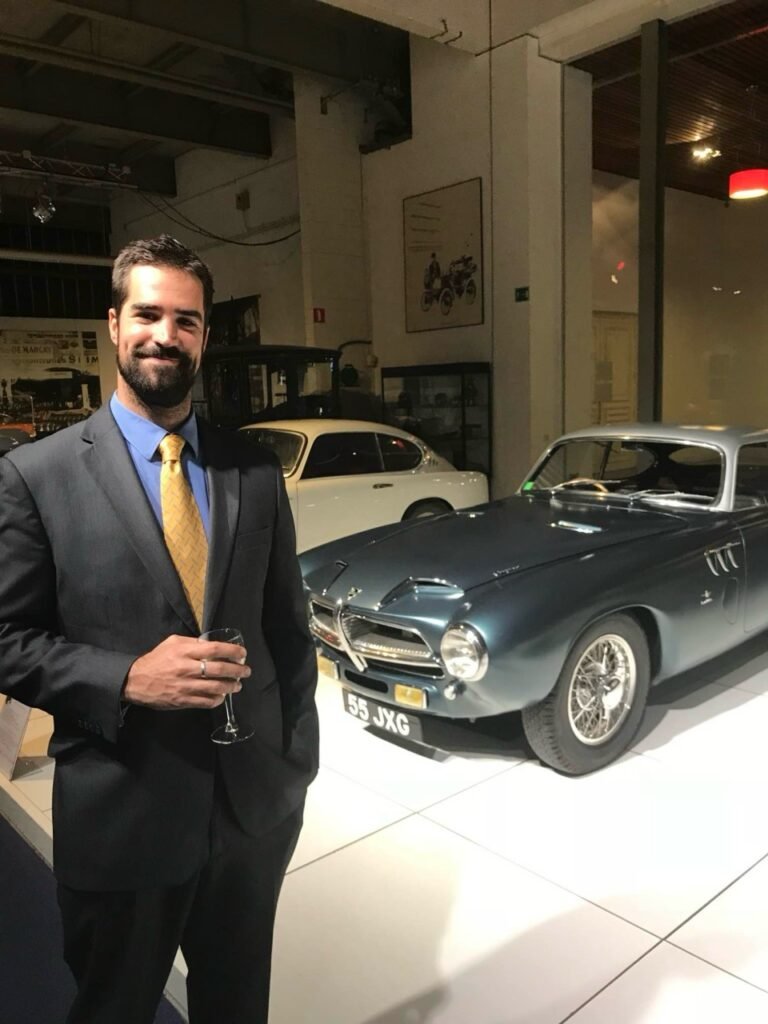
Miguel Fenollosa Ricart is Wifredo’s great-grandson. The family always talked about the great-grandfather. His grandfather — Wifredo’s eldest son — told stories about ENASA and the Pegasos. His mother too. Even his father, who knew Wifredo for only a few years before his death, had unpublished anecdotes. But Miguel admits that as a young man, the interest wasn’t there the way it is now. “It’s really only more recently that I’ve asked questions and dug deeper, but my great-grandfather has always had a very strong presence in my life.”
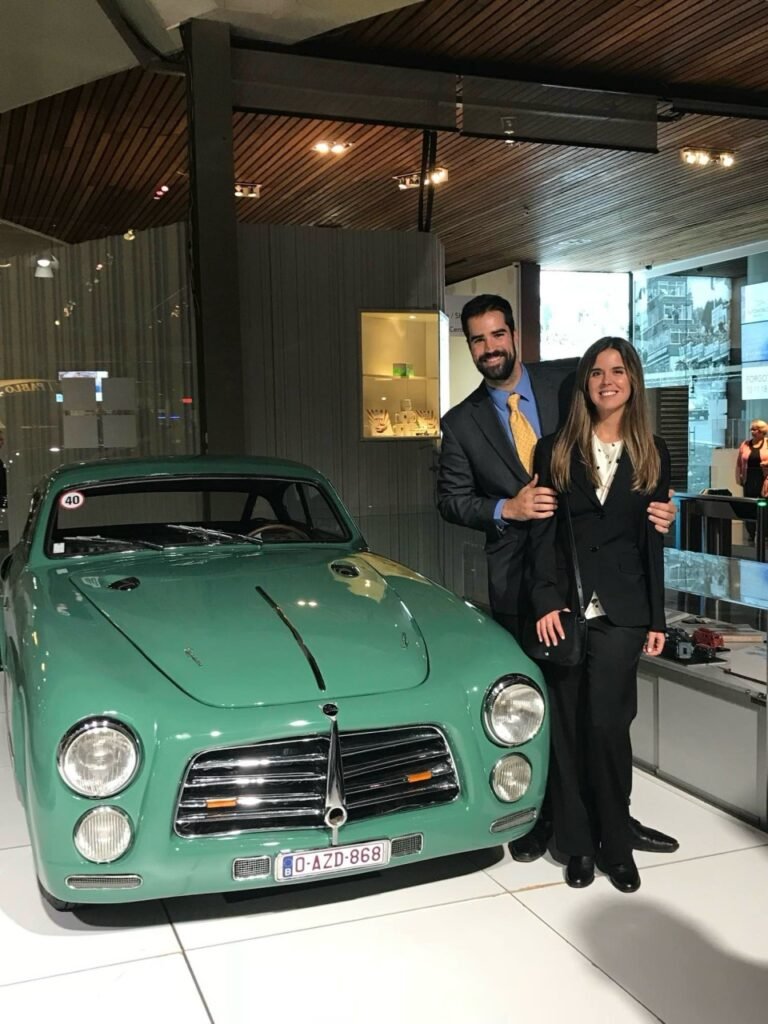
In November 2018, a Pegaso exhibition is organized in Brussels. Normally his uncle José Ramón would have attended — he’d always been the bridge between the Ricart family and the Pegaso world — but he was unwell. So Miguel’s mother went. And Miguel went with her.
What he found there changed his life. More than 20 Pegasos in perfect condition, gathered in one space. And because of who they were, the owners let them climb in and even fire up some of the engines.
“It was right there, surrounded by those jewels on wheels, that I thought: why did it all end the way it did? Why can’t it come back in some form? There has to be something I can do.”
That night in Brussels, Miguel made himself a promise: to revive his great-grandfather’s legacy. And for the next five years, he told nobody.
Five Years in Secret
The only person who knew was his wife, Carmen. She supported him from day one, “even though she thought what I was trying to do was, from her perspective, a bit crazy.” Miguel worked in silence for years: reading, researching, meeting people, shaping the project at night and in his spare time. He didn’t want to tell the family because he knew exactly what they’d say.
On December 26, 2023, he finally tells his parents. “Their reaction surprised me: my mother got very emotional and my father, who’s more reserved about these things, didn’t panic.” Both told him he was a bit mad. But they thought the project was noble. “One of my greatest wishes is for them to be front row when we unveil the prototype.”
His uncle José Ramón, the family’s keeper of the Ricart flame, responded with something beyond support. “He wasn’t just excited about the designs and the idea — he was thrilled that someone from the younger generation of Ricarts was showing that kind of interest in his grandfather’s legacy.”
The Team: These Aren’t Three Hobbyists
Miguel isn’t an engineer. He knows it and doesn’t hide it. His background is in business management, marketing, and sales. And that’s precisely the piece that was missing from the Ricart equation. Because his great-grandfather was an engineering genius and a catastrophic manager. Miguel says it without flinching: “I’ve inherited a bit of his dreamer gene, but I’ve learned from some of his mistakes.”
For engineering and design, he brought in Jim Palau-Ribes Roger. And this is where the project stops sounding like a garage dream. Jim has worked as a designer at Alfa Romeo, Mazda, SEAT/CUPRA, and Audi in Munich under Walter de Silva, where he contributed to advanced proposals for Lamborghini, including work related to the Huracán. But what makes him truly relevant to Ricart Cars isn’t his CV at big brands. It’s that he’s done this before.
Jim founded Pursang Motorcycles in Barcelona in 2018, reviving the legendary Bultaco brand with an electric motorcycle that he took from concept through to production, homologation, and market. He’s not a designer who makes pretty renders and goes home. He’s someone who knows what it takes to homologate a vehicle in Spain, set up a production line, and put a product on the road.
“In a small team you can’t work by departments; you have to understand the whole car,” says Jim. “What’s served me most for Ricart is having always worked between design and engineering: exterior, interior, 3D modeling, package, and feasibility.”
The third partner is Jordi Borrell, with background and experience similar to Miguel’s on the commercial side. He manages investor and collaborator relations. Three people. Three complementary profiles. Nobody’s redundant.
The z102s: What It Is and What It Isn’t
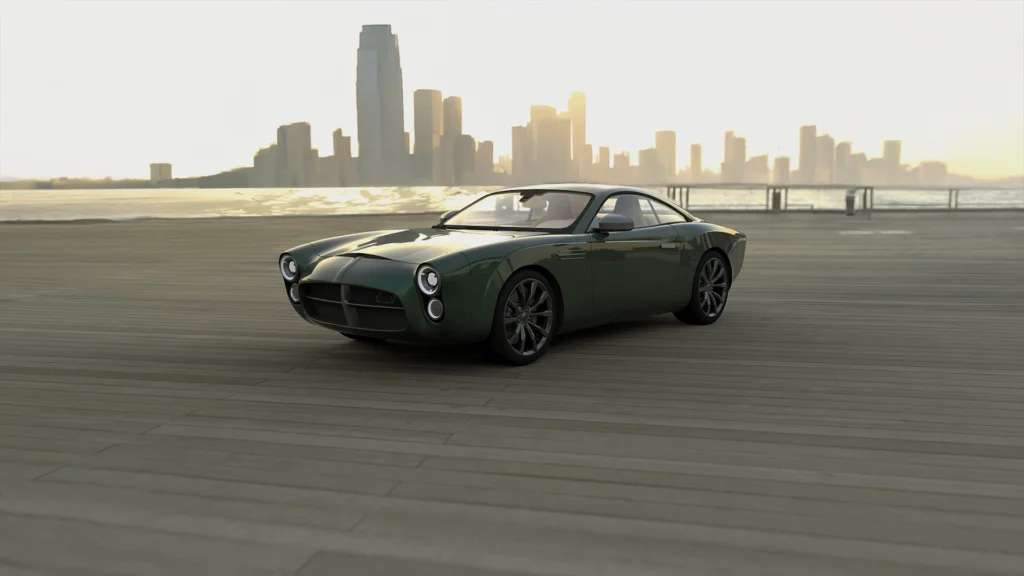
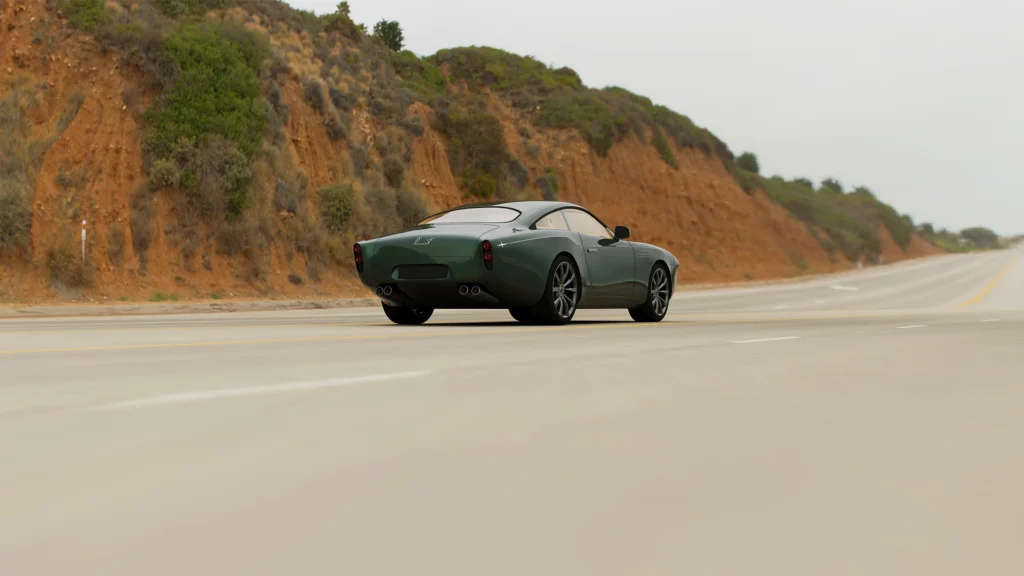
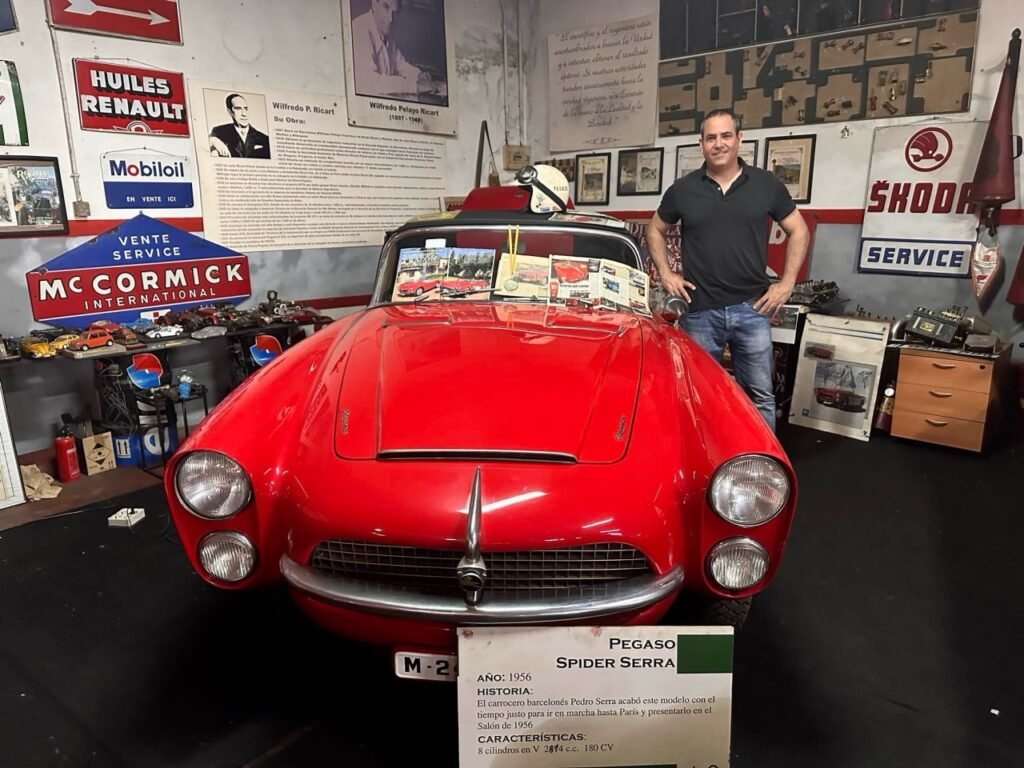
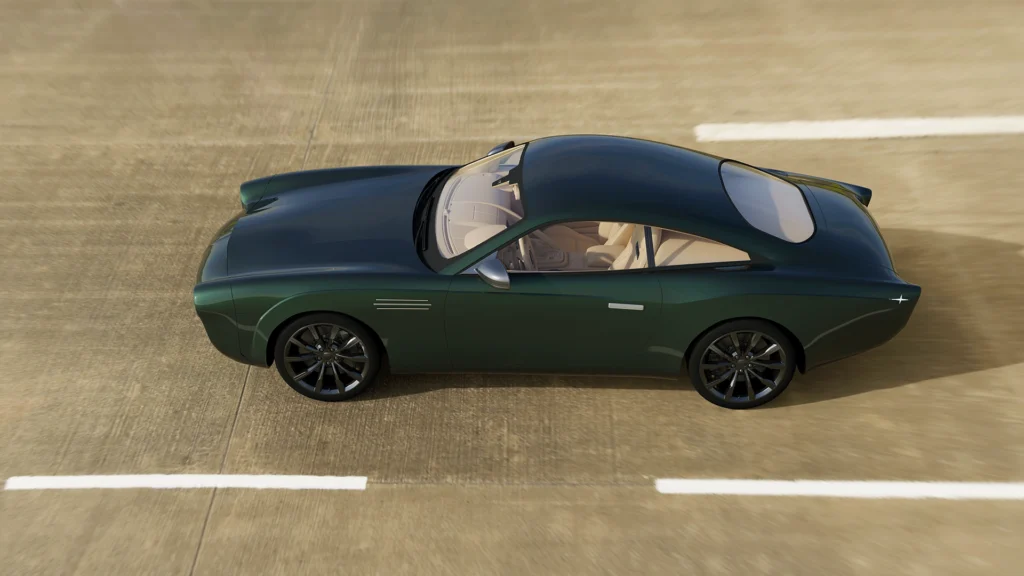
The first model is called the z102s. The reference is obvious: the Pegaso Z-102 bodied by Saoutchik, one of the most spectacular versions of Wifredo Ricart’s sports car. But Jim is clear: “The intention was never to make a retro car. We’ve kept above all the elegance, the proportions, and a certain visual tension from the original Z-102, but avoiding copying historical elements literally. The line between homage and new car is that the design has to work on its own, even if you don’t know the Ricart story.”
Published specs: supercharged 5.0 V8, 750 hp, 0-100 km/h in 3.5 seconds, 300 km/h top speed. Luxury GT. Production limited to 86 units — a direct nod to the total number of Pegaso sports cars ever made. Estimated price between €250,000 and €300,000.
The engine starts from an existing architecture. They won’t say which, and that’s logical at this stage. “Quite standard practice for a small project nowadays, both for cost and homologation reasons,” Jim explains. “But the real work is in how you integrate the whole package: cooling, packaging, character, sound, and how it all relates to the chassis.”
Two more models are in development. The z102t, based on the Touring Berlinetta body line of the original Z-102, is being developed at a serious level of architecture and design language. The Trisiluro — internally nicknamed “the crazy one” — is a track-only single-seater inspired by the Bisiluro Damolnar that set the speed record at Jabbeke. That one remains more conceptual, though substantial 3D work has been done.
Tsutomu Matano, the father of the Mazda Miata, saw the z102s designs before he died. He liked them. He suggested shortening the front overhang. They did it. “He had an incredible sensitivity for reading a design and understanding where the character of the car lived,” Jim says. “Such a shame he left us so soon.”
The Real State of Play: No Sugarcoating
NEC doesn’t sell smoke. And Miguel appreciates that, because neither does he.
The real state of the project today: three models designed, collaboration agreements with companies that will be part of manufacturing when the time comes, and a significant portion of initial engineering work completed. There is no physical prototype. They’re in the investment-seeking phase. Some investors have confirmed capital, but the full round isn’t closed.
The number: 10 million euros to reach the first delivered car. That covers a rolling prototype, homologation, safety testing, a proprietary chassis — because they want to be manufacturers, not tuners — and building their own factory. In Spain. Non-negotiable.
“We’ve turned down investment offers that came with the condition of manufacturing abroad,” Miguel says. “Can you imagine a Pegaso built in China? It would completely lose the essence.”
The question Jim answers without blinking: how do you differentiate a €300,000 GT from a kit car with a pretty render? “The difference is in solving the car for real. Packaging, structure, ergonomics, cooling, surface quality, tolerances — everything has to work at the same time. When design and engineering are born together, the car communicates coherence and solidity.”
Pegaso, Iveco, and a Name They Can’t Use
The Pegaso brand belongs to Iveco. But the story is more complicated than it looks.
Miguel went to Iveco first. Met them at their Madrid offices. Told them the idea. Asked for the brand. And against all expectations, Iveco said yes. There is a signed letter of intent.
But intellectual property issues arose that are being resolved. Miguel can’t say much more right now. What he can share is the decision they made in the meantime.
“If this whole project is being done to honor my great-grandfather’s legacy, why not use his original brand, Ricart, the first brand he created in the 1920s?” They dug into the archives. And discovered something they hadn’t expected: Pegaso carries the weight of the name but also enormous public responsibility. Ricart as a brand gives them more room. “It might be harder to establish publicly, but it gives us far wider freedom in terms of what we could do with this project.”
What Wifredo Would Criticize
I asked Miguel what his great-grandfather would say if he could see the z102s. I told him not to say he’d be proud, because that’s the easy answer.
“He’d probably criticize a lot of it: not designing and building our own engine from the start. Or that we’re thinking too much about the financial aspects of the project and not enough about the automotive essence. Or that the z102s design is fine but we’re not being bold or transgressive enough, the way he was in his time.”
And that’s exactly what Wifredo Ricart would have said. Because he was an engineer for whom the possible was never enough. And because he didn’t understand that designing is one thing and manufacturing is another. His great-grandson does understand that. And that may be the difference between this time working and not.
I asked Jim the same question differently: if you could show Wifredo Ricart a blueprint of the z102s, what would he look at first? “I think he’d look at the technical logic before the design itself. Ricart understood that a great car isn’t just aesthetics; there always had to be a clear mechanical and engineering rationale behind it.”
The Documentation Lost Forever
There’s something Miguel shares with visible pain. The family has little original material from Wifredo. He has an archive of over 400 digitized photographs, though many are already known. They hold private correspondence from the years after Pegaso, including an exchange with Enzo Ferrari in the 1960s that Miguel describes as “very interesting.” His great-uncle made those letters public through specialist press a few years ago.
But what truly hurts is this: the original technical documentation from the Pegaso era — blueprints, calculations, specifications — was incinerated by ENASA on orders from the INI. Destroyed. What little survives exists in the archives of museums, dealerships, and private collectors.
And there’s another detail Miguel discovered recently: his grandfather Wifredo, Ricart’s eldest son, once owned a Pegaso Z-102 Touring Superleggera. He sold it.
The 1926 Ricart That Still Exists
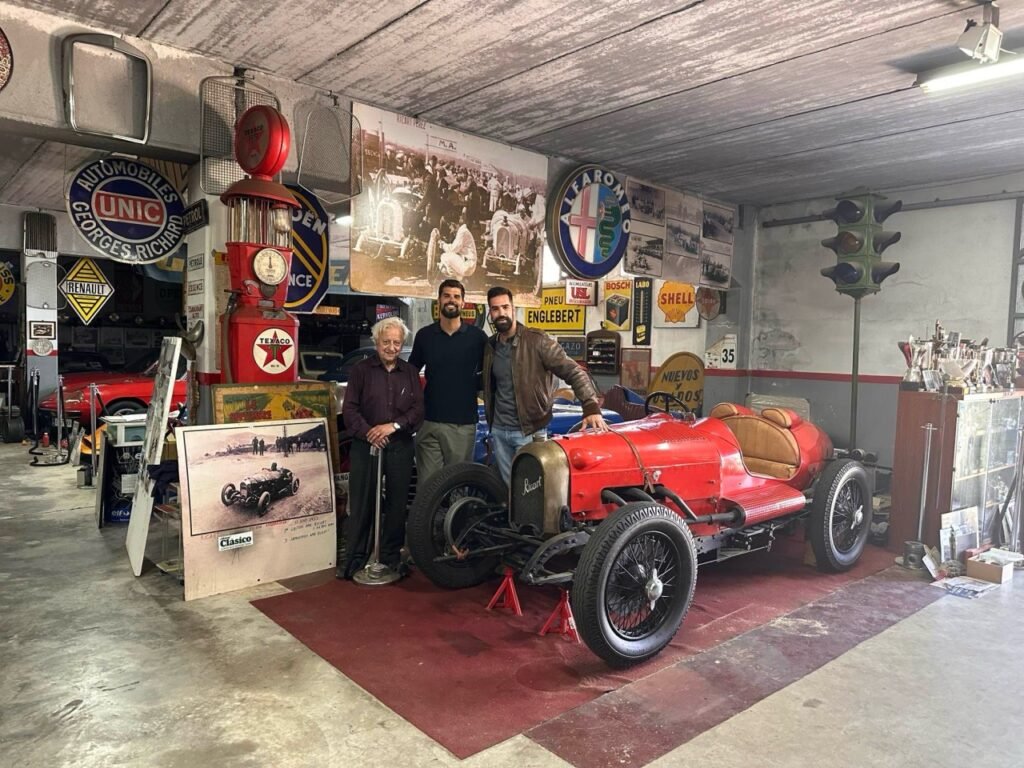
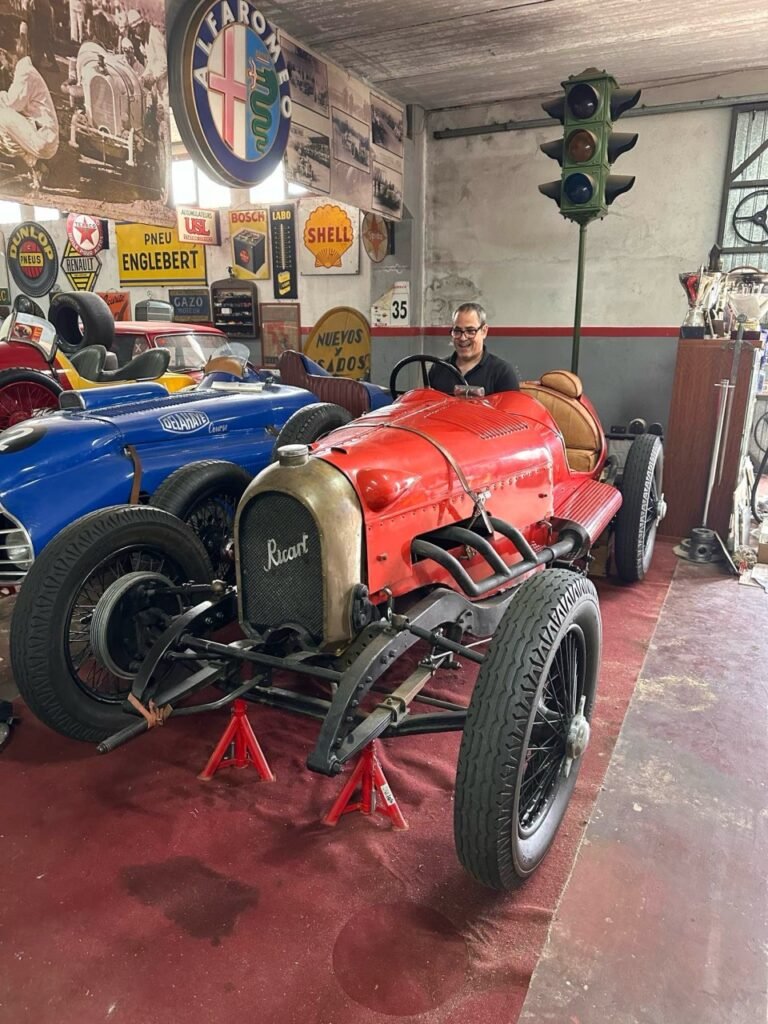
There’s an extraordinary detail that connects this story to something that seems impossible. Ramón Magrinyà, one of the contacts who’ve opened doors for Miguel in recent years, doesn’t just own a Pegaso. He owns a 1926 Ricart six-cylinder. Original. In perfect condition.
Think about that. The car Wifredo Ricart drove from Barcelona to the Paris Motor Show a century ago still exists. And his great-grandson is designing its successor.
Full Throttle
Miguel told me a story that could be the ending of a film. But it’s real.
Last year he went to the spot in the Cerdanya, in the Pyrenees, where the family scattered his grandfather’s ashes over twenty years ago. He went to tell him about the project. He spent an hour there alone, freezing cold, talking to him, while his wife, his business partner, and his partner’s wife waited patiently in the car.
Just as he was getting up to leave, in the distance came the roar of a powerful engine. It was probably someone in a Porsche, giving it too much throttle on the road at the bottom of the valley. The timing was a coincidence.
But for Miguel, in that moment, it was a clear message from both Wifredos.
Full throttle and forward with everything.
If they secure the 10 million, if homologation goes through, if manufacturing stays in Spain and the market responds, the Ricart name will be on a car in the street for the first time in nearly a century. If they don’t, Miguel is clear that his great-grandfather’s legacy won’t die: “Even if it’s just a simple website where I can host historical archives about my great-grandfather and his work. Wifredo Pelayo Ricart Medina and his legacy must never die.”
An engineer from Barcelona built impossible cars in 1922. His great-grandson is trying to do it in 2026. The name is the same. The dream is the same. The question is whether this time the country is ready to let it happen.
NEC thanks Miguel Fenollosa Ricart and Jim Palau-Ribes Roger for their trust and their time.
Check you’re still alive.
1 thought on “RICART CARS”