Panoz: the nicotine-patch millionaire who chain-smoked and saved American racing
There’s an irony so cruel at the center of this story that if a novel served it up you’d say the author overreached. The man who made his fortune leading the team that invented the nicotine patch — the device meant to help people quit smoking — was a lifelong heavy smoker. He smoked Silk Cut, the brand that sponsored Jaguar at Le Mans. And he died in 2018, at 83, of pancreatic cancer.
That man was Don Panoz, and with the money from that patch he built one of the most improbable and beautiful stories in modern American motoring. A sports car company born almost by accident, out of a son’s whim, that ended up single-handedly reviving endurance racing in the United States. This is his story, and the story of one stubborn obsession: the engine up front, always up front, against the entire world.
From Avezzano to the pharmacy that changed everything
Don Panoz wasn’t born rich, and wasn’t born with that name. He came into the world as Eugene Panunzio, son of Italian and Irish immigrants, with roots in Avezzano, in Italy’s Abruzzo region. Hold onto those names — Avezzano, Abruzzi, Esperante — because they’ll come back, decades later, painted on the flanks of sports cars. A man who names his cars after the places of his blood is no ordinary businessman.
Panoz made his fortune in the pharmaceutical industry, and not in any ordinary way. After opening a couple of pharmacies, he led the group of researchers that developed the transdermal patch, the technology that delivered a drug through the skin continuously. Its most famous application was the nicotine patch, the little strip that has helped millions of people quit tobacco. He patented the technology and retained it through his own company, Elan Corporation. That made him a billionaire.
And here’s where life takes its first unexpected turn. Panoz didn’t dream of building cars. It was his son who dragged him into that world.
A son, a bankrupt Irish factory, and an orphaned chassis
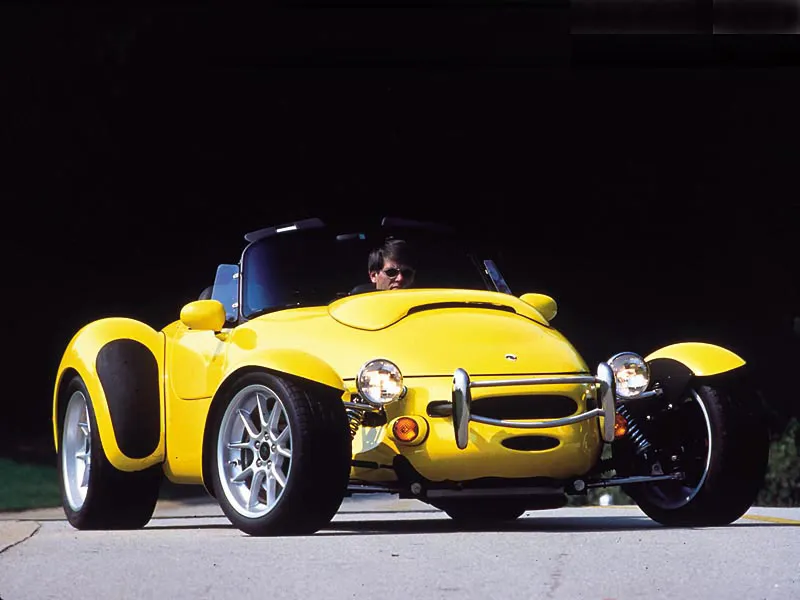
The son, Dan Panoz — Danny to many — had begun his automotive career at a small Irish firm, the Thompson Motor Company, which was trying to build a successor to the mythical Lotus 7. The company folded in 1988 with almost nothing to show for it, but it left something loose in the world: the designs and technology of a light sports chassis that ended up, in practice, orphaned.
Dan saw an opportunity where others saw a ruin. And his father, the patch billionaire, decided to bankroll his son’s adventure. In 1989 Panoz Auto Development was born, with Dan at the helm. The first car began assembly the following year: the Panoz Roadster, a retro-looking sports car with those separate cycle fenders evoking the 1950s, but with mechanicals far more serious than its classic profile suggested.
The company’s personality is already showing here. Panoz didn’t want to build one more car. It wanted to build a different car, hand-made, in small numbers, in a modest facility in Georgia, nearly each one tailored to the customer. The antithesis of Detroit.
The first American aluminum sports car
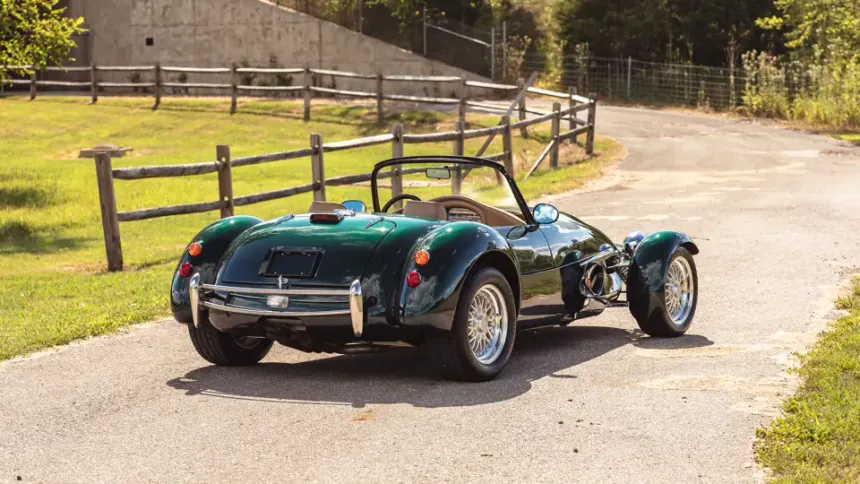
The real statement of intent came in 1994 with the Roadster’s second generation, dubbed AIV. The letters stood for Aluminum Intensive Vehicle, and it wasn’t marketing: the Panoz Roadster AIV was the first American sports car built predominantly of aluminum. Aluminum body and chassis, when that was almost exclusively the territory of hideously expensive European exotics.
Underneath beat a Ford V8, specifically the modern all-aluminum engine from the Mustang SVT Cobra, and later a 4.6-liter 32-valve unit. With it, that old-fashioned-looking roadster ran 0–60 mph in under five seconds, an astounding figure for the mid-1990s. The image deceived: it looked like a nostalgic toy and it was a lightweight missile. Around 220 Roadsters were built, most with the aluminum engine, each assembled by hand. A tiny manufacturer doing, by hand, something the industry considered expensive and complicated.
And in every one of them, a trait that would become Panoz’s obsessive signature: the engine sat up front. That pronounced hump between the fenders wasn’t styling, it was the hood covering a front-mounted engine when half the sports-car industry was pushing toward the mid-engine layout.
The front-engine obsession against the whole world
Here’s the strange and beautiful heart of this story. Don Panoz caught the endurance bug, the Le Mans bug, in the 1990s. And he decided his company wouldn’t just build road cars but would construct its own prototypes to assault the 24 Hours.
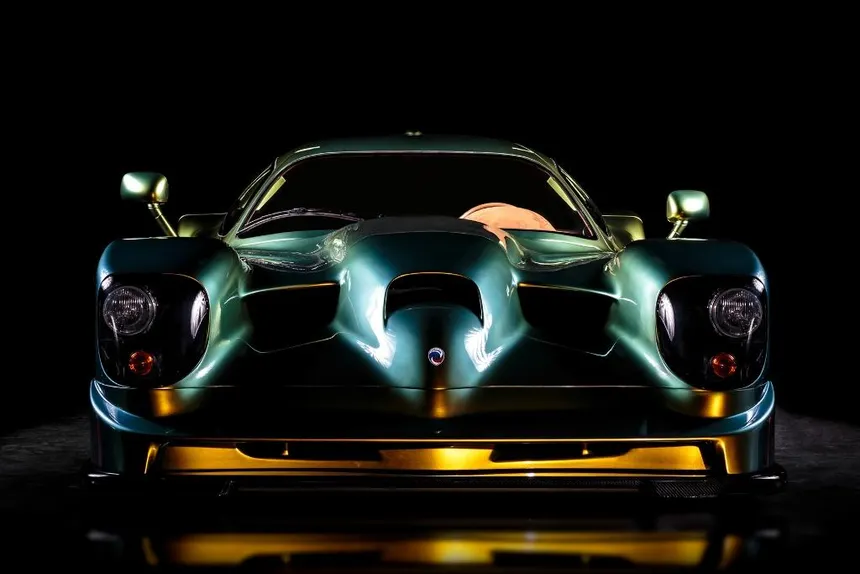
When the time came to design the race car, the entire paddock was moving in one direction: mid-engine, behind the driver, as competition physics had dictated for decades. It was the logical thing, the efficient thing, what everyone did. And Don Panoz said no. He insisted, against the judgment of nearly any engineer, that his Le Mans prototype carry its engine up front. Why? For an almost sentimental reason: to keep the link with the road cars his son built, all front-engined. He wanted his race car to be recognizably a Panoz, not a generic prototype identical to the rest.
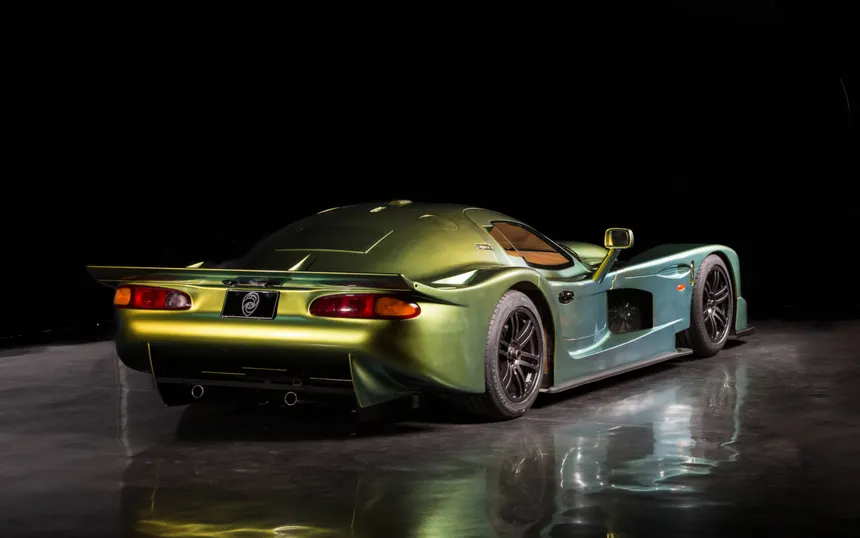
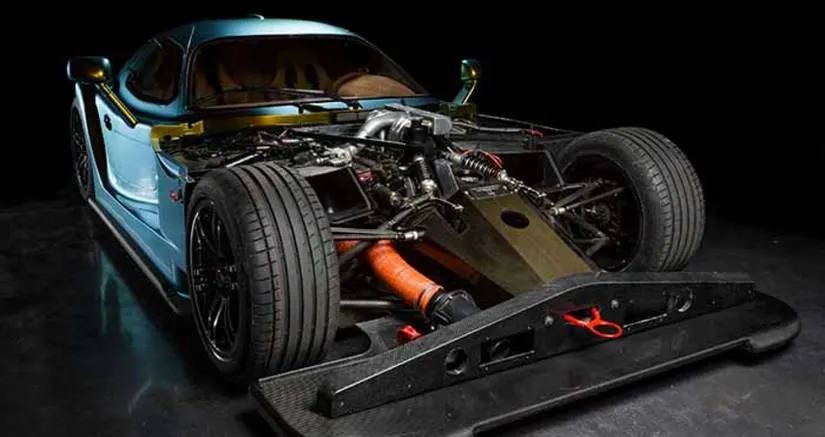
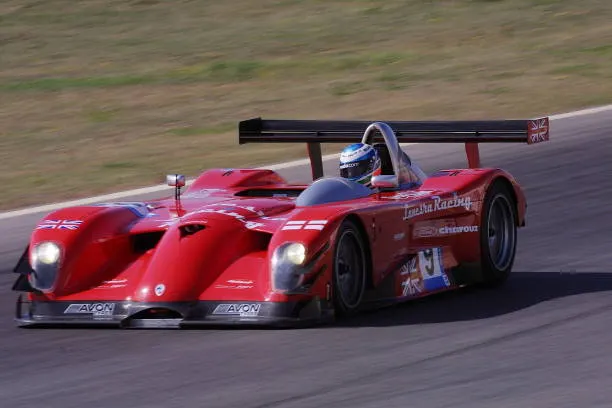
So were born the Esperante GTR-1 and then the LMP-1 Roadster-S and LMP07 prototypes: Le Mans cars with the engine up front in an era when that was near technical heresy. The engine was, of course, a Ford small-block V8, tuned by another division of the Panoz empire. Those cars won the public’s affection precisely for being different, for that deep rumble of the front V8 when everything else sounded mid-engined. They were, in practice, among the last front-engined prototypes to seriously race in endurance’s top class. Stubbornness turned into identity.
There was reward beyond romance: the Esperante, in GTLM form, won its class at the 24 Hours of Le Mans in 2006. A hand-built manufacturer from Georgia, born of a son’s whim and a patch’s money, winning at the world temple of endurance.
The man who resurrected American racing
But the greatest thing Don Panoz did wasn’t a car. It was saving an entire sport.
By the late 1990s, endurance racing in the United States was dying. And Panoz, with his fortune and his overflowing passion, decided not to let it go. He founded the American Le Mans Series, a category that gave America European-style endurance racing and that for years was among the most thrilling in world motorsport. He created Petit Le Mans, America’s great endurance race, alongside his Château Élan resort in Georgia. He bought historic circuits: Road Atlanta, Sebring, Mosport. He acquired IMSA, the governing body of much of American endurance racing. One man, with pharmacy money, carried on his shoulders the rebirth of an entire sport on a continent.
Think about the sheer breadth of that. Panoz didn’t just build a car or sponsor a team, the usual way a rich enthusiast dips into racing. He built the whole ecosystem: the cars, the series they raced in, the tracks they raced on, the governing body that sanctioned them, even the resort where fans stayed. Vertically integrated passion. If you went to an American endurance race in the 2000s, there was a decent chance Panoz owned the circuit, sanctioned the series, and had built one of the cars on the grid, all at once. Almost nobody in motorsport history has held that many pieces of the same sport in a single pair of hands.
That’s why, when the motoring world talks about the great characters American racing has produced, Don Panoz sits on the list beside names like Carroll Shelby — the flight instructor turned chicken farmer turned legend — or Jim Hall, the Texas oil billionaire behind Chaparral. Outsized, wealthy, passionate characters who understood racing not as a business but as a personal obsession worth pouring a fortune into.
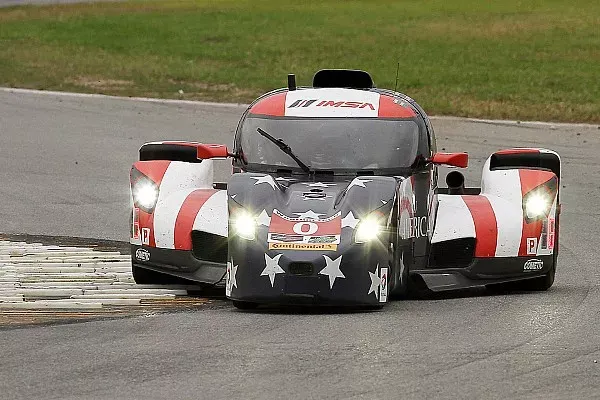
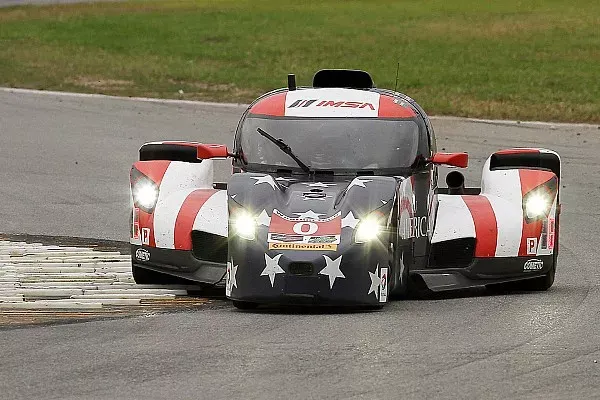
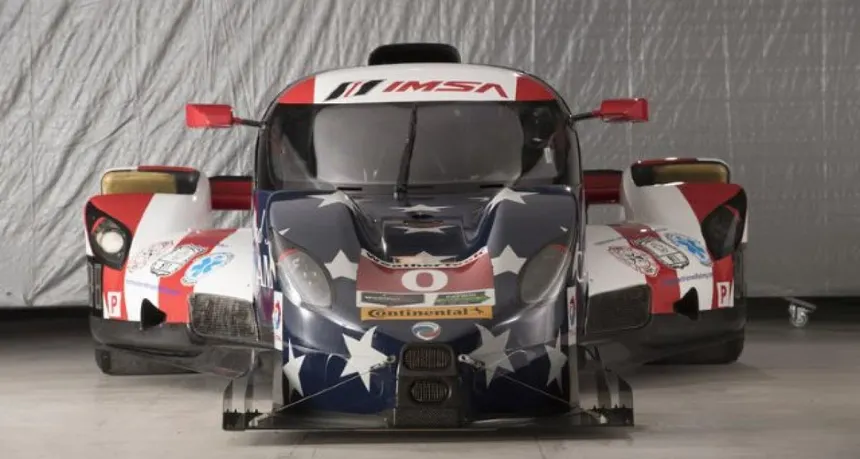
And his appetite for the different didn’t fade with age. In 2012, an older man by then, Panoz embraced one of the strangest cars modern endurance has ever seen: the DeltaWing. Designed by Ben Bowlby, it was an arrow- or dart-shaped prototype with an extremely narrow nose, its front wheels barely apart, breaking with everything a race car was supposed to look like. It weighed half what a conventional prototype did and used half the power and fuel to go just as fast, an almost heretical idea of efficiency. Plenty of people laughed at the DeltaWing when they saw it. Panoz, true to himself, saw in that oddity exactly what he loved: someone daring to ask why things had to be the way they’d always been. That was his through-line from beginning to end.
What vanishes and what just changes shape
Careful with the easy nostalgia, because Panoz’s story has its shadows. The company was never a giant and never pretended to be; it was always a small, hand-craft manufacturer of tiny runs, surviving on passion and the financial backing of the family fortune. Some models, like the Abruzzi, barely got past a few appearances before the project was shut down. Not everything Panoz tried worked out, not by a long way.
But the brand didn’t disappear, and above all its influence didn’t. The American Le Mans Series eventually merged into today’s American endurance championship, but its spirit lives on every time a prototype roars at Sebring or Road Atlanta. The Panoz name kept going, with the Roadster, the Esperante, and later models like the Avezzano — that one named for the grandfather’s hometown. And the DeltaWing, that radical arrow-shaped car of 2012 that Panoz embraced, remains one of the boldest design gambles endurance has ever seen.
Physical death and paper death aren’t the same. The cars are still built in minuscule numbers, the races Don founded run on under other names, and his mark on American motorsport is so deep that, as has been said, it’s so woven into the sport that many people don’t even know it’s there, holding everything together.
What Panoz teaches
This story moves me for what it says about passion and its contradictions. Don Panoz was a man full of them: the inventor of the anti-smoking patch who never quit smoking, the pharmaceutical billionaire who fell for cars because of his son, the Italian-blooded American who named his sports cars after Abruzzo towns, the rational businessman who insisted against all engineering logic on putting the engine up front simply because that’s how it felt like his. He wasn’t a consistent man. He was a passionate one, which is something far better and far rarer.
Panoz proves that sometimes the best things in a field aren’t done by the insider with a business plan, but by the person who arrives from outside, with a fortune made in another world and an irrational love for something, and decides to spend the money keeping that something from dying. Without Don Panoz, American endurance racing would probably have spent years in the wilderness. He put his pharmacist’s fortune to holding it up because he felt like it, because he loved it, because he could.
Ask yourself something next time you hear a prototype roar at Sebring: a good part of why that sound still exists we owe to a heavy smoker who got rich helping others quit, and who spent that money on cars with the engine where nobody wanted it. Life is made of these magnificent contradictions. Panoz was one of the best.
Check you’re still alive.