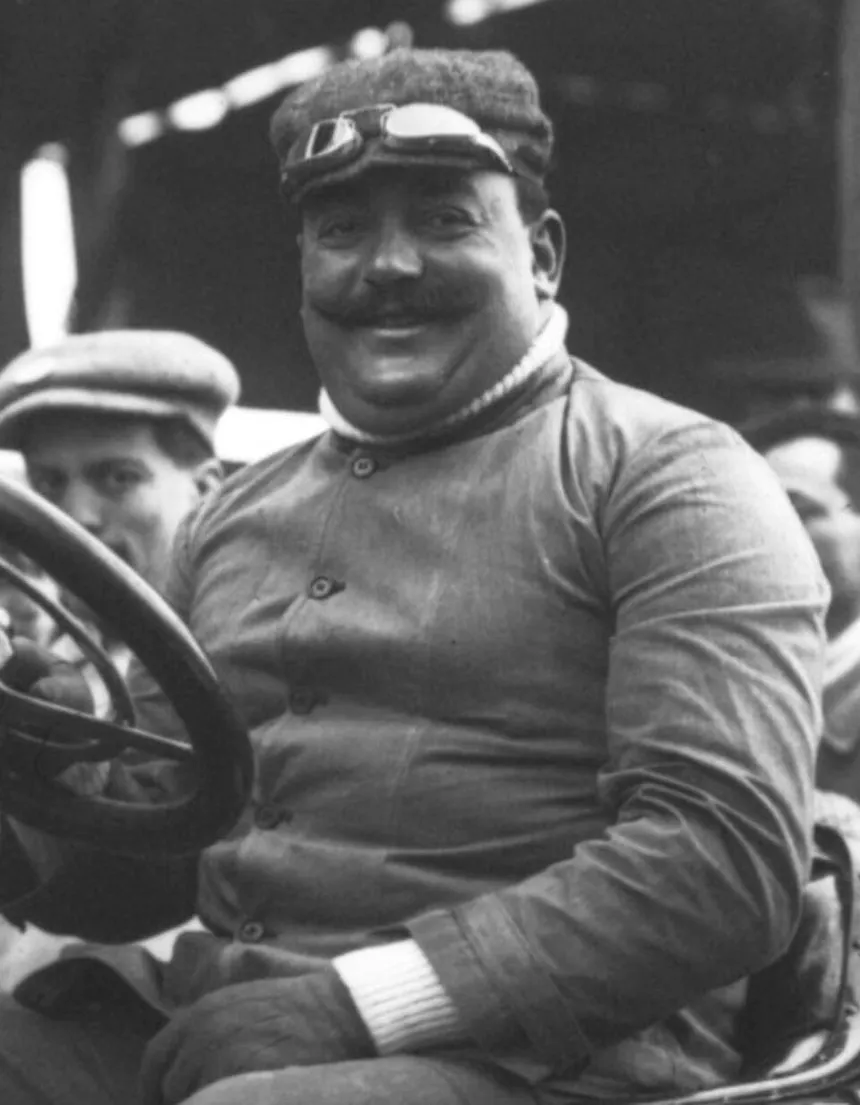
Vincenzo Lancia: the racing driver who became a manufacturer and refused to let his cars race
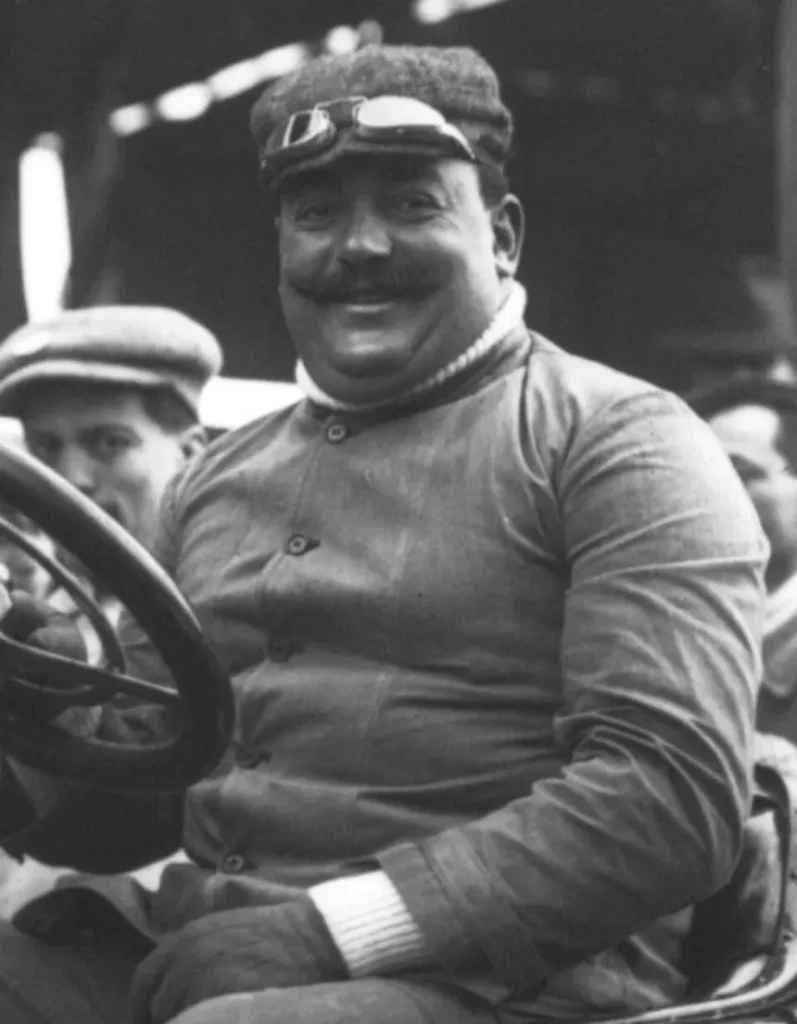
Here’s a paradox that almost never gets told and that defines this man better than anything else.
Vincenzo Lancia, before he turned thirty, was arguably the fastest racing driver in Italy. He drove for Fiat. He racked up podiums at the Targa Florio, the French Grand Prix, the Vanderbilt Cup in America. Over twenty documented race victories at a time when winning a Grand Prix was, fundamentally, a question of surviving it. When he founded his own car company in 1906, aged twenty-five, everyone in the European paddock assumed the obvious: now we’ll see Lancia cars on the grid. Logical. The man was a racing driver. The marque carried his name. The trajectory was set.
He didn’t. For the next thirty-one years, until the day he died of a heart attack in his Turin office, Vincenzo Lancia refused to enter his cars in official competition. Privateers ran Lancias, of course. Independent drivers took road cars and adapted them for hillclimbs or local rallies. But an official factory team, a Squadra Corse, a serious commitment of manufacturer money to motorsport: never. The brand that would later become the most decorated rally constructor in history — ten World Rally Championship constructors’ titles, still the absolute record — was founded by a man who didn’t want his cars to race.
That contradiction is Vincenzo Lancia. To understand it, you have to understand the man. Which means starting at the beginning. Which means Fobello.
Censìn, the kid from Fobello
Vincenzo Lancia was born on 24 August 1881 in Fobello, a small mountain village in northern Piedmont, about eighteen kilometres from the Swiss border and twenty-six kilometres west of Lago Maggiore. Tiny place. Mountain air. Stone houses. The Lancia family had been there since around 1550. Four centuries of Lancias in the same valley.
His father was Giuseppe Lancia, “cavaliere” — an Italian honorific given to prominent industrialists. Giuseppe had made his money in the canning industry. Some sources mention an earlier chapter of his career in Argentina before he returned to Italy to set up his Turin business. The family was comfortable. Not aristocratic, not nobility, but with enough resources to live well and to have ambitions for their children.
Vincenzo was the youngest of four — one sister, two older brothers. As the baby of the family, the pressure to take over the canning business fell less heavily on him. What his father wanted for him was a stable, respectable career. Lawyer, or accountant. Something with letters after the name, an office, regular hours. So Giuseppe enrolled him at the Turin Technical Institute to study bookkeeping.
Vincenzo, every serious biography confirms, found it lethal. He did the minimum required. He had a genuine gift with numbers — that he developed — but the idea of spending his life adding up columns in ledgers struck him as a kind of slow death. What interested him was a completely different world: the world of machines. Italian industry was just beginning to take off. The first mechanical workshops were appearing in Turin. The first automobiles were crossing the streets, making noise and producing smoke. And Censìn — that’s how he was known at home, that’s how the village called him — wanted to be inside that world.
The opportunity came through his father, almost by accident. Giuseppe Lancia owned property in Turin, one piece of which was an industrial workshop he decided to rent to a man called Giovanni Ceirano. The Ceirano brothers were pioneers: they’d started making bicycles and by the late nineteenth century were already experimenting with the first motor vehicles. They needed bigger premises to produce them. Vincenzo’s father provided one.
Vincenzo, sensing the opening, convinced his father to let him work at the Ceirano workshop. The official excuse was to expand his accounting experience — that was, after all, what he’d been training for. The reality was something else entirely. The moment Vincenzo walked into that workshop, he stopped looking at ledgers and started looking at engines. The Ceirano brothers and their chief engineer, a man called Faccioli, realised almost immediately that they had a teenager with a brutally good feel for mechanics. He had no formal engineering education. But he understood machines as if he had built them.
That quality — reading a machine from the inside without proper academic training — was Vincenzo Lancia’s signature for the rest of his life.
Fiat: the racing driver who broke cars
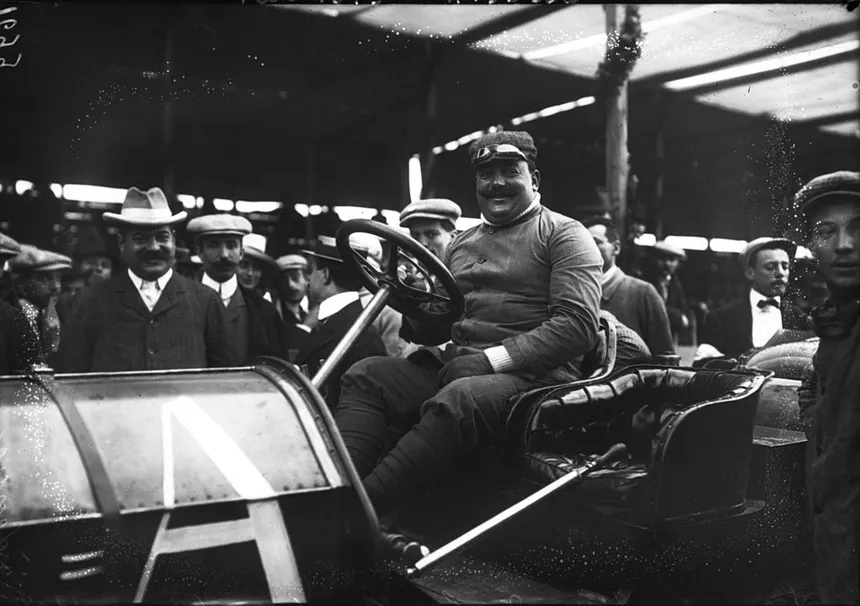
In 1899, Giovanni Agnelli bought the Ceirano operation and reorganised it under a new name: Fabbrica Italiana Automobili Torino. Fiat. Vincenzo, by then eighteen, stayed inside the new company. His real breakthrough came in 1900-1901, when Fiat made him a works driver in their growing racing programme.
And that’s where Censìn started making noise. A lot of noise.
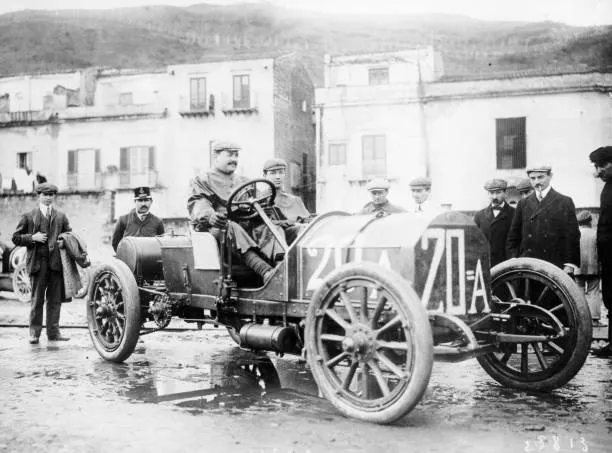
The races of the first decade of the twentieth century don’t resemble anything in modern motorsport. They were run on closed public roads, with stages of one or two hundred kilometres, with dust, with stones flying, with spectators standing right at the edge of the track. Cars weighed a tonne and a half, ran engines of between six and thirteen litres — yes, litres, not cylinders — and reached up to 160 kilometres per hour on the longest straights. Driving one was an act of faith. Surviving one was a miracle.
Vincenzo Lancia stood out in that world for one specific reason: he was supernaturally fast and abusively hard on the machinery. He went to the absolute limit. He hunted tenths in every corner. He pushed cars past whatever the engineers had managed to test on the bench. And as a direct consequence, he broke cars at a rate that drove Fiat’s technical staff to the brink of nervous collapse.
The records are there. He finished second outright at the 1907 Targa Florio in a Fiat 28/40 HP — an impossibly oversized car for Sicilian mountain roads. He drove the French Grands Prix of 1906, 1907 and 1908. He crossed the Atlantic to compete in the Vanderbilt Cup in America. His name appeared in newspapers in Italy, France, Britain and the United States.
He accumulated more than twenty documented victories. And at the same time, he accumulated so many retirements from mechanical failures that his engineers learned to carry spare parts that hadn’t been planned for. Vincenzo Lancia wasn’t a driver who won full championships. He was a driver who won specific races and broke the car at the next one. Pure speed without restraint.
But — and here’s the key part — Vincenzo learned something during that phase that would shape the rest of his career. He learned, from the driving seat, exactly which component failed first, why it failed, and how it should have been manufactured to not fail. Every retirement was a lesson. Every blown engine was a technical report. When at twenty-five he decided to build his own car factory, he already had inside him information no draughtsman could possess: the information of a man who has broken cars with his own hands.
1906: the decision
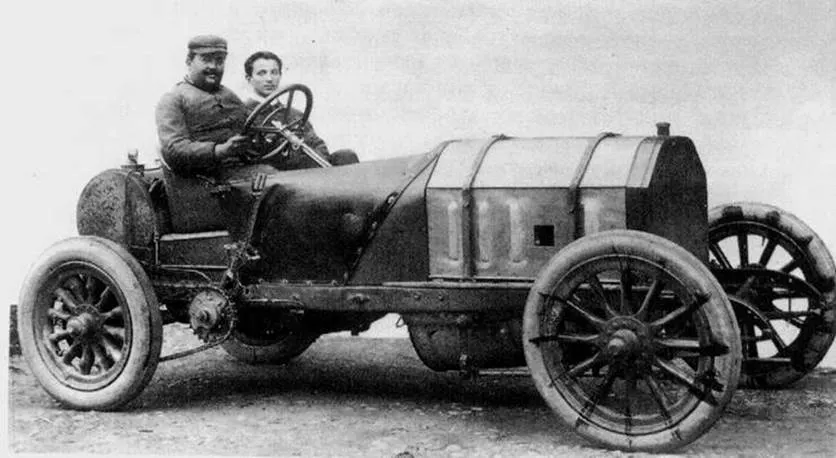
On 27 November 1906, Vincenzo Lancia and his friend Claudio Fogolin — another Fiat works driver — founded Lancia & C. Fabbrica Automobili. Small workshop on Via Ormea, at the corner of Via Donizetti, in the south-eastern part of Turin. The first car was called Tipo 51, also known as the 12 HP, also known as Alfa — not after the Milan brand, but after the first letter of the Greek alphabet. Vincenzo would name his cars after Greek letters for decades. Alfa, Beta, Gamma, Delta, Epsilon, Zeta, Eta, Theta. A habit. A good one.
The Tipo 51 already set the tone. Refined mechanicals nobody else was fitting. Attention to detail no competitor matched. Vincenzo would delay launching a car rather than release it below his standards. For a business that needed cash flow, that’s a decision that makes any accountant uncomfortable. But Vincenzo Lancia had one thing crystal clear: he wasn’t going to build cars he wouldn’t drive himself.
And that conviction connects directly to the paradox we opened with.
The paradox: the racing driver who refused to race his own marque
Here’s the part almost nobody tells you. When Vincenzo Lancia founded his company, everyone assumed he’d build a racing team. He was a driver. He’d been part of the European paddock for five years. He had the contacts, knew how a team was run, had cars carrying his name. Industrial logic said: put your cars on the grid, win, sell.
Vincenzo said no. And for the thirty-one years he ran the company as founder and CEO, he maintained that refusal with a consistency that puzzled everyone around him. Lancia was not going to have an official competition team. Period.
Why? There are several theories and none is fully confirmed. What the more serious biographers — including official Lancia publications and posthumous tributes in La Stampa — point to is a combination of reasons.
One. Vincenzo had seen too many drivers killed. The first decade of the twentieth century was brutal on Grand Prix drivers. Colleagues of his died in accidents. Others were permanently maimed. The idea of putting other men into cars carrying his name, and having to bury one of them, was intolerable to him. He was a racing driver who understood, viscerally, that racing drivers can die.
Two. Vincenzo had a very specific idea of what a Lancia car was. And a racing car isn’t that. A racing car is a compromise between reliability and outright performance, optimised for a specific distance, with components designed to last exactly long enough. A Lancia car had to last twenty years, take a family from Turin to Sardinia in August without falling apart, and still be running when the original buyer’s grandson inherited the keys. Vincenzo saw motorsport as a completely different business from his own. And the respect he had for that difference stopped him from getting involved.
Three. The most personal one. Vincenzo had probably had enough motorsport as a driver. What it had given him — fame, money, contacts, mechanical knowledge — he already had. What it now asked of him — more years at circuits, taking risks as a team owner, managing other drivers, dealing with race officials — wasn’t worth it to him.
Whatever the reason, the fact is clear: during the Vincenzo era, Lancia had no factory motorsport programme. The brand grew, innovated, sold, gained prestige. But it didn’t race. And for enthusiasts who assumed a “sporting” road car had to be backed by racing victories, that bordered on contradiction.
The era of industrial innovation
If it wasn’t racing, what was driving Lancia’s growth? A string of technical innovations that shook the European industry.
In 1913 Vincenzo introduced the Lancia Theta. The first European production car with a complete electrical system as standard. Electric starter, electric lighting, illuminated instrumentation. While the rest of Europe was still cranking engines by hand and bolting oil or kerosene lamps to the front.
In 1922 came the Lancia Lambda. The first production car in the world with a monocoque body. Self-supporting structure, no separate ladder chassis sitting underneath the bodywork. The entire concept underpinning a hundred percent of modern road cars starts here. Stiffer, lighter, safer. Paired with independent front suspension via a sliding-pillar system — another Lancia invention that would stay in production for forty years.
The Lambda is Vincenzo’s masterwork. It’s the proof his philosophy worked. While the rest of the European industry was building cars on ladder chassis, copying what had been done for twenty years, Lancia was delivering something completely new and becoming the continent’s technical reference brand.
There’s one industrial detail that almost no biography mentions. In 1930, together with his friend Giovanni Battista “Pinin” Farina, Vincenzo co-founded Carrozzeria Pinin Farina in Cambiano. Yes. That Pininfarina. The studio that would later dress everything from the Ferrari Dino to the F40. Vincenzo Lancia didn’t just build one industrial pillar. He built parallel ones. He had industrial instinct alongside mechanical talent.
Adele Miglietti, the secretary who became his wife
There’s one detail in Vincenzo’s personal life worth flagging. His wife, Adele Miglietti, had been his secretary at the factory before they married. Not a small thing. Adele knew the business from the inside. She knew the engineers, the suppliers, the important customers. When they got married, what Vincenzo gained wasn’t only a wife but a partner who understood the company at his own level.
They had three children: Anna Maria, Gianni, and Eleonora. Gianni, the middle child, would inherit the company. But that was later.
Adele matters because when Vincenzo died suddenly in 1937, she took over management alongside Gianni, who was only twelve at the time. Without Adele, Lancia would have disappeared or been sold immediately. With her at the helm through that critical decade of war and postwar, the company survived and gave Gianni time to grow into a man capable of taking over.
February 1937: the early death
Vincenzo Lancia died on 15 February 1937, in Turin, of a heart attack. He was 55 years old. He hadn’t reached his 56th birthday.
The biographers agree on one contributing factor: Vincenzo had been significantly overweight throughout his adult life. He was a physically large man. In period photos you see him broad, full-faced, always wearing a dark suit and either a bow tie or a strict cravat. That physical heaviness, combined with the brutal pace of work he imposed on himself — he spent hours on the workshop floor with engineers, did vehicle testing personally, supervised details any normal CEO would have delegated — eventually caught up with him.
His death came just as the Lancia Aprilia, his last great project, was about to enter full production. Vincenzo lived to see it finished but not to see it on the road. The Aprilia launched a few months after his death and became one of the brand’s biggest commercial successes throughout the prewar period.
He was buried at Fobello. In the family tomb at the small village cemetery where he’d been born fifty-five years earlier. The land his family had occupied since 1550 ended up being his final ground too.
After Vincenzo: the turn
Once Vincenzo was gone, everything changed. And this is where it gets interesting.
Gianni Lancia, his son, was different from his father in one essential way: Gianni loved motorsport. He was obsessed with it. The first thing he did when he consolidated his position at the head of the company, in the late 1940s and especially through the 1950s, was build the thing his father had refused to build. An official racing team.
To do that, he hired Vittorio Jano, by then the most important engineer in Italy, who’d been pushed out of Alfa Romeo after the failure of the 12C in 1937 — the same year, historical coincidence, that Vincenzo Lancia died. With Jano on board, Gianni Lancia took the marque into rally, into endurance, into Grand Prix racing. The Mille Miglia. The Targa Florio. The Carrera Panamericana. And finally, in 1954, the marque debuted in Formula 1 with the Lancia D50 — one of the most technically radical single-seaters ever built.
In other words: Vincenzo Lancia didn’t want his cars to race. His son Gianni put them in every category that existed. And the marque went on to win, eventually, ten World Rally Championship constructors’ titles, multiple Carrera Panamericanas, multiple Targa Florios, and an F1 World Championship with a Lancia rebadged as a Ferrari (the D50 Gianni sold to Enzo Ferrari for one pound sterling in 1955).
The Vincenzo paradox closes there. The brand he founded specifically not to race ended up being the most racing-decorated brand in rally history. What he refused to do, others did after his death. And they did it so well that the racing legacy of Lancia is today one of the brand’s foundational pillars. A pillar its own founder had refused to raise.
Why he matters
Vincenzo Lancia matters for a reason that goes beyond cars. He matters because he proved you can build a big brand without following the obvious playbook. That you don’t need to race to sell. That a car manufacturer can grow on pure engineering, on obsessive quality, on technical solutions the rest of the industry doesn’t dare try yet.
That philosophy — “engineering first, everything else later” — defined Lancia throughout its early decades. And it left a legacy. When years later the marque finally started racing, it did so with the same attitude: cars designed from the first bolt to be technically superior. The Stratos isn’t a Fiat adapted for rally. It’s a car conceived from scratch for rally. The Delta S4 isn’t a sporting saloon. It’s a supercharged-and-turbocharged missile on four driven wheels. The ECV isn’t an S4 evolution. It’s a carbon-fibre prototype with a Triflux engine.
That mindset of “don’t copy, invent” is what Vincenzo left embedded in the company’s DNA. It was inherited by Jano. By Lombardi. By Gandini when he drew the Stratos. And it continues, in weaker versions, in the modern Lancia of Stellantis that’s just returned to the WRC with a Ypsilon Rally2 HF Integrale.
That’s what matters about Vincenzo. Not the cars he personally directed. But the mindset he installed in the system.
Today, if you go to Fobello, a village of about 250 inhabitants in the middle of a Piedmontese mountain, you can visit the cemetery where he’s buried. It’s small. It’s a village cemetery. There are cypresses and old plaques and the kind of silence you only find in mountain graveyards. There, inside the family tomb, rests the founder of one of the most important Italian car brands in history. A man who in his time chose not to make headlines by winning races. Who preferred his cars to be talked about for their engineering, not for their podiums.
He won that bet. And then, after his death, he also won the other one. The one he never wanted to play.
That’s the Vincenzo Lancia paradox. The racing driver who stopped racing to build cars. The manufacturer who didn’t want to compete. And the founder whose brand ended up winning more than any other in the world.
Check you’re still alive.