NSU: The Company That Reinvented Itself Four Times, Then Died the Moment It Finally Nailed It
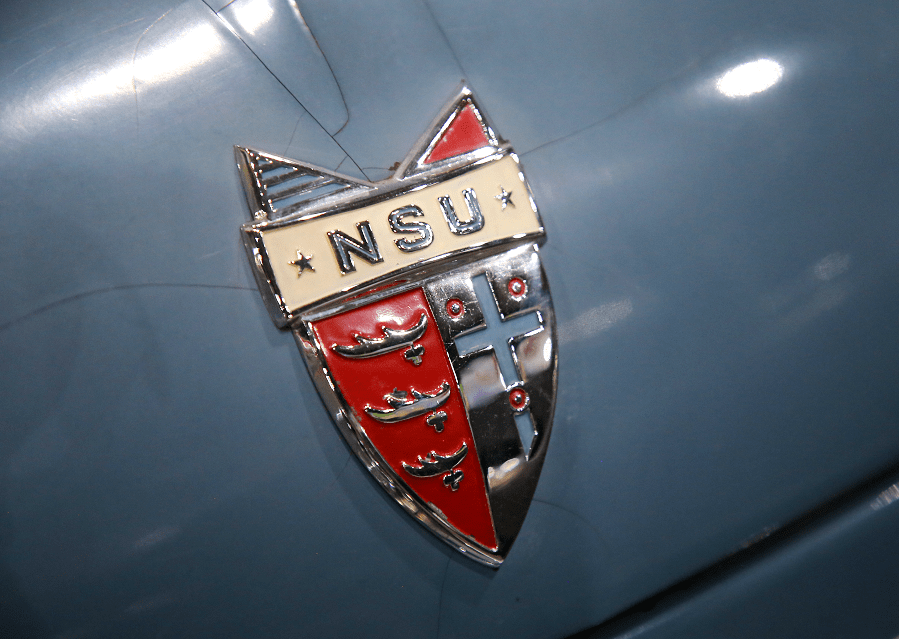
Say “NSU” to most American enthusiasts and you’ll get a blank look, or maybe “isn’t that the rotary thing?” The Wankel. The Ro80. As if the company was born in 1967 to build one weird engine and then promptly die.
It’s a massive disservice. Because by the time NSU rolled the Ro80 onto the road, it had already spent nearly a century building things that moved. Knitting machines. Bicycles. Motorcycles that were, for a stretch, the fastest on Earth — and set that record on American salt, at Bonneville, right under Detroit’s nose. Every time a market died underneath NSU, the company didn’t sink with it. It reinvented itself and jumped to the next one. Four times over. Until the fifth jump — the most ambitious of the lot — landed on nothing.
This is the whole story of Neckarsulm. The one almost nobody tells, because almost nobody gets past the Wankel.
Two Mechanics, an Island in the Danube, and Knitting Machines
It starts in 1873, in Riedlingen, a small town on the Danube. Two mechanics, Christian Schmidt and Heinrich Stoll, set up a workshop with a name that sounds like a joke today: “Mechanical shop for the manufacture of knitting machines.” An old English lathe, a waterwheel for power, and a business turning out machines so the local housewives could knit faster.
Note the detail, because it’s the DNA of everything that followed: NSU was never a car company that started out making cars. It was a shop full of engineers who built whatever the job called for and built it well. That mindset — solve the mechanical problem, whatever it is, wherever the order comes from — stayed baked into the place forever.
In 1880 they moved to Neckarsulm, a town where the river Sulm runs into the Neckar. That’s where the name comes from. NSU doesn’t stand for anything grand. It’s the initials of Neckarsulm. Two German rivers stuck together. That’s it.
When the Bicycle Killed the Knitting Machine
Here comes the first reinvention, and it’s a business lesson most modern companies couldn’t stomach.
In the late 1800s, Europe went crazy for the bicycle. It was the iPhone of its day — everyone wanted one, it changed how ordinary people got around, it was freedom on two wheels. NSU, sitting comfortably selling knitting machines, saw the train coming and jumped on. In 1886 it started building bicycles, the first a high-wheeler branded the “Germania.”
And here’s the good part: they didn’t hedge. They saw the bicycle was the future and went all in. By 1892, bicycle production had completely replaced the knitting machines. The founding business — gone. The whole company pivoted to the new market in about six years. It sounds easy when you say it fast. Try convincing a modern board to shut down the division that fed the company for decades because something more promising came along. Good luck.
From Bicycle to Engine: Only One Step
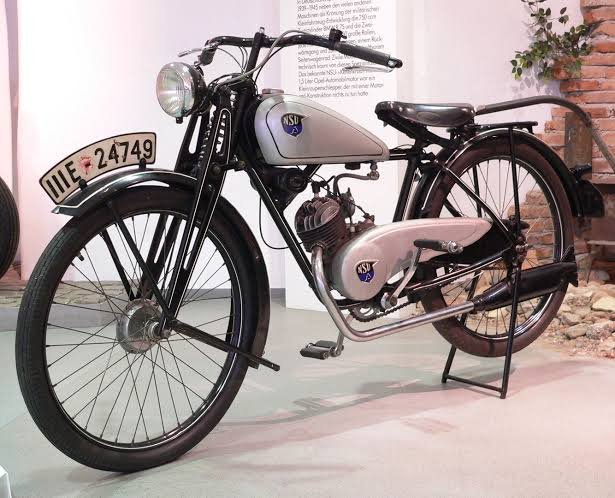
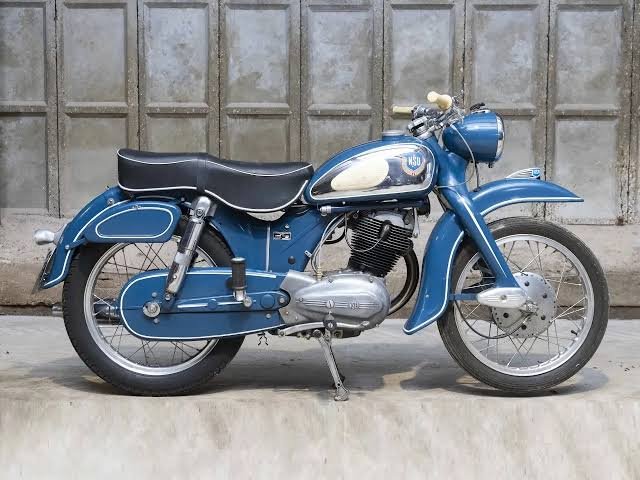
If you’ve got a factory full of people who know how to make frames, wheels, bearings and drivetrains, what’s the next thing you ask them to build? Something with an engine in it. In 1901 NSU produced its first motorcycle, first with a bought-in Swiss engine and soon with its own. In 1905 came the first NSU car.
There’s a fact American readers usually miss and NSU loved to remind everyone of: back in 1888 they’d already built the chassis for one of Daimler’s earliest automobiles. They were in on the invention of the car from the very beginning — not latecomers to the automobile, but present at its birth, supplying the running gear while most of the world had never seen a horseless carriage.
Then came the second reinvention, and this one hurt. In the depths of the 1930s, NSU made a brutal call: it sold off its car manufacturing. The Heilbronn plant went to Fiat in 1932. NSU kept only the motorcycles. It gave up cars to survive. Sometimes reinventing yourself means keeping what pays and dropping the ballast — even when the ballast is half your name.
And on motorcycles, NSU didn’t just survive. It conquered the world.
The Biggest Motorcycle Maker on the Planet
This is where the story gets serious, because everybody skips this chapter and it’s the biggest one in the company’s history.
By the mid-1950s, NSU wasn’t the biggest motorcycle manufacturer in Germany. It was the biggest in the world, full stop. Turning out something like 300,000 units a year. The NSU Max, with its pressed-steel monocoque frame, was years ahead of its time and sold in huge numbers. On two wheels, Neckarsulm was what a giant Japanese brand is today.
And it wasn’t just volume. NSU had been racing hard since the 1930s, with supercharged, double-overhead-cam machines from engineers like Albert Roder making up to 90 horsepower on a petrol-benzol brew. They ran Grands Prix, won championships, and all that race engineering trickled down to the street bikes. Buy an NSU in the fifties and you were buying a slice of that racing culture. That’s why the badge carried the prestige it did — it wasn’t selling transport, it was selling engineering proven flat-out on Sundays.
And then there was outright speed. Here’s the jewel almost nobody connects to the Ro80 — and it happened on American soil.
The Day a German Broke 200 mph — at Bonneville
August 1956, Bonneville Salt Flats, Utah. The place where impossible records get chased. The NSU factory team had leased the whole course for a week of record hunting. Among the machines they hauled out was a silver, cigar-shaped bullet: the NSU Delphin III.
Wilhelm Herz rode it. And that day, Herz did something no human had ever done: break 200 mph on a motorcycle. He clocked 211.4 mph. On two wheels. In 1956. The first man in history across that barrier did it on an NSU, on American salt — and it stung the domestic industry enough that a Triumph-powered streamliner came back a month later, with Johnny Allen aboard, to take the number back for the home team. That rivalry, German engineering versus the American-run British bikes, played out right there on the Utah flats.
But catch the detail that changes everything, the one that turns this anecdote into the key to the whole story. The Delphin III’s bodywork was developed in the University of Stuttgart wind tunnel. And the drag coefficient they achieved? 0.19. In 1956. On a motorcycle.
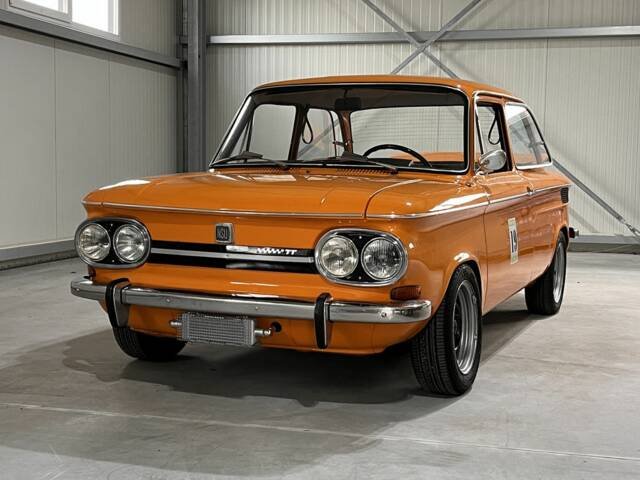
Hold that number. Because eleven years later, that same obsession with cutting the air, that same wind-tunnel culture baked into the company’s bones, is what produced the Ro80 with its 0.355 wedge — the shape the Audi 100 would copy in 1982. NSU didn’t discover aerodynamics with the Ro80. It had been obsessed with it for decades. It had introduced itself to the world breaking records on a salt desert.
And there’s a detail even more telling. Herz had rebuilt part of his early racing bike himself, by hand, salvaging a rusted 350cc engine out of the rubble of the Neckarsulm factory after Allied bombing flattened it in the war. From literal ruins to 200 mph in barely a decade. That’s the kind of people who worked at NSU — not marketers chasing a record for the brochure, but engineers who dug their own machinery out of the wreckage and then rode it faster than anyone alive.
The Fourth Reinvention: Back to Cars
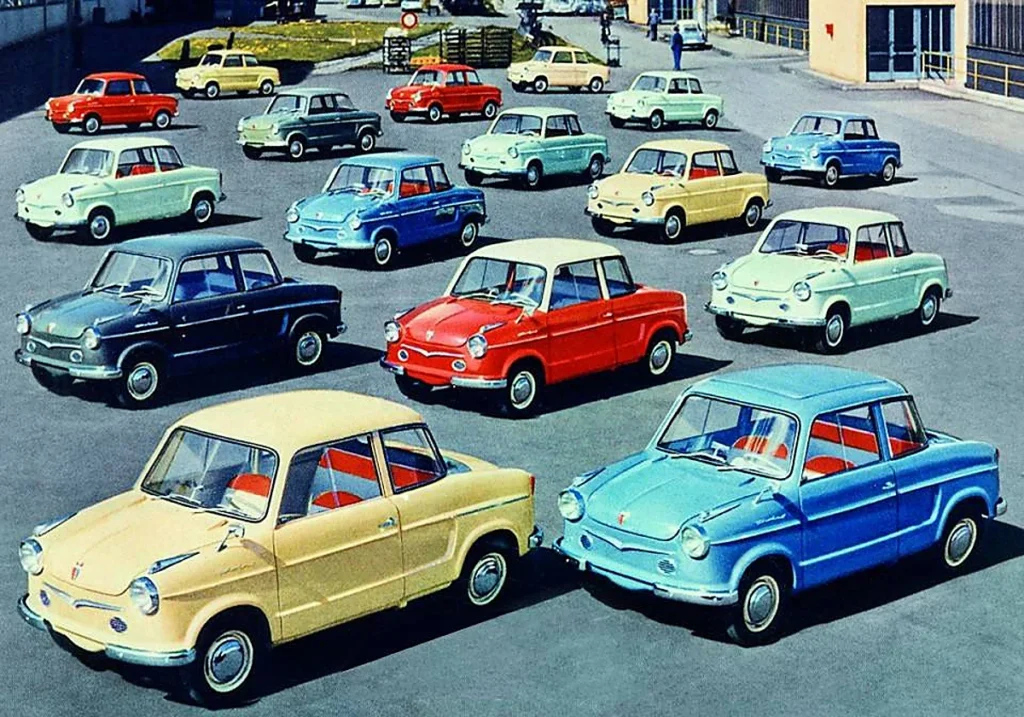
In 1957–58, with the motorcycle market starting to shrink across Europe — the people who used to buy a bike now aspired to a small car — NSU pulled its fourth pivot. It went back to automobiles, twenty-five years after selling that business to Fiat.
It started humble: the Prinz. A small, rear-engined, air-cooled car to haul the family around without going broke. Out of that came the Prinz 4, and above all the TT and TTS — tiny sports saloons that made a name in circuit racing and rallying, punching well above their weight against far pricier machinery. The little air-cooled twins and fours were tuner favorites, cheap to run and eager to be thrashed, and privateers across Europe turned them into giant-killers on club circuits. NSU could build cars again, and it built them fun.
But NSU hadn’t come back to make econoboxes. It came back with one obsession lodged in its skull: Felix Wankel’s rotary engine, which it had been funding since just after the war. And that obsession brought the fifth reinvention. The one that killed it.
The Reinvention That Went Wrong
In 1964 NSU launched the Spider: the world’s first production car with a Wankel engine. In 1967, the Ro80: the most advanced saloon in Europe, Car of the Year, a technical masterpiece. And you know the ending if you’ve followed this cluster. The rotor’s apex seals ate engines before their time, NSU stood behind every one of them under warranty until the coffers ran dry, and in 1969 the company lost its independence.
Volkswagen bought it. Merged it with Auto Union. Out of that mix came modern Audi. And the NSU name — those two initials from two rivers that had survived knitting machines, bicycles, two world wars and a global motorcycle reign — faded out until it was gone entirely by the late seventies.
Nearly a hundred years of reinventing itself. Knitting machine, bicycle, motorcycle, car. Every time the floor gave way, they jumped. And on the last jump, right when they’d signed off the most advanced car of its era, there was nowhere left to land.
What NSU Actually Was
It’s easy to remember NSU as “the Wankel guys who blew it.” But that label is embarrassingly lazy.
NSU was one of the most shape-shifting companies European industry ever produced. A survival machine that spent a century reading where the world was headed and turning the wheel before anyone else. When the knitting machine stopped making sense, they buried it without sentiment. When motorcycles started sliding, they went back to cars. They knew how to kill their own businesses at the right moment — the hardest decision there is in a company, and the one almost nobody dares to make.
The irony, the gut-punch, is that the only reinvention that failed was the most ambitious of all. Cowardice didn’t kill them. Standing still didn’t kill them. Diving headfirst into the most radical technology of the age before it was ready — that killed them. NSU died from the very thing that had made it great: the nerve to jump.
Next time you hear “NSU” and someone says “Wankel” like that explains the whole thing, tell them about 200 mph on the salt. About 0.19 in 1956. About the knitting-machine workshop on an island in the Danube. Then ask how many companies they can name that reinvented themselves four times running before dying with their boots on.
Check you’re still alive.