
Alfa Romeo Giulia GTAm: The Best Giulia America Never Got
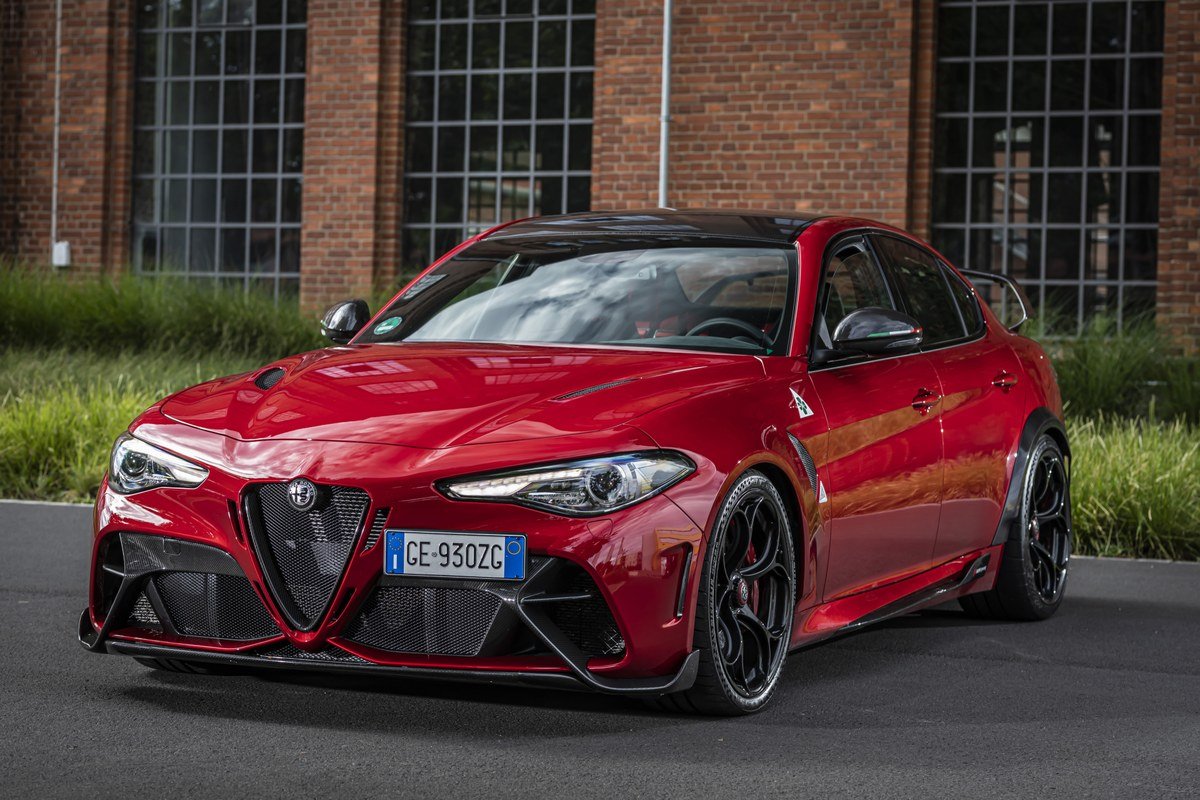
America can’t buy the best Giulia ever made, and the joke is that the letter at the end of its name may well be about America. The Alfa Romeo Giulia GTA and the track-focused GTAm, launched for Alfa’s 110th birthday, were built in a run of just 500 cars, and Alfa had no plans to sell either one in the United States. Australians could buy one. Europeans, the Middle East and Africa could buy one. If you live in Ohio, you get to read about it. So let’s read about it properly, starting with why three letters, GTA, matter more to Alfa Romeo than any engine it has ever built.
Chiti, Chizzola and a lot of aluminum
In 1963 two ex-Ferrari engineers, Carlo Chiti and Ludovico Chizzola, set up a small independent race shop in Udine, in northeastern Italy, and called it Autodelta. Before long the same shop would build the Tipo 33 sports racers. The shop moved to Milan, and in 1965 Alfa Romeo bought it and made it the official factory racing team, with Chiti in charge.
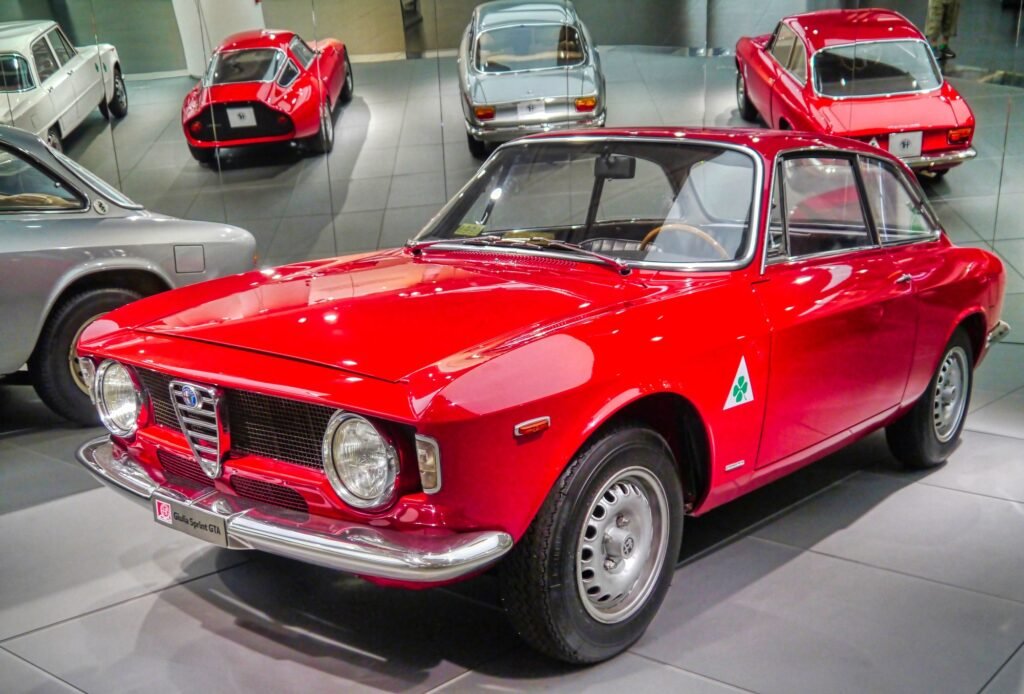
The job was to turn the Giulia Sprint GT, the pretty coupe Giorgetto Giugiaro had drawn at Bertone, into a touring car winner. Chiti’s recipe had two ingredients: less weight and more power. The steel floor and structure of the Sprint GT stayed, but almost every exterior panel was replaced with an identical one stamped from Peraluman 25, an aluminum alloy with magnesium, manganese, copper and zinc that weighed far less than steel. Parts like the oil pan, valve cover and bellhousing went to light alloys too. The result: 745 kg, about 1,640 lb, against 950 kg for the regular Sprint GT.
For power, the 1,570 cc four got a twin-plug cylinder head, two spark plugs per cylinder instead of one. With two sparks, the flame starts in two places at once, the mixture burns faster and more completely, and the engine can be pushed harder without detonation. Street versions made 115 hp. Autodelta race cars made 170.
The Giulia Sprint GTA, Gran Turismo Alleggerita, “lightened grand tourer,” debuted at the Amsterdam show on February 18, 1965, and was homologated for Group 2 touring car racing by July. To get there, Alfa built road cars: between 1966 and 1969 it made 493 GTA 1600s, 486 of them documented today. They cost twice as much as a regular Sprint GT. Only about 25 to 28 were factory Autodelta race cars.
On track it was a steamroller. Andrea de Adamich won his division of the 1966 European Touring Car Championship and Alfa took the manufacturers’ title, the first of three straight European titles for the brand. On this side of the Atlantic, the GTA made a splash in the very first season of SCCA Trans-Am, in 1966. There was even a supercharged GTA SA, of which just ten were built.
The m that might mean America
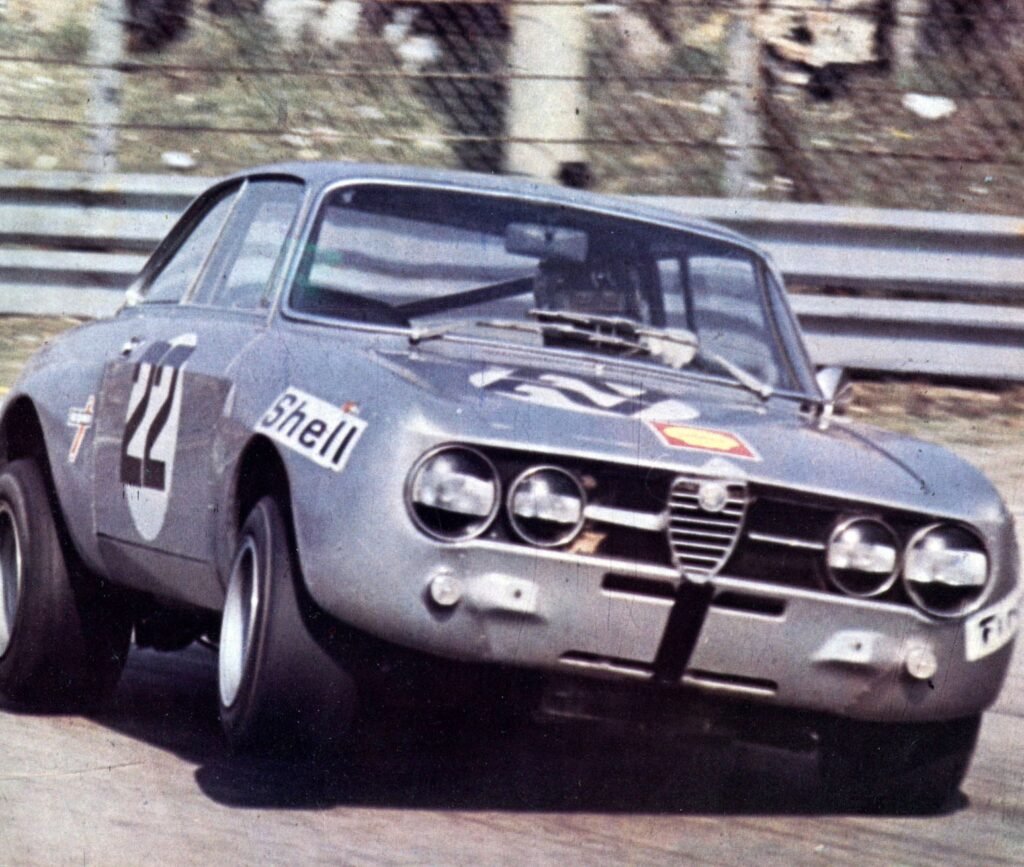
In 1970 the story took another step with the 1750 GTAm. Its base was the US-market 1750 GTV, which used SPICA mechanical fuel injection to meet American emissions rules. Autodelta and a few private shops built around 40 race cars with steel bodies and fiberglass fender flares, and in 1971 the engine grew to two liters for the 2000 GTAm.
What the “m” stands for has been argued about for fifty years. Some say “maggiorata,” enlarged, for the bigger engine. Others say “modificata,” modified. The third camp says “America,” because the car grew out of that US-spec, fuel-injected GTV, and that’s a big part of why the theory has stuck. But when Alfa launched the modern GTAm, its official explanation was “modificata.” Nobody has managed to close the debate.
The GTAm kept winning. Dutch driver Toine Hezemans was European Touring Car champion in 1970, with wins at Monza, Budapest, Brno and Jarama, near Madrid. According to Motor Sport, the 1970 crown was settled at the Jarama 4 Hours on September 27, the season finale, where GTAms filled the top four places. In 1971 the drivers’ title went to Dieter Glemser’s Ford Capri instead.
Later came other GTAs: the 155 GTA touring car of 1992, with Lancia Delta Integrale hardware underneath, which left the BMW M3s far behind in Italian Superturismo, and the 156 and 147 GTAs of the early 2000s with the Busso V6. None chased the “lightened” part as seriously as the one that arrived in 2020.
A birthday party with no party
Alfa turned 110 on June 24, 2020, and on March 2 it announced how it would celebrate: with a Giulia GTA. The debut was meant for the Geneva show, which the pandemic cancelled, so the reveal went digital. There would be two versions, the four-seat GTA and the two-seat GTAm, with 500 units between them, all numbered and certified. Alfa said the number was a nod to the 500 cars Group 2 homologation called for back in the sixties; the 1600 GTA ended up at 493. Alfa also considered a Stelvio GTA and dropped the idea, saying it didn’t fit customer expectations. The name would stay on the Giulia only.
The international press finally drove it on May 12, 2021, at Balocco, the Piedmont proving ground Alfa has used since the sixties. In Europe the price was around double that of a Giulia Quadrifoglio, just as the 1965 GTA had doubled the price of a Sprint GT. In Spain the GTA started at €194,000 and the GTAm at €199,500. By the end of September 2021, all 500 were sold.
For American readers, here’s the context. The regular Giulia Quadrifoglio you could buy here made 505 hp and cost around $72,000 when it launched. The GTA’s European price was more than double that.
Where the 220 pounds went
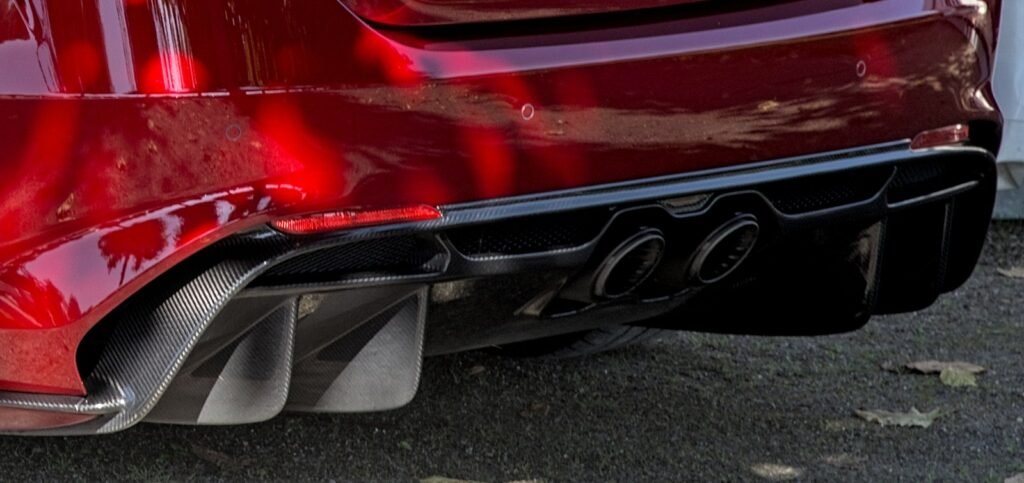
The base is the Giulia Quadrifoglio, the sedan Alfa built to take on the BMW M3. Alfa claimed the GTA was about 100 kg, around 220 lb, lighter. The Quadrifoglio already had a carbon fiber hood, roof and driveshaft, plus an aluminum engine, doors and suspension. The GTA adds carbon fiber for the front bumper, front fenders, rear wheel arch inserts and rear diffuser. The GTAm adds carbon seat shells and Lexan polycarbonate side and rear windows, a clear plastic far lighter than glass.
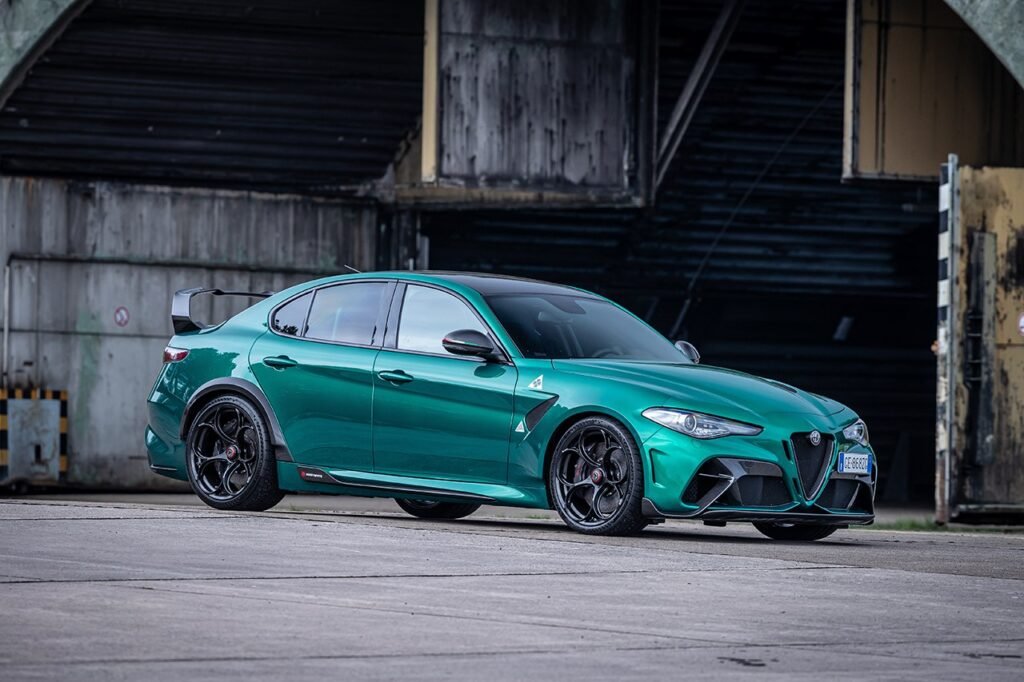
And then there’s the weight mess Alfa created for itself. At launch, it quoted about 1,520 kg for the GTAm, roughly 3,350 lb, and a power-to-weight ratio of 2.82 kg per horsepower, which it billed as best in class. But Alfa’s own official technical data sheet and owner’s manual give different numbers: 1,580 kg for the GTAm, 2.93 kg per horsepower, and 1,605 kg for the GTA. That’s two incompatible sets of figures from the same manufacturer for the same car. The 60 kg gap isn’t rounding: it’s more than half the weight the GTA claims to have lost. The pretty number lived in press releases and headlines. The one that counts is on the data sheet, and with it, 2.82 goes away.
The engine is the Quadrifoglio’s twin-turbo 2.9-liter V6, up from 510 to 540 hp in European spec. To find those extra 30 horsepower, Alfa spun the turbochargers faster and fitted a titanium Akrapovič center exhaust built into the carbon diffuser. A freer-flowing exhaust lets gases out more easily, so the engine wastes less energy pushing them. Torque stays at 600 Nm, 443 lb-ft, from 2,500 rpm, through the same ZF eight-speed automatic to the rear wheels. The GTAm runs 0-62 mph in 3.6 seconds with launch control.
Track width, the distance between the wheels on the same axle, grew by 50 mm front and rear, about two inches. A wider car leans less on its outside tires in a corner because the shifting weight has less leverage. Springs, dampers and bushings, the rubber mounts connecting suspension to body, are all specific. The 20-inch wheels use a single center-lock nut, like a race car, instead of five lug nuts.
The wind tunnel in Hinwil
The other half of this car is aerodynamics, and that’s where Sauber comes in. The Swiss outfit then running Alfa Romeo’s Formula 1 team has its own wind tunnel in Hinwil, and that’s where the GTA’s aero was developed. Sauber Engineering also makes most of the car’s carbon parts, especially the ones that move air: the front bumper, side skirts, diffuser, the GTA’s spoiler and the GTAm’s wing.
Here’s what each piece does. Downforce is a force that pushes the car into the pavement as speed rises, adding grip in corners without adding weight. The splitter is the blade sticking out under the front bumper: it slows the air above it and speeds it up below, and that pressure difference pins the nose down. The diffuser works at the back, and its trick is the opposite of what you might expect. It’s a duct that widens toward the rear: as it opens up, the air coming from under the car slows down and recovers pressure to match the air outside. That lets the air just ahead of it, under the floor, flow faster and at lower pressure than it would without the diffuser, and that low pressure under the car is what sucks it to the ground. A flat, fully faired underbody helps that air move cleanly from front to back. The rear wing is an airplane wing mounted upside down: instead of lifting, it pushes down.
If you want the basics of why shape costs or buys speed, we’ve covered how a car fights air resistance. On the GTAm all of this is adjustable. The active front splitter is bigger than the Quadrifoglio’s and can be moved forward 40 mm for track use. The carbon rear wing has four positions. In its most aggressive setting, Alfa says, the GTAm makes twice the downforce of the GTA and three times that of the Quadrifoglio. That downforce has a price: the GTAm’s top speed depends on the wing setting, because the harder it pushes down, the more drag it creates.
In October 2020, Alfa’s two Formula 1 drivers, Kimi Räikkönen and Antonio Giovinazzi, drove the prototypes. Räikkönen worked with the aero team on the adjustable splitter and the manually adjustable rear wing. His verdict was pure Kimi, short and to the point: the car was better balanced at high speed.
GTA or GTAm
They share the engine, basic aero, track width and suspension, but they’re two different cars. The GTA keeps four seats, has no roll bar, and its splitter and spoiler are tuned for daily use. Door panels, seats and windows come from the Quadrifoglio. It’s a lighter, more powerful Quadrifoglio with more downforce that you could drive every day.
The GTAm is something else. Two racing buckets with six-point Sabelt harnesses, a roll bar behind them and no rear seats at all: in their place is an upholstered tray with molded spots for two helmets and a fire extinguisher. The door panels are gone and you open the doors by pulling a fabric strap, race-car style. Dash, panels, glovebox and pillars are wrapped in Alcantara with matte carbon trim.
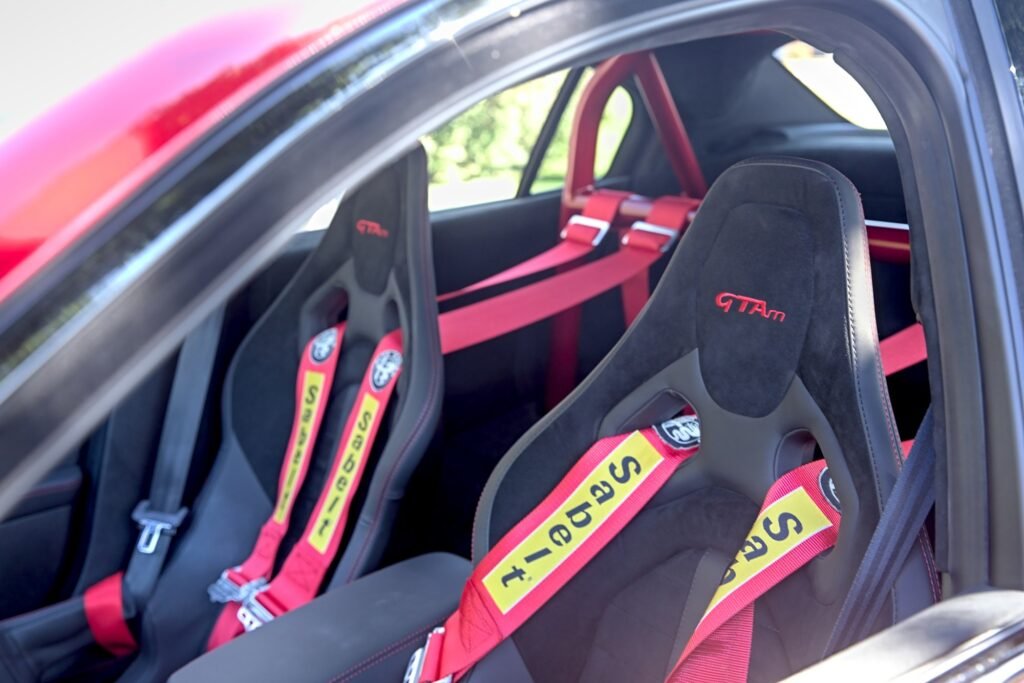
Every one of the 500 buyers got a Bell helmet in GTA livery, an Alpinestars suit, gloves and shoes, a personalized car cover and a course at the Alfa Romeo Driving Academy.
Versus the M4 CSL
BMW answered two years later with the same recipe. The 2022 M4 CSL also ditched its rear seats to save weight, also got more power, 550 hp and 650 Nm, and was also limited, in its case to 1,000 cars. BMW quoted 1,625 kg to DIN standard, which defines which fluids and equipment are included, and a full 20.832 km Nordschleife lap in 7:20.207, the fastest ever by a production BMW at the time.
Using Alfa’s data sheet, the GTAm is 45 kg lighter than the BMW, but there’s no guarantee both numbers were measured the same way, so take that comparison with a grain of salt. What you can compare is the approach. BMW built a two-door coupe for M’s 50th anniversary. Alfa built a four-door sedan for its 110th. And the Alfa got there first.
What it’s worth now
Like every limited run, the used market has swung around, judging by auction platform records. In June 2023 a GTAm with 76 km on it sold in France for €244,360, well above its original price. In May 2024 another changed hands for €161,000. In November 2025 an Italian dealer was asking €189,990 for car number 476 of 500, in rare Verde Montreal, a former Stellantis Italia press car. For an American collector, there’s an extra hurdle: Alfa never offered it for sale in the US.
The GTA that earned the name
Is the Giulia GTA more important than the Quadrifoglio? As a car, yes. The Quadrifoglio was the anti-M3, the sedan that proved Alfa could take on the Germans again. The GTA proved something else: that Alfa still knew what its own letters meant. Bringing back a name like this without earning it would have been the fastest way to burn it, and Alfa knew that. So the car isn’t just stickers and wheels: there’s real weight out, 30 more horsepower, an F1 wind tunnel behind the aero, and a GTAm that is, inside, a race car with no apology.
What doesn’t add up has to be said too. A GTAm at 1,580 kg and a GTA at 1,605, by Alfa’s own data sheet, are a world away from the 745 kg original, and calling a sedan of more than a ton and a half “lightened” stretches the word. The price doubled the Quadrifoglio’s. But the approach is the same as 1965: take the road car, strip what isn’t needed, add power and hand it to people who’ll take it to a track. Chiti did it with Peraluman and two spark plugs per cylinder. Alfa did it again with carbon, Lexan and Sauber’s wind tunnel.
It’s also very likely the last GTA with a combustion engine. A name that means stripping weight sits awkwardly in an era of half-ton battery packs, and we’ve already seen EVs pretending to be gas cars. And for America, there’s one last irony. The letter at the end of GTAm may or may not stand for America, but either way, America never got one.
Check you’re still alive.
Photos: Alfa Romeo (Alfa Romeo press), Zairon (CC BY-SA 4.0), Gabriela Noris (public domain), Alfa Romeo (Alfa Romeo press), Alexander Migl (CC BY-SA 4.0), Alexander Migl (CC BY-SA 4.0).