Intercooler: the radiator that cools the air, not the engine
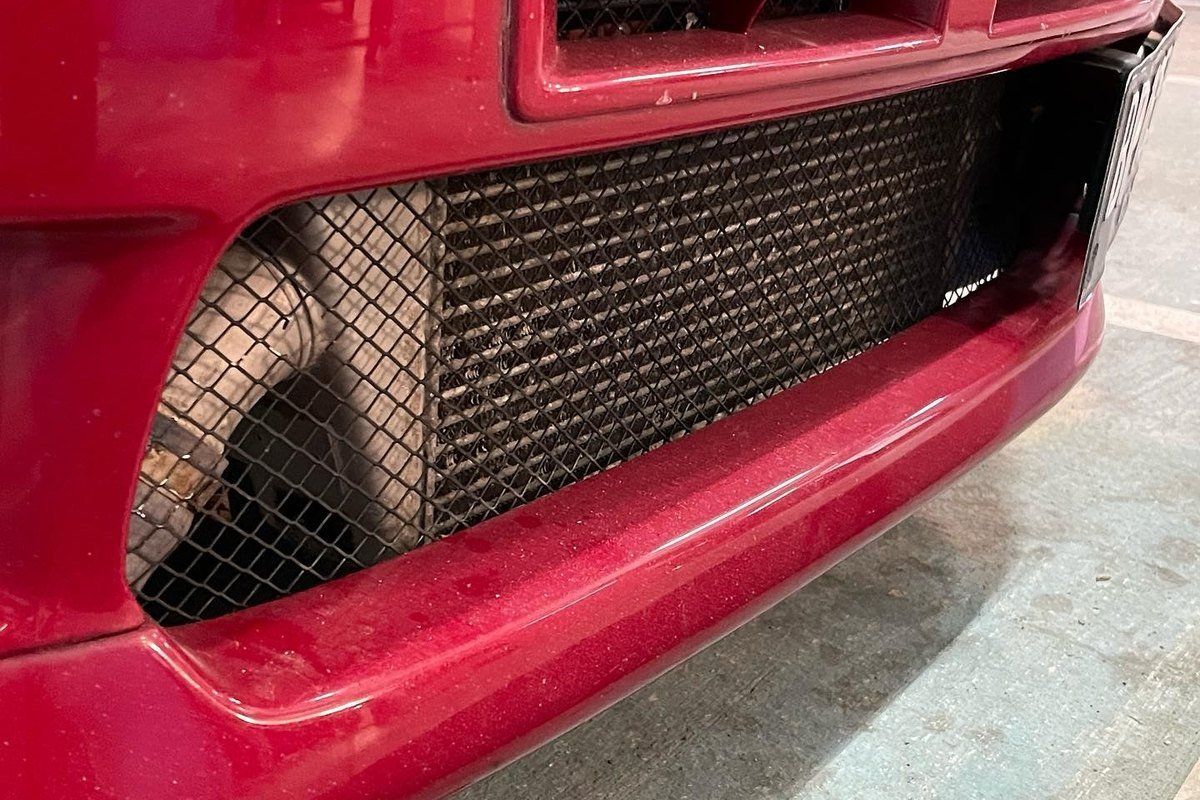
In 1986 Buick took the meanest car in America, the Regal Grand National, and made it meaner with a part most of its owners had never heard of. Same 3.8-liter V6, same single turbo, same black paint that made it look like Darth Vader’s commute. The new bit was a small air-to-air radiator plumbed between the turbo and the throttle body. Output went from 200 horsepower to 235, and a year later the run-out GNX was rated at 276, a number almost nobody who has driven one believes. No extra cylinders, no bigger engine. Buick had simply started cooling the air.
That’s what this chapter is about. We’ve spent five installments of this series cramming more air into cylinders: letting it walk in on its own in a naturally aspirated engine, shoving it in with a supercharger, spinning a turbocharger off the exhaust, and then doubling up and mixing the two. All of it was a fight for pressure. What we haven’t talked about is the bill that pressure runs up, and that bill is paid in heat.
Squeeze air and it gets hot. No exceptions.
Pump up a bike tire hard and grab the barrel of the pump afterward. It’s warm, and not because of friction. When you compress a gas quickly, the work you put into squeezing it ends up inside the gas as heat, and there’s no time for that heat to leak away. A turbo compressor does the same thing at 100,000-plus rpm.
Run the textbook math and it gets ugly fast. Take 77-degree air off the street, compress it to about 15 psi of boost (twice atmospheric pressure, absolute), and assume a compressor efficiency of 70 percent, which is respectable for a real turbo. The air leaves the compressor at roughly 245 degrees Fahrenheit. You’ve built a very expensive hair dryer and pointed it at your intake.
Why does that matter? Because an engine doesn’t actually want pressure. It wants oxygen molecules, since those are what burn the fuel and push the piston. The number that counts is density, the mass of air packed into each cylinder-full, and density goes up with pressure and down with temperature. Hot air is puffy air.
Here’s where most explanations get it wrong, so let’s be exact. The air coming out of a turbo is still denser than the air going in. Boost wins. But in that example above, you doubled the pressure and only got about 50 percent more density. Cool that same charge back down to 77 degrees at the same boost and you’d have roughly 30 percent more oxygen in the cylinder than the hot version. Heat doesn’t take away the air you had. It takes away a big slice of the air you paid for.
Knock: the part that breaks things
Lost density costs you horsepower. The second problem costs you pistons.
In a healthy gasoline engine, the spark plug lights the mixture and a flame front sweeps across the combustion chamber in an orderly burn. Detonation, or knock, is what happens when the last bit of unburned mixture, trapped in a far corner of the chamber, gets squeezed and heated by the advancing flame until it lights itself off before the flame gets there. It doesn’t burn. It goes bang. Two pressure waves collide, the engine makes that marbles-in-a-can sound, and if it keeps up you get cracked ring lands, holed pistons and a very quiet tow home.
Hot intake air doesn’t cause knock all by itself, but it starts the mixture closer to that self-ignition point. Every degree you add on the way in is a degree of margin you’ve given away. So the heat of compression is a double hit: less oxygen, and less room before the engine eats itself.
What the intercooler really does
The fix sounds almost too simple. If the air leaves the turbo hot, run it through a radiator before it gets to the engine. That radiator is the intercooler. The air sheds heat, shrinks, gets dense again, and the same cylinder swallows more oxygen.
That leads to the most repeated myth in every parts-store aisle in the country: “an intercooler adds horsepower.” It doesn’t create anything. It hands back power the heat had already taken. But don’t overcorrect and call it useless either. An engine with a good intercooler makes more power than the same engine without one, for two reasons. The cooler air is denser, and because it’s further from knock, the tuner can run more boost or more ignition advance. The Grand National’s 35-horsepower jump in 1986 came from both, along with an engine tune that knew the air was now colder.
The name is technically wrong, by the way. “Intercooler” comes from aircraft and industrial compressors that squeezed air in two stages and cooled it in between. A car with one turbo has no “between.” Engineers call it an aftercooler or a charge-air cooler. Marketing departments called it an intercooler, and marketing won.
There’s no free lunch, though. Air has to snake through hundreds of little tubes and fins to get cooled, and it loses some pressure doing it, maybe a pound or two of boost on a decent street setup. Long plumbing also means more volume the turbo has to fill before boost shows up at the throttle, which feeds right back into the turbo lag problem we chewed on two chapters ago. A good intercooler trades a little pressure for a lot of density. A bad one, undersized or with a mile of piping, can cost more than it gives.
Air-to-air: simple, cheap, and hungry for real estate
Most production intercoolers are air-to-air. Hot boosted air runs through the core, outside air blows across it, done. No pump, no coolant, no electronics. On the highway it works beautifully because there’s an endless supply of cool air flowing over it.
The catch is location. It has to sit where air hits it, which usually means behind the front bumper, with long pipes running from the turbo forward and back again. On a front-engine car that’s an easy layout. On a rear-engine car it’s a puzzle.
Porsche solved that puzzle in the most Porsche way possible. The 911 Turbo, the 930, launched in 1975 without any charge cooling. For 1978 it grew to 3.3 liters and got an air-to-air intercooler, and since there was no room up front for the ducting, Porsche put the cooler on top of the engine, inside a bigger rear wing. That’s what the “tea tray” spoiler really is: a radiator with bodywork. Europe got 300 horsepower. American cars were detuned for emissions, and after 1979 Porsche pulled the Turbo from the US altogether until it came back in 1986.
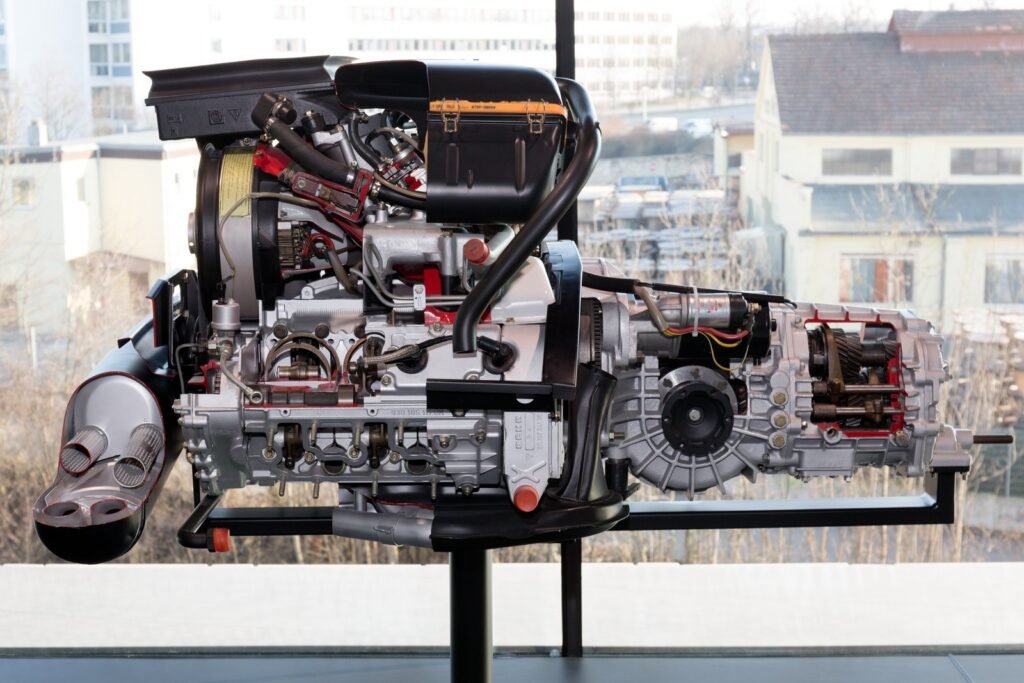
Big rigs found the same trick for the same reason. In Spain, the 12-liter diesel built by Pegaso, the state-owned truck maker that also once built a supercar, made 352 horsepower in 1972 without any charge cooling, enough to call itself the most powerful truck in Europe. The turbo versions sold in volume afterward settled at around 306-310. When Pegaso finally added an intercooler on its Tecno trucks in 1985, the same block jumped to 340. Thirty horsepower out of nothing but colder air, on a truck that never saw a racetrack.

Water-to-air: complicated, compact, and not a compromise
The other family uses liquid. The hot boosted air runs through a compact heat exchanger with coolant flowing through it, and that coolant gets pumped to a separate radiator wherever there’s room. You need a pump, a reservoir, extra plumbing and another radiator, so there’s more weight and more to break.

The payoff is packaging. The exchanger can sit right on the engine, even inside the valley of a supercharged V8, which is why the factory-blown Ford and GM V8s of the last 20 years carry their charge coolers under the blower lid. Water also soaks up heat spikes well, since it takes a lot of energy to warm up. Drag racers exploit that by filling the reservoir with ice for a quarter-mile pass that lasts single-digit seconds.
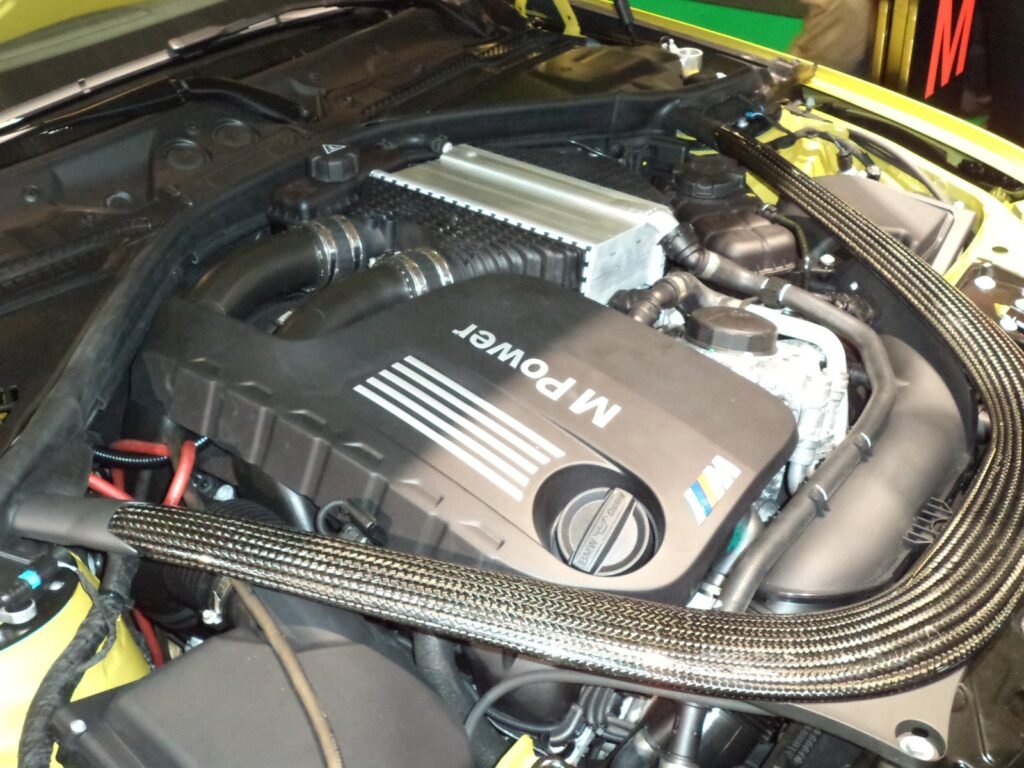
For years the line was that water-to-air was a drag-strip trick or a packaging Band-Aid. BMW blew that up. The F80 M3 and F82 M4 put a water-to-air cooler right on top of their twin-turbo inline-six, in cars built to lap racetracks all afternoon. Yes, there are two heat transfers instead of one (air to water, then water to outside air), and that needs a properly sized system. Built right, it holds up to sustained abuse as well as air-to-air does. Which type wins depends on how well each is built, not on the label.
Water and methanol: the trick with a war record
There’s a third way to cool the charge that doesn’t need a radiator at all. Spray a fine mist of water into hot air and the water evaporates, and evaporation pulls heat out of whatever’s around it. It’s why sweat works. Mix methanol into that water and you get a bonus, because methanol is a strong anti-knock agent in its own right.
Detroit knew this early. The 1962 Oldsmobile Jetfire, one of the first two turbocharged production cars sold in America, ran a 215-cubic-inch aluminum V8 rated at 215 horsepower, one horsepower per cubic inch. To survive a 10.25:1 compression ratio under boost, it carried a reservoir of what Oldsmobile called Turbo-Rocket Fluid, essentially a 50/50 blend of distilled water and methanol with a dash of corrosion inhibitor, metered into the intake once boost came up. Let the tank run dry and a valve cut the boost. The whole system’s fussiness is a big reason the Jetfire lasted only two model years.

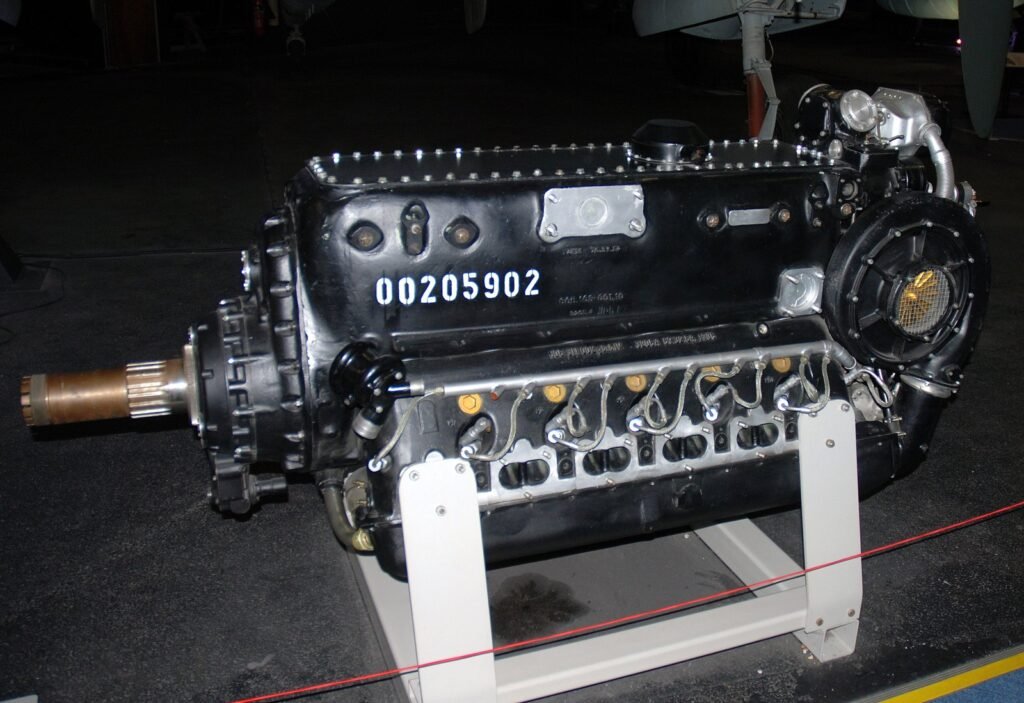
But the real proving ground was the sky. The P-47 Thunderbolt’s Pratt & Whitney R-2800 already had a turbosupercharger with an intercooler in the belly. Add water injection and pilots could pull war emergency power, about 2,300 horsepower in the P-47D, for a few minutes at a time. The Luftwaffe ran its own version, MW 50: 50 percent methanol, 49.5 percent water and half a percent of anti-corrosion oil, sprayed into the supercharger. On the Daimler-Benz DB 605 in late Messerschmitt Bf 109s, switching it on gave roughly 100 horsepower from charge cooling alone. The bigger gain came from what the knock protection allowed: much higher boost, taking takeoff power from about 1,475 to around 1,800. Ten minutes maximum, five minutes rest between shots.
The story that rarely gets told is about the BMW 801 radial in the Focke-Wulf 190. You’ll often read that it used MW 50 too. Fittings for it did appear on the 801D in 1942, but the system never went into production on that engine, because the cylinder heads developed tiny cracks when it ran.
The M4 GTS brought it back to the showroom
Seventy years later, BMW put the same idea in a road car. The 2016 M4 GTS used a water-injection system developed with Bosch: three injectors in the intake plenum, each feeding two cylinders, supplied from a five-liter tank in the trunk. The intercooler still does the heavy lifting, and the water finishes the job right before the air enters the cylinders. US-spec output went from the regular M4’s 425 horsepower to 493. Run the tank dry and the engine falls back to a safer tune. Same logic as a Bf 109 pilot hitting the MW 50 switch, with a warranty.
My problem with all of this
Here’s what bugs me. We started this series with an engine that just breathed. Then we pressurized the air to get more in. That pressure made heat. To kill the heat, we added radiators, pumps, coolant loops, water tanks and methanol reservoirs. Every fix brings its own fix. The naturally aspirated engine from chapter one wasn’t completely free of heat, since intake air warms up inside any engine, but it never had to deal with the furnace blast of compression. It had no lag, fewer parts, fewer ways to fail.
Charge cooling isn’t the villain. It protects engines and makes them last. The point is that every boosted engine on the road carries hardware that exists only because somebody decided to force air in instead of letting it in. Forced induction is a heat problem wearing a pressure costume. Some of the bills it sends you are worth paying. The intercooler is one of them.
Next time we head for the weird stuff: the Comprex, which boosted with pressure waves instead of a turbine; the French Hyperbar, which stuck a combustion chamber between engine and turbo; and the two-stroke diesels that can’t run at all without a blower. The museum of forced induction’s dead ends.
The roads that lost, from the Comprex that boosted with pressure waves to the Leclerc tank’s turbo with its own combustor, are in the pressure wave supercharger, the Hyperbar and other strange roads of forced induction.
What the industry did with all this air once it knew how to force it in is chapter 8: engine downsizing and why a small turbo burns less than a big one, superknock and cracked pistons included.
Check you’re still alive.
Photos: Jacksonpuaminghow (CC0), Alison Cassidy (CC BY-SA 3.0), Morio (CC BY-SA 3.0), Spanish Coches (CC BY 2.0), Zytonits (CC BY-SA 2.0), Roland Turner (CC BY-SA 2.0), Greg Gjerdingen (CC BY 2.0). Wikimedia Commons.