
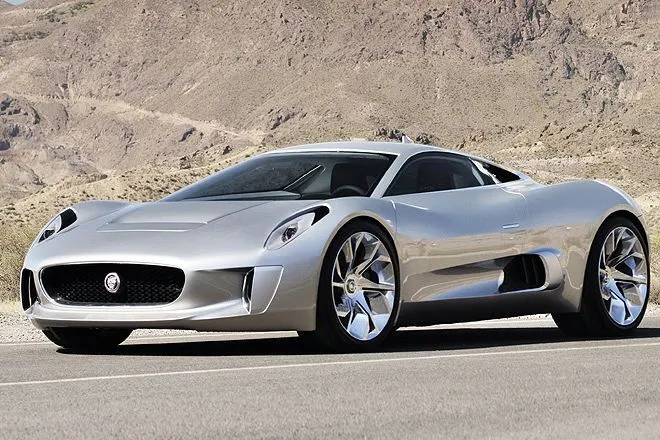
JAGUAR C-X75: THE SUPERCAR JAGUAR CHOSE NOT TO BUILD
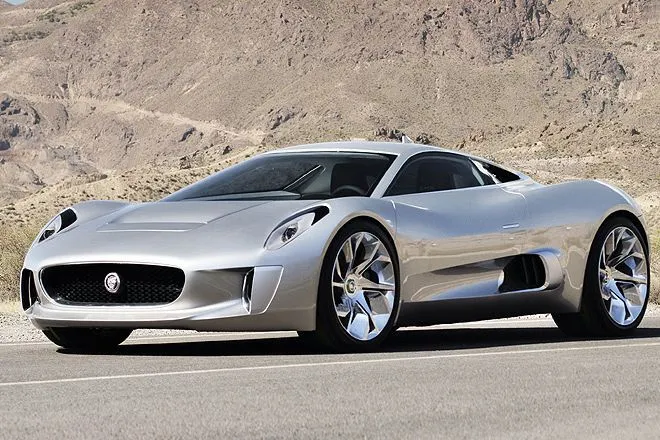
A British supercar that beat Ferrari, McLaren and Porsche to the punch
Three years before LaFerrari, P1 and 918 Spyder were even announced, a British firm in Coventry had already engineered a 890 hp plug-in hybrid supercar with a 1.6-litre engine that revved to 10,000 rpm and a 0-60 time under three seconds. It had a partner from Formula One. It had five running prototypes. It had a price tag, a production slot, and a wait list.
Then Jaguar killed it.
The C-X75 is not the story of a concept that never made it. It is the story of a supercar that did make it, all the way to the doorstep, and then watched the door close. Five prototypes were built. The Williams F1 team signed on. Journalists drove pre-production cars. And in December 2012, a single press release ended a project that, on every technical metric, was ready to launch.
This is the British supercar that should have changed Jaguar forever. Instead, it became a James Bond film prop.
Paris, October 2010: a Jaguar that looks nothing like a Jaguar
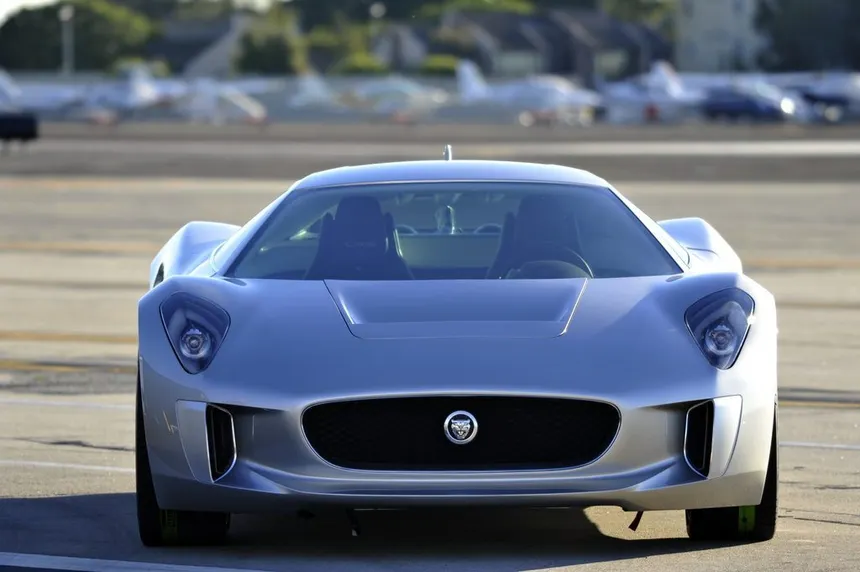
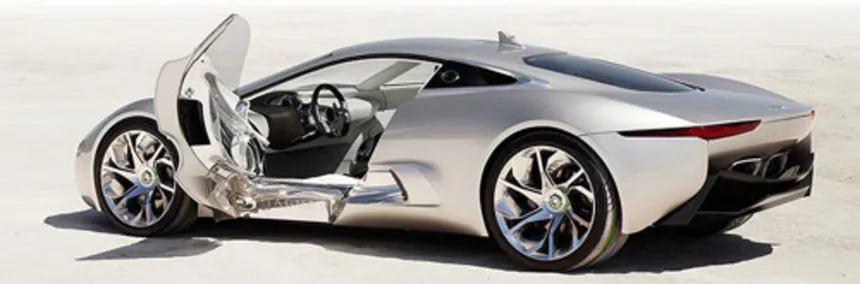
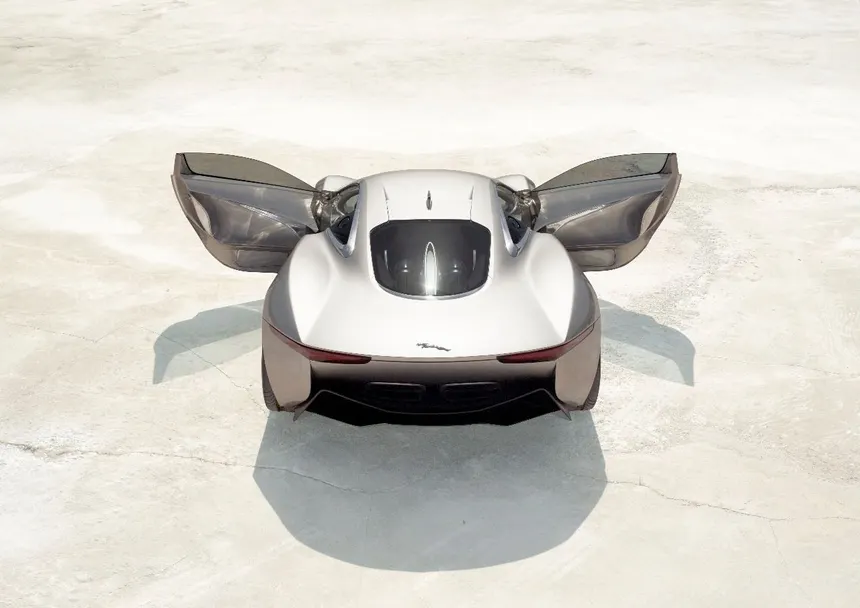
The 2010 Paris Motor Show was supposed to be Mercedes-Benz country, with the SLS still fresh on the floor. It became Jaguar’s show overnight. Ian Callum’s design team rolled out a low, wide, mid-engined two-seater with swan doors, a glass canopy and twin micro gas turbines visible behind the cabin. The press packs called it a hybrid. The press itself called it the future.
The C-X75 won AutoWeek’s Best in Show. It won the Louis Vuitton Classic Concept Award. It got more column inches than the rest of the show’s debutants combined. And it did all of that on a powertrain that had nothing to do with a piston engine.
Four electric motors, one per wheel, supplied by YASA in Oxford, generating a combined 580 kW (778 bhp) and 1,600 Nm. A 19 kWh lithium-ion battery pack giving 110 km of pure-electric range. And then the headline trick: two Bladon Jets axial-flow micro gas turbines, mounted in the rear, each weighing under 36 kg, each producing 70 kW at 80,000 rpm, used purely as range extenders to recharge the battery or, in Track mode, feed power directly to the wheels.
Total range with turbines active: 900 km. Top speed: 330 km/h. Zero to 60 mph: 3.4 seconds. 80 to 145 km/h: 2.3 seconds, which on paper put it ahead of anything Ferrari, Lamborghini or Porsche had on a showroom floor that month.
Why turbines? Because they don’t need a gearbox
This is the part that always gets glossed over in supercar journalism. The C-X75 didn’t use micro turbines because they were romantic or because they made a good noise (they didn’t). It used them because a turbine, used as a generator, is mechanically simpler than a piston engine doing the same job.
No clutch. No gearbox. No reciprocating mass. No oil pump driven off a crankshaft. The turbine spins at a constant high speed, drives a generator, and that generator charges the battery. It doesn’t care about engine load curves because it doesn’t have one in the conventional sense. It just runs at its efficiency sweet spot and pumps electrons.
The Bladon Jets unit could also burn essentially anything liquid and flammable. Diesel, kerosene, biodiesel, petrol. Try doing that with a turbocharged four-pot.
The Top Gear lot at the time, Clarkson and May especially, picked up on this in their coverage. May in particular, the engineering nerd of the three, kept pointing out that Jaguar wasn’t just showing off a pretty face: it was proposing a different idea of what a supercar’s engine should be. Not a bigger combustion engine, but a different kind of engine altogether.
The problem, as Jaguar quickly found out, is that the rest of the world was not yet built for this.
May 2011: production confirmed. May 2011: the turbines die quietly
Seven months after Paris, Jaguar announces production. Up to 250 cars, between £700,000 and £900,000 pre-tax, delivery 2013 to 2015. The technical partner is Williams Advanced Engineering, the engineering arm of the Williams F1 team. Mike O’Driscoll signs the press release. The order book opens.
What the same press release also says, in smaller print, is that the production car will use a downsized petrol engine instead of the micro gas turbines. Officially, this is to ensure homologation. Off the record, it’s because nobody can find a way to package the turbines for emissions, thermal management and noise compliance across three continents without compromising the car’s other targets.
Williams and Cosworth go to work. What they design, between 2011 and 2013, is one of the most extraordinary internal combustion engines of the 21st century. A 1.6-litre, four-cylinder petrol unit with both a turbocharger and a supercharger, revving to 10,000 rpm, producing 500 bhp on its own. That’s 313 bhp per litre, from a four-cylinder, designed for road use. Three years before the F1 grid switched to 1.6 V6 turbo hybrids in 2014, Williams already had a 1.6 turbo-supercharged road-car engine sitting on a dyno in Grove.
Add two electric motors, one per axle, fed by a 19 kWh battery. Total system output: 890 bhp. Combined torque: 1,000 Nm. Claimed 0-60 mph: 2.8 seconds. Top speed: over 200 mph. CO2 emissions: under 99 g/km on the European test cycle.
That last figure is the one that should make any modern reader stop. A 200 mph hypercar with the emissions of a Toyota Yaris. In 2013.
What you actually felt was sitting in front of you
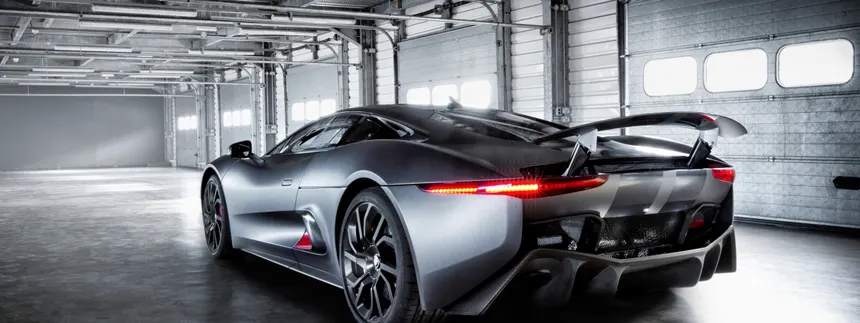
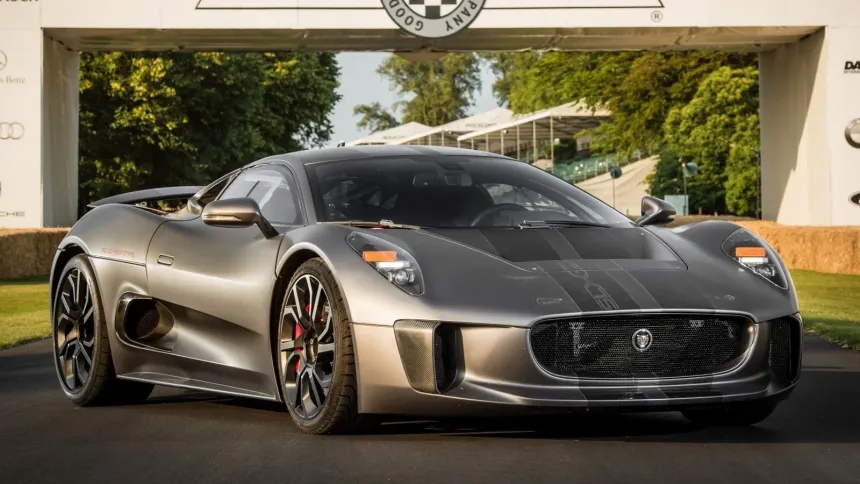
Strip away the hybrid drivetrain for a second and look at the architecture. Carbon fibre and aluminium monocoque. Mid-engined layout with the electric motors at the axles and the IC engine just behind the cabin. Kerb weight target: under 1,500 kg dry, properly light for a hybrid supercar in that era when the McLaren P1 came in at over 1,500 kg dry and LaFerrari at around 1,255 kg dry.
The 1.6 was small enough physically that Williams could mount it low, hand-built around the battery rather than the other way round. The brakes were the AP Racing units developed for Jaguar’s XFR Bonneville record car, the one that ran 226 mph at the salt flats. Aerodynamics were designed from scratch around a hybrid powertrain, not bolted on top of a combustion architecture.
Piece by piece, a modern hypercar textbook.
What the people who actually drove it said
Here is the part that genuinely stings. In the summer of 2013, six months after the cancellation had been signed, Jaguar invited the British press to Gaydon to drive the finished prototypes. Nothing to sell. Just a public showing of what had been built.
Auto Express went first and called it a direct rival to the Porsche 918 Spyder, even in prototype state. Autocar drove it on Gaydon’s handling and high-speed circuits, compared it favourably to the McLaren P1 and Porsche 918 they had already tested, and described the 1.6 twin-charged unit, in their own words, as like a mutant superbike motor backed by epic electric torque fill. evo magazine noted the gearshifts came close to the 918 Spyder’s PDK and called the overall balance “very, very impressive”.
And then, during the same press visit, Ian Callum himself, the man who had designed the car, dropped the line that would follow him for the rest of his Jaguar career. Asked by an Auto Express journalist whether the C-X75 should have gone into production, the design director answered: We really should be building it shouldn’t we?. Then he added that he probably wasn’t supposed to say that out loud.
Six months after the official cancellation. On the company’s own test track. With five working prototypes circulating around him. The chief designer publicly admitted, on the record, that the decision to kill the car had been wrong.
That is not a quote you forget if you were standing there with a notebook.
December 2012: the email no one at Williams wanted to read
Adrian Hallmark, Jaguar’s then-Global Brand Director, breaks the news in a press statement. The wording is the standard British corporate softener: after a thorough re-assessment of near-term market conditions, the company’s view is that the global economic landscape does not currently support the introduction of a supercar such as the C-X75.
Translation: the Great Recession is still biting in Europe, the supercar segment is about to be crowded by LaFerrari, P1 and 918 Spyder, and Tata Motors (Jaguar Land Rover’s owner since 2008) would rather put that capital into Range Rover and Land Rover production lines that actually move metal in volume.
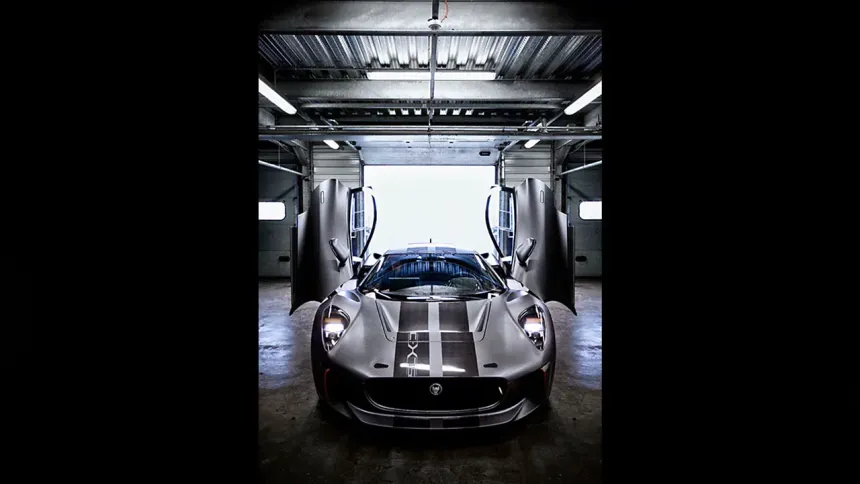
By the time the press release went out, the prototypes were already running. Williams had built them. They were functional, drivable, and within touching distance of homologation. Hallmark said the company would harvest about 60 per cent of the C-X75’s technology for future Jaguar production cars. That promise was kept, partially, in the I-Pace. But the C-X75 as a complete product, as a finished British supercar with a name on the back, never went on sale.
The decision cost Jaguar nothing in headlines. It cost it everything in legacy. By 2014, when LaFerrari, P1 and 918 Spyder all delivered to customers, the hybrid hypercar conversation was an Italian, German and Anglo-Italian conversation. Britain’s only entry was a press release explaining why its car wouldn’t be on the road.
Spectre, Rome, and a V8 from a Range Rover
In 2015, Daniel Craig’s fourth outing as Bond, Spectre, opens with a chase scene through Rome. Mr Hinx, played by Dave Bautista, drives a burnt-orange C-X75. The car gets close-ups, jumps, drifts, a flamethrower in the face from the DB10 and a swim in the Tiber.
This is where the project came back to life, sort of. Eon Productions asked Jaguar for cars. Jaguar said yes, then realised the existing prototypes were too rare and too valuable to throw down riverbanks. Williams Advanced Engineering was commissioned to build new ones. Four were built as full stunt cars, plus additional bodies and a pod car (a car with a roof-mounted secondary control rig so a stunt driver could pilot it while the actor sat in the cockpit for close-ups).
Mechanically, the Spectre C-X75s were not C-X75s. They were tubular space-frame chassis with C-X75 bodywork, powered by a slightly detuned version of Jaguar’s 5.0-litre supercharged V8 from the Range Rover Sport SVR. Six-speed Ricardo transaxle, sequential paddle shift, rear-wheel drive instead of the production car’s all-wheel drive, full WRC-spec suspension after the original units collapsed on impact during early shooting along the Tiber riverbank.
It worked beautifully on screen. It bore no mechanical resemblance to the car Jaguar had cancelled. And when the film was released, half the automotive press asked the question that should have been asked three years earlier: why aren’t you building this for real?
Ian Callum builds his own
Callum left Jaguar in 2019 and set up Callum Designs. In 2022 his firm announced it would take one of the Spectre stunt cars and rebuild it into a road-legal supercar to a customer’s specification. New gearbox, refined V8 (the Range Rover SVR engine retained), bespoke interior, road-tyre suspension geometry, all the bits that were never meant to be there on a film stunt unit.
The result is the Callum C-X75. One unit, publicly confirmed. A car whose existence is, in a way, an indictment of the company that designed it. The supercar that the corporation cancelled has been built, in single-unit form, by the man who drew it, after he stopped working for the corporation.
If you wanted a single image to summarise how British supercar industry decisions get made in the 21st century, that is the image. The designer left, took the file with him, found a customer, and built it himself.
What the C-X75 actually proved
That a 1.6-litre four-cylinder petrol engine could produce 500 bhp in a road-legal package. That four wheel-mounted electric motors with individual torque vectoring could outperform a mechanical limited-slip differential on track. That micro gas turbines could function as a viable range-extender for a passenger car. That a carbon-fibre monocoque supercar could weigh under 1,500 kg dry with a hybrid drivetrain on board.
It also proved something less pleasant. That a finished, working, beautiful piece of engineering can be killed by a balance sheet. That five prototypes, three years of development, and a Williams F1 partnership are not, in the end, enough.
The C-X75 sits in the same drawer as the BMW M1 Hommage, the Lancia Stratos HF Zero and the Italdesign Aztec. Ready cars. Engineered cars. Killed cars.
It deserved better. It still does.
Check you’re still alive.