Lola T70: the crash-test dummy that beat Porsche and Ford
Watch the famous crash scene in Steve McQueen’s Le Mans one more time — the Gulf Porsche 917 that peels off the racing line, slaps the Armco, sheds bodywork and keeps bouncing down the straight like a pinball ball with a death wish, iconic, cinematic, canon.
It isn’t a 917.
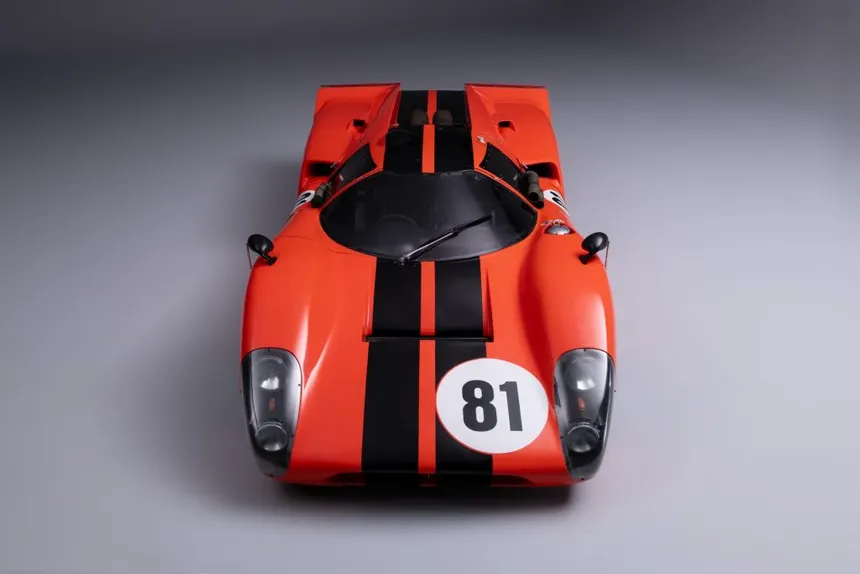
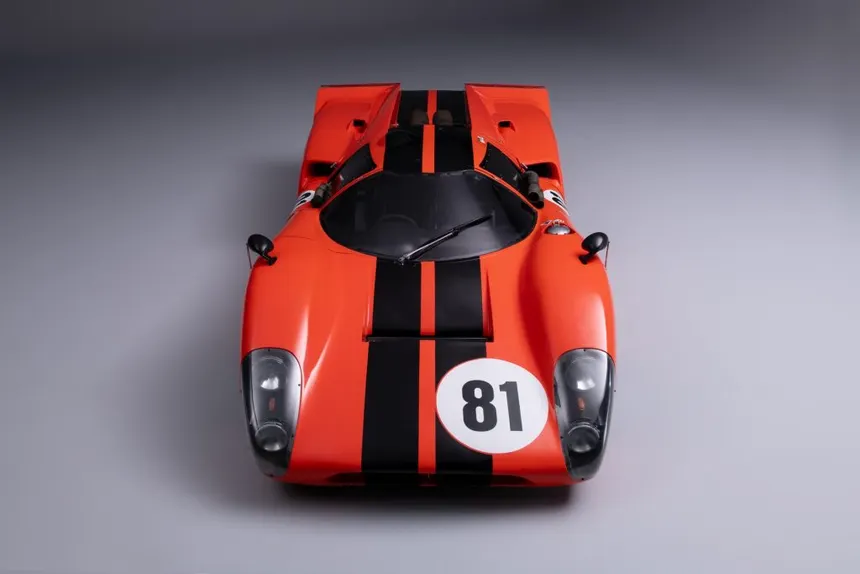
It’s a Lola T70 wearing a 917 shell over its aluminium tub, radio-controlled by two Frenchmen on a raised platform, one on the throttle and one on the steering, and when the throttle guy overcooked his input the steering antenna snapped off on the first impact and the fake 917 became a rudderless missile. McQueen kept the footage, it made the film, and that’s how most of the world met the Lola T70 — as Porsche’s stunt double.
The real story is louder.
Broadley, Ford, and the workshop in Huntingdon
Eric Broadley had just walked out on Ford after two years watching Roy Lunn rework his ideas in Slough, because his Lola Mk6 GT — an aluminium mid-engined coupé shown at the Racing Car Show in January 1963 that had impressed at Le Mans that summer — had caught Ford’s eye enough for the American giant to buy the whole project, drag Broadley across the Atlantic and back into a Slough workshop, and reshape, restyle and rematerialise his design into something he no longer recognised as his own. The car that came out the other end was the GT40, and Broadley had signed a two-year contract that felt longer than that. So by 1965 he was back at Huntingdon with a notebook, a workshop that had never stopped ticking over, and a plan to do it his way.
The plan was a mid-engined sports racer with an aluminium riveted monocoque, GRP bodywork, double wishbones front and rear, and a rear bay engineered from the drawing board to swallow a small-block American V8 without complaint, Chevrolet or Ford, take your pick. Broadley wanted the privateer to have a fighting chance against factory teams, and that was the whole thesis.
Type number: T70. Debut win: October 17, 1965, with Walt Hansgen driving John Mecom’s Ford-powered T70 to victory at the Monterey Grand Prix at Laguna Seca — less than a month into competition. Statement made.
Can-Am 1966: John Surtees goes shopping
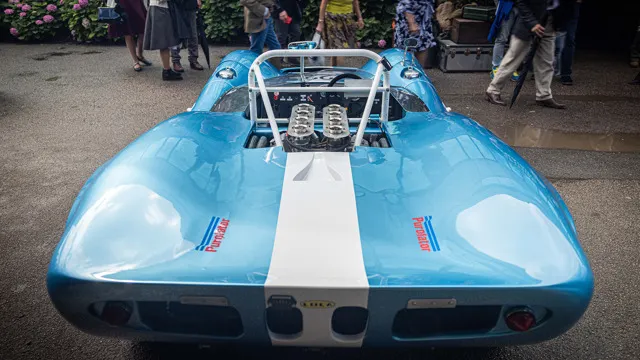
Fit a Chevrolet V8 to the Mk II Spyder, drop John Surtees in the seat and see what happens, and what happens is five wins in six races and the inaugural Can-Am championship, with Surtees — a former Ferrari F1 world champion who by then already knew what a bad chassis feels like — publicly saying the T70 was the sweetest sports racer he had driven. Dan Gurney entered a Ford-engined T70 the same year and took a win, becoming the only Ford-powered car ever to win a Can-Am race, a piece of trivia that if you drop it in a pub nobody believes you.
McLaren, Chaparral, everyone with money to burn was in that paddock, and the independent car built by a former architect with 2,000 quid of savings and a workshop in Huntingdon beat them all.
The following year Bruce McLaren released the M6 and the party ended, with the T70 grabbing one Can-Am win in 1967 and that was that.
But Broadley never played one game at a time.
The FIA rulebook loophole and the Mk III Coupé
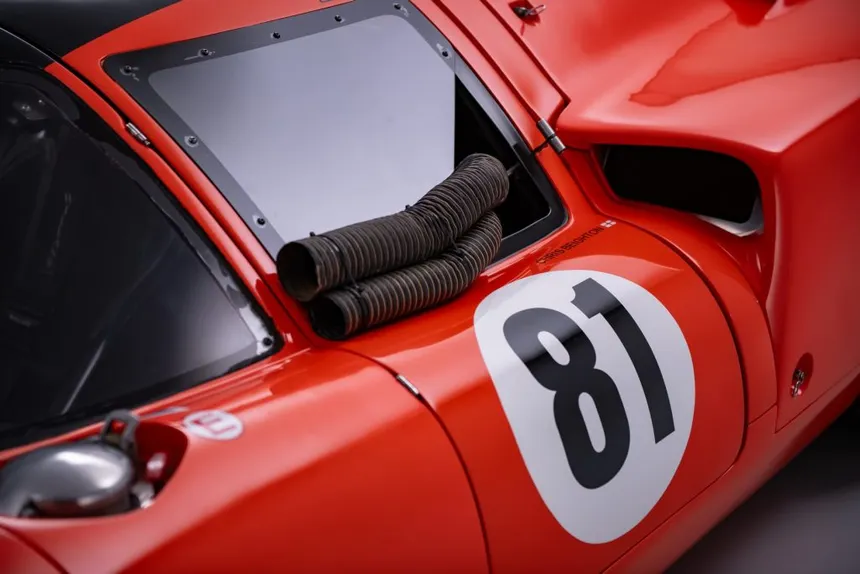
For 1968 the FIA capped prototypes at three litres but left a door open — five-litre sports cars with at least fifty units homologated could keep racing — and Lola was close to that number, same as Ford’s GT40. Two cars the new rules were supposed to bury got a stay of execution, and Broadley used the extension to launch the Mk III Coupé in late 1967.
Aerodynamics by Tony Southgate — later of Jaguar Sport and Toyota TS010 fame — gave the closed body cleaner airflow than the GT40, and down the Mulsanne straight the T70 Coupé could reach 200 mph. With the same engine as the Ford it accelerated harder, and on paper it was the car that was going to put a boot on Ford’s neck.
On paper, because what it didn’t have was John Wyer next door, and Wyer’s Gulf-liveried GT40s were prepared like a military operation. T70 Coupés went to gentleman drivers and small private teams that couldn’t match that level of preparation over 24 hours, and the Chevy small-block itself had reliability issues in long endurance runs — brilliant for a sprint, fragile over a full day. Chris Harris would say the car had the pace and no operations department, which in racing means you’re going home early.
Until Daytona.
Daytona 24, February 1969
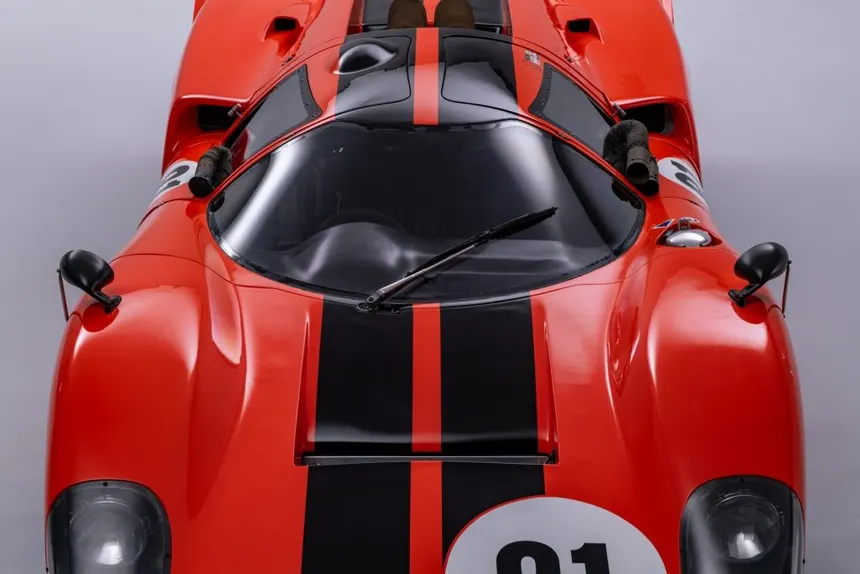
Roger Penske bought a Mk III B for Mark Donohue, and the Mk III B was, in Broadley’s own words to anyone who asked, a completely new car sharing only the windscreen with the previous Mk III — full aluminium monocoque derived from the T160 Can-Am design, revised body, twin faired-in headlights, injected Chevrolet V8, five-speed Hewland LG600 in place of the four-speed, and somewhere around 450 hp. The FIA, in its habit of looking the other way when convenient, homologated it as an evolution of the Mk III.
Donohue and Chuck Parsons ran the blue-and-yellow Sunoco T70 at Daytona against Porsche 908s, John Wyer’s Gulf GT40s and two other T70s campaigned by American International Racing with Ed Leslie and Lothar Motschenbacher inside — Traco-built small-block 302 cubic inch Chevys, quicker in a straight line than the Sunoco car and driven flat out from the flag. The Porsche 908s dropped one by one with mechanical failures, the Wyer GT40s ran into their own gremlins, and Penske’s operations department did what Penske’s operations department always did: never made a mistake.
They won. Second place also went to a T70.
One month later, in Geneva, Porsche unveiled the 917.
The high tail — ask a 917 engineer
The 917 launched with vicious stability problems, its first-generation bodywork lifted at speed, moved unpredictably through high-speed corners and had drivers openly refusing to drive it. Only when Porsche reshaped the tail into a high, upswept profile similar to the T70 Mk III Coupé did the car become raceable.
Porsche’s official history doesn’t spell this out, but Motor Sport Magazine and various engineers who worked on both sides of the paddock have — and Broadley with Southgate had solved the airflow problem on the T70 Coupé a year earlier. Jo Bonnier came within a whisker of beating a 917 at the Österreichring in a Mk III B that had 25% less power and a chassis a year older, and he finished second. Top Gear would put that in the “moral victory” folder, and the T70 lived in that folder for a decade.
McQueen’s crash-test dummies
Back to Le Mans, 1970. Solar Productions bought five used T70 chassis — cheaper than 917s, cheaper than the Ferrari 512s Enzo Ferrari refused to lend after reading a script where Porsche wins — and fitted 917 and 512 bodywork over Lola tubs to radio-control the setup and film the crash sequences.
The famous 917 crash chassis, SL76/141, had raced with Ulf Norinder and Jo Bonnier before Solar bought it, was painted yellow with number 12 for one sequence, resprayed as a Gulf Porsche for the crash, filmed and destroyed on camera. Decades later somebody pulled it out of a barn and restored it.
George Lucas borrowed one for THX 1138 the same year, using a T70 Coupé as a car of the future in his first commercial film — in 1971, the mid-engined Lola was still ahead of its time enough to look like tomorrow.
That’s how Hollywood used it, and that’s most of the reason the T70 is famous outside racing circles — as scenery, not as champion.
South Africa, January 1968: a record for two decades
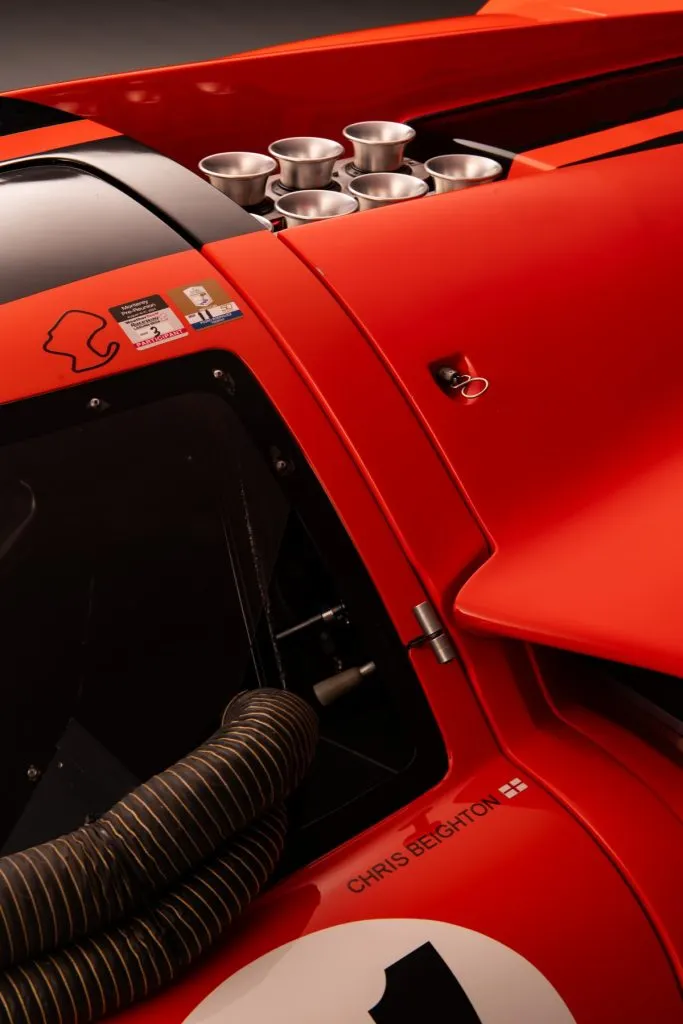
Mike D’Udy took a Mk III B to a stretch of the R45 between Vredenburg and Hopefield in the Western Cape and set a two-way average land speed record of 191.80 mph, with a one-way best of 195.96 mph. Fifth gear was destroyed partway through the runs and couldn’t be repaired, and he completed the record with what he had left.
The mark stood until November 1988, when a factory-backed Audi 5000 CS with Sarel van der Merwe finally beat it, pushing the record to 224.30 mph.
Twenty years, a used race car and a stretch of provincial road versus the entire German factory machine, and that is what the T70 was capable of when you gave it a straight line and a full tank.
Broadley Automotive, Bechtolsheimer and the V80
Lola Cars folded in 2012, but the T70 didn’t. Broadley Automotive builds Mk3B replicas using the original moulds and drawings, so authentic that the FIA grants them Historic Technical Passports, and they race in the FIA Masters Historic Sportscar Championship alongside original T70s, Ferrari 512s and Porsche 917s, winning overall, in 2025. Race Car Replicas in the US makes both Mk II and Mk3B recreations with aluminium monocoques, Gardner Douglas in the UK builds a spaceframe Spyder homage, and Sbarro in Switzerland produced thirteen Mk III replicas years ago — a piece of Broadley’s design that keeps finding hands willing to keep it alive without any factory telling anyone to do so.
Till Bechtolsheimer, who bought the Lola brand from the Birrane family in 2022, has launched the T70s V80 — a road-legal restomod that mirrors the Mk III Coupé almost exactly, low nose, stacked headlights, wide hips with air intakes behind the doors, elongated cut-off tail. The car Broadley drew in 1965, now with a number plate and permission to touch public tarmac, sixty years later.
What the record book won’t tell you
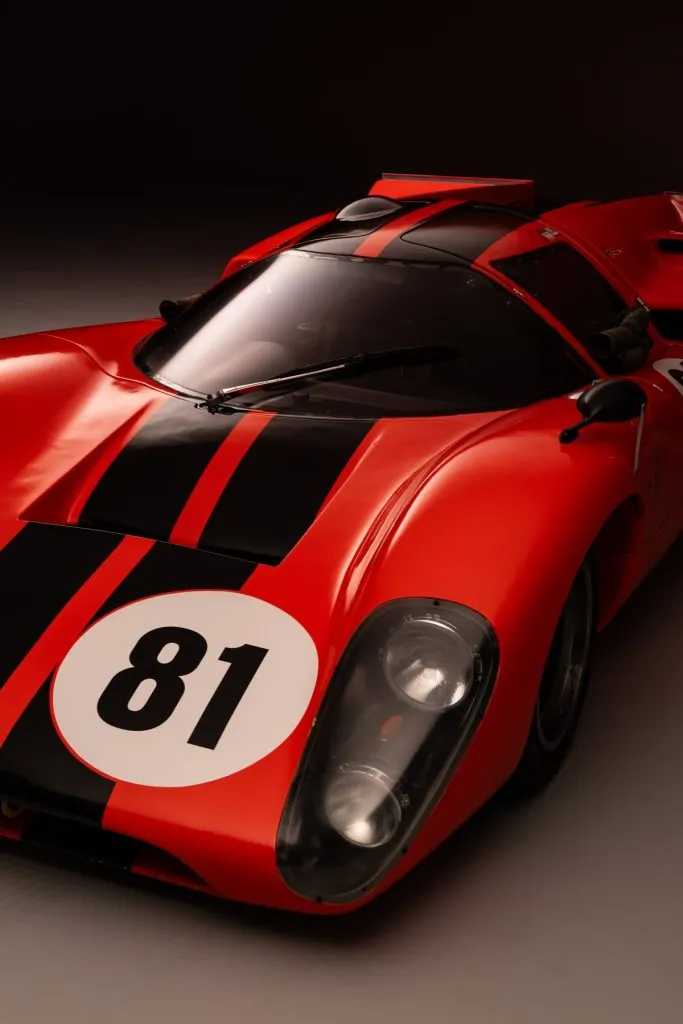
Over 200 official race wins, more than 100 units built, the only independent constructor’s car that seriously frightened Ford, Porsche and Ferrari inside a single decade, the car that showed Porsche how to shape a rear end that wouldn’t launch itself into the barrier, the car McQueen used as a stunt double to make cinema, the car Broadley drew when Ford had just taken his GT design and told him — notebook in hand — watch what else I can do.
Ask the average enthusiast who won Daytona in 1969 and they’ll say a Ford, a Porsche, a Ferrari, a Chaparral, anything but the truth, which is that a privateer with a Chevrolet engine and a chassis built in an English shed took the overall win, with another chassis just like it in second place.
That stings, and it should, because the T70 never won a headline in the mainstream press outside of a Steve McQueen storyline. It won what you win in the workshop, the respect of the people who understood what they were looking at, the kind of quiet reputation that gets passed from a mechanic with grease under his fingernails to a younger one who hasn’t seen one on track yet.
Check you’re still alive.