Managing Composites: the bones of the hypercars you see at Goodwood are engineered in Spain
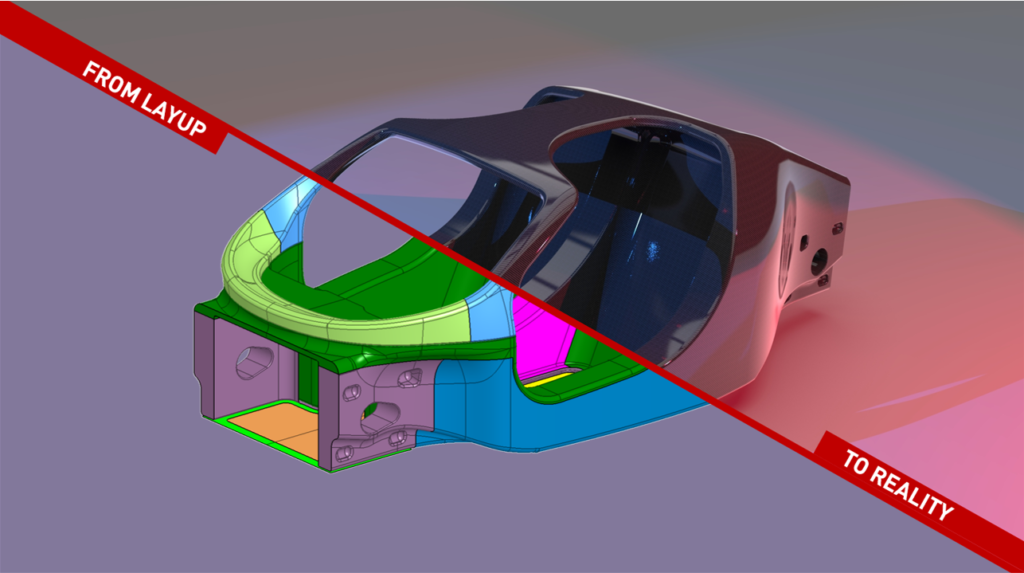
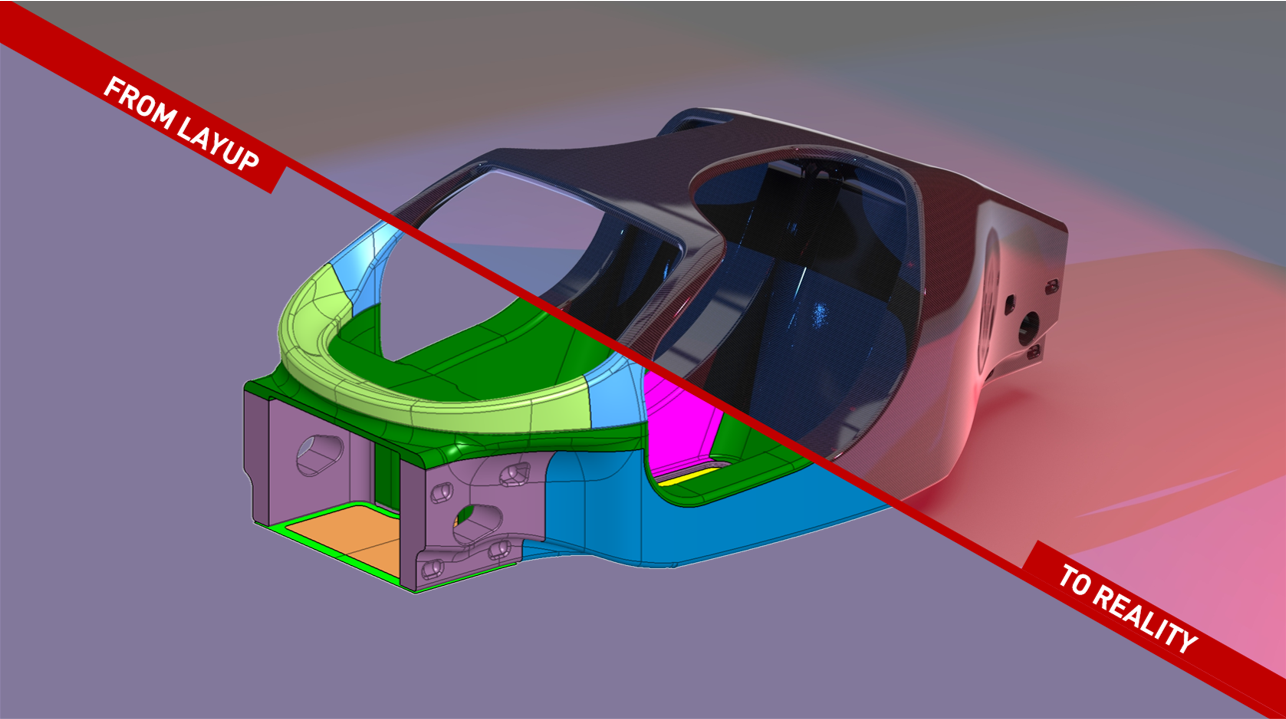
Everybody looks to Dallara as the reference for hypercar and racing chassis work. And then I stumble onto a little-known Spanish company that turns out to do the same thing. And does it just as well, because it builds for a lot of the brands behind the cars we love.
It’s called Managing Composites. The CEO is Lluc Martí Fibla, and he’s about as approachable as the drive to go meet them is short.
After that, and knowing how much I care about domestic industry, they’ve earned a place in this house. Having it on my doorstep and not telling anyone would be like owning a plate of hand-carved jamón and sitting down to eat tofu.
The lawn
A July morning at Goodwood. A car climbs the hill in front of two hundred thousand people. Photographers, timing gear, applause.
An August Sunday at Pebble Beach. Another car on the grass, ocean behind it, a line of people waiting for a closer look.
That’s what everyone sees. The result.
What nobody sees is what came before. The impossible deadline. The part that didn’t arrive. The entire weekend in front of a simulation that wouldn’t close. The call somebody had to make on a Tuesday at eleven at night, with real money on the line and no way of knowing whether it would work.
It happens in every trade. Somebody builds something, it works, and suddenly it’s all comments about how lucky they got and who they must know. Nobody counts the lost sleep, the time not spent at home, or the number of times the whole thing nearly went under.
Only the photo gets seen. And anybody can step into a photo.
At Goodwood and at Monterey, every single year, there are several cars that a Spanish company you’ve probably never heard of worked on.
And it’s no accident that you haven’t heard of them.
One freelancer and two who showed up before the pandemic
Managing Composites starts operating in 2018, with Lluc working freelance.
Just before the pandemic, two co-founders joined him. Eneko, a former colleague of Lluc’s at Koenigsegg. And Alex, Eneko’s colleague at McLaren.
The rest is history.
Eight years later they’re more than a hundred people.
They work — in words that circulate quietly around the industry — with all or nearly all of the world’s hypercar companies and with the top end of the restomod world. They’ve been through several dozen cars that will take your breath away.
Three names from that list can be said out loud.
Zenvo, for whom they built the Aurora’s platform. Nilu27, which published on its own account that Managing Composites is responsible for the car’s structures. And Gordon Murray Special Vehicles.
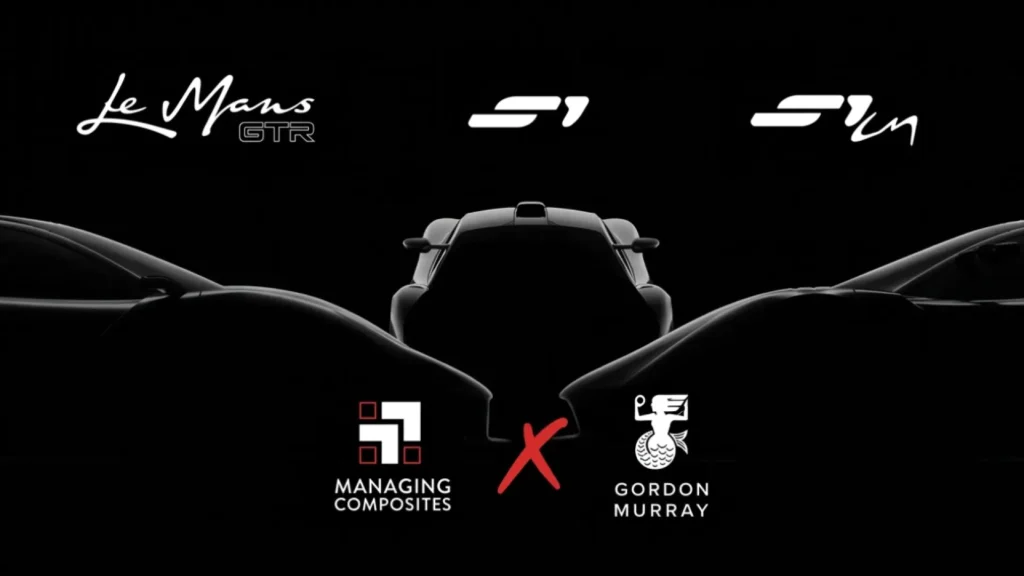
The Gordon Murray news is from this week. A strategic alliance covering three cars: the S1, the S1 LM and the Le Mans GTR. Three completely separate projects, with parts that resemble each other without being the same.
The rest — dozens of cars — can’t be named.
Why it can’t be named
Here’s the part that explains everything else, and it isn’t pretty.
Manufacturers love to say they develop and build everything in-house. That story has a market price and it sells high. There are brands with Formula 1 teams where attaching your name to theirs is worth many millions.
So the contracts come with a gag. It’s a world where getting out from backstage and claiming credit for the work is genuinely difficult.
Read that slowly, because it isn’t about professional discretion. It’s about in-house craftsmanship being a commercial asset, and about protecting that asset requiring the people who did the work to stay quiet about having done it.
And the chain doesn’t stop there.
Because if the company is invisible, the person inside it is invisible twice over. Somebody spent three weeks solving a problem nobody had solved before. That solution is now bolted into a car climbing the hill at Goodwood. And that somebody watches it from home, unable to say it’s theirs, in a car that doesn’t carry their company’s name either.
Next time you read that a hypercar is built entirely in-house, by the brand’s own hands, with generations of tradition behind it — bear in mind there’s a real chance some of those hands are in Spain.
And that whoever moved them can’t tell you.
Waiting until you have something to show
With Gordon Murray there was one decision that says more about these people than any spec sheet.
They could have announced it months earlier. They didn’t.
They waited until the Le Mans GTR was running. Until the S1 LM was deep in development. Until the S1 debuted at Monterey. Once all three cars spoke for themselves, they made it official.
The reasoning is textbook and almost nobody applies it: a partnership is a big claim, and for something to be credible it isn’t about words, it’s about facts. Otherwise all you’re announcing is an intention. Reality carries far more weight than a promise.
A company that spends the year silent under contract, when it’s finally allowed to speak, waits a few more months to have something to show.
In an industry that launches hypercars with a render and a waiting list, that’s close to a provocation.
Engineering inside, manufacturing outside
The working model isn’t the one you’d expect, and this is the part that’ll surprise you most if you come from the shop floor.
The engineering is all in-house. Design, simulation, project management, design optimization for manufacture, production management. All of it inside.
The manufacturing isn’t. They work with several partners and pick one or another depending on the technology, the complexity and the number of parts.
And it isn’t for lack of muscle. It’s the opposite.
Picture having to build an entire car in a matter of weeks. The bottleneck can be the CNC time for the patterns. Being able to run the work in parallel across several sites gives you a capacity that’s very hard to offer with everything under one roof.
There’s the lesson, and it runs against common sense. The in-house factory — the thing that reads beautifully in a press release — is exactly what ties your hands the day the deadline bites.
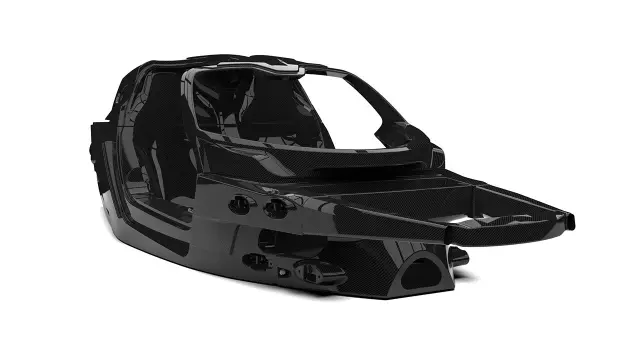
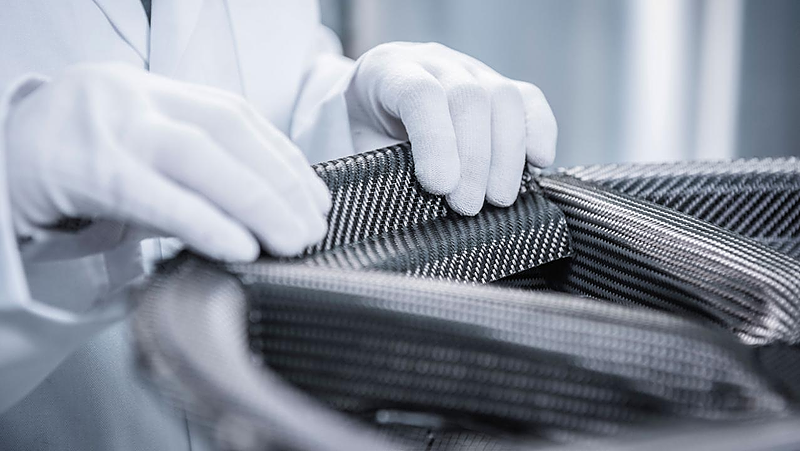
On processes, whatever the job needs. The mainstay is prepreg and autoclave, which is the best there is for both performance and finish. But they’ve worked in infusion, RTM, SMC, wet lay-up and even pultrubraiding.
And they don’t stop at structure. Body, aero, visible parts. They call it a one stop shop, and the line that goes with it is that all challenges are welcome.
Dallara
Back to the comparison from the top, because it’s the one anyone would make.
They’ve found themselves bidding against Dallara on the odd project, but it isn’t the norm. And it isn’t the norm because it isn’t the same business.
Dallara is heavily focused on motorsport and competition. Managing Composites is in hypercars and restomods. From the outside it looks identical. The distance is considerable.
The difference is the objective. Dallara plays in pure performance. They play in a very fine balance between performance and craftsmanship, with unique aesthetic finishes.
And that distinction is bigger than it sounds. A race car has to be fast, full stop: if a part is ugly but works, it’s a good part. A multi-million-dollar hypercar has to be fast and also has to survive somebody studying the weave from four inches away, in raking light, hunting for a ripple.
Two different trades sharing a material.
Remote from day one
They were born as a remote company, with everything that brings. Headquarters in Madrid and, beyond Spain, team members in five other countries.
The hiring criterion is easy to say and hard to sustain: they’re interested in talented people and not much bothered about where those people are. What matters is the service and the result delivered.
And for that to happen you need professionals aligned around a culture that allows it. An environment where people can be themselves, enjoy it, have the resources, and get on with doing something brilliant.
That’s also where The Native Lab comes from — Managing Composites’ own academy, run by Martina Mongelli, who is part of the team. A company that can’t find the people it needs and decides to train them. That gets its own chapter in this house.
It all reads like a corporate brochure until the word that changes everything shows up.
Weirdness
One of the company’s declared values is weirdness. Literally that. And they like it to be felt day to day.
Read that again, bearing in mind who they invoice.
A company that works for the most guarded brands on the planet, that signs gagged contracts, that can’t say out loud half of what it does, has put in writing that one of its values is being weird.
Although maybe the right word isn’t weird. Maybe it’s authentic.
Because in that place, most of the staff don’t limit themselves to working: they live what they do.
They’re not a traditional engineering firm, and they don’t say it as a slogan. Or maybe they do. Their slogan, the one on the t-shirts and the company presentations, is We do cool sh*t!
The people who aren’t in the photo
And there’s one thing this company has spent years wanting told, and nobody ever asks about.
There’s a lot of talk about the cars they build. That’s fair enough. They’re spectacular.
But very rarely does anyone talk about the people behind them.
About those who put in the hours solving problems nobody had solved before. About those who keep learning when they could settle. About those who turn a profession into a passion, or the other way round. About those who have built a culture where excellence isn’t negotiable and looking after each other comes above everything.
The cars end up taking the spotlight. What rarely shows up in the photos is the team that makes them possible.
And maybe that’s the most interesting story of all.
The NEC take
We’ve spent years complaining that Spain has no real automotive industry. That all we do here is assemble hatchbacks for other people. That the talent leaves because there’s nowhere to put it.
And it turns out there is. A company that starts in 2018 with one man working for himself, grows to more than a hundred people in eight years, works with nearly every hypercar brand on the planet, and puts several cars a year on the lawns at Goodwood and Monterey.
You didn’t know. Almost nobody did. And that isn’t their fault: they’re forbidden from telling you.
There’s the problem, and it isn’t a Spanish one, it’s the whole sector’s. An industry selling the story of its own hands while signing contracts to stop the real hands saying whose they are.
It’s the same thing as always, in its most extreme form. You see the car on the lawn and you see nothing of what it cost to get there. And once the photo has been taken, anybody can step into it.
So let’s do here what they can’t.
Next time you watch a hypercar climb the hill at Goodwood, don’t just think about the badge on the hood. Think about the fact that its bones may have been engineered in Spain. And think, above all, about the person watching it from home, knowing exactly which part of that car is theirs, and unable to tell a soul.
Check you’re still alive.