The Italian company that builds every IndyCar, F2 and F3 chassis — and almost nobody outside racing knows the name
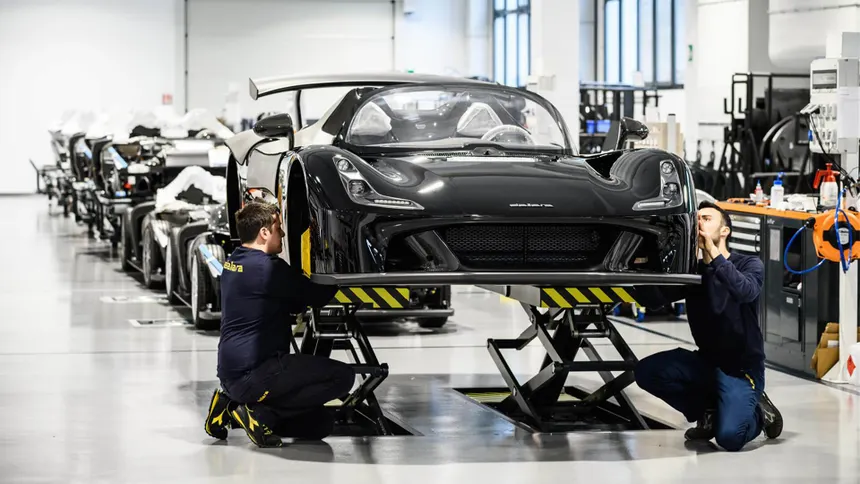
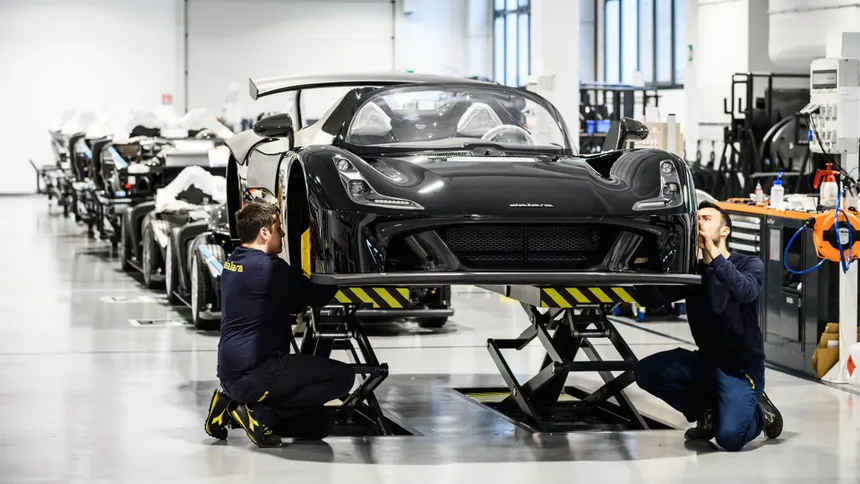
Forget the F1 paddock for a minute. Walk down pit lane at the Indianapolis 500 instead. Every car you see — every single one of the 33 starters — was built by the same company. Walk down pit lane at any Formula 2 round. Same thing. Formula 3. Indy NXT. Japanese Super Formula. EuroFormula. Same company. One factory. One town.
That town is Varano de’ Melegari, in the province of Parma. Population: 7,000. The company is Dallara. And unless you live deeper inside motorsport than most, you’ve never heard of them.
This is the strange story of the most important racing manufacturer in the world that almost nobody outside the sport can name.
What Dallara actually builds
The easiest way to grasp the scale of Dallara is to list the championships it supplies. Brace yourself.
Dallara is the sole chassis supplier to the IndyCar Series. Its first chassis ran in 1997. It has been the exclusive supplier since 2008. The current chassis is the DW12 — named after Dan Wheldon, the 2011 Indianapolis 500 winner who died testing it at Las Vegas two days before the name was announced. The DW12 has been in service since 2012. Each chassis costs $349,000. Every car on the grid uses it. No exceptions.
Dallara is the sole chassis supplier to FIA Formula 2 and FIA Formula 3 — the two final steps before F1. Sole supplier to Indy NXT. Sole supplier to Japan’s Super Formula, the fastest single-seater series outside Formula 1. Sole supplier to EuroFormula Open. It built the Spark-Renault chassis that launched Formula E. It builds cars for the World Endurance Championship, the European Le Mans Series and IMSA. Its joint venture with Cadillac since 2016 produced the LMP2 that evolved into today’s Cadillac GTP, racing against Porsche and BMW in the top class at Daytona and Sebring.
If you race anything professional that isn’t F1 or Le Mans Hypercar, odds are very high the thing you’re sitting in came from a small town in Italy that most people couldn’t find on a map.
Why the world’s biggest racing chassis company is invisible
Because Dallara doesn’t race. Dallara builds.
That sounds like a semantic point. It isn’t. When Lewis Hamilton wins, you see Mercedes win. When Cadillac fights Porsche at Daytona, you see Cadillac. What you don’t see is that the Cadillac monocoque was made in Parma. What you don’t see is that when an American driver wins the Indy 500, the carbon tub he’s sitting in was made by the same company that made the one in second, third, and dead last.
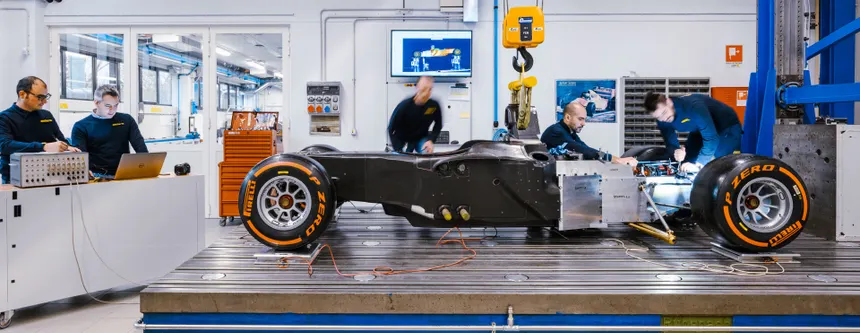
Dallara gets paid to build the chassis. The winning gets done by someone else, with someone else’s logo on it. The margins go to Dallara. Eight hundred-plus employees across the Italian headquarters, the plant at Stradella di Collecchio, and the American factory at Speedway, Indiana — that last one opened in 2012 to put DW12 production closer to the customer base. Annual revenue sits comfortably above $200 million.
There’s an old Klondike saying: in a gold rush, sell shovels. Dallara is the shovel store. And every prospector in motorsport is a customer.
When the CEO of IBM Italy walked into a 7,000-person village
In October 2007, Andrea Pontremoli was President and CEO of IBM Italy. He’d started at IBM in 1980 as a hardware customer engineer — basically a maintenance technician who fixed mainframes. Twenty-seven years later, he was running IBM’s entire Italian operation. Boardroom, jet, secretary, the whole package.
He quit IBM to move to Varano de’ Melegari, a village of 7,000 people, and run a small racing chassis company. Not as a hired gun — he came in as a partner. He bought into the equity. He took the CEO chair.
Asked why, his answer was simple. In Dallara he could do in a week what at IBM took a quarter. The chain of decision was three people deep. When a technical problem came up, the engineer who had to solve it was sitting at the next desk over.
Pontremoli’s job was to professionalize the company without corporatizing it. To scale it without breaking it. Keep the chain short. Keep the town. Keep the head. He’s done it. He’s still CEO. He still lives there. And the company has roughly doubled in size since he arrived. It’s the rare case of someone leaving the corner office of a Fortune 500 multinational for a factory in a hill town — and being proven right by the numbers.
The cars with someone else’s name on the bonnet
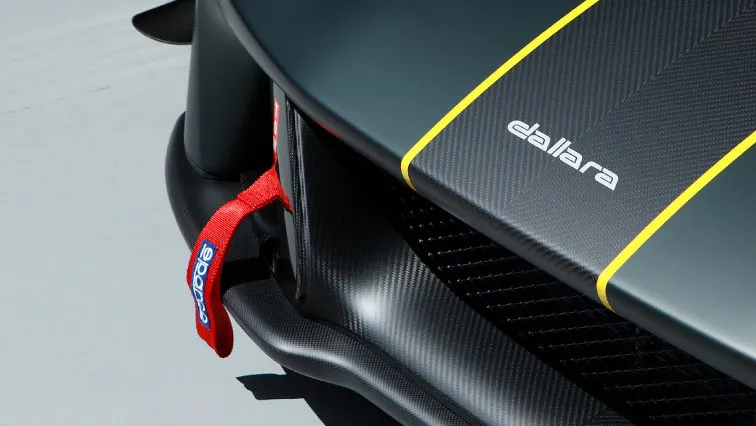
The part nobody outside racing tells you about is the consultancy work. Dallara’s automotive division has worked for Alfa Romeo, Audi, Bugatti, Ferrari, KTM, Lamborghini, Maserati and Stellantis. Some examples worth tracing:
Bugatti Veyron. Dallara joined the project in 2001 to define the chassis, design the suspension, tune vehicle dynamics and study the aerodynamics. The car that became the first modern 1,000-hp hypercar carried Varano DNA before the first one rolled out of Molsheim.
Bugatti Chiron. When Bugatti began work on the Veyron’s successor in 2016, Dallara was back at the table. The modern Bugatti chassis architecture is, in significant part, Italian engineering.
KTM X-Bow. In 2008, when an Austrian motorcycle company decided to build its first car, it asked Dallara to design the carbon-fibre monocoque. The result was, essentially, a Formula 3 with number plates.
Alfa Romeo 4C and 8C. The two modern Alfa halo cars, both with carbon tubs. Dallara involved in both.
Maserati MC12. The Ferrari Enzo-based GT racer that brought Maserati back into competition in the mid-2000s. Dallara consulted alongside Ferrari’s own engineering team.
Maserati MC20. The new Modena supercar unveiled in 2020. The carbon-fibre monocoque is Dallara’s. Light, stiff, safe — exactly what you’d ask of a hypercar.
If you’ve ever lusted after a Veyron, a Chiron, an X-Bow, a 4C, an 8C, an MC12 or an MC20, then as the British motoring press has noted plenty of times, you’ve lusted after Dallara know-how. You just didn’t know it.
The Formula 1 chapter nobody talks about
Dallara had a five-season run in Formula 1 between 1988 and 1992, building chassis for BMS Scuderia Italia — the team owned by Italian steel magnate Giuseppe Lucchini. Five cars: F188, F189, F190, F191, F192. Engines from Cosworth, Judd and Ferrari V12.
The highlights weren’t world titles. They were stubborn, hard-earned podiums against far better-funded operations: Andrea de Cesaris third at the 1989 Canadian Grand Prix in the F189; JJ Lehto third at the 1991 San Marino Grand Prix at Imola in the F191 with the Judd V10; eighth in the constructors’ championship in 1989 and 1991. For a small Italian team fighting Ferrari, McLaren, Williams and Benetton on a fraction of the budget, with Pirelli tyres when Goodyear had the front of the grid, those were real results, earned hard.
Scuderia Italia switched to Lola for 1993 and Dallara left F1 — for twenty-four years. Then in 2016, Gene Haas decided his new American Formula 1 team would have its chassis built in Italy by Dallara. Romain Grosjean finished sixth on debut in Australia in the Haas VF-16, the team’s high point of that first season. It remains the closest Dallara has come to putting its own name back on an F1 grid.
It doesn’t need to anymore. The entire F2 field runs Dallara chassis. That’s being in F1 without being in F1.
The engineer who won fourteen World Championships and then came home
In January 2020, Aldo Costa walked into Dallara as Chief Technical Officer. For people outside the F1 bubble: Costa is one of the most decorated engineers in modern Formula 1. Fourteen Constructors’ Championships and twelve Drivers’ titles on his CV. He worked at Ferrari from 1995 to 2011 and became Technical Director through the Schumacher era and the titles that followed. He jumped to Mercedes in 2011 as Engineering Director and was one of the principal architects of the Silver Arrows dynasty that won every single championship of the hybrid era from 2014 to 2018. Hamilton’s title cars. Rosberg’s title car. Through Costa’s drawing office.
When he explained why he left Mercedes for Varano, he told a story. At the beginning of his career, he’d written to Giampaolo Dallara asking for a job. There wasn’t an opening, but Dallara helped open doors for him elsewhere in the industry. Many years later, Costa said, it felt like the wheel had come full circle.
That’s Dallara. It isn’t only a manufacturer. It’s the place that Italian engineers come back to after they’ve already won everything elsewhere. It’s the place that opens doors and that you return to. You can’t buy that. You build it over fifty years.
The Dallara Academy and the simulator
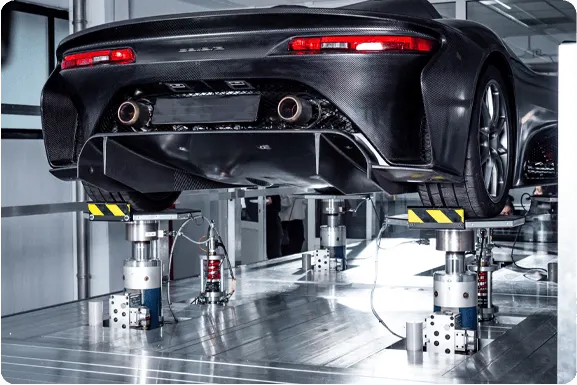
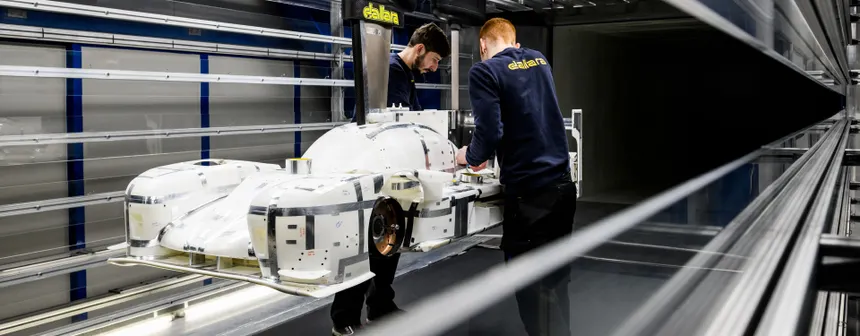
The transformation of the last fifteen years has been the simulator. Dallara was one of the first racing manufacturers to see that the cost caps and reduced track running of modern motorsport would force everything into virtual development. They built one of the most advanced driver-in-the-loop simulators in the world, with a supercomputer behind it, plus a state-of-the-art wind tunnel and a CFD operation that punches well above the company’s headcount. Half their development now happens before any carbon part touches a road or a circuit, and customers from other manufacturers regularly rent simulator time at Varano because there is nowhere else to do it at this level outside an F1 team.
In 2015 they opened the Dallara Academy, a building attached to the headquarters that doubles as museum, classroom and open office. Schools visit. Universities visit. Twelve-year-olds walk in and touch the chassis of an Indy 500 winner. That is Motor Valley culture in practice — industrial heritage treated as a generational investment, not a marketing exercise.
Why Dallara is Dallara
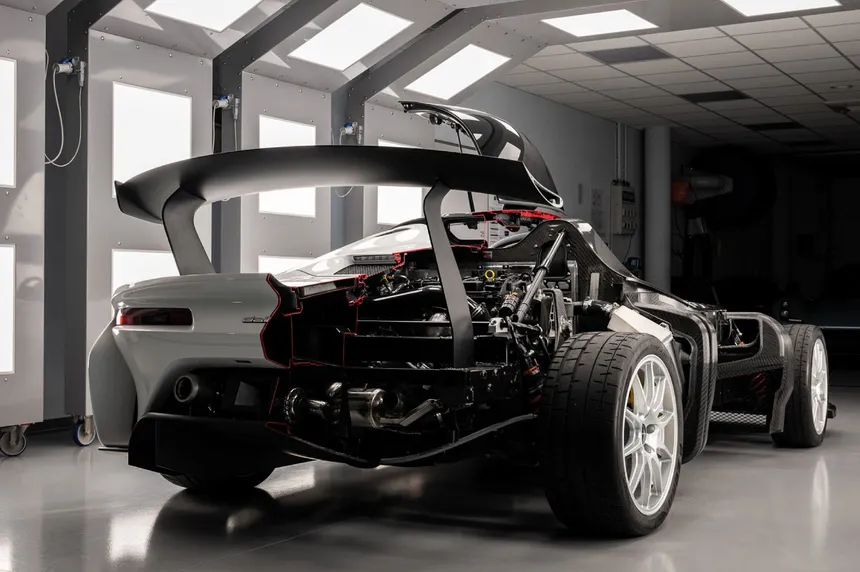
What makes this story unusual is that Dallara almost didn’t exist. Giampaolo Dallara could have said yes to Ferrari, to Lamborghini, to Maserati, to any of them. He was offered technical director roles. He had the credentials, he had the CV, he had the age. In 1972 plenty of people thought he was making a mistake to set up shop in a village garage at 36 years old with the Miura already done.
He wasn’t wrong. He picked correctly. He picked the place, the scale, and the kind of customer relationship he wanted. He picked being a supplier over being a star. He picked making chassis over having his name on the bonnet.
Fifty-four years later, Dallara builds the cars that run the Indianapolis 500, its CEO walked away from running IBM Italy to be there, its CTO walked away from running Mercedes F1 engineering to be there, revenue is comfortably north of two hundred million dollars and the village of 7,000 is still a village of 7,000.
That is how you build an empire without anybody noticing. That is engineering done right.
Check you’re still alive.