
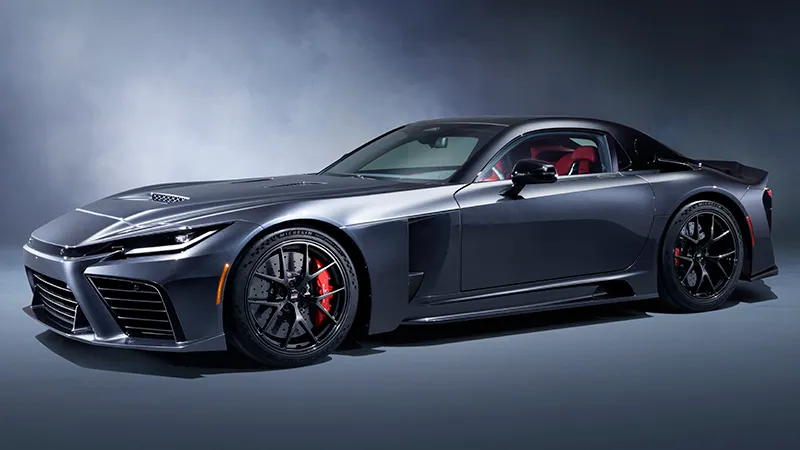
The Toyota GR GT Is the Toyota V8 That Answers a Question Nobody Dared Ask
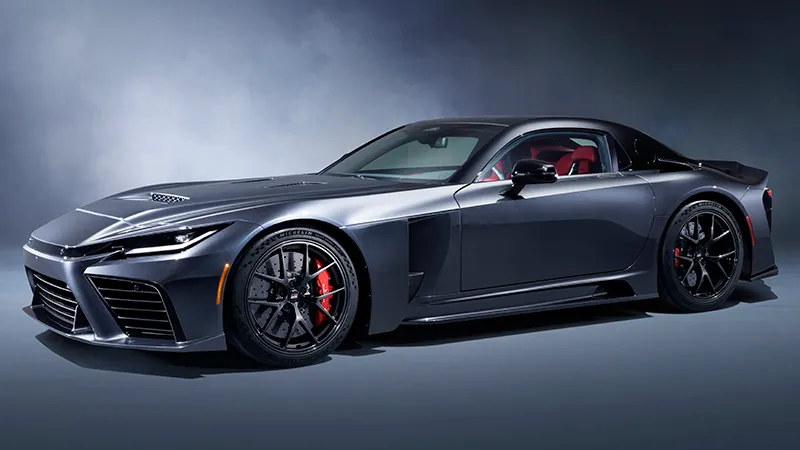
Ask a room of enthusiasts to name the last time Toyota built something to make you shiver, and most will land on the Lexus LFA. A 4.8-litre V10, a soundtrack Yamaha helped tune, and a build run so limited it became a legend the moment it stopped. That was 2010. For fifteen years the answer to “what’s Toyota’s dream car?” was a car you could no longer buy. The GR GT ends that sentence. It is a newly developed 4.0-litre twin-turbo V8, and the most important thing about it is not a number on a spec sheet. It is that Toyota chose to build an eight-cylinder engine it did not need, in an era engineered to make such engines extinct.
The engine deserves the first word, because the rumour mill got it wrong. This is not, as social media insisted, a V8 borrowed from BMW’s shelf. It was developed inside Gazoo Racing from a clean sheet, with a 90-degree bank angle, a bore and stroke of 87.5 by 83.1 millimetres, two turbochargers nested inside the vee in a hot-V layout, dry-sump lubrication, and an oil pan shaved thinner than convention allows. The short stroke matters more than the power figure, because it lowers the whole block. And a lower block is the entire point of this car.
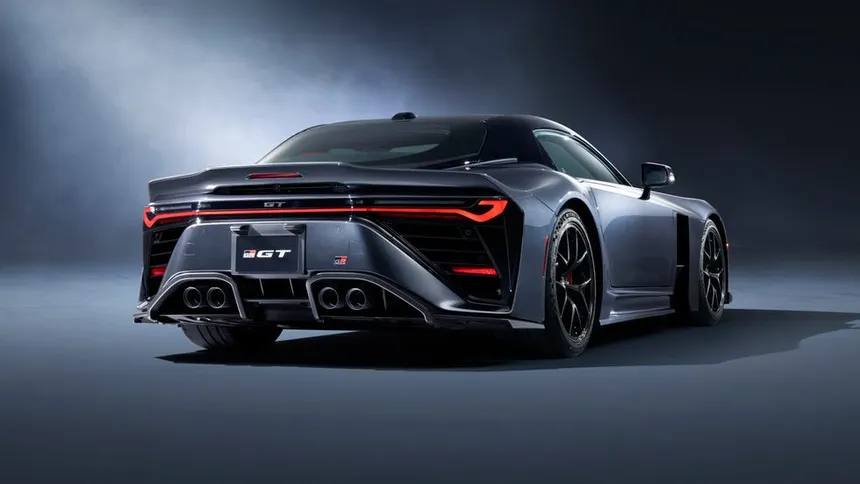
Designed from the floor upward
Toyota tells the development story in reverse of the industry norm, and it is worth taking them at their word. Engineers started not with styling but with a target: get the car’s height and the driver’s seating position as low as physically possible. Only then did they select a front-engine, rear-drive layout, chosen for how manageable it would feel at the limit. And only after that did they position the heavy masses—the dry-sump V8, the rear-mounted transaxle, the drive battery, the fuel tank—to drop the centre of gravity as far as it would go. The payoff shows up in one number: the driver’s centre of gravity and the car’s sit at roughly the same height. In most sports cars the driver perches above the machine’s balance point; here the two are level.
Weight distribution lands at 45:55 front to rear, that rearward bias feeding traction on corner exit and stability under power. Kerb weight is held to 1,750 kilograms or less, remarkable for a hybrid GT carrying a V8 and carbon-ceramic brakes. The enabler is Toyota’s first all-aluminium body frame—large aluminium castings in the main structure, extrusions placed where rigidity demands them, advanced joining methods, and body panels in aluminium and CFRP. This is supercar architecture, and Toyota is not pretending otherwise.
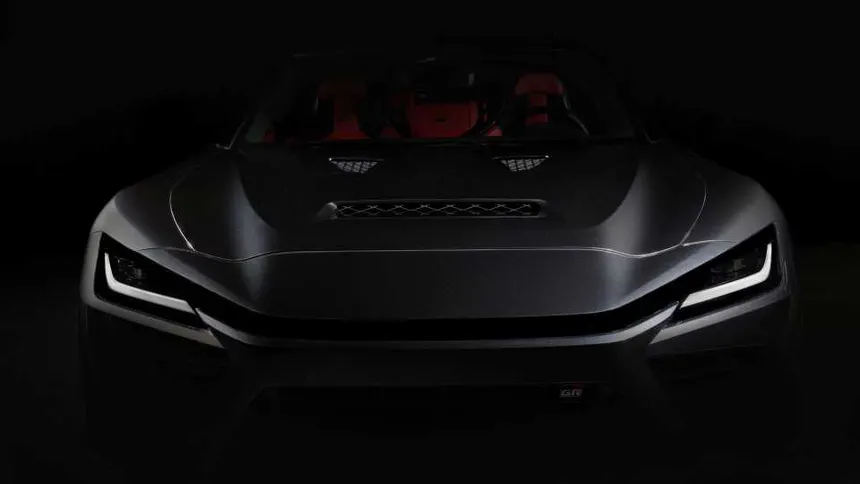
Power is the least of it
The headline figures are 650 PS or more of system output and 850 Nm or more of torque, quoted as development targets. Big numbers, the biggest a road-going Toyota has ever worn. And yet they are almost the least interesting part, because the single-motor hybrid system is not here to win a bar argument. The electric motor lives in the transaxle, and its job is to fill in low-end torque, mask turbo lag, and shove from the first millimetre of throttle. Chris Harris has spent years explaining to camera why throttle response separates a great car from a fast one; this is a hybrid tuned entirely around that idea, rather than around a fuel-economy brochure.
The gearbox rewards attention. It is a newly developed eight-speed automatic built into the transaxle, and it ditches the torque converter for a wet-start clutch. Drive reaches the rear axle through a carbon-fibre torque tube, and the transaxle also houses a mechanical limited-slip differential. Wet clutch, CFRP torque tube, mechanical LSD—that is a race car’s parts list, not a grand tourer’s. These aren’t motorsport touches added for the brochure; they’re the parts you fit when the circuit is the actual target.
Aerodynamics, back to front
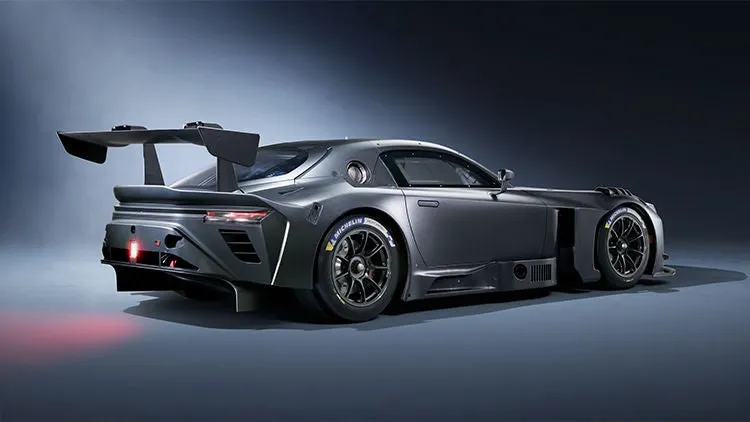
Here is the tell. In conventional road-car development, the body is styled first and the aerodynamicists are handed the shape and asked to make it breathe. On the GR GT the order flipped. The ideal aerodynamic form was established first—an “aero model” proposed by the fluids team—and the exterior was then designed around it. Engineers with FIA World Endurance Championship experience joined the programme and argued every surface with the designers. With a top speed north of 320 km/h, aero was not decoration; it was a first-order engineering constraint. The car you see is the consequence of how it had to move air, not the other way round.
Sound got the same no-shortcuts treatment. Acoustic development rested on two pillars: a sound that lets the driver interact with the car, and a sound that communicates changes in the engine’s thermal energy. The exhaust structure was crafted so the note tracks what the machine is actually doing. At a moment when half the industry pipes fake engine noise through the cabin speakers, Toyota tuned the exhaust so the GR GT sounds like what is actually happening inside the engine.
A chassis tested until it breaks
Suspension is a low-mounted double wishbone with forged aluminium arms front and rear, developed from scratch for linear response and fine control from daily driving to the ragged edge. Tyres are bespoke Michelin Pilot Sport Cup 2s, 265/35ZR20 front and 325/30ZR20 rear. Brakes are Brembo carbon discs, with braking behaviour dialled in alongside professional drivers. The stability control offers multi-stage adjustment of power delivery and braking intervention, letting the driver pick a difficulty level to match skill and weather—the same system Toyota runs in its Nürburgring 24-hour cars.
That thread runs through the whole programme. The GR GT was developed the same brutal way as every GR before it: test, break, fix, repeat. Engineers hammer the car until something fails, improve the part, and start again. It was refined on race simulators from the earliest stages, then flogged at Toyota’s Shimoyama test course, at Fuji, at the Nürburgring, and on open roads to make sure it works on a wet Tuesday as well as a hot lap. This is not marketing wrapped in carbon fibre. It is a car that has bled on the bench.
The cabin was designed from the seat out
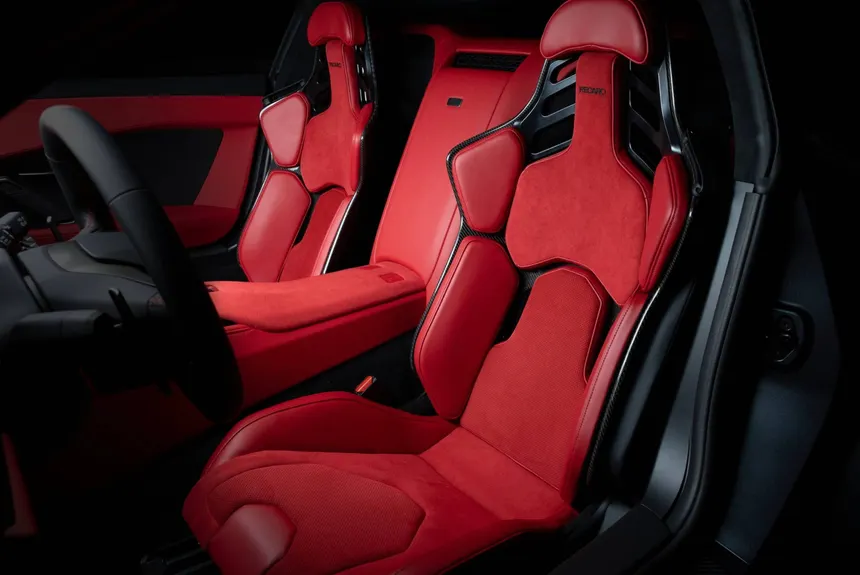
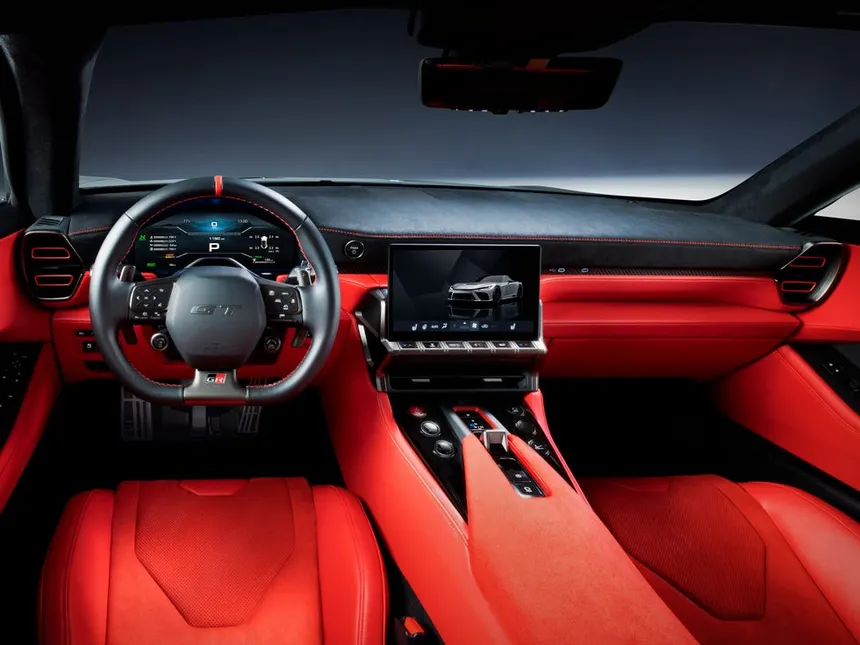
The interior followed the same logic as the rest of the car: function first, form second. Cabin design prioritised driving position and visibility above everything, chasing ergonomics that work for a professional and a gentleman driver alike, on circuit and on the daily commute. Driving-related switches sit close to the wheel, positioned and shaped for intuitive operation without dropping your eyes from the road. The gauges got obsessive attention: the width, height, and placement of the shift-up and gear-selection indicators were settled by trial and error so they read at a glance even at circuit pace. It is the cabin of someone who thought about the driver before the catalogue photograph—the sort of detail that separates a real driver’s car from a fast one dressed up for the brochure.
The GR GT3, the sibling that races
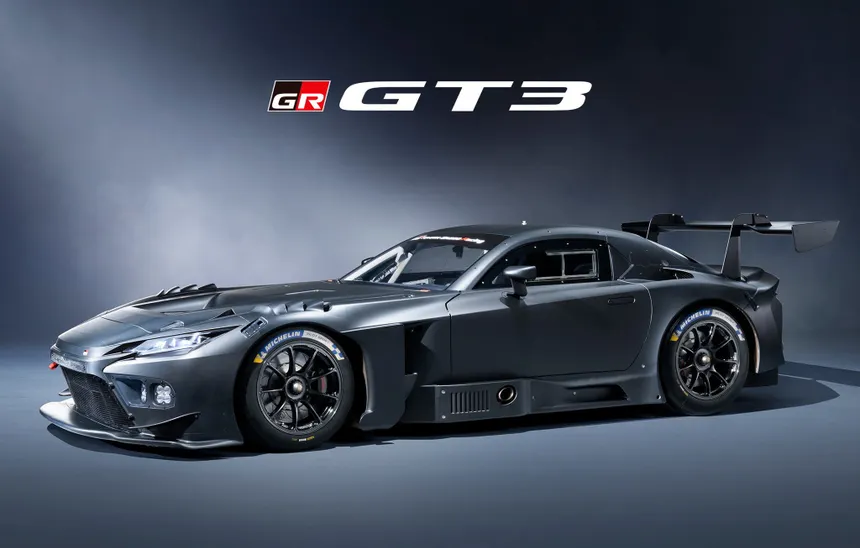
The GR GT did not arrive alone. Alongside it came the GR GT3, an FIA GT3-spec race car built on the same foundation. It shares the three key elements—low centre of gravity, low weight with high rigidity, aerodynamic pursuit—and much of the aluminium chassis and double-wishbone hardware. Its 4.0-litre twin-turbo V8 shares many structural components with the road car’s engine. The GT3’s existence is not a commercial afterthought; it is proof that the road car was conceived from the outset as a homologatable racer. Toyota did not adapt a road sports car to go racing. It designed the two in parallel—the exact reverse of how almost everyone else works. The GT3 is aimed at the customer who wants to win yet finds a car anyone can drive, with a dedicated support system the brand is building in tandem.
Shikinen Sengu: the reason that isn’t on the spec sheet
The word Toyota uses to explain why this car exists is not a performance figure. It is Shikinen Sengu, the Shinto ritual in which a shrine is completely rebuilt every few decades—not just the building, but the furnishings, the garments, the tools. The ritual exists because rebuilding is the only way the artisans—carpenters, smiths, weavers—pass their craft to the next generation. Without the rebuild, the knowledge dies with the people who hold it.
The GR GT, the GR GT3, and the Lexus LFA Concept were born from Akio Toyoda’s conviction that certain car-making skills must be preserved and handed down. The veterans who built the LFA transferred their techniques to younger engineers through this project. That is the real reason the car exists, and it fits in no column marked “torque”. Toyota did not build the GR GT to fill a gap in the range. It built it so that the craft of the LFA would not die. The fact that it also does 320 km/h is almost incidental.
What it deliberately isn’t
It is worth naming what this car refuses to be, because the refusals reveal the intent. It is not a mid-engined supercar; Toyota deliberately chose front-engine, rear-drive—the classic GT formula, the 2000GT formula—prioritising how it handles at the limit over the bragging rights of a mid-ship layout. It is not an electrification showcase; the hybrid serves response, not a sustainability dossier. And it won’t sit in every Toyota showroom—it goes to selected Lexus dealers, a decision that sets it apart from the ordinary road car and pushes it toward the rarefied.
That set of refusals draws a car that knows precisely what it wants to be: a front-engined grand tourer with a race car’s soul, built to lodge in the memory the way the 2000GT and the LFA did. Production is targeted for around 2027, and by then we’ll see how much of these development targets survives into series reality. But the statement of intent is already made, and it is not the kind you walk back.

The car as an answer
There is a deeper reading, and it’s the one that lands. At a moment when nearly the entire industry is cutting cylinders and papering over the loss with cables, Toyota did the opposite—eight cylinders, a real voice, engine up front, gearbox at the back, and electrification that serves the driver instead of the rulebook. The GR GT is a giant company’s answer to a question almost nobody says out loud: did we really have to give all of this up?
It is not a nostalgic answer. This is a 2027 car, aluminium-framed, simulator-bred, with endurance-prototype aerodynamics. But it is also a stubborn insistence that certain things—the craft, the sound, the physical bond between driver and machine—shouldn’t vanish just because a regulatory calendar said it was time. Akio Toyoda promised there would be no boring cars. The GR GT is what happens when a company takes that promise completely at its word.
Comprueba que sigues vivo / Check you’re still alive