
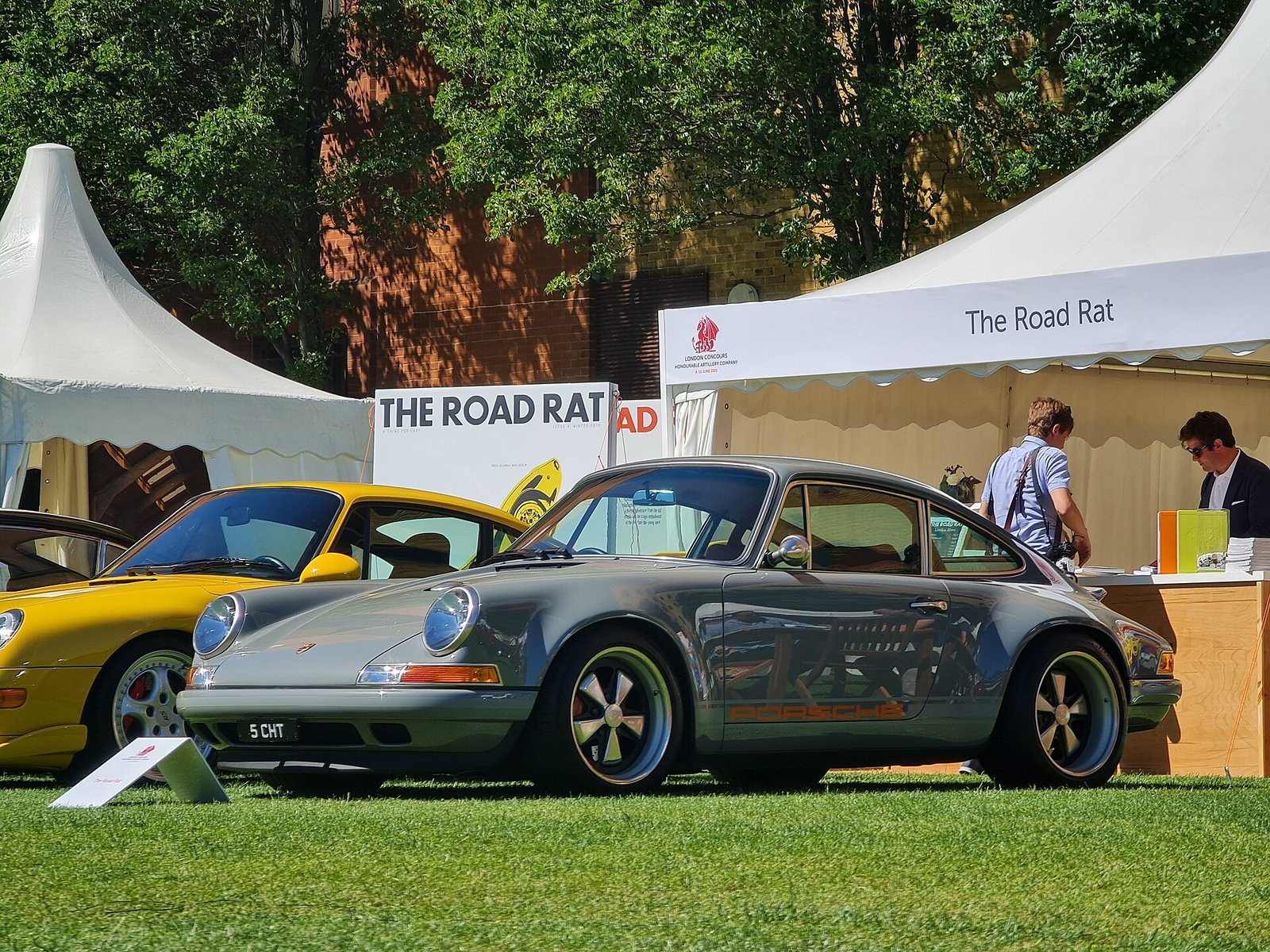
Somewhere in the San Fernando Valley, people are paying more than a new 911 Turbo S for an air-cooled Porsche from around 1990. Not a restored one. A reimagined one, as Singer Vehicle Design likes to say. The conversion alone starts above $475,000 by published figures, before you’ve even supplied the donor car, and a well-optioned build can head toward $1.5 million or beyond. The waiting list is measured in years: three, four, depending on who’s telling it.
Meanwhile, Detroit, Stuttgart and Tokyo keep telling us the future is a crossover with a 15-inch screen, voice control and over-the-air updates. If that’s progress, why are the cars generating the most passion right now decades old?
They’re called restomods. Restored, modified. And they’re not a fad for bored billionaires. They’re the clearest evidence there is that the car business has lost track of what people actually want.
What a restomod is
The idea is simple. Take an iconic classic, keep its shape and its character, and replace the guts with modern hardware. Better engine, better chassis, better brakes, better everything. The emotional shell with today’s engineering underneath. Think of a vintage tube amp rebuilt with modern components: same warmth, none of the hum.
It solves a problem a lot of enthusiasts know well. They want a car that makes them feel something. They don’t want the rust, the drum brakes, the vapor lock and the 45 horsepower that came with the original.
America understood this before anyone. Hot rodders were dropping V8s into Model As before the word "restomod" existed, and the pro-touring crowd has spent decades turning first-gen Camaros and Mustangs into cars that stop, steer and handle like modern sports cars. What’s changed is that the idea has gone upmarket, global and very, very expensive.
Why nostalgia hits so hard
We tie shapes, sounds and smells to specific moments in our lives. The cars on the bedroom wall, the one in the driveway when you were a kid, the one in the movie you watched a hundred times. Carmakers know this and exploit it constantly. Look at how much more attention the retro-styled electric Renault 5 gets compared with Renault’s more conventional EVs. You’re not buying a car. You’re buying a memory.
The ones doing it right
Singer: the gold standard
Singer, based in Los Angeles, defined the modern restomod. It takes 964-generation 911s, the last air-cooled shapes before the 993, and rebuilds them part by part with an obsessive attention to detail that borders on the unhealthy. It isn’t a tuned Porsche. It’s what Porsche might have built in 1990 with today’s technology and no accountants in the room. And the market agrees: used Singers change hands for around $1 million because buyers would rather pay than wait.
Kimera EVO37: the 037 lives again
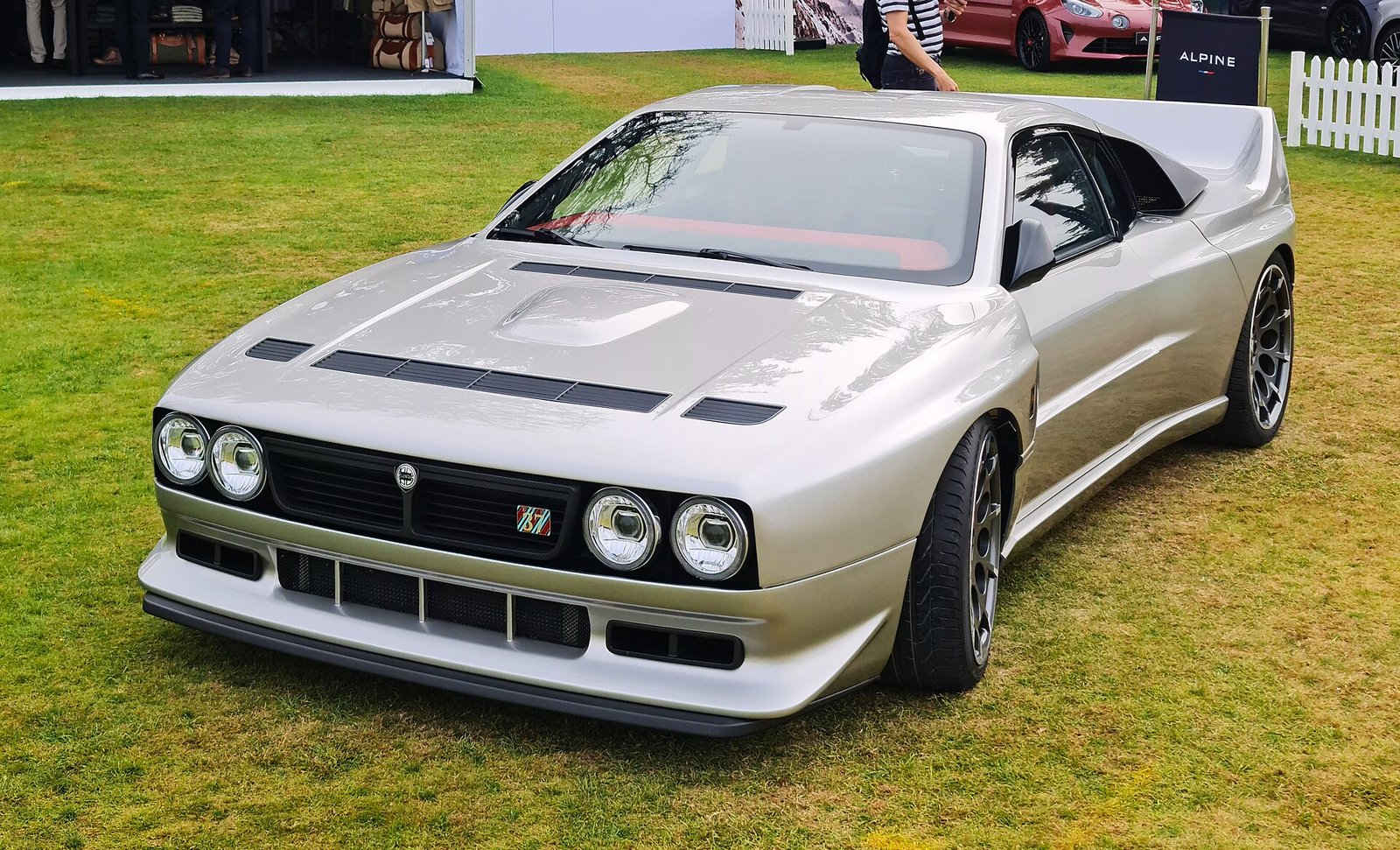
The Lancia 037 is one of the most beautiful rally cars ever built, the last rear-drive car to win a World Rally Championship manufacturers’ title, in 1983. Italy’s Kimera Automobili brought it back as the EVO37: a supercharged and turbocharged engine in the spirit of the original, a carbon-fiber body that respects every curve, and an interior that smells like a service park. Only 37 were planned. The first 26 sold at €480,000 each, around half a million dollars; the last nine went up to €540,000. Half a million for a feeling.
HWA Evo: the AMG founder rebuilds his own legend
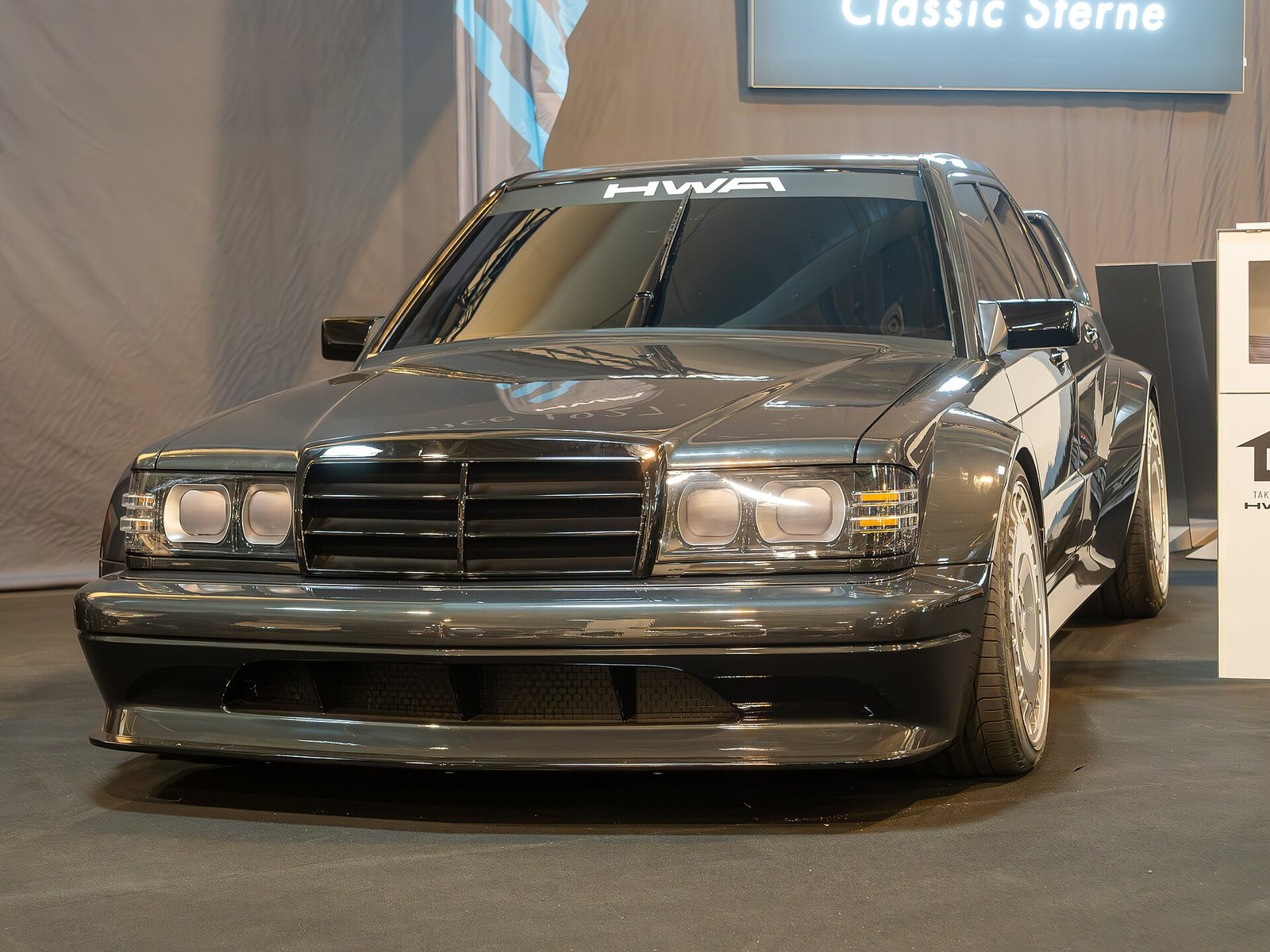
If one restomod has it all, history, legitimacy, engineering and a shape that makes grown men stop talking, it’s the HWA Evo. Hans Werner Aufrecht is the "A" in AMG. After selling his share of that business to Mercedes, he founded HWA, which went on to run Mercedes’ DTM program for years. For HWA’s 25th anniversary, he brought back the car that defined German touring car racing in the early ’90s: the Mercedes 190E 2.5-16 Evolution II, the box-flared sedan Americans mostly know from posters and video games.
They don’t butcher any of the 502 original Evo IIs. They start with a regular W201 190E shell and rebuild it from scratch: carbon-fiber body, wider and longer than the original, a Mercedes 3.0-liter twin-turbo V6 with about 444 hp, upgradeable to nearly 500, a six-speed manual, rear-wheel drive and about 1,350 kg, roughly 2,976 pounds. Only 100 will be built, at €714,000 before taxes. The first one, chassis 000, sold at RM Sotheby’s in Tegernsee, Germany, in July 2024 for €1.31 million including fees and taxes.
Legende Automobiles: the R5 Turbo 3
A modern take on the mid-engined Renault 5 Turbo, the little French rally monster that was never sold in the US. Turbocharged four-cylinder of about 400 hp sitting just ahead of the rear axle, a rally-style sequential gearbox, and a body almost entirely in carbon fiber: fenders, doors, roof and hoods. When Renault won’t do it, a small independent shop proves the demand is there.
Eagle, Alfaholics and David Brown
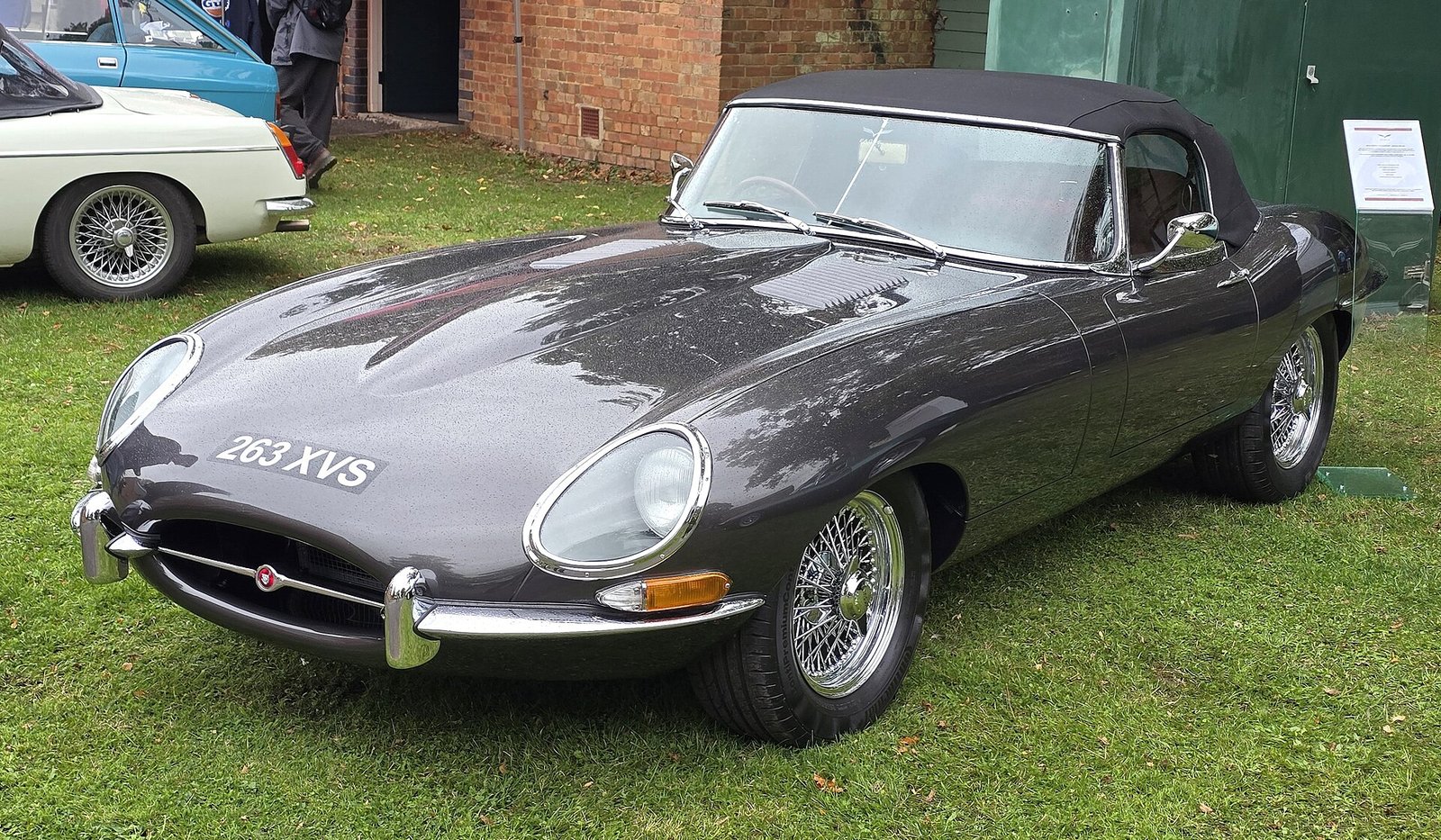
In England, Eagle rebuilds Jaguar E-Types to modern engineering tolerances, and some people say the results are better than the originals. They certainly cost far more. Alfaholics takes 1960s Alfa Romeo Giulia GT coupes and turns them into featherweight, hand-tuned twin-cam machines in the spirit of the racing GTA. David Brown Automotive turns the classic Mini, a car designed so anyone could afford one, into a luxury object that costs as much as a well-equipped new SUV.
The ones that get it wrong
Not every nostalgia play works. The failures share a pattern: they borrow the name and betray the idea.
Fiat 124 Spider: the Japanese disguise
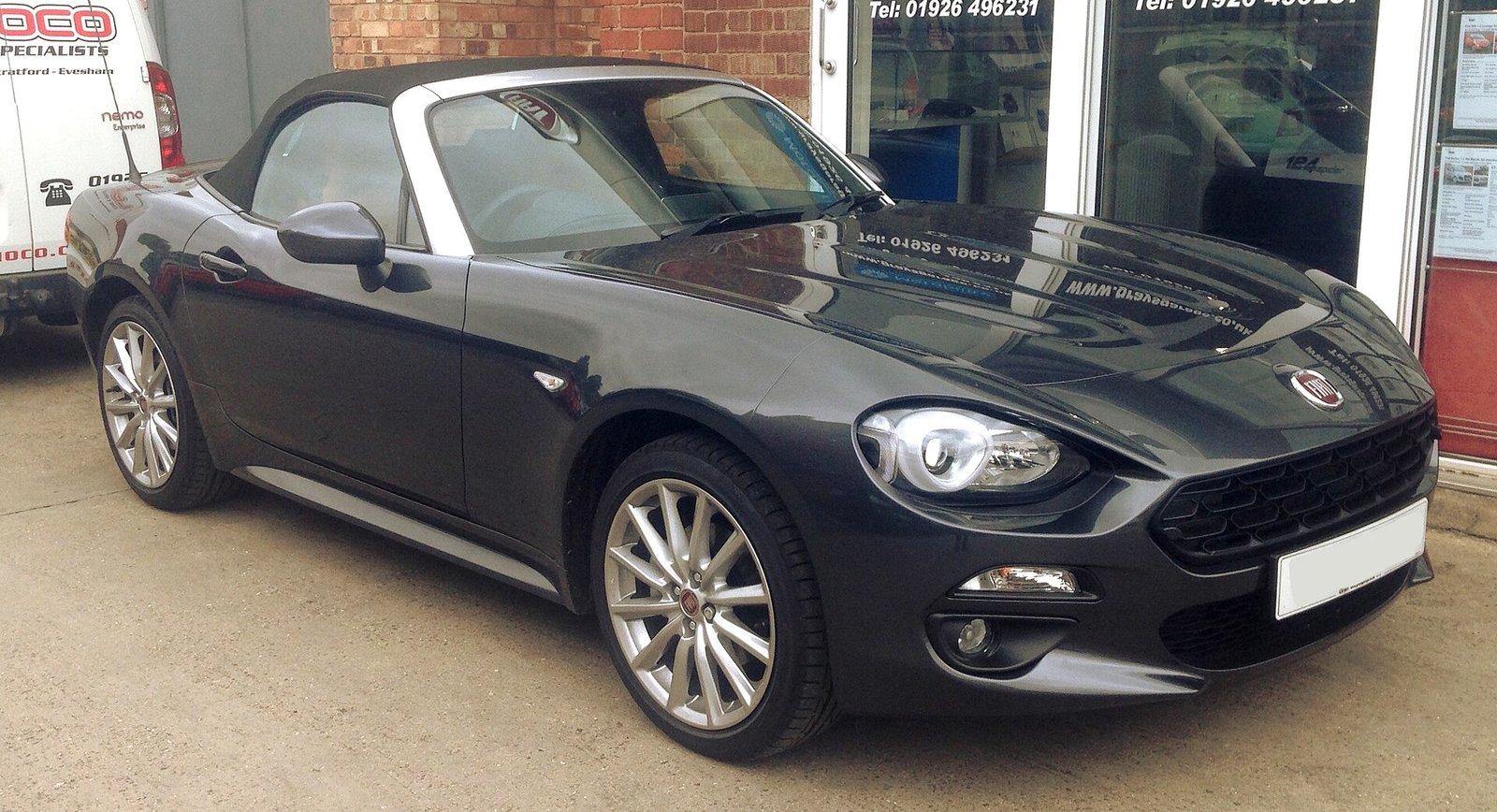
Americans saw this one up close. Fiat took a Mazda MX-5 Miata, built by Mazda in Hiroshima, put an Italian-styled body on it, a Fiat turbo engine under the hood, and called it the 124 Spider. The car was fine. The Miata underneath is great. The problem was that everyone knew. Once you know there’s a Mazda under the dress, the spell is broken. The 124 Spider name promised an Italian roadster story; what you got was a rebadge with better marketing.
VW Scirocco III: the empty name
Europe got this one, and America was spared. The original Scirocco, especially the Giugiaro-designed Mk1, was all clean lines and lightness. The 2008 Scirocco was a Golf in a different suit, on the Golf’s platform. They kept the name and lost the point, and the car died without a successor.
What separates the winners
The successes share three things the failures never have.
First, the silhouette is sacred. Singer doesn’t touch the 911’s profile. Kimera doesn’t change the 037’s proportions. Eagle doesn’t redesign the E-Type. The original shape is the emotional anchor, and if you change it, you lose the connection.
Second, the mechanicals have character. A modern engine isn’t enough on its own. The supercharger-plus-turbo setup in the EVO37 is a direct nod to the original. Singer’s air-cooled flat-six is the whole point of the car. The machinery has to tell a story.
Third, the execution is sincere. Buyers have to feel the builder loves the car as much as they do. When the motive is purely commercial, as with the 124 Spider or the Scirocco, it shows.
Why the big brands can’t do it
Singer, Kimera and Eagle are shops run by obsessives who answer to themselves. Every decision gets one test: is this true to the car? If not, it doesn’t happen.
Big carmakers can’t work that way. Every decision passes through product committees, profitability studies, cannibalization analysis, emissions rules and the amortization schedule of a shared platform. The result is the lowest common denominator: a competent product that offends no one and excites no one. We’ve written about where that road ends, with cars that are basically iPads on wheels.
What it looks like in Spain
We write from Spain, and here restomods run into an obstacle American builders don’t have: the ITV, Spain’s mandatory vehicle inspection. Under Royal Decree 866/2010 and the Industry Ministry’s modification manual, changing a car’s engine, suspension or brakes counts as a formal modification that needs an engineering report, a compliance report and a workshop certificate before it’s legal. A true restomod is a pile of modifications, and every one has to be signed off. We’ve detailed how painful legally modifying a car in Spain is; a restomod multiplies it.
Shops do it anyway. Pradell Automotive in Taradell, near Barcelona, builds full restorations and restomods with modified chassis and engine swaps, and Spanish outlets reported in November 2025 that its waiting list already ran to 2028, with a first trip to SEMA in Las Vegas in the works.
The one I lose sleep over: a Volkswagen Corrado
Since we’re dreaming, let me dream out loud. There’s a restomod nobody has built that would, done right, blow up the market, or break my heart if I couldn’t afford it: a Volkswagen Corrado.
The original Corrado had perfect proportions, a low beltline, that pop-up rear spoiler, and a compact, aggressive stance no VW coupe has had since. It died in 1995 and VW never gave it a real successor.
Now picture this. The original silhouette respected to the millimeter, with subtle fender flares. Under the hood, the 2.5-liter turbocharged five-cylinder from the Audi RS3, but mounted longitudinally instead of transversely. That changes everything: better weight distribution, less load on the front axle, a different car to drive. All-wheel drive with a mechanical Torsen center differential, old-school Quattro thinking, instead of the RS3’s electronically controlled system. More than 400 hp, with no computer deciding where the power goes.
And the sound. Anyone who’s heard an inline five knows. It’s somewhere between the bark of a four and the smoothness of a six, and nothing else sounds like it.
Could Volkswagen build it? Every ingredient is already in the pantry: the heritage, the engine, the drivetrain, the know-how. It won’t. Too many committees. But if an independent shop with Singer’s vision took a Corrado and built exactly that, 500 units, high price, no compromises, the waiting list would fill overnight.
A time machine with a license plate
In the end, restomods aren’t explained by spec sheets or market studies. They’re explained by something the industry doesn’t want to hear: modern cars are better at everything, safer, cleaner, faster, more connected, and most of them make you feel nothing.
When someone pays half a million for a Kimera EVO37, they’re not buying a car. They’re buying a time machine, and the version of themselves that fell for cars watching rally videos as a kid. No electric crossover with a panoramic screen can sell them that.
That, product planners of Detroit, Wolfsburg and Turin, doesn’t have a price. It does have a waiting list.
Check you’re still alive.
Photos: MrWalkr (CC BY-SA 4.0); MrWalkr (CC BY-SA 4.0); MrWalkr (CC BY-SA 4.0); Makizox (CC BY-SA 4.0); MB-one (CC BY-SA 4.0). Via Wikimedia Commons.