Renault 5 Alpine: the hot Le Car America never got to drive
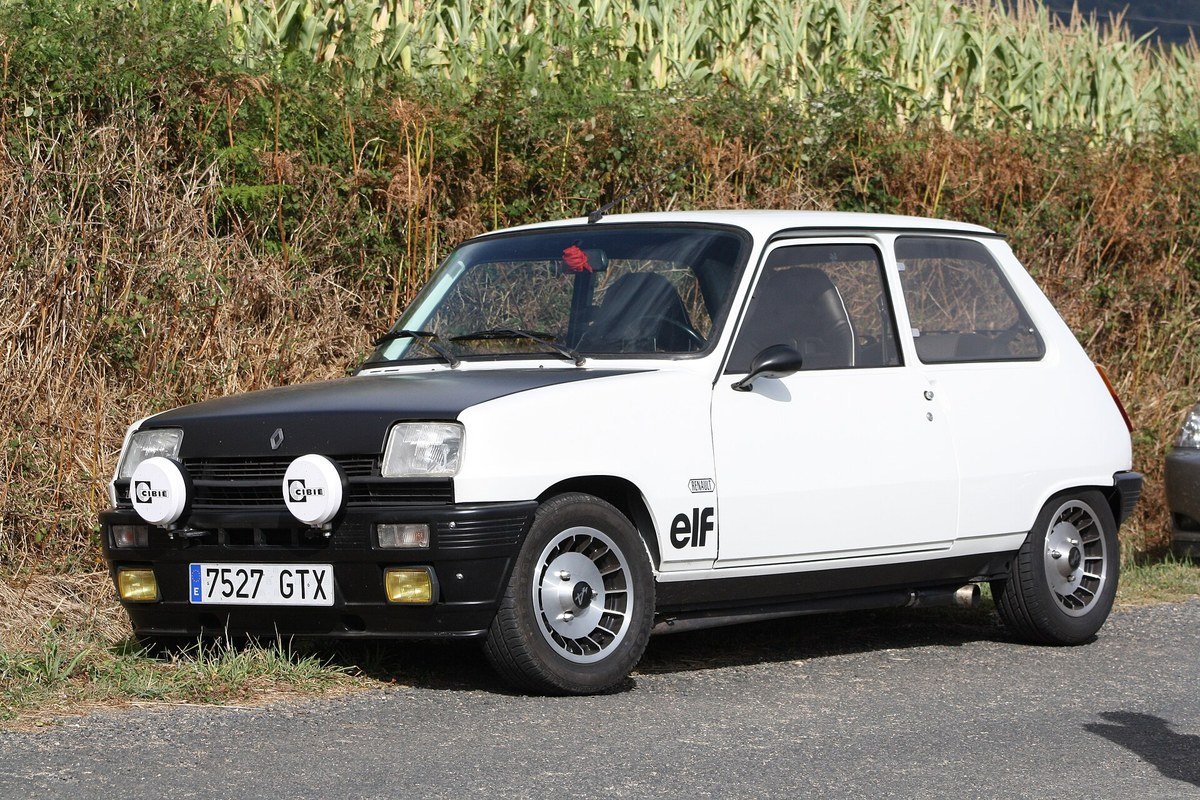
Ask an American of a certain age about the Renault 5 and you’ll get a smirk. Over here it was Le Car, a tin box with a canvas sunroof and a name that sounded like a joke from a sitcom writers’ room, sold from 1976 and later pushed through AMC dealerships next to Jeeps and Concords. What nobody told American buyers was that the same little hatchback had a sibling in Europe that finished second in the Monte Carlo Rally, ran rings around cars costing three times as much, and helped write the rules for every cheap fast hatchback that followed. It was the Renault 5 Alpine, it showed up in 1976, and it never crossed the Atlantic.
That’s a shame, because the recipe would have made perfect sense to anyone who ever put a hot cam in a Chevy small-block: take a cheap, light, mass-produced car, give it a tuned version of an old-school iron engine and a proper gearbox, and let it embarrass people with more money. The French just did it in a car with a wheelbase of about 95 inches.
A cheap car built on a dead man’s sketch
The story starts with a designer named Michel Boué. In 1968, in his spare time, he sketched a new small Renault by tracing a shape over a photograph of the old Renault 4. Management loved it enough to greenlight it almost untouched. Boué died of cancer in 1971, months before the Renault 5 went on sale in January 1972. He never saw one on the street.
The car he left behind became the people’s car of France. It was short, clever and cheerful, with something nobody else had in 1972: big plastic bumpers instead of chrome. Designers mocked them at the time. Ten years later every manufacturer on the planet was doing the same thing, partly because of crash rules that hit American cars first, with the five-mile-an-hour bumper standard of the mid-seventies. The Renault 5 got there for style and practicality. Everyone else got there because Washington told them to.
A car that popular was always going to get a fast version. What made this one different was the badge Renault chose for it.
Why the Alpine name mattered
To a French enthusiast in the seventies, Alpine meant the A110 Berlinette, the tiny fiberglass coupe from the Normandy port of Dieppe that won the first ever World Rally Championship for manufacturers in 1973. Think of it as France’s answer to a Shelby badge: a small outfit that turned Renault parts into winners. Renault bought a controlling stake in Alpine in 1972, and the plan was that the small performance Renaults would be developed and built in the Dieppe works that founder Jean Rédelé had opened in 1970.
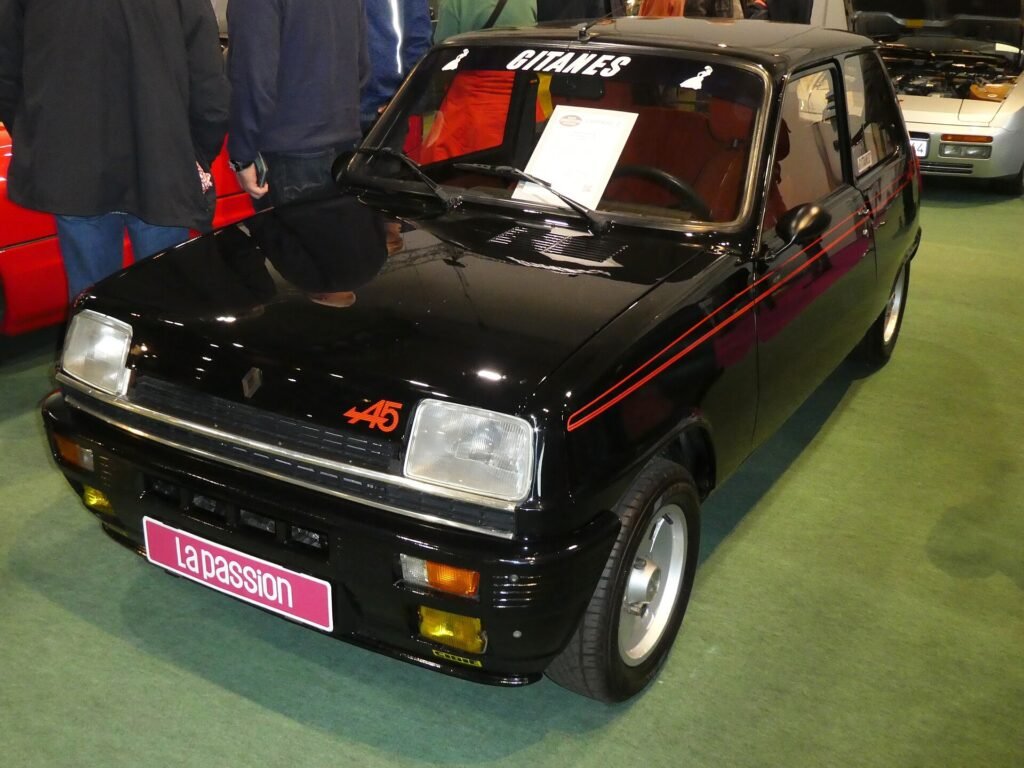
So the Renault 5 Alpine wasn’t a sticker package. Under the hood sat the Cléon-Fonte four, a 1,397 cc cast-iron engine with a single camshaft down in the block and pushrods working the valves. If that sounds familiar, it should. It’s the same basic layout as a Detroit V8 of the era, just with half the cylinders and a fraction of the displacement. Simple, tough, easy to wrench on. Alpine gave it an aluminum head, more compression and a two-barrel Weber carburetor, and the result was 93 hp at 6,400 rpm. That’s roughly 66 hp per liter from a pushrod engine, a number that would have made plenty of American engineers raise an eyebrow in 1976.
The math that made it quick
In the bicentennial year, a lot of American performance cars were choking on emissions equipment. A 1976 Corvette’s base V8 made 180 hp, and it had to haul around well over 3,000 pounds. The Renault 5 Alpine weighed about 850 kilograms, which is around 1,870 pounds. That works out to roughly 20 pounds per horsepower, and on a narrow, twisting road that matters far more than the number on the spec sheet. Top speed was around 175 km/h, close to 109 mph, at a time when the national speed limit at home was 55.
The gearbox was the other piece of the puzzle. Most small European cars of the day had four forward speeds. The Alpine borrowed a five-speed from the bigger Renault 16 TX. On a mountain road that fifth ratio let you keep the little engine right in its sweet spot. On the highway it calmed things down. Today nobody notices a fifth gear. In 1976, on a car this cheap, it was a statement. In France the Alpine cost around 30,000 francs, ordinary-car money for a car that could keep up with much more expensive machinery.
It’s worth being straight about where it sits in history. The Alpine was not the first small car to get the hot treatment. Italy had the Autobianchi A112 Abarth from 1971, and France had the Simca 1100 Ti from 1973, with 82 hp. And Volkswagen’s Golf GTI, which went on sale in Germany in June 1976, had 110 hp, fuel injection and a top speed of 182 km/h. Americans wouldn’t get that car until 1983, when the Rabbit GTI rolled out of the Westmoreland plant in Pennsylvania. The Renault never came at all.
Second at Monte Carlo, in the snow
The moment that made the Alpine’s reputation came in January 1978, at the Monte Carlo Rally, the most famous event on the calendar. That year it snowed hard, and in deep snow horsepower turns into a liability. What wins is low weight, traction and a driver who isn’t afraid of the car moving around.
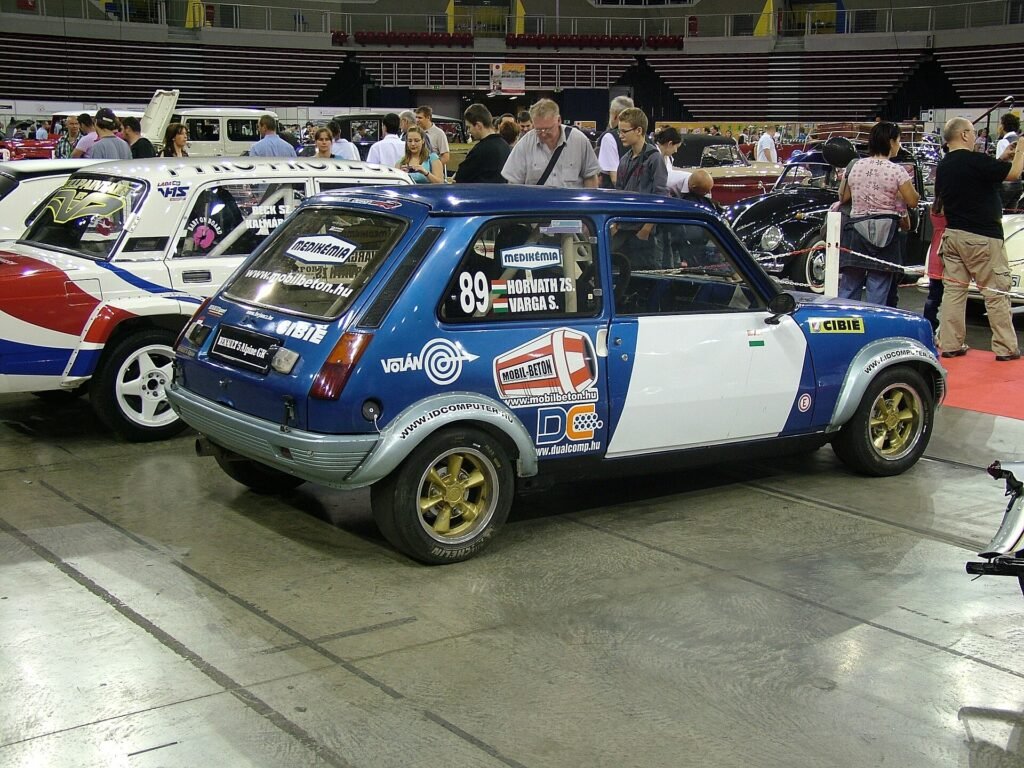
Renault entered a pair of Group 2 cars, which means modified production models rather than purpose-built specials. The team was hoping for a class win. Instead, Jean Ragnotti and co-driver Jean-Marc Andrié finished second overall and Guy Fréquelin finished third. The only car ahead of them was Jean-Pierre Nicolas’s Porsche 911, and after nearly seven hours of competitive stages the gap between first and second was under two minutes. Picture a modified economy hatch finishing on the podium of a major event, ahead of factory-backed exotica, and you get the idea.
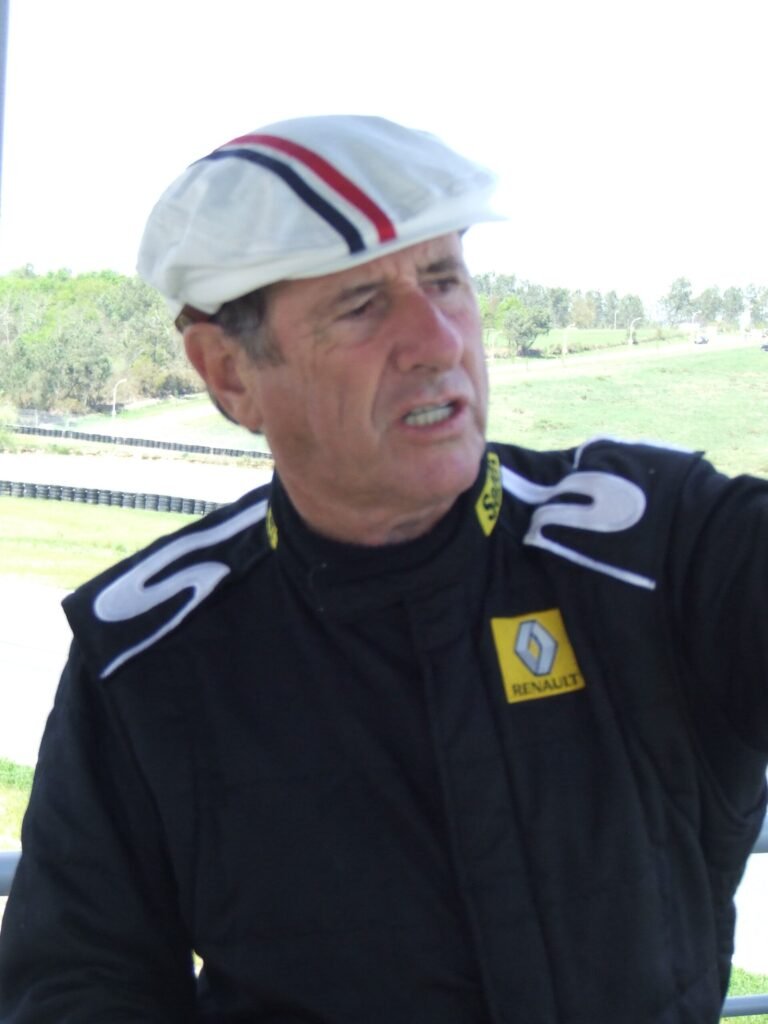
Ragnotti became Renault’s favorite son that day. He was the kind of driver who would throw a car sideways just because a crowd was watching, and he’d stay with Renault through the wild mid-engine Turbo years. The Alpine kept scoring after Monte Carlo too: a podium in the Ivory Coast that same year and second place at the Tour de Corse in 1979, an all-tarmac rally where a short, light car can dance. In France, Renault also ran a one-make series for the car, and for it built 706 special Alpine Turbo cup cars with a strengthened shell, vented front discs from the Renault 12 Gordini and a baffled oil pan so the engine wouldn’t starve in long corners.
Alpine, Gordini, Copa: one car, three names
Here’s where it gets messy. In Britain, the car wasn’t called Alpine at all. The Alpine name had belonged to Sunbeam since 1953, Sunbeam’s parent company Rootes ended up inside Chrysler, and in 1975 Chrysler revived the name for a family sedan, the Chrysler Alpine. That’s the same Chrysler that owned Dodge and Plymouth back home. With a Chrysler Alpine already in British showrooms, Renault couldn’t sell a Renault Alpine next to it.
So Renault reached for another name from its own past: Gordini. Amédée Gordini, born near Bologna in Italy in 1899, was a tuner nicknamed “the sorcerer” who had been squeezing extra power out of Renault engines for decades. In Britain the car went on sale in 1979 as the Renault 5 Gordini, and the name stuck even when the turbo version arrived.
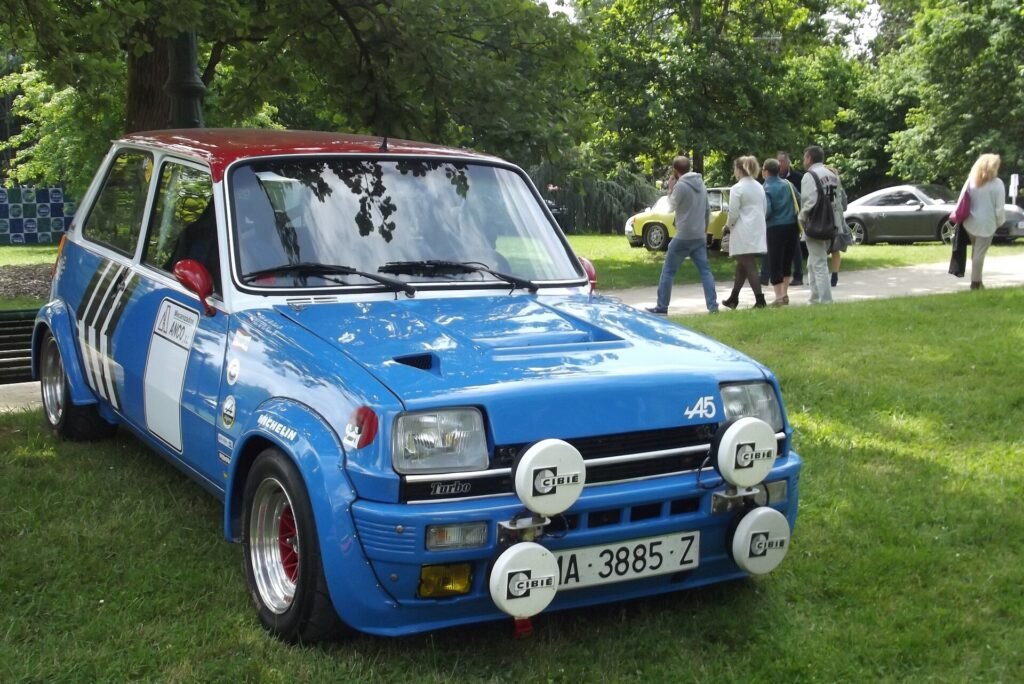
Then there’s Spain, which most English-language histories skip entirely. The Renault 5 was built in Spain from 1972 by FASA-Renault in Valladolid, a factory that Spaniards treated as their own. It was so much a local product that FASA even built a four-door sedan version, the Siete, which the French never sold at home. The hot version was sold in Spain as the Renault 5 Copa, named after the one-make racing series Renault ran on Spanish tracks, where whole grids of these cars traded paint every weekend. Spanish sources say it was assembled in Valladolid with some parts shipped in from France. When the turbo arrived, the Spanish market called it the Copa Turbo. So depending on where you lived, the same car was an Alpine, a Gordini or a Copa.
The turbo, and what came after
In September 1981, Renault bolted a Garrett T3 turbocharger onto the Cléon engine and created the Renault 5 Alpine Turbo. For anyone who hasn’t lived with one: a turbo uses exhaust gas that would otherwise be wasted to spin a turbine, which drives a compressor that forces more air into the engine. More air means more fuel can be burned, and more power comes out of the same displacement. Renault’s version was a bit old-fashioned. The turbo blew through the carburetor rather than feeding a fuel injection system, a cheap trick that let them keep a conventional carb. Output rose to 110 hp, and top speed went past 185 km/h, about 115 mph.
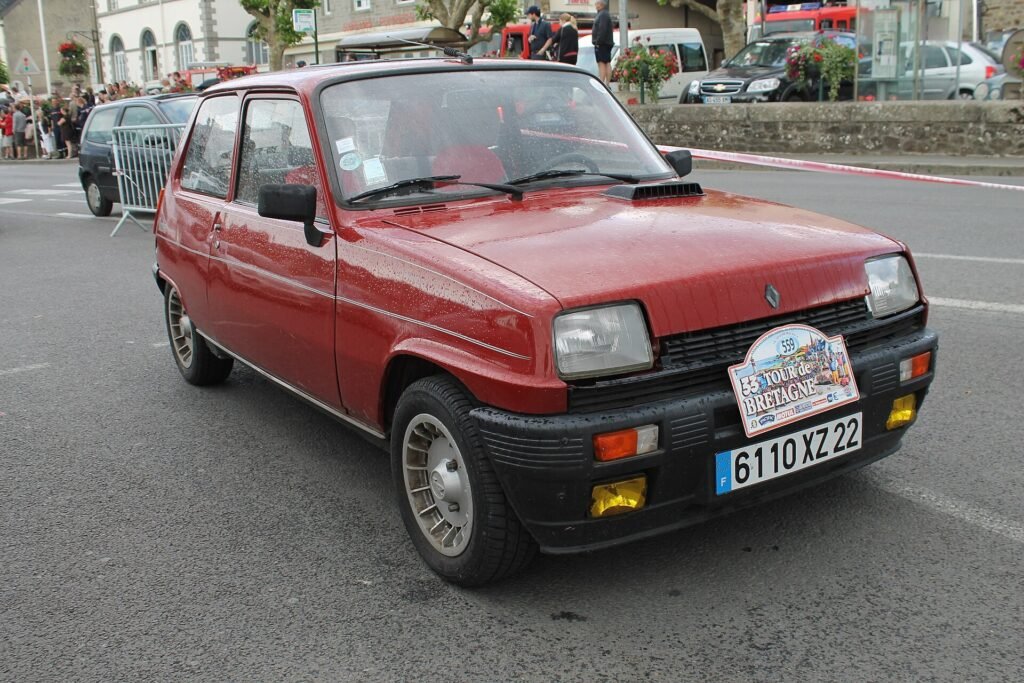
One thing gets mixed up constantly: the Alpine Turbo did not lead to the mid-engine Renault 5 Turbo, the Group B rally monster with the engine behind the seats. That car came first, in 1980. Renault was the team that brought turbocharging to Formula 1 in 1977, and the Alpine Turbo was the street-level trickle-down of that obsession, the version someone with a regular paycheck could actually buy.
Total production of the Alpine in all its forms came to about 80,000 cars, roughly 56,000 naturally aspirated and 24,000 turbocharged. In 1984 the turbo was renamed Lauréate Turbo as a send-off, and the second-generation Renault 5 picked up the baton with the GT Turbo. By then the US had moved on to the Renault Alliance, built in Kenosha, Wisconsin, and named Motor Trend’s Car of the Year for 1983.
The one that got left out
When Americans talk about where the hot hatch began, the answer is almost always the Golf GTI, and in fairness the GTI did set the formula that won: more engine, fuel injection, plaid seats and a giant sales network that eventually included the United States. But the Renault 5 Alpine arrived the same year, with the same basic idea, and it came from a racing family the Volkswagen couldn’t claim. The reason one became a legend and the other a footnote has more to do with marketing muscle and which markets each car reached than with what they were like to drive.
The Alpine deserves a seat at that table. It was light when light wasn’t fashionable, it was fun when fun cost serious money, and it went to the most famous rally on earth and came home on the podium with 93 hp. Next time someone laughs about Le Car, you can tell them that its hot sibling went toe to toe with a Porsche 911 in the snow above Monaco and lost by less than two minutes.
Check you’re still alive.
Photos: Jorjum (CC BY-SA 3.0), Andrew Bone (CC BY 2.0), Handelsgeselschaft (CC BY-SA 4.0), granada_turnier (CC BY 2.0), ThierryCollard (CC BY-SA 4.0), Kev22 (CC BY-SA 4.0).