Kimera K39: a 986 hp Koenigsegg V8, a seven-speed manual and a target on Pikes Peak
America taught the world to love the restomod. Singer in Los Angeles turned old Porsche 911s into some of the most desirable cars on earth, and an entire industry grew up around taking a classic and rebuilding it with modern engineering. In Italy, a former rally driver named Luca Betti did the same thing with the Lancia 037, the last rear-wheel-drive car to win the World Rally Championship, and his company Kimera Automobili became one of the stars of the restomod world.
Then Betti did something most restomod builders never do. He stopped borrowing old cars. The Kimera K39, revealed at the Concorso d’Eleganza Villa d’Este on the shore of Lake Como in May 2026, is an all-new car designed from a clean sheet, with a carbon-fiber chassis, a seven-speed manual gearbox and an engine nobody expected to see outside Sweden: a twin-turbo V8 from Koenigsegg. Its next big stops include Monterey Car Week in California and, eventually, Pikes Peak in Colorado.
In short: the Kimera K39 is the first clean-sheet car from Luca Betti’s Kimera Automobili, the Italian firm known for the Lancia 037-inspired EVO37 restomod. Revealed at Villa d’Este in May 2026, it has a carbon chassis, a seven-speed manual and a 5.0-litre twin-turbo V8 from Koenigsegg with 986 PS and 1,200 Nm on 95-octane fuel, and it is aimed at Pikes Peak.
From Cuneo to Lake Como
Six years before the K39, Betti was restoring classic Lancias in Cuneo, in northwest Italy. Kimera’s first car, the EVO37, used a Lancia Beta Montecarlo as a donor, kept the central section of its structure, reinforced it with tubular frames and built a modern interpretation of the 037 Group B rally car around it. It had a turbocharged and supercharged four-cylinder and an analog, mechanical feel that collectors loved. The EVO38 that followed pushed the same idea further.
Both were restomods: superb ones, but rooted in an existing car. The K39 is the moment Kimera became a manufacturer.
The car behind the name
To understand why Betti’s first cars mattered, you need to know about the Lancia 037. In 1983, Lancia won the World Rally Championship for manufacturers with a mid-engined, rear-wheel-drive car against Audi’s all-wheel-drive Quattro, a victory that shouldn’t have been possible on paper. The 037 had a supercharged four-cylinder, a chassis developed with Dallara and bodywork by Pininfarina, and in the hands of drivers like Walter Röhrl and Markku Alén it beat the more technologically advanced Audi through clever strategy and sheer commitment. It was the last rear-drive car ever to win the championship.
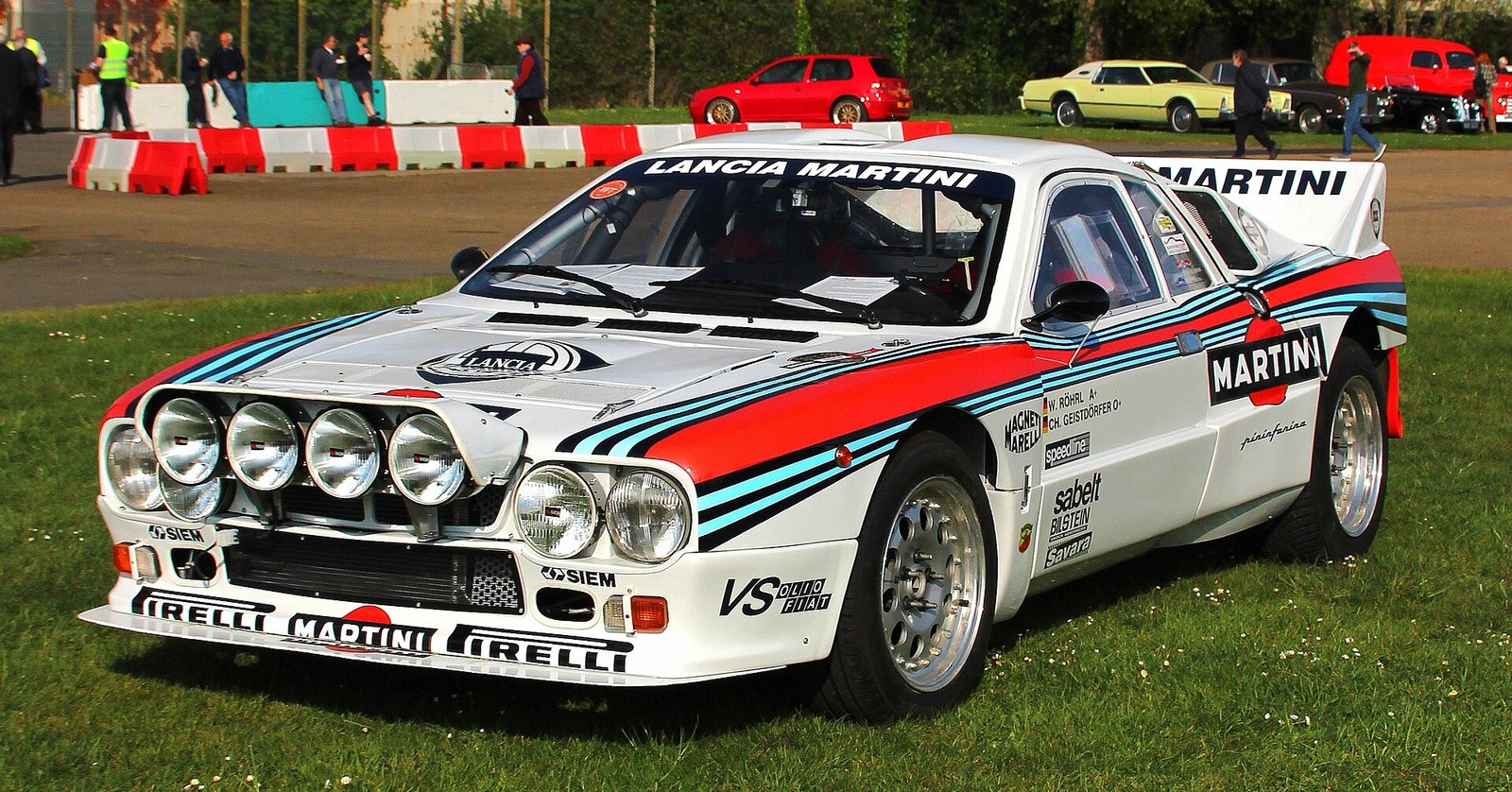
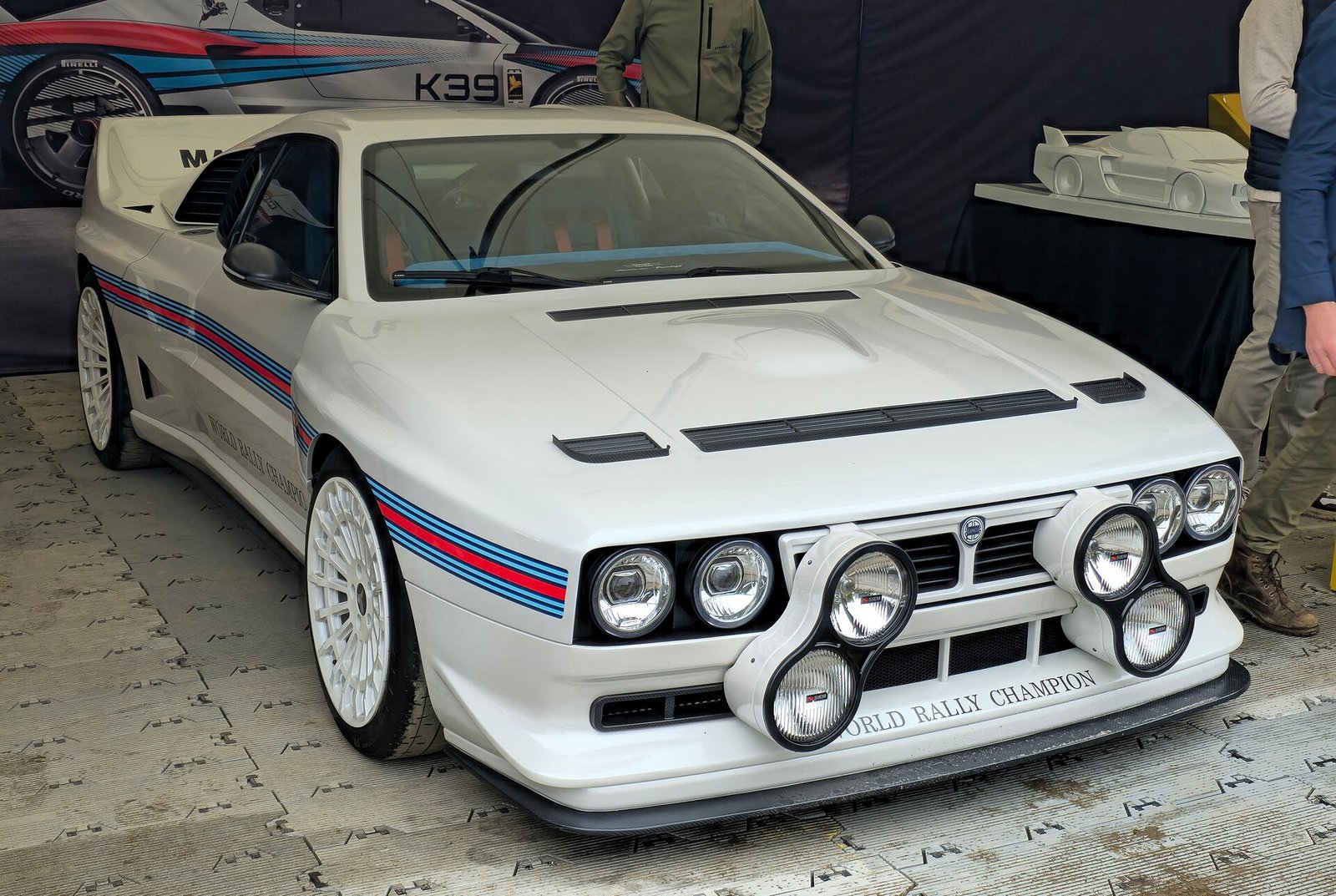
Kimera’s EVO37 was a love letter to that car. The K39 keeps the spirit and leaves the old structure behind.
The Koenigsegg connection
The headline is the engine. Kimera’s K39 uses a 5.0-liter twin-turbo V8 developed by Koenigsegg, the Swedish hypercar maker whose engines are among the most advanced in the world. In Koenigsegg’s own Jesko, that engine family can make close to 1,600 hp on E85 ethanol fuel. For Kimera it was set up differently: smaller turbochargers from the earlier Agera, specific software and a redesigned intake, producing 986 metric horsepower at 7,350 rpm and 1,200 Nm, about 885 lb-ft, of torque, on ordinary 95-octane pump gasoline, with a rev limit of 8,250 rpm.
The aim wasn’t the biggest possible number. It was response: power you can feel and use in every gear, from low revs to the limiter. According to the figures Kimera and Koenigsegg have released, the engine meets emissions rules in markets around the world, carries Koenigsegg’s "Ghost Squadron" emblem on its cover, and lets owners receive software updates over the air through Koenigsegg’s cloud system.
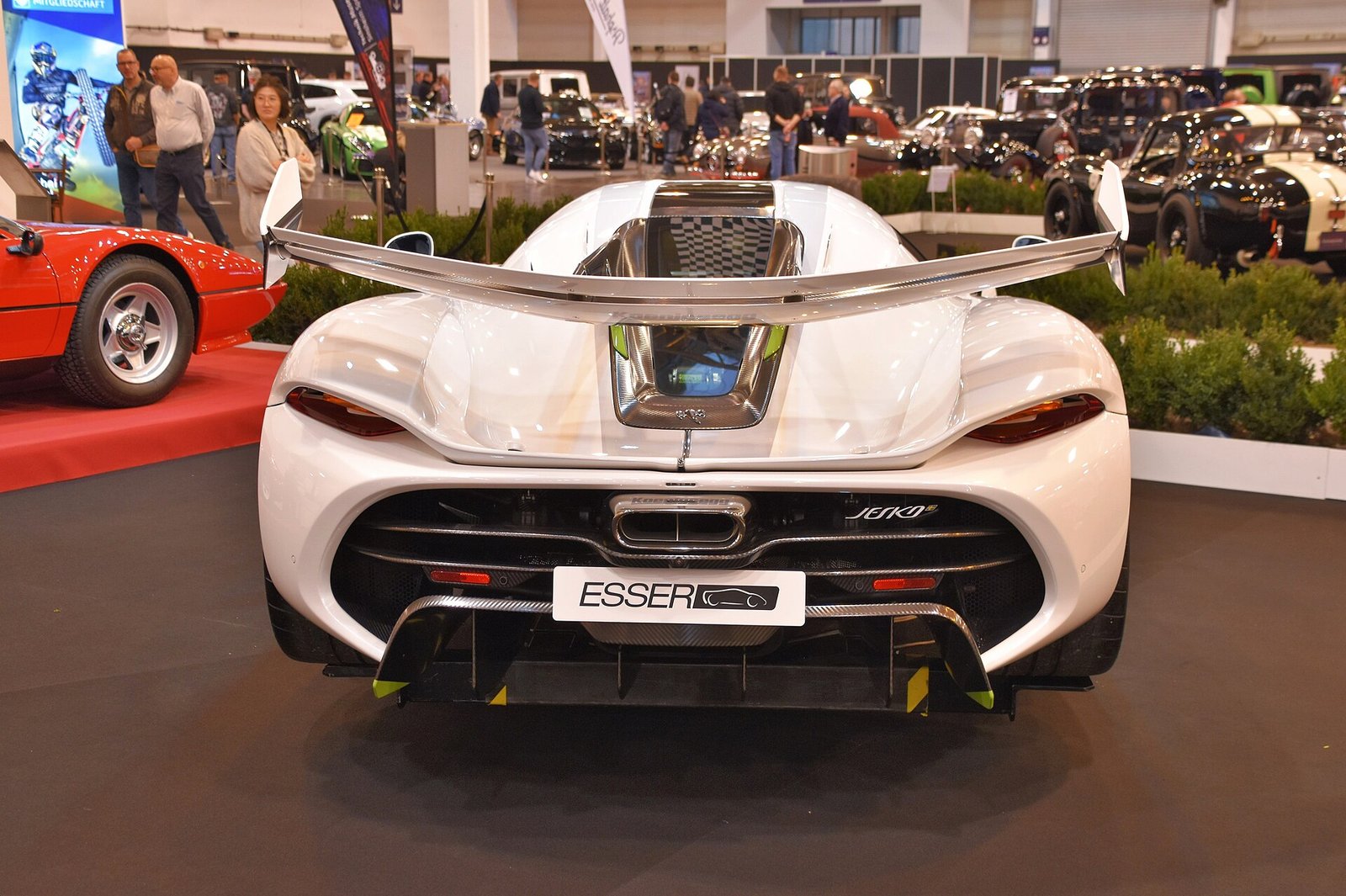
Christian von Koenigsegg has described this as the first time his engine technology has been used outside his own cars. For a company that builds almost everything in-house and guards its engineering closely, that’s a remarkable endorsement of a small Italian firm.
Why smaller turbos
The choice of the Agera’s smaller turbochargers deserves a word. A turbocharger uses exhaust gas to spin a turbine, which drives a compressor that forces more air into the engine. Big turbos can move enormous amounts of air and make huge power at high revs, but they take longer to spin up, so the engine feels lazy at lower speeds until the boost arrives. That delay is turbo lag. Smaller turbos spin up faster and give a more immediate response, at the cost of peak power.
For a car meant to be driven with a manual gearbox, response matters more than an extra few hundred horsepower at the top. A driver changing gear by hand wants the engine to answer the moment the clutch comes up. Kimera traded the Jesko’s headline numbers for that feeling.
A manual gearbox in a 1,000 hp car
Almost every hypercar launched in the last decade uses a dual-clutch or paddle-shift gearbox. They shift faster, they’re quicker around a track, and they make marketing easy. The K39 launches with a seven-speed manual made by Cima, with a clutch pedal, driving the rear wheels only. A sequential paddle-shift option is being evaluated, but the manual is the car’s identity.
For Americans, the closest point of reference may be the enthusiasts who still order manual Porsche 911s and Corvettes or hunt down the last stick-shift performance cars. Betti is going much further: nearly 1,000 hp, rear-wheel drive and a target weight of about 1,100 kilograms, roughly 2,425 pounds. That’s a power-to-weight ratio of almost one horsepower per kilogram, with no gearbox computer to help. Every shift is the driver’s decision, and every mistake is the driver’s too. With that much torque going to two rear tires, a clumsy downshift or a careless foot on the throttle can turn into a spin far more quickly than in a hypercar whose electronics quietly correct the driver.
The F40 shadow
Betti has never hidden his love for the Ferrari F40, and it shows. A twin-turbo V8, a manual gearbox, rear-wheel drive, minimal weight and almost no electronic aids describe the F40 as much as the K39. The difference is power: the F40 made 478 hp. The K39 has roughly double that, at a similar target weight.
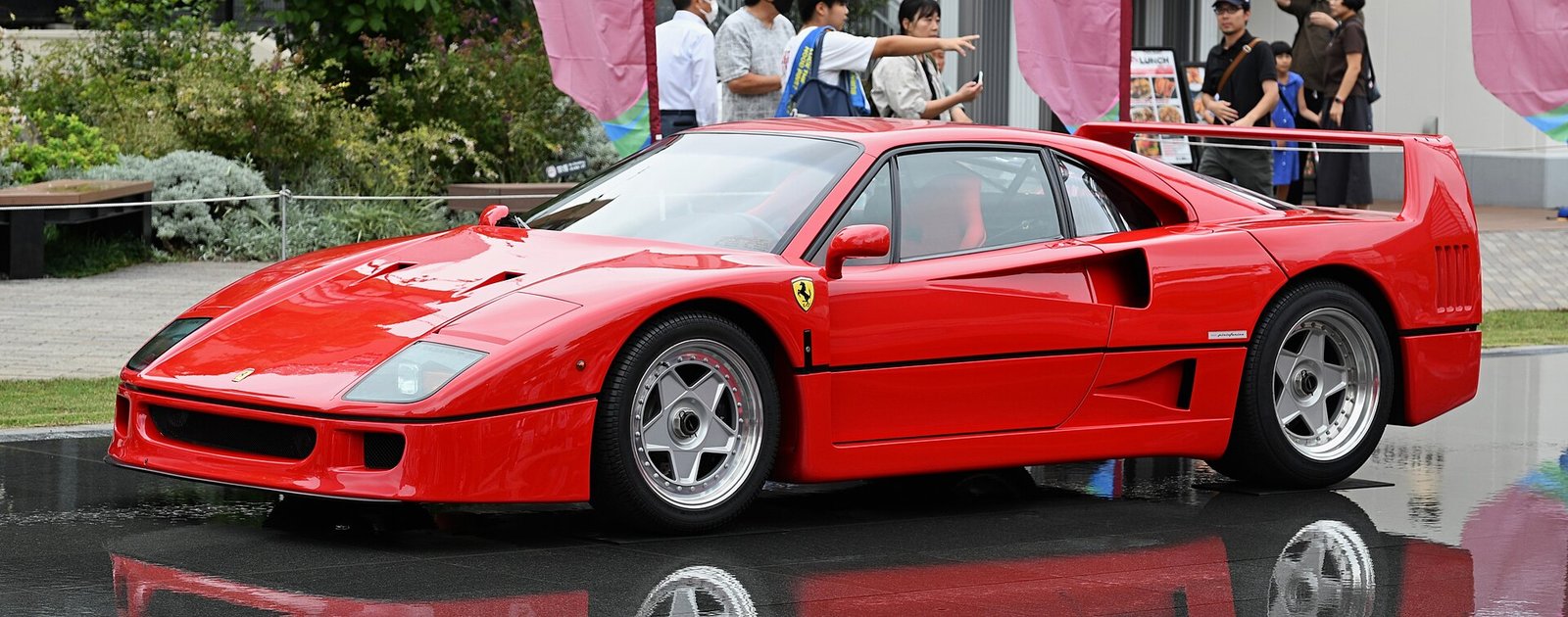
The styling pays homage too, with pop-up headlights, something no new car has offered in decades, a flat, abrupt tail with round lights, a central exhaust and deep vents behind the rear wheels. Some British magazines have already called the K39 a modern F40.
A real constructor’s chassis
Under the body is everything a restomod isn’t. The K39 has a full carbon-fiber monocoque designed from scratch. The V8 is a stressed member, meaning the engine itself forms part of the car’s structure and carries loads, as in a racing car. The suspension uses pushrod-operated inboard springs and dampers at both ends, a layout borrowed from single-seaters that keeps unsprung weight low and lets engineers place the components where they work best.
Dallara, the Italian engineering company founded by Gianpaolo Dallara that builds the chassis for IndyCar and Formula 2 and that worked on the original Lancia 037 in the 1980s, has acted as a consultant on the aerodynamics. The car rides on 20-inch front and 21-inch rear machined aluminum wheels with Pirelli Trofeo RS tires, steel brakes with carbon-ceramics in development, and a full carbon-fiber body.
Carbon fiber matters here for the same reason it matters in Formula 1. A carbon monocoque is extremely stiff for its weight, which lets the suspension do its job precisely instead of fighting a flexing structure, and it protects the occupants in a crash. It’s also expensive and slow to make, which is why only the most exclusive cars use it. For a company that started by reinforcing the steel shell of a 1970s Lancia, building a full carbon tub is a huge leap.
Group 5 roots
Where the EVO37 and EVO38 looked back to the World Rally Championship of the 1980s, the K39 looks to endurance racing of the same era. Its inspiration is the Lancia Beta Montecarlo Turbo, the Group 5 "silhouette" racer that Lancia ran in Martini colors at the turn of the 1980s and that won its class in the World Championship for Makes. The Group 5 rules allowed huge freedom under a recognizable production silhouette, and the cars were wide, low and aggressive. The K39 brings that look into the present.
Inside, according to the sketches Betti has shown, there will be an exposed gearshift mechanism, a multi-level dashboard and a tachometer standing proud of the steering column as a nod to the original Montecarlo Turbo’s cockpit. The finished interior is due to be shown at Monterey Car Week in California in August 2026.
Pikes Peak
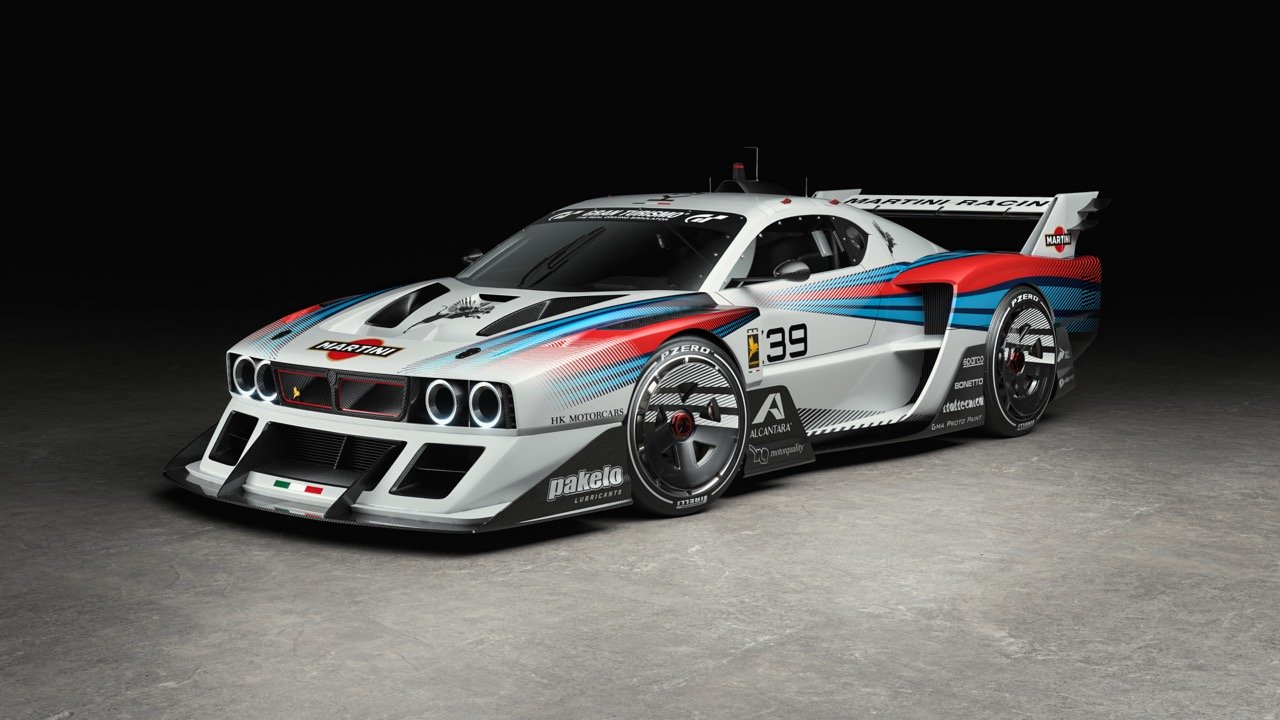
The most American part of the K39 story is a mountain. Kimera has announced a Pikes Peak version in full Martini livery, limited to ten cars for the first customers who put down deposits before the car existed. It gets a huge front splitter, a roof-mounted ram-air intake and a rear wing designed without regulatory limits, because Pikes Peak’s Unlimited class has almost none. The Martini stripes are no accident. The Italian drinks brand sponsored Lancia’s works cars through some of its greatest years, from the Montecarlo Turbo in endurance racing to the 037 and the Delta in rallying, and the red, light-blue and dark-blue stripes on white became one of the most recognizable liveries in motorsport. For a car that grew out of a 037 restomod, carrying those colors up an American mountain closes a circle that runs from Turin to Colorado. Koenigsegg is set to provide additional technical support, and the target is the overall record at the Colorado hill climb, now planned for 2027.
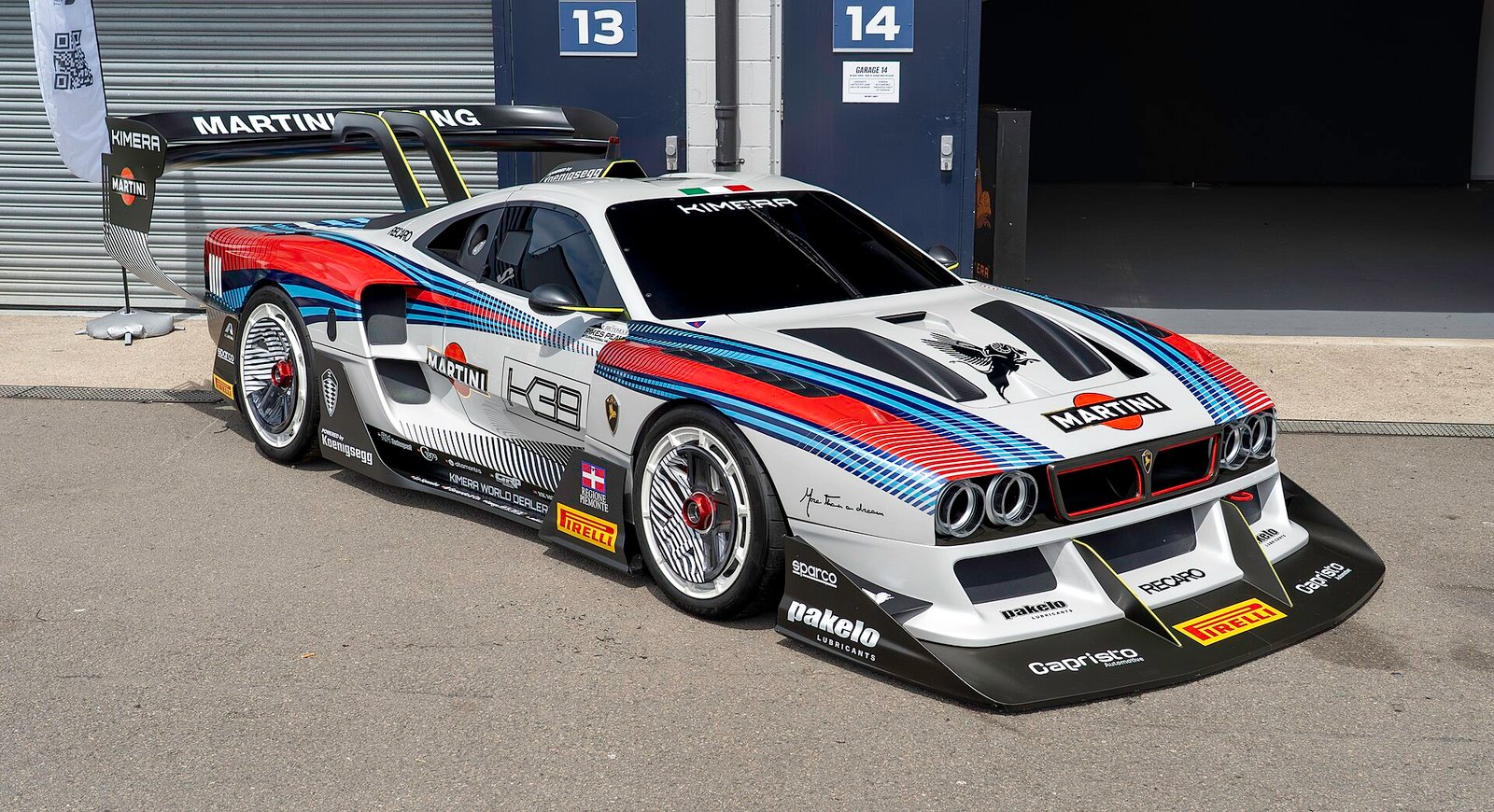
Pikes Peak is a fitting stage. The 12.42-mile road to the 14,115-foot summit has been the scene of some of the most famous runs in motorsport, from Walter Röhrl’s Audi in 1987 to Nobuhiro "Monster" Tajima’s Suzuki Escudo, the car millions of gamers know from Gran Turismo, and Romain Dumas’s electric Volkswagen ID.R record in 2018. One British magazine described the K39 Pikes Peak as the love child of a Lancia 037 and that Gran Turismo Suzuki, which tells you exactly what kind of car it is.
The numbers
Based on Kimera’s announced figures: a Koenigsegg-developed 5.0-liter twin-turbo V8 with 986 hp at 7,350 rpm and 1,200 Nm at 5,500 rpm; a 8,250 rpm limit; 95-octane gasoline; a seven-speed Cima manual; rear-wheel drive; a carbon monocoque with pushrod suspension; a target weight of 1,100 kg. Production will be very limited, with press estimates between 50 and 100 cars, and more than 20 reportedly allocated before the reveal. Kimera hasn’t officially confirmed the price, but British press estimates put it around £2 million with options. Deliveries are planned for early 2027.
An analog bet in a digital arms race
The hypercar world is racing toward electrification. Rimac, Pininfarina’s Battista and others produce well over 1,500 hp from electric motors, with acceleration figures no combustion car can match. Kimera is going the other way: combustion, a manual gearbox, rear-wheel drive and as little electronics between driver and car as the law allows. It’s a bet that a certain kind of buyer cares more about how a car feels than about its 0-60 time.
It’s not a lonely bet. Gordon Murray’s T.50 and its naturally aspirated V12 with a manual gearbox showed there’s a market for analog hypercars among wealthy enthusiasts who already own every fast car they want. The K39 joins that small club with a very Italian twist and a Swedish heart.
What the K39 says about Kimera
The progression is clear. From restomod to constructor. From four cylinders to a V8. From around 500 hp to nearly 1,000. From a donor Lancia to its own carbon monocoque. From Italian engine specialists to Koenigsegg. At each step, the people vouching for Betti’s work have been more credible than at the step before, and there’s no higher endorsement in the hypercar world than convincing Christian von Koenigsegg that your car deserves his engine.
Kimera K39 FAQ
What engine does the Kimera K39 have?
A 5.0-litre twin-turbo V8 developed by Koenigsegg, set up with smaller turbos from the Agera, specific software and a new intake. It makes 986 PS at 7,350 rpm and 1,200 Nm (about 885 lb-ft) on ordinary 95-octane fuel.
Does the Kimera K39 have a manual gearbox?
Yes, a seven-speed manual, unusual in a car with close to 1,000 hp.
When was the Kimera K39 revealed?
At the Concorso d’Eleganza Villa d’Este on Lake Como in May 2026. Its next stops include Monterey Car Week and, eventually, Pikes Peak.
Who makes the Kimera K39?
Kimera Automobili, founded by former rally driver Luca Betti, which started by building the EVO37 and EVO38 restomods inspired by the Lancia 037.
Full guide: From Group B to Pikes Peak: the NEC Rally Guide
Check you’re still alive.
Photos via Wikimedia Commons: Kimera K39 Pikes Peak, MrWalkr (CC BY-SA 4.0); Kimera K39, Gnmrc (CC BY-SA 4.0); Kimera EVO37 and Lancia 037 Rally in Martini colors, Calreyn88 (CC BY-SA 4.0); Koenigsegg Jesko, Charles from Port Chester (CC BY 2.0); Ferrari F40, TTTNIS (CC0).