Kimera K39: 1,000 Koenigsegg Horsepower, a Manual Gearbox, and the Question Nobody Dared Ask
Christian von Koenigsegg doesn’t hand out the beating heart of his company to just anyone. He’s spent decades building a reputation on engineering so uncompromising that owning a Koenigsegg feels less like buying a car and more like receiving a handshake from the laws of physics. His twin-turbo V8 is one of the most remarkable internal combustion engines ever built. And until May 15, 2026, it had never been fitted to anything other than a Koenigsegg.
That changed on the shores of Lake Como.
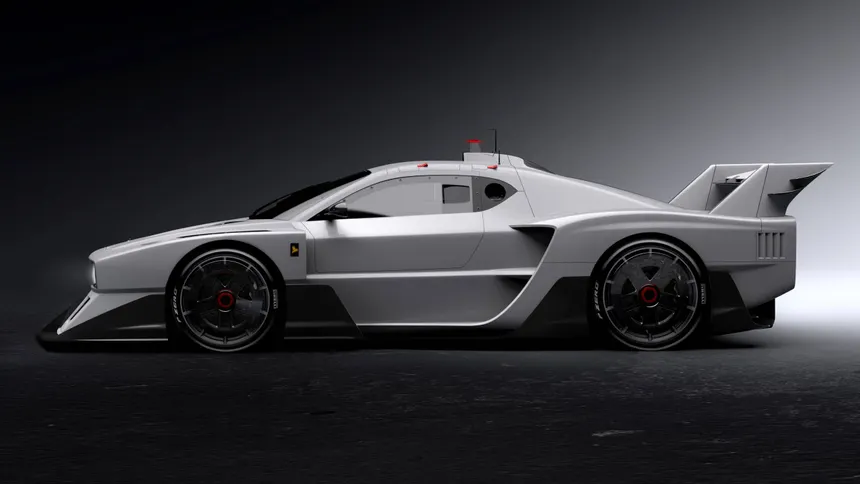
The Kimera K39, unveiled at the Concorso d’Eleganza Villa d’Este, is the first car outside Koenigsegg’s own lineup to carry one of its engines. It’s also the first entirely original car from Kimera Automobili — no donor vehicle, no restomod prefix, no reinterpretation of something that existed before. A clean-sheet carbon fiber monocoque hypercar. With a manual gearbox. And rear-wheel drive. And pop-up headlights.
If that reads like a fever dream, wait until you see the numbers.
The Engine: A Koenigsegg Heart Beating for Italian Hands
The joint venture centers on a 5.0-liter twin-turbo V8 producing 986 hp at 7,350 rpm and 1,200 Nm of torque at 5,500 rpm, with the redline set at 8,250 rpm. All of this running on standard 95 octane pump fuel. Not E85, not race fuel. The stuff you buy at any petrol station in Europe.
In the Koenigsegg Jesko, this engine family is capable of nearly 1,600 hp on E85 ethanol. Kimera didn’t want that. They wanted response, not headlines. So the K39 runs downsized turbochargers sourced from the Koenigsegg Agera — smaller, lighter, optimized for quicker spool and sharper throttle response rather than peak output. Bespoke software and a revised intake system complete the calibration.
This isn’t a crate engine deal. Koenigsegg developed a dedicated version of the V8 specifically for Kimera’s performance philosophy. K39 customers get access to the Koenigsegg Cloud with over-the-air software updates, and the engine is fully emissions-compliant worldwide. Von Koenigsegg himself described the project as “independent, emotional, technically ambitious and built with a clear sense of purpose” — exactly the kind of collaboration that deserves something truly special.
What this says about Kimera matters more than what it says about the engine. If Christian von Koenigsegg trusts Luca Betti enough to hand him the V8, he’s seen what Kimera builds from the inside. Chris Harris once said that the best way to judge a car company is by the people who respect it. By that metric, Kimera just moved to the front of the queue.
The Gearbox: A Seven-Speed Manual. In a 1,000 HP Car. In 2026.
Every hypercar launched in the last decade has arrived with a sequential or dual-clutch transmission as standard equipment. Faster shifts, better lap times, better everything — the marketing writes itself.
The K39 is going to ignore all of that.
It launches with a seven-speed manual gearbox manufactured by Cima. A proper three-pedal setup. In a car with 986 hp and rear-wheel drive. Kimera has confirmed a sequential paddleshift option is being evaluated, but the manual comes first. It’s the version that defines the car.
This isn’t an affectation. This is a technical statement. A car with 1,000 hp, 1,100 kg, and rear-wheel drive with a manual gearbox demands a level of physical and mental engagement that no automated system can replicate. Every gearchange is a decision. Every mid-corner acceleration is a negotiation between your right foot, your right hand, and physics. There’s no algorithm to save you. Just your hands and your judgment.
Betti is a self-confessed Ferrari F40 devotee. He’s never hidden it. And when you look at the K39’s spec sheet — twin-turbo V8, manual gearbox, rear-wheel drive, minimum weight, zero electronic nannies — the connection is inescapable. Top Gear has already called it “the modern F40.” But there’s a fundamental difference: the F40 had 478 hp. The K39 has double that. At the same target weight.
The Chassis: From Restomod to Constructor
This is where the K39 breaks from everything Kimera has done before.
The EVO37 and EVO38 started from a Lancia Beta Montecarlo as a donor car. They retained the central monocoque section, reinforced with tubular structures, and built around it. That’s a restomod. An exceptional restomod, but a restomod nonetheless.
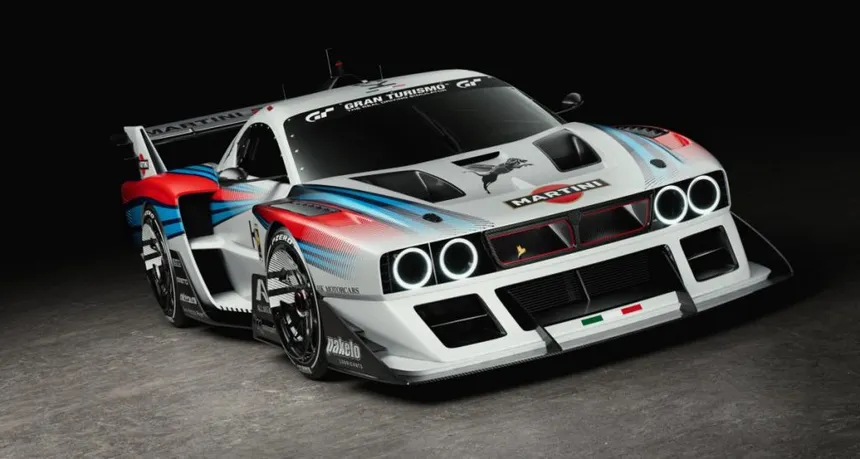
The K39 starts from nothing. A complete carbon fiber monocoque designed from scratch. The V8 is a load-bearing, structural element of the car. Inboard pushrod suspension front and rear, like a single-seater racing car. Dallara — the same Dallara that participated in the development of the original Lancia 037, the same Dallara that builds IndyCar and Formula 2 chassis — is consulting on the aerodynamic package.
Steel brake discs as standard (with carbon-ceramics in development). Machined aluminum wheels, 20 inches at the front and 21 at the rear. Pirelli Trofeo RS tires. Full carbon fiber bodywork. Target weight: 1,100 kg. The same weight as the EVO38, with 400 hp more.
Do the maths. 986 hp divided by 1,100 kg. A power-to-weight ratio of 0.896 hp/kg. Almost 1:1. With rear-wheel drive. And a manual gearbox.
If that doesn’t keep you up at night, nothing will.
The Design: Where Group 5 Meets the F40
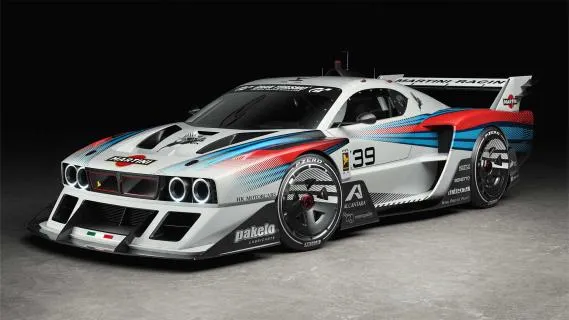
The EVO37 and EVO38 drew from the World Rally Championship of the 1980s. The K39 draws from the World Endurance Championship of the same era. The direct inspiration is the Lancia Beta Montecarlo Turbo Group 5, the Martini Racing team’s “Silhouette” car that dominated the World Sportscar Championship in the late ’70s and early ’80s.
But the execution carries the signature of someone who grew up with an F40 poster on the wall.
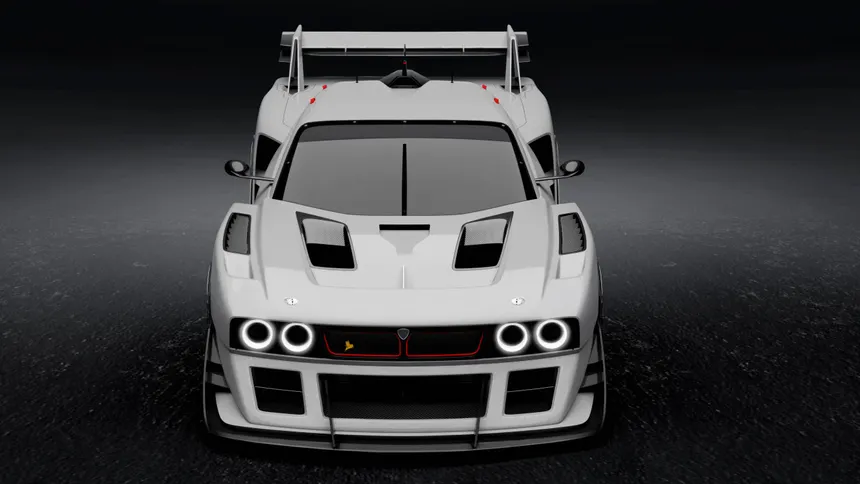
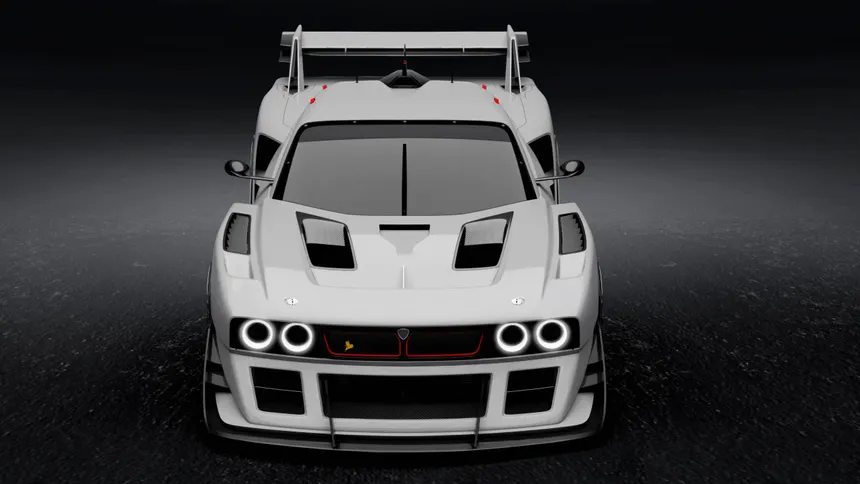
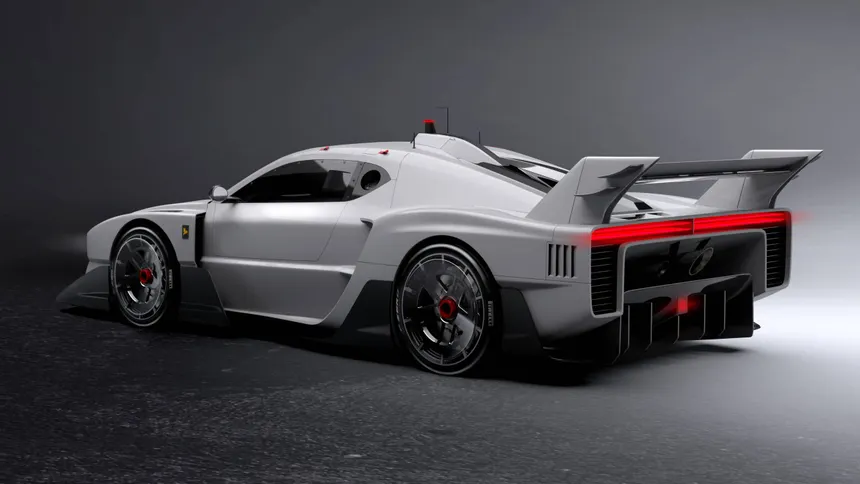
Pop-up headlights — yes, in 2026. Massively widened rear wheel arches with enormous air intakes to cool the V8. The rear is flat, abrupt, and beautifully simple: twin circular tail lights, a central Koenigsegg exhaust, a deep diffuser, and four vertical slashes behind the rear wheels. If you’ve seen an F40 up close, you know exactly what we’re talking about. This isn’t a copy. It’s a visual conversation between two philosophies that share the same obsession: making function and beauty indistinguishable.
Interior details are scarce ahead of the full car’s reveal at Monterey Car Week in August. Betti has shown sketches to journalists: an exposed linkage manual gearbox, a more complex multi-level dashboard design than the EVO37, and a tachometer protruding from the steering column as a nod to the Lancia Beta Montecarlo Turbo’s cockpit.
Pikes Peak: The Believers’ Edition
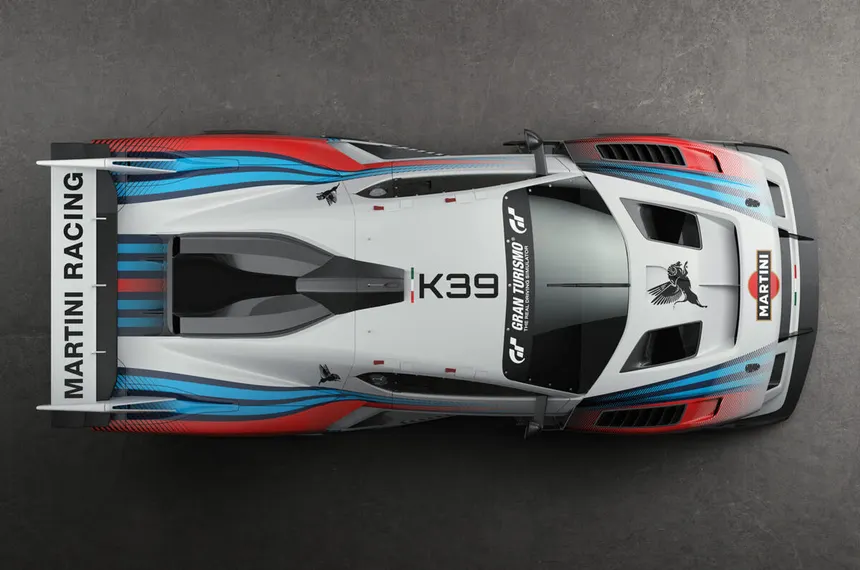
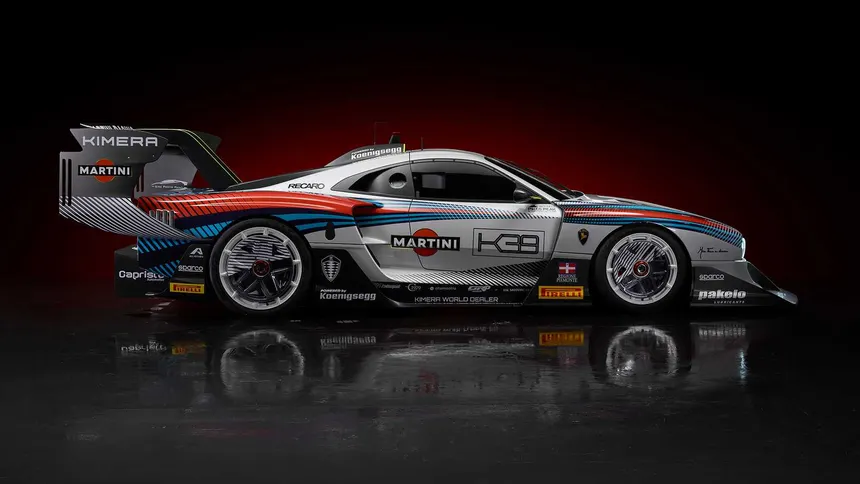
Kimera has confirmed a dedicated Pikes Peak version wearing full Martini Racing livery. 10 units reserved for the first customers who believed in the project from the start — the ones who placed deposits before the car existed.
The Pikes Peak specification includes a surfboard-depth front splitter, a roof-mounted ram-air intake, and a rear wing designed with zero regulatory constraints — because Pikes Peak doesn’t impose any. Koenigsegg is also providing additional technical support for the Colorado effort. Target: 2027.
PistonHeads described it as “the lovechild of a Lancia 037 and the Gran Turismo Suzuki Escudo.” If you’ve played GT2, you know precisely what that means.
The Cold Numbers
Engine: 5.0-liter Koenigsegg twin-turbo V8, bespoke for Kimera. Power: 986 hp at 7,350 rpm. Torque: 1,200 Nm at 5,500 rpm. Redline: 8,250 rpm. Fuel: 95 octane pump fuel. Transmission: 7-speed Cima manual (sequential under evaluation). Drive: rear-wheel drive. Chassis: carbon fiber monocoque. Suspension: inboard pushrod, front and rear. Aerodynamics: Dallara consulting. Brakes: steel discs (carbon-ceramics in development). Wheels: machined aluminum, 20″ front, 21″ rear. Tires: Pirelli Trofeo RS. Body: full carbon fiber. Target weight: 1,100 kg. Power-to-weight: 0.896 hp/kg. Emissions: globally compliant. Production: extremely limited (estimated 50–100 units). More than 20 allocated pre-reveal. Price: not officially confirmed. Press estimates around £2 million with options. Pikes Peak version: 10 units, target 2027. Deliveries: early 2027. Show schedule: Spa, Le Mans, Aurora (Sweden), Goodwood Festival of Speed, Monterey Car Week, Las Vegas concours.
The Competitive Landscape: An Analog Bet in a Digital Arms Race
The broader hypercar market has largely converged on the same formula: hybrid drivetrain, dual-clutch gearbox, active everything. The McLaren W1, the Mercedes-AMG One, the Aston Martin Valkyrie — all extraordinary machines, all built around the same fundamental idea that technology should insulate the driver from the car’s extremes. Faster, safer, more capable. And increasingly, more clinical.
Kimera is betting the opposite. The K39 enters a market where no other manufacturer is offering a thousand-horsepower car with a manual gearbox and rear-wheel drive at this price point. The closest spiritual comparisons aren’t its contemporaries — they’re the cars that came before. The Ferrari F40, which trusted the driver to manage 478 hp with no traction control and a dogleg five-speed. The Porsche Carrera GT, which famously punished inattention. The McLaren F1, which put the driver in the centre of the car and expected them to be worthy of the position.
The K39 belongs in that lineage. Not because it copies any of them, but because it shares their fundamental conviction: the driver is not a liability to be managed. The driver is the point.
What’s remarkable is the confidence it takes to make that bet in 2026. Every engineering team in the hypercar world knows that automated systems are objectively faster around a circuit. Kimera knows it too. They simply don’t care. Because the K39 isn’t designed to set the fastest possible lap time. It’s designed to deliver the most intense possible driving experience. And those are two very different engineering briefs.
The early market response suggests the bet is sound. More than 20 cars allocated before a working prototype exists. That’s not speculation — that’s conviction, backed by the credibility Kimera built one EVO37 at a time.
From Cuneo to Lake Como: What the K39 Says About Kimera
Six years ago, Luca Betti was a former rally driver restoring classic Lancias in Cuneo. Today he’s presenting a Koenigsegg-powered hypercar at Villa d’Este.
What happened in between wasn’t luck. It was a sequence of correct decisions executed without shortcuts. The EVO37 proved Betti could build a real car — Top Gear awarded it Performance Car of the Year in Portugal last summer. The EVO38 proved he could go beyond reinterpretation. And the K39 proves Kimera no longer needs a car from the past to justify its existence.
The progression reads like someone who knows exactly what they’re doing: from restomod to constructor. From four cylinders to V8. From 505 hp to 986 hp. From Lancia Beta Montecarlo donor to bespoke carbon monocoque. From Italtecnica to Koenigsegg. From Öhlins to inboard pushrod with Dallara.
Each step has been bigger than the last. And at each step, the people validating Betti’s work carry more credibility than those at the step before. There isn’t a higher rung than convincing Christian von Koenigsegg that your car deserves his engine.
The K39 isn’t the end. It’s the moment Kimera stops being a restomod brand and becomes a hypercar manufacturer. With the same philosophy — analog, mechanical, driver-focused, no electronic intermediaries — but playing in a different league entirely.
1,000 hp. Manual gearbox. Rear-wheel drive. 1,100 kg. Pop-up headlights.
Somebody explain to me why this isn’t car of the year before it’s even turned a wheel.
Now, check you’re still alive.
Not Enough Cylinders — Where data comes first and the machines bring the emotion.