
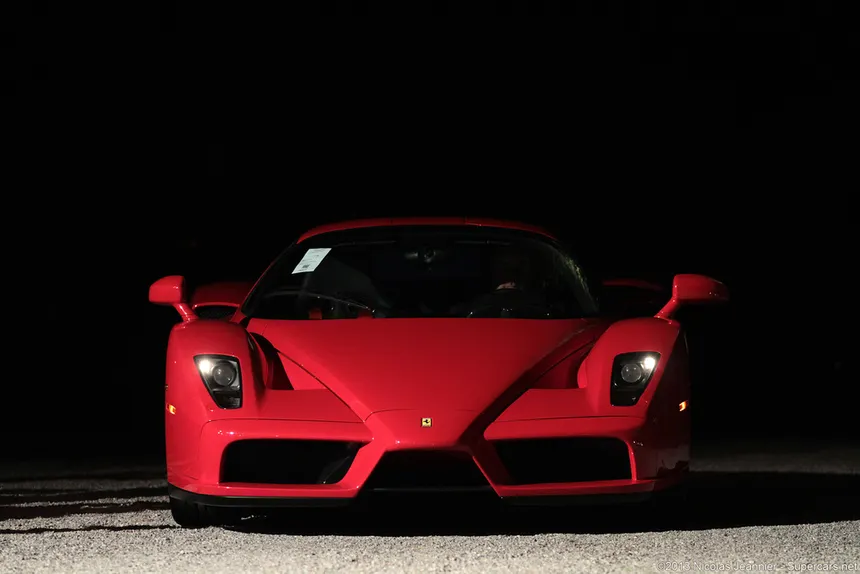
Ferrari Enzo: too much name for one car
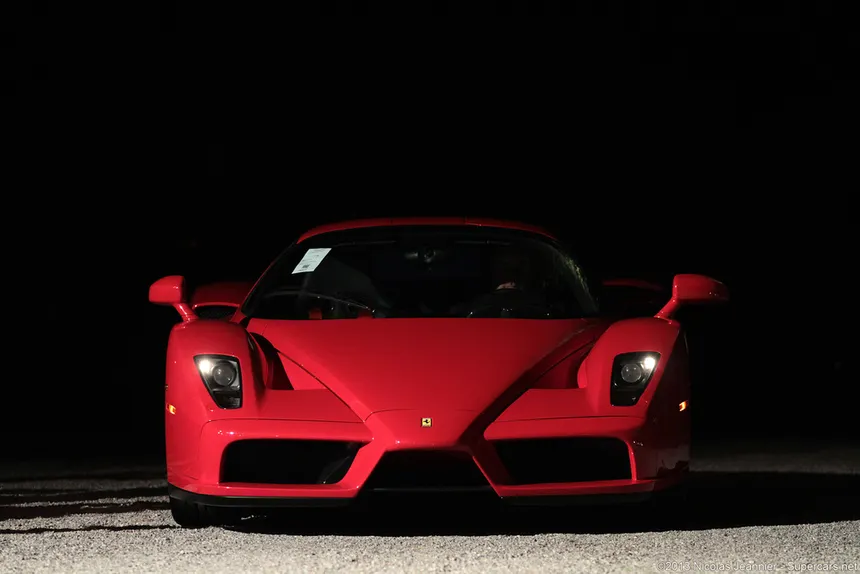
Ferrari did not put Enzo Ferrari’s first name on a road car to decorate the history books. It did it because the entire project had to answer for him.
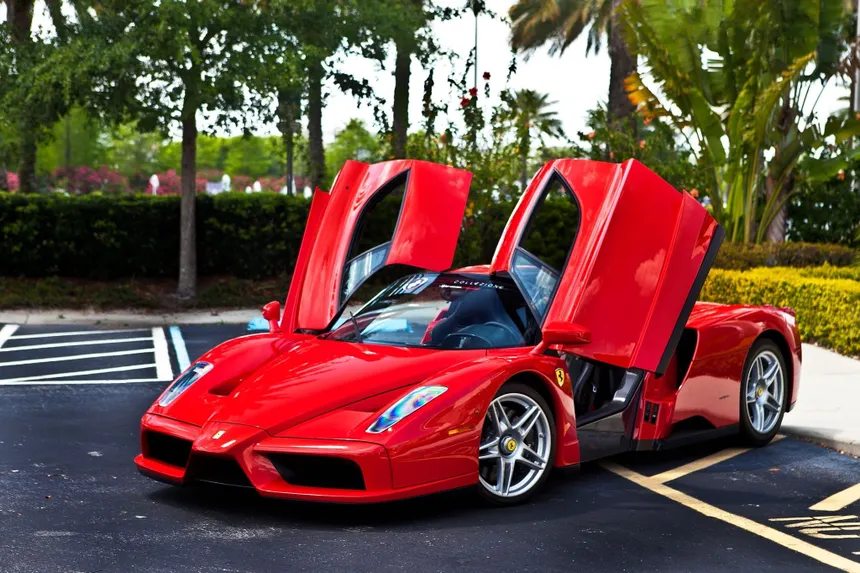
In 2002, Maranello could have followed the obvious sequence. F40. F50. Another code, another number, another supercar carrying the weight of the company without carrying the founder’s first name on its bodywork. Instead, Ferrari named its new limited-production flagship Enzo Ferrari. The name turned the car into more than a product. It made it a statement about what Ferrari believed its founder, its racing program and its road cars were supposed to mean at the beginning of the twenty-first century.
That is the part of the Enzo story that usually gets buried beneath horsepower figures. The important question is not only what the Enzo was. It is what Ferrari was saying by calling it Enzo.
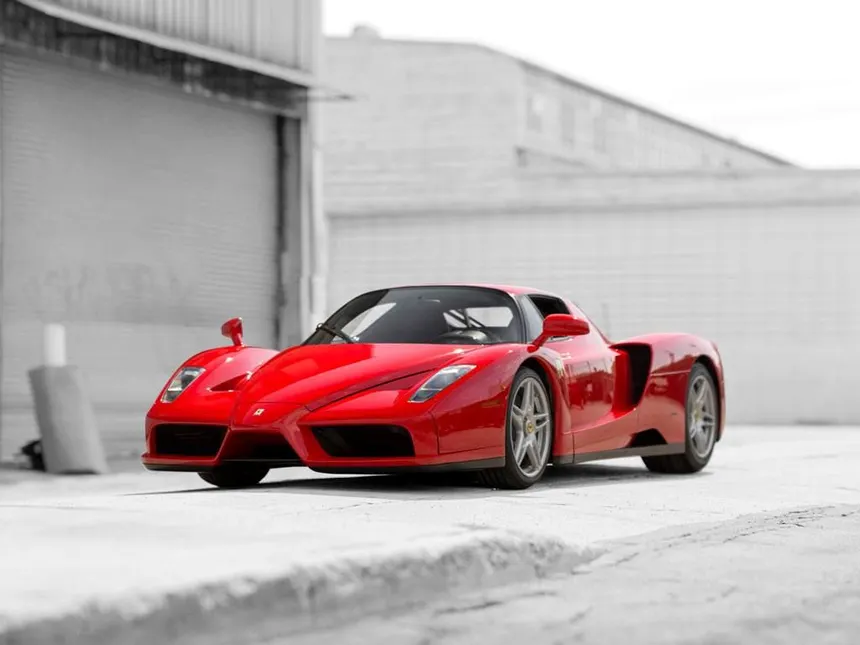
The name set the car’s position before it turned a wheel
Ferrari already carried its founder’s surname on the badge, the company and the mythology. Using his first name for one specific car was therefore not a casual tribute. It fixed the model’s position inside the brand. This was not going to be judged as merely another fast Italian two-seater. Ferrari’s official material presents it as a tribute to the founder and as an extreme synthesis of motorsport technology.
The choice connected four things at once. The name connected the car to Enzo Ferrari. The timing connected it to Ferrari’s dominance in Formula 1. The naturally aspirated V12 connected it to Maranello’s mechanical tradition. The carbon structure, electro-hydraulic transmission, carbon-ceramic brakes and racing-derived systems connected it to the company’s competition experience.
Ferrari was not offering a sentimental postcard from its past. It was using that past to certify the present.
A project code can remain impersonal. Enzo Ferrari cannot. Once that name is on the car, every decision is judged against the whole institution: the race cars, the V12s, the F40, the F50, the victories and the founder’s insistence that racing was the reason the company existed.
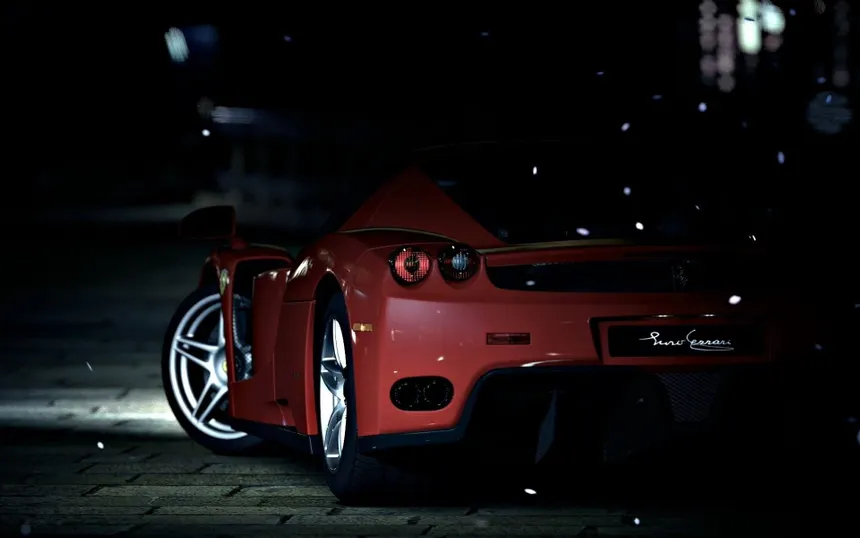
2002 was the right moment to make the claim
The Enzo appeared during Ferrari’s most confident modern period. Ferrari’s own historical material links the car to the year of Scuderia dominance in Formula 1, and the company’s museum describes it as an extreme technological synthesis created in homage to the founder during that dominant period.
That context changes the tone of the launch. Ferrari was not trying to borrow credibility after a collapse. It was presenting racing success as living authority. The message was direct: the competition program that defined the company had reached a level of power and sophistication that could now be translated into the ultimate road car.
Naming the car Enzo was therefore a form of corporate confidence. Ferrari was saying that the modern company had earned the right to speak in the founder’s name. It was also setting a trap for itself. The model could not hide behind an anonymous code. It had to be fast, technically serious and unmistakably Ferrari. Anything less would make the name look larger than the machine.
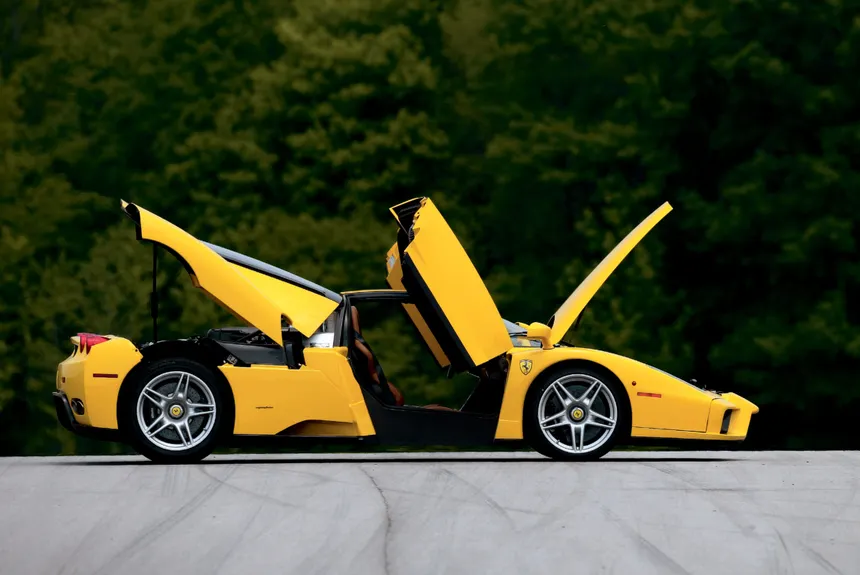
The Enzo was not a Formula 1 car with a license plate
The phrase “Formula 1 car for the road” is a useful headline and a poor explanation. Ferrari says the Enzo’s 65-degree V12 was designed on the back of the company’s Formula 1 experience. That does not mean it was a Grand Prix engine adapted for street use.
The Enzo introduced the F140 engine family. Ferrari states that the family debuted in the 2002 limited-edition supercar and that it was, at the time, the world’s most powerful naturally aspirated engine. The official model specification lists 5,998.80 cc, 660 horsepower at 7,800 rpm, 657 Nm of torque at 5,500 rpm, an 11.2:1 compression ratio and 110 horsepower per liter.
Those numbers describe an extreme road engine developed by people who understood racing. That is a more accurate and more interesting story than pretending the Enzo was a disguised Ferrari F1 machine.
The F50 makes the distinction clear. Ferrari describes the F50 engine as directly derived from the one used in the 1990 single-seater, while it presents the Enzo as the link between racing know-how and road use. The Enzo did not need to impersonate a single-seater. Its achievement was turning Ferrari’s competition knowledge into a road car with its own engineering logic.
| Component | Ferrari’s confirmed specification |
| Engine | Rear longitudinal 65-degree V12 |
| Displacement | 5,998.80 cc |
| Maximum power | 660 hp at 7,800 rpm |
| Maximum torque | 657 Nm at 5,500 rpm |
| Dry weight | 1,255 kg |
| Transmission | Six-speed electro-hydraulic F1 gearbox plus reverse |
| Chassis | Carbon-fiber and Nomex honeycomb monocoque |
| Brakes | Carbon-ceramic discs |
| Top speed | Over 350 km/h |
| 0–100 km/h | 3.65 seconds |
Several popular figures are deliberately absent here. A precise downforce figure and the often-repeated Fiorano comparison with the F50 were not located in the primary documentation reviewed for this article. They should not be repeated as factory-verified facts simply because they appear everywhere online. A serious article does not need a number it cannot defend.
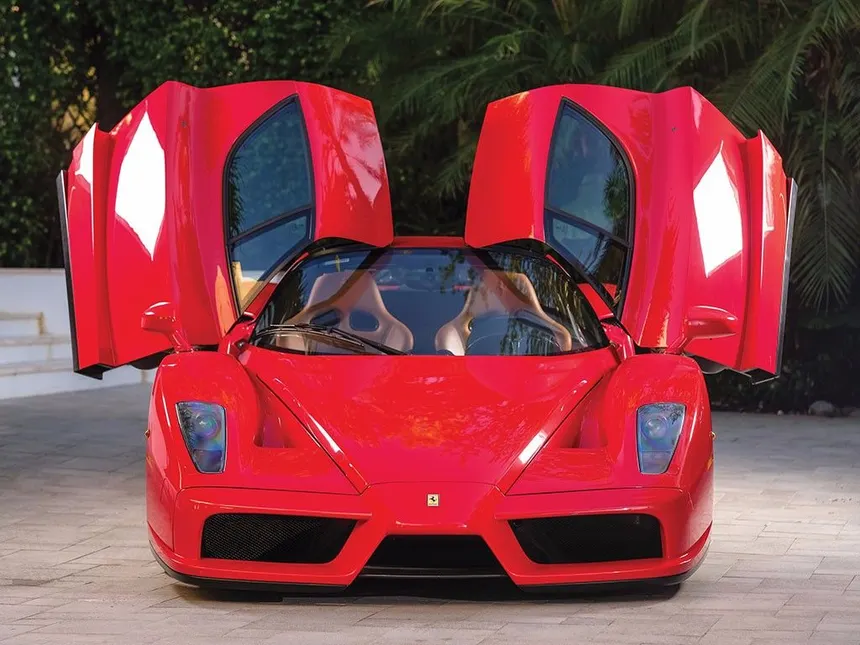
The technology Ferrari actually put on the road
The Enzo’s connection to racing was visible in its structure and systems. Its carbon-fiber and Nomex honeycomb monocoque reduced mass while creating a stiff platform. Its dry-sump lubrication system suited a car designed for serious lateral loads. Its carbon-ceramic brakes brought a technology that was still far from ordinary road-car equipment into Ferrari’s most ambitious street machine.
The six-speed electro-hydraulic F1 transmission with steering-wheel paddles also served a clear purpose. It allowed the driver to keep both hands on the wheel while the system managed clutch and gear engagement. That did not turn the Enzo into an automatic appliance. It made the connection between the driver’s command and the drivetrain faster and more repeatable.
Ferrari says that several Enzo solutions later appeared in subsequent models, including the compact lightweight V12, carbon-fiber brake discs, the human-machine interface and aerodynamic features. That gives the car a second historical role. It was not just a final showcase for a generation of technology. It was also a development platform for the Ferraris that followed.
This is where the car becomes more than a museum piece. Its design language and systems were radical, but the company did not leave them trapped inside 399 road cars. Ferrari used the Enzo to move ideas into the broader product line.
The V12 did not end with the Enzo
One claim needs to be removed completely: the Enzo was not the last Ferrari naturally aspirated V12. Ferrari continued to build naturally aspirated V12 models afterward, and Ferrari Magazine describes the continuing development of the F140 family in later cars.
The accurate formulation is narrower and stronger. The Enzo was Ferrari’s limited-production flagship before LaFerrari introduced hybrid assistance alongside a V12. It occupies the top of a period in which Ferrari’s most extreme road car relied on combustion alone, without electric support.
That makes the Enzo both an endpoint and a starting point. Its formula belongs to the last generation of uncompromising flagship Ferraris without a battery system. Its engine, however, was not an isolated farewell. The F140 family became a foundation for later Ferrari V12 applications. The body was a closing statement; the mechanical family continued speaking.
That distinction matters because history is not improved by making a good car sound rarer than it was. The Enzo does not need the false title of “last Ferrari V12” to be important. Its real position is more precise.
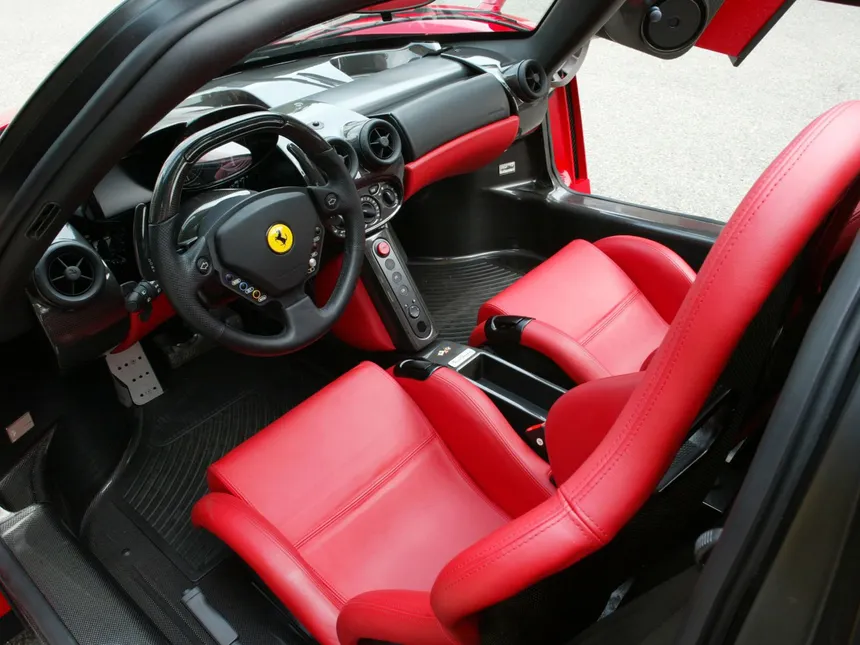
The Ferrari that represented racing without entering a championship
The Enzo looked ready to generate another lazy myth: a Ferrari built for the street but secretly meant for the starting grid. That is not what the official material says. Ferrari presented the Enzo as its ultimate limited-production road supercar, a tribute to the founder and a synthesis of racing technology.
The Maserati MC12 provides the sharper comparison. Maserati states that the MC12 Versione Corse was derived from the MC12 GT1 racing car and that the GT1 won the 2005 FIA GT world endurance championship. The evidence reviewed here does not justify calling the MC12 a Ferrari Enzo with a different body, nor does it support saying that every major component was shared unchanged. It does support a more careful and more interesting point: technology and a related project found a competitive life under the Maserati badge, with the modifications required by GT racing.
The Enzo was the declaration. The MC12 GT1 was the track instrument.
That difference explains why the Enzo did not need an official racing career to carry competition authority. Its function was to condense Ferrari’s racing knowledge into a road car at the top of the range. The MC12’s function was to meet a racing brief and win under another brand inside the same corporate universe.
What Ferrari confirms about production
Ferrari’s current official specification says that 399 examples were developed for road use. That is the number this article can defend as a factory-backed figure. The familiar story about an additional car presented to Pope John Paul II appears widely in secondary accounts, but it was not confirmed in the primary documentation reviewed here. It is therefore not presented as settled fact.
This is not pedantry. The difference between “widely repeated” and “confirmed by the manufacturer” is the difference between a collector’s story and an editorial fact. If the source cannot be shown, the sentence has to be softened or removed.
The same discipline applies to performance stories. Ferrari confirms more than 350 km/h, 3.65 seconds from zero to 100 km/h, 11 seconds for the standing 400 meters and 19.60 seconds for the standing kilometer. Those figures are enough. There is no need to add a spectacular but unsupported lap-time comparison to make the car sound serious.
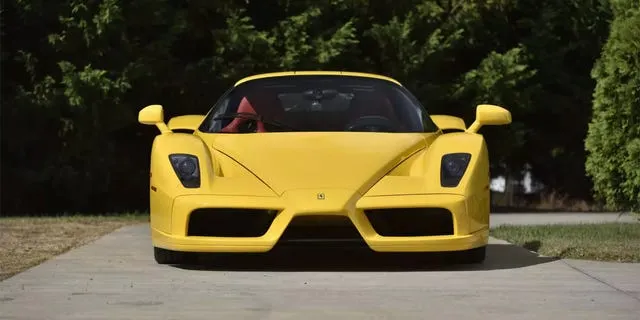
So what was Ferrari saying by calling it Enzo?
The name did not describe the car’s function. It described the position Ferrari wanted the car to occupy.
Ferrari was asserting that the founder remained a usable authority for interpreting the present. Not because Enzo Ferrari personally designed the monocoque, aerodynamics or gearbox, but because the company selected parts of his legacy and presented them as a continuous line: competition as the origin, the engine as the center, limited production as a privilege and the road car as the consequence of racing expertise.
That is a much more ambitious operation than a tribute. Ferrari was asking customers and enthusiasts to accept a direct continuity between the founder, the dominant Scuderia of 2002 and a modern company capable of turning competition solutions into the most extreme road product in its range.
The name acted as a certificate of authenticity. If the car was called Enzo Ferrari, it had to represent Ferrari better than any other.
The danger was obvious. The name created authority, but it also removed every hiding place. An F140 could be argued over as an engine. An Enzo Ferrari could be argued over as a complete interpretation of the company.
The car answered that challenge because it did not try to recreate the founder. It tried to define what Ferrari believed was still essential in his idea of the company: racing first, engines at the center, road cars built without apology and technology transferred from the track only when it served the driver.
The NEC verdict
The Enzo is not great because it carries the founder’s name. The name simply made mediocrity impossible.
It was not a Formula 1 car with a license plate. It was not the last Ferrari naturally aspirated V12. It did not need to win a championship to justify itself. It was the moment Ferrari assembled a new naturally aspirated V12, a carbon structure, competition-derived technology and enough confidence to place the most authoritative name in its history on the bodywork.
The name opened the door. The car had to prove it deserved to walk through it.
Check you’re still alive.
2 thoughts on “FERRARI ENZO”