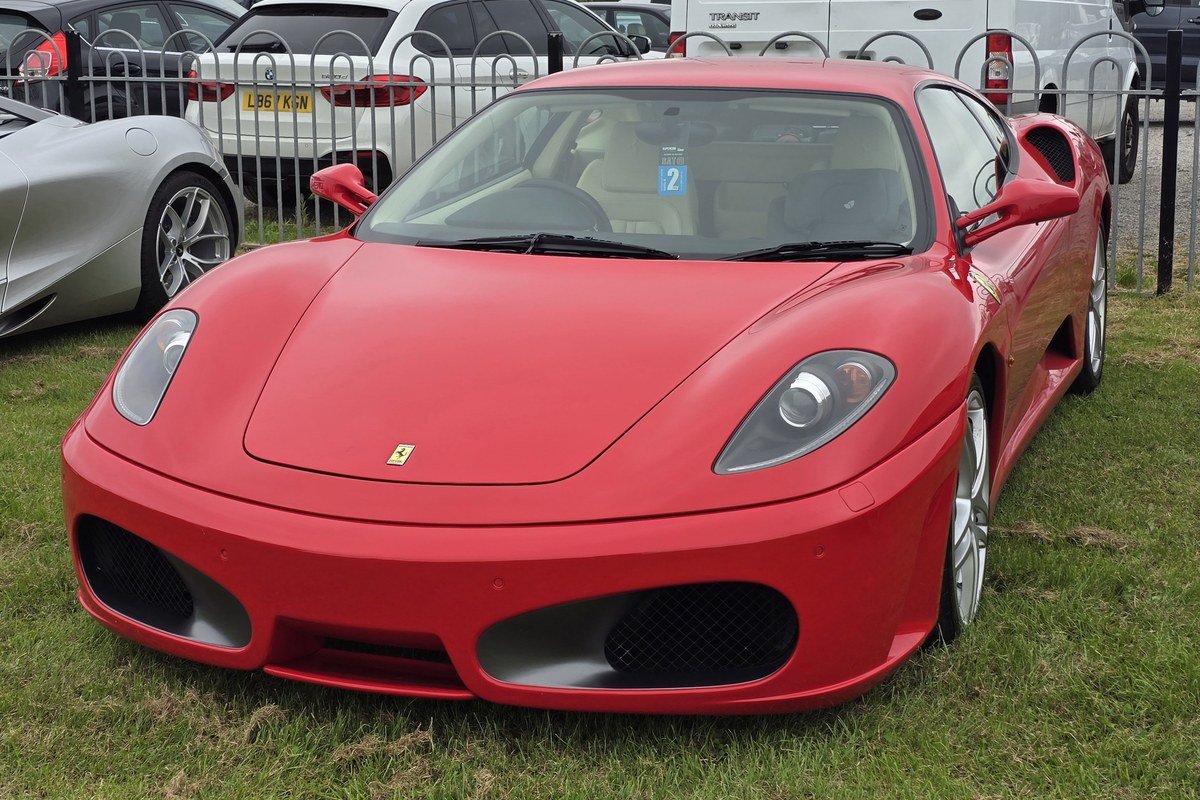
Ferrari F430: The Clean-Sheet V8 Maserati Got First
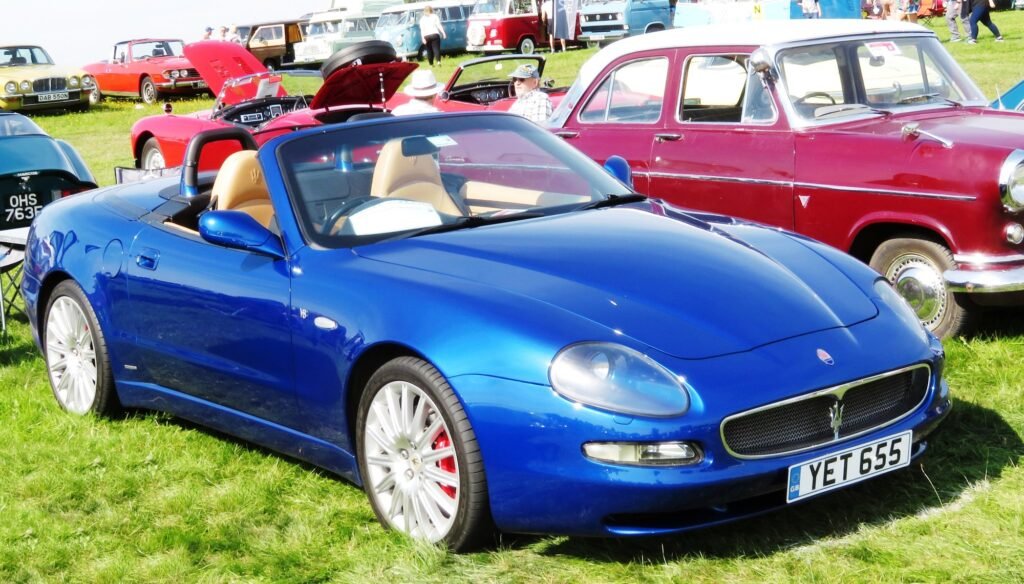
In 2002, Maserati came back to America after a decade away with a blue-blood convertible called the Spyder, a paddle-shift gearbox and a new 4.2-liter V8 nobody paid much attention to. Two years later Ferrari rolled the F430 onto a stand in Paris, announced an entirely new engine with no parts in common with the old one, and let the world applaud.
Same engine family. Maserati had it first. Anyone who bought that Spyder was already driving the bones of the car that would define Ferrari for the next decade.
That is the story of the F430, and it gets better the closer you look, because most of what you hear about this car at cars and coffee turns out to be half wrong.
The fifty-year myth
Start with the line every Ferrari guy will give you: the F430 ended fifty years of V8s descended from the Dino, the engine Enzo designed for the car he refused to badge.
Enzo Ferrari never designed an engine in his life. He was a racer and an operator, and he hired men who could draw. The original Dino was a V6, proposed by his son Alfredo in late 1955 for Formula 2 and worked up in 1956 with Vittorio Jano, the old master who came over from Lancia. Dino died that year at 24 and his father put the name on the engine. That V6 ended up in the 206 and 246 road cars, which wore no prancing horse, and in the Fiat Dino, built because the racing rules demanded production blocks.
The V8 didn’t arrive until 1973, a 2.9-liter 90-degree unit called the F106, in the Bertone-bodied Dino 308 GT4. It gets filed under Dino because that was the name on the car. Where it really came from is disputed: one French guide traces it to the Daytona V12, others to the Lancia D50 V8, and I have not seen a document that settles it. What is on the record is the family’s run, from the 308 through the 328, the 348, the F355 and the 360 Modena. 1973 to 2004. Thirty-one years, which is plenty, and nobody needs to round it up.
Two cranks, one family
Ferrari and Maserati developed the F136 together for a simple reason: Fiat had sold half of Maserati to Ferrari in 1997, and the two Modena neighbors suddenly had one set of accountants. The same family went on to power the Alfa Romeo 8C Competizione, the GranTurismo, the California and the 458.
What splits them is the crankshaft, and if you grew up on American V8s this is the part to understand. A cross-plane crank, with throws at 90 degrees, is what’s in your Corvette and your Mustang. It balances beautifully and fires unevenly along each bank, which is where the burble comes from. Maserati stuck with that. Ferrari chose a flat-plane crank for the F430, throws at 180 degrees, which effectively turns the V8 into two inline fours sharing a sump. The crank weighs less and the engine revs harder. It also shakes more and sounds like nothing from Detroit. Same family, opposite personalities.
The F430’s F136 E displaces 4,308 cc and makes 483 hp at 8,500 rpm with 343 lb-ft at 5,250. Ferrari quoted over 196 mph and four seconds flat to 62, half a second quicker than the 360. Specific output barely moved, from 111.5 metric horses per liter to 113.7. The gain came from displacement, up 20 percent from 3,586 cc, and Ferrari’s own spec sheet says all that extra capacity added just four kilos, around nine pounds. A twin-plate clutch and a small flywheel also dropped the height of the powertrain from 145 mm to 130, which is a free gift to the center of gravity.
Dry-sump lubrication helps there too: the oil lives in a separate tank rather than a pan under the engine, so the whole lump sits lower and doesn’t starve in a long, hard corner.
Then Corvette showed up
To see what that engine was up against, look at what America built in the same window. The C6 Corvette Z06 landed for 2006 with a 7.0-liter LS7, 505 hp and a curb weight around 3,130 pounds. The F430 coupe weighed about 3,344. So Chevrolet delivered more power and more than 200 fewer pounds, using a pushrod V8 making 72 horses per liter against Ferrari’s 113.7, for a fraction of the money.
Road & Track lined them up in 2006, and in the numbers transcribed by enthusiasts at the time (I haven’t seen the magazine itself, so treat them as secondhand), the F430 did 0-60 in 3.8 seconds, the Gallardo and the 911 Turbo in 3.9, and the Z06 in 4.1. The Lamborghini Gallardo was the car Ferrari actually worried about, with 493 hp from a five-liter V10 and all-wheel drive.
Maranello’s answer to all of that wasn’t a horsepower figure. It was a knob.
The dial
The manettino, Italian for a little lever, is the rotary switch on the F430’s wheel, and Ferrari lifted the idea and the word from its F1 team. Five positions, one twist, and the car changes its stability control, damping, shift logic, throttle response and differential all at once. Today every Mustang has a version of this. In 2004 it was startling.
Behind it sat the E-Diff, which Ferrari billed, along with the dial, as a world first for a production car. A mechanical limited-slip reacts to wheelspin once it has started. The E-Diff used hydraulic pressure to vary its lockup continuously from what the sensors were reading: steering angle, lateral g, wheel speeds and throttle.
World first deserves an asterisk. Mitsubishi put Active Yaw Control on the Lancer Evolution IV in 1996, and the same year Honda sold ATTS on the Prelude Type SH, right here in the US. Both used clutches and a computer to shift torque side to side. Ferrari’s hardware does something different, and it came from the F1 program, but a Honda coupe from an ordinary dealer lot was steering with its differential eight years before Paris.
The contrast Ferrari actually cared about was internal. The 348 had basic ABS and no other electronic help, and the press roasted it for how it behaved at the limit. Fifteen years on, five systems answered to one dial. From there it’s a straight line to cars like the Ferrari F80, where the software runs nearly everything.
A Spanish-Moroccan-American and a shark’s nose
Frank Stephenson, the designer of BMW’s reborn Mini and the Maserati MC12, took charge at Ferrari-Maserati in 2002 and shaped the F430 with Pininfarina. Born in Casablanca to a Spanish mother, he was a teenager in Madrid before heading to California to study design at ArtCenter. His brief was to take the 360 and make it better looking. He thought the 360 looked too soft and friendly, so he went looking for something meaner in the archive.
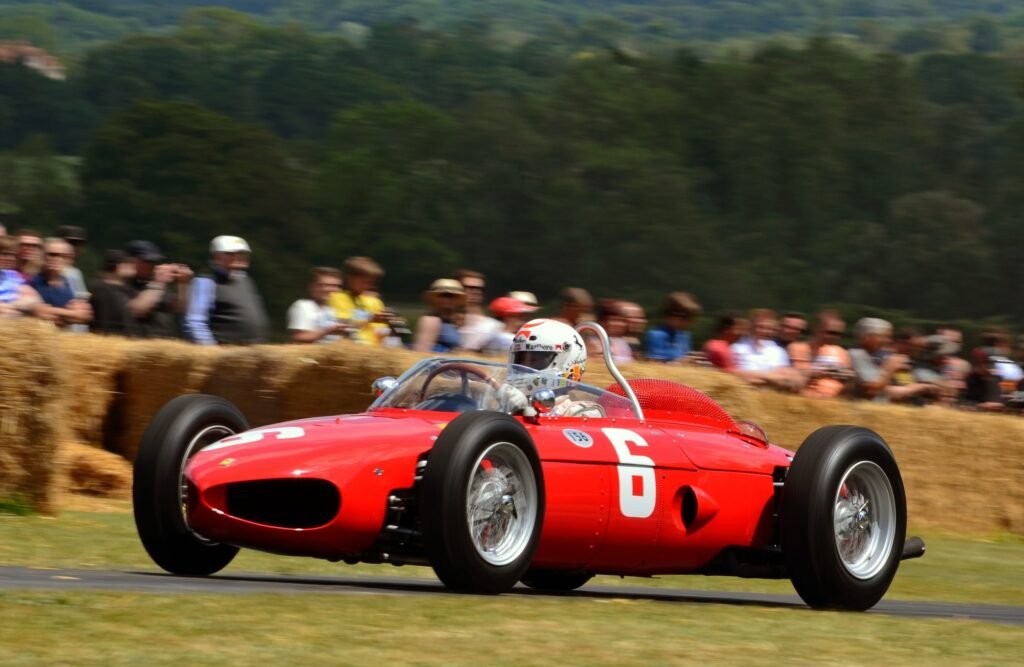
He found it in the two oval nostrils of the 1961 Ferrari 156 Sharknose, the F1 car Carlo Chiti engineered and Phil Hill, from Santa Monica, drove to the world title. The bumper openings on the F430 are that nose reinterpreted. Stephenson’s view is that copying old ideas is a sin and borrowing from them isn’t. The taillights nod to the Enzo.
Underneath, the aluminum space frame is the one the 360 Modena developed with Pittsburgh’s Alcoa. Ferrari called the F430 about 70 percent new, and one specialist history says only the hood, doors, roof and glass interchange. Wheelbase stayed at 2,601 mm, or 102.4 inches.
An estimated 16,750 were built between 2005 and 2009. People like to say this was the car that turned the entry-level V8 into the business, but the numbers don’t back that up. The F355 managed 11,273. The 360 had already done about 16,365 across coupe and Spider. The F430 held the line.
Michael’s button
The 430 Scuderia came in 2007, and Michael Schumacher, newly retired from F1, pulled the cover off it at Frankfurt that September. Ferrari says he spent a great deal of time testing it during development, and the numbers show what the program was for: 503 hp at 8,500 rpm, a claimed 1,250 kg dry, which is 100 kg under the F430 on Ferrari’s own comparison, titanium fasteners and springs and wheel nuts, a Lexan rear window, hollow anti-roll bars, and shifts of 60 milliseconds. The curb figure commonly quoted is about 3,150 pounds. F1-Trac, brought over from the 599 GTB Fiorano, was tied into the E-Diff as one system for the first time.
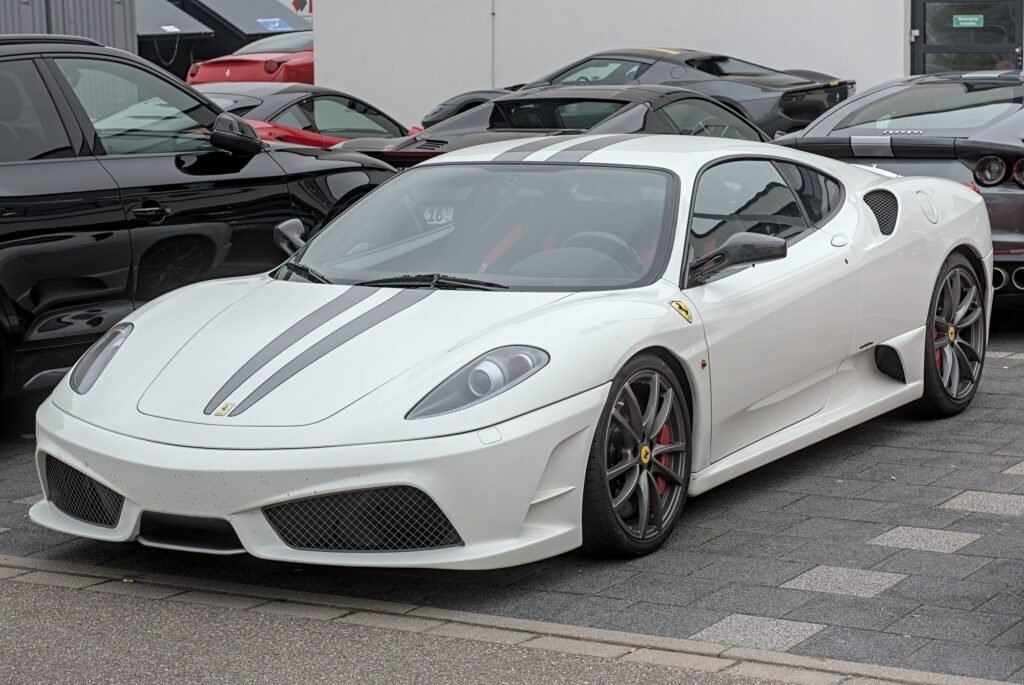
The Ferrari story is that the dial was the future. The Schumacher story is better. On the F430, a single click set everything at once, so if you wanted the engine and gearbox at full attack you also took the stiffest damping. Schumacher, by Autocar’s and evo’s accounts, wanted the car wide open on a bad road with soft shocks, and so the Scuderia got a separate button on the console, later known as the Bumpy Road setting. The greatest F1 driver of his era told Ferrari that its one knob had one thing too many on it.
On Ferrari’s Fiorano test track, the circulating times put the 430 Scuderia at 1:25.0 and the Enzo at 1:24.9, with the F430 at 1:27.0 and the 360 at 1:31.0. One contemporary road test had it actually beating the Enzo. These are factory times and not independent timing, so call it a dead heat between a mid-priced V8 and the hypercar it was supposedly beneath.
The open version, the Scuderia Spider 16M, followed at the World Finals at Mugello in November 2008 to mark Ferrari’s sixteenth constructors’ title. It was limited to 499 cars, with 1,340 kg dry, eighty less than the F430 Spider, and a plaque on the rear grille. Ferrari had never sold a track-focused entry model as a convertible before: the 348 GT Competizione and the 360 Challenge Stradale were coupes.
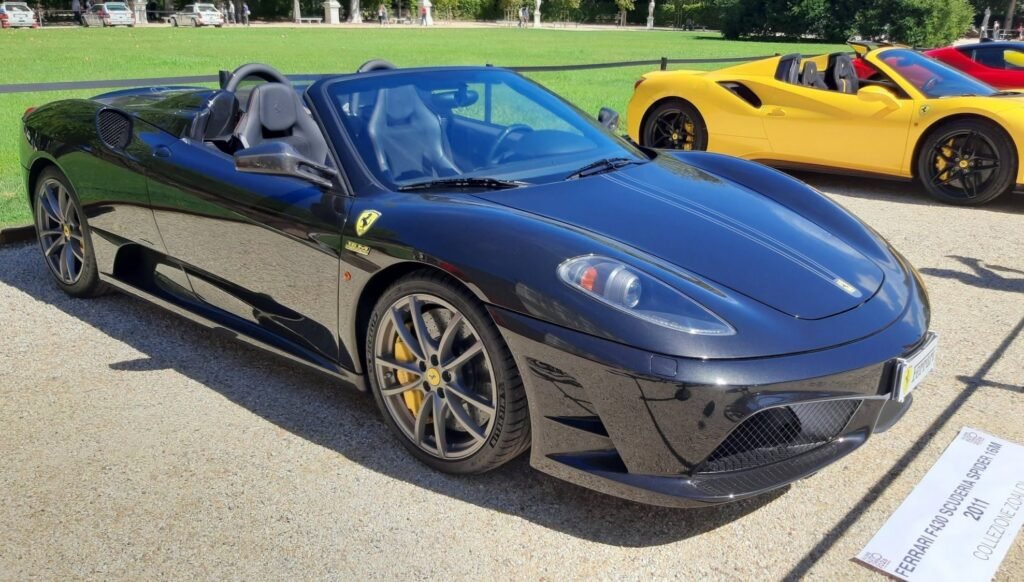
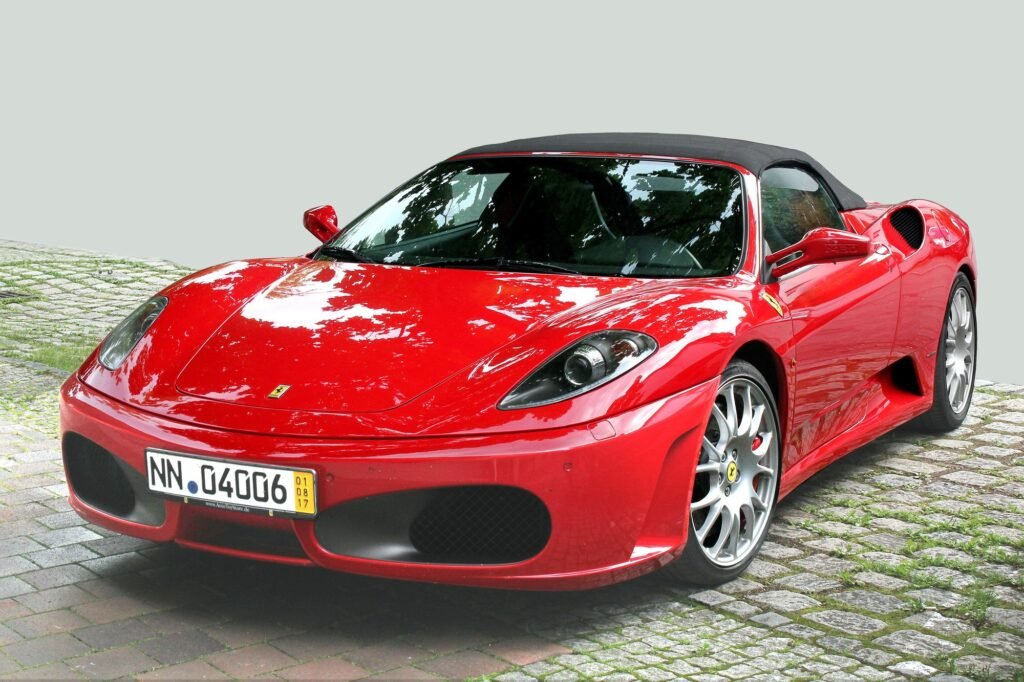
The Spider, by the way, deserves less scorn than it gets. It arrived at Geneva in 2005, gave up about 115 pounds and three mph of top speed to the coupe, and the rest is the same car.
And there’s the one-off nobody mentions at the show. The first official product of Ferrari’s Special Projects program, the SP1, was built on an F430 for Japanese collector Junichiro Hiramatsu in 2008 and styled by Leonardo Fioravanti, the same man who drew the 308. The second was the gold P540 Superfast Aperta, commissioned by the son of American cable TV pioneer John Walson, which we covered in the 599 piece.
Houston’s Ferrari
The F430 had its best American moment far from any dealer. Giuseppe Risi’s Houston team, Risi Competizione, ran the F430 GT2 and made it one of the great customer race cars of its time. In 2008, Jaime Melo, Mika Salo and Gianmaria Bruni won the GT2 class at Le Mans by eight laps. In 2009, Melo, Salo and Pierre Kaffer won it again, after taking the class at Sebring that March, in the 100th American Le Mans Series race. That year’s Le Mans also had a Ferrari F430 GTC in the garage with Patrick Dempsey on the driver list, off the set of Grey’s Anatomy.
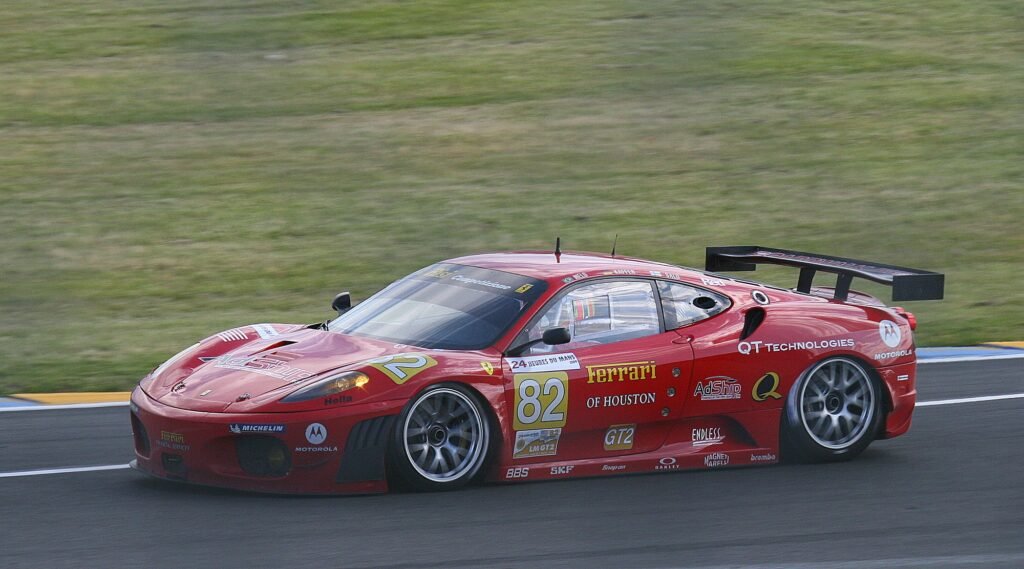
Those cars carried a quiet joke. To fit the class rules, Michelotto destroked the engine to 3,997 cc. The F430 is named for 4.3 liters, and its most famous wins came with 4.0.
What it costs you now
Three pedals first. The F430 was the last mid-engined Ferrari with a gated manual, and the F1 paddle box took so many orders that the option died with it. A figure of about 300 manual coupes gets quoted online, sourced to one owner’s post, so I won’t repeat it as fact. What’s beyond dispute is what the market pays for that gate, the same premium we saw with the 599, the 612 and the F12.
The fault that marks this car is the exhaust manifold. They crack, early cars most often, and many have since received the revised part. Take it seriously, because the pre-cat can break up and send debris into the engine. Past that, the V8 is about as tough as Ferraris get: evo’s buying guide quotes a specialist calling it bulletproof, with no cambelts to worry about. If you’ve priced engine-out belt service on an F355, you know what that’s worth.
F1 cars eat clutches at about 12,000 miles, better than the 360 but very dependent on stop-and-go use. Air in the system usually means a new pump, and a failed actuator ran about £6,000 at UK prices. E-Diff solenoids fail too, though they’re cheap. Carbon-ceramic brakes are common on late cars and painful to replace. And yes, the soft-touch interior buttons turn sticky, like on every Italian car of that decade.
One bit of seller’s talk to ignore: “last naturally aspirated mid-engine V8 with hydraulic steering.” Ferrari’s own parts diagrams show a hydraulic steering box and pump on the 458 Italia and the 458 Speciale. That line doesn’t survive a parts catalog. The stick and the 499 16Ms are the arguments that do.
The verdict
The F430 is where Ferrari quit living off its inheritance and started sharing. Thirty-one years of V8s carrying a dead son’s name gave way to a block built with Maserati, on a shared budget, one that showed up first in a car from across town. If that bothers you, price out a bespoke engine program for 16,750 cars and get back to me.
The bigger shift is the dial. After this car, the question of what makes a Ferrari fast starts getting answered in code. And the best story about that dial is the one where Schumacher asked for part of the decision back.
It is faster, safer and better than what it replaced. It is also the moment the driver stops being the main variable.
How much of what we call talent survives a system that puts a decent amateur within half a second of a factory test driver?
Check you’re still alive.
Photos: Calreyn88 (CC BY-SA 4.0), Charles01 (CC BY-SA 4.0), Nic Redhead (CC BY-SA 2.0), Lothar Spurzem (CC BY-SA 2.0 DE), Alexander Migl (CC BY-SA 4.0), Turning67 (CC BY-SA 4.0), Martin Lee (CC BY-SA 4.0).