
BMW M1: The Supercar That Almost Wasn’t and That BMW Never Dared to Repeat
Introduction: When BMW Wanted to Play in the Big Leagues
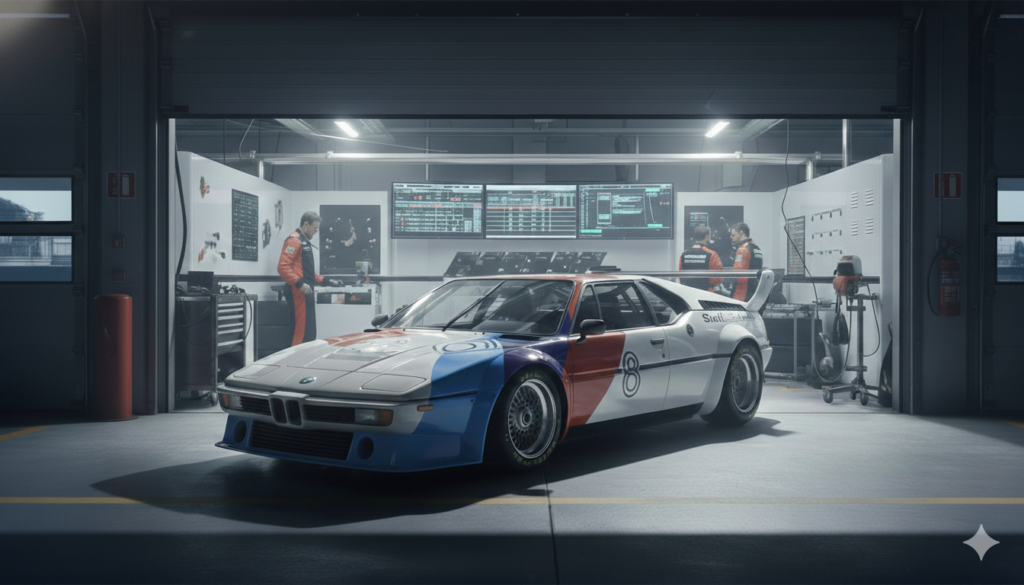
BMW decided it wanted to play in the big leagues. Ferrari, Lamborghini, Porsche. The folks in Munich wanted a mid-engine supercar to compete in Group 4 and, while they were at it, show the world they could do more than just sport sedans.
The problem: BMW didn’t have a clue how to manufacture a car like that.
The solution: call Lamborghini.
Yes, you read that right. BMW, the quintessential German brand, needed the Italians to build their only supercar. Lamborghini would handle the chassis and production, Giugiaro would design the body, and BMW would provide the engine.
The perfect plan. What could go wrong?
Everything.
The Italian Disaster: When Lamborghini Almost Killed the M1
Lamborghini was on the brink of bankruptcy. Prototypes were constantly delayed. Quality was disastrous. BMW sent engineers to Sant’Agata Bolognese, and they came back with horror stories: parts that didn’t fit, deadlines that weren’t met, and budgets that skyrocketed out of control.
After a year of suffering, BMW broke the contract. Now they had a half-developed car, no factory to produce it, and a Group 4 homologation requirement that demanded 400 units in an impossible timeframe.
The German solution: do it themselves, but in the most complicated way possible.
Baur, the coachbuilder from Stuttgart, would assemble the bodies. Ital Design would paint them. And BMW Motorsport would finish them by hand in Munich. An absurdly complicated process for a car that was supposed to be for competition.
In the end, only 453 units were manufactured between 1978 and 1981. Some records speak of exactly 456 units. Group 4 was canceled before the M1 could truly compete. The car arrived late to a party that was already over.
But here is the important part: although it arrived late for Group 4, the M1 found its true purpose in the Procar Championship. And that changed everything.
The Design: Giugiaro and Geometric Perfection
Marcello Gandini made the Countach. Giorgetto Giugiaro made the M1.
But the M1 was not an act of sudden inspiration. Giugiaro based it on the 1972 BMW Turbo, a concept car designed by Paul Bracq that was never produced. That car already had the essence of what the M1 would be: clean lines, perfect proportions, mid-engine, a design that looked like the future.
Giugiaro took that essence and perfected it.
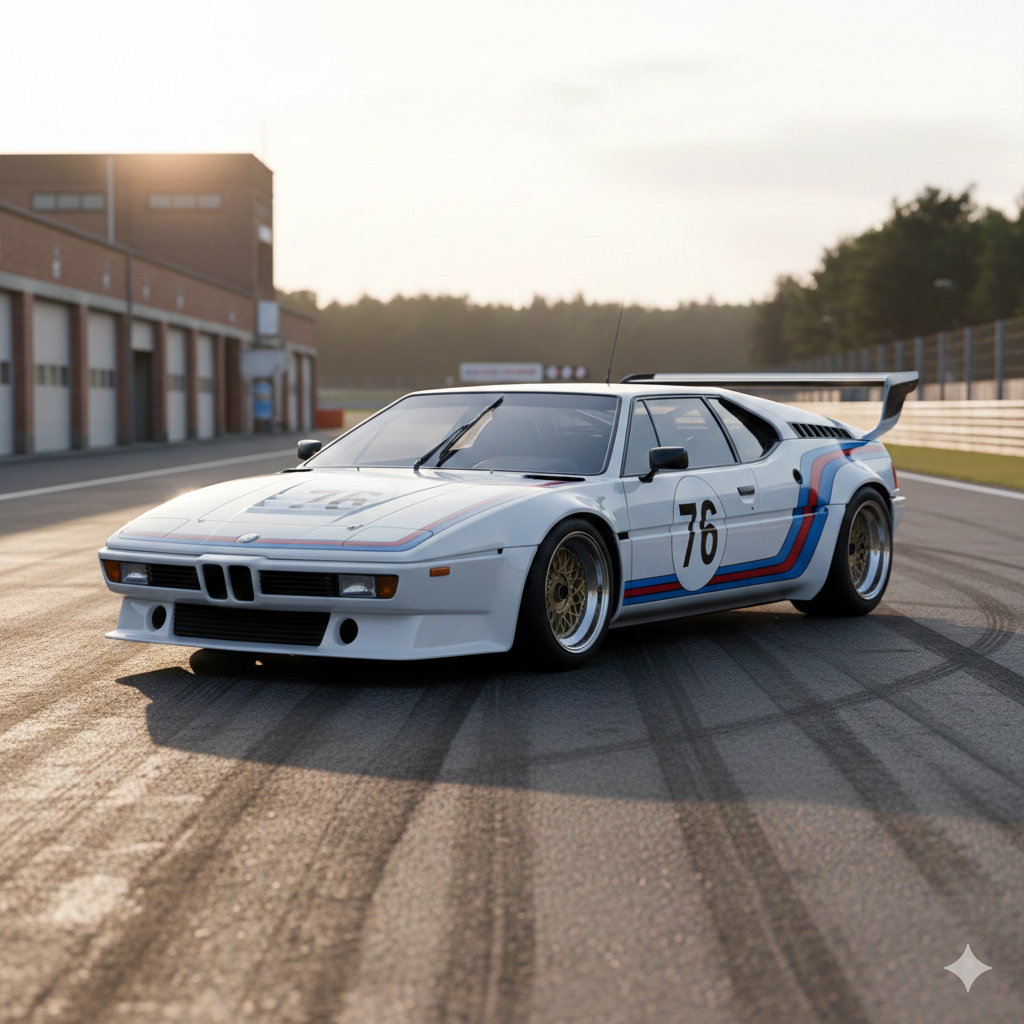
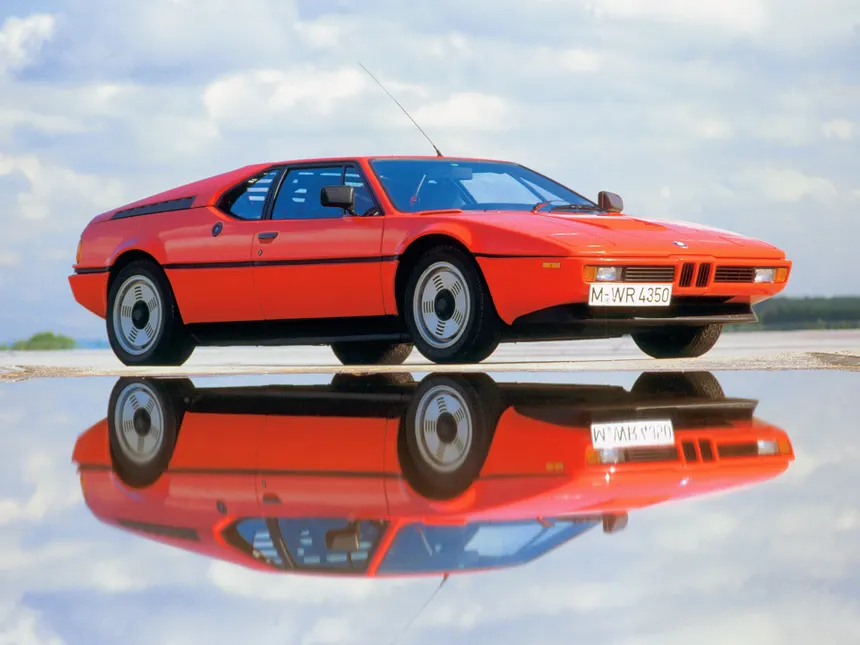
Clean lines. Perfect proportions. No ridiculous wings or fake air intakes. A design that in 1978 looked like the future and in 2026 still looks timeless.
The low front end, the pop-up headlights that retract into the bodywork, the functional side intakes that feed the mid-engine, the chopped rear with integrated taillights. Every line has a purpose. Every curve exists for a reason.
Compare it with any current supercar full of creases, active spoilers, and LEDs everywhere. The M1 proves that less is more. That elegance doesn’t need complexity.
The M1 measures 171.6 inches (4,360 mm) long, 71.7 inches (1,822 mm) wide, and 44.9 inches (1,140 mm) high. A nearly perfect 3.8:1 ratio between length and width. That’s what makes it look so good from every angle.
The Engine: M88, Six Cylinders of Legend
This is where BMW showed what they could do.
The M88 is a 3.5-liter inline-six with double overhead cams, 24 valves, and Kugelfischer mechanical injection. 277 hp in the street version. 243 lb-ft (330 Nm) of torque. Nothing spectacular today, but in 1978, it was cutting-edge technology.
Why an inline-six and not a V8 or V12 like the Italian competition?
Because BMW knew something many forget: the straight-six is the most balanced engine in existence. Perfect primary and secondary balance. No parasitic vibrations. Capable of high revs and taking a beating.
The M88 revved to 6,500 RPM in the street version. Top speed: 165 mph (265 km/h). 0-60 mph acceleration: 5.5 seconds. Respectable numbers for 1978, but the important thing wasn’t the numbers. It was the way it delivered that power.
The engine was mounted longitudinally behind the rear axle, giving the M1 perfect weight balance: 47% front, 53% rear. That is what makes a mid-engine car drivable. It’s not just putting the engine in the back and hoping for the best. It’s engineering.
The Competition Versions: When BMW Discovered the Turbo
But the real magic happened when BMW decided to compete seriously.
The M1 Procar: 470 hp of Pure Adrenaline
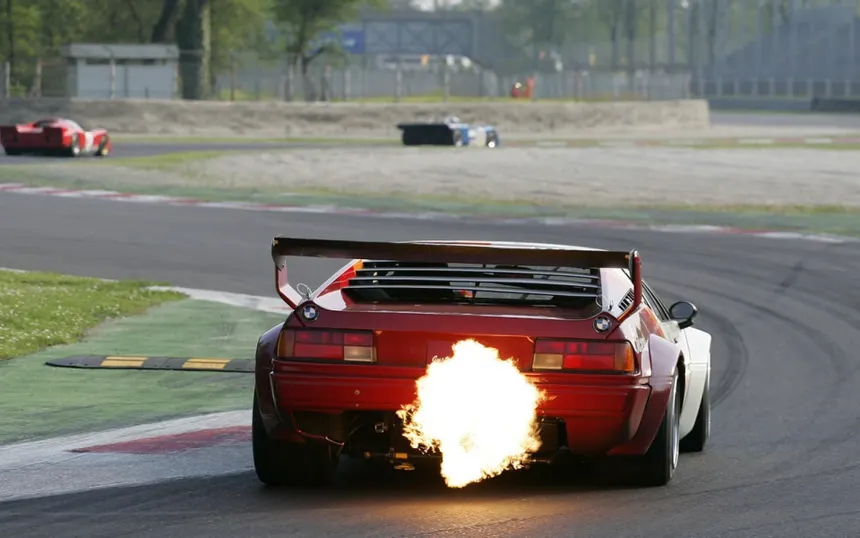
For the Procar Championship, BMW created a special version of the M88—naturally aspirated but highly modified. 470 hp at 9,000 RPM. 288 lb-ft (390 Nm) of torque. The engine was completely overhauled: lighter pistons, titanium connecting rods, more aggressive camshafts, larger valves.
The M1 Procar did 0-60 mph in 3.2 seconds. Top speed: 186 mph (300 km/h). In 1979. No turbo. No electronic traction control systems. Just a 3.5-liter engine and a driver with balls.
The Procar Championship was a one-make series that ran as a support race for the Formula 1 Grand Prix. All cars were identical M1s, so the competition was pure: driver against driver. And the winner of the first edition in 1979 was Niki Lauda, the legendary Austrian F1 driver. Lauda won the championship with Ron Dennis’s Project Four team.
That tells you everything you need to know about the M1 Procar. It was so fast it needed an F1 champion to win it.
The M1 Group 5: 850 hp of Pure Insanity
But if the Procar was fast, Group 5 was directly supernatural.
To compete in Group 5 endurance racing, BMW created a turbocharged version of the M88. The displacement was reduced to 3.2 liters (to accommodate turbo sizing regulations), but they fitted a massive turbocharger. The result: 850 hp at 9,000 RPM.
Yes, 850 horsepower. From a 3.2-liter engine. That’s 265 hp per liter. In 1979. Without direct injection, without advanced electronic management, without anything we consider “normal” today.
The turbo lag was brutal. When you stepped on the gas, there was a second of waiting while the turbo spooled up. And then, suddenly, 850 horses pushed you against the seat. Some reports speak of later versions reaching 1,000 hp in maximum qualifying trim.
The M1 Group 5 weighed around 2,645 lbs (1,200 kg). That means it had a power-to-weight ratio of 708 hp per ton. For comparison, a Ferrari F40 (1987) had 478 hp/ton. A Porsche 959 (1986) had 344 hp/ton.
The M1 Group 5 was more powerful, per ton, than practically any racing car of the era.
The Legacy of the M88: When an Engine Defines an Era
The M88 was the beginning of the M Division. Without the M1, there would be no M3, no M5, and none of the Ms that came after.
The M88 evolved. It went from 3.5 liters to 3.6 liters. Electronic injection was added. Compression was increased. And that engine, evolved, ended up in the M5 E28 (1984-1988) with 286 hp, in the M6 E24 (1987-1989) with 286 hp, and in the M3 E30 with its initial 200 hp (using a four-cylinder derivative of the same head design).
The M88 was the father of the entire M dynasty. It was the engine that proved BMW could build racing engines. It was the foundation upon which everything that followed was built.
The Procar Championship: When the M1 Found Its Purpose
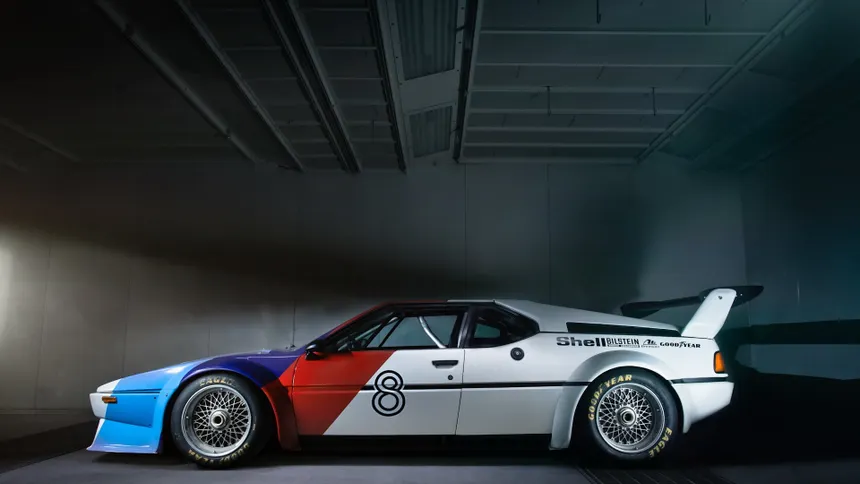
Group 4 never happened. But in 1979, BMW had a brilliant idea: create a racing series using the M1 as the base.
The Procar Championship ran as a support series for Formula 1. All cars were identical M1s, so the competition was pure: driver against driver, with no technical advantages.
And it was a spectacular success.
The first edition in 1979 was won by Niki Lauda with Ron Dennis’s Project Four team. Lauda, the legendary Austrian F1 pilot, proved that the M1 Procar was so fast it required an F1 champion to master it.
The second edition in 1980 was won by Alan Jones, another F1 champion. The Procar Championship became a spectacle: F1 drivers competing in identical M1s, demonstrating their skills without technical advantages.
The Procar Championship only lasted two years (1979-1980), but it was enough to prove the M1 was an extraordinary car. It was enough for the M1 to enter automotive history as one of the greats.
Curiosities Few People Know
The Schnitzer M1: The Radical Version
While BMW Motorsport made official versions of the M1, the German tuner Schnitzer decided to make its own.
Schnitzer took the M1 Procar, modified it radically, and entered it into Group 5 competitions. The result was a car that made the official M1 look slow.
Schnitzer fitted an even larger turbo, increased the boost pressure, and reached 900 hp. The car weighed around 2,535 lbs (1,150 kg). That is a power-to-weight ratio of 783 hp per ton.
Schnitzer won several races with their modified M1s. It was a demonstration that the M1, even in its official racing version, had room for improvement.
Only 399 Road Units
Here is the fact many forget: only 399 road units of the M1 were manufactured. Some records mention 453 or 456, but the most accepted figure for street cars is 399.
That’s fewer than many modern supercars produce in a single month. It’s fewer than some Ferrari special editions. It’s fewer than almost anything Porsche has ever done.
The M1 is, literally, one of the rarest supercars ever made.
The Original Price: When the M1 Was Expensive
The M1 cost 115,000 German Marks in 1978. That’s approximately $50,000 at the time, or roughly $230,000 in 2026 money.
For comparison, a Ferrari 308 GTB cost about $45,000. A Porsche 911 SC cost around $20,000. The M1 was expensive. Very expensive.
But it was a car built by hand, with racing components, in very limited quantities. The price made sense.
The M1 Today: One Million Dollars
Today, an M1 in good condition is worth over $1,000,000. Some special examples, like Procars or Schnitzer cars, are worth even more.
The M1 has become one of the most valuable cars in history. Not because it’s modern. Not because it’s fast. But because it is rare, beautiful, and represents a moment in automotive history when BMW dared to take a risk.
Why BMW Never Did It Again
This is the question no one wants to answer.
BMW had a mid-engine supercar with an iconic design and a legendary engine in its hands. A car that today sells for over a million dollars when one appears. A car that won championships. A car that was fast, beautiful, and pure.
And what did they do? They canceled it and never tried again.
Yes, there is the i8 (2014-2022). A plug-in hybrid with a three-cylinder turbo engine (228 hp) and electric motors that summed to 357 hp total. Video game design, video game engine, video game experience.
It’s not the same. It has no soul.
The official excuse: “it’s not our segment,” “it doesn’t fit the brand,” “the BMW customer is looking for something else.”
The reality: fear.
BMW has become a brand that optimizes Excel spreadsheets, not a brand that takes risks. The M1 was a project of madmen. It cost money, it arrived late, and commercially it was a relative failure (only 399 units sold).
But it created a legend.
Today, BMW makes electric SUVs with giant grilles and steering wheels that look like PlayStation controllers. Cars designed by committee, approved by marketing, manufactured to meet regulations.
The M1 was made because Jochen Neerpasch, the head of BMW Motorsport, had balls. And at BMW, there aren’t many guys like that left.
The Legacy They Don’t Want to Remember
The M1 proved three things that BMW seems to have forgotten:
First: BMW can make extraordinary cars when it wants to. The M88 was the start of the M division. Without the M1, there would be no M3, M5, or any M cars. The M1 was proof that BMW could compete with Ferrari, Lamborghini, and Porsche at their own game.
Second: The straight-six is enough. You don’t need 12 cylinders to make a supercar. You need well-executed engineering. The M1 competed with Ferraris and Lamborghinis with two to six fewer cylinders. And it won.
Third: Honest design lasts. While the supercars of the 80s and 90s age poorly, the M1 remains elegant. Because it didn’t chase fashions; it chased proportions. Because Giugiaro understood that beauty comes from function, not decoration.
Comparison Table: The M1 vs. Its Rivals
| Model | Year | Engine | Power | Weight | 0-60 mph | Top Speed | Production |
| BMW M1 | 1978 | 3.5 I6 | 277 hp | 3,203 lbs | 5.5s | 165 mph | 399 units |
| Ferrari 308 GTB | 1975 | 3.0 V8 | 255 hp | 2,976 lbs | 5.8s | 161 mph | 2,891 units |
| Lamborghini Countach | 1974 | 3.9 V12 | 375 hp | 3,086 lbs | 5.6s | 174 mph | 2,049 units |
| Porsche 911 Turbo | 1975 | 3.0 I6 Turbo | 260 hp | 2,711 lbs | 5.2s | 155 mph | 2,876 units |
| M1 Procar | 1979 | 3.5 I6 | 470 hp | 2,645 lbs | 3.2s | 186 mph | ~50 units |
| M1 Group 5 | 1979 | 3.2 I6 Turbo | 850 hp | 2,645 lbs | 2.5s | 217+ mph | <10 units |
Conclusion: The Car BMW Should Remember
Every time BMW presents another SUV with a beaver-tooth grille or announces that the future is electric and autonomous, they should look back at the M1.
Not to repeat it. That’s impossible. Times have changed. Regulations are different. Customers want other things.
But to remember that once they were capable of taking a risk. Of doing something different. Of creating a car that half a century later still generates more passion than anything they’ve done in the last 20 years.
The M1 was not a commercial success. But it is the only BMW you can call a supercar without anyone arguing with you.
And that, in the world of motoring, is worth more than all the units of the X6 ever sold.
The M1 was the car that proved BMW could be great. It was the car that created the M division. It was the car that won championships. It was the car that was beautiful, fast, and pure.
And it was the last car BMW made with its heart, not with a calculator.
Final Notes: Where to Find an M1
If you are looking for a BMW M1, here is your approximate price guide (2026):
- Standard Road M1: $850,000 – $1,300,000
- M1 Procar (Ex-competition): $1,600,000+
- M1 Group 5 (Ex-competition): $2,200,000+
- Schnitzer Modified M1: $1,100,000 – $1,600,000
The prices are astronomical, but they make sense. The M1 is rare. The M1 is beautiful. The M1 is historic.
And most importantly: the M1 is the last supercar BMW made with its soul intact.
#BMWM1 #Supercar #M88 #Giugiaro #Procar #MidEngine
Not Enough Cylinders – Technical opinion with criteria, not with an algorithm.
Pingback: BMW Z1 (1989–1991): The Sliding-Door Roadster That Changed BMW's Future