Achates Power: The Walmart Heir’s Engine That Aramco, Cummins and the U.S. Army Are Still Paying For
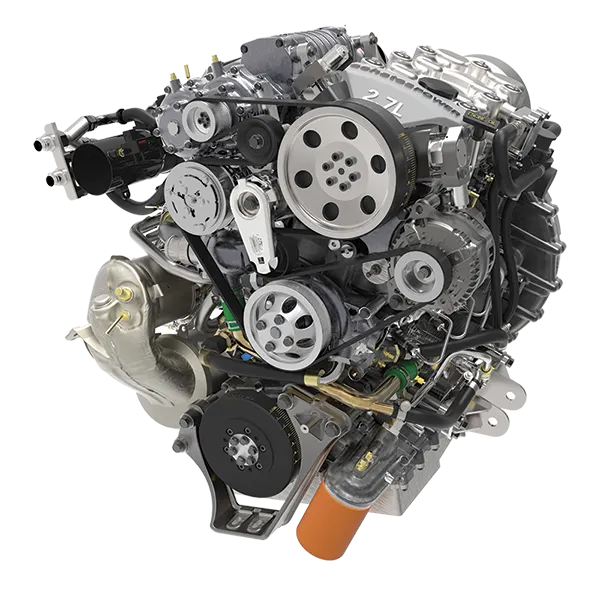
In January 2018, at the Detroit auto show, the most radical engine in the building was sitting under the hood of a Ford F-150, and it wasn’t on the Ford stand. It was on the Aramco stand. The Saudi oil company had brought along a pickup powered by a three-cylinder, 2.7-liter engine with no spark plugs, no cylinder head and no valves, and six pistons arranged in facing pairs. It came from a company in San Diego called Achates Power. It was the first gasoline opposed-piston compression-ignition engine fitted to a road vehicle in modern times, and if you’ve never heard of it, that’s sort of the point.
We’ve written before about Aramco’s DHE hybrid engine and its stake in Horse Powertrain, as if they were new moves. They weren’t. The oil company has been funding a radical combustion engine in the U.S. for eight years. So has the U.S. Army. And the engine company was started by a member of the family that owns Walmart.
Two pistons, one cylinder
An opposed-piston engine puts two pistons in a single cylinder, facing each other, with no head between them. The combustion chamber forms in the gap between the two crowns when both reach top dead center together.
Look at what disappears. There’s no cylinder head, camshaft, valves, valve springs or, in Achates’ gasoline version, spark plugs. All the machinery on top of a conventional engine is gone. By the company’s count, a comparable supercharged V6 has about 60 percent more parts. Fewer parts means lower manufacturing cost, fewer things to break and less maintenance.
What stays is a horizontal cylinder, two pistons, two crankshafts, one at each end, and ports cut into the cylinder wall, intake at one end and exhaust at the other. When the pistons move apart, they uncover the ports and the cylinder is scavenged. When they come together, they close the ports and compress the charge until it ignites. It’s a two-stroke cycle, one combustion event per crank revolution instead of one every two. In practice, Achates claims a big gain in thermal efficiency over a four-stroke of the same size: brake thermal efficiency of about 45 percent in its gasoline compression-ignition engine, compared with roughly 25 to 30 for a typical gasoline engine and around 41 percent for Toyota’s best hybrid units.
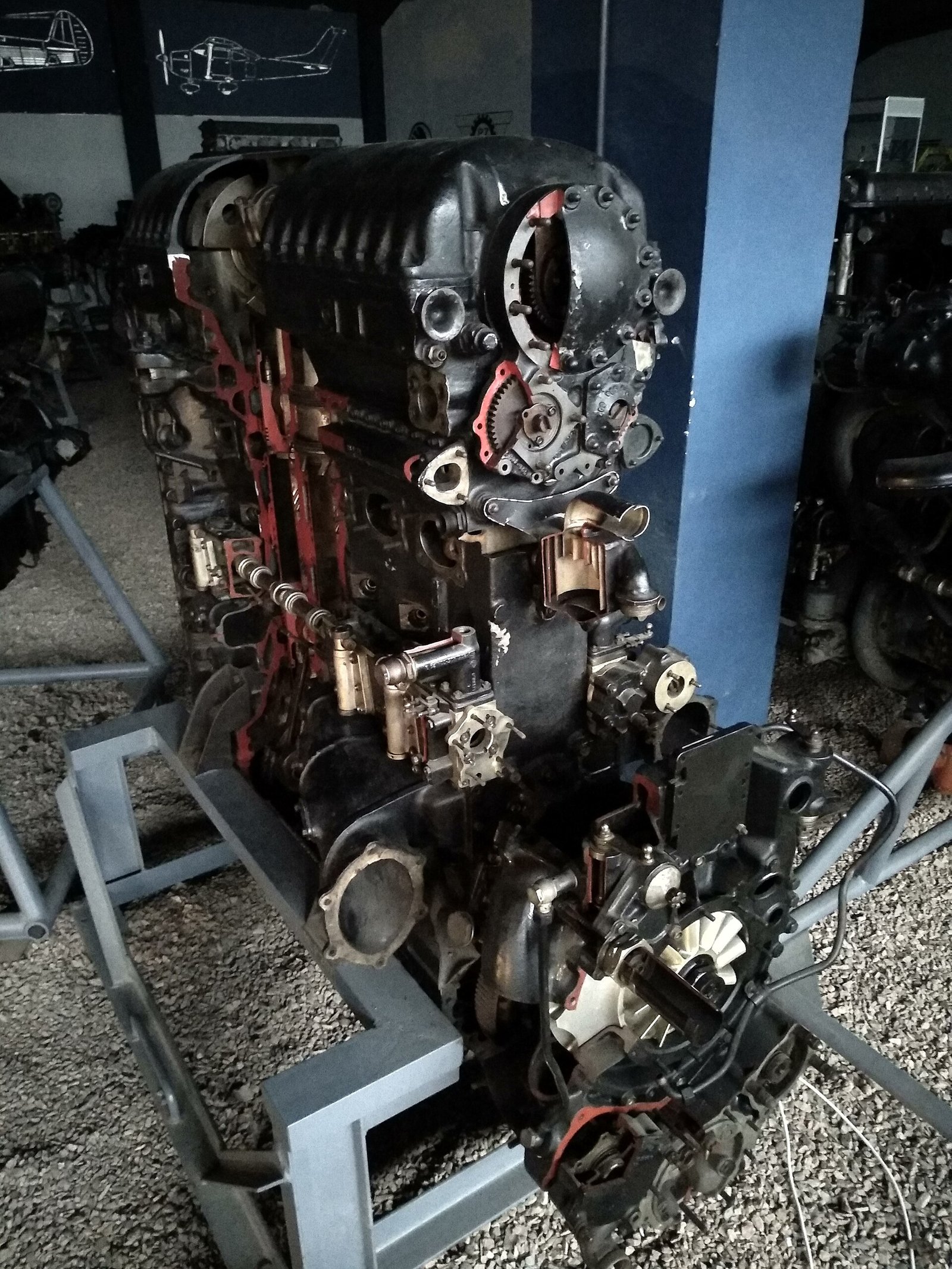
None of this is new as an idea. Germany’s Junkers built Jumo 205 opposed-piston diesels for aircraft in the 1930s, and they flew in long-range machines such as the Junkers Ju 86 and the Blohm & Voss BV 138 flying boat, where fuel economy mattered more than anything else. In America, Fairbanks Morse of Beloit, Wisconsin, built opposed-piston diesels for locomotives and Navy submarines through World War II and the Cold War. Fairbanks Morse Defense still holds the license to Achates’ design for marine and military use. The supply chain for opposed-piston engines in the U.S. never vanished. It had just gone to sleep.
Britain has its own famous example, the Napier Deltic, a triangular arrangement of three crankshafts and opposed pistons that powered fast patrol boats and the Deltic locomotives of British Rail’s East Coast Main Line. And American truckers and bus drivers have a soft spot for a close relative: the two-stroke Detroit Diesel 71 series, the screaming "Jimmy" that went into everything from Greyhound buses to Sherman tanks. It wasn’t an opposed-piston design, but it used the same idea of ports in the cylinder wall to breathe, and it taught generations of mechanics that two-stroke diesels could be tough.
Why it disappeared, and why it’s back
If the idea is so good, why did it vanish from cars? Two words: emissions and oil. Old two-strokes were hard to scavenge cleanly, burned oil and pumped out pollutants that couldn’t meet modern rules. The tight engineering margins of the opposed-piston layout made it even harder. What changed is computing. Achates designs its ports, combustion and scavenging with simulation tools nobody had in the 1950s, uses modern fuel injection and air handling, and claims to have solved oil consumption and emissions problems that killed the earlier designs. That’s the real bet behind the company: not a new idea, but an old one finally made to meet 21st-century rules.
A Walmart heir and a physicist
Achates was founded in 2004 in Sorrento Valley, San Diego, by two men. One was John Walton, son of Walmart founder Sam Walton. The other was James Lemke, a physicist. Walton supplied the money and Lemke the concept. Walton was a Vietnam veteran, a Special Forces medic, and an enthusiastic private pilot, and he had a soft spot for the old opposed-piston designs that flew in aircraft before the war. He died in June 2005 when the ultralight plane he was flying crashed in Wyoming. Lemke continued without him.
The company has been run since 2018 by CEO David Crompton, and it has spent more than two decades of continuous R&D on three engines at once, each with a serious customer.
The F-150 that Aramco paid for
In 2016, Achates got a $9 million grant from the Department of Energy’s ARPA-E program to develop a gasoline compression-ignition opposed-piston engine, with Delphi and Argonne National Laboratory as partners. By 2018, the engine was in a Ford F-150 demonstrator, and Aramco Services, the Houston-based U.S. arm of Saudi Aramco, which runs a research center in Detroit, had signed a joint development agreement. That’s the truck that went on show.
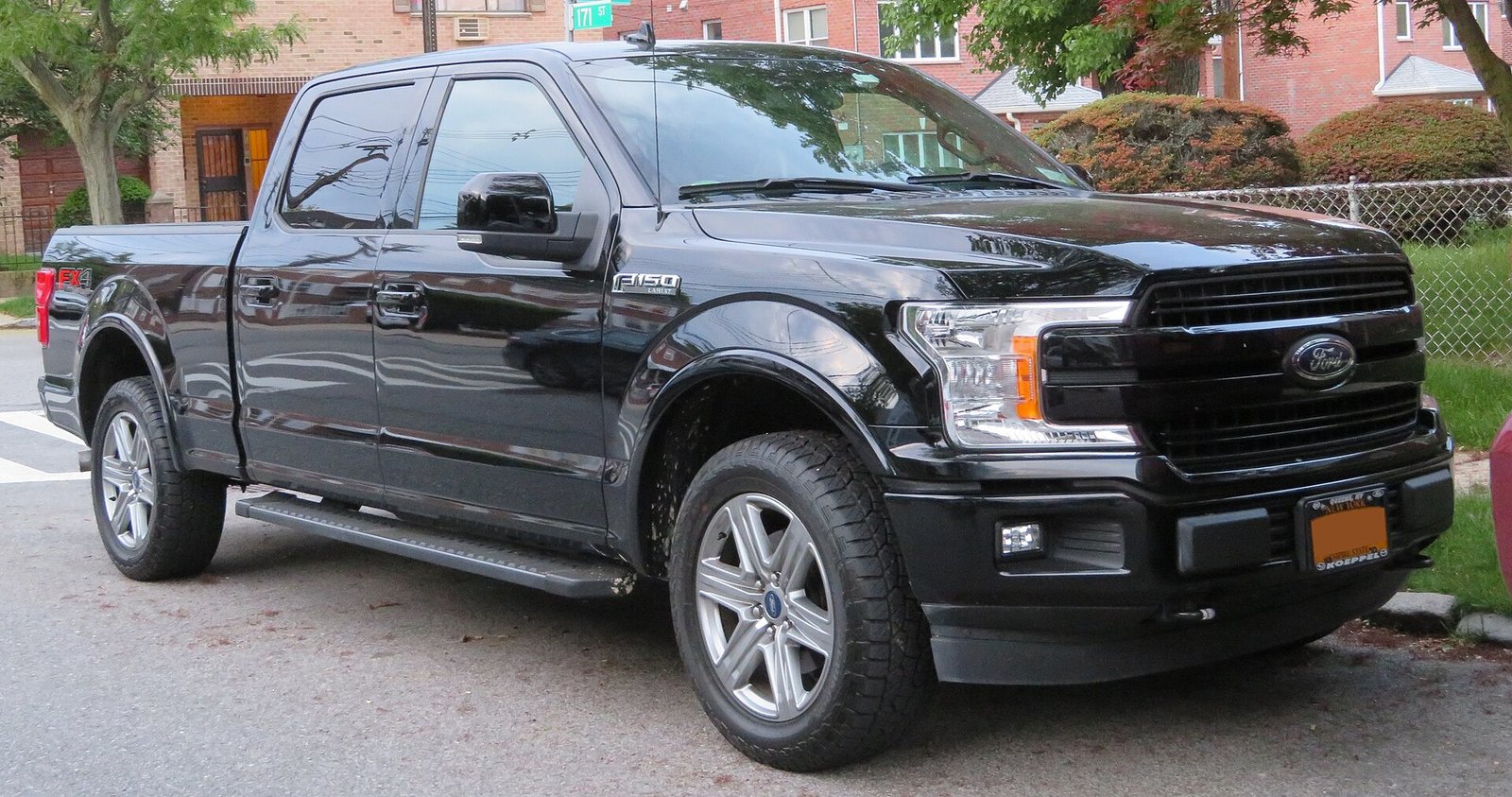
The numbers: three cylinders, 2.7 liters, six pistons, two cranks, 270 hp and 480 lb-ft, though some sources give 429 lb-ft depending on the stage of development. It returned 37 mpg on the combined CAFE cycle, about 6.35 liters per 100 km, and 42 mpg in diesel form. A 2018 F-150 with the standard 2.7 EcoBoost V6 was rated at 22 mpg combined. That’s 68 percent more range from the same tank. Achates said it could build the engine for $1,000 less per vehicle than the conventional technology roadmaps that Ford, GM and Stellantis were using to meet the 2025 CAFE rules, and that it would beat those rules by five mpg, according to technical director Fabien Redon.
Why would an oil company spend around $10 million on this? Because an opposed-piston engine that burns ordinary gasoline as efficiently as a diesel lets its product compete with electrification in a market that doesn’t want diesel. It also gives Aramco a technically distinct engine that no rival oil company has. The DHE that came later is the second generation of the same strategy.
What happened to the truck? Nothing, publicly. Ford never put an opposed-piston engine into production, and when it went after F-150 fuel economy, it took the hybrid route with the PowerBoost V6 in 2021. The demonstrator did its job for Aramco, though: it showed that a gasoline pickup could get diesel-like mileage without a single spark plug, and it gave the oil company a seat at the table in Detroit.
The Bradley
While the pickup was in development, Achates was also inside a much bigger military program. In September 2017, the U.S. Army awarded Cummins a $47.4 million contract, with Achates as its technology partner, to build the Advanced Combat Engine. The ACE was meant to replace the 600-hp Cummins VTA-903 that has powered the Bradley Fighting Vehicle since the early 1980s.
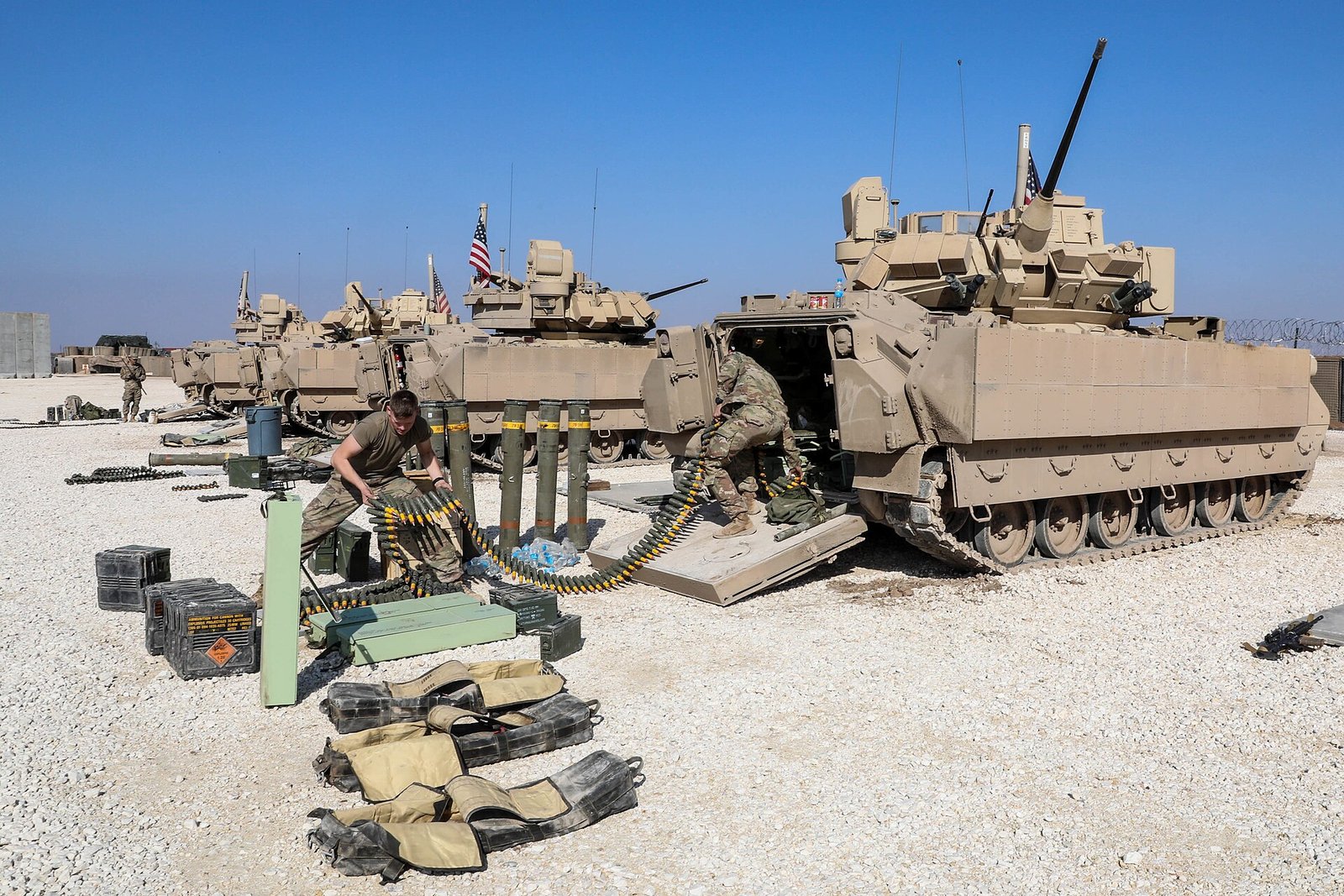
The ACE is a four-cylinder, 14.3-liter opposed-piston diesel making 1,000 hp and 2,400 lb-ft. It cuts heat rejection by 21 percent compared with the current engine, increases power density by 50 percent and uses 13 percent less fuel. It’s also modular, with 750 hp and 1,500 hp versions planned for other combat vehicles. For a vehicle crew, the efficiency gain isn’t about saving money: it means more range between fuel convoys, and fuel convoys are among the most dangerous things an army has to run. In August 2021 the Army followed up with another $87 million, to bring the engine to technology readiness level 6, which means testing in a real vehicle. It went into a Bradley demonstrator, with series production originally aimed at 2024.
That’s worth thinking about. Much of the conversation in Europe assumes that combustion is dying everywhere. Meanwhile, the U.S. Army has spent $134 million over eight years on one of the most radical combustion engines of the century, to put in its armored vehicles. Climate policy doesn’t apply to military hardware, and that’s exactly where Achates has found its first real path to volume production. Cummins, based in Columbus, Indiana, would build it, which brings the story full circle in its own way. Clessie Cummins founded the company in 1919 on the idea that diesels belonged in road vehicles, and in 1931 he entered a diesel-powered car in the Indianapolis 500, which ran the whole race without a pit stop. Ninety years later, his company is making that argument again, with an engine layout older than his first truck.
Walmart’s truck
The third engine is a 10.6-liter opposed-piston diesel for long-haul trucks. In December 2020, Achates said it had met ultra-low NOx and reduced CO2 targets at the same time using conventional aftertreatment, without exotic catalysts. The test mule is a Peterbilt 579 belonging to Walmart. So the engine that one Walmart heir paid for twenty years ago is being tested today in a truck owned by the company his family built. You couldn’t write it better.
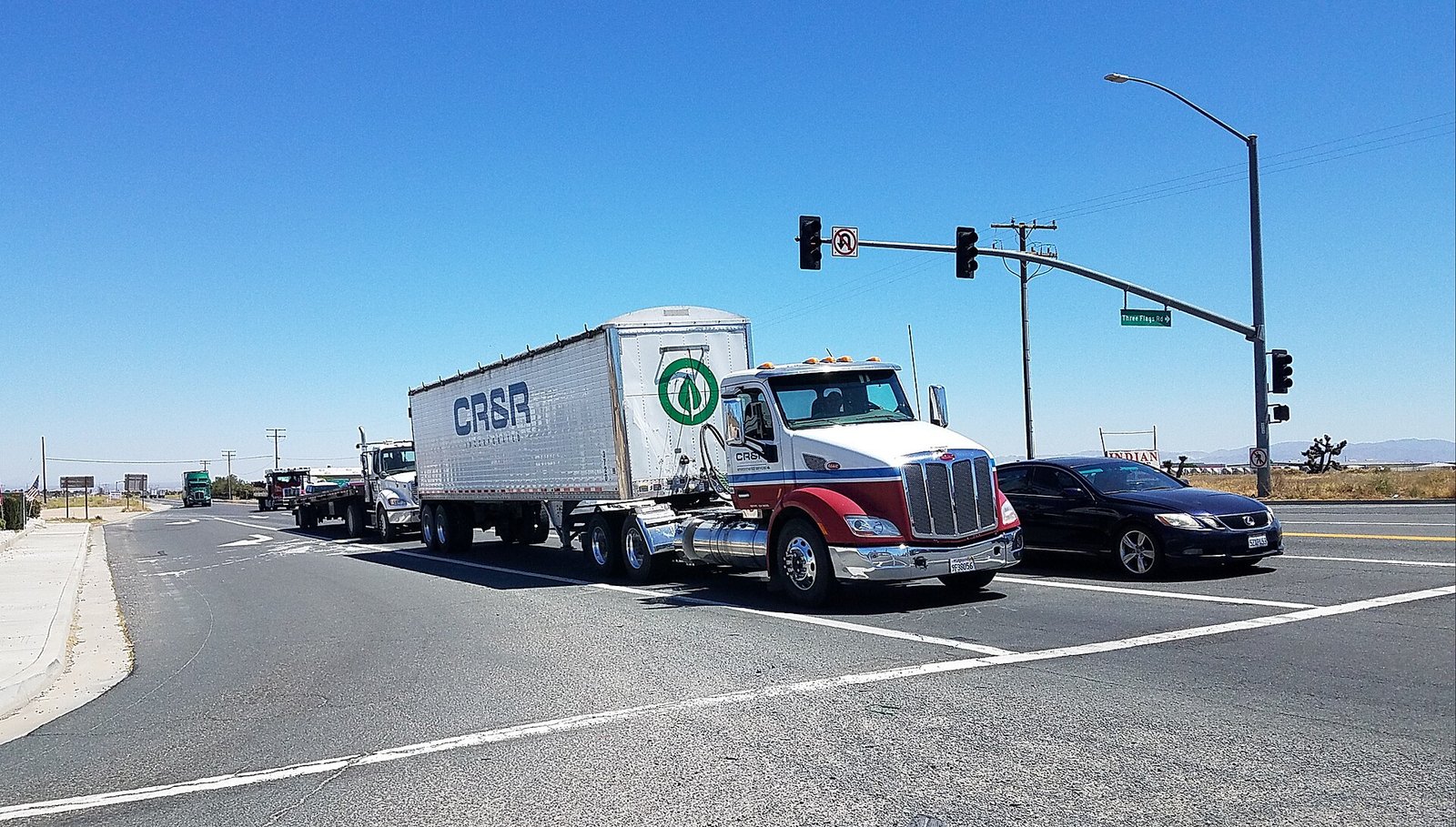
Achates also says the 10.6-liter is the first diesel engine to meet California’s near-zero 2027 standards, years before they kick in. For the American trucking business, that’s the difference between still being able to sell diesels in the biggest truck market in the country or not.
Putting it together
Aramco has been backing Achates since 2018 for a radical pickup engine. It backed Pipo Moteurs in France for the DHE, and in late 2024 bought 10 percent of Horse Powertrain to get access to an industrial network. Meanwhile, the 10.6-liter heavy truck engine keeps developing, and the military ACE is on its way to production.
It isn’t just Aramco. Chinese makers are chasing record thermal efficiency with conventional engines. Ferrari has filed a patent for oval pistons that recall the Honda NR. The free-piston engine keeps resurfacing in labs. Each big player is digging up a strange combustion architecture to sidestep electrification rules and serve the markets where combustion is still the norm.
Picture it in 2032: somewhere in Arizona, a Walmart truck with an Achates 10.6-liter rolls past an electric pickup built in China. Who won the combustion engine war? Not Europe, which is still busy arguing about it. Europe banned the sale of new combustion cars from 2035, then spent years debating exceptions, while American, Saudi and Chinese money kept building the engines that will run in every market where those rules don’t reach.
Aramco has paid for eight years, Cummins builds it, the Army wants it in its armored vehicles and Walmart is testing it in its trucks. The internal combustion engine isn’t dying. It’s moving to a different address, and most of the people who think it’s dead haven’t noticed the moving trucks.
Check you’re still alive.
Photos: Engine: Achates Power; Ford F-150, Kevauto (CC BY-SA 4.0); Junkers Jumo 205, Zala (CC BY-SA 4.0); M2A3 Bradley, Spc. William Gore, U.S. Army (public domain); Peterbilt 579, TheInvertedFan (public domain). Via Wikimedia Commons.
I think the achate’s engine has potential, But needs refining.
I think it’s an interesting engine, but I agree with you. Thanks for commenting. Regards!