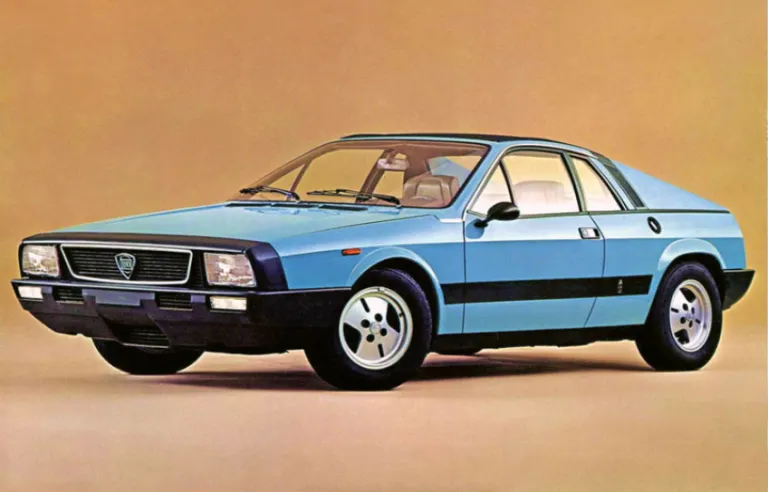
Lancia Beta Montecarlo: the car that changed brand three times before it existed
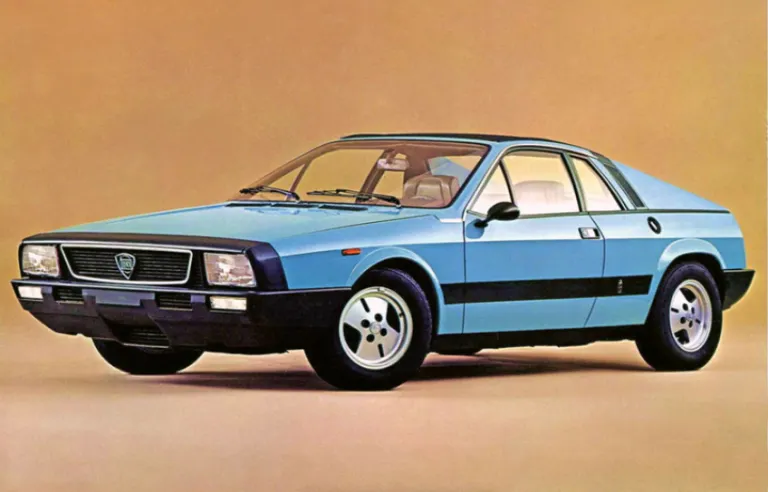
Some cars are born with a clear identity from the first CAD sketch. They know what they’re going to be, which brand they belong to, which segment they target. Everything after that is just execution.
And then there are cars like the Lancia Beta Montecarlo, which by the time it’s unveiled at the Geneva Motor Show in March 1975 has already been alive conceptually for seven years, has held three different names, has belonged to two different brands, has survived an oil crisis, and has been through a complete change of purpose. The Beta Montecarlo, before existing as a Lancia, had been a Fiat twice — and was saved from the archive by a decision now told in Italian car folklore as one of those half-real, half-mythical scenes from the night of 17 February 1975 at the Pininfarina styling centre.
That story alone — the car that changed identity before it ever hit the road — would be worth a piece on its own. But the Beta Montecarlo has another parallel story: that of its Turbo Group 5 version, the “Silhouette” with which Lancia won the World Championship for Makes in 1980 and 1981 in its sub-2-litre category. And the further story of serving as the structural platform, once its civilian life was wrapping up, for the Lancia 037 Rally that in 1983 would become the last rear-wheel-drive car to win a World Rally Championship.
So the Beta Montecarlo is three cars in one. A 1970s Italian road coupé. A Sports Car World Champion. And the chassis donor for the 037. Here’s the story.
The origin: the Fiat X1/8 that was meant to replace the 124 Coupé
Back to 1969. Fiat needs to replace the Fiat 124 Sport Coupé, which had been on sale since 1967 and was running out of life. The plan was to develop a more modern, more sporting successor to complement the Fiat X1/9 — the mid-engined Bertone roadster set to launch in 1972. Fiat commissioned the project to Pininfarina, then Italy’s most prestigious coachbuilder.
The project was internally named Fiat X1/8. Lead designer: Paolo Martin, a brilliant draughtsman who would later sign the Ferrari Modulo of 1970 and the Rolls-Royce Camargue of 1975. The first novelty of the X1/8 was that it would be the first car developed and built entirely by Pininfarina, not based on an existing model. That is, Pininfarina was making the leap from “the one who dresses the car” to “the one who builds the whole thing”. Industrially significant.
The planned engine was a 3-litre V6. The bodywork, a mid-engined sporting coupé. The design was complete in 1971. Then came the 1973 oil crisis.
The shift: X1/8 becomes X1/20
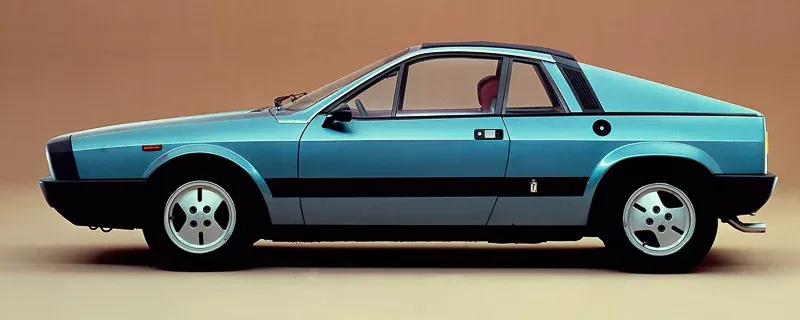
The oil crisis dismantled the project. A 3-litre V6 sports coupé in 1974, with the crude oil price quadrupled and Western economies in recession, wasn’t going to sell. Fiat decided to rescue the project but scale it down: the 3-litre V6 was replaced with a 2-litre four-cylinder. The internal designation changed from X1/8 to X1/20.
And here something interesting happened. Pininfarina, which already had the car practically finished in its X1/8 form, decided to do two things with the X1/20 platform. One, keep developing the road version with the four-cylinder. And two, build a competition variant for endurance racing: the Fiat Abarth SE 030, which in October 1974 finished second outright in an important race of the season, beaten only by a Lancia Stratos.
That podium, that second place behind a Stratos, is what changed the car’s history.
February 1975: the Pininfarina night
This is the part Italian workshops tell as legend with a basis in fact. One February night in 1975, at the Pininfarina styling centre in Turin, three men met to decide the X1/20’s future. Gianni Agnelli, president of Fiat. Renzo Carli, Pininfarina executive. Sergio Pininfarina, owner and heir of the firm. On a workbench, the practically finished X1/20 prototype.
The discussion, according to the versions that have reached us — all with caveats because there’s no official minute — turned on whether the car should go to market as a Fiat or whether it would fit better in another brand of the group.
At some point during the conversation, Agnelli got up, stepped out for a few minutes, came back with a grille bearing the Lancia shield, placed it on the prototype’s nose, tweaked the shape with a finger, and said something like this: the X1/20 can easily become a Lancia, since Fiat already has the X1/9 covering that segment.
That sentence decided everything. The X1/20 stopped being a Fiat and became a Lancia. A month later, the car was unveiled at the Geneva Motor Show in March 1975 as the Lancia Beta Montecarlo.
Is the scene 100% verifiable? We don’t have a way to confirm every detail. What’s documented is the decision: the car was assigned to Lancia, not Fiat, at some point in early 1975. And Agnelli was the man who made those calls.
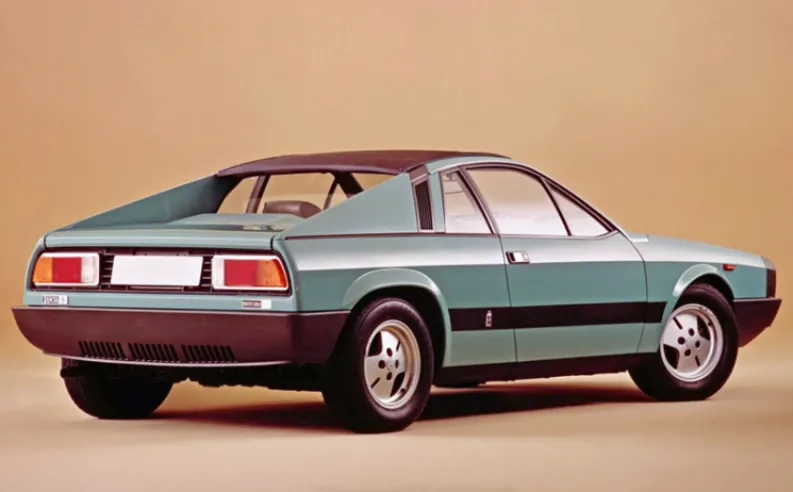
The name: “Montecarlo”
A small editorial note here. The car’s name is always spelled as Montecarlo, one word, not “Monte Carlo” like the city in the Principality of Monaco. The difference is deliberate. The name celebrates Lancia’s previous victories at the Monte Carlo Rally — the Fulvia HF wins primarily, but also the Stratos which was starting to dominate that event. It’s a tribute name, not a geographical one.
And “Beta” was the family designation. The Beta was already a Lancia range that had been in production since 1972, with saloon, coupé, HPE (shooting brake) and Spider variants. The Beta Montecarlo was added to the family as the mid-engined sporting variant, even though mechanically it had little in common with the other Betas (which were front-wheel drive with front-mounted engines).
The car: technical breakdown
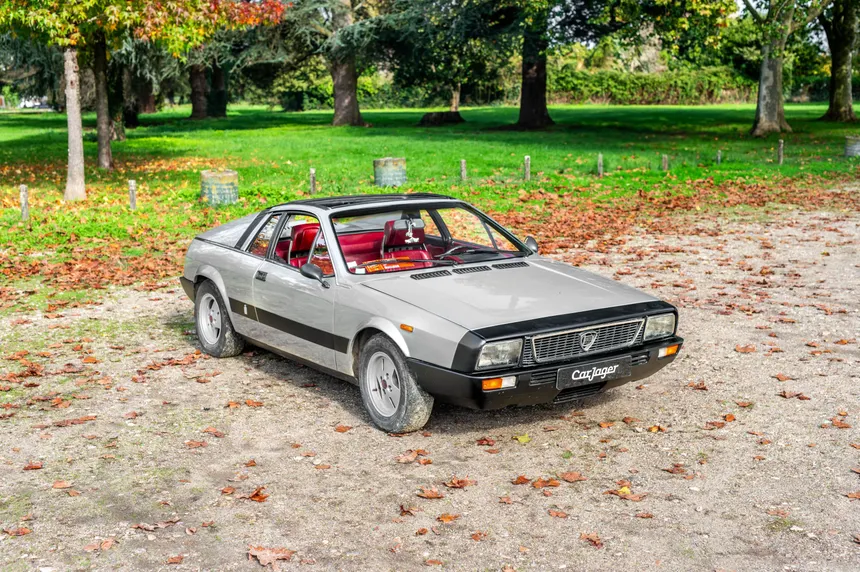
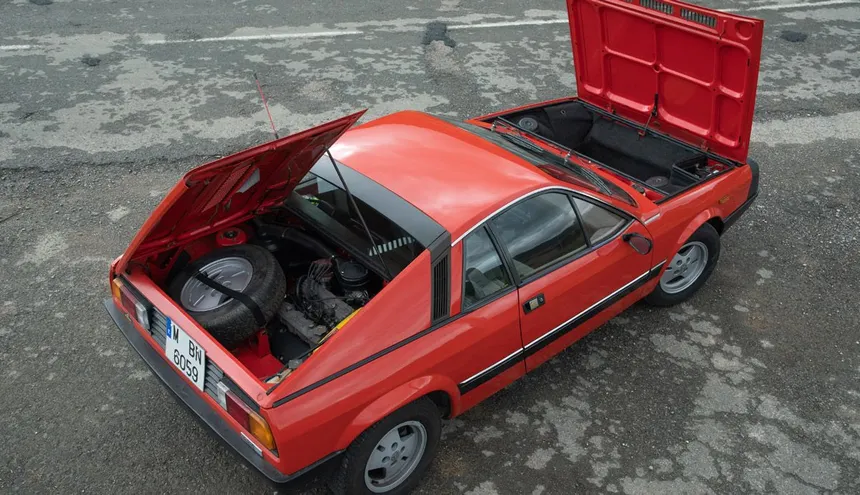
The Beta Montecarlo was sold from 1975 to 1981 in two series.
Series 1 (1975-1978) — marketed as Lancia Beta Montecarlo:
- Type 137
- Engine: 2.0L Lampredi DOHC inline four, transversely mounted mid-rear, 120bhp
- Rear-wheel drive
- Five-speed manual gearbox
- MacPherson suspension all round
- Disc brakes all round
- Bodystyles: Coupé and Spider (with a manually rolled-back targa top)
- US version: Lancia Scorpion with 1.8L Lampredi engine (1976-77)
- Designed by Paolo Martin at Pininfarina
- Assembled at the Pininfarina plant in Grugliasco, Turin
Dimensions:
- Wheelbase: 2,300mm
- Length: 3,813mm
- Width: 1,696mm
- Height: 1,190mm
- Kerb weight: 970-1,040kg
Series 2 (1980-1981) — marketed as Lancia Montecarlo (without the “Beta”):
- Same basic mechanicals, refinements in suspension and brakes
- Subtle styling changes in grille, indicators and wheels
- More limited production run
Total production: 7,798 units across both series.
It’s a relatively rare car today. Much rarer than its conceptual family member the Fiat X1/9. And very different in character: the X1/9 is light and playful, the Montecarlo is heavier, more serious, with a more mature dynamic balance but less mischievous personality.
The Beta Montecarlo Turbo Group 5: the monster from Turin
Here begins the Beta Montecarlo’s second life. The one that really put its name into motorsport history.
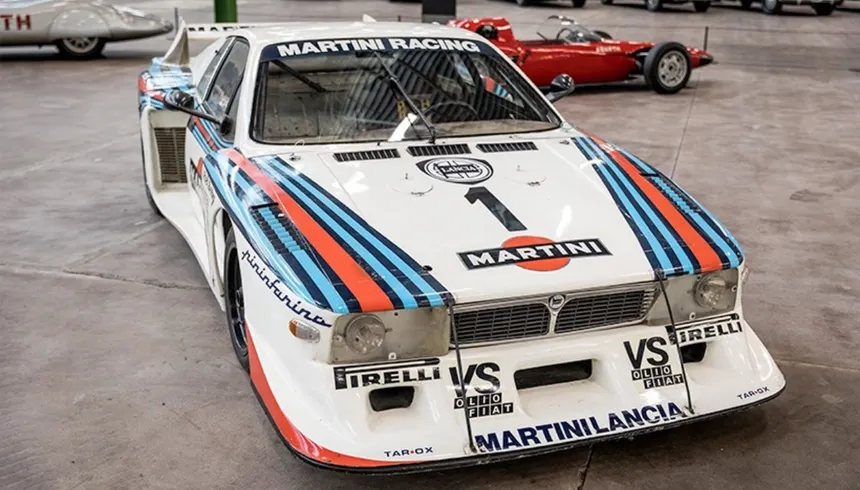
In 1976, the FIA changed the regulations for the World Championship for Makes, introducing the Group 5 “Silhouette” category. The idea behind Group 5 was to allow radically modified versions of road cars, maintaining the silhouette and styling features of the production car but with virtually free drivetrain and chassis. It was the global equivalent of the German “Silhouette” series.
Lancia Corse in 1977 decided to enter this category with a car based on the Beta Montecarlo. Why? Because the Stratos was running out of competitive life in rallying and Fiat had decided to concentrate the group’s rally programme on the Fiat 131 Mirafiori Abarth. Lancia needed its own competition programme in a different category. The Group 5 World Championship was the opportunity.
The project was developed in collaboration between Lancia Corse, Dallara, Abarth and Pininfarina. Four names any petrolhead recognises. The car’s official unveiling happened in December 1978 at the Pininfarina plant.
The intended engine was a 1.4L four-cylinder turbocharged unit, designed by Gianni Tonti (from Abarth), Claudio Maglioli, and Nicola Materazzi. The last one deserves a closer look: Materazzi was a specialist in turbochargers applied to racing engines. After his Lancia stint he’d move to Ferrari in late 1979 to develop the Formula 1 turbo engines, and from there to Maranello’s road car department, where he would design the Ferrari F40. Yes. The man who designed the F40 came from making competition engines at Lancia for the Beta Montecarlo Turbo.
The 1.4L turbo wasn’t ready for the start of the 1979 season. February testing started with a 2.0L atmospheric Lampredi engine from the Fiat 131 Mirafiori rally car. In April the 1.4L turbo arrived. Too late for the intended Mugello debut, but in time for the rest of the season.
The competition livery of the Beta Montecarlo Turbo was unmistakable: matte black with red flames on the main car. The sister car wore white flames on the same black. A completely different visual signature from anything else in the paddock — a bit rock and roll, a bit demonic, perfect for the Group 5 atmosphere of the late 70s.
The Group 5 record: two world titles
The Beta Montecarlo Turbo entered the World Championship for Makes Group 5 in 1979 and started picking up results quickly. But the good years were 1980 and 1981.
1980: world champion makes Group 5 in the sub-2-litre category.
1981: world champion makes Group 5 in the sub-2-litre category (repeat).
Two consecutive world titles. Against rivals like the BMW M1 Procar, the Porsche 935, the Ferrari 512 BB LM. Those cars were much bigger and far more powerful in the over-2-litre class, sure. But in sub-2-litre, the Beta Montecarlo Turbo was practically untouchable.
The car raced on legendary circuits: Mugello, Silverstone, Brands Hatch, Nürburgring, Le Mans (where it didn’t finish the 24 hours but did compete), Spa-Francorchamps. The images of a black Beta Montecarlo with red flames cresting Spa’s Raidillon are one of the classic postcards of late-70s/early-80s Group 5 racing.
For Lancia, those two titles mattered for a strategic reason. While the Fiat 131 Mirafiori Abarth was dominating rallying under the Fiat banner (not Lancia), the Beta Montecarlo Turbo ensured the Lancia shield kept winning world titles. The brand wasn’t abandoning competition — it was just changing arenas.
The step to the 037: the most important inheritance
And here’s the piece that closes the editorial loop on the Beta Montecarlo. When the Group 5 programme ended at the close of 1981, the investment in the Beta Montecarlo platform wasn’t wasted. Lancia Corse, together with Pininfarina, used the central section of the Beta Montecarlo as the structural base of the Lancia 037 Rally that would launch in 1982 and win the 1983 WRC manufacturers’ title with Walter Röhrl at the wheel.
The 037 is a radically different car from the road Beta Montecarlo. Rear-wheel drive, supercharged mid-mounted engine, fibreglass bodywork, sub-tonne weight. But the central cage — the cockpit cell — is directly inherited from the competition Beta Montecarlo. The mid-engined philosophy too. The Pininfarina collaboration too.
So: the Beta Montecarlo didn’t just win two titles in its Turbo Group 5 form. It served as the structural base for the 037, the last rear-wheel-drive car to win a manufacturers’ WRC title in the modern era. And the 037 served as the base for what came next, the Delta S4. And the S4 opened the path for the Integrale.
Once again: when you trace the Lancia dynasty from the Fulvia HF to the Integrale Evoluzione II Edizione Finale, one of the central pieces of the bridge is this 1970s road coupé that hardly anyone tells you about. The Beta Montecarlo.
Current value and collectability
A Series 1 road Beta Montecarlo, in good condition, sells today for between €25,000 and €50,000. Spider versions tend to be valued slightly higher than Coupés. Series 2 cars (1980-1981) are rarer and typically go between €40,000 and €70,000 in good condition.
The Turbo Group 5 competition cars are another universe entirely. So few exist that every time one comes to auction it’s a major event. Numbers in conversation among collectors range from €250,000 to €600,000 depending on race history, with the trend clearly upwards.
The curious thing about the Beta Montecarlo market is that for decades it was completely invisible. It was the “weird Lancia” nobody wanted. Only in the past five or six years has the collector market started to understand what this car actually is: the link between the Stratos and the 037, a 1970s mid-engined Pininfarina, and a car with two world titles in its records.
Why it matters
Three reasons, one per life.
As an industrial product, the Beta Montecarlo matters because it shows how product-line decisions were made in 1970s Italian industry. A project gets developed for years, then changes brand on an almost anecdotal decision by the group’s CEO, and ends up saving Lancia’s sporting segment at a critical moment.
As a racing car, it matters because it won two consecutive titles in its category with a team that combined the best of Italian engineering of the era: Pininfarina, Abarth, Dallara, and Lancia Corse. And on its engines worked Nicola Materazzi before he left for Ferrari to design the F40.
As a historical link, it matters because its central cage and mid-engined philosophy became the base of the Lancia 037, which won the 1983 WRC against the Audi Quattros. No Beta Montecarlo, no 037. No 037, no S4. No S4, no Integrale.
Three lives. One car. And almost nobody tells the whole story.
If you ever walk through an Italian concorso and you see a Beta Montecarlo parked between Stratos cars and Delta Integrales, I’d recommend stopping. It’s probably the least celebrated car in the 70s-80s Lancia cluster. And at the same time, it’s the one that connects the two eras: the Stratos era that’s wrapping up and the 037 era that’s just being born.
Paolo Martin drew it at Pininfarina when it was still going to be a Fiat. Agnelli baptised it with an improvised grille one February night in 1975. Nicola Materazzi tuned it before leaving for Ferrari to design the F40. And a team that three years later would build the last rear-wheel-drive WRC winner on top of its skeleton crowned it with two world titles.
Some cars have a history. The Beta Montecarlo has three.
Check you’re still alive.