Abarth: the Austrian who built Italy’s giant-killers out of Fiat parts

If Carroll Shelby had been born in Vienna, raced motorcycles instead of chicken farming and worked with Fiats instead of Fords, he might have been Carlo Abarth. Abarth took small, cheap Italian cars and turned them into race winners, sold go-fast parts to anyone who wanted them, and built a scorpion badge that still means "bigger bite than it looks." His company claimed around 10,000 race wins, more than 7,000 of them documented, plus 10 world records, 133 international records and well over 200 models. All of it started with a boy who strapped leather belts onto a scooter to go faster than the older kids in his neighborhood.
A Viennese kid with an Italian father
Karl Alberto Abarth was born in Vienna on November 15, 1908, when Austria was still an empire. His father was Italian, from Merano in South Tyrol, so Karl grew up with a foot in both cultures. He raced bicycles as a teenager, apprenticed at the Castagna coachworks in Milan at 17 and worked for the racing department of Motor Thun in Austria by 19.
At 20 he built his own motorcycle from parts of different brands, around a 600 cc Sunbeam engine, and started winning. His first victory came in Salzburg on July 29, 1928. Over the next decade he collected five European titles, most of them in sidecar racing, always on machines he built or modified himself, without a factory behind him.
Racing the Orient Express
The story that best explains Abarth happened in 1934. With the Austrian economy in ruins and attention hard to come by, he challenged the Orient Express, the luxury train that symbolized fast European travel, to a race from Vienna to Ostend, Belgium, a distance of more than 800 miles, on a motorcycle with a sidecar he had designed himself. He beat the train.
It was publicity, engineering and nerve in one stunt, and it set the pattern for everything he did afterward. Abarth understood something most engineers of his era didn’t: a race nobody hears about is worth very little, while a race everyone talks about can build a business. That lesson would sell hundreds of thousands of exhausts two decades later.
The crash and the war
In 1938 or 1939, depending on the source, Abarth crashed badly in a race in Ljubljana, in what was then Yugoslavia, and spent more than a year in the hospital. His riding career was over. World War II trapped him in Yugoslavia, where he worked for Ignaz Vok converting engines to run on kerosene. After the war he moved to Merano, became an Italian citizen, and Karl became Carlo.
The Porsche connection
Abarth’s next chapter tied him to some of the biggest names in the business. In 1934 he had married the secretary of Anton Piëch, Ferdinand Porsche‘s son-in-law. After the war, when Ferdinand Porsche was held in a French prison, Abarth helped broker a deal with Piero Dusio, the Turin industrialist who founded Cisitalia: Dusio would help pay for Porsche’s release in exchange for Porsche engineering work.
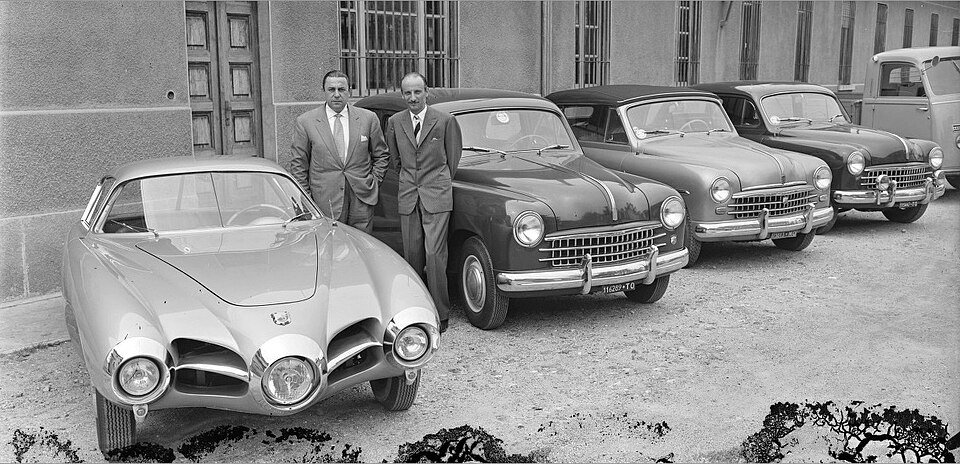
That work produced the Cisitalia Type 360, a Grand Prix car designed by Porsche with a supercharged 1.5-liter flat-12 and four-wheel drive, a decade ahead of its time. Abarth worked on the project with Ferry Porsche and engineer Rudolf Hruska, as designer, engineer and test driver. The costs ran out of control, Dusio left for Argentina with a deal from Juan Perón, and Cisitalia collapsed.
Paid in race cars
Instead of back wages, Abarth took Cisitalia’s race cars. He rebadged them Abarth-Cisitalia and kept racing. On March 31, 1949, he and Armando Scagliarini founded Abarth & C. in Bologna. The company soon moved to Turin, Fiat’s hometown. The logo was a scorpion, Carlo’s zodiac sign. No agency, no focus group: just the horoscope of a stubborn Austrian who believed in the stars and in carburetors.
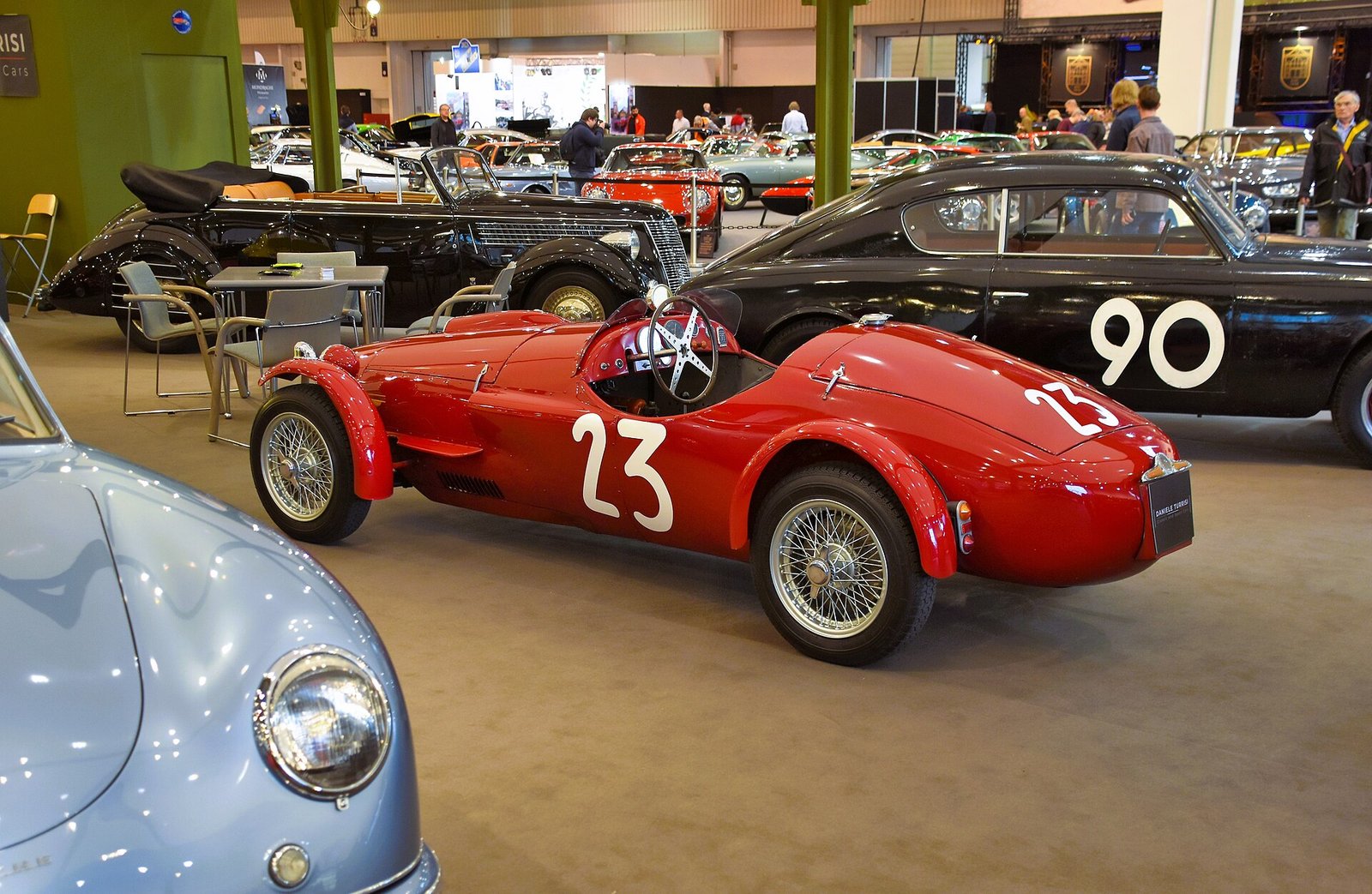
The first car was the 204A Roadster, based on the Fiat 1100, with a twin-carburetor engine making 62 hp and a streamlined body by Giovanni Savonuzzi. On April 10, 1950, at the Palermo–Monte Pellegrino hillclimb in Sicily, the great Tazio Nuvolari, near the end of his career, drove a 204A to a class win and fifth overall. It was Nuvolari’s last victory and the scorpion’s first big headline.
The parts business that paid for the racing
Abarth’s philosophy was simple. Don’t build cars from scratch. Take a mass-produced Fiat, small, cheap and everywhere, and make it fast. His company sold tuning kits, camshafts, carburetors, forged pistons and above all exhausts. By the mid-1960s Abarth was making more than 250,000 exhaust systems a year, for Fiat and many other European makers. Think of it as Italy’s version of the American speed-parts industry, with the racing program as the best advertising money could buy.
The original Abarth 595 and 695
The names modern buyers know come from the 1960s. In 1963 Abarth launched the Fiat-Abarth 595, a Fiat 500 with its little two-cylinder engine enlarged to 595 cc and power raised from the stock car’s 17 hp to around 27. Then came the 695, and the 695 SS with roughly 38 hp, in a car that weighed barely more than 1,000 pounds.
Those numbers sound tiny now, but the 695 SS could run with much bigger cars on a twisty road, and it turned the Cinquecento from a city runabout into a pocket rocket. Owners could buy the parts and convert their own 500s, which made the cars even more popular, and the formula of a small, loud, angry Fiat sold to people who liked to tinker became the template for everything that came after.
Records at Monza
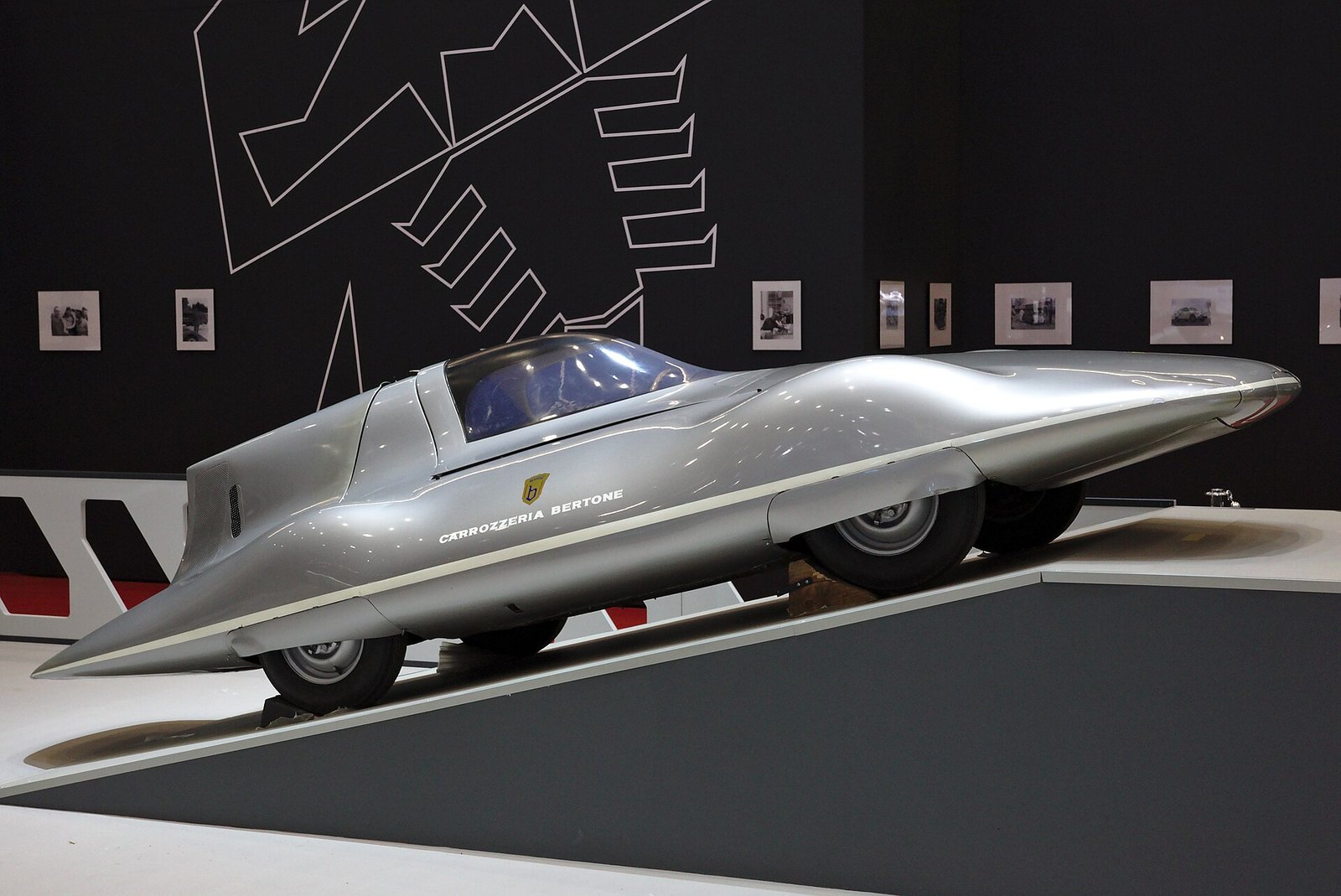
Abarth loved records because they proved durability as well as speed. In June 1956 a Fiat Abarth 750 with a Bertone body ran 24 hours at Monza with four drivers, averaging about 97 mph. It was the first of 133 international records.
In 1958 he went further with the humblest car in Italy, the Fiat 500. With an enlarged engine, higher compression, a Weber carburetor and an Abarth exhaust, six drivers took turns for seven days around Monza, covering more than 11,000 miles and setting six international records for production cars from 351 to 500 cc.
And in 1965, at 57, Abarth lost about 66 pounds on an apple-only diet so he could squeeze into his Fiat Abarth 1000 Monoposto and set acceleration records at Monza himself.
The Double Bubble and the American connection
Americans met Abarth mostly through small sports cars. The Fiat-Abarth 750 with the Zagato "double bubble" roof, two humps that gave helmeted drivers headroom, became a favorite in SCCA small-displacement classes in the late 1950s, punching far above its size. Abarth cars raced in the U.S. for years, and Abarth exhausts became an aftermarket item American hobbyists knew by name.
Much later, the badge came back to American showrooms. Fiat sold the Fiat 500 Abarth in the U.S. from 2012, a tiny turbocharged hatchback with an exhaust note far bigger than its size, and from 2016 there was the Fiat 124 Spider Abarth, built in Hiroshima on the Mazda MX-5 platform with a Fiat turbo engine. Both were sold until the end of the decade, when Fiat’s American presence shrank.
Beyond Fiat: Porsche and Simca
Abarth’s work wasn’t limited to Fiats. In 1960 Porsche asked him to build lighter, more aerodynamic bodies for the 356 Carrera to race in the GT class. The result was the Porsche 356B Carrera GTL Abarth, with an aluminum body made in Italy. About twenty were built, and they won their class at Le Mans and on the Targa Florio. Today they are among the most valuable 356s in existence, a strange footnote in which a Fiat specialist from Turin built some of the fastest Porsches of their day.
Simca, the French company that was partly owned by Fiat at the time, also got the Abarth treatment. The Abarth-Simca 1300 and 2000 of the early 1960s used Simca underpinnings with Abarth’s own twin-cam engines and low, purposeful coupe bodies, and they were serious threats in European GT racing in their classes.
Ruling the small-car classes
Abarth’s real kingdom, though, was the small-displacement class. The Fiat-Abarth 850 TC and 1000 TC sedans, little rear-engined boxes with their hoods propped open to help cooling, dominated European touring car racing in their divisions through the second half of the 1960s. They looked ridiculous and won constantly. That combination, a car that seemed too small to matter beating bigger ones, became the essence of the brand. American fans who later bought an Abarth 500 with a loud exhaust were buying a direct descendant of that idea.
A difficult boss
Abarth wasn’t easy to work for. He was obsessive, fussy about punctuality and famous for urgent Monday morning meetings in the week before a race. Criticize one of his cars and the relationship was over. But saints don’t win thousands of races.
Selling to Fiat
For years the relationship with Fiat was close. Fiat paid Abarth a bonus for every racing win by a Fiat-based car anywhere in the world, an arrangement that got very expensive as the victories piled up. On July 31, 1971, Abarth sold his company to Fiat. Running a racing operation of that size without a big manufacturer’s resources had worn him down. He stayed on for a while, then went back to Vienna, where he died on October 24, 1979, at 70, under the sign of Scorpio, the same sign he was born under.
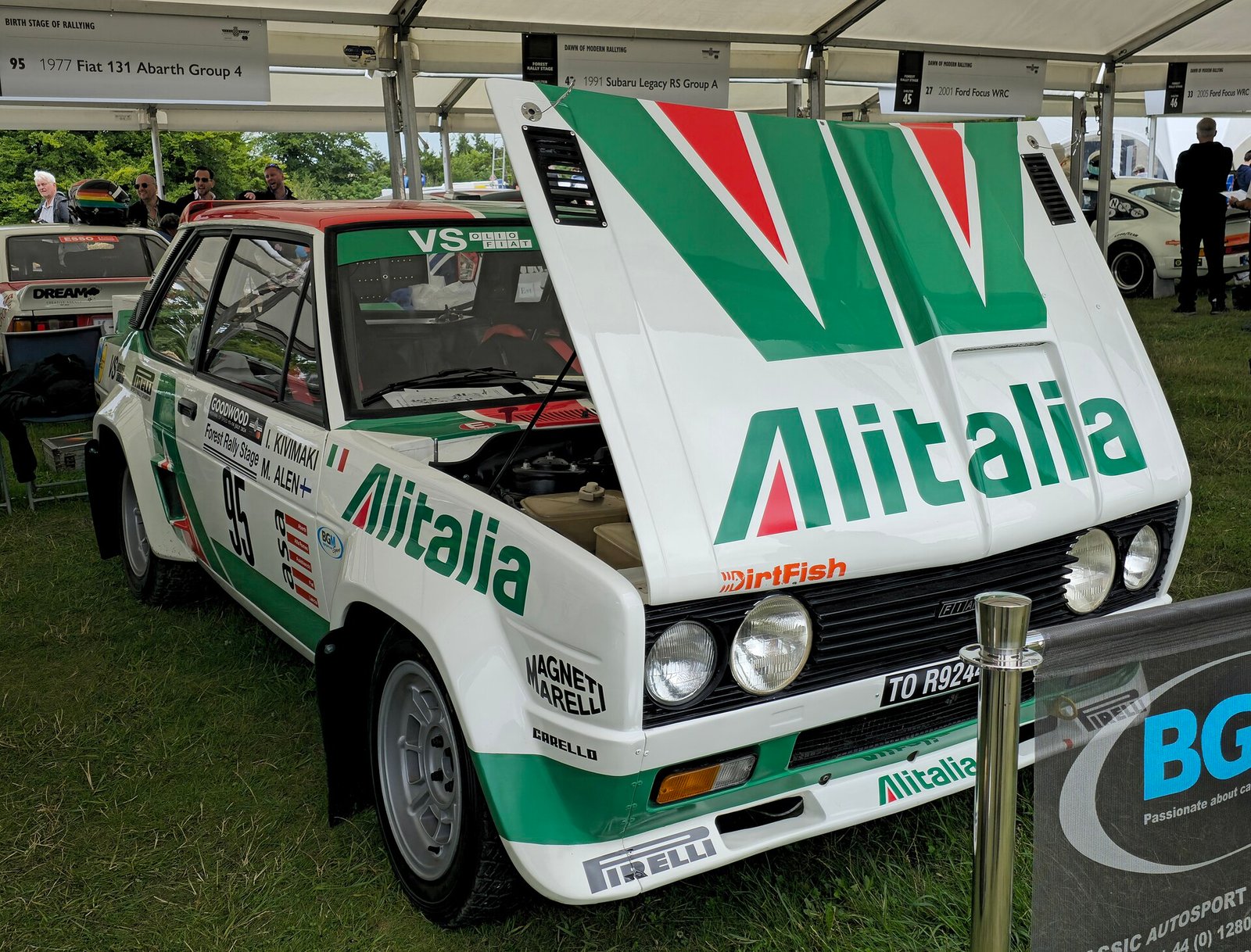
Under Fiat, Abarth became the racing department, and it won again. The Fiat 131 Abarth took the World Rally Championship for manufacturers in 1977, 1978 and 1980. The competition work later moved to Lancia, which kept collecting world titles.
Sticker scorpions
Then came the long decline. In the 1980s and 1990s the Abarth name was often little more than a trim package, applied to cars that didn’t have the engineering to back it up. Mechanics had a name for them: sticker scorpions.
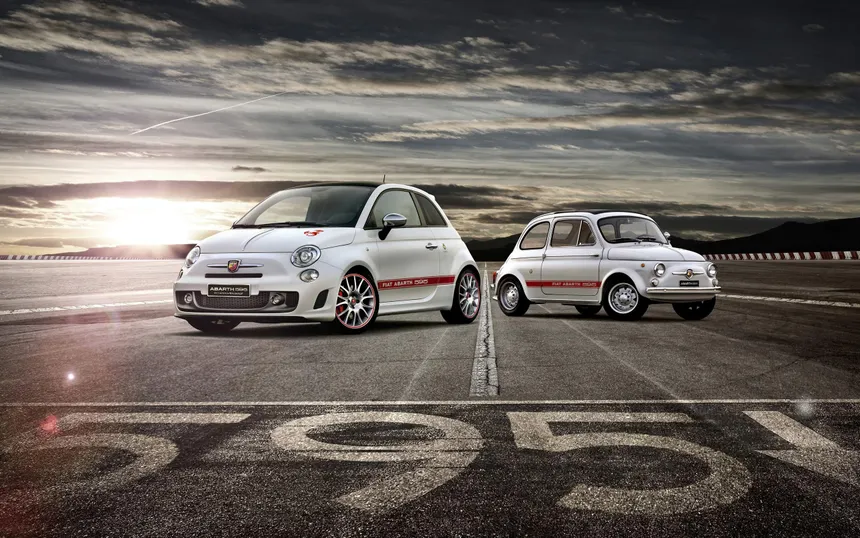
Fiat relaunched Abarth as its own brand in 2007. The Abarth 500, later the 595 and 695, used a 1.4-liter turbo engine with up to 180 hp in the 695 70° Anniversario, a loud Record Monza exhaust and endless personalization. Owners modified them the way Carlo’s customers had modified their 500s and 600s in the 1960s.
The electric problem
Then Stellantis decided Abarth’s future was electric only. The Abarth 500e has 155 hp and reaches 62 mph in about seven seconds, respectable for a small electric car. But Abarth buyers have always bought the car to work on it: change the exhaust, remap the engine, feel the turbo. An EV takes most of that away. Gaetano Thorel, who has run Abarth in Europe, has said publicly that Abarth customers want combustion engines because they modify their cars, and with electric cars they can’t.
Sales show the problem. In Italy, Abarth’s home market, fewer than 200 Abarth 600e and 500e cars were registered in 2025. Stellantis has been studying a return to combustion, possibly based on the new Fiat 500 Hybrid, but that car uses a 65-hp 1.0-liter three-cylinder and a platform designed for electric power, with little room for the old 1.4 turbo. Carlo Abarth lost 66 pounds to fit into a race car. His corporate heirs are struggling to fit a decent engine into the car that carries his name.
Small, fast, and with a sting
Whatever Stellantis decides, the history is written. Abarth proved that a small car could beat bigger ones if someone with the right hands put the right parts inside. He raced a train, built his empire on exhausts and tuning kits, and turned a cheap Fiat into a record breaker. He was born and died under Scorpio, and he lived like one: small, quick and with a sting nobody forgot. For more from the same world, read our story of the Lancia Delta S4.
Check you’re still alive.
Photos via Wikimedia Commons: Carlo Abarth with the 1952 Abarth 1500 Biposto, unknown photographer (public domain); Abarth-Cisitalia 204A, Charles from Port Chester (CC BY 2.0); Abarth 750 Bertone, Alexander Migl (CC BY-SA 4.0); 1977 Fiat 131 Abarth, Calreyn88 (CC BY-SA 4.0). Other photos: Abarth press images.