Alfa Romeo 8C Competizione: The Alfa That Alfa Romeo Didn’t Build
America got 84 of them. Maybe 90. Nobody has nailed that number down either, and that turns out to be the whole story of this car.
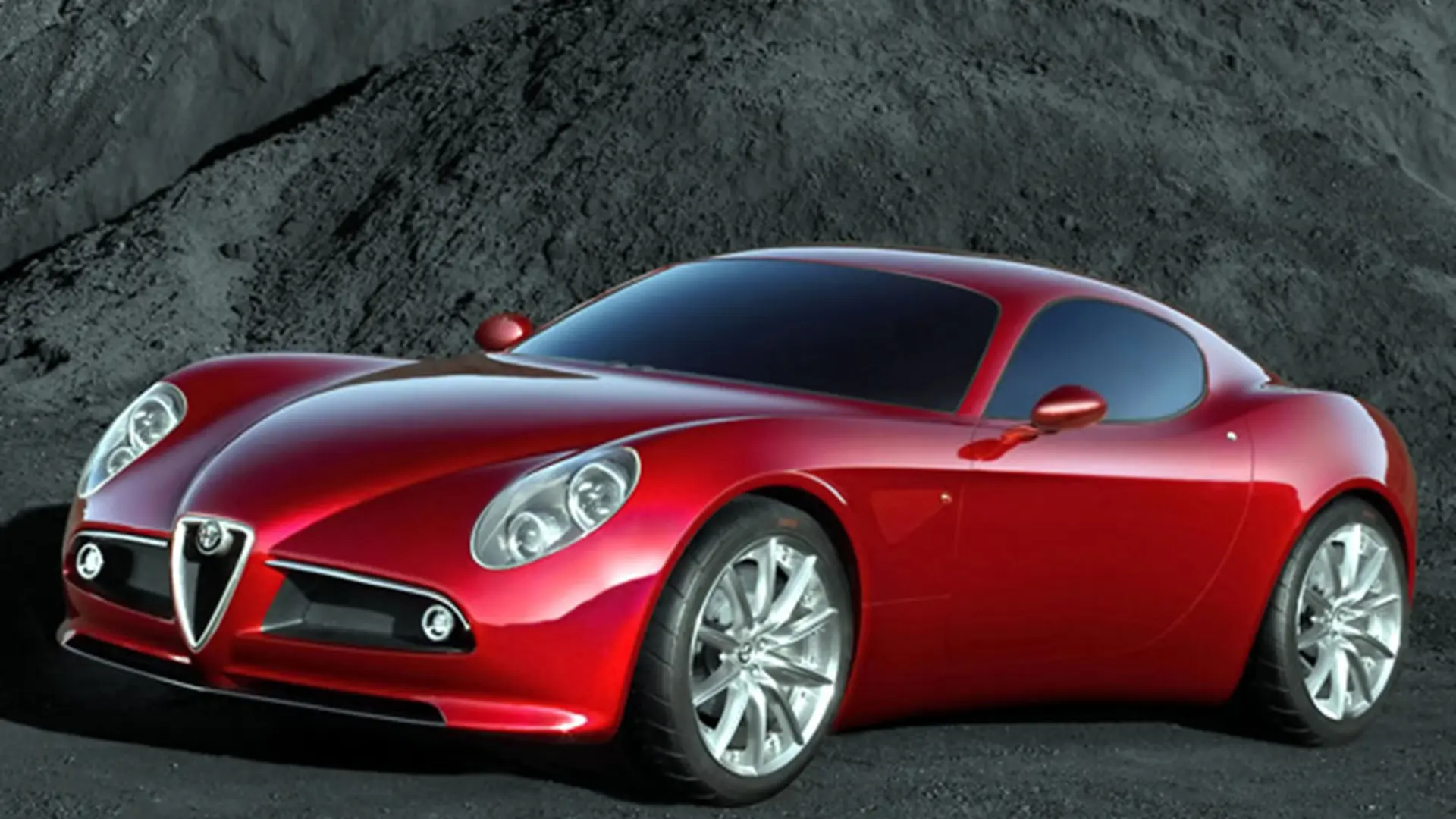
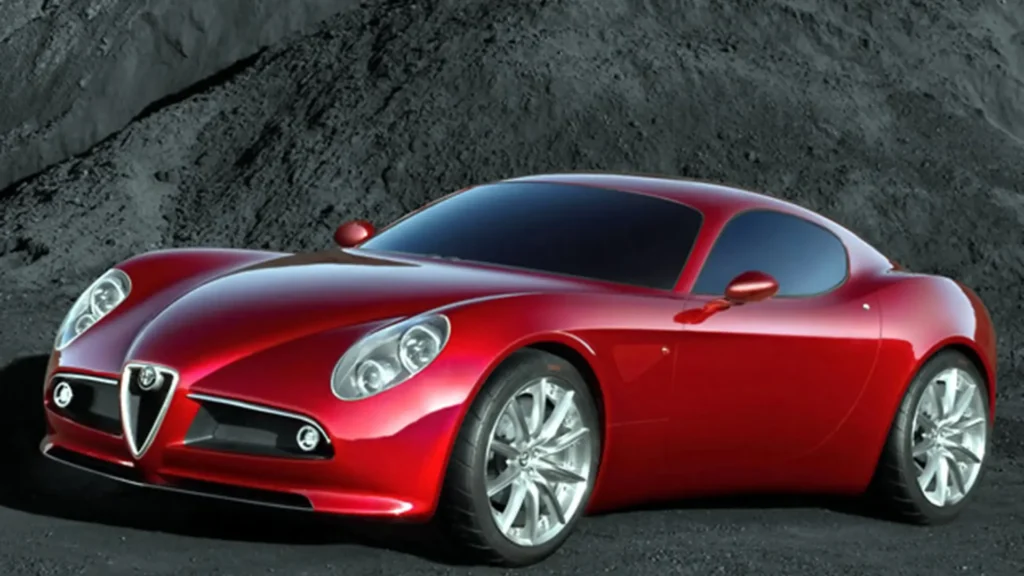
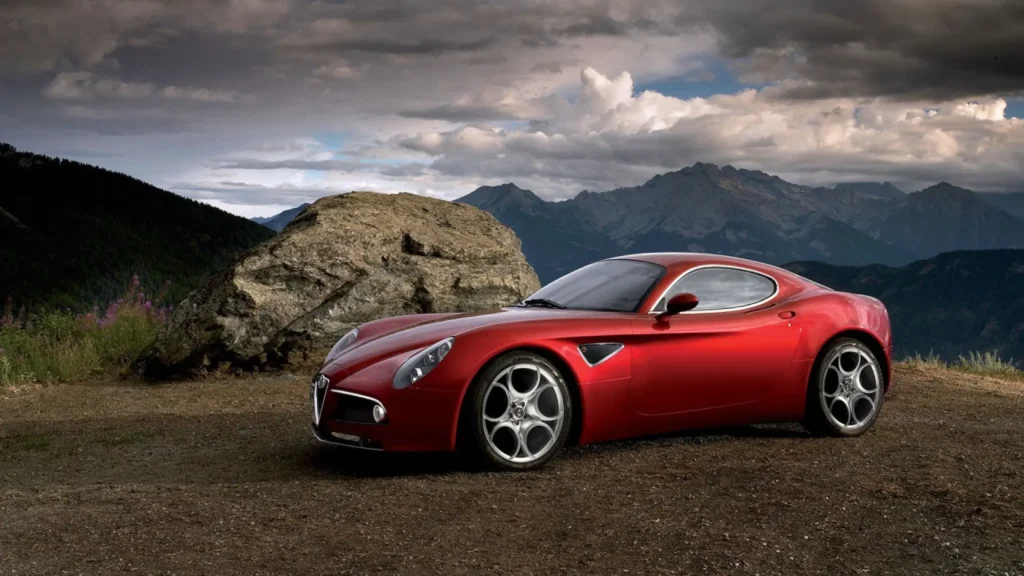
The Alfa Romeo 8C Competizione was the car that brought Alfa Romeo back to the United States after thirteen years away. It arrived with a Ferrari engine, a Maserati chassis, a carbon body built by an aerospace supplier, and a badge that promised a bloodline the car never had. It is also one of the most beautiful things anyone has built this century.
Both of those are true, and almost nobody writes about the first one.
The comeback nobody could have timed worse
Alfa Romeo had been gone from the American market since the 164 stopped selling. Thirteen years. The plan to come back was the 8C: a two-seat coupe well north of $200,000, sold in a country where the brand’s reputation rested on affordable Spiders and sedans your uncle complained about.
There was no dealer network left, so the cars were sold and serviced through Maserati stores. Sources put the American allocation at 84 coupes and 35 Spiders; other outlets say 90 coupes. That discrepancy has never been resolved by anyone, which should tell you something about how thoroughly this car has actually been researched.
Then the Great Recession showed up.
Using a quarter-million-dollar limited-run exotic to relaunch a brand, through somebody else’s dealers, at the exact moment American credit seized up, was not a plan. It was a gesture. Alfa’s real return took years longer and needed the 4C and then the Giulia to happen.
But as a gesture it worked. Seventeen years later, here we are.
Who actually built this thing
Everyone shortens the 8C’s construction to five words: Maserati chassis, Ferrari engine. The real list is longer and stranger.
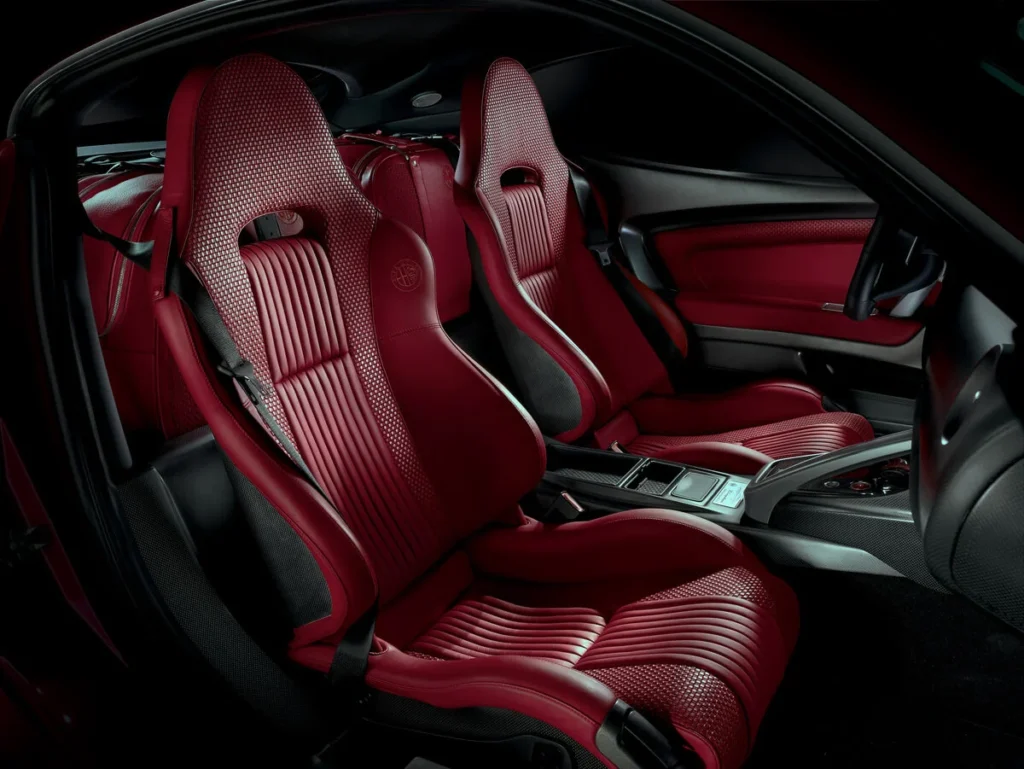
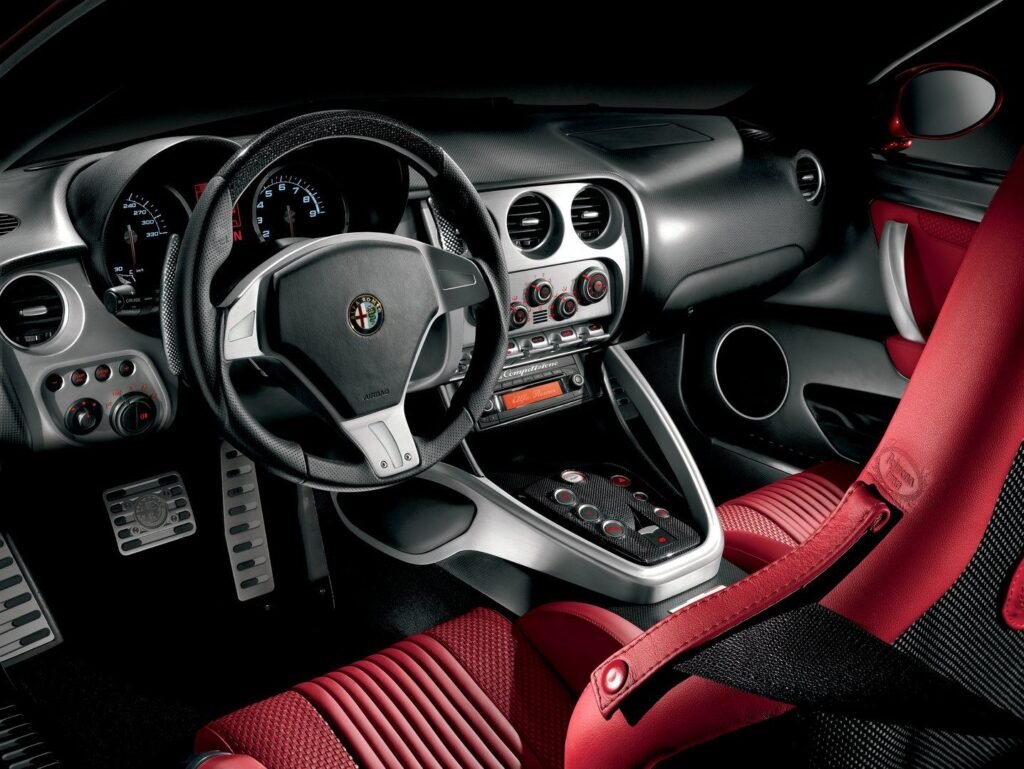
The steel chassis came from ITCA Produzione in Grugliasco and was shipped to Modena. It was not a clean-sheet platform. It blended the outgoing Maserati Tipo M138 architecture, from the Coupé and Spyder, with the incoming Tipo M145 of the GranTurismo, plus Alfa-specific pieces. The wheelbase came out at 2,646 mm, shorter than any of those Maseratis. The double-wishbone suspension shared its basic layout with the Quattroporte but ran its own geometry, springs, dampers and bushings. Structural carbon fiber was bonded to the steel floor to form the passenger cell, and steel subframes carried the engine, gearbox and suspension.
The carbon body was made by ATR Group in Colonnella, in Abruzzo. That firm has been laying up composites since 1982. It built the Ferrari F50‘s tub, worked on the Enzo and the Porsche Carrera GT, runs nine plants in Italy, and also produces aerospace components and the carbon tubes for Colnago’s C-40 and C-50 bicycle frames. Materially, the 8C is an aerospace product wearing an Alfa badge.
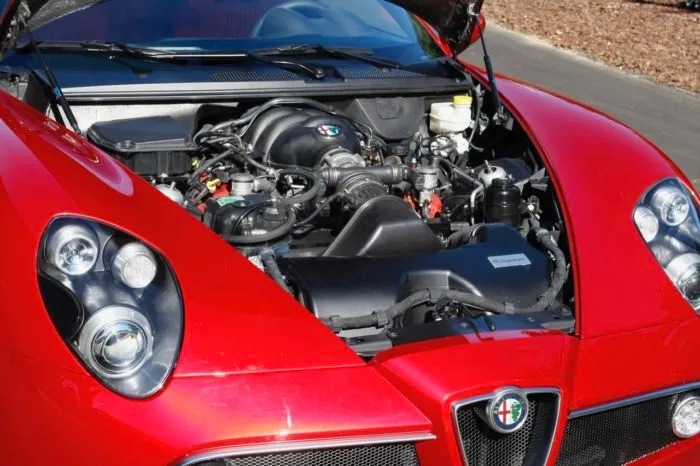
The engine, the 4.7-liter F136 rated at 450 metric hp at 7,000 rpm, is assembled at Maranello. The six-speed automated manual sits at the rear in a transaxle, in unit with the limited-slip differential, quoting shifts of 175 milliseconds.
Final assembly happened at the Maserati plant in Modena.
And the production version was engineered by Maserati people, working alongside Ferrari, in parallel with the GranTurismo program.
Add it up. What Alfa Romeo contributed to the 8C was a styling team, Wolfgang Egger and Daniele Gaglione at Centro Stile, and a badge. Everything else belonged to somebody else in the building.
The manufacturer can’t keep its own spec sheet straight
Here is where this stops being another gallery of pretty photographs.
Stellantis Heritage runs an official page on the 8C Competizione. It is the manufacturer’s own account of its own car. It says three things that don’t match anything else on record.
It credits Dallara with supplying the chassis. ITCA Produzione is not mentioned.
It describes a composite chassis of aluminum, titanium and carbon. Every technical account describes a steel frame with a bonded carbon cell and steel subframes.
It lists the weight at 1,490 kg. Every homologated spec sheet and technical database says 1,585 kg at the curb, with European measurement standards pushing it to 1,660 kg.
I can’t verify which chassis account is correct, and I’m not going to guess. There may be a division of work between Dallara and ITCA that has never been properly told. The 1,490 kg figure may be a dry weight that the page fails to label. What is verifiable is that the factory’s own history page and the car’s actual paperwork describe two different automobiles, and that this has sat there for years without anyone cross-checking it.
Fewer than a thousand cars built, and the company that built them isn’t clear on the architecture of its own chassis.
The name is a bolt-on
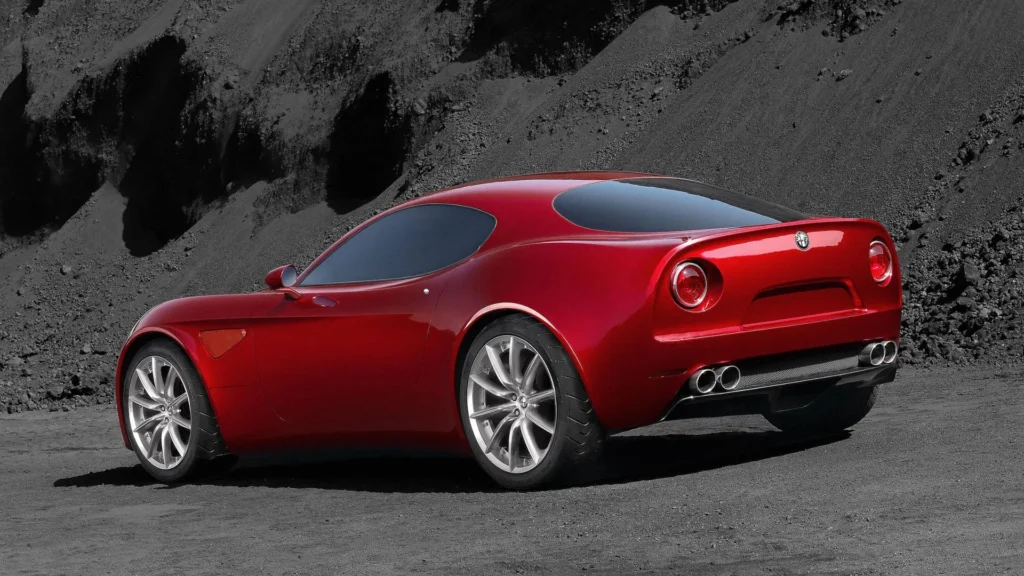
The real 8Cs, Vittorio Jano’s cars, ran a straight-eight. That is what the code means: eight cylinders, in line, common crankcase, two blocks of four. It was Alfa’s principal racing engine from its debut at the 1931 Mille Miglia until it was retired in 1939, and it won Le Mans four years running from 1931 to 1934.
The 8C Competizione has a V8. Not an Alfa V8. A Ferrari V8.
The surname is an even bigger stretch. “Competizione” doesn’t come from any 8C. It comes from the 6C 2500 Competizione of 1948, which finished third in the 1949 and 1950 Mille Miglia, the second time with Fangio and Augusto Zanardi driving. Six cylinders.
So the name splices a 1930s straight-eight to a postwar straight-six and hangs the result on a Maranello V8 that has nothing to do with either.
The best part is that Alfa spells this out itself. On that same official page, the company explains that 8C is the code for Jano’s straight-eights and that Competizione refers to the 6C 2500. It writes it down without blinking. That is how limited-run marketing works: you take a word that won races and attach it to something that never raced.
Carbon on top of steel, and why
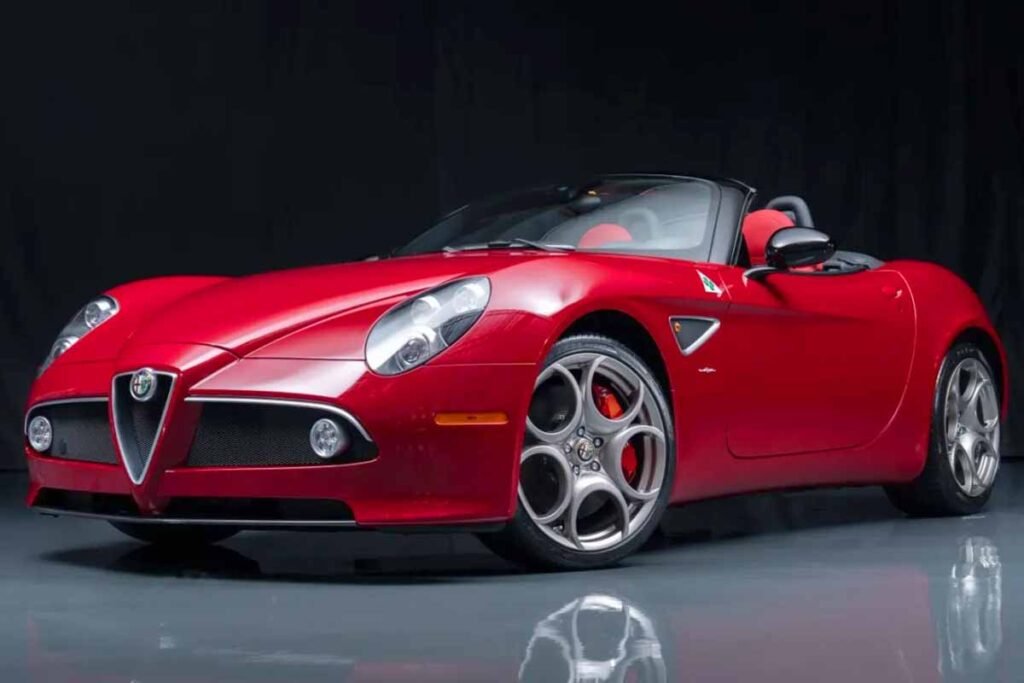
Everyone repeats that the 8C has a carbon fiber body. Very few people follow that sentence with the contradiction: it weighs 1,585 kg.
Put it against what it faced in 2007 and 2008. The Ferrari F430 of those years was quoted at 1,450 kg on the manufacturer’s DIN measurement, with a 4.3-liter V8 making 490 metric hp. The 2008 Maserati GranTurismo S, sharing the 8C’s engine in a 440 hp tune, was quoted at 1,880 kg. These are each maker’s own claims, measured to different standards, so treat them as indicative rather than exact.
The translation: the 8C is roughly 295 kg lighter than the Maserati it came from, which deserves credit. And it is still around 135 kg heavier than the Ferrari of the same season, with more displacement and less power.
Why? Because the carbon is where you look and the steel is where you don’t. A bespoke aluminum frame or a full carbon tub means developing a structure from zero and amortizing it. At 500 units that math does not close. Adapting a steel chassis from two Maseratis already in production got the car built. The steel was the price of the 8C existing at all.
It also explains the reviews. Testers found the suspension very firm and yet still found body roll, and the automated manual has not aged gracefully. A car with this architecture was never going to out-handle a 997 Turbo. It was doing something else.
A detail that rarely gets repeated: during early press running at Balocco in the wet, an Alfa engineer told journalists that the stability control could be switched off, but that they shouldn’t. Four hundred and fifty horsepower, rear drive, a transaxle, and a carbon body that muffled engine noise about as well as a paper napkin. Fair warning.
The 171 Spiders that were never built
The number everyone repeats is 500 coupes and 500 Spiders. A thousand cars. It’s in the press, in spec databases, in encyclopedias.
It’s wrong.
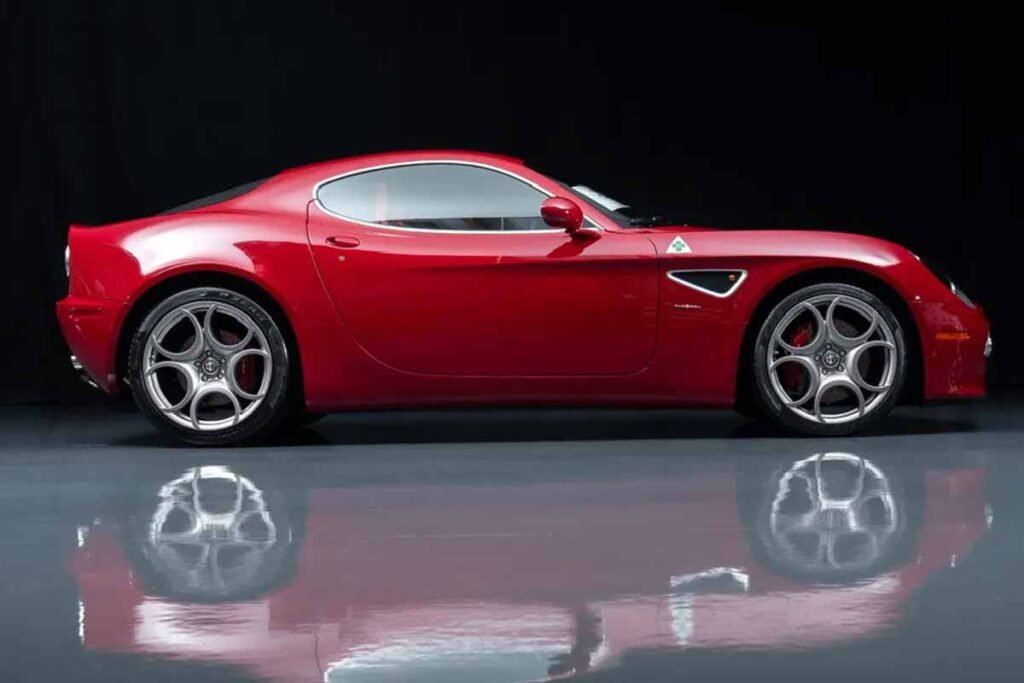
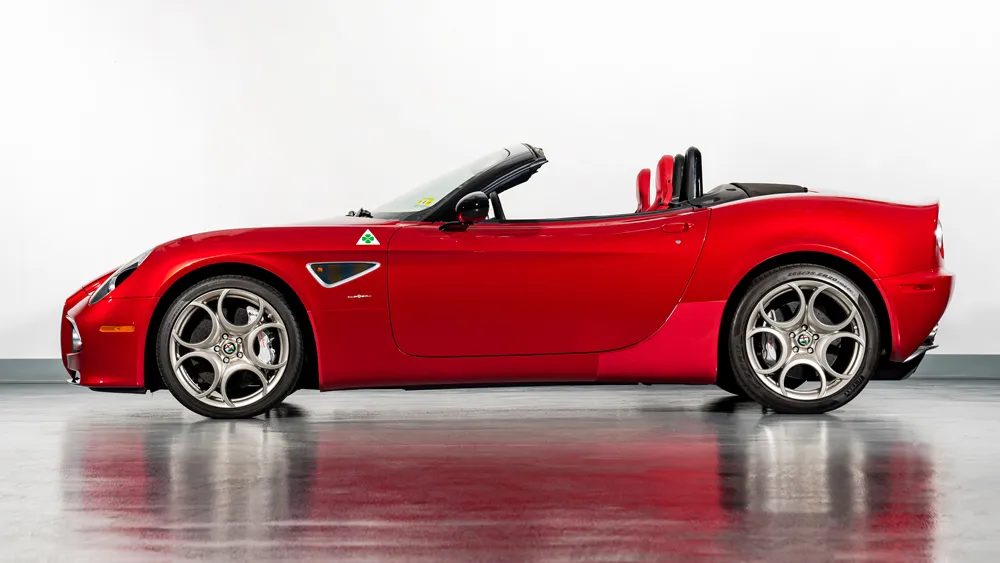
The real figure is 500 coupes and 329 Spiders. Total: 829.
And it wasn’t for lack of buyers. After production was announced, Alfa took more than 1,400 orders for the coupe, of which only 500 could be filled. The Spider, listed more than 50% above the coupe, drew around 1,200 orders. With that demand on the table, the run was cut at 329. The financial crisis killed 171 cars that were sold before they were built.
There is an entire unwritten story in that decision: who signed off on it, what happened to the deposits of the customers left out, and why the official line is still “500 and 500” a decade and a half later.
Nobody agrees on the price either
Look up what an 8C Competizione cost new and you’ll find all of this:
- €159,300, published at the time as Alfa’s announced price.
- Around €162,000 in technical databases.
- €236,000, the figure FCA Heritage itself used when it offered two cars from its own collection.
- €266,000 for the Spider in that same sale.
- $299,000 for the Spider in the United States.
Some of those include taxes and some don’t; some are from different years of the run. I’m not presenting any of them as the price, because it isn’t established which one is. What is established is that for a car with fewer than a thousand examples, built less than twenty years ago, by a manufacturer that still exists and keeps its own archive, there is no clean, verified price figure in circulation.
A great deal has been written about the 8C. Very little of it has been checked.
Three offspring and eight sacrifices
Things were built on the 8C’s bones that almost nobody covers, and two of them are American stories.
BAT 11 dk, 2008. Bertone revived Franco Scaglione’s Berlinetta Aerodinamica Tecnica line at the request of a private American, Dr. Gary Kaberle of Michigan, who had owned the original BAT 9 since he was a teenager and sold it years later to cover medical care for his wife, Debbie. The “dk” in the name is for her. The car was shown in Geneva in 2008, off-site, then crossed the Atlantic for its North American debut at the Meadow Brook Concours d’Elegance. Whether it is a running car on 8C mechanicals or a static mock-up with working doors is a point on which the sources flatly contradict each other, so I’m flagging it rather than picking the version I like best.
Pandion, 2010. Bertone again, led by Mike Robinson, shown in Geneva for Alfa’s centenary. Same 4.7 V8, same 450 hp, and a claimed 1,258 kg, more than 300 kg under the production 8C. The entire side of the car, fender to fender, is a single door that rotates back and ninety degrees up.
Disco Volante by Touring, from 2013. This is the one that changes the arithmetic. Touring Superleggera, with Louis de Fabribeckers designing, honored the 1952 C52 by building new hand-beaten aluminum and carbon bodywork over the 8C’s structure. Eight cars. More than 4,000 hours of work each. Eight months of lead time.
Counted from delivery of the donor car.
For those eight Disco Volantes to exist, eight Alfa Romeo 8C Competiziones gave up their original bodies. Of 829 cars built, eight are no longer what left Modena. Nobody frames it that way, and that is exactly what it is.
Sixteen years before the 33 Stradale
Which brings us to why the 8C matters beyond its own looks.
When Alfa Romeo unveiled the new 33 Stradale in 2023, the recipe was: take a Maserati base, in this case the MC20‘s carbon monocoque and Nettuno V6, hand-build it at Carrozzeria Touring Superleggera, cap it at 33 units, and put the name of a sacred 1967 car on the nose.
Now 2007: take a Maserati base, build it in the Maserati factory, cap it at 500 units, and put the name of a sacred 1931 car on the nose.
Same play, sixteen years earlier. With the same coachbuilder, no less. Touring Superleggera, which bodies today’s 33 Stradale, is the firm that had been stripping 8Cs since 2013 to build Disco Volantes.
Now the fine detail, the one that requires holding two spec sheets side by side. The 8C Competizione made 450 metric hp; the Maserati GranTurismo S with that same engine made 440. Alfa took ten more than the donor. The 2023 33 Stradale makes 620; the Maserati MC20 with that same engine makes 630. Alfa takes ten fewer.
It’s a small thing, and that’s why it counts. In 2007, when Alfa Romeo borrowed, it took the better version. In 2023, it takes the second one.
A badge is not a blueprint
The 8C leaning on a Maserati isn’t the crime. Special cars have always been built this way and always will be. Ferrari put engines in Lancias, Touring dressed half of Italy, and the 1967 33 Stradale came off a race car. Sharing is the business.
The crime is charging for a bloodline the car doesn’t have, and then failing to keep the spec sheet straight on your own website. Alfa Romeo sold the 8C wrapped in Jano, in Le Mans and in the Mille Miglia, and delivered a gorgeous object drawn in Arese and built by six other people. You can do that. But then you skip the lineage sermon: you say it’s a Maserati dressed by the best styling team in Europe, you charge whatever that’s worth, and you go.
The strange part is that the 8C could have carried that truth standing up. It looks that good, sounds that good and has aged that well that it needed no borrowed surname at all. Those 1,400 orders didn’t come in for Vittorio Jano. They came in for Wolfgang Egger.
How many “heritage” cars would still be standing if you stripped off the name and made them defend themselves?
Check you’re still alive.