Schuppan 962CR: The Street-Legal Le Mans Racer Porsche Still Won’t Claim
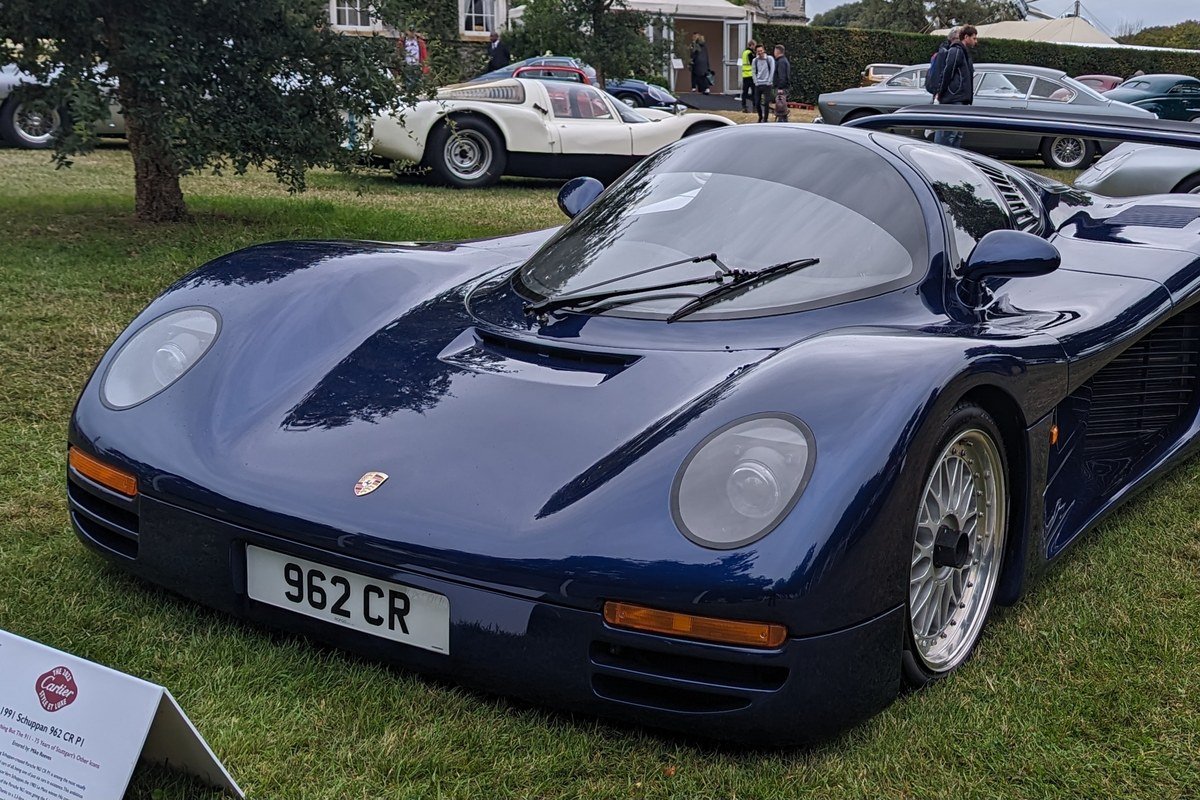
Jay Leno has driven just about everything with a steering wheel, but the Schuppan 962CR he took out for his show had exactly one mile on the odometer. Not a restored mile. One mile, period. The car had spent twenty years parked in the office of a man who made windshields for buses, accepted as partial payment for a debt from a company that no longer existed. That is where a $1.5 million road-going version of the most successful endurance racer of the 1980s ended up. Its builder lost his house, his car collection and the very Porsche 956 he had driven to victory at Le Mans. Ask him today whether he’d build a few more to finish the run, and he laughs and says never.
An Aussie in a Rothmans car with two Americans
Vern Schuppan was born in South Australia in March 1943 and came up through karting before heading to Europe. His first brush with the Formula 1 World Championship was a kick in the teeth: at the 1972 Belgian Grand Prix he was BRM’s test driver, qualified the car, and never started the race because teammate Helmut Marko, the same man who would later run Red Bull’s driver program, took his car. Schuppan’s first real Grand Prix start came at the 1974 Belgian race with Ensign.
American fans knew him from the Brickyard. He ran the Indianapolis 500 three times, won Rookie of the Year in 1976 and finished third in 1981. No Australian did better at Indy until Will Power finished second in 2015.
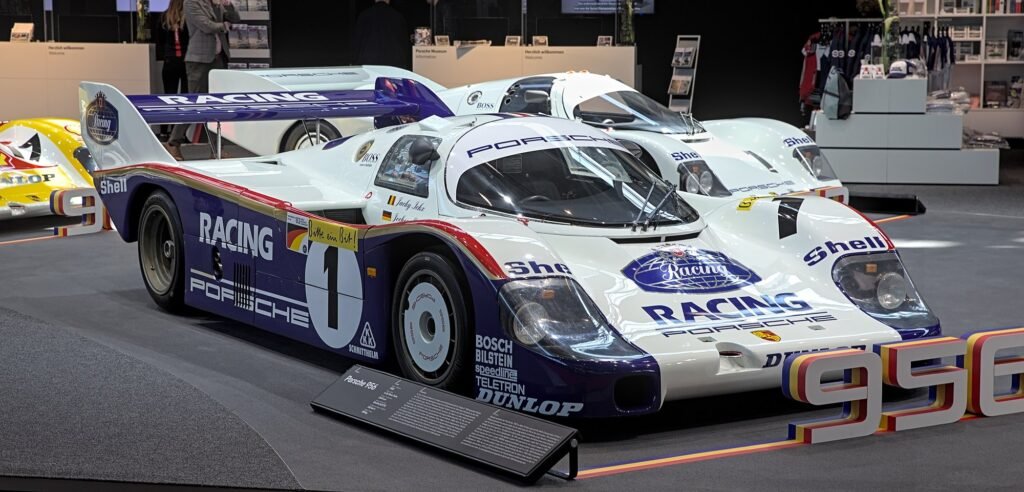
His real home, though, was endurance racing. Porsche signed him as a factory driver for 1981, and in June 1983, at 40, he won Le Mans in the Rothmans Porsche 956 alongside two Americans, Al Holbert and Hurley Haywood. Most write-ups call him the first Australian to win the race. He wasn’t. That honor belongs to Melbourne-born Bernard Rubin, who won for Bentley in 1928 with Woolf Barnato. Schuppan was the second, 55 years later.
That same 1983 season he won Japan’s endurance championship with the privateer Trust Racing outfit, and Japan became his second home. That’s where the money for the 962CR would come from.
What made the 962 worth copying
The Porsche 962 was the evolution of the 956, the Group C prototype Norbert Singer designed for Porsche. In the US it ran in IMSA GTP, the American prototype series. Under the body sat a monocoque made of aluminum panels.
A monocoque works like an eggshell. Instead of a frame of tubes with everything bolted on, the tub the driver sits in carries the loads from the suspension and the engine. It doesn’t have to be made in one piece, and the outer bodywork bolts on separately. The stiffer and lighter that tub is, the better the suspension can do its job. By the late 1980s, carbon fiber, done right, promised more stiffness and less weight at the same time, and Kremer, Joest and designer John Thompson were already building their own 962 tubs.
Schuppan, who had set up Team Schuppan in High Wycombe, northwest of London, in 1987, went to a British aerospace firm called Advanced Composite Technology. Singer liked the idea and handed over the factory drawings. ACT built an initial batch of carbon tubs for Schuppan’s race cars, sponsored by electronics maker Omron and consumer lender Takefuji. The Omron car that finished 15th at Le Mans in 1990 would later become the first road car prototype. A tub that ran the 24 Hours ended up with a license plate.
The Spaniard who outlasted the factory
Schuppan’s 962 years have a Spanish thread most English-language histories skip. At Le Mans in 1986, Porsche handed him an experimental 962 fitted with PDK, the dual-clutch gearbox whose descendant now ships in every automatic 911, sharing it with American Drake Olson. The gearbox broke. Schuppan was moved to the Jochen Mass and Bob Wollek car, which hit oil in the Porsche Curves at three on Sunday morning and was out. Al Holbert won that year with Derek Bell and Hans-Joachim Stuck, and the car in second, eight laps back, was a privateer: Walter Brun’s Swiss-run 962 with Spaniard Jesús Pareja on the driving roster. Pareja and Oscar Larrauri won the Jerez 360 km world championship round that August in the same Brun car, and by 1988 the team raced as Repsol Brun Motorsport, carrying the Spanish oil company’s colors. Pareja came back in 1994 and won the GT2 class at Le Mans in a Porsche 911. A customer 962 with a Spanish driver got further in 1986 than the factory car carrying the man who had won it three years earlier.
Golf courses, hotels and a guy who hung around the paddock
To understand this car you have to understand Japan in 1989. The Nikkei stock index hit its all-time high on December 29, 1989, just over 38,900 points, and lost almost half its value in 1990. During the boom, Japanese money was buying American trophies: Mitsubishi Estate paid $846 million for a controlling stake in Rockefeller Center in 1989, and a year later Pebble Beach went to a Japanese buyer too. Back home, more than 160 golf courses were built between 1989 and 1991, with another 1,200 in the pipeline. Golf club memberships traded like stocks.
In that world, a road-legal Le Mans car looked like a reasonable purchase. According to Schuppan, during the 1989 season an enthusiast who worked for Kosho, a Nomura Group company building hotels and golf courses, started showing up at the track talking about exactly that. Some sources put the first approach in 1988.
Schuppan formed Vern Schuppan Ltd (VSL). One of his race cars became the mule and went through type approval, the certification a model needs to be registered for the road: emissions, lights, noise. Schuppan says it didn’t need much changing.
The first result was the 962LM, built at the old Tiga factory with the help of former F1 driver Howden Ganley. It used the factory’s 2.65-liter 935/79 flat-six straight from Porsche Motorsport: four valves per cylinder, air-cooled cylinders, water-cooled heads, 630 bhp at 8,200 rpm. The first one was finished in early 1991. By then the bubble had popped, and Schuppan says Kosho took only three cars.
The LM prototype had a short, violent life. Built on race chassis 962-123, which had finished tenth at Le Mans in 1988 with Brian Redman, Eje Elgh and Jean-Pierre Jarier, it was used mostly to test systems. Coming back from the MIRA proving ground with Ganley driving, it caught fire and burned to the ground.
The California part of the story
When Kosho backed off, one of Schuppan’s Japanese sponsors introduced him to Art Sports, the performance car import arm of Osaka’s Art Corporation, run by Toshio Terada. Art Sports announced the project in February 1991. That April, Motor Sport magazine reported that Terada had ordered 50 cars and planned to sell roughly a third each in Japan, the US and Europe, at 195 million yen apiece. Schuppan now remembers it as 25.
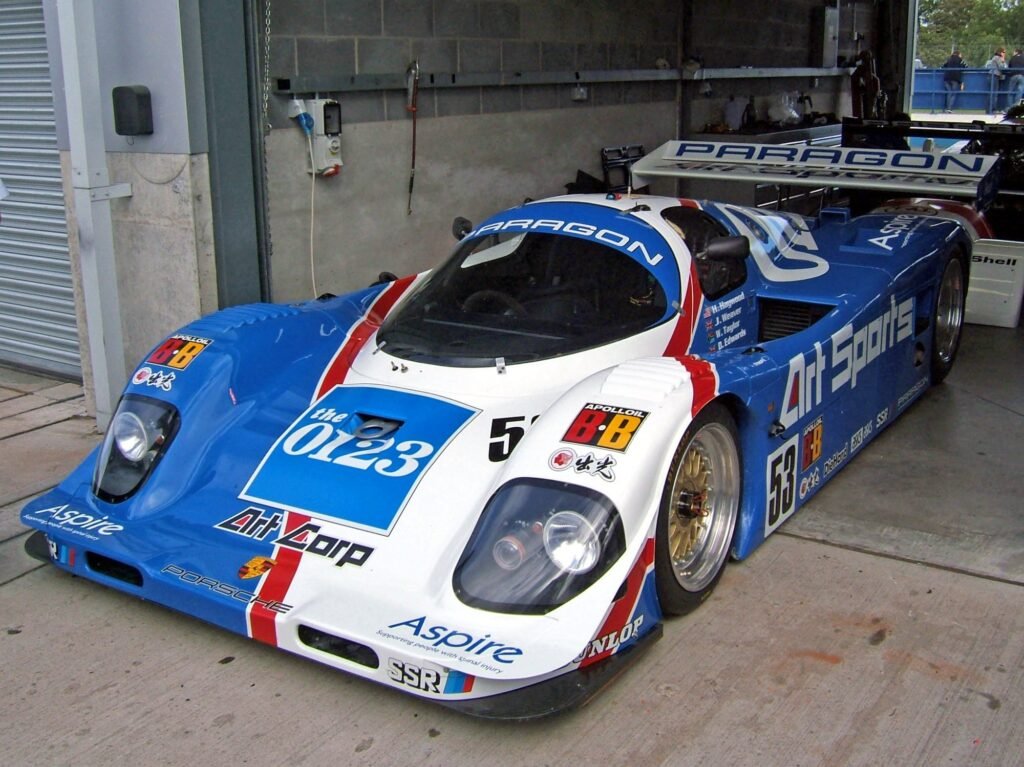
Art Sports wanted a grand tourer, not a race car with plates. That meant starting nearly from scratch. Reynard took over the tub, widening ACT’s design by two inches to make room in the cabin.
The engine is where America comes in. The CR used the 962’s flat-six in IMSA spec, the version that raced in the US: twin turbos, two valves per cylinder, one cam per bank and full air cooling, good for about 600 bhp. Porsche supplied the engines to Andial, Alwin Springer’s California shop, which had prepared Porsche’s IMSA engines. Andial handled the road conversion: mufflers, catalytic converters, emissions control.
Why air cooling on a road car? It’s simpler. Fins on the cylinders shed heat into air pushed by a fan, with no radiators, water pumps or hoses to fail. The tradeoff is harder temperature control in heat and traffic, something every 911 owner of that era knows.
Displacement depends on who you ask: Schuppan says 3.4 liters, Motor Sport wrote 3.3 in 1991, and one seller listed a 3.2-liter 962/71. Engines get swapped over thirty years, and the CR01 prototype itself later received a correct IMSA-spec motor, so no single number fits every car.
Power went through Porsche’s five-speed synchromesh racing gearbox with a limited-slip differential. The Alcon brakes carried the Schuppan name.
The GM designer who drew a better Porsche than Porsche
The body is what separates the CR from every other road-going 962. The design project started with Ray Borrett, head of prototype production at GM’s Australian arm, Holden. Schuppan commissioned studies from several designers, Ken Greenley and Martin Read among them, and picked the one by fellow Australian Mike Simcoe. Simcoe was working for Saturn in the US at the time, flying back and forth to England and, in Schuppan’s words, spending entire weekends reshaping the buck. He went on to become GM’s senior vice president of global design and retired in July 2025.
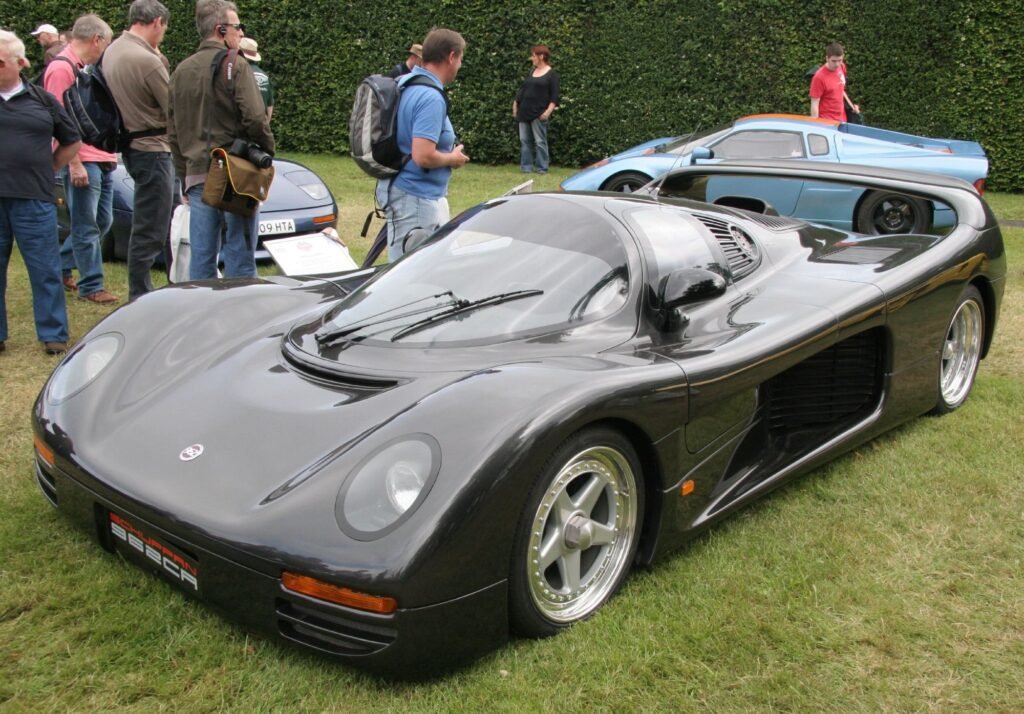
What he drew keeps the 962’s bubble canopy, dictated by the chassis hard points, and wraps it in Porsche road car cues: elliptical headlights, a hood that dips between raised front fenders like a 911 sticking its head out a window, and a hoop rear wing that blends into a full-width taillight bar straight out of the 959.
Ralph Bellamy, an Australian ex-Lotus and McLaren designer, worked on the dynamics. The big question for any road-going 962 was ground effect. The race car’s floor is shaped so air underneath speeds up and drops in pressure, sucking the car to the track. Raise it four inches so it survives a speed bump, and much of that grip disappears. Motor Sport reported a ride height of 10 to 12 centimeters, softer springs and Koni adjustable dampers.
VSL grew to around 60 people counting suppliers and bought composites specialist Bill Stone’s business to make bodywork in-house. The Japanese pressure was so intense that Schuppan barely drove the CR. In 1991, a Japanese team including writers from Car Graphic came for the final test at MIRA, then flew the prototype straight to Japan.
How a badge turned Stuttgart against him
According to Schuppan, the first blow came from his own partner. Art Sports removed the 962CR badge, fitted a Porsche crest and announced it held worldwide rights to Porsche’s supercar. The car appeared that way in Car Graphic. Stuttgart cut off parts supply, including 20 engines due after the five already delivered from a contract for 25. Magneto magazine reports that Schuppan leaned on Andial for engines afterward. There’s no record showing the cut left the CR permanently without power. It hurt badly, but the project died of several causes at once: money, orders and contracts.
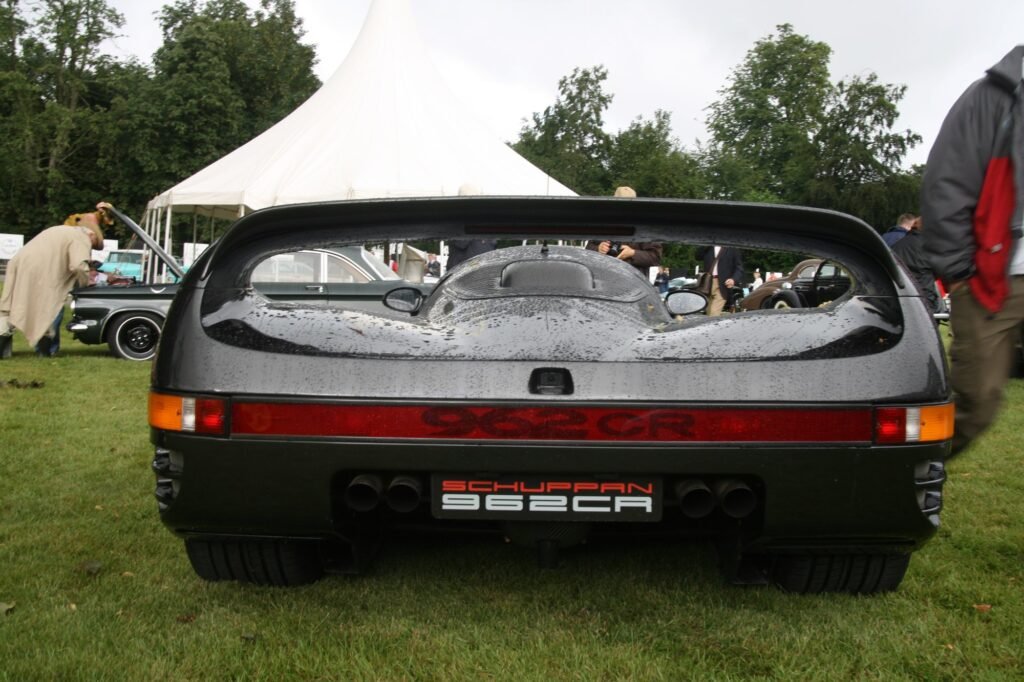
Art Sports took delivery of the first production CR in Japan in 1992. Then, according to former VSL employee Trevor Crisp, it renegotiated to 20 cars or nothing, then ten, and VSL went to the English courts to enforce the deal.
What follows is Schuppan’s account, as told to Hagerty. VSL was buying a bigger factory partly with money advanced by Art Sports, and each delivered car paid down part of that loan. When Art Sports walked away, it called the loan and gave VSL 14 days. There was a £6 million cancellation clause, but Art Sports hired a hard-nosed London firm that tried to stretch a two-week trial to two months; it ran five weeks. Schuppan had to post another £300,000 as security for costs, and remembers calls at 3 a.m. and piles of faxes on Friday nights. He lost his house and cars, including the 956.
He made one last run at it. He flew to Japan and closed a deal for three cars, about £900,000, almost enough to survive. He finished them and sent two to Heathrow. The next day, Art Sports’ lawyers sought an emergency hearing, arguing the contract allowed more time to road-test the cars. The judge allowed the test and put the burden of unloading them on Schuppan, but the plane was already taxiing. Schuppan says that once it was airborne, the lawyers told Barclays he’d defied a court order and the bank refused to honor the letters of credit. A letter of credit is the bank’s promise to pay the seller once goods are delivered as agreed, even if the buyer balks. Crisp tells a similar story: court orders in the UK and Japan, the British one arriving too late, one car coming back. Without the court record or the bank’s paperwork, this remains one side’s account. VSL went into administration, Britain’s court-supervised insolvency process, and took the race team down with it.
How many were built? Not six
Nearly every article says six. Schuppan himself told Hagerty three CRs. Mecum counted two CR prototypes, two production CRs and three LMs. The most solid list, with chassis numbers, comes from Trevor Crisp, who worked at VSL and later ADA Engineering, and now runs Katana Ltd. It’s an insider’s documented testimony, not an independent audit. VSL built seven cars:
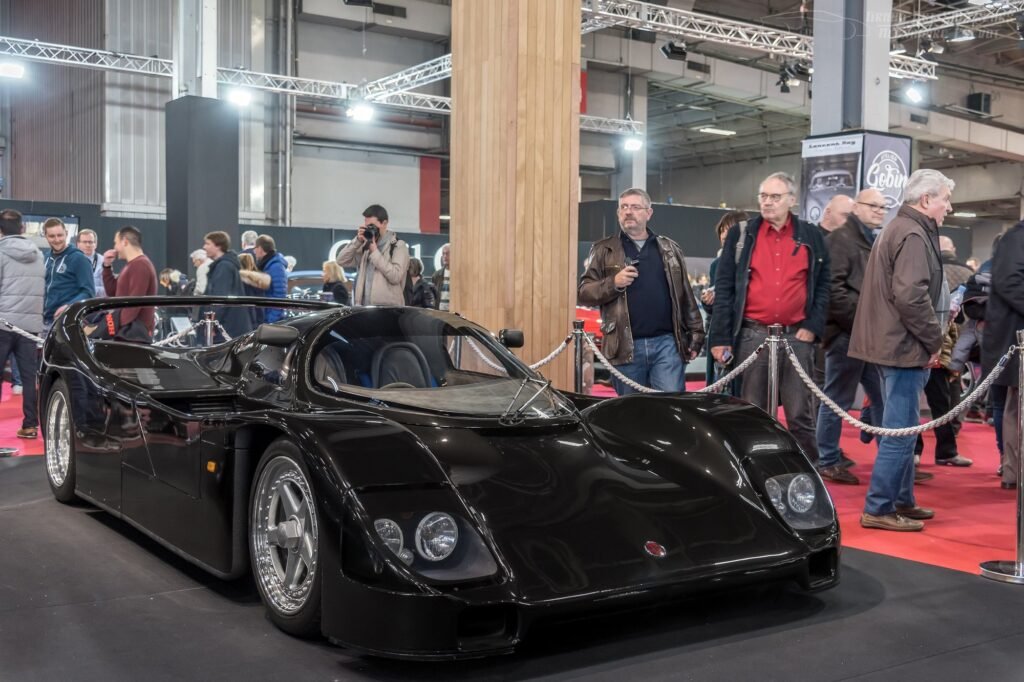
- One LM prototype, VS 962LM P1, the one that burned.
- Two production LMs on new ACT tubs. One belongs to Japanese owner Takeshi Moroi and appeared on Top Gear.
- Two CR prototypes: CR01 on the ex-Omron tub, and CR02, the first on the wider Reynard tub, now with Bingo Sports in Tokyo.
- Two production CRs: AS 962CR 04/50, delivered to Art Sports in 1992, whereabouts unknown per Crisp, and AS 962CR 05/50.
An eighth car came from ADA Engineering between July 24 and August 21, 1993, after VSL could no longer build: an LM on an unused ACT race tub, with Singer’s 1985 Le Mans bodywork and only the rear half of the CR body, wearing number AS 962CR 06/50. The plan was to run it at Le Mans in 1994 as a Schuppan 962CR to win back Porsche and Art Sports. It never happened. Crisp calls presenting it as a genuine CR a flag of convenience. So real CRs with Simcoe’s body: four.
One mile, two decades, one bus windshield maker
Among VSL’s creditors was a bus windshield manufacturer in the same industrial park. He took an unused 962CR as partial payment and kept it in his office from 1995 to 2015. It resurfaced at the HSR Classic 24 at Daytona, trailered down by New York Porsche specialists Hudson Historics. Collector Matthew Ivanhoe fell for it, talked the owner into selling and took it home in early 2018. When Leno drove it, he enjoyed himself but missed ventilation: there isn’t any. The brochures promised air conditioning. The seller of the prototype says that never happened.
One detail nobody seems to have checked: Road & Track describes this black car as completed in 1993 with a unique body and engine bay changes. That fits the car ADA built that summer. No source confirms it, and Crisp places that car’s sale to a US buyer in 2009, which doesn’t square with twenty years in a windshield shop. It’s an open question.
The last VSL car, 05/50, is the one from the Heathrow flight. Refused by Art Sports, it came back to the UK, and a court let VSL sell it elsewhere. Schuppan sold it to his neighbor, who kept it nearly 30 years. In 2006 Crisp’s team, then at Group C Ltd, adapted it for British single-vehicle approval with Motec engine management for emissions, a collapsible steering column, new headlights and polycarbonate side windows. Mecum offered it at Monterey in August 2024 with 91 miles.
What it was up against
The list price was 195 million yen: about $1.5 million, or roughly £830,000 in 1994 money. Porsche historian Karl Ludvigsen confirmed that figure after years of rumors claiming $2.5 million.
- Jaguar XJR-15 (1990–1992): Tom Walkinshaw’s road car built from the Le Mans XJR-9, carbon and Kevlar, a 6.0-liter V12 with about 450 hp, 2,315 lb, £500,000. Schuppan drove one and wasn’t impressed. Hagerty says the CR cost three times as much; the numbers show 38 to 66 percent more depending on the year, nowhere near triple.
- McLaren F1 (unveiled May 1992): 6.1-liter BMW V12, 618 bhp, 2,513 lb dry, about $1 million. Cheaper than the Schuppan and slightly more powerful, roughly 3 percent.
- Schuppan 962CR: about 600 bhp and 2,315 lb, the same weight as the XJR-15 with roughly 150 more horsepower.
Mecum claims the CR’s quoted top speed of just over 230 mph beat the Bugatti EB110 by nearly 10 mph and made it the world’s fastest production car for a few months of 1992. No independent measurement backs that up, so treat it as a manufacturer claim, along with the 3.5-second 0-60 time.
McLaren still promotes the F1 as the first road car with a carbon chassis. The XJR-15 had one in 1990, and Schuppan’s production 962LMs with ACT carbon tubs date from 1991, a year before the F1’s debut in Monaco.
The cousin that won
While Schuppan fought in court, Jochen Dauer showed his road-going 962 at the 1993 Frankfurt show. Singer saw it and realized the new GT1 rules at Le Mans needed only one road car for homologation, meaning the rulebook required race cars to derive from a road model on sale. Porsche threw its weight behind the project, and in June 1994 the Dauer 962 of Yannick Dalmas, Mauro Baldi and Hurley Haywood won Le Mans outright, with the sister car third. Haywood had shared Schuppan’s winning 956 eleven years earlier.
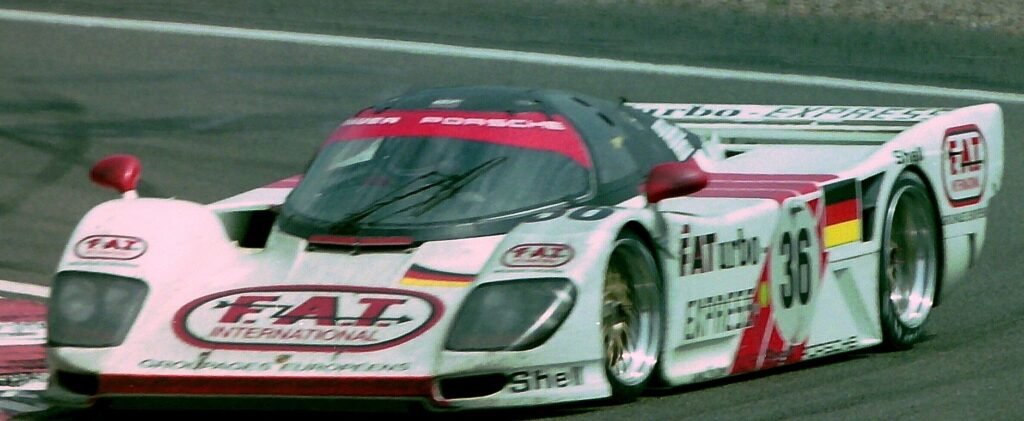
Plenty of spec sheets claim Schuppan’s 50 cars were meant to homologate the CR for Le Mans. Nobody names the rule that required it, and in 1991 the plan was purely commercial. The only documented Le Mans plan is the ADA car for 1994, and it went nowhere.
Porsche’s illegitimate son
At the 2023 Rennsport Reunion at Laguna Seca, Porsche’s own party, the dark blue CR prototype sat on display. Porsche still doesn’t officially recognize the car. Schuppan says the Porsche Museum shop has sold scale models of it anyway. That’s a strange position for a company whose engineer handed over the drawings, whose factory sold the engines and approved the carbon tub.
The CR is the best road-going 962 ever made, the only one with its own face, its own chassis and a design that does more than peel the stickers off a race car. It was killed by a bubble bursting in Tokyo, a partner who walked away after the factory was half paid for, and a hastily stuck-on crest that cost it Stuttgart’s goodwill. A man who won Le Mans for Porsche paid for it with his home. Porsche can sell the scale models in its museum. It can afford to put the real thing in its history books.
Check you’re still alive.
Photos: Calreyn88 (CC BY-SA 4.0), Alexander Migl (CC BY-SA 4.0), John Chapman (Pyrope) (CC BY-SA 3.0), Brian Snelson (CC BY 2.0), Hugh Lunnon (CC BY-SA 2.0), Alexandre Prevot (CC BY-SA 2.0), Martin Lee (CC BY-SA 2.0).